Now grows July’s garden like a wild child. She is ten years old. She exists in the trance of summer’s ancient charms. She leaves home for the day and goes everywhere—into the meadows, the forests, over to the creekside, up into the trees. She returns home wild with superpowers. She can bloom, fruit, set seed, and seek love. All through the wild days, the birds follow her. She runs barefoot through clover fields and, alas, disturbs a very busy honey bee. The honey bee drills its barbed-edge stinger into her foot, then dies. The wild child limps home, weeping. Her mother concocts a salve with baking soda and water, paints it onto her wounded foot, and reminds the wild child to keep her shoes on whenever she is running away from home.
July’s garden resurrects the wild child.
She is older now, but nevertheless dons her play clothes early in the morning and leaves home for the day, slipping yonder out the old back door and into the garden. She begins with a plan, but then her shoes come off. She knows her superpowers are no match for the Eden she has muscled out of the dirt.
July’s garden remembers love at first sight.
July’s garden persuades recklessness to overrule order.
July’s garden teases, with perfume-scented dangers. If the wild gardener survives her broken back, poisoned skin, and woodchuck-tattered will, serenity seeps in—so sympathetic—and replenishes the rain barrels, the bird baths, and the wine cellar.
July’s garden blinds the wild gardener with full-on sunshine.
Flowery aromas, suspended in the steamy heat, wait for the beat of a butterfly’s wings to disperse memories of heaven to wherever the gardener is at work heaving and hoeing. This is real aromatherapy. Fragrances penetrate the wild gardener’s weak sensibilities, reducing them to a soothing salve of unfettered romantic longings. The gardener paints her world with the sweetly-scented cure, healing loneliness, failures, sorrows, and fear.
July’s garden sings only love songs, and the gardener, barefoot and pregnant with too many dreams, closes her eyes to listen. Her fingertips replace her eyes as she reaches out, finding her way using her hands and her tongue and her nose. The gardener stumbles to the melodies of love—hands a-sway, her nose in the air. Such a snob indeed she has become, expecting her garden to attract the favor of the gods.
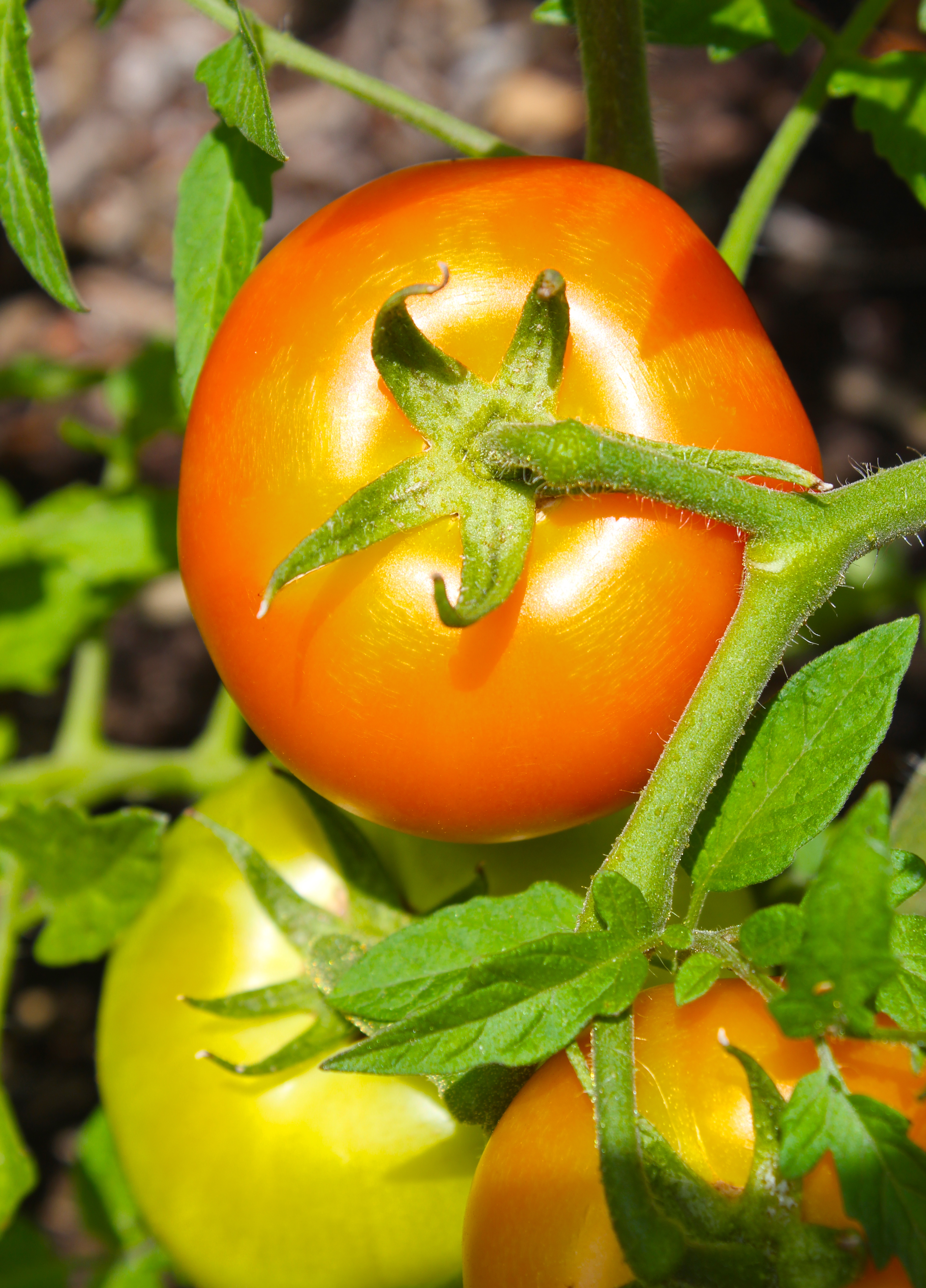
July’s garden calls the devoted gardener to kneel next to the tomatoes and keep a vigil—for it is bad luck to grow them and not be the first to eat them. The Feast of the First Tomato is never scheduled. When the time comes, the wild gardener plucks the chosen fruit, adores it, and then eats it.
The Feast of the First Tomato unravels the wild gardener’s soul.
She builds a blueberry-beaded rosary, anoints every berry with her sweat, and prays for everlasting sunshine. Then she collects the blueberry prayer beads into a bowl and feeds them to her family.
July’s garden responds to the wild gardener, emoting and inspiring more primal desires through performances of sultry, blooming, botanical ballets. The show won’t go on forever. But the wild gardener is smitten and chooses to spend the rest of her life believing it might.
This is how the gardener ended up married.
This is how she ended up with children.
This is how she learned she would never find the inside passage to Eden,
without first running around outside—barefoot—
through clover fields, buzzing with bees.

 Excursions