Emerging From Covid

Family Letter #16, during a time of writing letters to my family when the Coronavirus Pandemic dominated our lives.

Mid-April, 2021

Hello to all from the other side. Yes, it happened; an evil variant of the coronavirus got me. It got my son, too. The two of us are now mutant Pokemon ninjas after high fevers melted our brain to mush; and, we have inside info on a common new disease no one knows much about, but all of us thought we knew plenty about. My precious son became my light through the brain fog after his four days of fevers broke. He said: “Don’t read anything about the virus on the internet Mom! It’s just going to freak you out!” Alas, his warnings came too late; I had already freaked myself out over and over, googling everything I could about a vicious contagion that excels at being unpredictable. My fevers lasted six days and I don’t know where I was transported to during those days, nor do I know how to manage the altered brain that continues to slosh around inside my aching skull. At times, while in the depths of my fevers, a persistent craving for homemade cake with buttercream frosting hovered on the edges of reality; yet if a piece would have been presented to me, I wouldn’t have touched it. Food just doesn’t taste the way I dream it should. The saddest lingering effect of my bout with the coronavirus has been the discovery that I’m no longer a chocoholic nor can I drink much wine and beer. I hope this cruel joke reverses itself someday soon, and I’ve even created my own version of a chocolate rehab routine: I try to eat a small piece of chocolate each day, or a half-dozen chocolate chips. This ought to get me in shape for a campfire-roasted s’more, stuffed with an exquisite square of classic Hershey’s chocolate, by summertime. As for the wine and beer, my head remains too sensitive to headaches to relax and enjoy liquor.

About two weeks after I got sick, I set off on my first substantial walk. My husband agreed to accompany me into my favorite woodlands down the road since I wasn’t feeling as perky as I’d hoped. Although a pair of house finches had distracted me during the darkest days of my fevers by choosing to build a nest in the Japanese Umbrella Pine just outside my bedroom window (and I was so grateful to watch them flying back and forth hard at work), I missed my daily rambles to catch the spring arrivals of wood ducks and other birds in places beyond my gardens. I’ll admit, as soon as I arrived at my familiar trailhead, it seemed I’d gone too far from the security of home (it’s only a quarter mile away), and as soon as I began walking, it felt like I was trying to climb Everest without an oxygen tank.

However, I made it to my favorite beaver pond and got all excited about tramping across the sturdy dam those industrious, plump rodents had sculpted from locally-sourced mud. It’s so  fascinating to marvel, close up, at the construction work of beavers and, to me, it’s amusing and endearing to spy hand-like paw prints pressed into the mud.  My feelings of elation at being in the great outdoors soared into the stratosphere and knocked me right off my feet. When it happened, I fell (as expected), into a pungent glop of New England springtime mud, but only because I tipped to the right as I went down; had I faked right and gone left, I would have landed in the cold pond. No drama or excitement added pizazz to the fall; I simply wobbled and toppled, like a rag doll who for a brief moment believed she had bones and muscles. One week beyond my mud-thud flopover, I returned to visit the beaver pond again—this time all by myself—and tried navigating, one step at a time, that balance beam of gorgeous mud. Success!

And so, I write my Sixteenth Letter of the Pandemic as a walking-wounded survivor of the sinister disease that has crushed every level of human life on Planet Earth for more than a year, with no signs of letting up in too many parts of the world. For our family, March came in like a lamb and went out like an angry, restless, pissed-off lion (as opposed to sticking with the script, and coming in like a lion and going out like a lamb). We had watched the last piles of snow melt away; had swept up the debris of nearly two cords of wood which kept the fires in our hearth going throughout a long, cold winter; and, we’d set off to greet spring by searching for wood frogs, peeper frogs, pussy willows and migrating birds. A crazed, competitive, and somewhat humorous chase for vaccines had ensued all around us. At the same time—and unbeknownst to us—a dangerous line of cruel thunderstorms were about to wallop the shores of what we had long believed were our own safe harbors. 

In fact, because I was so sure we’d weathered the pandemic as best we could and were about to sail forth into our new lives on calm seas, I’d spent the last weeks before our vaccine appointments re-reading a book one sister gave me a long time ago on how to change my life by tidying up my household. (Maybe you all have already read the book:The Life-Changing Magic of Tidying Up. It’s good!) I was revisiting the book in response to America’s impressive vaccination campaigns, which were gaining steam and causing serious feelings of pandemic peer pressure to torment me. I wanted to emerge from lock down—post-vaccine—as a new and improved version of my pre-pandemic self. To me, it really did feel like the pandemic was going to end soon, yet my house (and brain, in the opinion of the book), was still a mess. According to the book, I needed to put my past in order, reset my life, and take the next step forward by getting rid of all the useless bric-a-brac cluttering up my house and my head.  The pandemic had already refashioned us into a one-car household when I gave my car to the kids in Brooklyn after theirs broke down forever back in August. (With a work-from-home lifestyle, it was obvious we only needed one car.) All I had left to do, before getting vaccinated, was to focus in on a plan, a process, and a deadline for tidying up everything. If I did, my fresh and improved self would be in a great position to thrive in the weird new world. I was doing a pretty good job at following the advice in the book! And then, wham-o, the virus interrupted my momentum and crushed my aspirations. 

It will come as no surprise to hear that being so sick for so long gave me a lot of time (probably too much time), to think about all the things I’ve gotten right and all the things I’ve gotten wrong in my life. I couldn’t focus on reading or watching movies—even listening to music was difficult—so as I languished in silence, I promised myself that if I survived one of the world’s most terrible diseases, I would never worry again about what I got wrong in life! I would only celebrate my triumphs. 🙂 I know my son and I are beyond fortunate.

* * * * * * *

More than ten years ago, I planted a pear tree near my deck. It’s about to burst into bloom. When I sit in my house looking at it on this late April day, I notice that at any one moment, there can be more than seven different kinds of birds foraging for insects and/or sweet blossoms on that one tree. Do the birds know they are different from one another? I hear them compete for—and establish—territories, with their songs and unusual behaviors, but on my pear tree, each avian appears unhurried and quiet as they concentrate on searching for food. Beyond the pear tree, two magnolia trees are blooming; a yellow one and a pink one. My Yoshino cherry tree is blooming, too. The Yoshino’s fleeting and dazzling blossoms are one of nature’s truest, ephemeral heart stoppers; I love standing under the tree when the flower petals are falling in a breeze.  Out in my front kitchen garden, the Bonfire Peach tree is ablaze with its showy, vibrant pink flowers. Soon to pop, after all these early spring bloomers, are the wonderful redbuds and crabapples. Meanwhile, the old birdbath nestled in the garden near my unique Sourwood tree crumbled into ruins this winter after relentless loads of snow and ice were too much to bear, at last. I remember how the birds used to show up for bath time in previous garden seasons by taking turns while waiting on the branches of surrounding bushes and trees. They never shared the bath the way they share the pear tree. 

* * * * * * *

A week ago, I opened up the motorhome to get it ready for a new travel season and soon heard a phoebe singing from a branch in one of the white pines nearby. It boosted my spirits to notice they’d returned to my gardens for another spring and summer. On the same day, I realized the juncos had flown north until next fall. Later in the evening, I looked up at the night sky and caught the constellation Orion slipping further and further away. It’s a good sign that my life is  getting back on track when I feel a specific sort of regret—not for what went wrong in days gone by or for what will never be—but for what I might be missing out on, in real time, if I don’t stop to smell the flowers and partake in the seasonal joys of my own unique and special life here on Planet Earth; the only place, for all we know, where life has ever—and will ever—exist. 

I don’t know what my new “normal” will be as I heal from my bout with the coronavirus. What I do know is this: As long as Mother Nature’s enchantments are still making my heart skip a beat, it’s because my soul, at least, remains afloat and ready to set sail.

And as long as my soul is alive and well, so am I.

This pandemic letter was completed on May 3rd, 2021, at Skidaway Island State Park, Georgia. We arrived here after a week camping on the North Carolina side of Great Smoky Mountains National Park. Writing is more difficult for meta complete at the present time. It’s tiring to concentrate. I’m on the road with my husband for a month, traveling and working through the south. Now, more than ever, I look at the craft of writing as a way to heal from Covid 19. It forces me to keep concentrating, thinking, and multi-tasking. As usual, it’s the arts that can be so healing. Included with this letter is a star-shaped leaf from the American Sweetgum Tree. (Liquidamber styraciflua.) The tree is native to the southeastern United States. They tower all around my outdoor writing spot at Campsite Lucky #13, along the coast of Georgia where historic islands of many kinds are woven together with vast marshlands and rivers.

Willie. Weed. Luck.

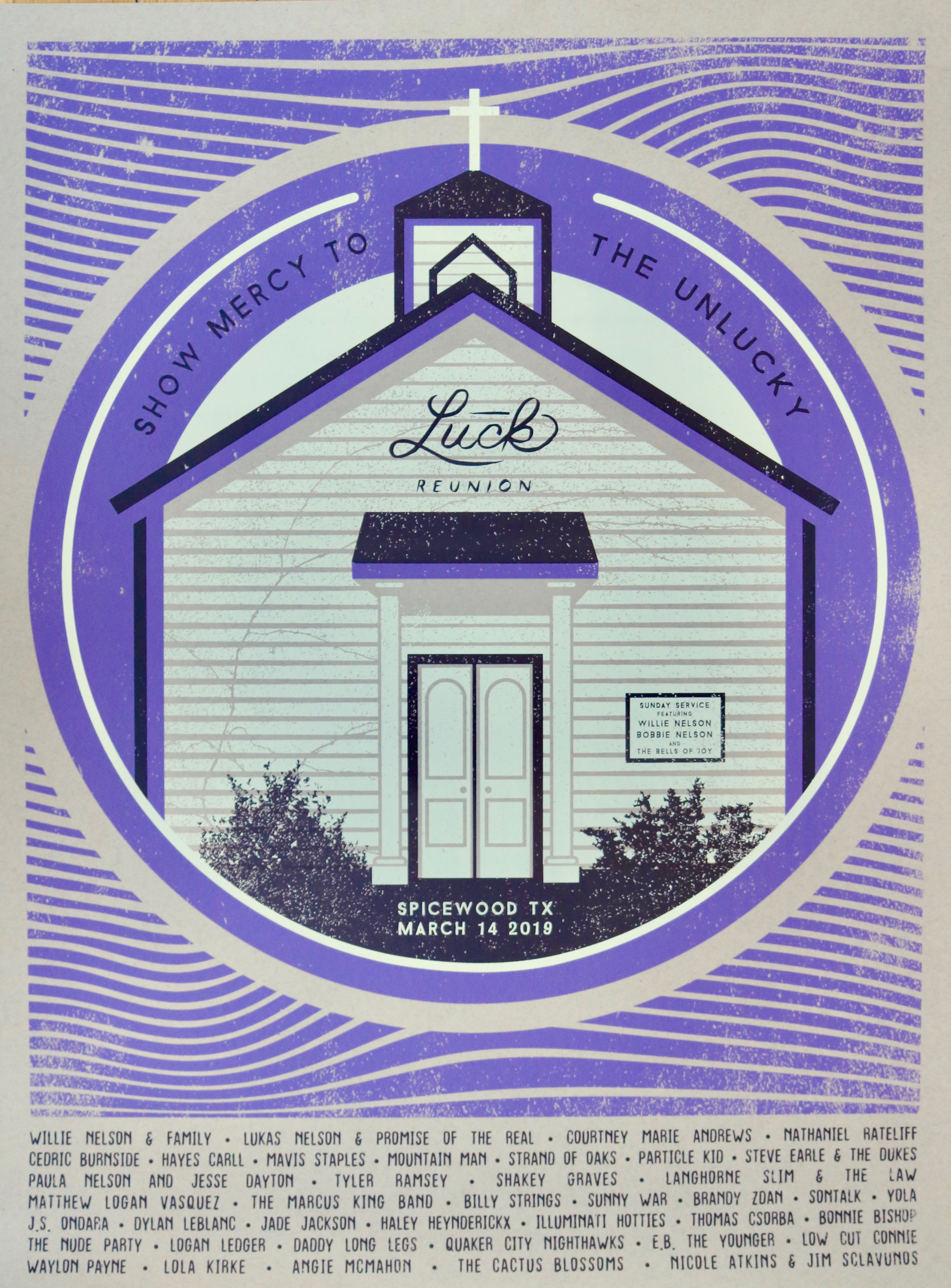
A radiant Willie Nelson beams through a veil of marijuana smoke on the cover of Rolling Stone. It’s May, 2019 and he’s eighty-six years old. The photo was taken March 15th, one day after Willie rocked Texas Hill Country at an exclusive, intimate music festival he hosts known as Luck Reunion. Some critics said Willie’s performance this year at Luck was his best in the eight years since the festival began. He still tours, too. How does Willie do it? He gives a lot of credit to weed. He also notes that loving well and working hard continue to keep him in the game. And, there’s this: Like me, Willie is a self-proclaimed sentimental and nostalgic sap.

I know all of this because recently I became a little obsessed with Willie Nelson. First of all, his music has always been a part of my life; everyone knows the man is a legendary American roots music outlaw. (He’s also an American stoner outlaw; a country boy raised by his grandparents during the Great Depression who went on to became a longhair more apt to smoke a bong than drink a beer.) Second of all, several years ago Willie came into my life unexpectedly through the mail. Thirdly and best of all, this year Willie came into my life just in time to redirect a run of bad luck. The fact is, there isn’t anything more exciting than getting blindsided by luck. And when it comes to Luck, Texas style, Willie is the man.

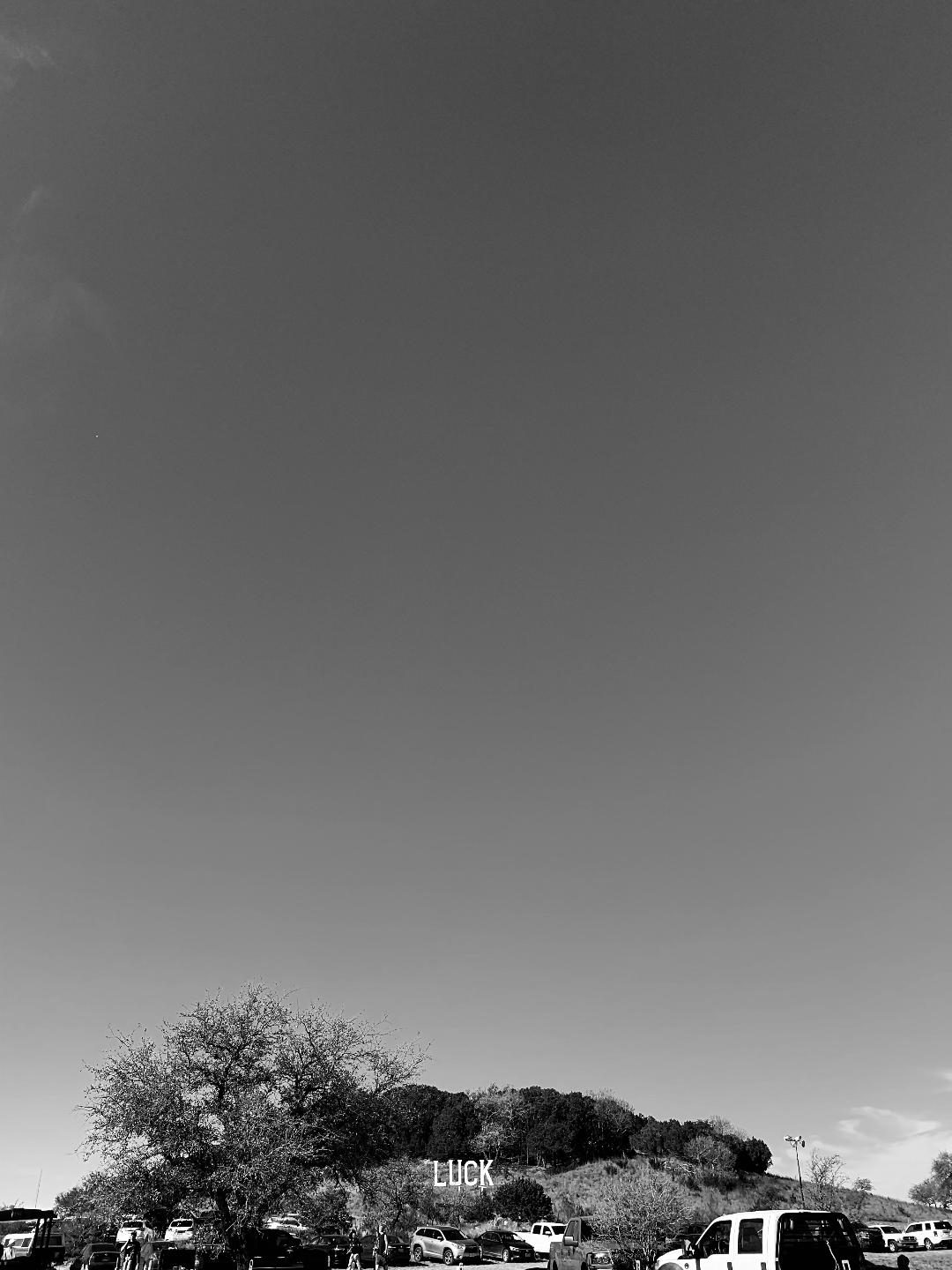
The Luck Reunion Music Festival takes place at Willie’s own Luck Ranch in Spicewood, Texas just outside of Austin during the days of the SXSW Music Festival. Tickets are hard to come by and highly coveted. To keep things fair and prices right, Luck Reunion uses a system of four lucky draws. If your name comes up, you can buy two tickets. Only about 2,000 tickets are sold, so if you never win a draw, you are basically out of luck because the chances for scalping tickets are slim.

If you do get lucky and have a chance to make it through the gates at Luck for the festival, you’ll enjoy a full day of the best in American roots music on six stages, you’ll get all drinks on the house, you’ll find the best in local food creations and art, and, of course, you’ll get to hear a grand finale featuring Willie and his family band (yes, that includes his kids and Sister Bobbie) delivering one hit after another with all the feel-good fun you would expect from a successful, satisfied Texan. The entire scene won’t just get you high, it’ll get you feeling sentimental and nostalgic, too. Turns out, science is beginning to extol the benefits of healthy doses of weed, sentimentalism, and nostalgia. But the funny thing is, if anyone has become the unexpected poster child for the joys of weed and faith and fun and luck, it has to be Willie Nelson.

* * * * *

I first heard about Willie Nelson’s Luck Reunion in late February of this year at the same time a long run of personal bad luck seemed to be gaining steam instead of puttering out. My new year, from the get-go, had been defined by bad news: The diagnosis of a serious, painful, chronic illness (son), two consecutive, compromising injuries (husband), life-goal roadblocks (daughter), and serious injury (sister). The crappy blends of bad luck not only cancelled (at the last minute) our traditional family trip and our yearly skiing adventures, but it also snuffed out a few dreams, flooded the worry chambers of my racing brain, and just plain bummed me out.

So after groveling through the early months of 2019 like a timid mouse without a Pixar contract, it finally happened.  Luck came my way and when it did, I found myself taking a second look at a misfit guitar hanging on my wall. The one everyone makes fun of. The one that arrived in the mail, from across the country, in a flimsy, torn-up cardboard box. Somehow, the guitar escaped harm. It was more ornamental than instrumental, nevertheless I hung it up on the wall next to other guitars that are played all the time. Why did I hang the guitar up? For two reasons. One: The guitar was purchased at a charitable auction by my brother in a spirit of generosity. Not one to collect things, nor own much of anything, he sent the guitar to me because my husband, my son, and my daughter are all musicians and he thought we might like it. Two: The guitar was signed by Willie Nelson. Yes, of course there are thousands of charitable guitars signed by Willie Nelson; so it isn’t a rare thing to own. But Willie Nelson, himself, is a rare thing. He’s that rare human being who overcomes adversity, isn’t afraid to be an outlaw for art and activism, and doesn’t focus on bitterness, self pity, or despair in spite of running into (and through) more heart shredding episodes of bad behavior and bad luck than anyone deserves. He’s also open minded. Willie Nelson is eager to reconsider long-held positions and take a look at situations from different, often better, perspectives.

Could it be? That the guitar on my wall was a good luck charm? Some kind of fate-filled talisman just hanging around in my home waiting for the right time to make me kick up my heels when all I wanted to do was sit on my butt and stare out the window? Because something kind of cool happened in February when I was sitting on my butt staring out a window on a wall just opposite Willie Nelson’s guitar. My son, the professional musician and an outlaw since long before he was born, called. “Hi Mom.” He said. “I’m playing drums with Lola Kirke at SXSW in Austin. We have two shows. We’ve also been invited to play at Willie Nelson’s Luck Reunion.”

My son.

Performing music as part of a day of peace and love at Willie Nelson’s ranch.

In Texas.

Where Willie Nelson would be performing, too.

I let those thoughts sink in for about a second before I bolted for my computer and looked up how to get tickets. No go. I’d missed all four rounds of the lucky draw. It was enough that I wanted to see my son perform, but then I discovered that the lineup included Mavis Staples. Mavis effing Staples. My heart beat faster. Both Willie Nelson and Mavis Staples are heroic outliers in the realms of American music and American activism. They’d been through a lot. Mavis marched from Montgomery to Selma. I wanted to go to Luck, Texas and get some inspiration from that kind of living history. I had to get to Luck, Texas. Spooky, but true: our family trip, which had been cancelled due to illness and injury, was to have been an excursion to Big Bend National Park near the Rio Grande in Texas…

stared up at that Willie Nelson guitar hanging on my wall again…

It’s impossible to express the feelings of excitement that kept washing over me as I realized my son would be a part of a peaceful celebration of music and history and passion and art and food and drink hosted by Willie Nelson at one of Willie’s most beloved homes. The mission statement on the Luck Reunion website made every sentimental and nostalgic drop of sap running through my blood simmer with high hopes that luck would get me there: “…Luck Reunion is a movement dedicated to cultivating and spreading the culture of Luck, Texas and the evolution of our American roots. Our goal is to attract and celebrate musicians, artists, and chefs who, like the outlaws and outliers before them, follow their dreams without compromise. By collaborating with a group of creators who share our vision, we aim to celebrate the legacies still among us, while lifting up a crop of individuals who share a respect for those who blazed the trails before them. We are on a mission to cultivate the new while showing honor to influence. Join us in preserving the legacy of Luck, Texas.”  (If this mission statement makes your heart flutter, go to the website and get on the mailing list for next year’s lucky draw.)

As February ended, and March began, I still hadn’t heard from my son about tickets to Luck Reunion. I considered writing a letter to Willie Nelson and pleading with him to let me in. I repeatedly checked the Internet for ticket options.

Nothing.

And then one Sunday night, three days before the 2019 Luck Reunion,  I heard a twang near the Willie Nelson guitar hanging on the wall. It was my husband’s phone. I knew it had to be my son texting us. I closed my eyes, crossed my fingers, and hoped to fucking die…and go to Texas heaven.

The text: “I can get you in.”

My husband and I flew to our computers and booked flights, a car, and a little cabin near a lake. I bought Willie’s book, It’s a Long Story. My Life. I watched videos of Mavis Staples. We asked friends which acts they thought we should make sure to see. (All of them!) I pored over maps and decided we’d stay near Austin for the music, then spend time touring through the wildflowers of Texas Hill Country and the history and riverwalk festivities of San Antonio, then return to Austin and fly home. It would be a pilgrimage; because when it comes to religion, I believe in good luck and bad luck. I also believe in the laws of physics. Good luck has to follow bad luck, eventually.

As fast as I could (the trip was only a few days away), I scrambled to pack my things and button up our house and affairs so I’d have some time to start dreaming about sitting with a heaping plate of smokey Texas barbecue and a tall glass of crispy American beer. I sighed just thinking about my clothes getting drenched in the sweet, smokey scent of Big Texas Dreams. If bad luck had taken away hikes with my family in Big Bend and skiing powder in the Canadian Rockies with my true love, you can bet your country-girl boots I sure as hell would take the trade of listening to live music while strolling the dusty lanes of Luck, Texas where Willie Nelson holds his unique party in the ruins of an old west town he built to film one of his movies, “The Red Headed Stranger.” (He nurtures rescued wild horses on his ranch, too!) Furthermore, my son was scheduled to play with Lola Kirke in the Chapel. I love chapels. What could be better than a chapel where the altar is a stage for music? At Luck, the chapel is one of the most intimate stages with great sound. The lineup at The Chapel was superb. In fact, the lineup at the entire festival kept my stomach filled with butterflies. After being down on my luck for so long, I couldn’t wait to lift our spirits in Texas Hill Country.

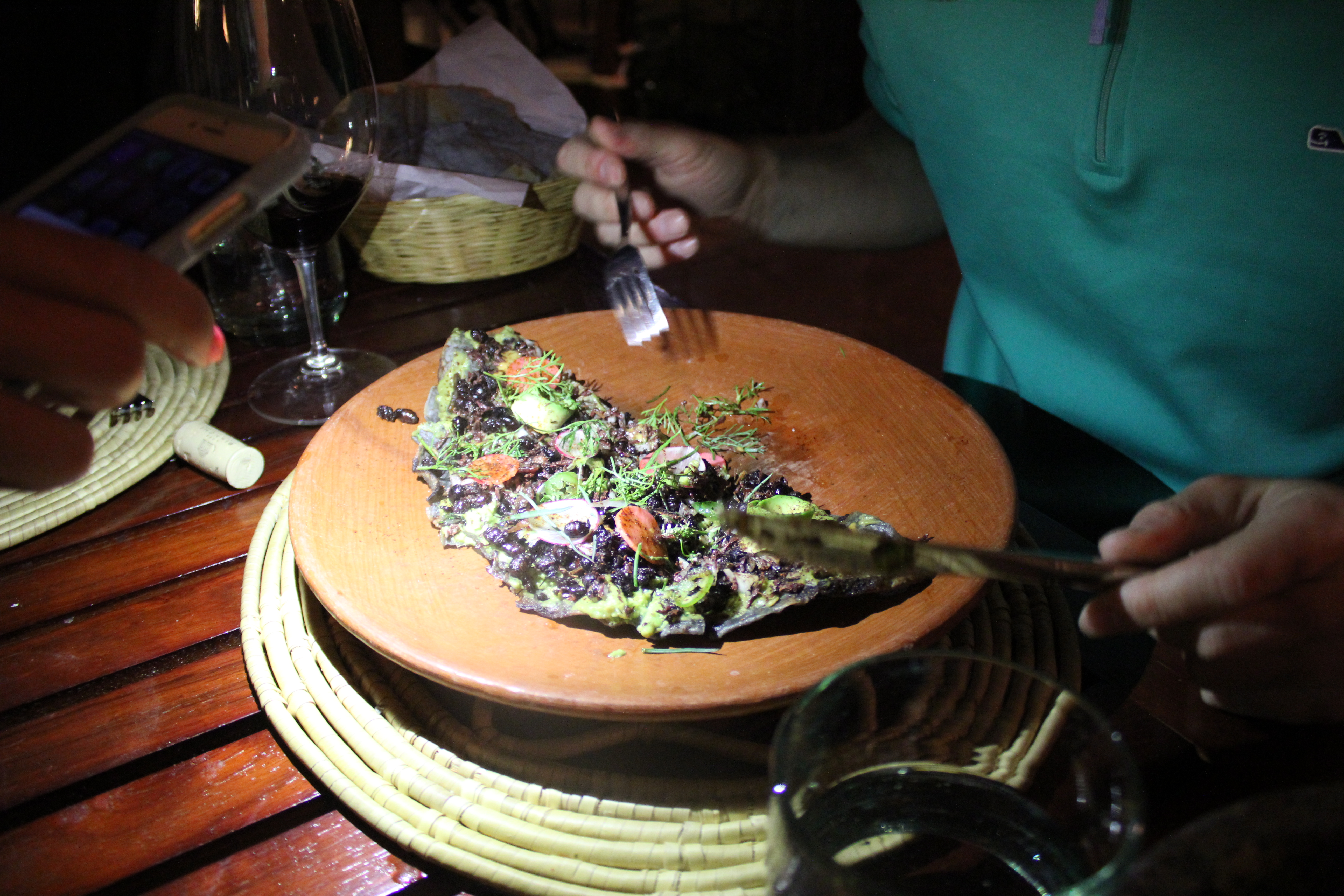
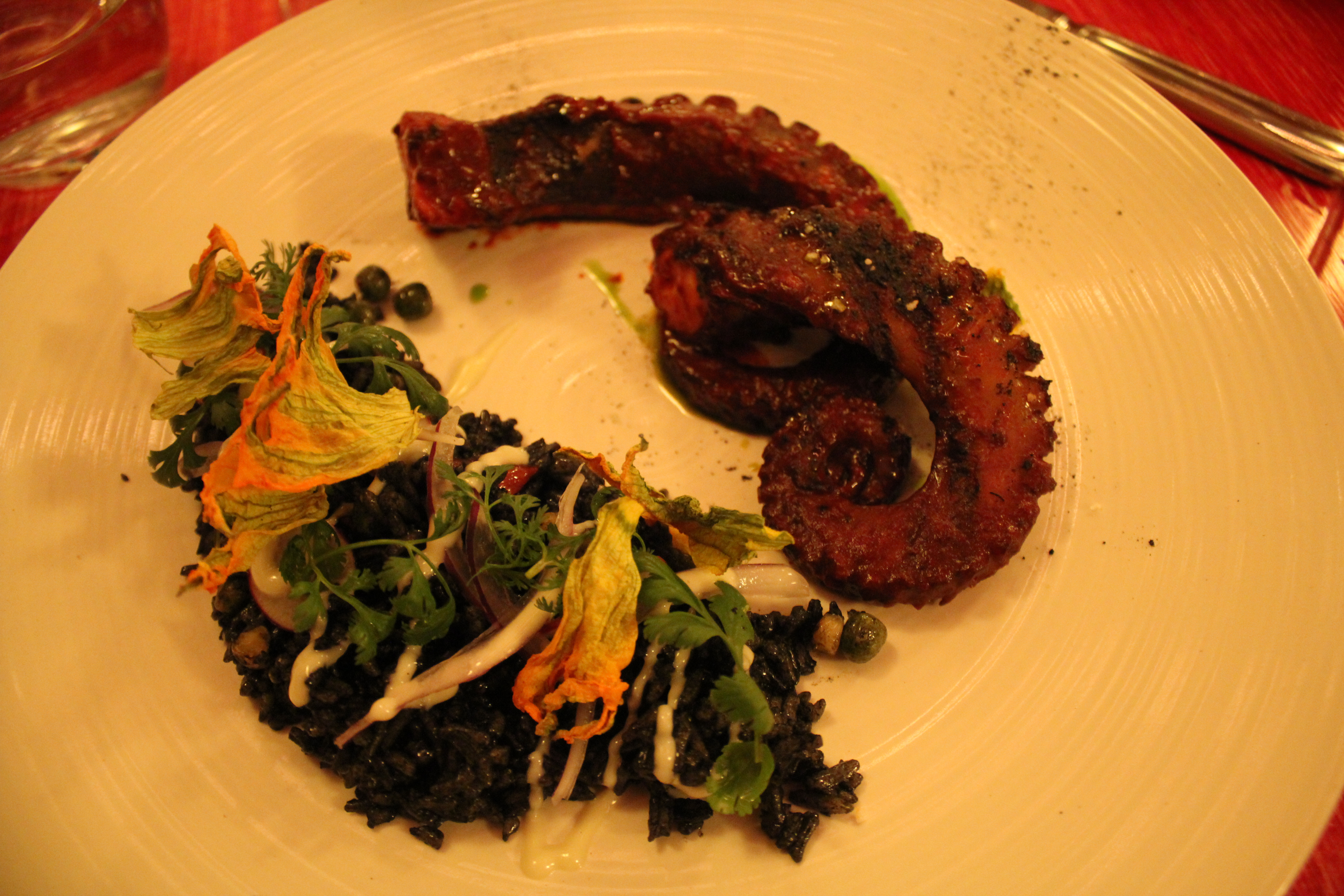
And so we did. We started out on Rainey Street in Austin, fully energized by SXSW revelers. To our great joy, we found a Oaxacan restaurant down the street from the club where my son was booked to play with Lola Kirke. What a blast.


The next day was Luck Reunion. We didn’t know the details of how we would get into the festival, so we lined up with everyone else, living on a prayer, hoping our names were on a guest list. Eventually, the nerves were too much for me. I held our place in line and my husband went looking for some information. When he returned, he brought two, sparkling VIP passes for the parents (us, of course) of one of New York City’s most dedicated outlaw musicians.

The wows kept coming all day. Fabulous details like fresh flowers on tables and elaborate shrines to the departed souls in American music enhanced the feeling of “being a part of the Luck family.” Hearing and watching as many outstanding musical performances as we could, made us feel so fortunate. In fact, we didn’t stick our VIP passes onto our clothes. We kept them carefully protected inside our pockets. One can never have too many lucky charms.

IMG_2585

As for inspiration, it was everywhere. When Mavis Staples took the stage—a stage dedicated to female artists—nostalgia flooded forth. She started with “Slippery People” by the Talking Heads. She belted out “Freedom Highway,” the first protest song her father wrote at the time of the tragic case of Emmett Till and just as the famed Staple Singers were joining Martin Luther King’s fight for civil rights in America. She finished with a fresh performance of “The Weight,” inviting the female performers at Luck on stage to join in. Here’s a fun fact: The iconic version of “The Weight” performed by The Band…for the Last Waltz film…the one with those soulful gospel voices… features The Staple Singers. Pops sings a lead and so does Mavis. Pull it up on the Internet and give it a listen. (That injection of nostalgia? Those chills? It’s all good for you.)

Mavis Staples hasn’t let a bit of her soul wilt. She still believes in the power of music and she still believes in her ability to lead the people forward through her art. She’s almost eighty-years old; totally blessed with superpowers. And how about the way “respect for those who blazed the trails before us” plays out among the up and coming crop of new musicians invited to Luck? My son drummed out Lola Kirke’s new rendition of Rick Danko’s “Sip the Wine” at Luck.

Before Willie Nelson took the stage, my son herded us into the VIP area for something to eat. He showed up with a barbecued (or maybe it was roasted?) alligator head. I hesitated. “Mom.” He said. “Peel away a piece of meat and try it. Don’t you want to say you ate alligator head at Willie Nelson’s ranch?” Like a lot of strange meats, it tasted a little bit like chicken. Then my son said, “I just found out we’re going to be playing at Bonnaroo.” As if the day didn’t already have enough excitement to it.

IMG_2609

Willie and his family band took the stage at about 11 PM. It was an epic concert under the party lights of one man’s grand Texas dreams. Willie played hit after hit; every song a crowd pleaser. How the heck does he do it? As he writes in his book, he is a sentimental man. And, like I said earlier, science claims there’s something to be said about the benefits of allowing sappy vulnerability to soothe your soul. Willie writes: “My eyes are closed, my prayers are aimed towards the heavens, but in my gut, I don’t feel worthy of so much good fortune. I sing okay, I play okay, and I know I can write a good song, but I still feel like I’ve been given a whole lot more than I deserve…The fuel is love—love of people, places, animals, plants, water. Love of sound, love of space, love of fireflies and star-filled skies. Love of life. Love of home.”

Seems so simple to believe in love. But it’s not. More Willie: “I’d had my share of low moments, but I was learning that there’s always something you can do. You can train your mind to look up, not down and not back.” But then again: “I try to live in the present tense, but I’m always aware of the power of my past.” If you read Willie’s book, keep a computer handy for the interactive experience of listening in on the extensive varieties of music he’s studied and performed both on his own and with a thrilling collection of the world’s greatest musical artists.

Hope to see you at Luck Reunion next year!

IMG_2625


Whiskey river, take my mind

Don’t let her memory torture me

Whiskey river, don’t run dry

You’re all I got, take care of me


IMG_2560


The Chapel at Luck.


20190314_130627


IMG_2604

Lola Kirke and band in The Chapel at Luck.


IMG_2536

My son and his friend Lola Kirke after their gig in Austin at the SXSW Music Festival.


20190314_152710

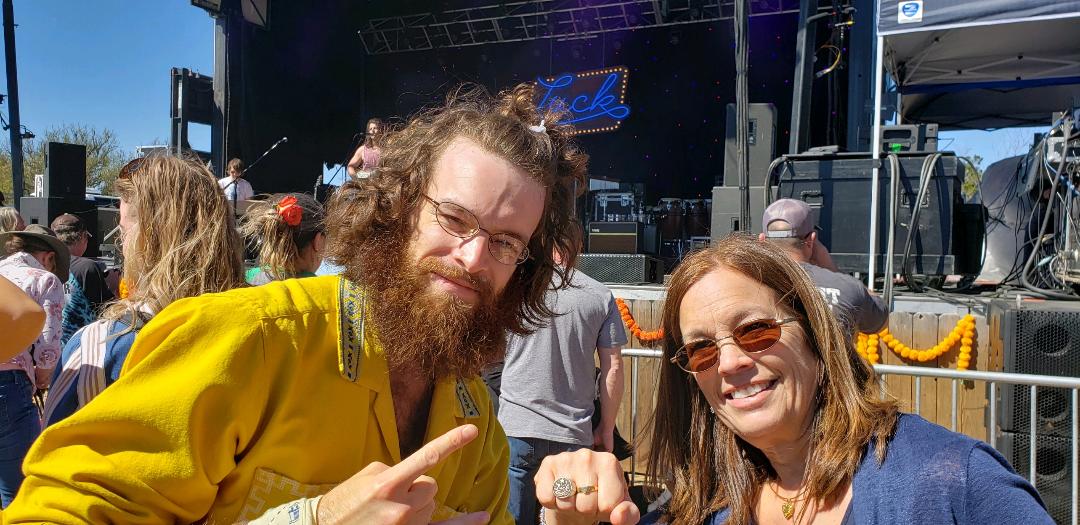
All performers are presented with an exclusive Luck Reunion ring and become a forever member of the Luck Reunion family.


IMG_3086


IMG_3090


IMG_2641


IMG_3223


Music is magic. It not only takes us back, but also leads us forward.

❤ Show Mercy to the Unlucky ❤

* * * * *


Enzo Ferraris Aren’t Just For Dudes.

Let’s go on a road trip with a Young Dude I used to know and become our 9-year-old selves. It’s May. Temperatures in New England are rising, so we’ll take the Enzo Ferrari out of storage.

Young Dude will be our driver; we are placing him in command of the super sexy cockpit. Our Enzo Ferrari is red. SO RED. (Believe it or not, Young Dude and his dad know the owner of this dream machine—one of only 400 to ever be created on Earth.)

IMG_5934

Blessedly, it’s 2018 and roadways still exist for the classic pleasures of motorcar cruising. We won’t be alone on the roads because as soon as the fruit trees are blooming and the honeybees are zooming in the northeast—upsy daisy go the garage doors of car enthusiasts everywhere and from those protective chambers emerge some of springtime’s most beautiful babies—born when art, design, and beauty feathers a nest with power, speed, and technology.

Young Dude plans to catch frogs, turtles, and snakes along our routes. If we drive past rock shops he’ll pull over so we can all take a look, though we all prefer finding rocks and fossils on our own. As for snacks, we’ll be totally bummed if seasonal ice cream shops aren’t open yet.

Our driver Young Dude is an Uber Dreamster. He dreams all the time. He dreams unconsciously and deliberately and, some would say, irresponsibly. Young Dude is driven more by his dreams than his grades and it appears he is on track to flunk out of fourth-grade. If that happens, we are down with blasting into the sunrise with him. In fact, we’ve hatched a plan to drive our Enzo off the cliffs of Schafer Canyon Road in Canyonlands National Park, which would be more like a runway for the Enzo because everyone knows our Enzo can fly.

(Note to driving enthusiasts everywhere: Schafer Canyon Road in Canyonlands National Park in Moab, Utah is a still-surviving terrifying roadway. If you haven’t already done so, drive it before they pave it, put up guard rails, and install a toll booth. Our family did it in a big Yukon. A complete and memorable white-knuckle frightfest.)

* * * * * * * * *

After our road trip, Young Dude drives the Enzo Ferrari to school where he glides the work of art into a conspicuous parking place in the center of the playground.

IMG_5940 2

He gets us to school just in time for English class.

The teacher hands out a writing assignment.

Ready? Remember, we are nine years old and we are trapped in the fourth grade.

Here’s the prompt: Write about a magic stone that when you skip it across a pond, it comes skipping back to you. 

* * * * * * * * * *

Here’s Young Dude’s unedited story, penned when he really was nine years old (a long time ago) and he was my happily-obsessed-with-all-things-cars-trucks-planes-and-trains son.

Dude and the Awesome Pebble

     Once in a strange time, there was a weird place called Dudeland. Everyone wore sunglasses, Hawaiian T’s, and shorts and greased back hair. And there was a curious little 9-year-old called Dude McDude. He loved Lamborghini’s and Porsche’s and Ferrari’s and any other kind of sports car. He had a friend called Dudical O’Dude. One of their favorite things to do was to swim and skip pebbles. So here is the radical story about Dude and the awesome pebble!

One day, Dude and Dudical went for a ride in Mr. McDude’s radical Baja Beast. They were headed for a lake in Lamborghini Land. After about fifty billion light years, they were at the stoked lake. They immediately put on their Hawaiian-designed swim shorts and jumped in to play a game of “Lamborghini Diablo.”

They saw all kinds of fish: the Dudefish, Dudish Idol, Picasso Dude, HammerDude Shark, AngelDude, and the Puffing Dudey.

When they were done swimming, they started to skip pebbles. Dude skipped two, then Dudical skipped two. Dude skipped his third. It did three skips—but then began to skip backwards! He pondered. Stumped, he put the stone in his pocket, walked up the sandy beach, and left.

That night, he remembered the stone. Did it really mean something? Yes! He knew it did! He pulled the pebble out of his pocket. Whoa! It was glowing silver in the shape of a Diablo SV! He passed out and fell asleep.

The following morning, he woke up and looked out the window. The sky was blue, the grass was green, the driveway was filled with Diablos…wha…Diablos?! He took the pebble out of his pocket again. But it was now glowing red in a Porsche shape! He looked out into the backyard and saw…Oh Boy…

* * * * * * * * *

Oh Boy is right.

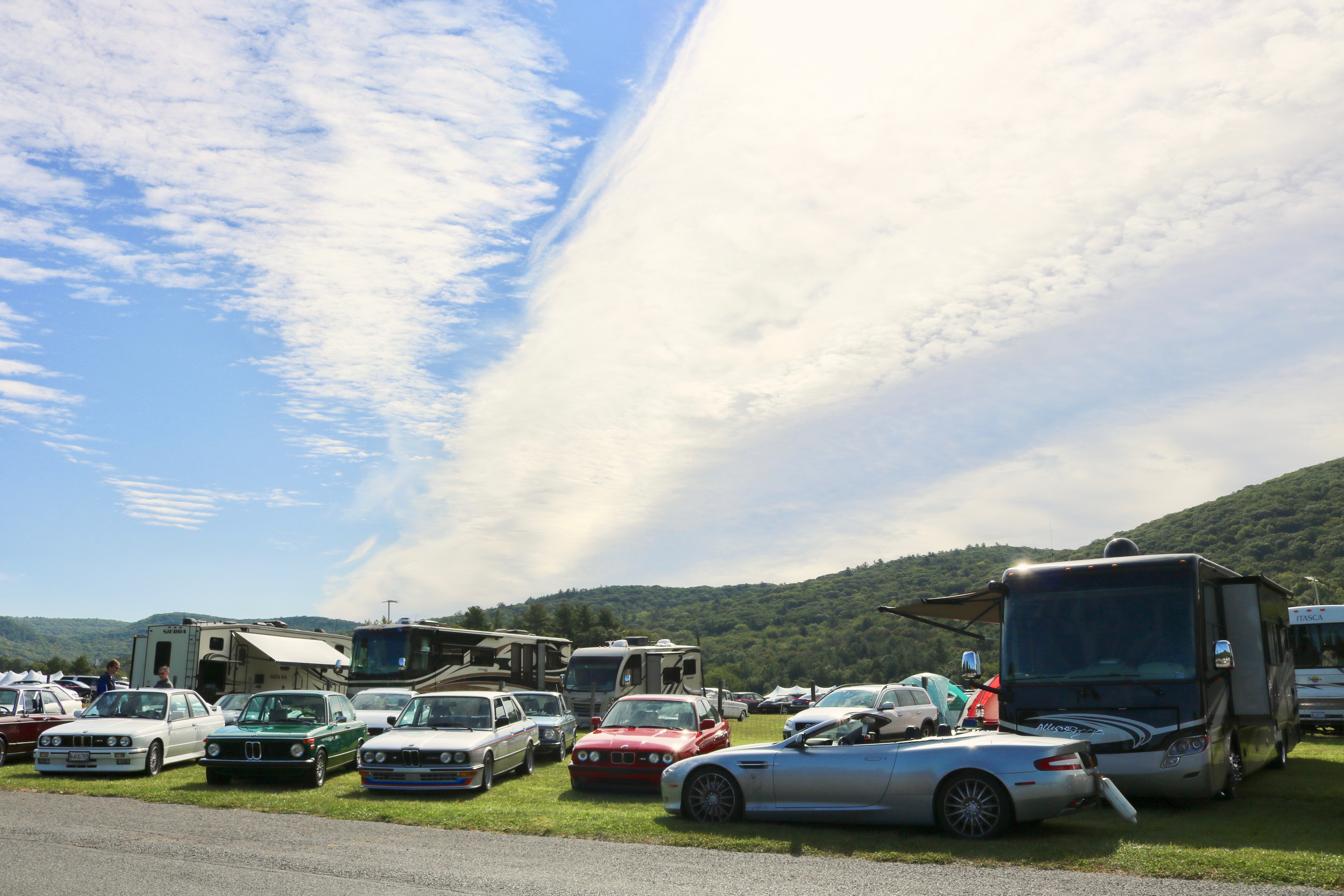
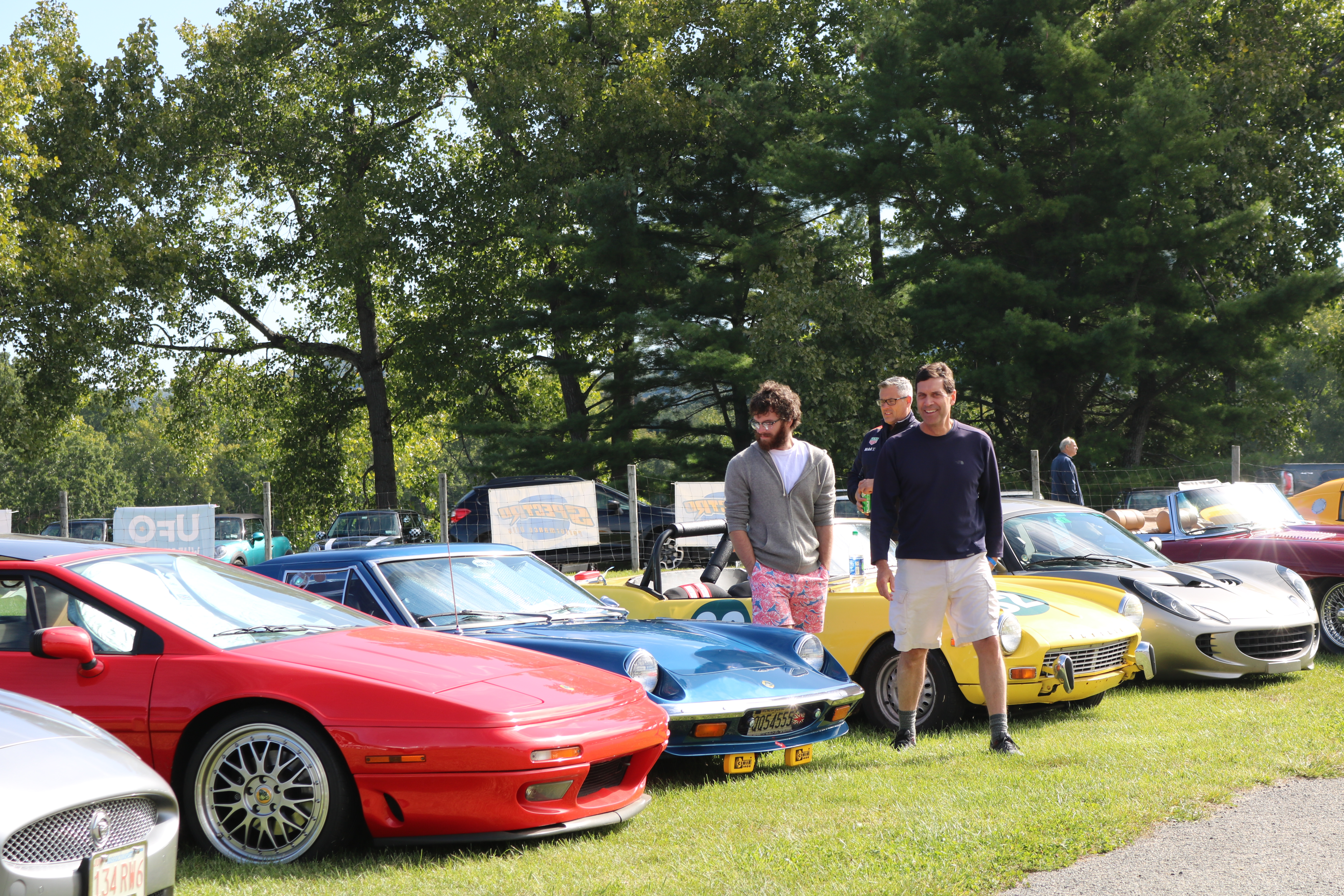
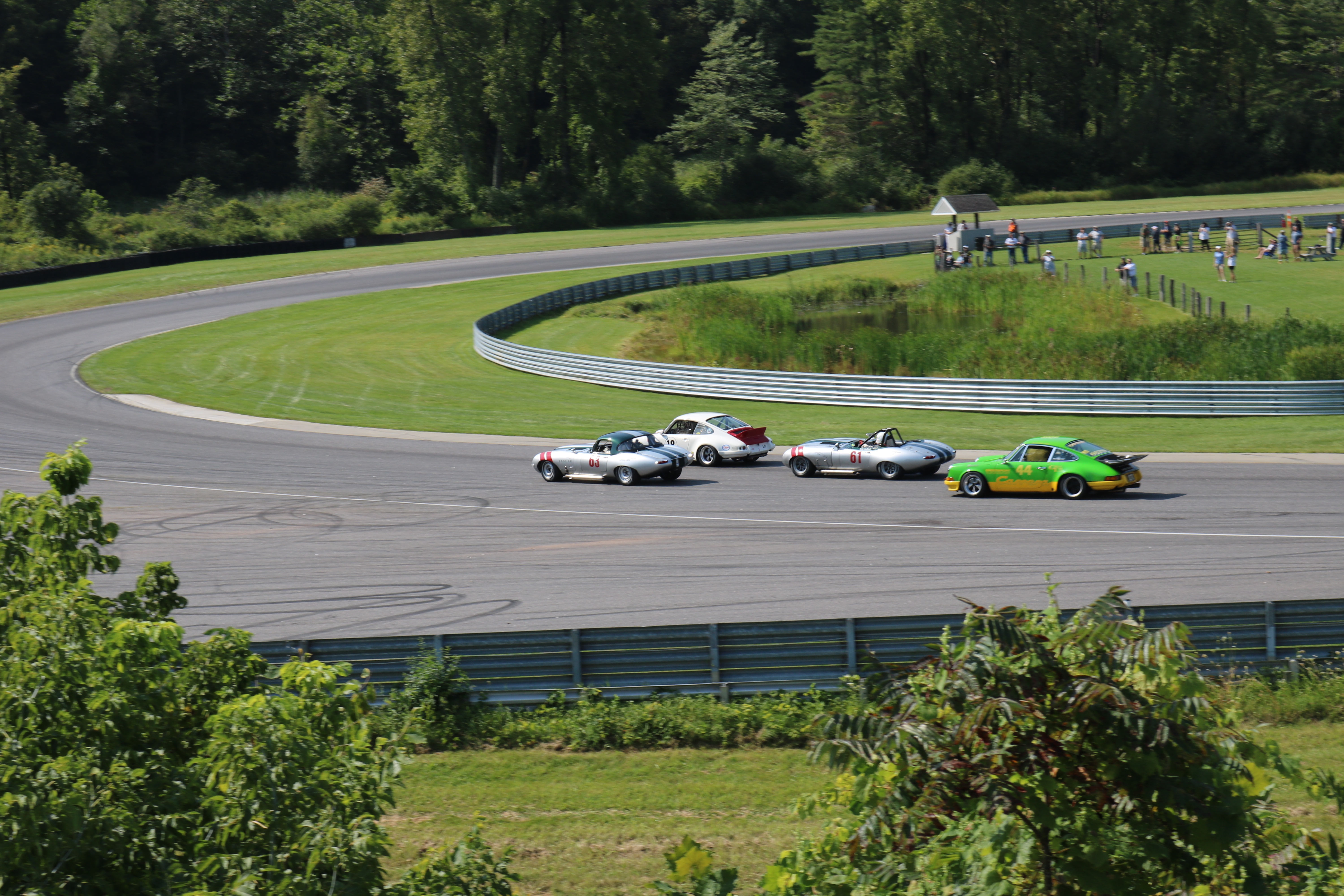
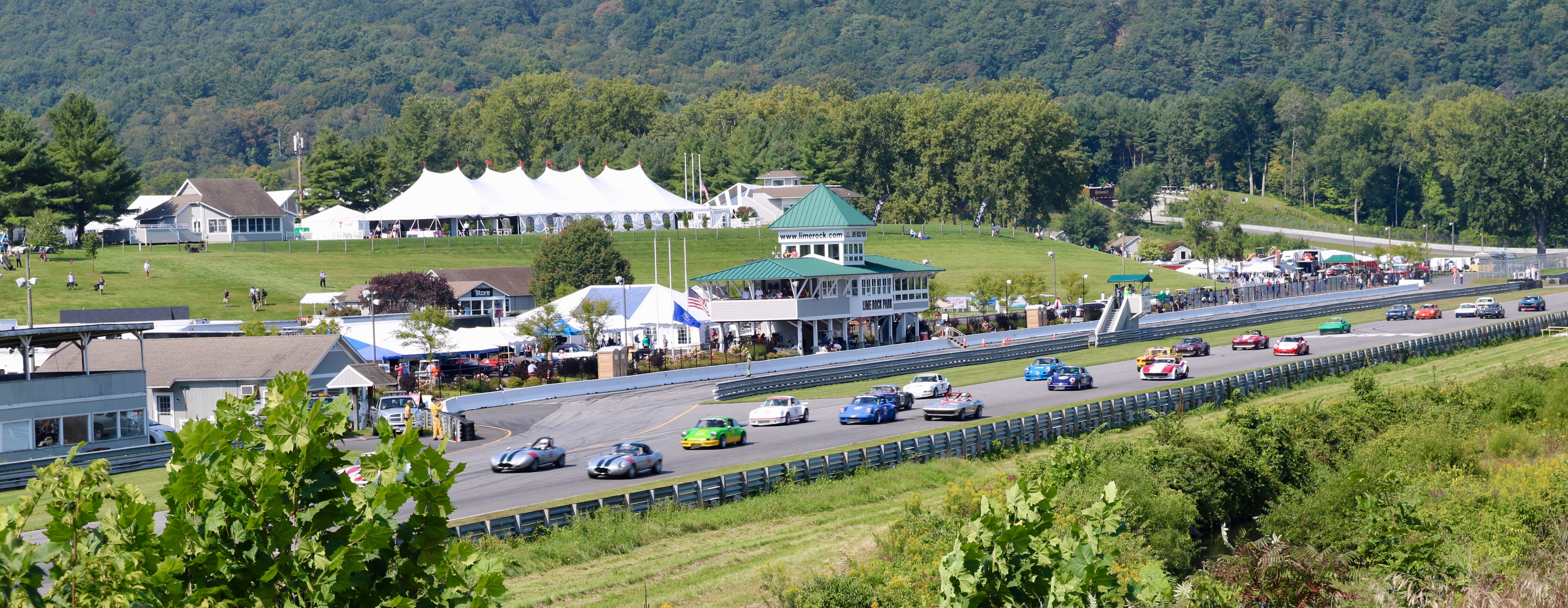
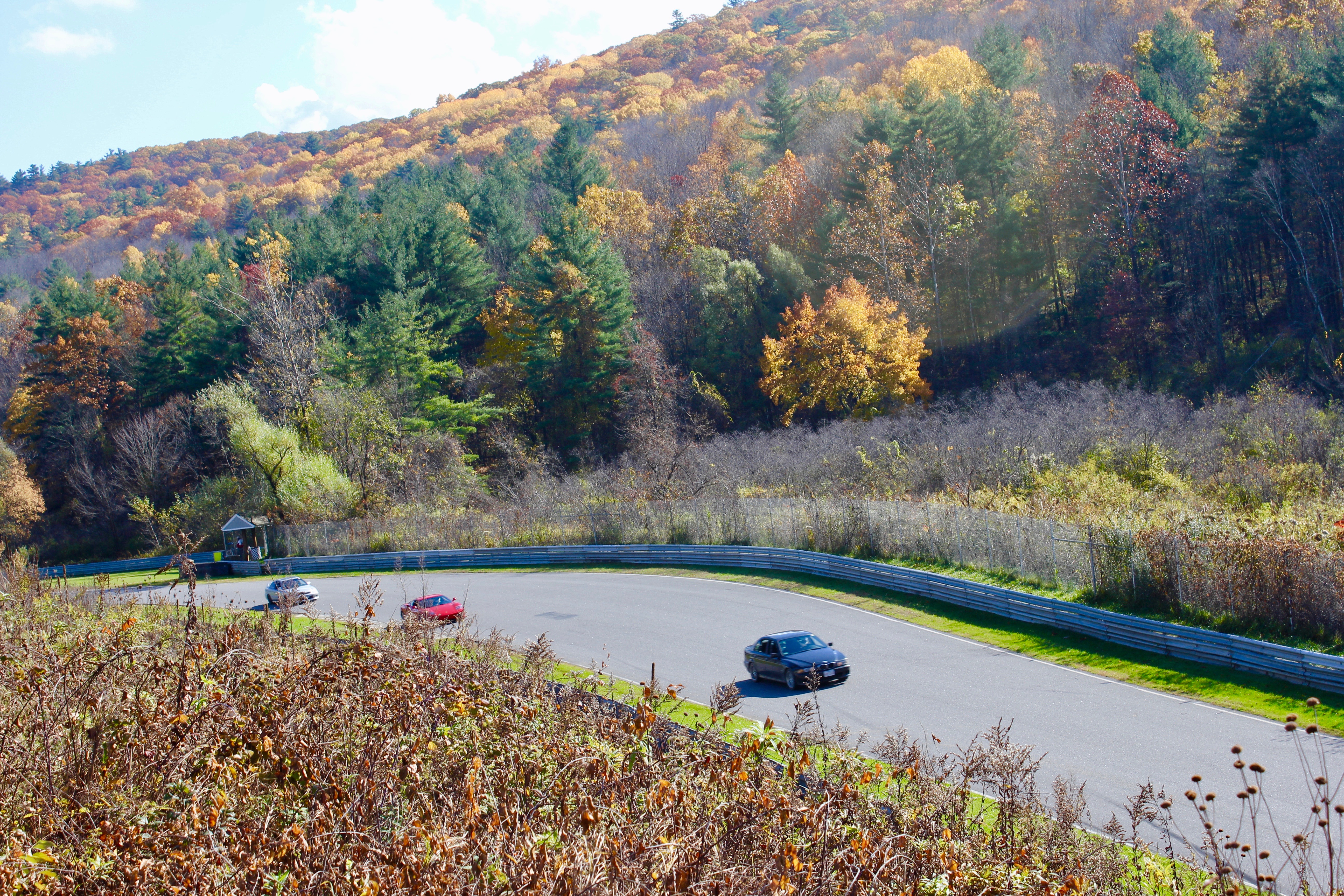
My life as mom to a natural born automobile enthusiast has been enriched by my son’s quests for speed, gorgeous design, and history as told through the stories of people affected by similar, lifelong passionate pursuits. Therefore, last year my husband and I finally reserved a patch of lush green grass on the infield of the race track at Lime Rock Park in Connecticut for three days of camping with some of the most beautiful cars still being driven—physically and mentally—by Uber Dreamsters fast around a race track. We set up our gypsy glam wagon while our son set up a tent amid BMW’s, Porsches, and exotic British Sports Cars. It was Labor Day Weekend when Lime Rock Park hosts Historic Festival and although we’ve been going to Lime Rock Park since my son was a little boy, we’d never attended Historic Festival.

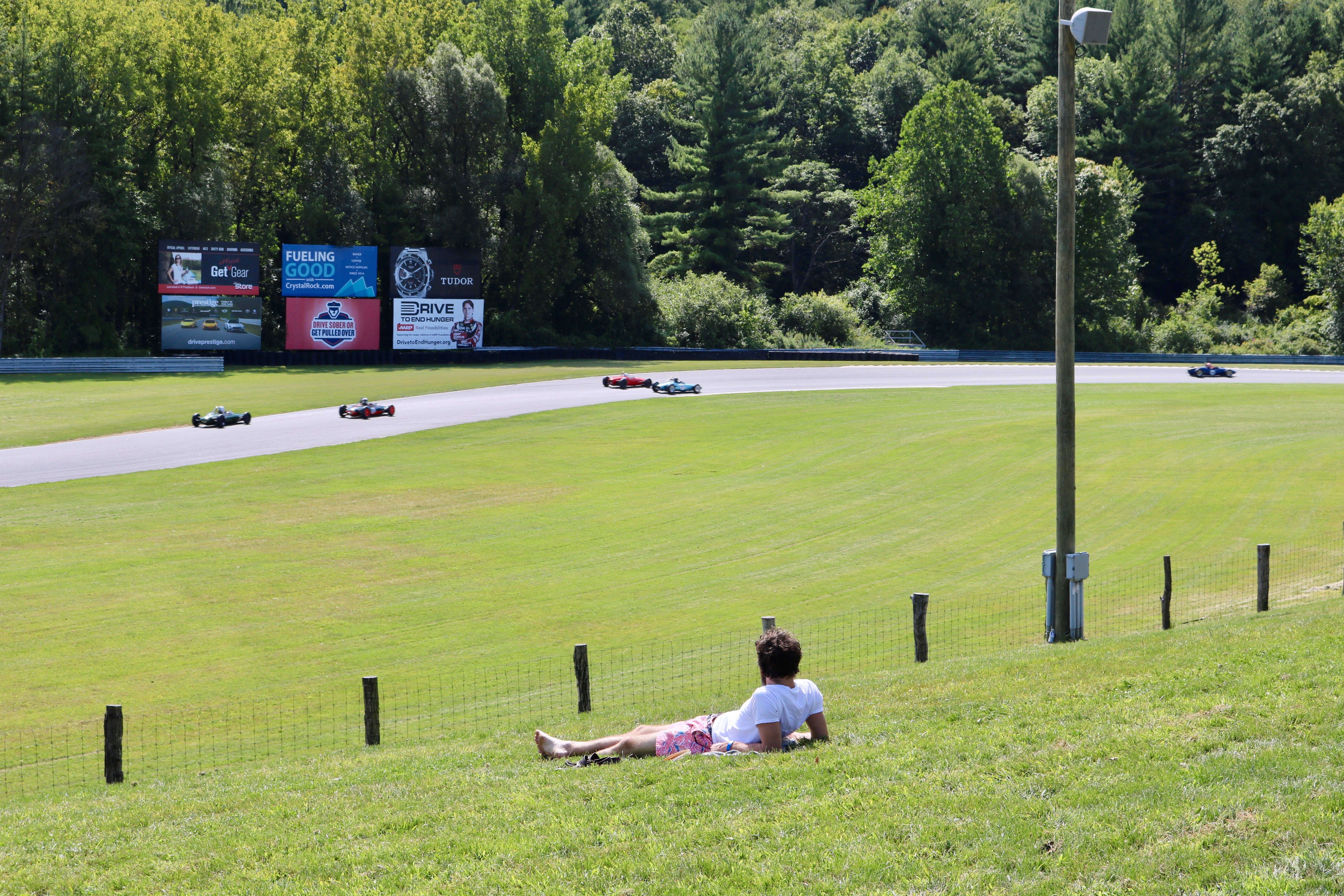
The festival is jammed with vintage car races, vintage race car and sports car parades, car auctions, and an event I recommend to all: Sunday in the Park—Concours d’Elegance and Gathering of the Marques. This is a special experience where more than 300 vintage automobiles along with their histories (as told by their devoted owners) are on display around the racetrack in a setting that becomes an interactive outdoor concert of story telling, wishing out loud, and gratitude—because it is always restorative to my soul to meet other  people who are willing to share their passions. It is also always fascinating to have history revealed through the front windshields and rearview mirrors of vintage cars and the goggles of devoted drivers. It rained hard for Sunday in the Park so I couldn’t use my camera to photograph the magnificent motorcars. But I did take some random pics during racing events on the sunnier days of the weekend.

If you or someone you love is an automobile enthusiast, you will understand how much I have enjoyed my newfound car-influenced experiences, all of which enhanced my life when I had a boy who loved cars and, through his undying obsessions, inspired me to become a bit cuckoo for them too. (Full disclosure, Matchbox cars and Hotwheels were some of my favorite toys when I was a little girl.)

It is indeed finally springtime in the northeast. As I notice flowering trees and shrubs, I am also smiling at the blooming of pretty cars zipping around on the roadways. As I listen to the spring peepers and wood frogs, I am also tuning in to the wistful conversations of winter-weary folk dreaming up plans for summertime road trips with unknown destinations.

Yet I can’t help but sense that there are, in our super-speedy modern world, spring breezes blowing in new directions. I wonder…how many more seasons will we hear the rumbling engines of drivers venturing out and about for breathtaking exhilaration on the open road? Or the calm cruise of country drives? Or the excitement of life-changing road trips that puts them in the cockpit of a motorcar where they take control over journeys that don’t need predetermined finish lines?

It’s true, self-driving cars hum on our horizons, ready to transport lazy minds and worn-out souls to nowheres. All I can think is this: How could such a machine ever know that as soon as life says you need to put the brakes on those dreams, it’s time to step on the gas?

* * * * * * * * *

Labor Day Weekend Historic Festival.

Bucolic Lime Rock Park, Connecticut. Trackside camping.

IMG_5837

Our campsite.

IMG_5833 2

IMG_5834


IMG_5891

IMG_5830

My son and I trackside.

IMG_5832

IMG_5829

IMG_5900

IMG_5917

IMG_5914 2


In the evenings, we rode our bikes around the racetrack as the local fauna made brave crossings on the now-quiet track.

IMG_5840


The legendary, super elite Enzo Ferrari.

IMG_5937

IMG_5936


In the evenings, after dinner, music other than the sounds of tuned engines by my son and his dad.

IMG_5864


When my son was not yet 12 years old, everyone looked the other way at Lime Rock and allowed him to try Endurance Karting for the first time in a field of racers much older and more experienced. The race was faster and more serious than I thought it would be.  The newbie racer finished fourth to his father’s and his father’s friend’s second-to-last and last place finishes. I was glad when that ended well.


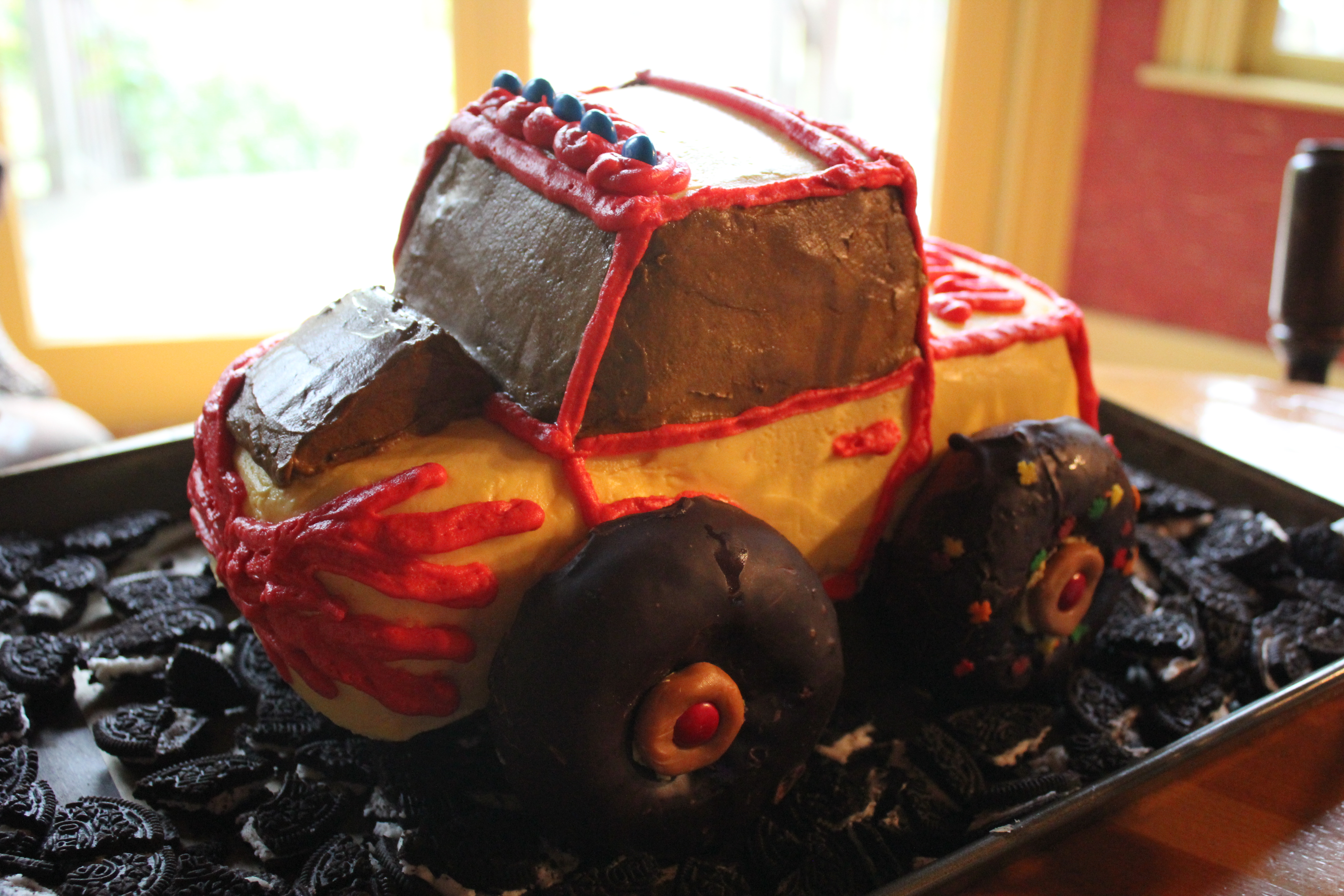
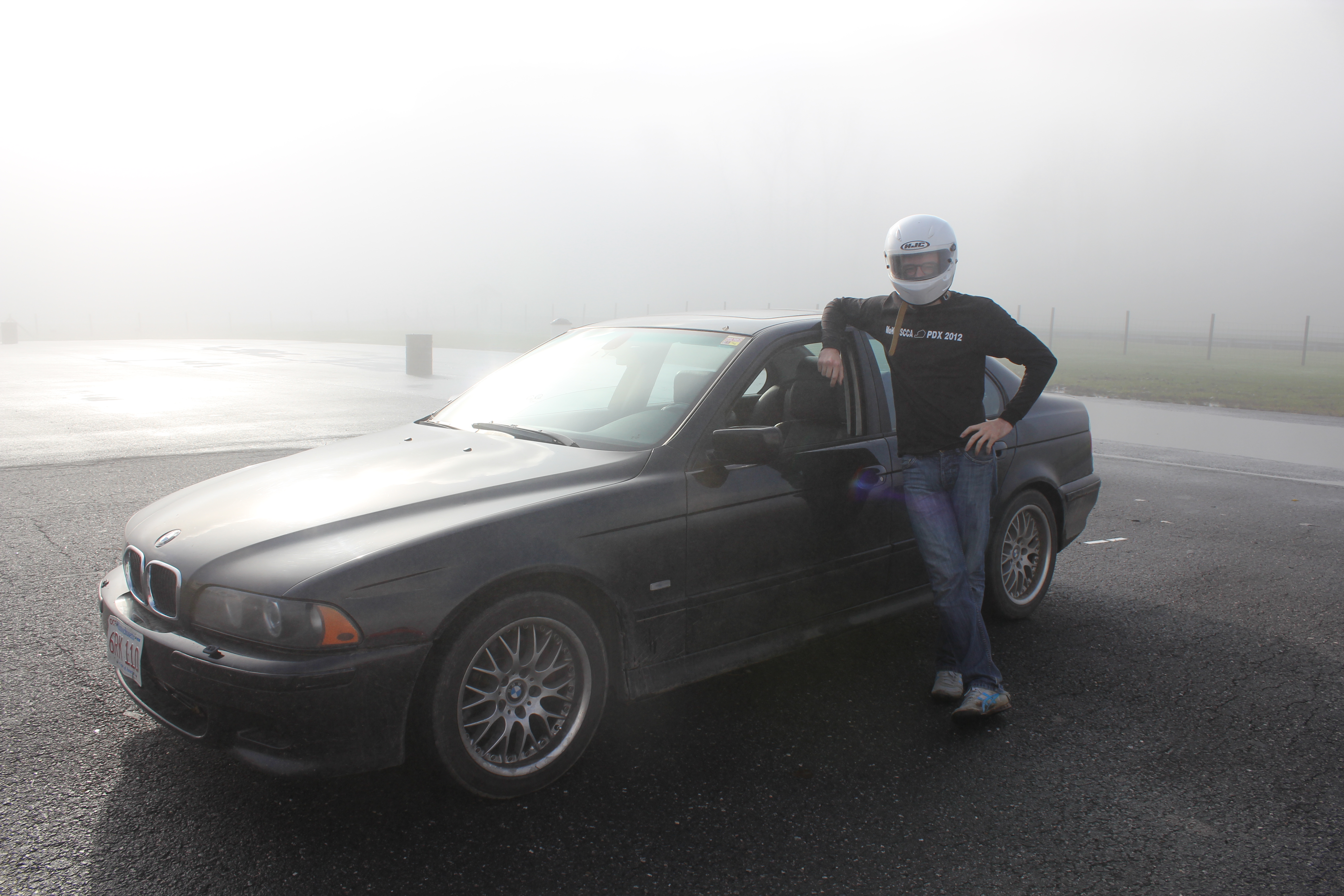
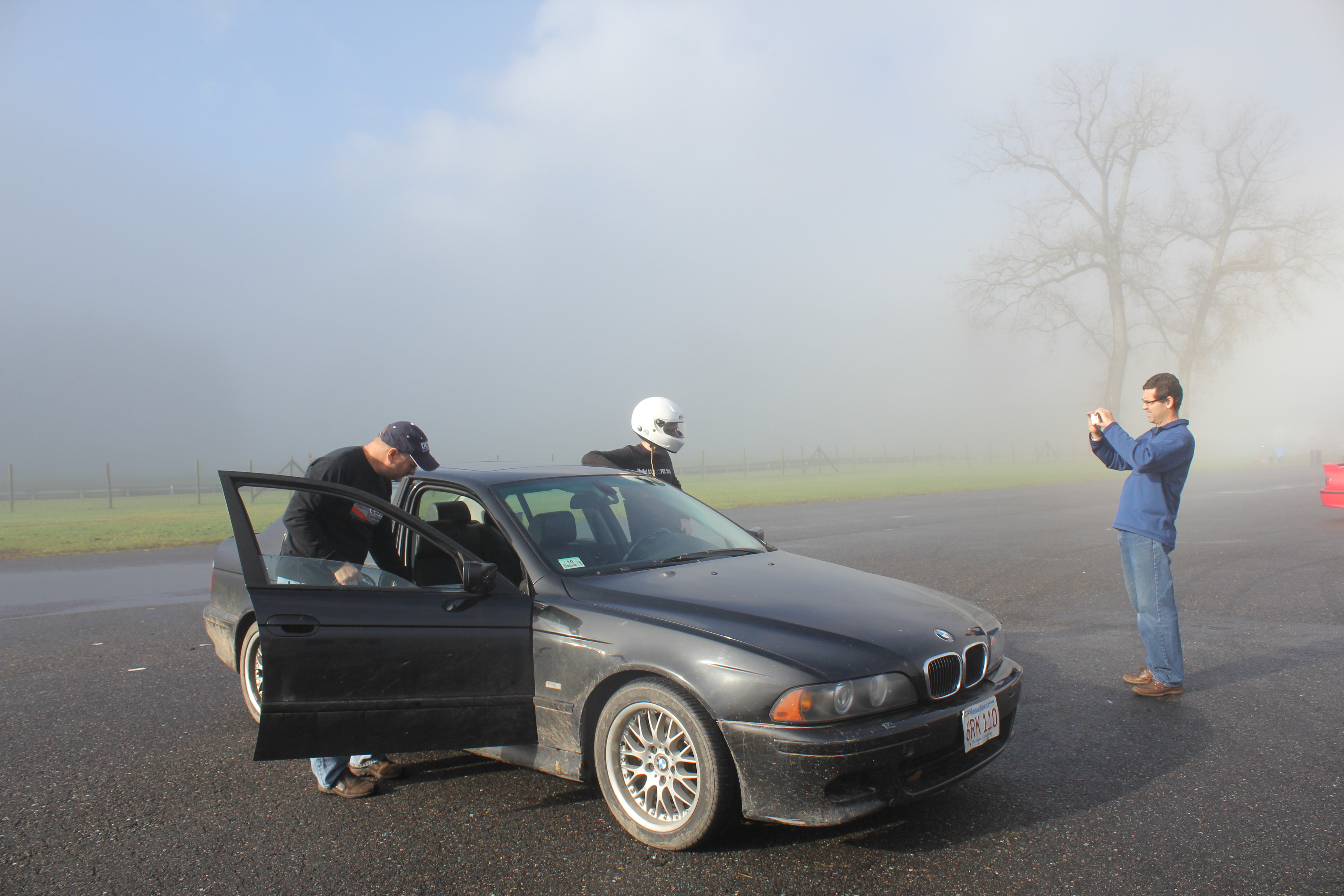
For his 21st birthday, I made my son a monster truck cake. (Donuts for the wheels.) We gave him a day of racing instruction at Lime Rock Park with professional drivers. He had to get his car track ready and show up before the sun was up and the fog had lifted for inspection. Then, he spent the day alternating class room instruction with on-the-track fast and intensive racing. He had one spin out which probably scared only me. Curious, I asked his driver to take me as a passenger during one of the professionals only races. The ride, without a doubt, was the most terrifying experience I have ever had. I didn’t like it at all. Nevertheless, I gained awareness and appreciation for the focused mind and intensely-skilled reflexes of a race car driver and the unbelievable heat a race car’s tires produce after speeding around a track!

IMG_1713

Ready to learn how to race.

IMG_1177

IMG_1178

Leading the pack.

IMG_1246

Sun setting over Lime Rock Park. Another day with cars when all ended well.

IMG_1512

Another experience of car racing lore which taught me respect for a race car driver’s necessary combinations of healthy body, healthy mind, speed, skill, and intelligence came my way on top of “America’s Mountain” in Colorado. Pike’s Peak is known for inspiring Katharine Lee Bates to write “America the Beautiful.”  It is also where the Broadmoor Pikes Peak International Hill Climb (“Race to the Clouds”) takes place offering all drivers climbs to 14, 110′ in little over 12 miles with 156 serious curves. The tales of this race enticed me to ride bikes down the historic roadway with my husband. Even on a bike, the hairpin turns were nerve-wracking for me. I would love to watch someone drive a car up this road, fast. (The speeds at which they do it are beyond impressive.)

IMG_0145

IMG_0141

Electric race cars already conquer the Pike’s Peak International Hill Climb. The EV’s (Electric Vehicles) can make the climb without concern for the altitude changes, which had always been a factor throughout history due to the loss of power as internal combustion engines react to diminishing oxygen in higher altitudes. (I think. Or something like that.)

IMG_0148


I gave my son’s first car, a Cozy Coupe, a new name for him: the Crazy Coupe. He could drive it without snow tires through New England’s most challenging snowstorms until spring.

IMG_1797


* * * * * * * * *


Bucket List Blues. Blacks. Double Blacks.

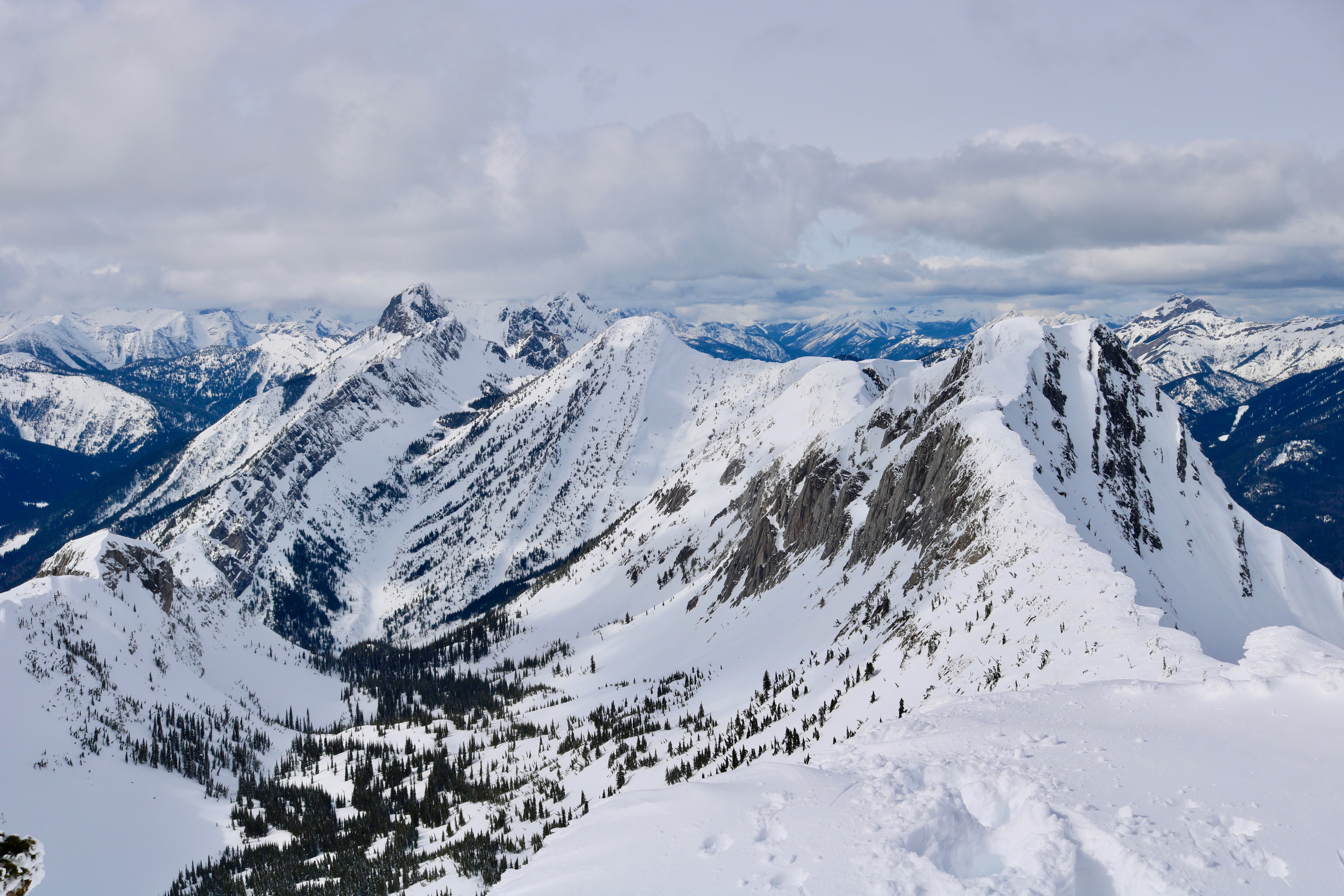
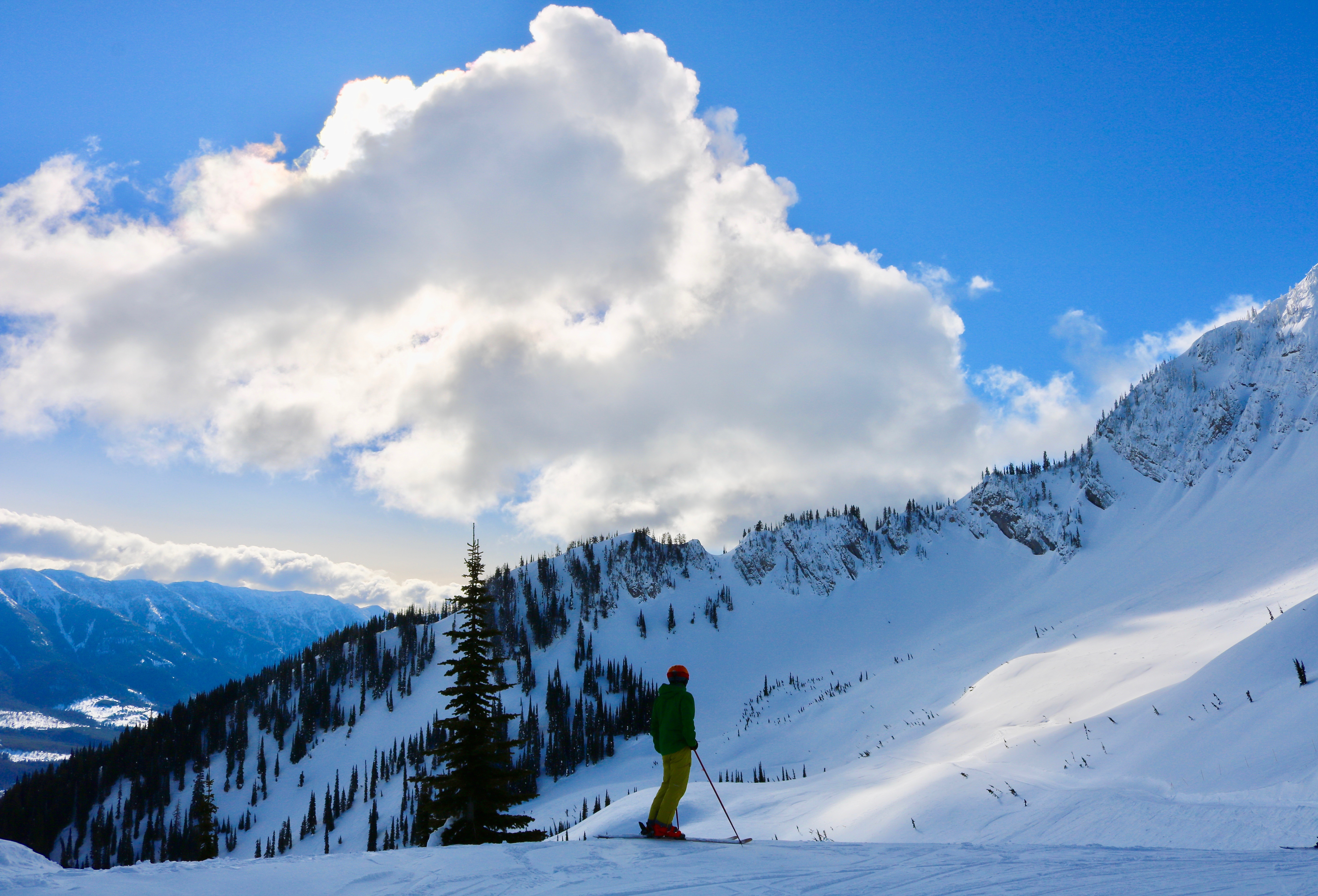
Views from the top of the Polar Peak Chairlift. Fernie Ski Resort.

IMG_9056


Early morning. First tracks.

IMG_9037

* * * * * * * * * * * *

Beams of pure, late afternoon sunshine are lighting up an expansive supply of fresh air about 7,000 feet above sea level in the Lizard Range of the Canadian Rockies in British Columbia. Heady hits of high altitude sun and oxygen clean out my lungs. My husband and I are gliding through this sparkling airspace aboard the White Pass Chairlift at Fernie Ski Resort. We introduce ourselves to a small man riding the lift with us. He says he’s from Ireland. It’s March 17th, 2018. Who wouldn’t feel a little bit lucky to meet an Irishman on St. Paddy’s Day while riding a chairlift?

Long, wide skis dangle from the ends of our chairlift buddy’s thin legs. He’s older than us, but not so old that we can’t relate when he starts recalling the halcyon days of hardcore skiing.  Back then chairlifts were slow and able to ferry, at most, two skiers per swaying seat to blustery mountain summits where experienced adventurers and foolhardy bandits often preferred to venture beyond the limits of a typical chairlift’s range. We did it by removing and then hoisting onto strong, youthful shoulders our skis, before hiking (in ski boots, always straight uphill) through deep snow or across slick, glare ice (routinely through pea-soup fog) to hidden headwalls, steeps, chutes, and virgin stashes of powder snow.

“And if we could’a! We would’a!” our chairlift companion sniggers, “hiked through the deep snow with our legs tied together! Just for the bragging rights!”

We nod and laugh because those classic days of yore were wicked fun and shockingly idiotic. Especially for me, a woman who didn’t grow up near any ski hills and, as far as I know, doesn’t even have skier’s DNA, with all its gutsy goofiness, schussing through my blood. Fortunately, the thrills of skiing don’t discriminate. Its charms will bestow blissful courage upon any knucklehead who, while skiing for the first time amid spectacular scenery, is willing to ingest (directly, from any passing snow cloud’s supply) the seemingly innocuous drug of one pretty snowflake, and feel the love

I fell (hahaha) in with a group of high-altitude (and attitude) yahoos when I decided, as a lonely, displaced, and curious college coed, that I’d like to learn how to ski. (There is nothing more unsettling to a moody introvert, who has landed in New England from afar, than the thought of spending long winters indoors all alone.) My new ski pals and I were sure we’d never get crushed in an avalanche, suffocated in a tree well, or broken to bits in long, long—so effing long—falls down steep, glacier-carved cirques. We didn’t wear helmets. We didn’t carry cell phones. We didn’t strap transmitters, shovels, whistles, or survival snacks to our bodies. We were members of a ski club based in upstate New York with a link to cheap farmhouse digs in the Mad River Valley of Vermont. I earned money to buy lift tickets for Sugarbush and Mad River Glen by selling my blood to the medical research lab rats at Boston University Medical School every week or so, on Fridays, before work. By the time I was anemic and a really slow bleeder (to this day, I can’t fill a pint pouch with donated blood), I could ski.

We were such a lucky group. Our club promoted ski trips to different mountains throughout the American west every ski season. I needed about six months to save for the trips and to get in shape for them, which meant that every August I became singularly focused on building wealth, building muscle, and building courage. As a wannabe schuss boomer, I had to teach myself to ski. But skiing with so many fearless yahoos (including the hottest skier in the bunch, my future husband) taught me how to get down steeps, chutes, moguls, ice, powder and crud, and in between trees without breaking my neck. If you’ve ever enjoyed the classic ski films of Warren Miller (may the Snow Gods rest his humorous heart and soul!) you know who we were: we were the ones who fell off chairlifts, dropped into chutes, and slammed our stupid asses against mountain boulders without nary a frayed hemline or bent zipper marring the neon-colored ski suits we wore. (It was the 80’s. Maybe our frizzed up and fluffed out, big hair did double duty as de facto helmets.) I remember a deep and glorious powder day in the glades at Northstar, Lake Tahoe. One of our friends, while flying through wisps of snow, snapped one of his brand new Volkl skis into two pieces of useless wood. He continued to sail over the treetops, weave through the tree trunks, and rip the rest of his run on the remaining ski until he zoomed right into the bar at the bottom of the hill.

* * * * * * * * * * * * *

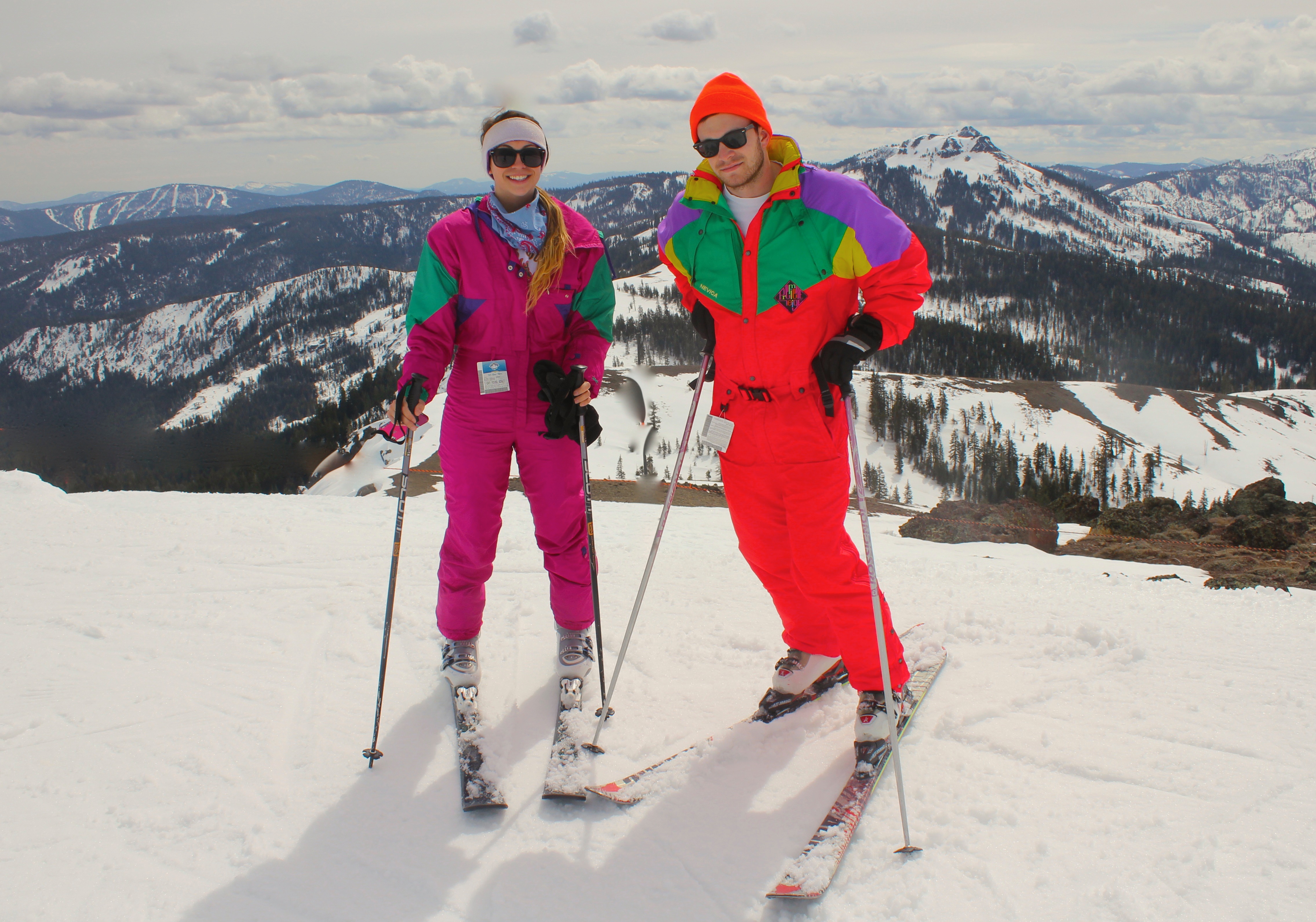
Just for fun (their idea not mine) my daughter and my son wearing my 80’s ski suit and my husband’s 80’s ski suit, respectively. North Lake Tahoe, 2011.

IMG_2047

* * * * * * * * * * * *

Way up in Canadian airspace at Fernie, our new Irish friend makes a chairlift confession: He has skied every single day of every single week of every single month, from the first chair to the last chair up, since Fernie opened for the season. Then he says he’s been behaving this way since coming to Canada from Ireland about seven years ago to retire. I say, “that sounds like a fun obsession.” He says, “You can call it an obsession if you want to.” Because to him, it’s not an obsession. It’s how he breathes. Soon, we realize that the powerful little Irishman is probably responsible for some of the impressive ski tracks down distant mountain peaks we’ve been admiring all week—the ones way, way, way up in the sky and out of bounds beneath curlicued, icy cornices where massive layers of snow bear down on steeps studded with rocky outcroppings and smeared with this season’s epic and oh-so-pristine snowpack.

Our chairlift buddy comes clean. Yes, some of those tracks are his. He tells us how he and his pals take the last chairlift up and hide out during final mountain sweeps conducted by the ski patrols. (All part of the local’s “forgiveness friendship club” we presume.) After the ski patrol has herded the rest of us to the bottom, the locals come out of hiding. They climb to dangerous summits and, if all goes well, are home in time for dinner after leaving gracefully arced, ethereal signatures carved into one of nature’s most beautiful and unstable natural substances—snow.

We’re almost at the end of our chairlift ride when our Irish friend notifies us that the Polar Peak Chairlift—easily accessible via a fast ski lane atop a ridge to our right—is up and running. The chairlift leads to cliffs and chutes above the treeline and is rarely open, our friend tells us, so we should go for it. “It’s worth riding up there if only for the views!” He says.

Just my luck! (But maybe not.) An “almost-as-ancient-as-the-mountains” acute nervous system response to the Irishman’s suggestion starts churning the lunch I recently enjoyed into a knotted clump. I know I will want to take that ski lift up to its spooky perch but, after I’m astounded by the views (while balancing on a slippery plot of mountaintop) (no doubt the size of a postage stamp) I know I will then have to find the least terrifying way down from that highest of summits—on my skis—using trails with the kinds of warning signs that used to excite me: Are you an expert? You better be! and STOP! (skull and crossbones) Fatal fall! and Pay attention to the diamonds! The doubles are the genuine article!

The thing is, I really want to see the views up there—all 360 degrees of infinite, snowy Mother Earth extending to the brink of every horizon. From the top of the Polar Peak Chairlift, I know I’ll be able to see the mountains of Alberta, British Columbia, Montana, Idaho…lakes, rivers, valleys…fluffy cloud formations, maybe distant snowstorms. And without the “heads up” from our Irish lucky charm, I might have missed out on making it to the top of Fernie since it’s our last afternoon in Canada.

But, I also know I don’t have youth on my side anymore. My joints and muscles hurt even when I’m doing nothing. Furthermore, I’m too old to be a knucklehead. Furtherfurthermore, after a few days of skiing at Fernie, I’ve noticed that the blue trails are really black trails, the black trails are really double blacks, and the double blacks are really “expert experts” trails. Or…is my head just messing with me? Because nowadays, when I find myself depending on the skinny metal edges of my skis to find harmony with the wobbly muscles of my body in order to keep me clinging to the side of a slippery slope…there’s some good fear, which serves to protect me from harm (I appreciate this fear) and there’s harmful fear, which deprives me of confidence (I hate this fear and it is getting tougher and tougher to manage).

And then—there’s my blasted Bucket List. I still want to ski as many different mountains as I can from top to bottom. I want to enjoy every view, from every summit. I want to identify mountain ranges, name rivers and other waterways, spy distant landmarks, and survey historical territories. I want to experience close encounters of the best kind with the flora and fauna of extreme alpine zones. I want to get high, for as many years as I am able, inside the heart and soul of winter, outside all day, on mountains that make me feel extraordinarily lucky and unbelievably blessed.

Yet the older I get, the more elusive the mountaintops become. Duh. And instead of my bucket list nearing a stage of completion, it continues to grow. Just last year, we discovered the infamous “Powder Highway” in Canada when we skied Revelstoke (big!) and Kicking Horse which led me to add the mountains of this legendary powder zone to my bucket list. (Fernie this year, now Red Mountain and Whitewater for next year.) My husband (still a wicked fast, beautiful skier) and I discuss this—my bucket list blues—over a well deserved, apres-ski beer after skiing from the summit of Fernie at the Polar Peak Chairlift all the way down 3,550 vertical feet. We compose a list of all the mountains we’ve skied since we started skiing together over 35 years ago. We count 63 mountains skied, in 12 states and two countries. Then we google, “How many ski mountains are there in America?” One answer: 481, give or take a hill. My husband asks me, “How many more do you want to put on your bucket list?”

* * * * * * * * * * * *


* * * * * * * * * * * * *

I have this firm belief that not only should every woman have a room of her own (even if she doesn’t want to write fiction), but she should also have a sporting activity (or activities) of her own.

A sporting activity that takes her into the great outdoors all day where the air is fresh, the views are restorative, and the options for picnicking locations are abundant. A sporting activity that, like a room of one’s own, guarantees long escapes into calm solitude. A sporting activity that rattles the bones, stretches and strengthens the muscles, and encourages useful introspection, refreshing the soul…Every. Time. A sporting activity where the woman athlete makes the rules and where competition falls away. A sporting activity where the woman athlete is challenged and must become fully aware of her own mind and her own body in order to achieve and experience bountiful doses of exhilarating pleasure. (“Abandon learning and there will be no sorrow.” Lao Tzu.) A sporting activity that exhausts the woman athlete, leaving her to marvel at how strong and able her own however-it-is-shaped-and-formed body actually is and how resolute and determined her own however-it-is-wired mind can be. A sporting activity that will rescue the woman athlete in two essential ways: (1) By taking her away, when she needs to get away and, (2) By bringing her back, when she needs to be grounded again. A sporting activity that has faith in the woman athlete, no matter how many set backs, heartbreaks, failures, and distractions she endures, or how many injuries, surgeries, and pregnancies, or how many “losing races against time” hover on her horizon. In other words, a sporting activity without rubrics, awards, rigid expectations, or finish lines. A sporting activity that lands the woman athlete in communities of socially joyful, silly, and heart healthy people who praise Mother Nature (no matter the weather no matter the season) praise love and life, praise good food and drink, praise the merriment of storytelling, praise the spontaneity of making new friends, praise time spent together as a family, and praise, with gratitude, every little moment of exhilarating glee.

I am grateful for three sporting activities of my own:

  1. Alpine skiing/Cross country skiing/Snowshoeing
  2. Hiking/Walking
  3. Road biking/Mountain biking

And, I have found that over a lifetime of devoting myself (and my weekends) to these sporting activities of my own, I continue to find uncommon happiness even as my bucket list grows to include more trails to hike, more routes to ride, and more mountains to ski.

Yes, I am getting older. But after we skied Fernie, we drove back to America and spent a week skiing Whitefish Mountain near Glacier National Park in Montana. What do you think I saw on the beginner’s bunny trail at Whitefish? I saw a woman, older than me, snowplowing down the slope—focused, tense, and determined. When I see something like that, it’s like finding a lucky charm. So encouraging! It’s never too late to find a sporting activity (or activities) of one’s own.

I wonder what’s on that newbie skier’s bucket lists!

* * * * * * * * * * * *

My husband, coach, and best friend on the slopes.

IMG_9158

IMG_9156

IMG_9163

❤ ❤ ❤

Good Mourning After A Long Winter.

IMG_9003

I know springtime is glowing behind a fresh crop of New England snow clouds, even though another blizzard bears down on us. It’s March, but winter drags on in our household. My mother-in-law died last week, joining my father-in-law, I hope, in a heavenly paradise. She took to her grave the end of a grand era in my life—almost 40 years of perfect-world love and life defined by hot summer days on a Cape Cod beach or carriage-road bike rides on the coast of Maine or feasts, fun, and celebrations throughout the years for every good reason we could think of.

When I flip through photos and memories of bygone days, emotional blizzards roar forth, burying everything we did in the blink of a snowflake’s fast flight to Earth. I find myself feeling adrift, tumbling through gusts of tearful sobs it seems shouldn’t come so frequently because my mother-in-law’s life was a long and wonderful one. Her heart was warm, not cold. In fact, she excelled at thawing the most bitter conflicts, the most chilling glares of disappointment, and the snarkiest comments of criticism and displeasure. Her determination to find ways through the misunderstandings of human imperfections usually triumphed because my mother-in-law was blessed with a gorgeous superpower: Faith in Love. There is a big-hearted difference between believing in love and having faith in love. The former is often a hopeful, romantic thing while the latter requires hard work and great patience.

* * * * * * *

The snow will rise to irresistible depths in the Massachusetts countryside when this newest, big blizzard winds down and I will go out walking or skiing through it. Last week, a storm blasted us just as we were creating a homemade service for my mother-in-law’s funeral.

I had gone walking through my gardens before that first storm, both to calm my sorrow and to search for plants I might want to put together into a seasonal bouquet for my mother-in-law’s service.

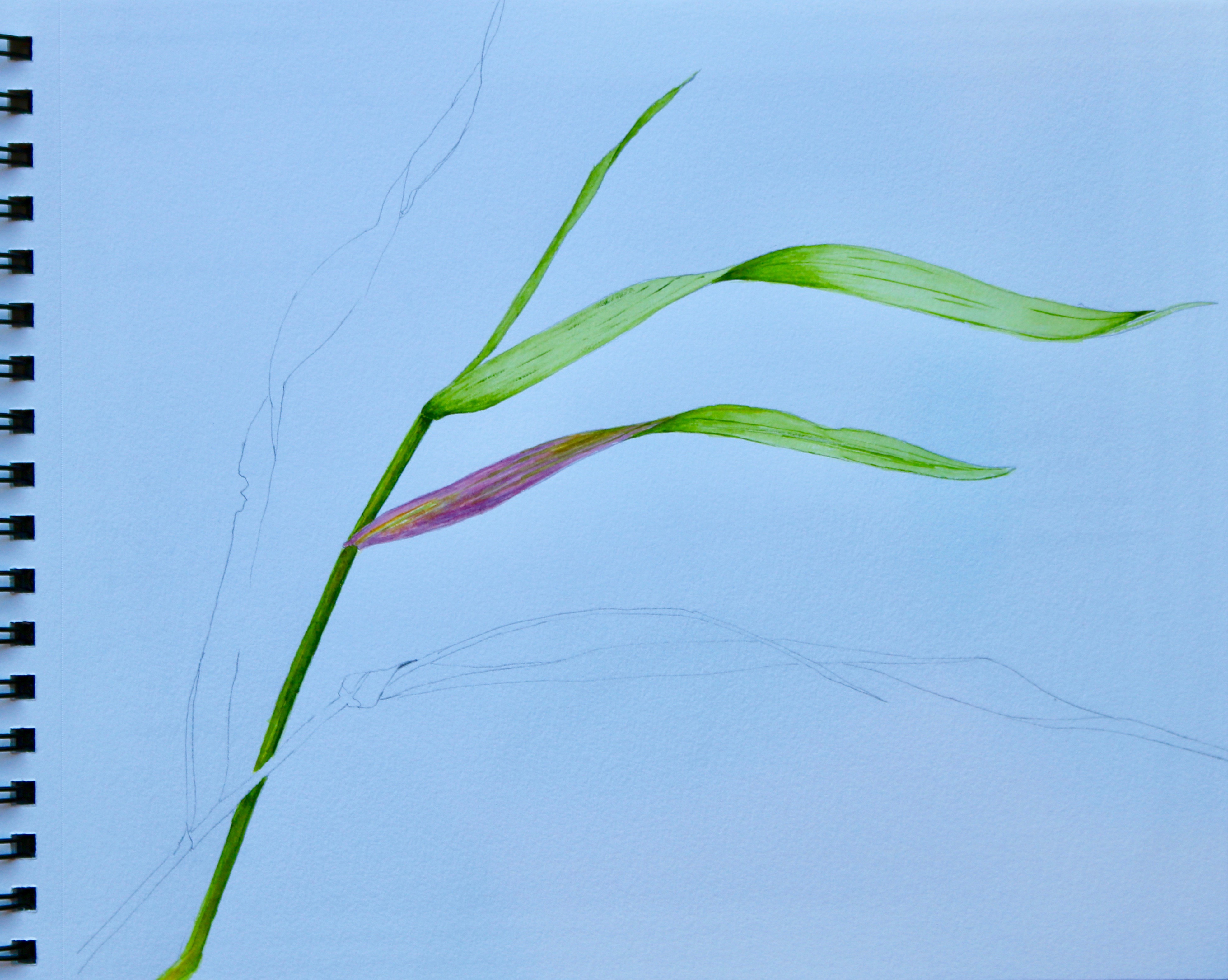
The Witch Hazel was blooming—I’d been painting a twig of it onto genuine vellum in watercolor through winter’s final days.

I found fragrant sprigs of Lavender, Sage, and Thyme and picked five sprays of the Sage, one for each of my mother-in-law’s five children.

I pruned branches from my Pear Tree. My mother-in-law had raised her family and lived her happiest years in a home on Pear Tree Drive in upstate New York.

I chose a branch from the Kousa Dogwood remembering how I had suggested that my in-laws should select a Kousa Dogwood for their last, new home. We drove all around town after they bought their final love nest, looking at Kousa Dogwoods growing in the gardens of neighboring houses.

I added branches from my Saucer Magnolia, a tree I grow in a memorial garden I designed for the memory of my baby son who died twenty-five years ago. The Saucer Magnolia was the one tree blooming in the gardens of the home where I lived when he died. My mother-in-law faithfully visited and decorated her grandson’s little grave every time she stopped to stay with us. Standing in my garden near the Magnolia tree, I had a sudden realization: When I became a mother for the first time, my mother-in-law became a grandmother for the first time. We were never the same after that day. Another memory, of something my mother-in-law said, came to me: “If you think you are beside yourself with happiness about your new baby, just wait until you have a grandchild.” My mother-in-law’s other superpower: Grandmother.

Blueberry branches, Redbud branches, Fothergilla branches, and Crabapple branches—I gathered a little bit of all of them.

I carefully selected a few branches from the Bonfire Peach Tree I planted in my garden when my father-in-law died almost six years ago. The Bonfire Peach is a showy, ornamental beauty for the garden because the pink spring blossoms are fluffy and profuse. Every year I pick the (usually neglected by most gardeners) little peaches and make one pie. The peaches are tart and it’s labor-intensive to make a pie from so many little fruits, but the pie is always a savory exclamation point to summer’s end.

Finally, I clipped branches from the Swamp Maple, a tree I fell in love with one year ago when I began to study it in springtime. The escape into my studies became a worthy distraction as my mother-in-law’s health continued to decline and she slipped further and further away into the mysterious and cruel afflictions of dementia. I felt gratitude for the Swamp Maples throughout that sad growing season. I know it sounds so corny to a lot of people to express love and appreciation for a tree, but people who believe such emotions are silly obviously have never had a tree come to their rescue.

The twigs, stems, and sprigs I gathered throughout my gardens before they were buried under the snowflakes of an epic New England nor-easter, were plunged into jars of warm water on a countertop in front of a window in my kitchen. I hoped to coax the buds to blossom early and make me happy by doing so.

Now I am watching as today’s snowflakes become lighter and more powdery. I love to trace their flights throughout my gardens, outside the windows of my home as I sit typing on my computer—a device my mother-in-law never learned to use.

The gardens, of course, are buried again.

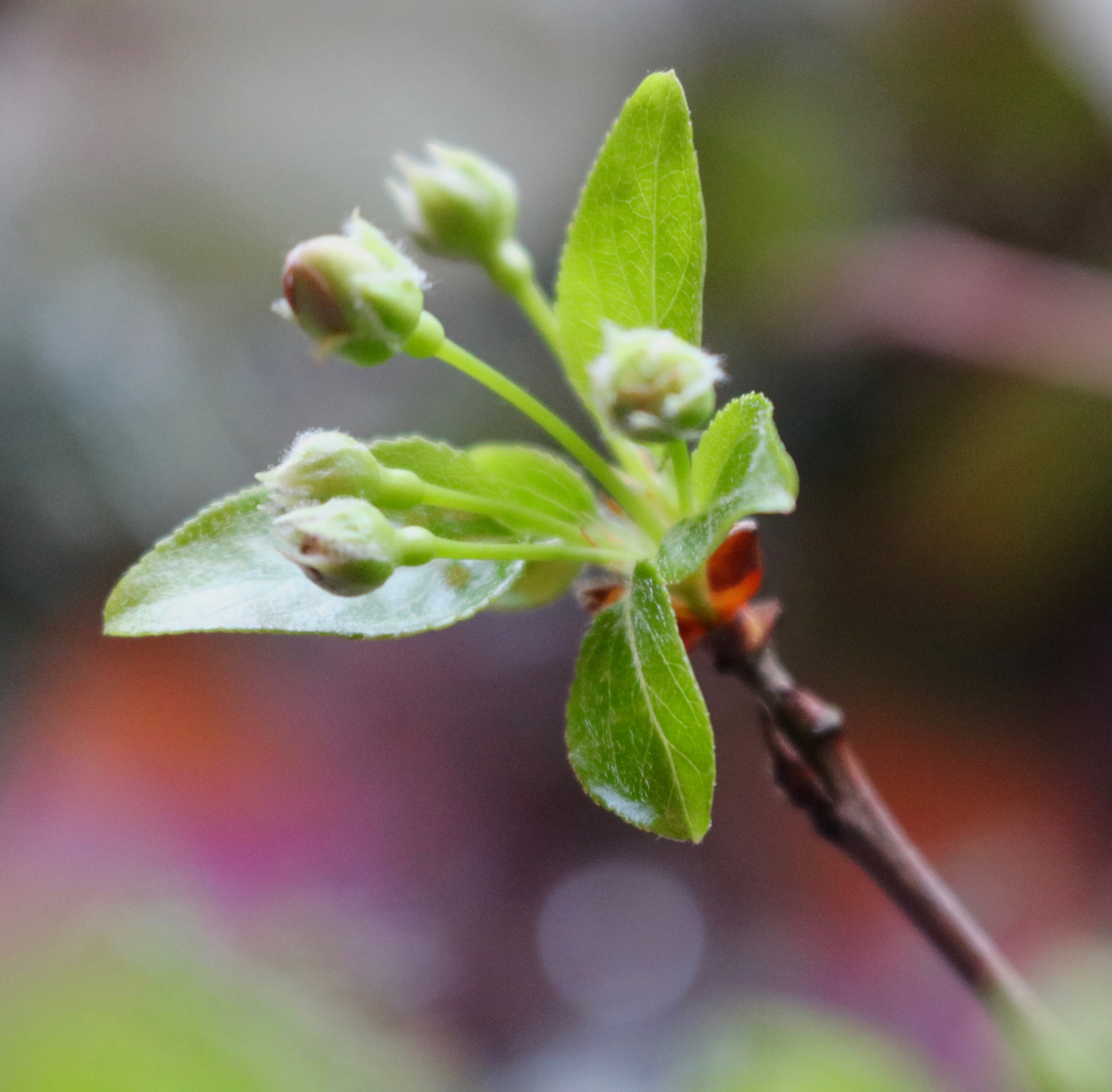
Yet one of the crabapple buds upon a twig I clipped just last week has one flower beginning to unfurl. So I blow on it, as gently as a spring breeze, and watch as the dainty, precious flower blossoms. 🙂

Surely, these are the final snowstorms of our long winter. Soon, I will be taking my wounded heart onto favorite hiking trails and into local garden centers in search of something special to plant in my gardens for the memory of my mother-in-law.

A springtime sun will come shining through and I will get to work, healing my heart again and keeping the faith, in love.

❤ ❤ ❤

IMG_9036.jpg


IMG_9035

❤ ❤ ❤


Finding The (Fading) Wild In Costa Rica.

One mother’s adventure travel narrative and photographic essay.
IMG_8725

PROLOGUE

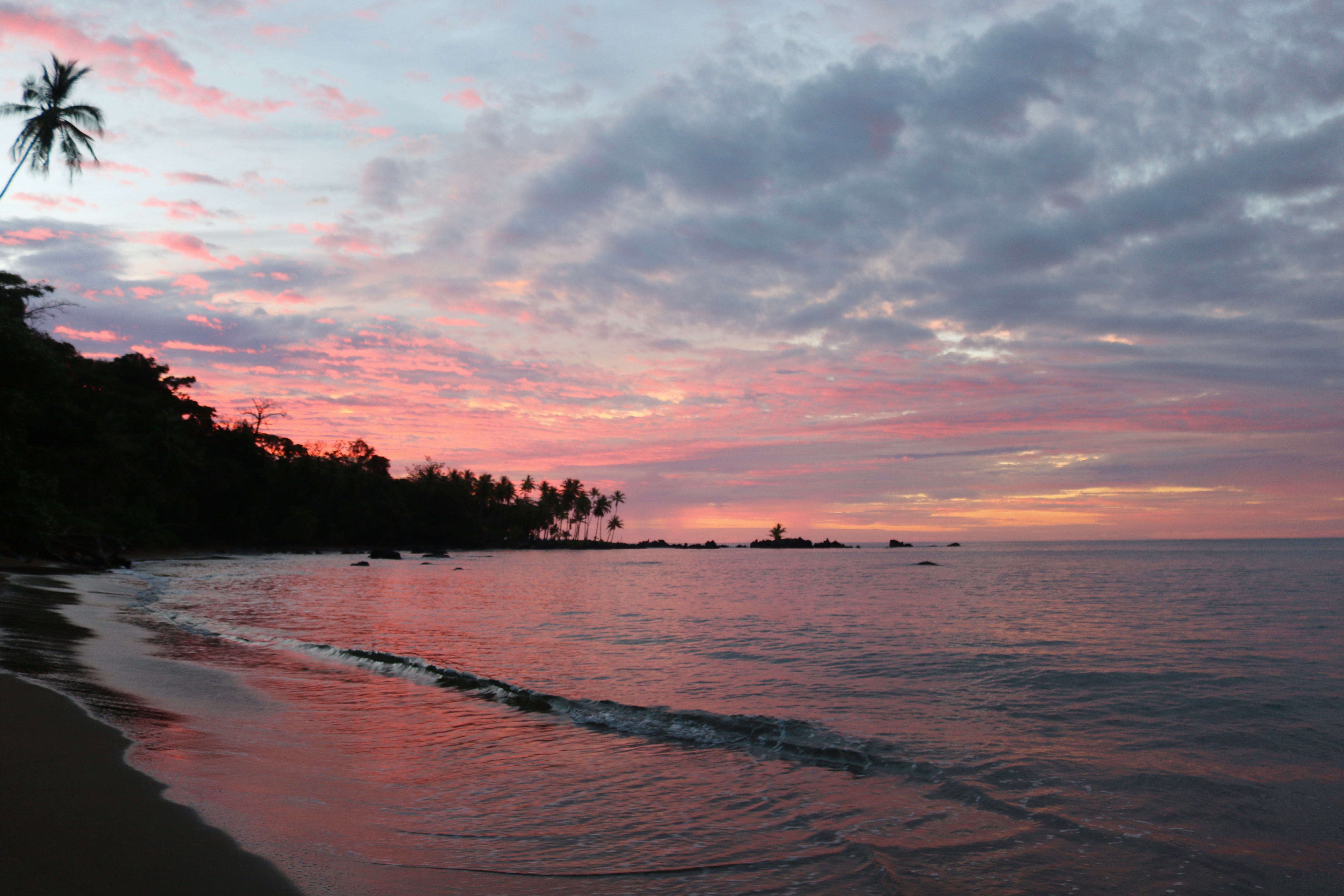
Close to the equator in the phantasmagorically green jungles of Costa Rica’s Peninsula de Osa, a traveler is blessed with about twelve hours of light and twelve hours of darkness every day. The sun rises bright, glows brilliant by midday, and then—after the traveler enjoys a late afternoon snooze in the sand, a pleasant happy hour drink before dinner, and one more swim—the sun flings a heavenly radiance over everything before slipping away. You might describe the sunsets as riots of color, except they don’t make a sound. From my vantage point, in a year dated 2018 by humans on Planet Earth, I’ve been taught that the sun (if we could hear it) would sound terrifying. This is because most of us believe the sun is an explosive, fiery thing.

And I think that’s probably true.

But I love the sun more than I fear it and have only felt anger for its power once in my life when it continued to shine on me (a whit of short-lived, organic matter in its boundless universe) at a time when I wished to die rather than endure the despair and physical pain of grief. Indeed, that phenomenal Superstar—aged more than 4-and-a-half-billion years old—has become my go-to guiding, wishing, and good luck star.

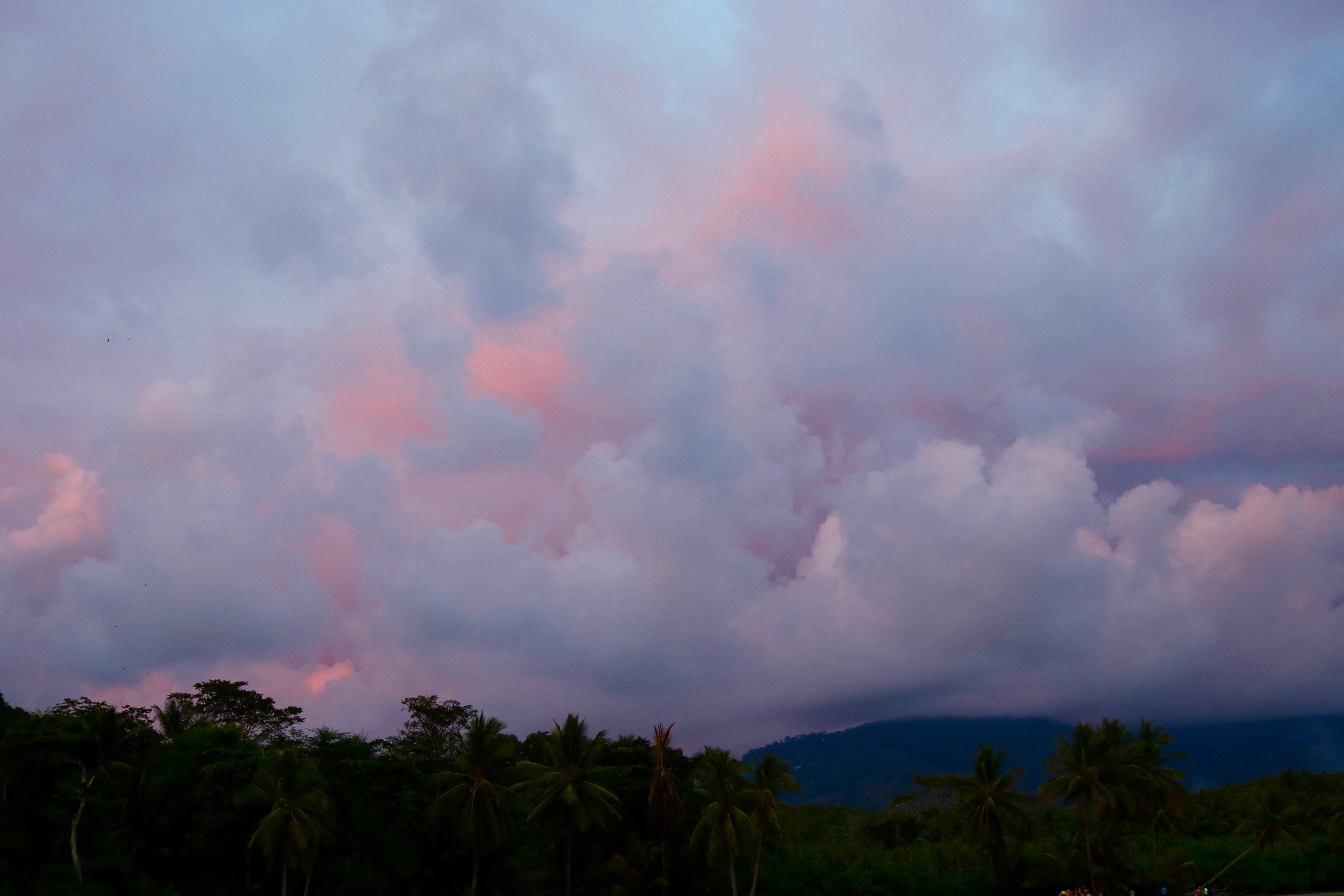
After the sun sets on the Osa Peninsula, the jungle goes dark.  One stands in the dense tangle of it and notices how the darkness settles in, first through the eyes, then down the throat, and finally into the soul where it dominates the imagination. Osa Jungle Black neither fades nor intensifies, but is resolute and vast. It feels fresh, smells lush, and pulsates with loud alive-liness. If a traveler turns on her headlamp, and aims its beam of light in every direction, she won’t believe how many eyes are watching. There are big eyes, little eyes, and tiny eyes. There are watery eyes, too, staring through the murk of swamps and calm streams and dangerous rivers.

Embraced by the purity of Osa Jungle Black with my family, after 12 days at peace alongside extraordinary nature, solitude, and the restorative wonders of the Pacific Ocean, I felt a haunting—not from hidden creatures waiting to bite me, sting me, or enjoy my entire family for a midnight snack. Nor from a ghostly sensation—or romantic fantasy—that tribes of the restless dead were guarding a wild paradise at risk.

What haunted me was my own good luck.

What if it had failed me?
IMG_7188

IMG_7516


CHAPTER ONE

When I first began planning a trip for my family to see Costa Rica, I thought it best to avoid a futile chase for some kind of utopia. After all, Costa Rica’s ecotourist destinations have been on the travel industry’s radar for a long time. I knew I was late to the party.

My husband thought he’d reduce my anguish by giving me a copy of a customized travel itinerary through Costa Rica, prepared by an elite travel consultant for friends taking a getaway trip for two. Their tour included must-see sites, luxury accommodations, and fun activities organized in a stress-free (and appealing) style with chauffeur-driven car rides and plane rides from Palm Tree A to Palm Tree B to Volcano to Cloud Forest to Coffee Plantation to Eco Resort with meals included and personal needs fulfilled.

All I had to do, according to my husband, was study the blueprint for the luxury tour and design something for twice the number of travelers at half the number of colones. Extra credit: Pull it off last minute during the busiest tourist season. Honors: Take our family where all those tourists are not going to be. Cum laude: Include culinary and cultural enrichment. Magna cum laude: Could we go ziplining. Summa cum laude: No shared bedrooms except, of course, for the mom and the dad.

After several fitful starts and stops (Costa Rica really is on every tourist’s radar) and some tense marital discussions, I summoned the goddesses of utopian escapes for help.

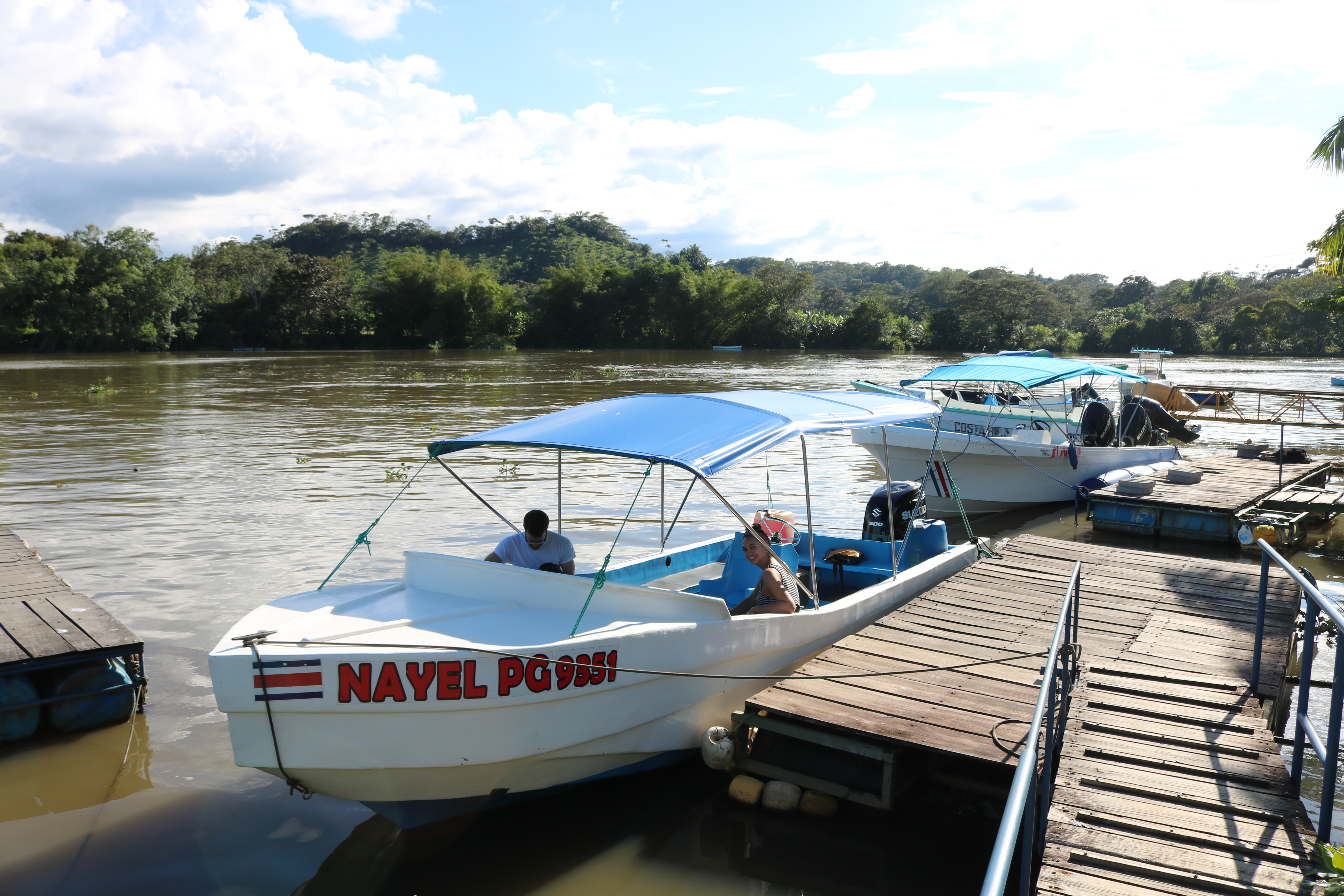
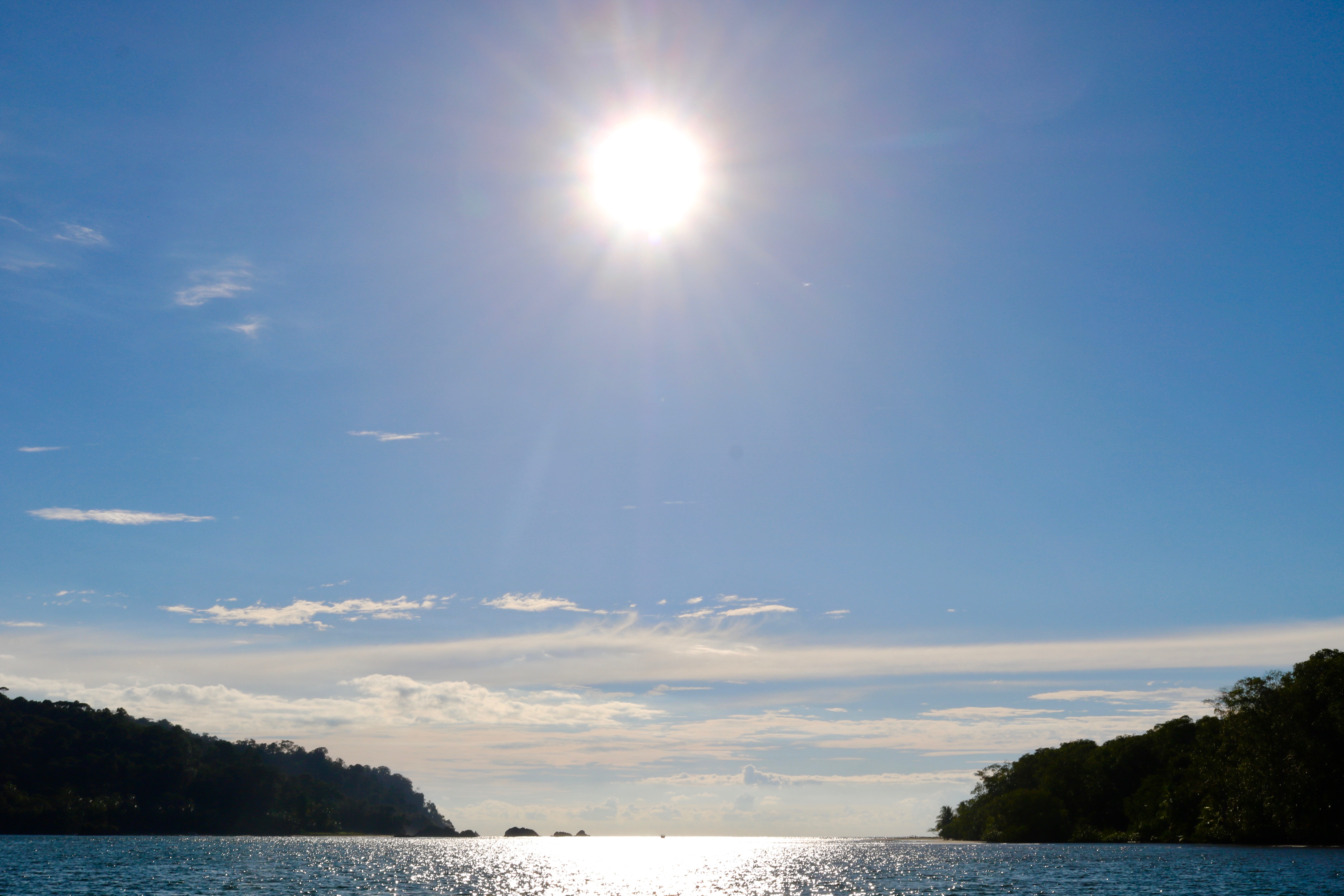
Soon, I found an enchanting place for rent in the wild jungles of the Osa Peninsula. The dreamy dwelling, named Casa Nirvanita, was portrayed by its gracious owners as a luxurious shelter, open to nature (“a biological jewel”) set in both secondary and primary rainforest with fruit trees and flowers growing amid rivers that flowed to the Pacific Ocean. Jungle creatures and critters lived all around (and often in) the dwelling, which had three bedrooms, four bathrooms, and several hammocks. We’d need to purchase food and drink for our entire stay, box and load it into a small boat, then take a voyage down the Sierpe River and into the (often turbulent) Pacific Ocean for a run across Drake Bay and over to a beach where we’d rock and roll in the surf while bringing our provisions ashore. Once arrived, we’d have no car, no take-out deliveries, no grocery stores. Not even a neighboring home from whence to borrow an egg.
IMG_7779

On approach to the Pacific Ocean and Bahia Drake from the Sierpe River.


CHAPTER TWO

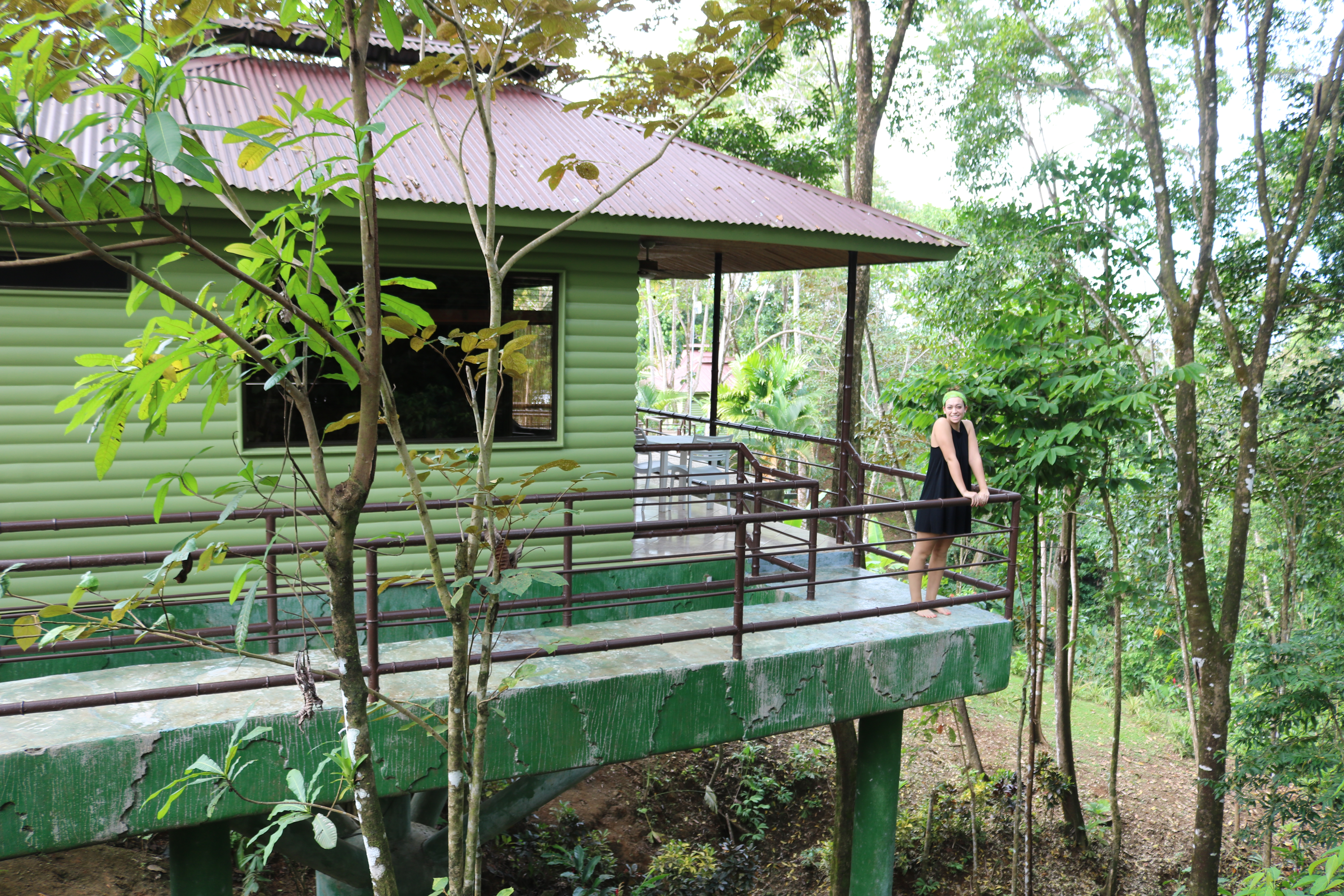
Before setting off for the Osa Peninsula, though, we needed a place to stay for the first four nights of our vacation. The dates fell during the New Year’s weekend holiday and, of course, not much showed up as available. But I did find one curious option made all the more intriguing due to the fact that it didn’t have a collection of 5-star reviews. In fact, it didn’t have any reviews at. It was a new-to-the-market, up-and-coming ecolodge. The name, Eden’s Nest, sounded fun, the price was right, and the digs were neat. They were called jungalows (bungalows built into the jungle canopy) and the property was located in Ojochal, a tranquil village on the way to Sierpe, the port town where we’d be storing our car for several days near the boat launch for travel to the Osa Peninsula. Each newly-renovated jungalow had a kitchenette, a balcony, and a bathroom and they were so well priced (less than $100/night!) that everyone could have their own hideaway. Our potential host, Carlo, offered to custom design a tour for us through the mountains, cloud forests, farms, and markets of a Costa Rica he had grown to love, beyond the beaten tourist paths.

We sent a lot money to Carlo and hoped we wouldn’t be adding a dumb luck story to our family’s tales of travel. After all, the jungalows had no reviews and the village of Ojochal wasn’t on the tourist radar.

IMG_7269


CHAPTER THREE

As soon as you come bounding into the jungles of Costa Rica, it seems like everyone you meet is saying everything you want to believe:

There is nothing here that will harm you!

Enjoy yourself!

Pura Vida!

When it first happened to us, we had already managed the airport hustle, retrieved our rental car, and conquered one of Costa Rica’s legendary steep, narrow, rutted, muddy, slick, twisty, and unmarked roads (two attempts) in the dark after a long drive from San Jose and upon final approach to Eden’s Nest. (Like this: Drive up a dark road in a little bit of rain, the road gets surprisingly steep, car wheels start spinning in some slurp, shift into reverse for a long, long ride backwards perhaps a quarter of a mile in the dark to where you started, then switch to first gear and gun the engine never letting your foot off the gas and never loosening your grip on the steering wheel no matter how many ruts throw you off course or how many cliff sides get too close.) And hopefully no other cars are coming at you from the opposite direction.

Welcome to the jungle!
IMG_7111

A fairy tale jungalow-of-one’s-own at Eden’s Nest in Ojochal.

Writing, reading, working, drinking Costa Rican coffee, smoothies, and finding local swimming holes (thanks to Carlo’s tips) with waterfalls.

IMG_7119

IMG_7139

Lunch after swimming. The lemons looked like oranges and that’s what we thought they were until we bit into them! Whole cooked fish with fried plantains.
IMG_7740

IMG_7734

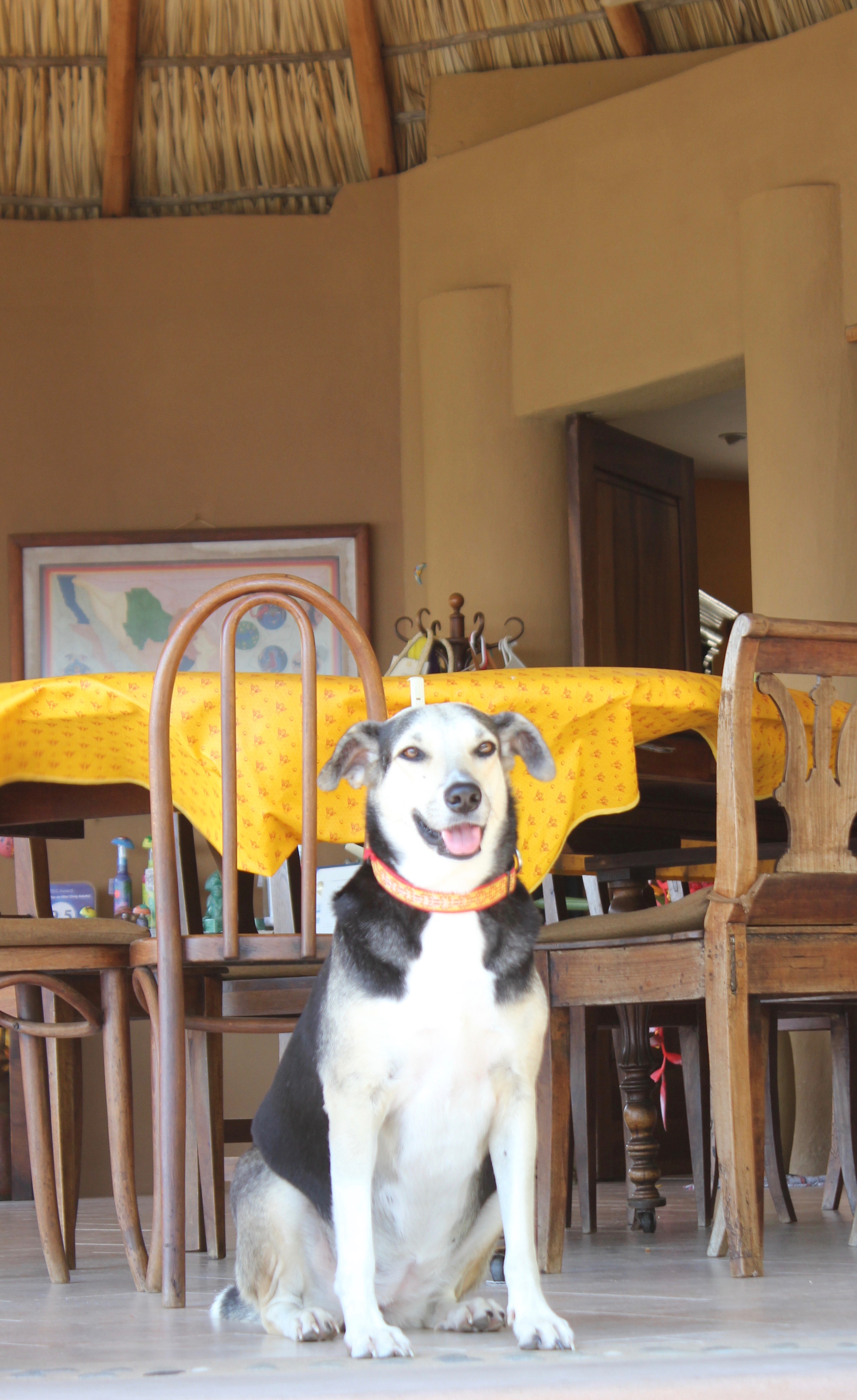
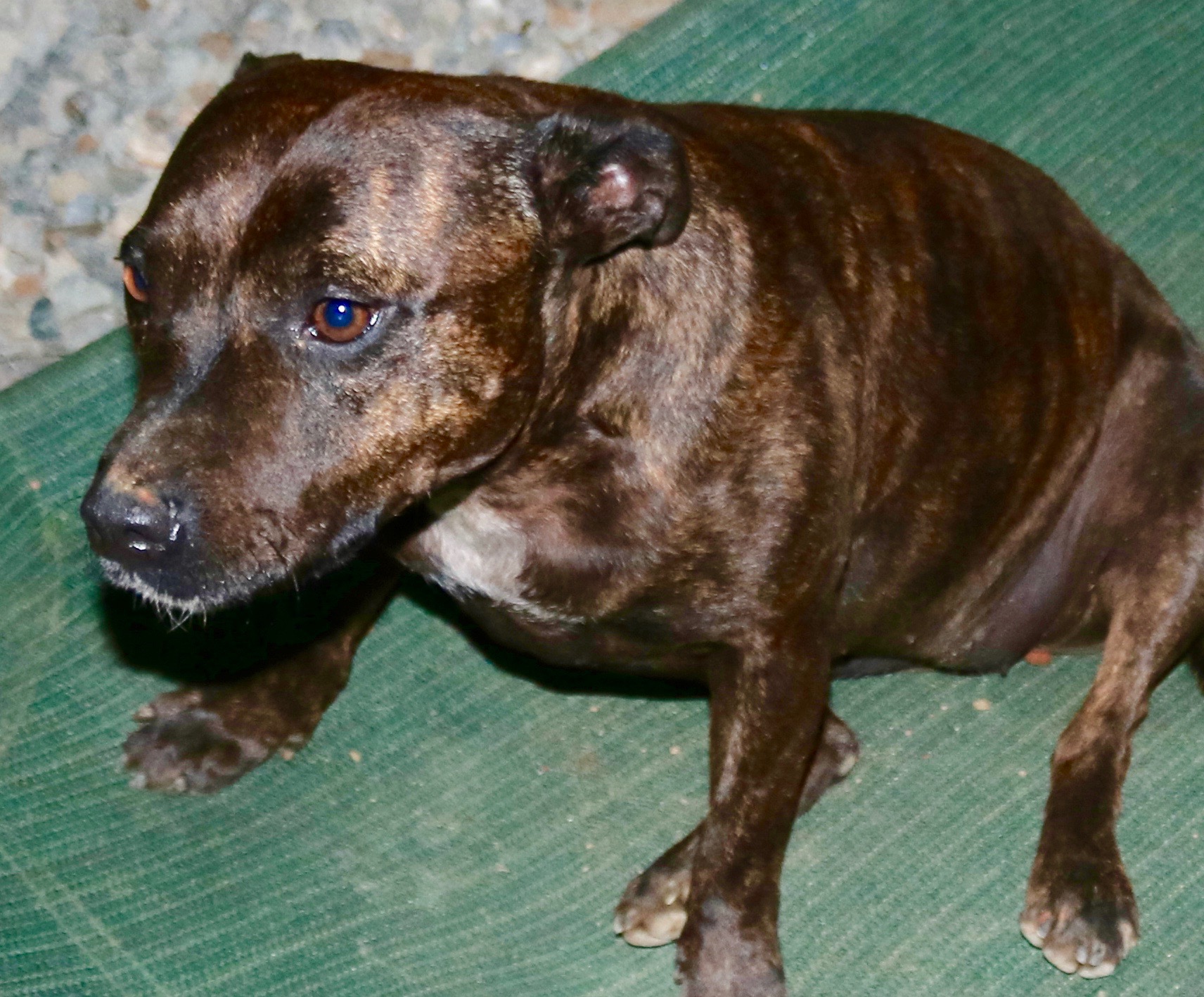
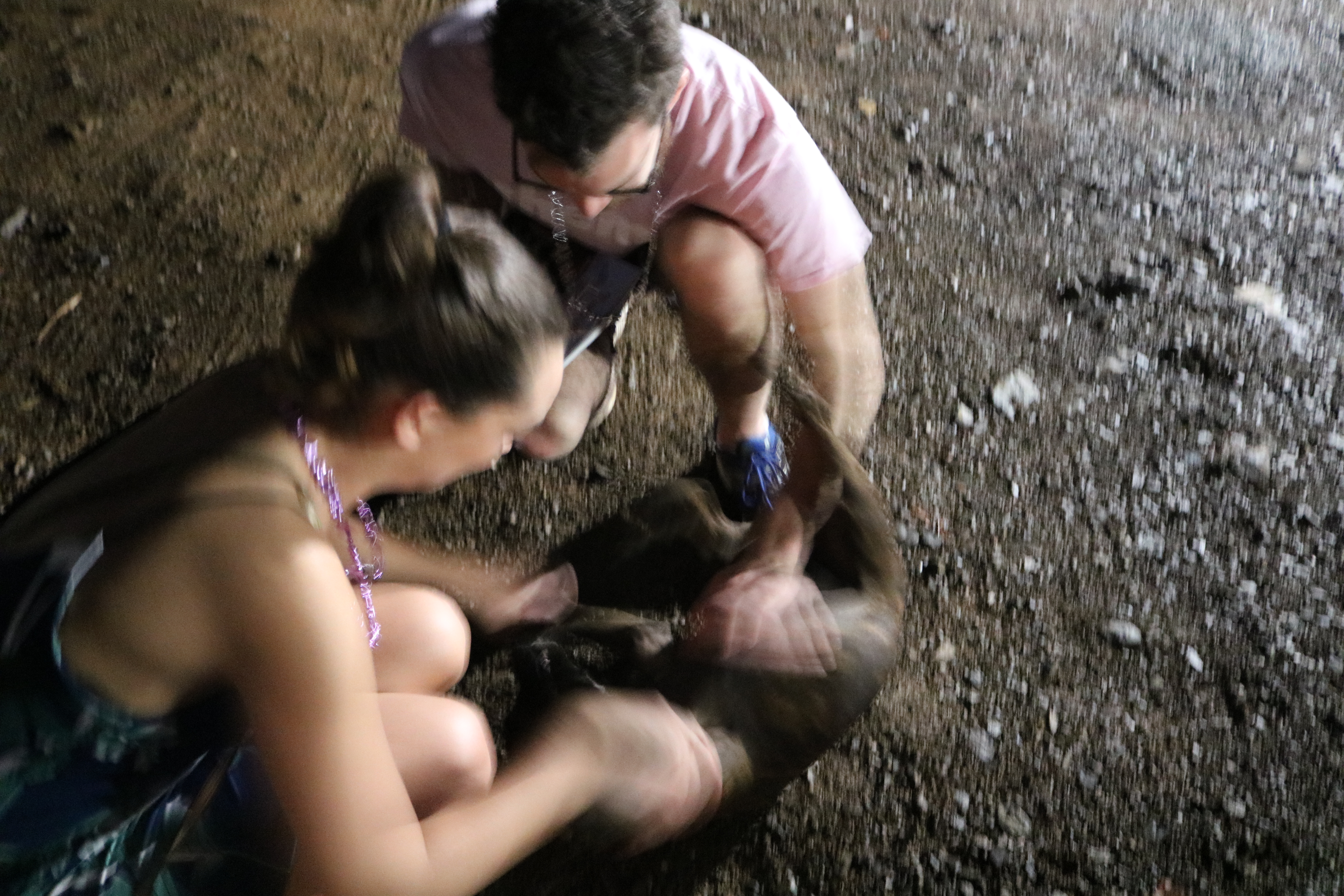
Belly rubs for Jessica at Eden’s Nest—the most lovable dog in Costa Rica!


CHAPTER FOUR

Talk about lucky.

The jungalows at Eden’s Nest were clean, comfortable, charming, and eco friendly. Sure, there were a few quirks…like Carlo’s recommendation that if our family wanted to go on tour with him, and see as much as we could in one day, his truck would be heading for the mountains before 6AM.

So we set the alarms on our phones and woke up laughing out loud

because early-morning-wake-up calls in a rowdy jungle don’t need one iota of technology!


CHAPTER FIVE

The most common question I’m asked about my family’s trip to Costa Rica is this one: Your kids travel with you? It’s a good question. My “kids” are adults—my son is 26, my daughter is 23—and they haven’t lived at home since they graduated high school and left for college. My son lives in Brooklyn, his favorite city, and my daughter lives in Somerville, MA wrapped up with her favorite city, Boston.

They’ve got it going on.

So whenever (3x so far) I’ve decided to hire a private guide for an entire day during our travels, I hope for good luck and good fun because I want my kids to enjoy traveling with us. (One of the most outstanding all-day tours our family took was with Alvin Starkman’s Mezcal Educational Tours in Oaxaca, Mexico. At the end of that long day, my daughter gave the tour an A+ grade.)

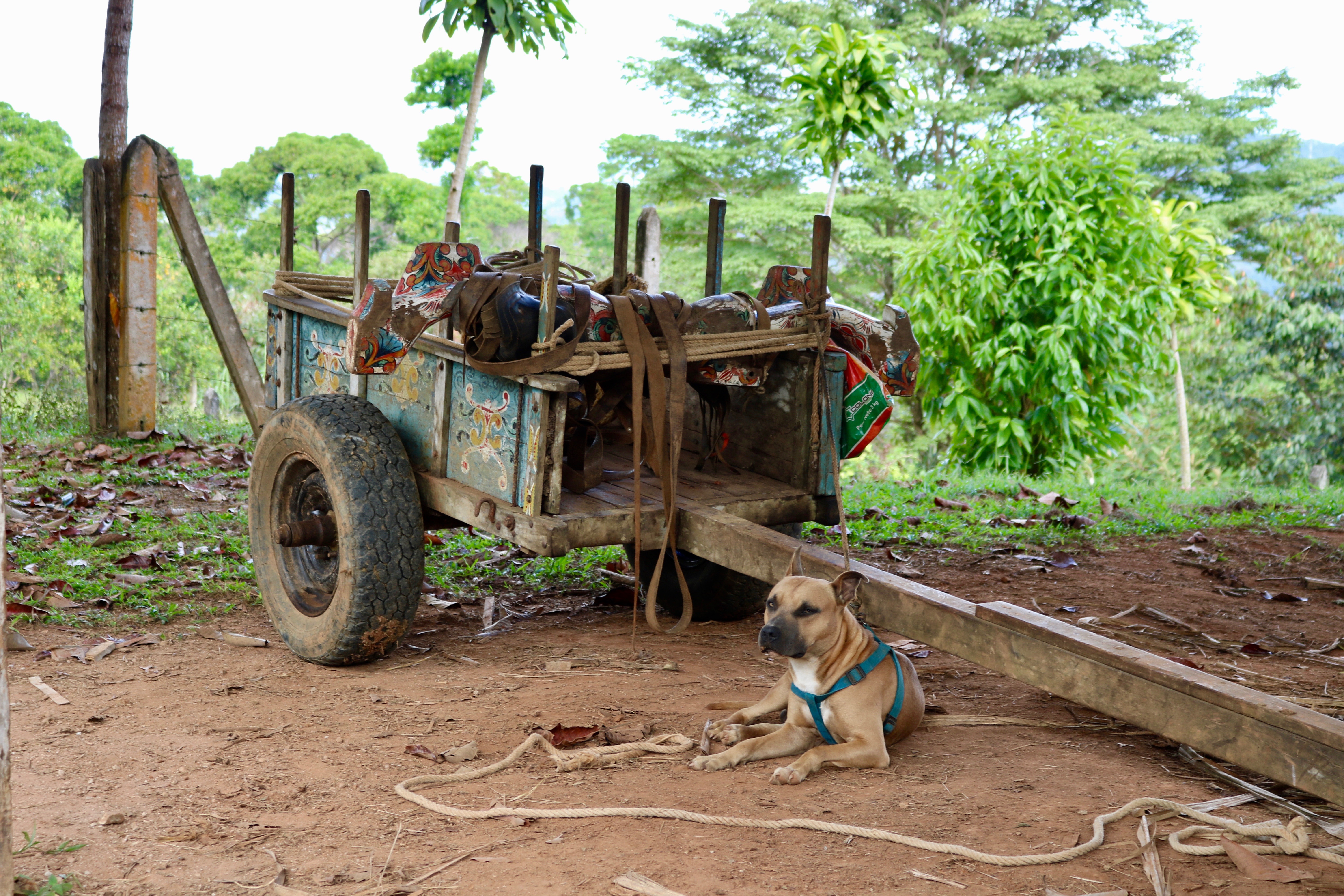
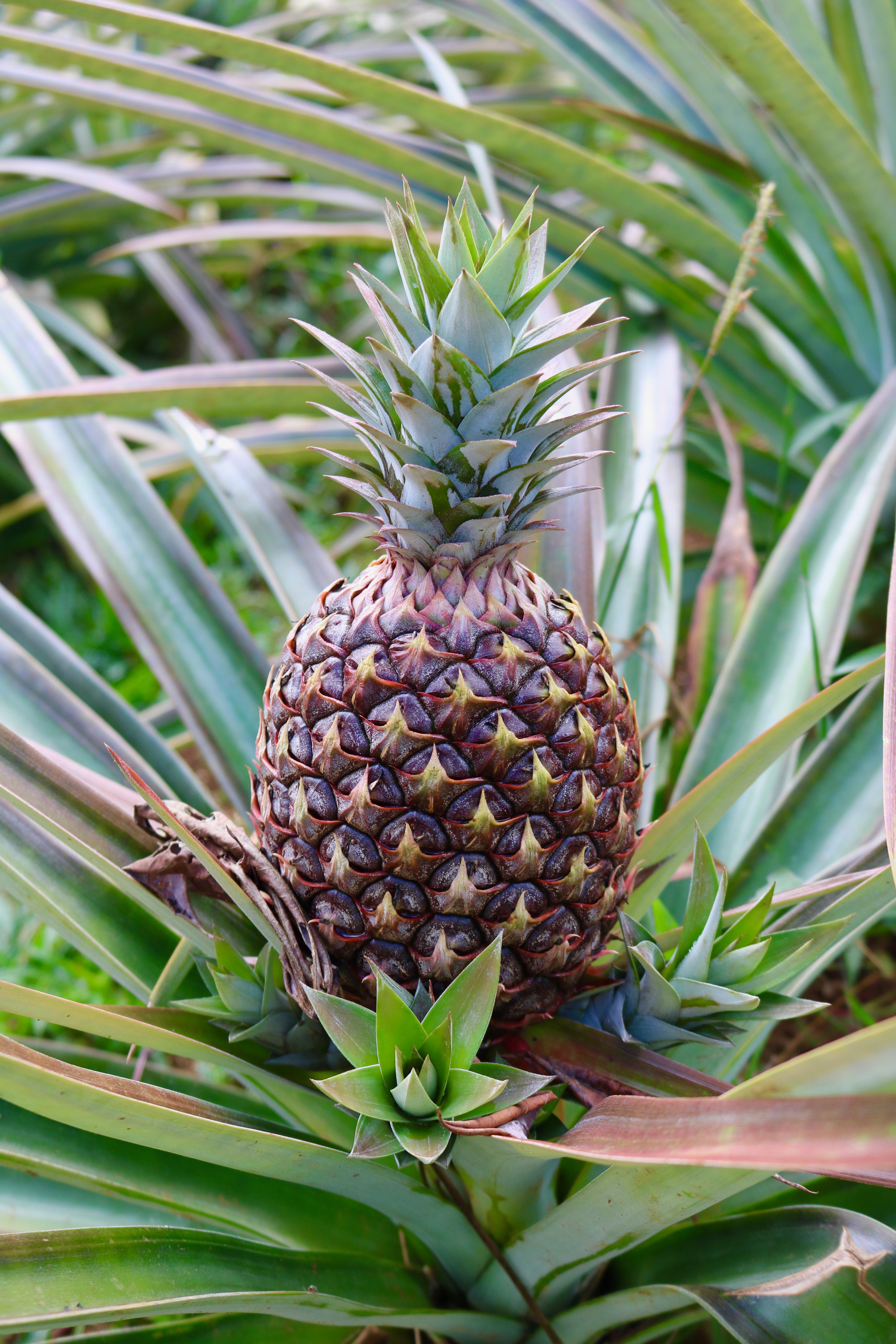
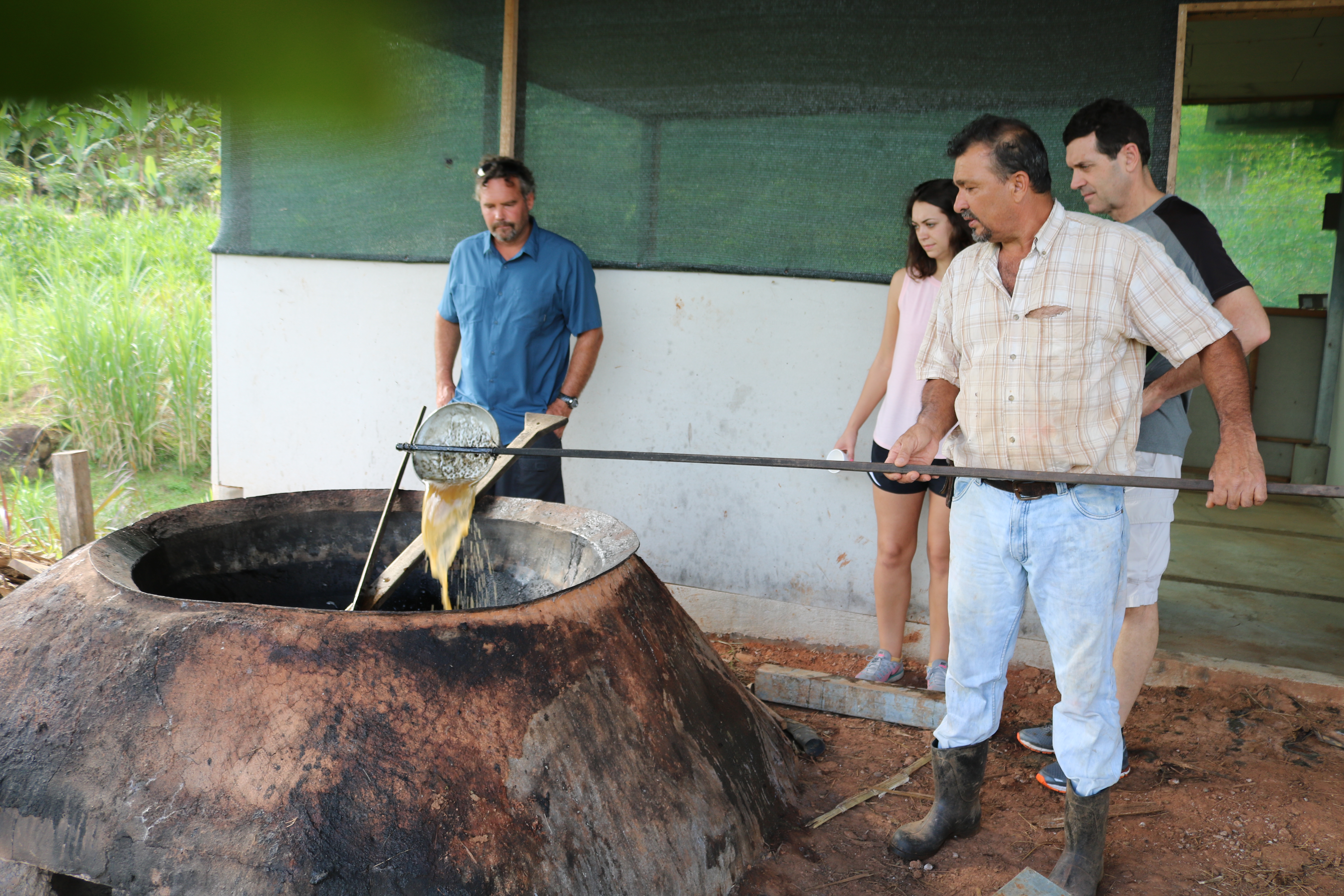
Carlo had it going on for a Costa Rica we hoped to find. He drove us into the Talamanca mountains, past waterfalls, through cloud forests, and onto a farm where a family welcomed us, proudly showed us their lands, crops, and livestock; how they make sugar and grow coffee, and then they bestowed generous gifts of organic fruits upon us after sharing wholesome cups of Costa Rican coffee on their porch. We visited San Isidro and ate in the market. We hiked at Cloudbridge Nature Reserve. We stopped for a typical Costa Rican afternoon snack at a roadside restaurant. All along the winding, scenic, narrow routes, we passed farmers on horseback sharing the roads with people out walking and people out riding motorcycles. Carlo’s tour included unexpected surprises about the culture, customs, cuisines, and beauty of Costa Rica.

At the end of the day, Carlo took us to the seaside in Dominical. He backed his truck up to the beach, opened the tailgate, and offered all of us a cold beer as local families were gathering on the beach to build campfires and watch the moon rise, almost full, before the start of a new year.

IMG_7239

IMG_7271

IMG_7322


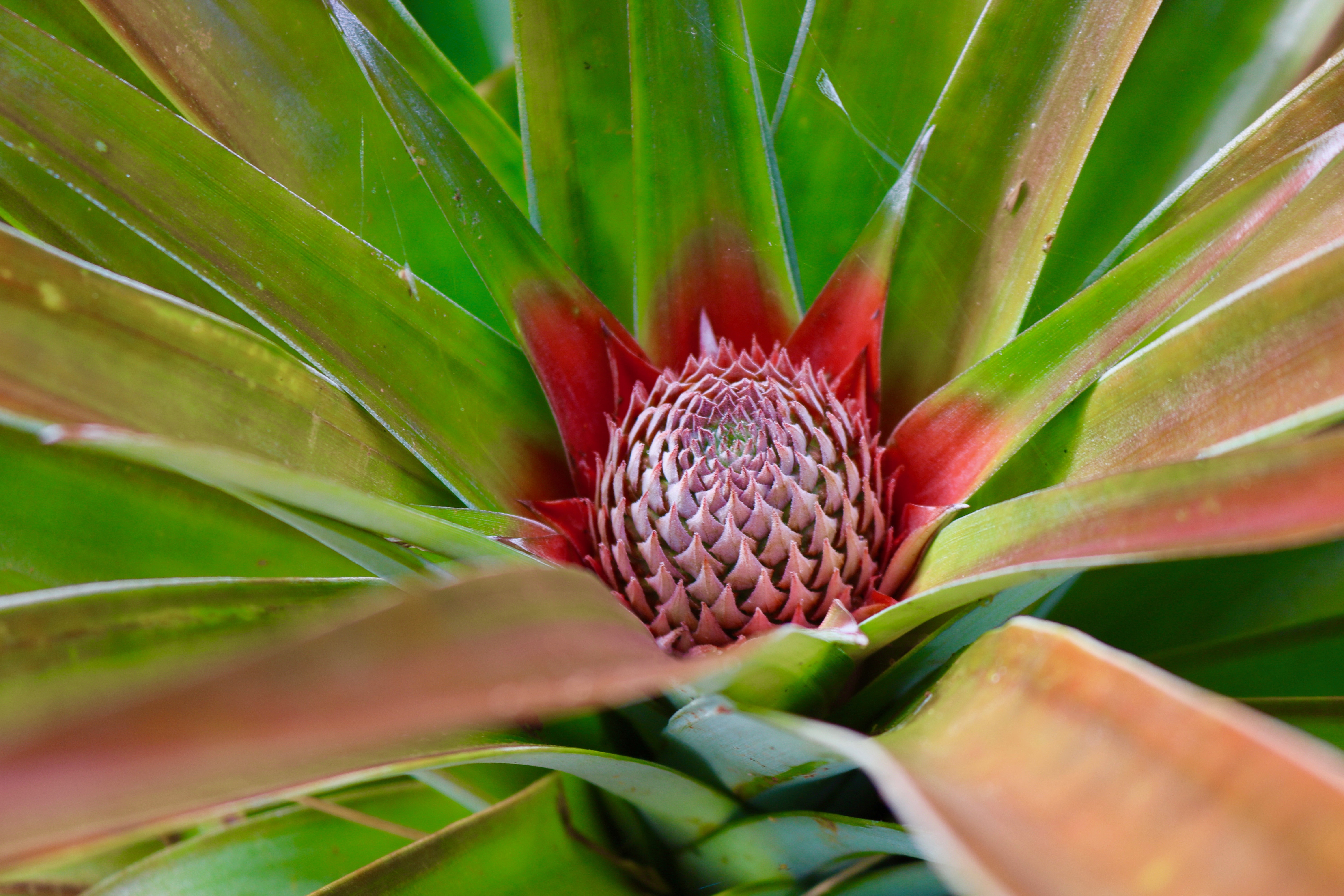
Beautiful pineapples hand picked for us.
IMG_7310

IMG_7318

A necessary tool, the machete, completely and quickly whittles sugar cane into sticks of true sweetness.

IMG_7345

Making sugar.

IMG_7293

Taking home sugar and coffee.

The family’s twin grandsons picked shirt-fuls of oranges and grapefruits for us.

IMG_7381

Organic fruit for making smoothies back in our jungalows at Eden’s Nest.

IMG_7253


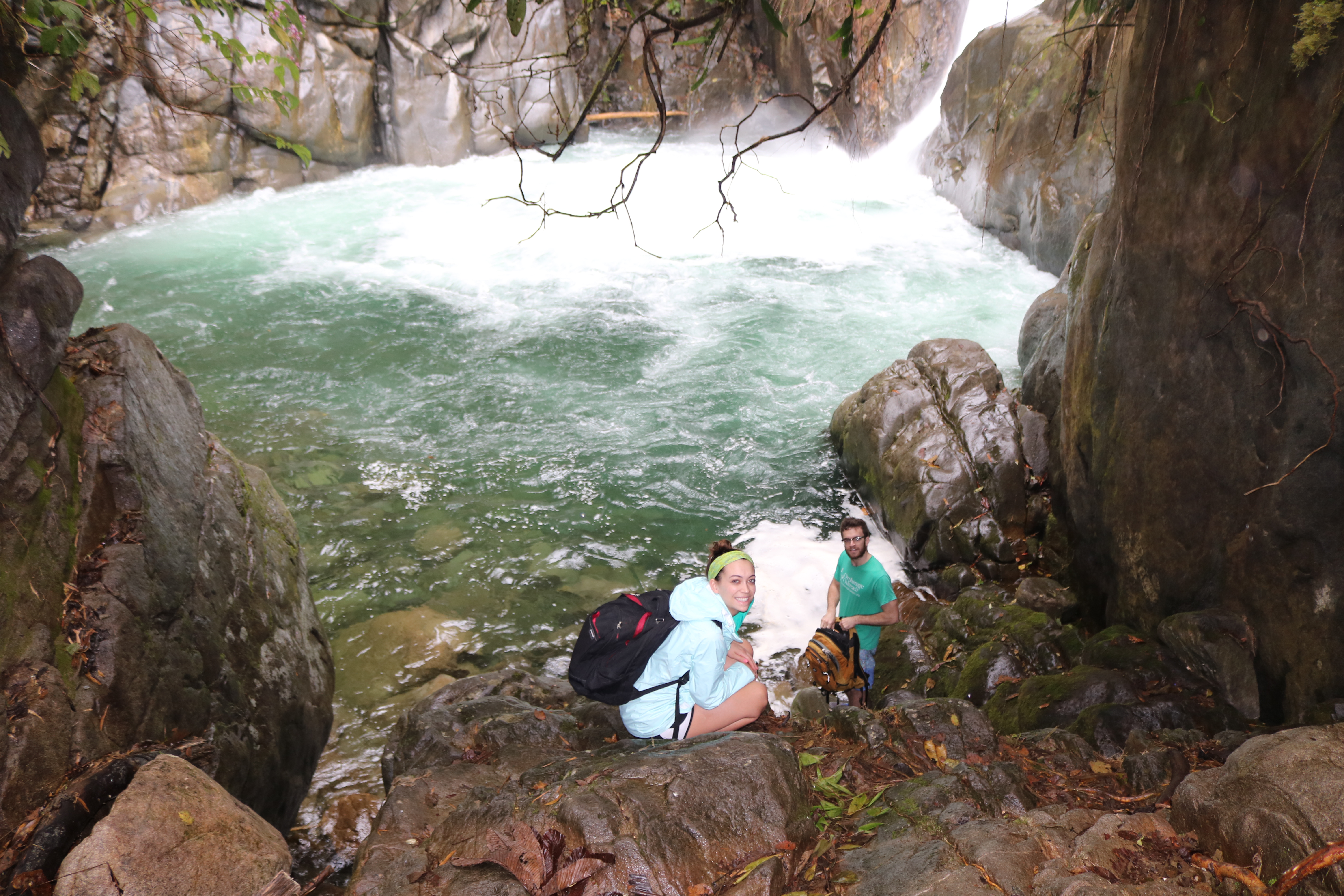
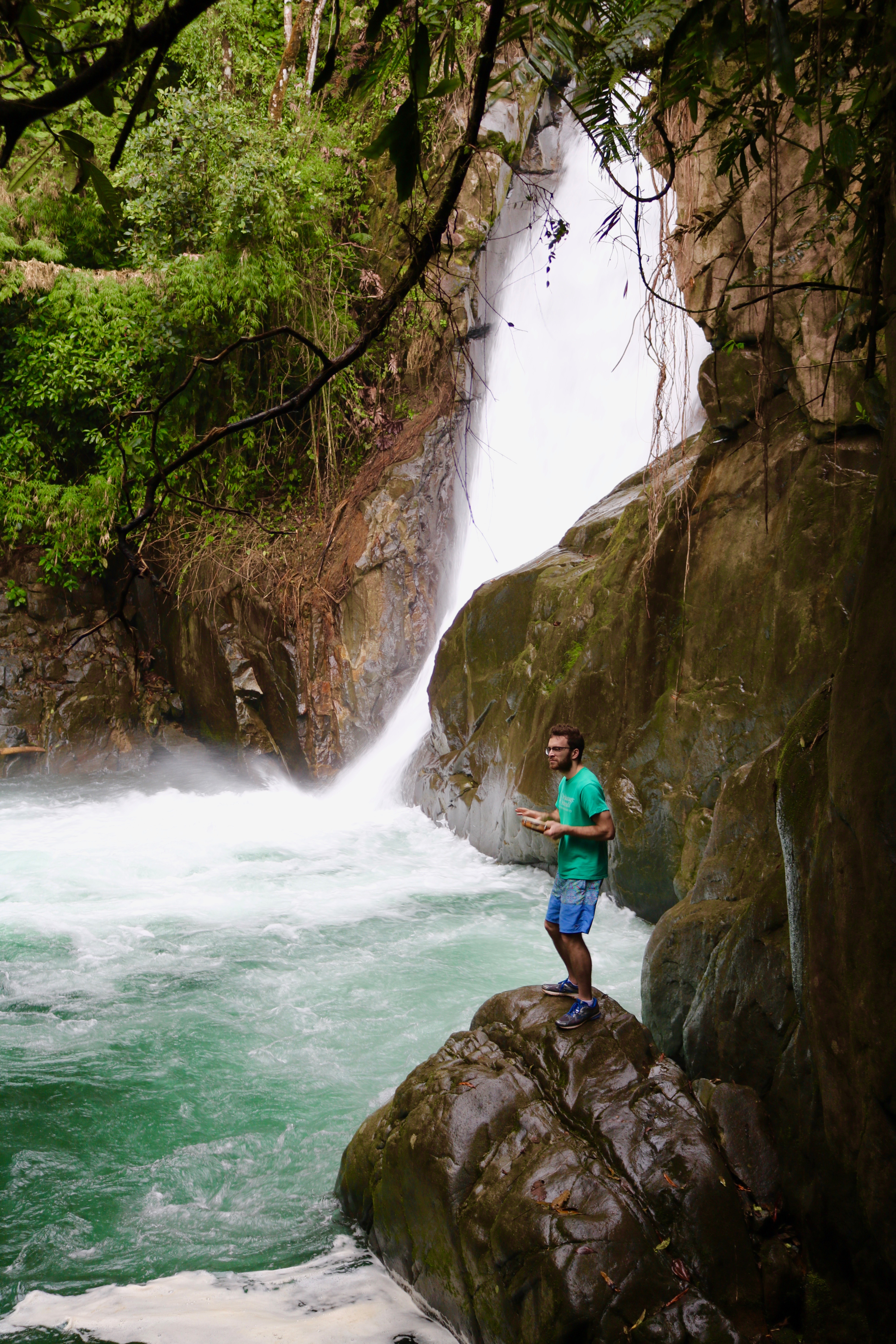
A PLEASANT HIKE TO PACIFICA FALLS AT CLOUDBRIDGE NATURE RESERVE
IMG_7432

My son playing his Brazilian pandeiro—a hand frame drum—with the falls. 
IMG_7435


STOPPING TO ENJOY A TYPICAL COSTA RICAN AFTERNOON SNACK

IMG_7487

IMG_7504

IMG_7226


CHAPTER SIX

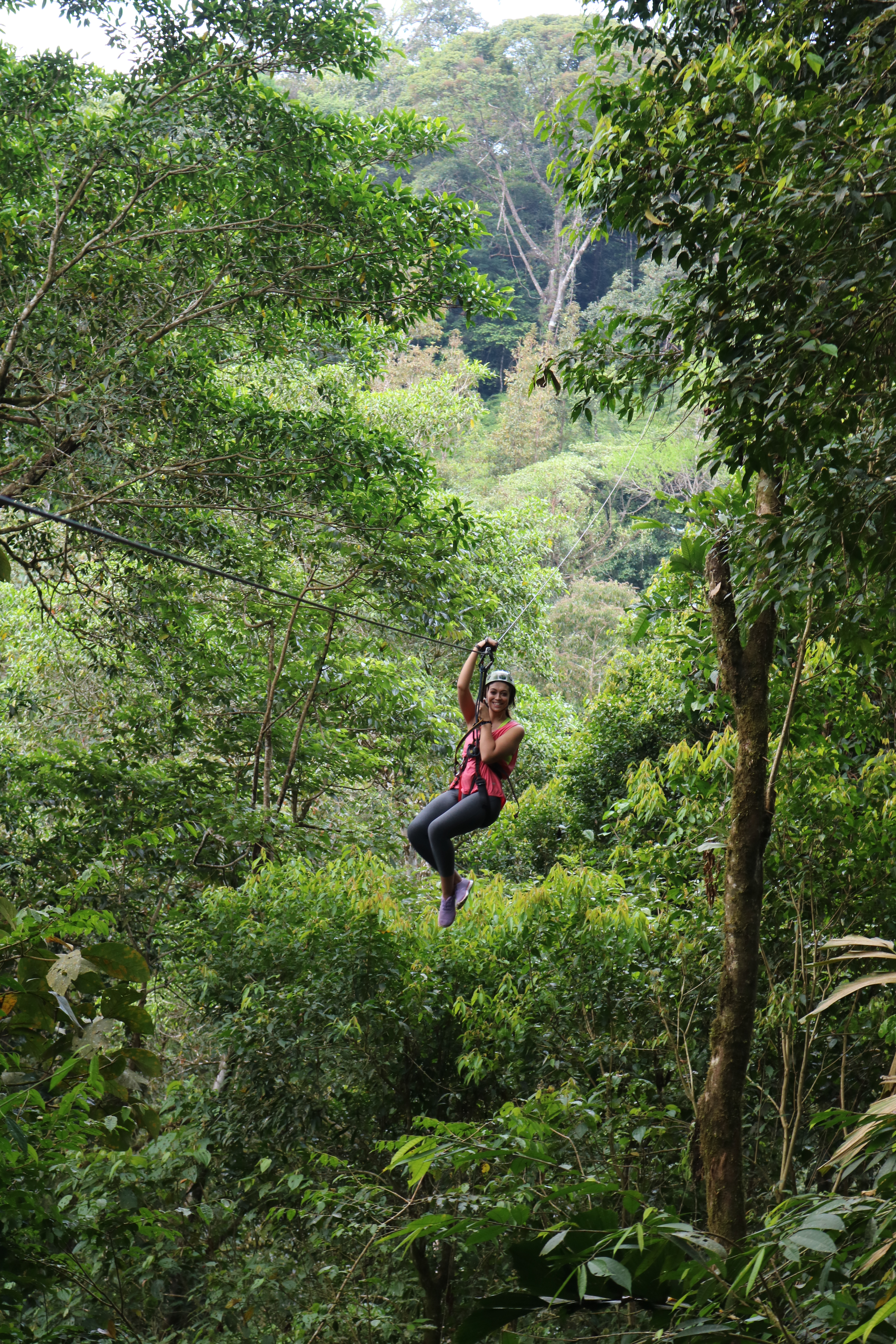
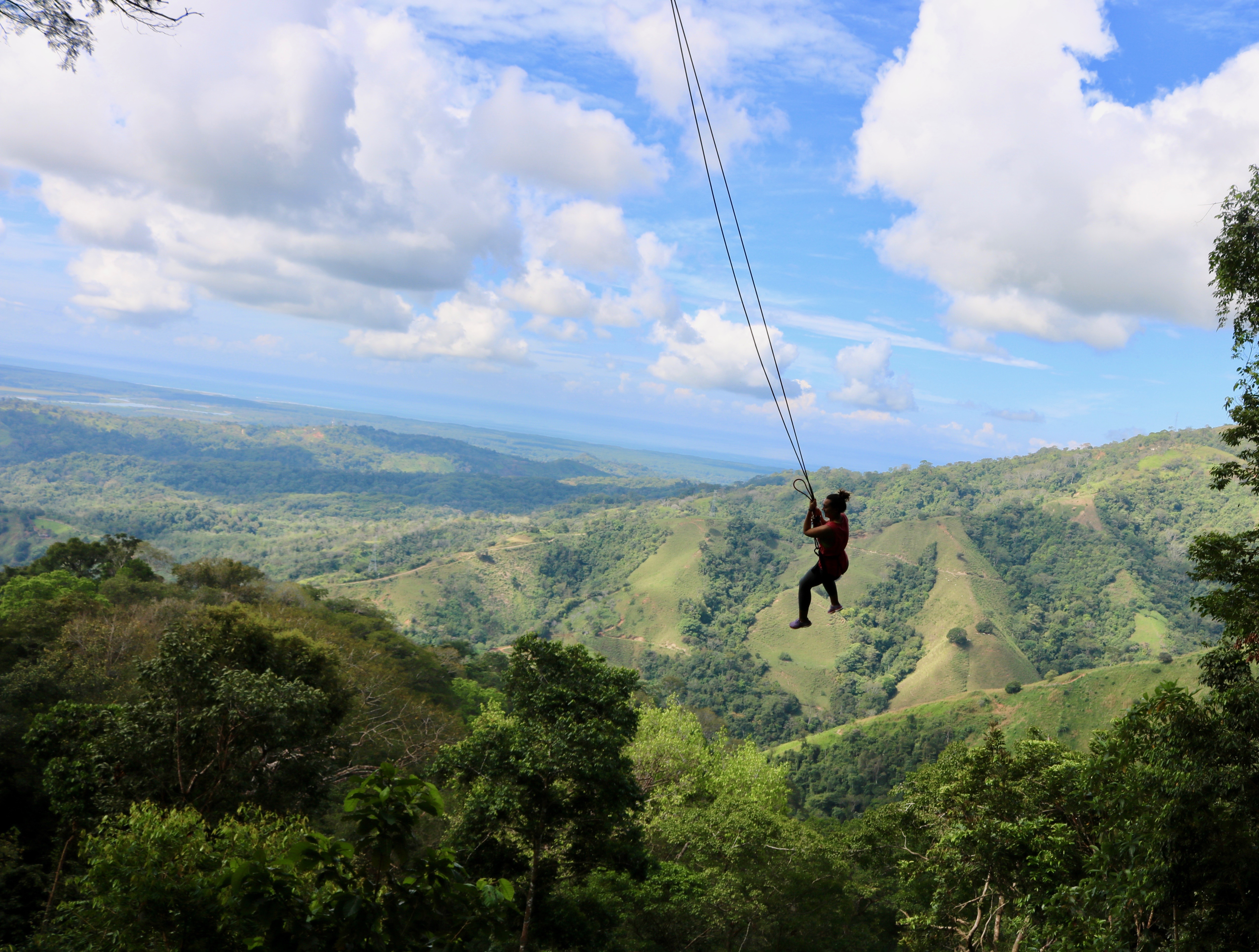
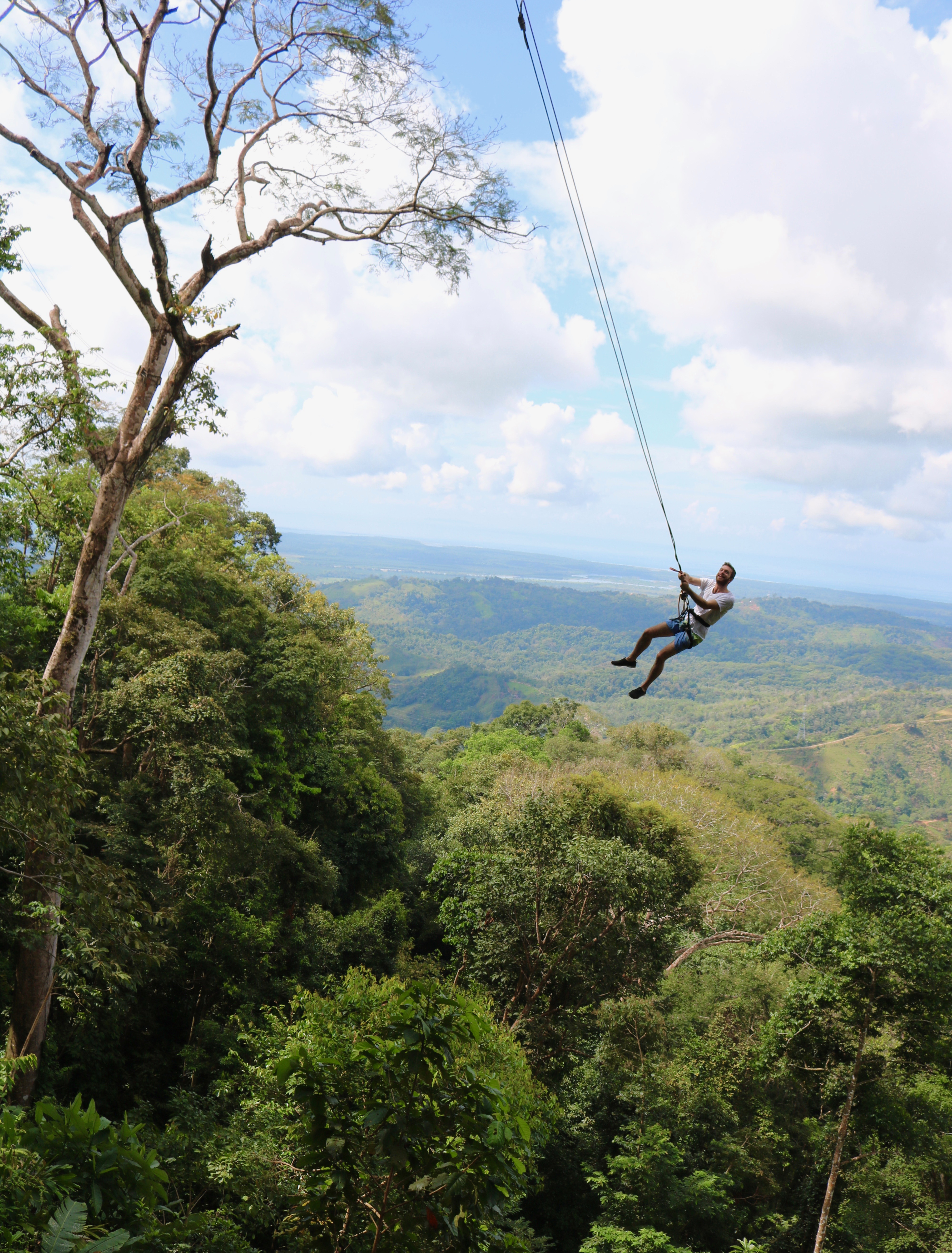
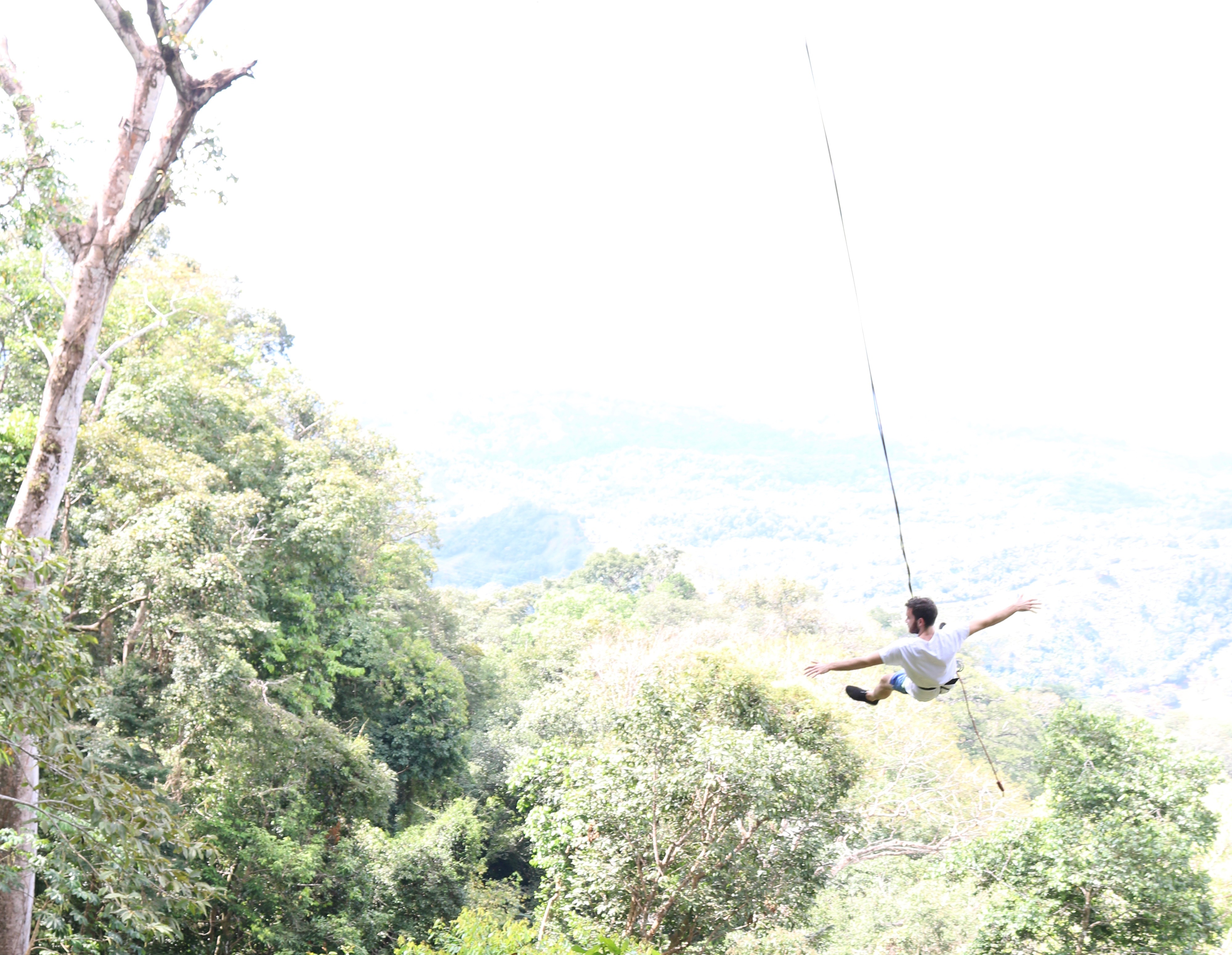
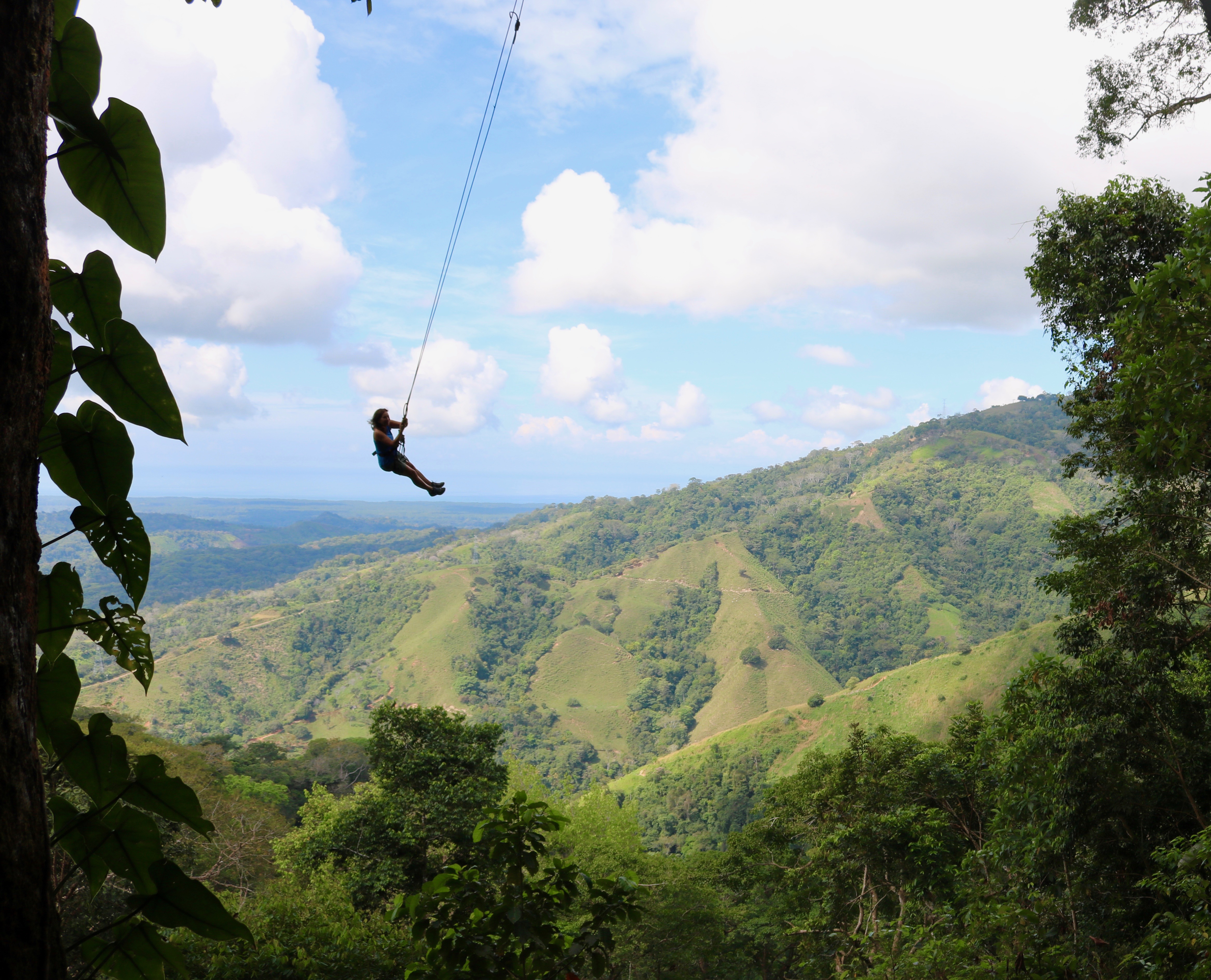
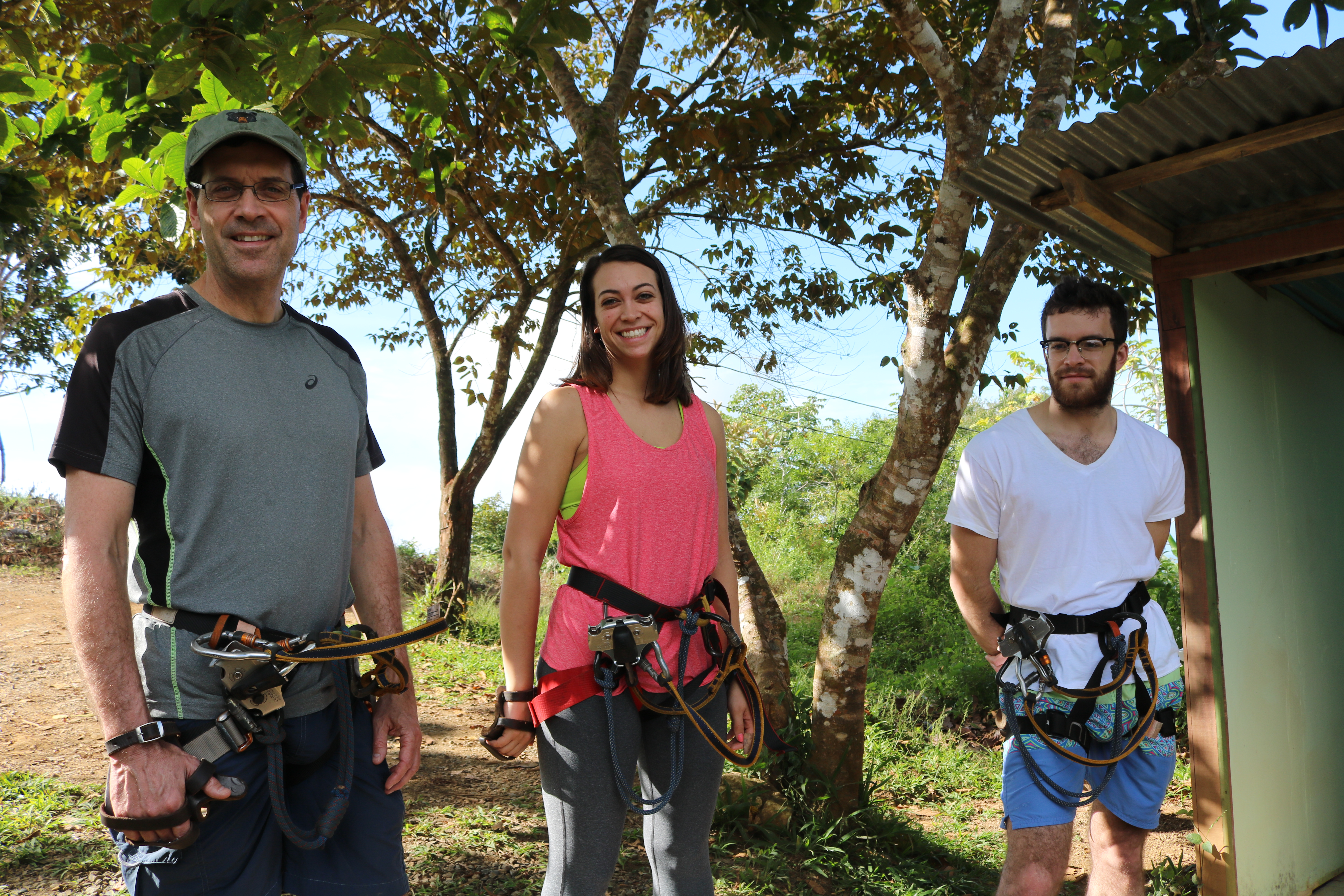
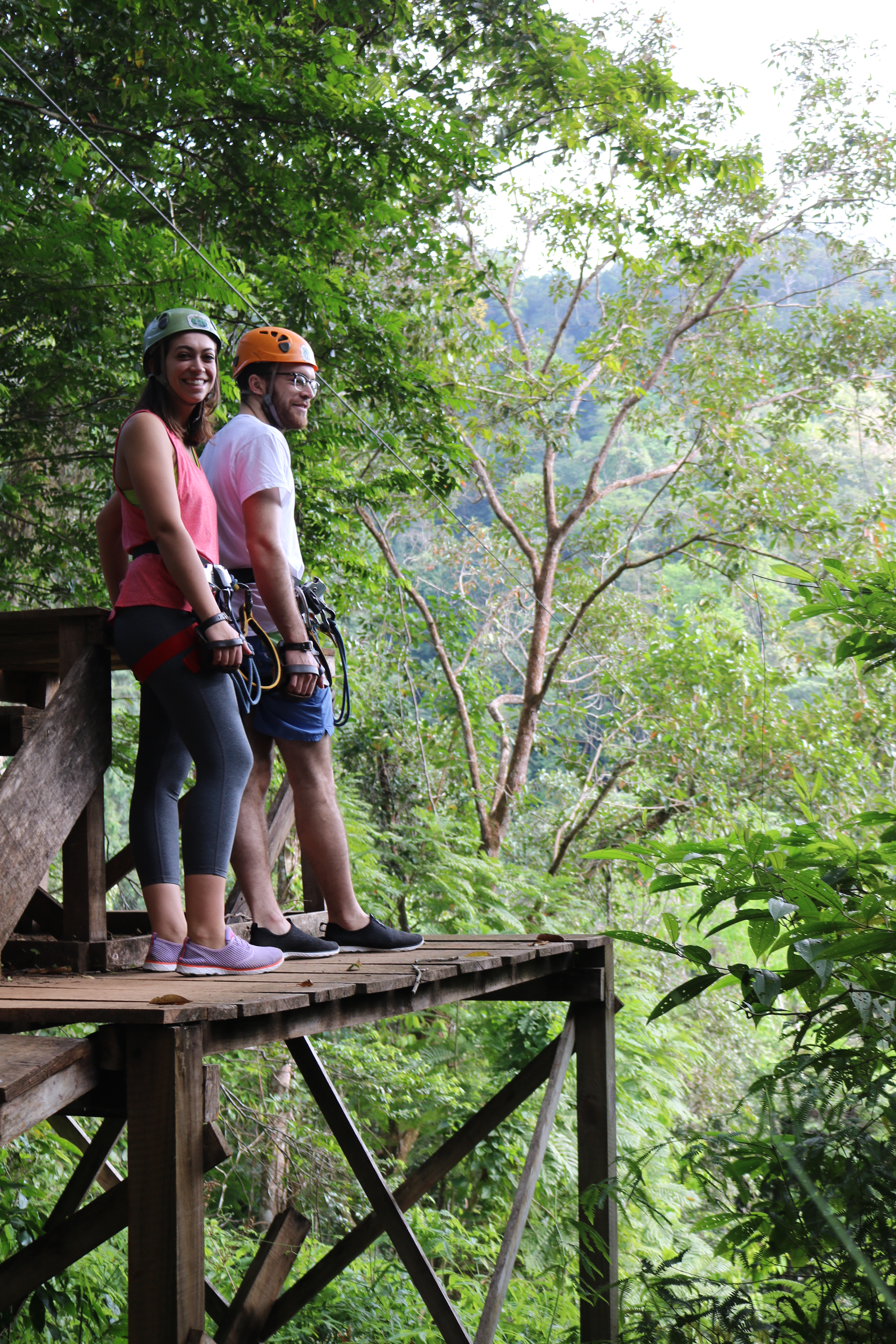
You can’t go to Costa Rica and pass up a chance to zip-line way up high and fast through the canopies of tropical rainforests and jungles. Lucky for us, Osa Canopy Tour was close to Eden’s Nest offering 9 zips, 11 platforms, 2 wobbly bridges, 2 scary drops, and one woohoo Tarzan swing to send you soaring over views of the Pacific Ocean. The adrenaline rush was a good one—it didn’t stop my heart, but it did take my breath away.

I will always remember zip-lining in Costa Rica as one of the most joyful and thrilling excursions I’ve ever shared with my family.
IMG_7552

IMG_7573

IMG_7585

IMG_7638

IMG_7660

IMG_7669

IMG_7663

IMG_7646


CHAPTER SEVEN

Our time at Eden’s Nest ended on January 1st, 2018 and our boat for the Osa Peninsula was scheduled to depart Sierpe for Bahia Drake and Casa Nirvanita at 3:00 the same day. We said goodbye to Carlo, gave Jessica (the most adorable pooch) some belly rubs, and promised to visit again. Carlo and his wife Tineka have exciting dreams for developing Eden’s Nest and they are ready to offer any services that might make a trip to Costa Rica more appealing. Carlo gave us useful advice consistently, including where to find ATM’s and where to grocery shop. It’s fun to check in on their website to watch Eden’s Nest become more and more of a destination ecolodge. One memory I won’t forget: Watching luminous Blue Morpho Butterflies, from a perch on our balcony, taking magical flights through the vibrant greens of Ojochal’s forests.

After grocery shopping (8 days provisions/four foodies), we crammed eight boxes of food/drink/one cooler into our rental car and set off for the outpost town of Sierpe. I immediately worried about how we would fit our suitcases, plus eight boxes of food and drink and one cooler, plus every member of our family onto a 28′ boat hired to help us find utopia.

Pura Vida! My husband, my son, and my daughter said. And they were right. The boat handled everything just fine. By the time the sun set on the first day of a new year,

the real world had fallen off our radar.
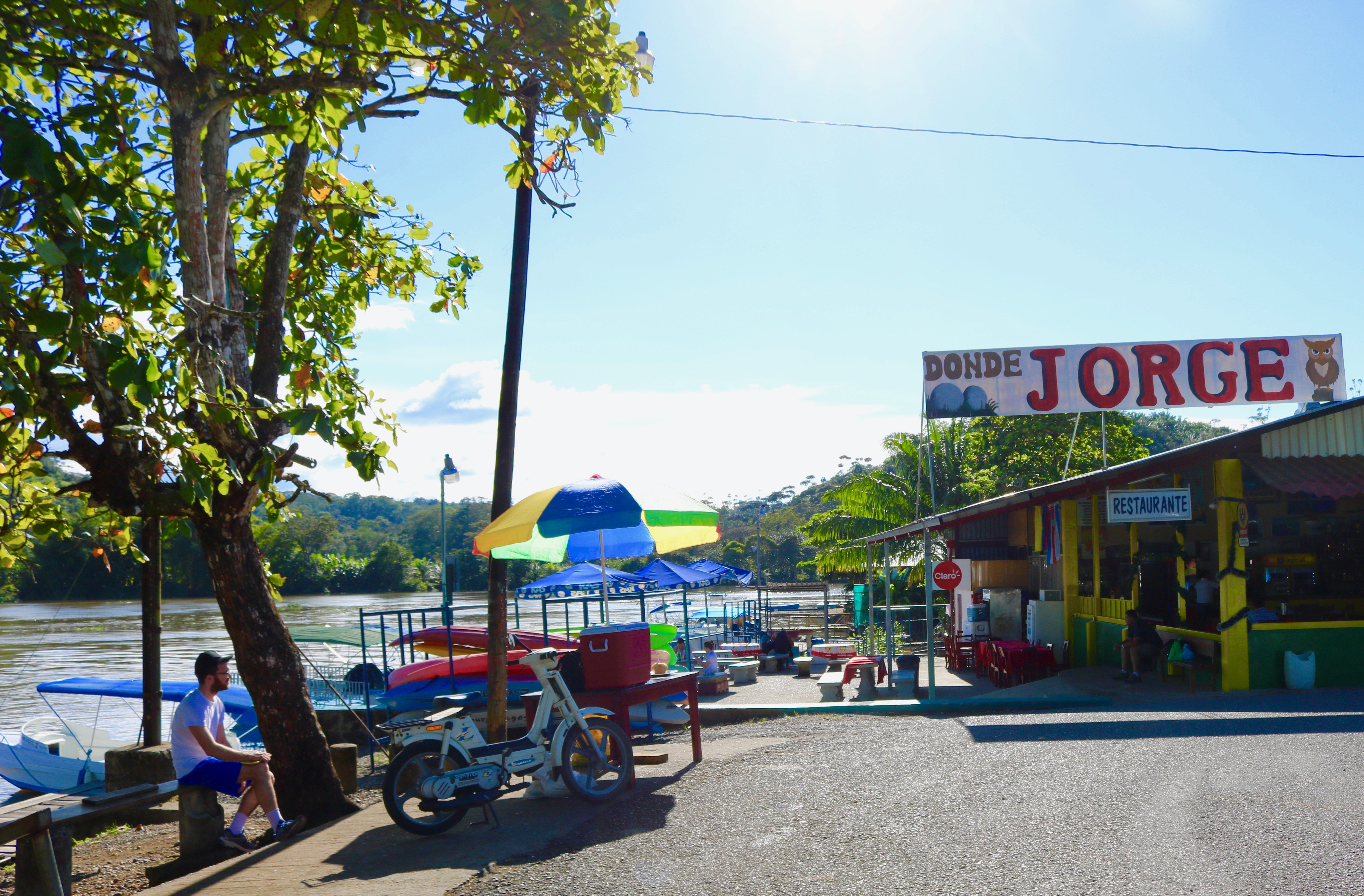
IMG_7764

Last supper before departure from the port of Sierpe, Costa Rica.

IMG_7762

Our cruise ship.

IMG_7765


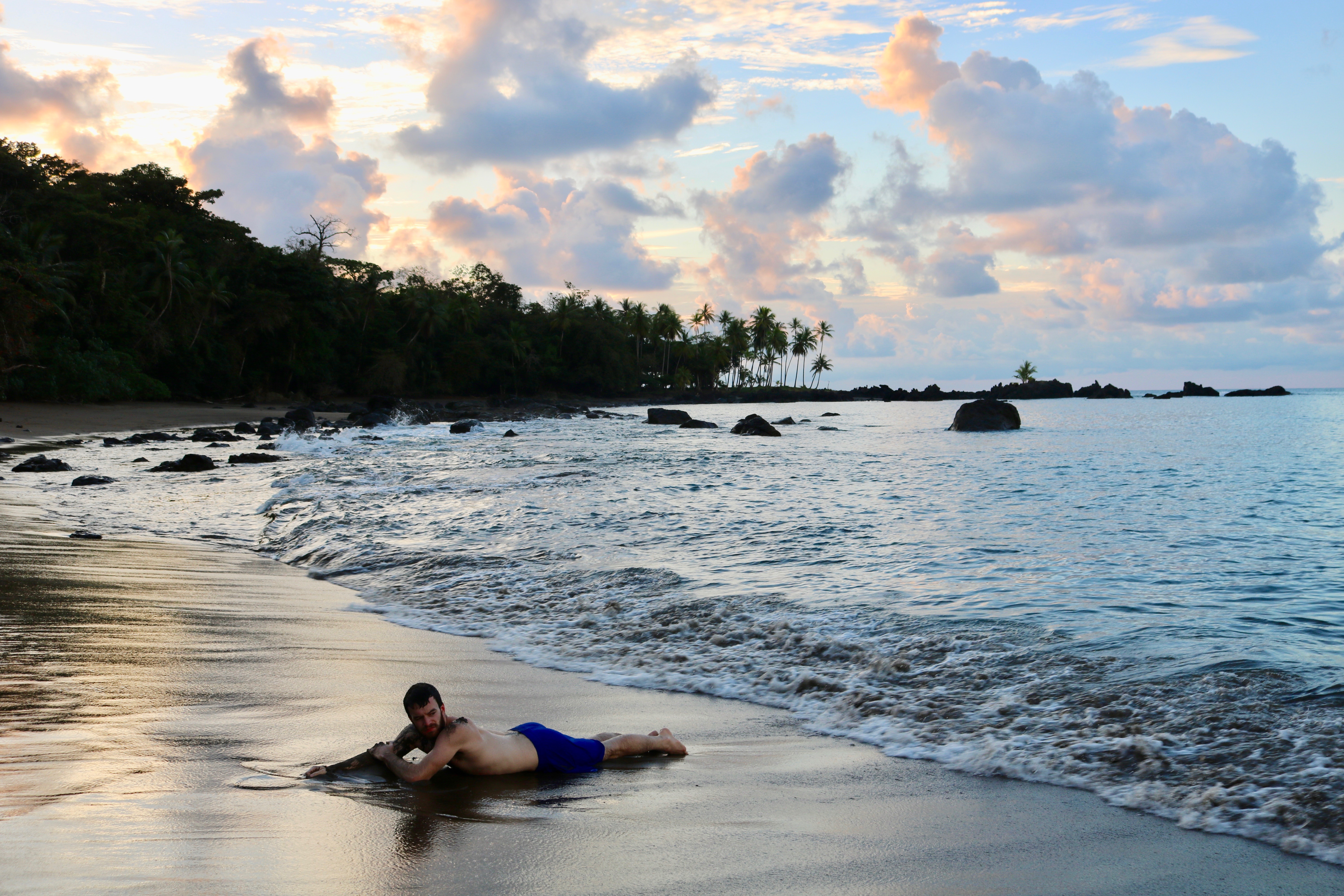
Landing somewhere near the equator in Central America.
IMG_7804

IMG_7805

IMG_7812


CHAPTER EIGHT

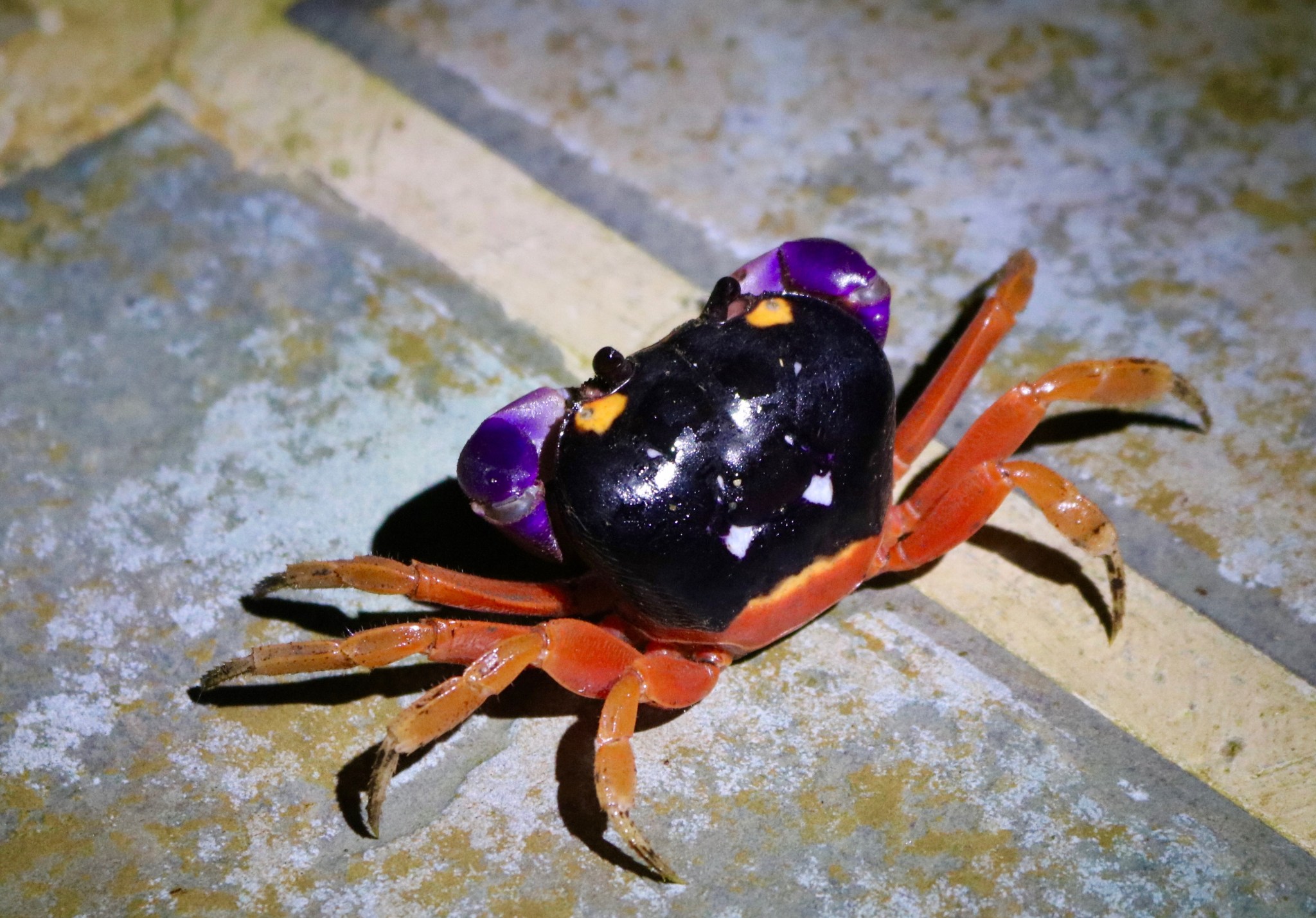
The first of many wild friends in our newfound utopia on the Osa Peninsula greeted us by moving into our shoes while we ate dinner after arriving. Halloween Moon Crabs. We didn’t know what they were when my husband noticed shadows moving on the porch. But our hosts had ensured us, “there is nothing here that will harm you!” so we shook the colorful crustaceans out of the shoes and found them to be somewhat likable.
IMG_7846

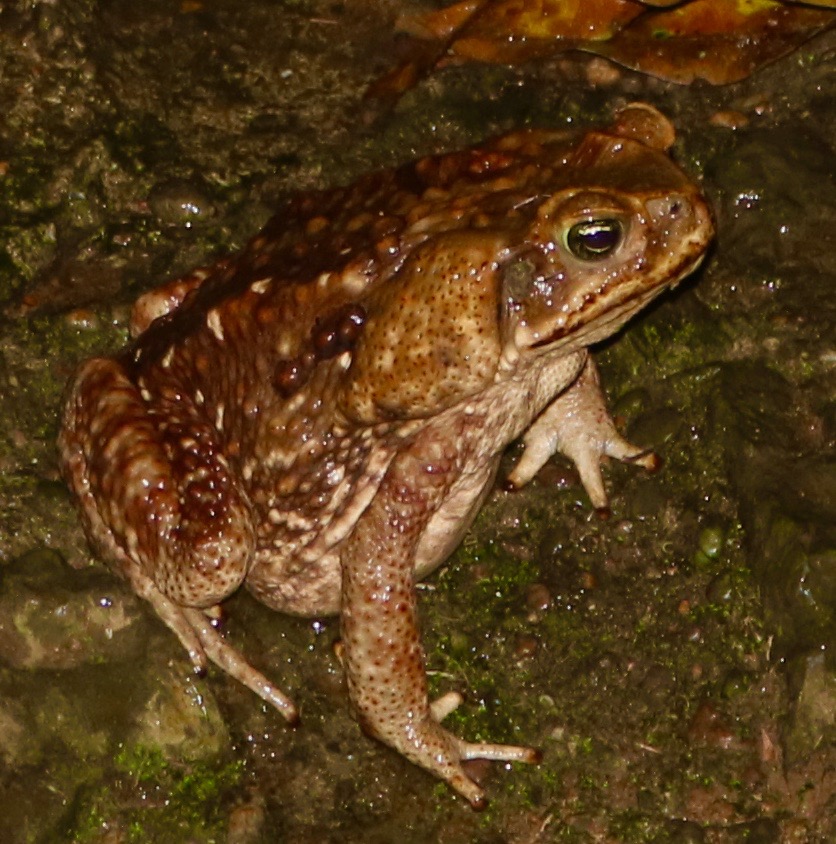
The house came with a cute cat, even so, Cute Cat didn’t seem interested in the crabs or giant Smoky Jungle Frogs (one of Costa Rica’s largest amphibians) that shared our living spaces and environs. The Smoky Jungle Frog we met could have been a prince. It was first spotted by my daughter on a night hike several pitch-black trails away from our house. “O.M.F.G.” She whispered.  “Don’t anyone move. There is something BIG looking right at me.” Here is an example of another reason why I travel with my children. My daughter, though she isn’t loopy over strange things that stare at you in the night, is a champion huntress. She’ll never miss a creature feature party, especially one promising unexpected guests in unusual settings. Later that evening, she spied an even bigger amphibian watching her from the comfort of damp, leafy jungle brush close to the house after she had settled in to enjoy a glass of wine. Surely, we joked, Smoky Jungle Frog had followed her and was hoping for a kiss that might change its life forever.

Trying to kiss a Smoky Jungle Frog in Costa Rica probably wouldn’t end well, according to a random Internet fun search: “In addition to inflating its body to appear larger, the Smoky Jungle Frog protects itself by secreting a toxin known as leptodactylin. This poison is released from its skin when it is handled, and it can cause rashes or a stinging sensation in humans, especially on any open cuts. The frog is capable of vaporizing this toxin into the air, potentially affecting people who are nearby without touching it.” 

As it turns out, it wasn’t a Smoky Jungle Frog disturbing the peace of my daughter’s evening. It looked more like the largest toad in the world, the Cane Toad, and although there are those who promote the licking of these toads to bring on hallucinogenic visions, that probably wouldn’t end well either. The Cane Toad’s glands are packed with enough poison to kill large animals. Science is studying the toad’s medicinal healing possibilities, but human reaction to recreational experimentation with the toxin can be unpredictable and potentially lethal.
IMG_8753

As the days and nights passed in our Jungle Palace (we lit the house with candles at night and it felt like we were living in a wonderful, mystical, lost-world palace) it became evident that Cute Cat had no desire whatsoever to patrol our living and sleeping quarters for creepy crawlies, creepy hoppers, creepy flying things, and/or super creepy slitherers. Perhaps it was because the Osa Peninsula jungles remain, for now, a stronghold for one of the greatest cats on Earth—the elusive Jaguar—and our palace cat shared some of that coolest-of-cats attitude.

IMG_7826

View from the porch into Casa Nirvanita, a luxurious Jungle Palace.

IMG_7830

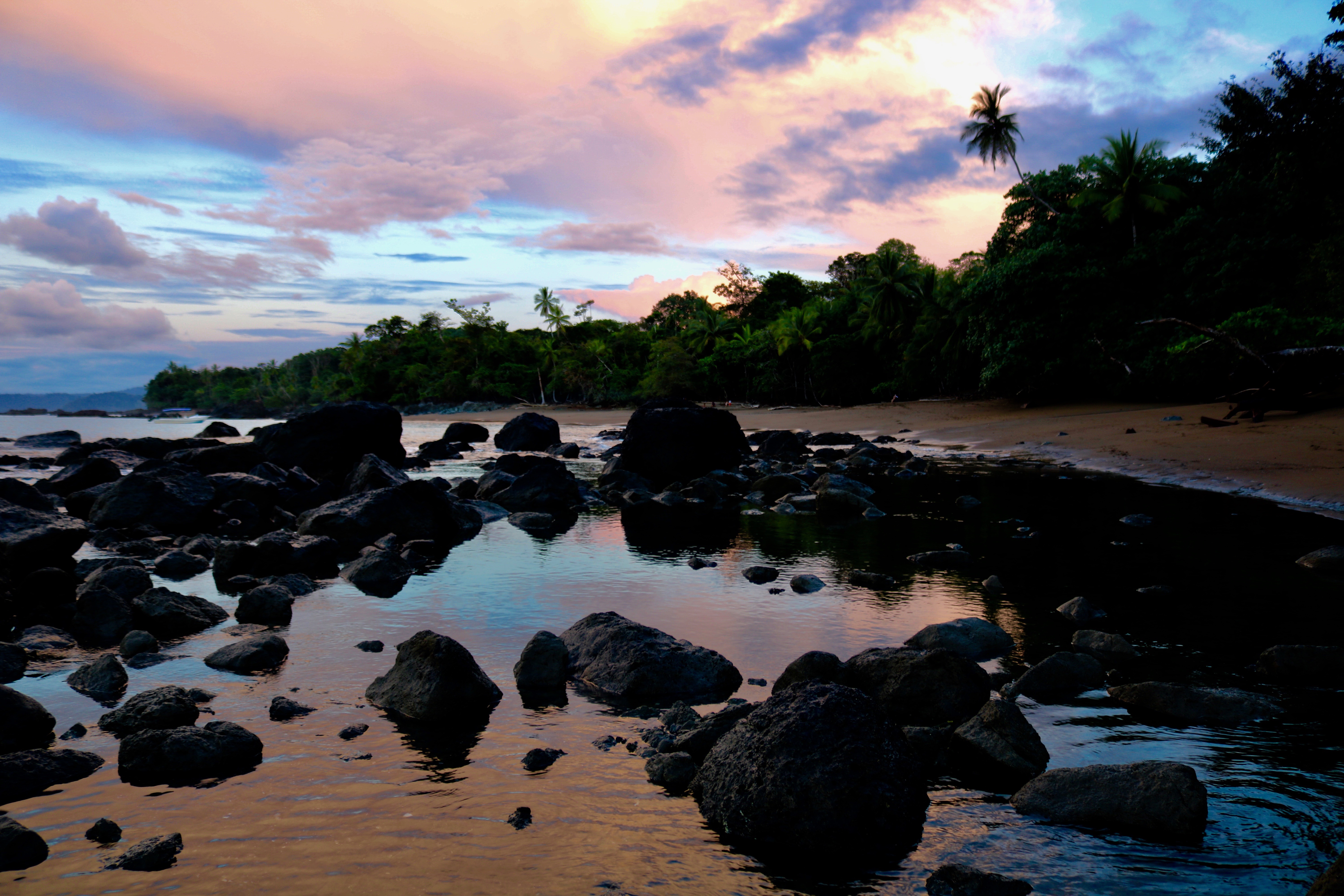
Perfect sand, surf, and tidal pools.

IMG_7938

Paddleboarding.

IMG_7899

Early morning kayaking.

IMG_8182

IMG_8130

Tide in.

IMG_7935

Tide out.

IMG_7906

IMG_8159IMG_8368

IMG_8586


CHAPTER NINE

Ecotourism: Responsible travel to natural areas that conserve the environment, sustain the well-being of local people, and support interpretation and education. (TIES. The International Ecotourism Society.)

The Sixth Extinction: “Though it might be nice to imagine there once was a time when man lived in harmony with nature, it’s not clear that he ever really did.” Elizabeth Kolbert

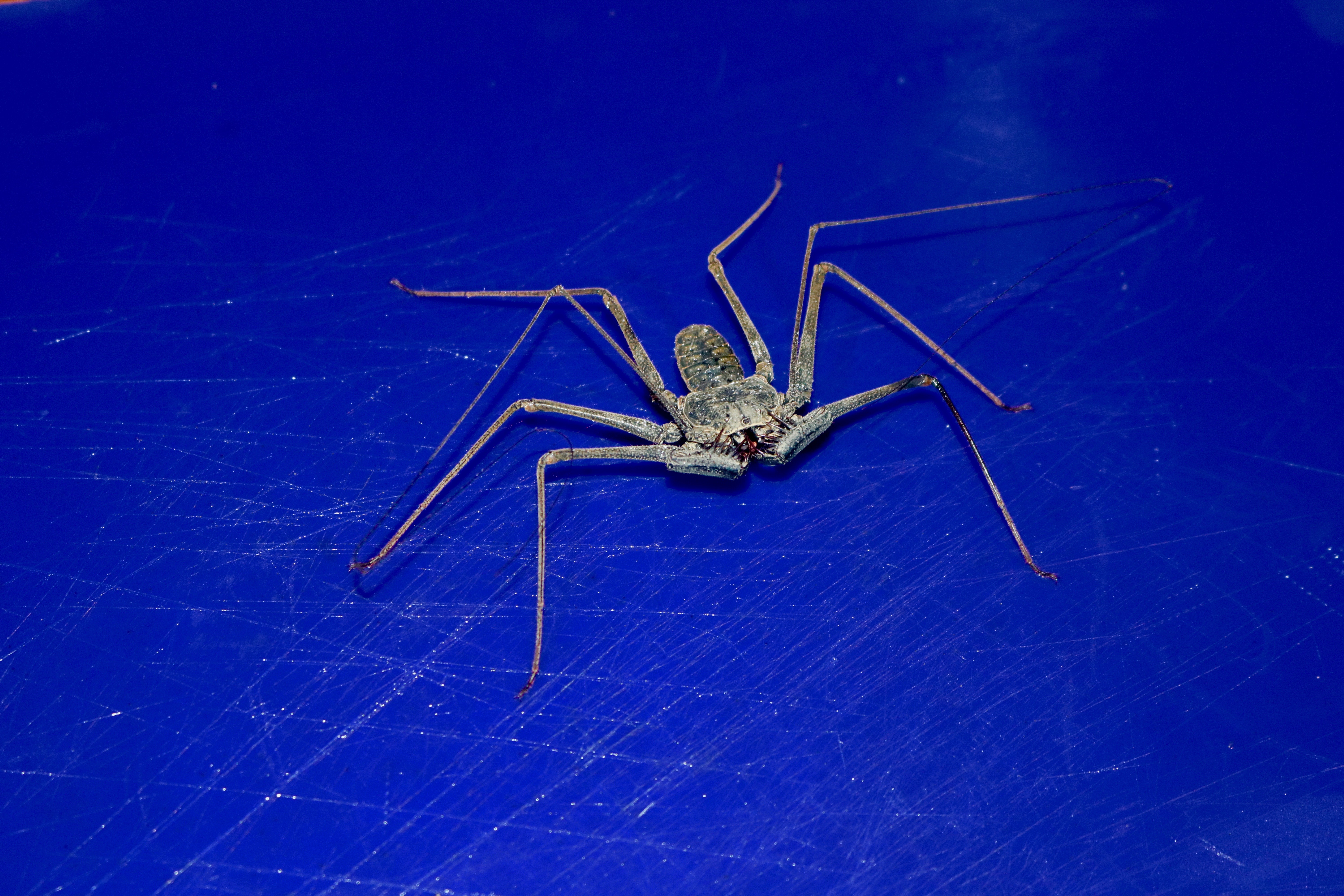
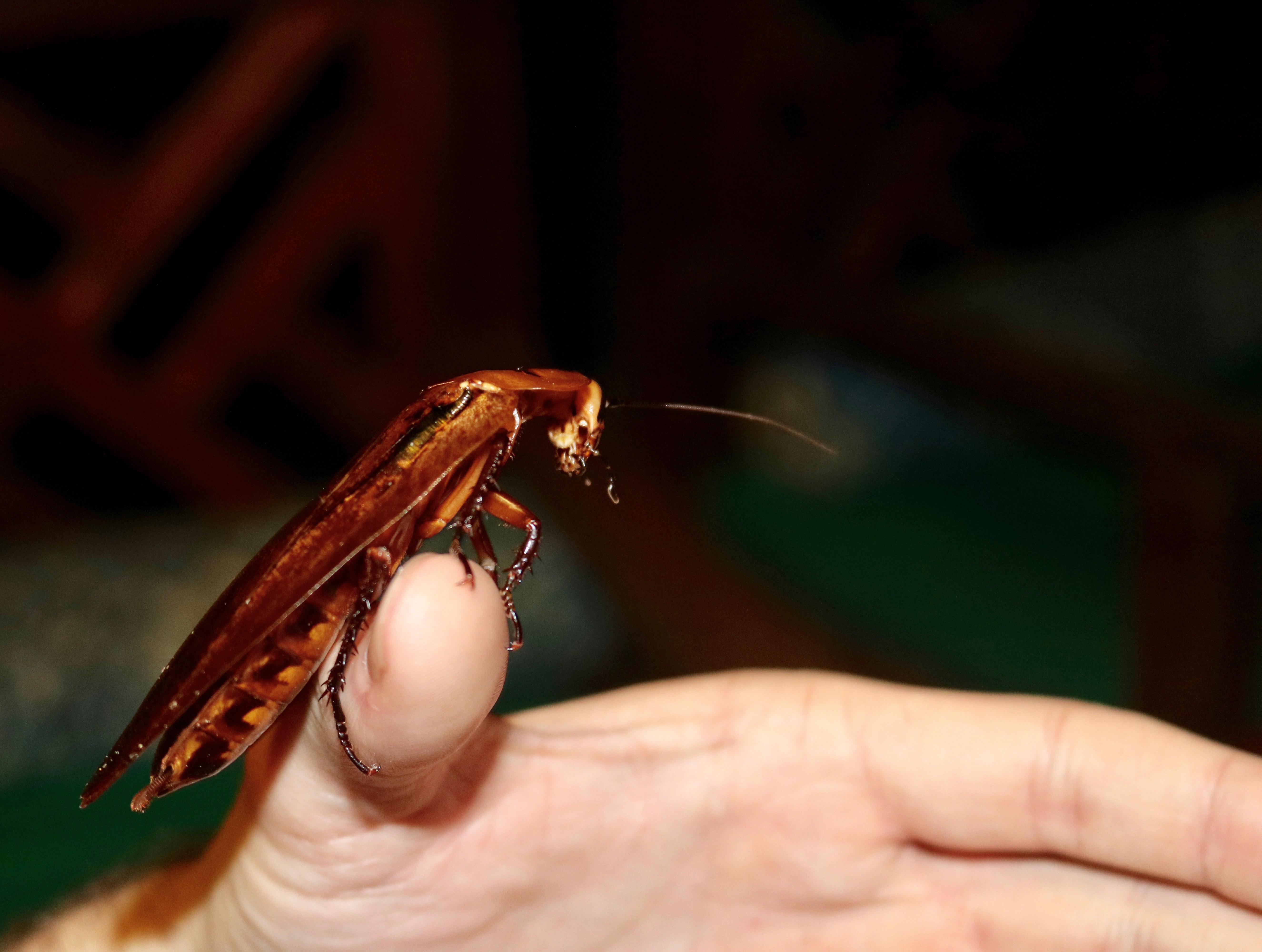
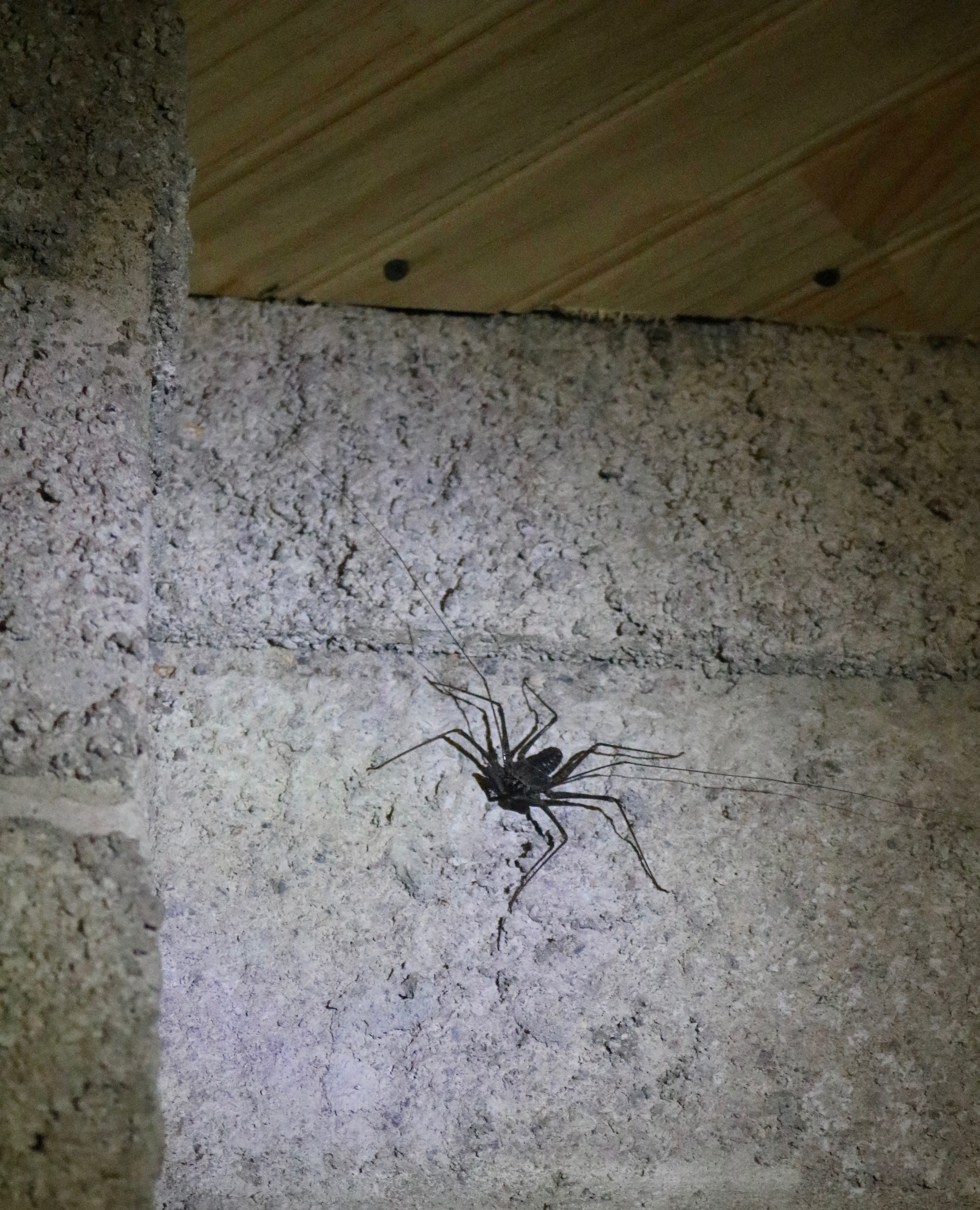
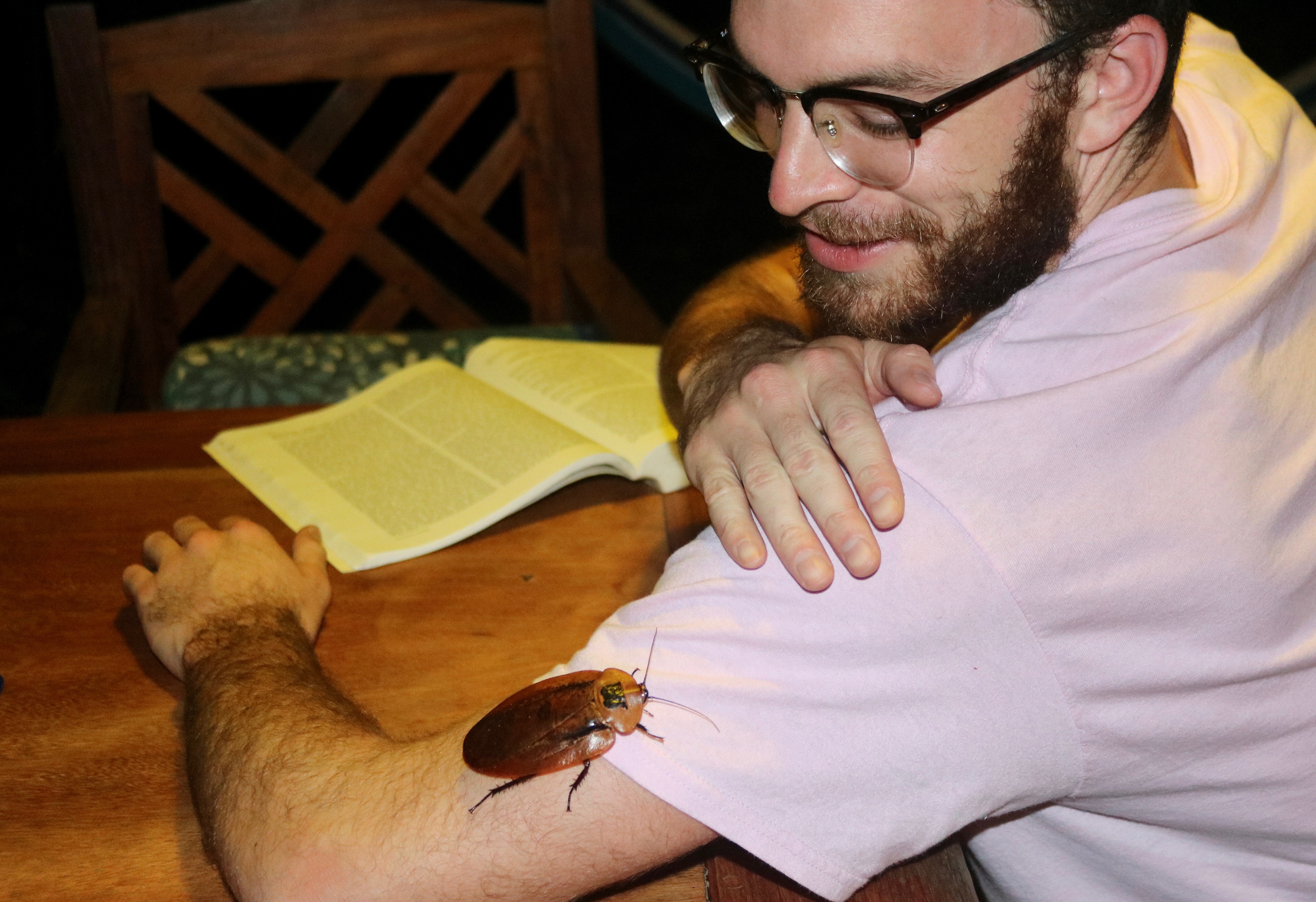
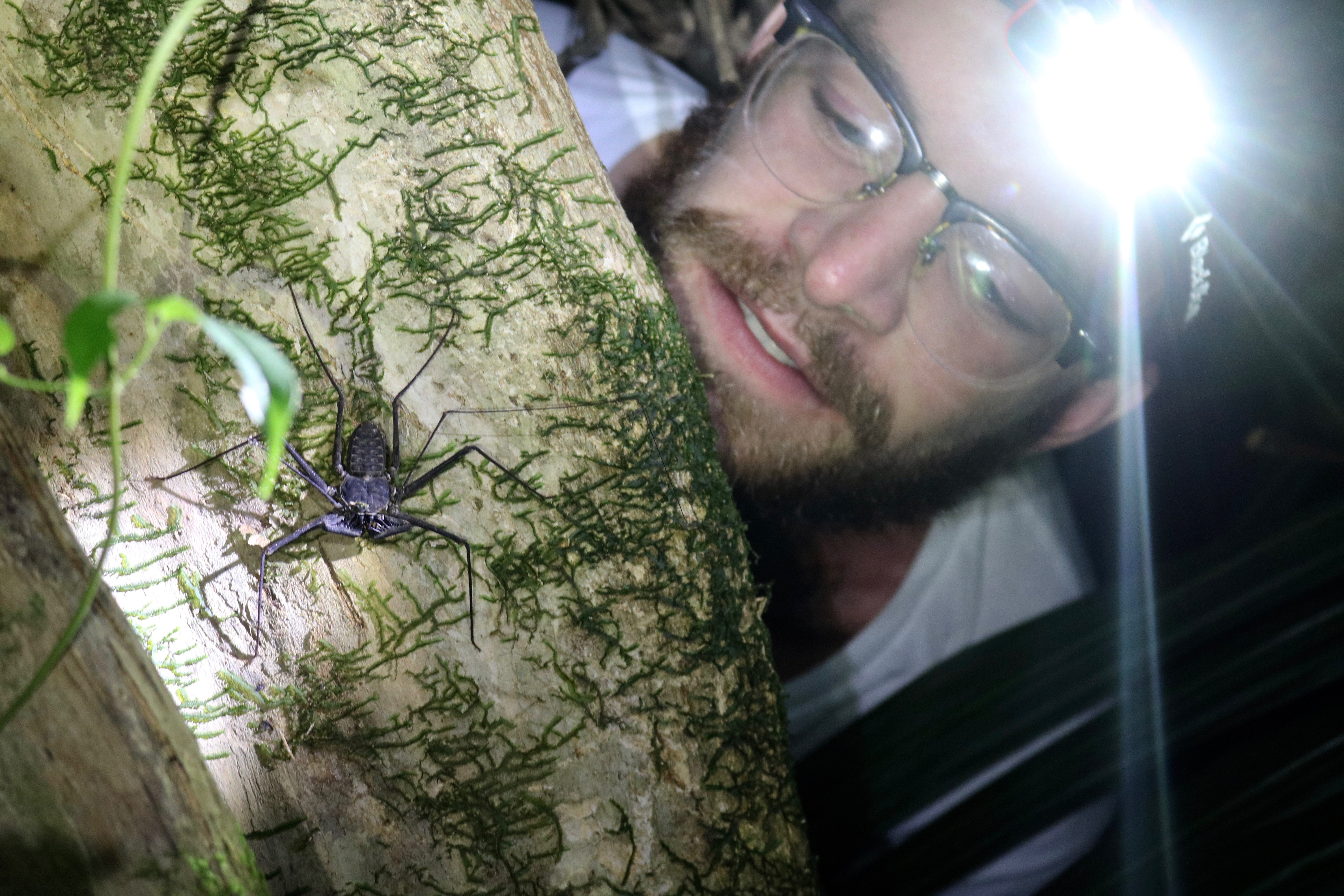
One evening a deluge of rain poured from the night sky, keeping us inside our palace shelter. Refugees from the storm soon appeared on the kitchen shelves (Common Tink Frog), on the walls (Giant Cockroach, Tailless Whip Scorpion), in the ceilings (bats), and in the corners (more amphibians of the toad variety). It became a night of great excitement and adventurous education. Fortunately for us, my son had devoted one summer during college to the pastime of happily skipping through the woods and fields of the Hudson River Valley collecting insects. Through his guidance, we developed a bit of a crush on Blaberus giganteus, a giant cockroach, and Amblypygi, a Tailless Whip Scorpion. The relief that calmed me when my son could immediately identify the astonishing bugs made the trials and tribulations of raising my kids feel even more triumphant. I didn’t question his authority—I could tell by the levels of admiration and rapture percolating through the humid atmosphere of a wet night in a rainforesty jungle, that my son had waited a long time to meet these impressive creatures on their own turf.

As for the frogs and toads coming in from the rain, what a story they can’t tell about their evolution and survival since long before the dinosaurs walked the Earth and long before flowers bloomed on plants, up until these days of present history when research begun in the 1980’s in Costa Rica reported a somber decline in, and vanishing numbers of, frogs.

But it’s a story we can try to understand through science, research, and the deliberate choice to free our minds from the confines of chosen ignorance while opening them to the possibilities of genuine truths about Planet Earth and Life. If all of this sounds like an exhausting and boring way to spend a vacation in paradise, it isn’t. Brain massages administered through the art of thinking can stimulate long periods of obsessed excitement over novel discoveries and wonders of the world. These massages have been proven to ward off the evils of ignorance, apathy, and cynicism while stimulating brilliance, courage, awareness, and—best of all—activism.

Tailless Whip Scorpion. Harmless.
IMG_8545

IMG_8563

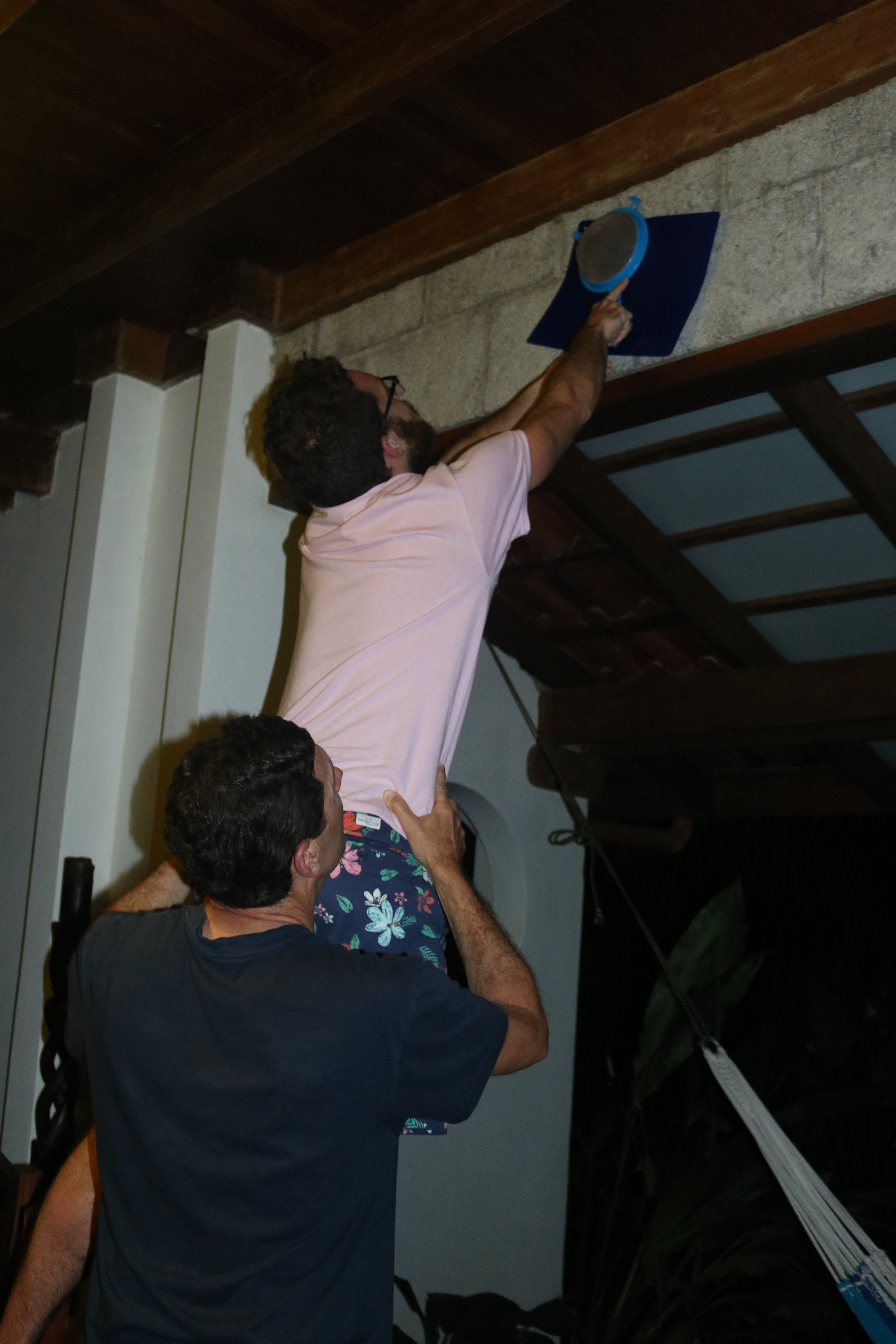
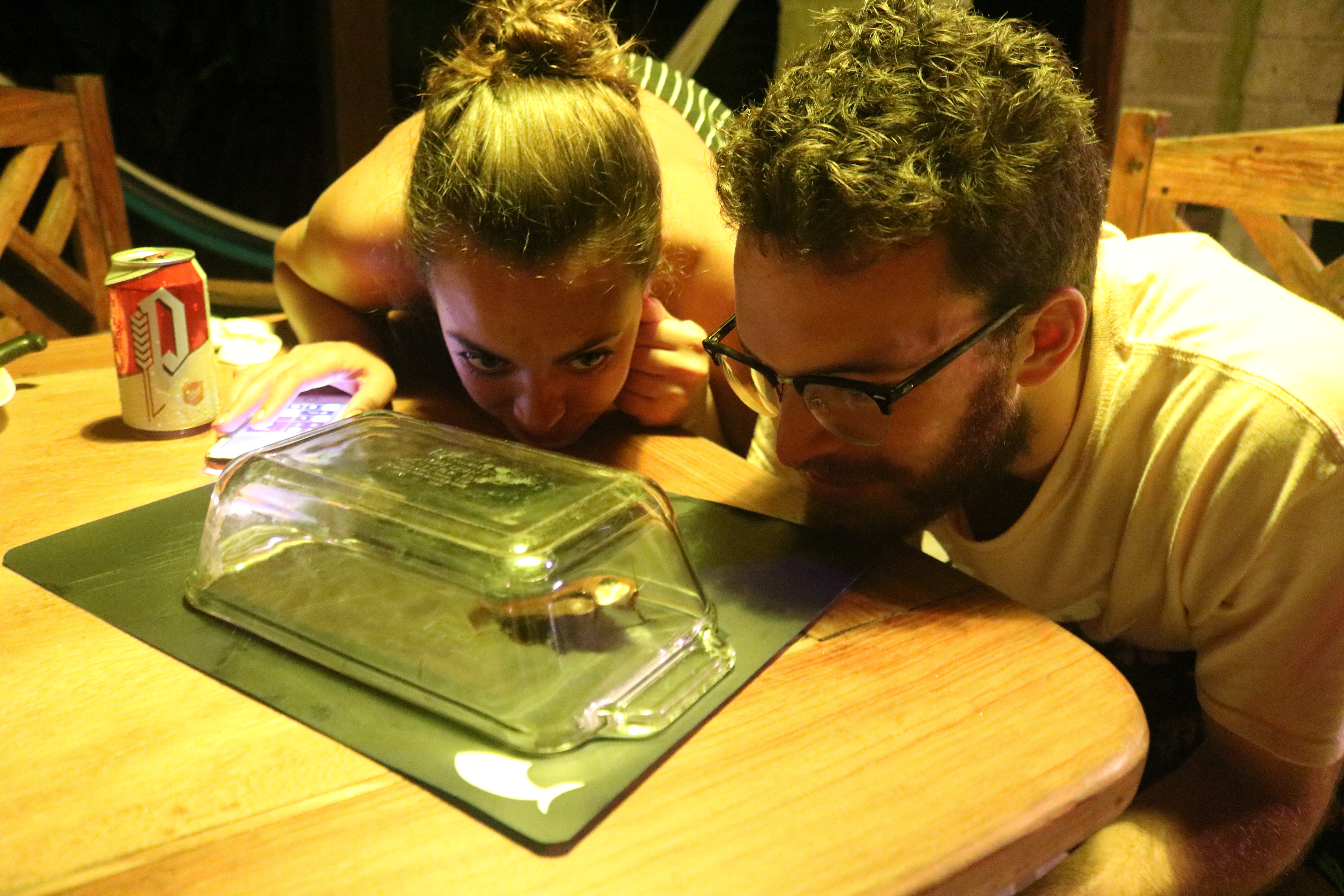
Few adventures are as exciting as spending a rainy night in paradise catching bugs in one of Earth’s most biologically intense jungles. Note the improvisational use of common kitchen utensils and containers as hunting and observation devices.
IMG_8523

IMG_8525

Blaberus giganteus. Our host, German, names this jungle bug his favorite.
IMG_8539IMG_8536

In the night jungle: Tiny frogs. Blue dragonflies. Blue crayfish. Opossum in a tree. Smoky Jungle Frog. Spiders. A lot of the handsome Tailless Whip Scorpions.

The Tailless Whip Scorpion on a tree in the jungle at night. This bug, in spite of having what appears to be an awkward, cumbersome collection of legs, can actually scamper rapidly up and down trees.
IMG_8745


CHAPTER TEN

A short walk from Casa Nirvanita, one of the transportation “hubs” for the Osa Peninsula has been set up.  It’s marked by a spare, wooden shelter where backpackers, day hikers, eco-lodge tourists, and other travelers wade through the water to hop on small boats for guided (required) tours to the Sirena contact station at Parque Nacional Corcovado and/or guided (also required) snorkeling tours to Isla del Caño. Our Casa Nirvanita hosts arranged a wildlife tour of Corcovado National Park and a snorkeling tour of Caño Island for us.

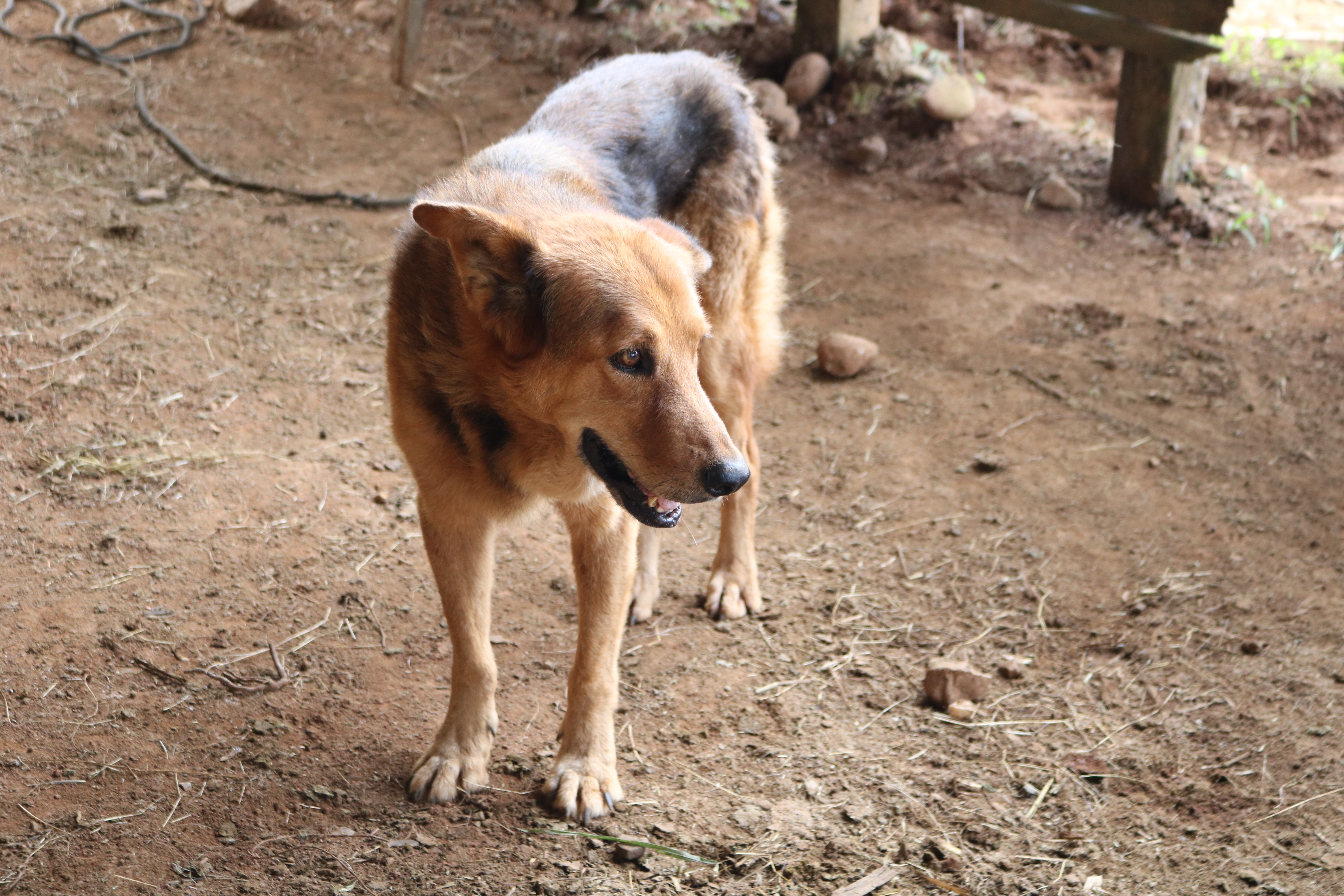
A public transport hub in Drake Bay and one of the many community pooches. In Costa Rica, we noticed stray dogs were friendly and well fed.

IMG_8373

IMG_8066

Corcovado National Park is a vibrant habitat for wildlife on the Osa Peninsula. Everything Exciting and Everything Scary and Everything Endangered exists somewhere in Corcovado National Park. (There’s gold in them ‘thar hills too.) For me, a guide added a layer of possible protection from the Everything Scary category of wild animals. I carried a first aid kit everywhere we went (because everywhere we went required walking through a jungle) but after researching the feared Terciopelo (aka: the highly venomous Fer-de-Lance Pit Viper) and noting its aggressive nature, the first aid kit had come to feel like dead weight in my backpack.

A typical day tour through Corcovado takes a group of 10-12 people quietly into the park with a competent guide carrying a powerful scope. Everyone gets a turn peeking at whatever the guide finds and if the animal behaves and sits still long enough, cell phone cameras can be pressed against the scope’s lens for pics. After a few hours of stalking wild beasts, lunch is served at the park headquarters before another round of quiet walks in search of magical creatures.

It was hot and muggy and since I didn’t get to see a three-toed sloth, I wasn’t sure if the tour satisfied me. I asked my kids what they thought of it. We did see a lot of animals! But there is something about sloths, and we were in Costa Rica…and I knew I might not pass that way again for a long time, if ever. My son’s review of the day rescued me. “Mom,” he said, “it was a Pokemon day. I mean everywhere we went, some animal came popping up out of nowhere.”

It’s true, the animals we saw weren’t like any we’d ever seen. And there they were, hiding out in their own habitats. There are no guarantees in Corcovado National Park that you will see wildlife. The animals are free range.

Short hike to the boat-stop for a one-hour ride to Corcovado National Park.
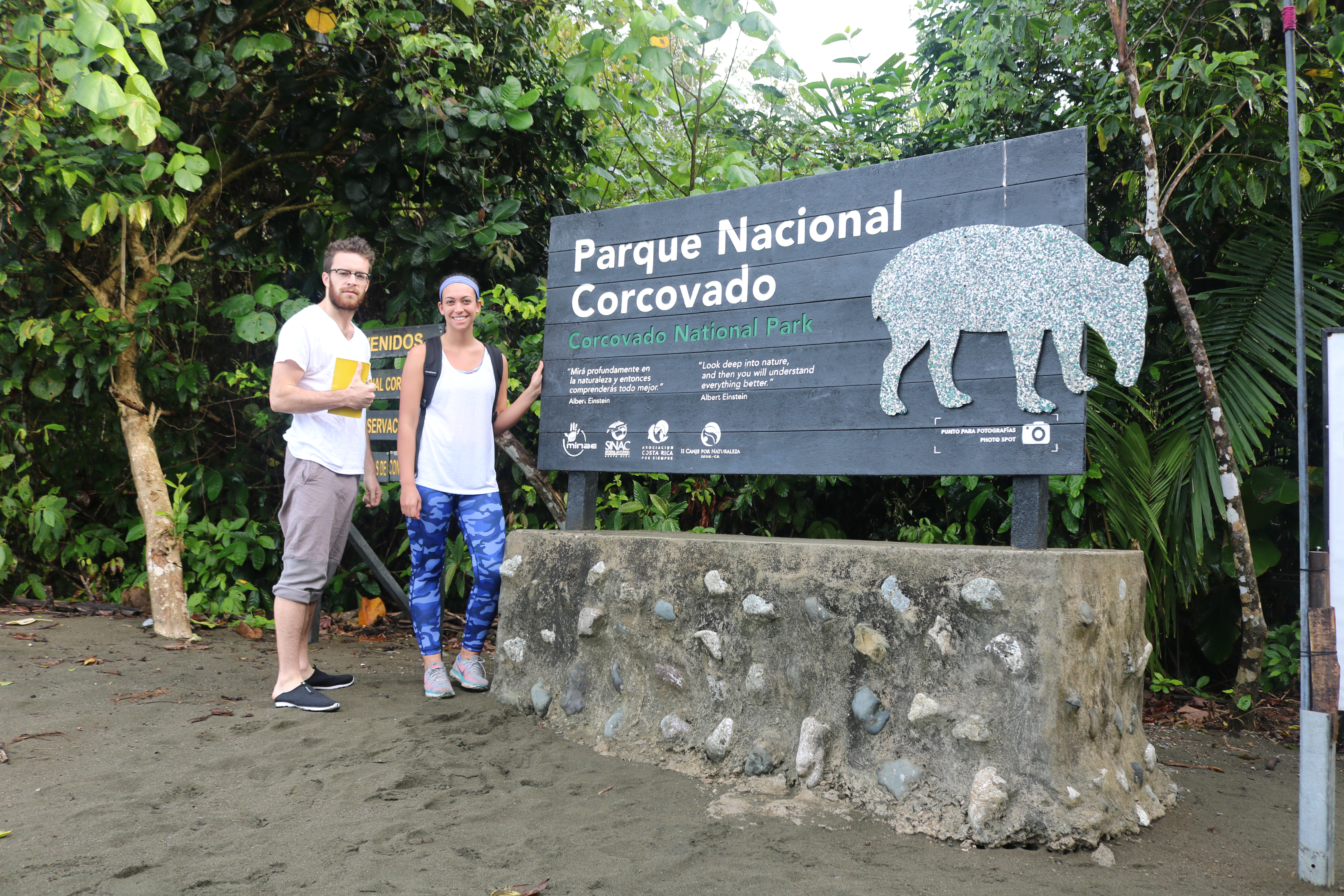
IMG_8073

IMG_8088

Sirena Contact Station for lunch. Note the large cabin with stacked bunks inside mosquito netting. Overnight tours are now on my bucket list. (Awakening at 3AM for breakfast by 3:30 in order to hit the trail early enough to find animals.)

Can you spot the hidden Pokemon?

IMG_8081

It’s a Caiman and it was hiding out in a stream with three others nearby. Below is a boring pic of Rio Sirena during our hike. Such a calm and muddy river…flowing to the Pacific Ocean…and hosting populations of American Crocodiles and Bull Sharks. It’s a long journey from this place to emergency medical care.
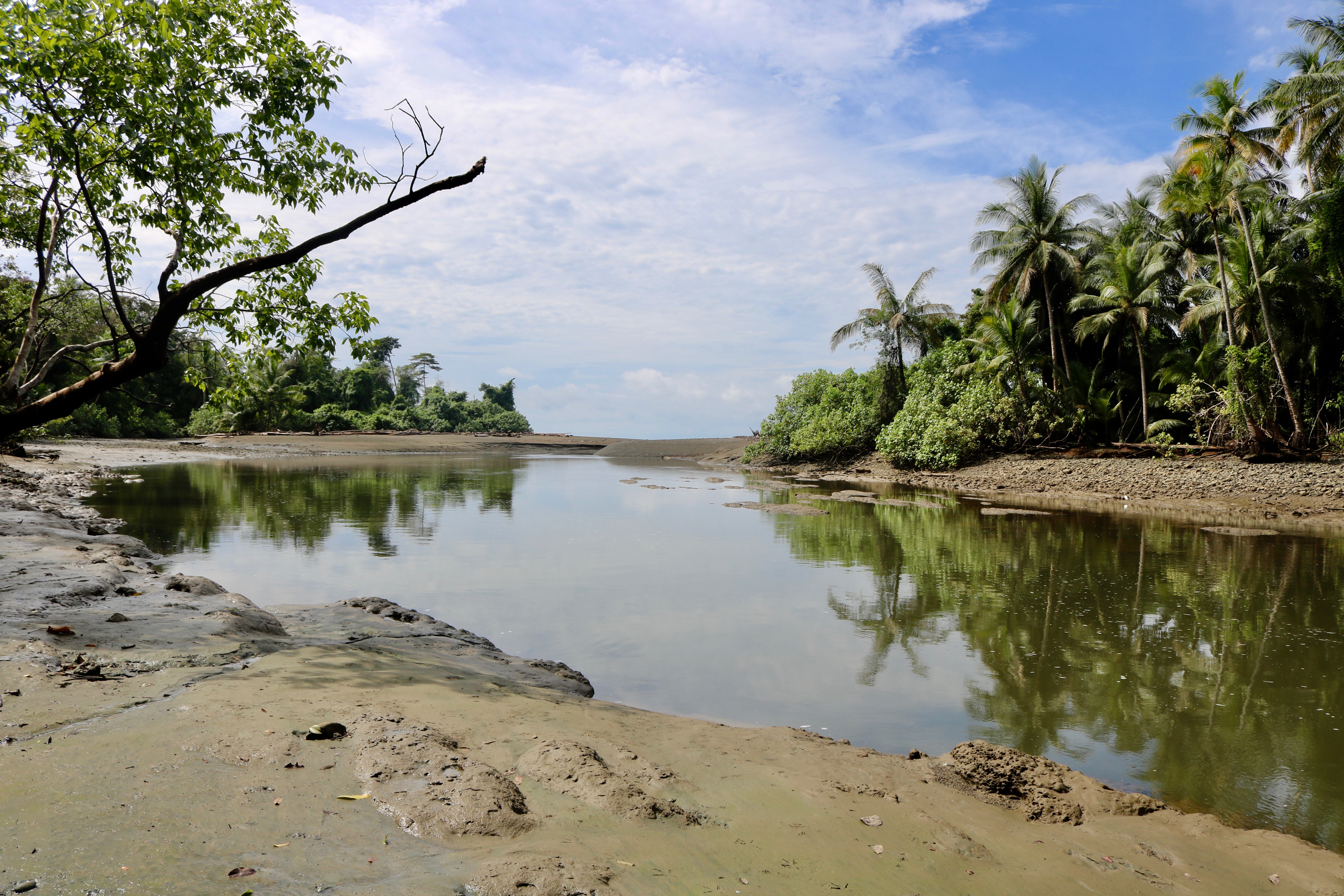
IMG_8093

Wherever you go hiking or walking through slick mud, be cautious when grabbing onto trailside flora for support.
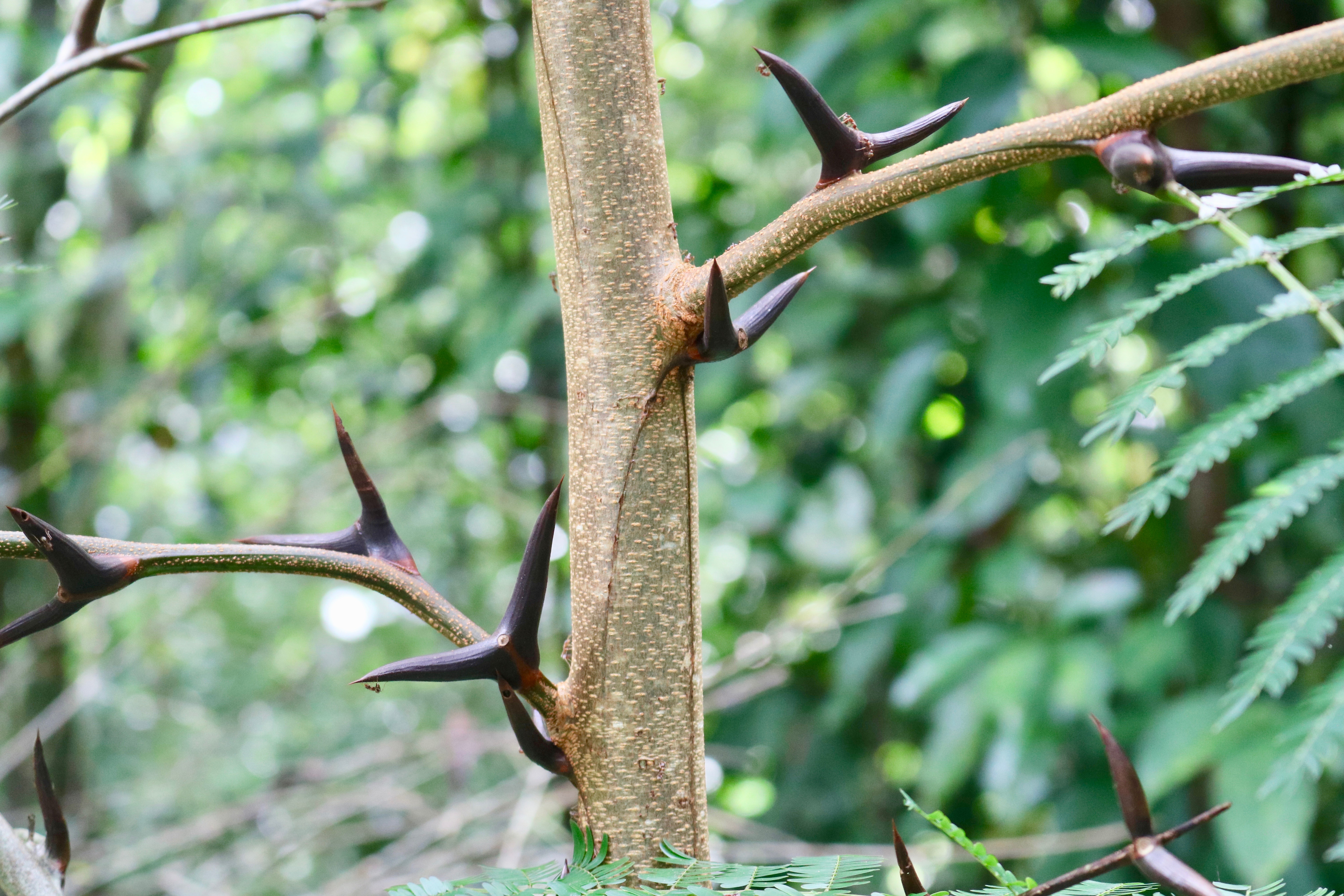
IMG_8122


CHAPTER ELEVEN

Isla del Caño Biological Reserve off the coast of Parque Nacional Corcovado doesn’t seem to have a chance in a world where alarms are sounding throughout the scientific community about the future for Earth’s coral reefs. Some warn the Earth might lose 90% of its coral reefs in the next 30 years. Others say all of Earth’s essential and irreplaceable coral reefs will be gone in 30 years.

You can still dive and snorkel through the protected and splendid coral reefs of Caño Island with a guide. A tour allows time to relax on the island’s remote beaches with the most charming collections of hermit crabs crawling around and hiding inside individually precious shell houses. Our guide, a marine biologist decorated with tattoos of marine life, told us one story of an unfortunate encounter with a Stingray. The side of her foot made contact with the animal’s vicious tail as she stepped into the Pacific Ocean to go for a swim. “I just didn’t see it,” she said. She also said the pain was excruciating, there were stitches and meds, and it wasn’t a big deal. After proceeding to educate us about the marine life we might encounter and raising our consciousness about the fragility of the biological reserve, she made a final announcement: “Please, remember to enjoy yourselves!”

We snorkeled along walls of coral teeming with a lot of our favorite fish, got accepted into an elite school of high-achieving fish, saw a Zebra Moray Eel, and observed several graceful Stingrays gliding through their own marvelous worlds under the sea.

IMG_8385

IMG_8438

IMG_8388

IMG_8442

IMG_8439


CHAPTER TWELVE

“Toucan!”

Such extravagant achievements of Mother Nature! Up close and personal (they delighted us every day at Casa Nirvanita) these birds supersede their images as cartoon characters and cereal box ambassadors.
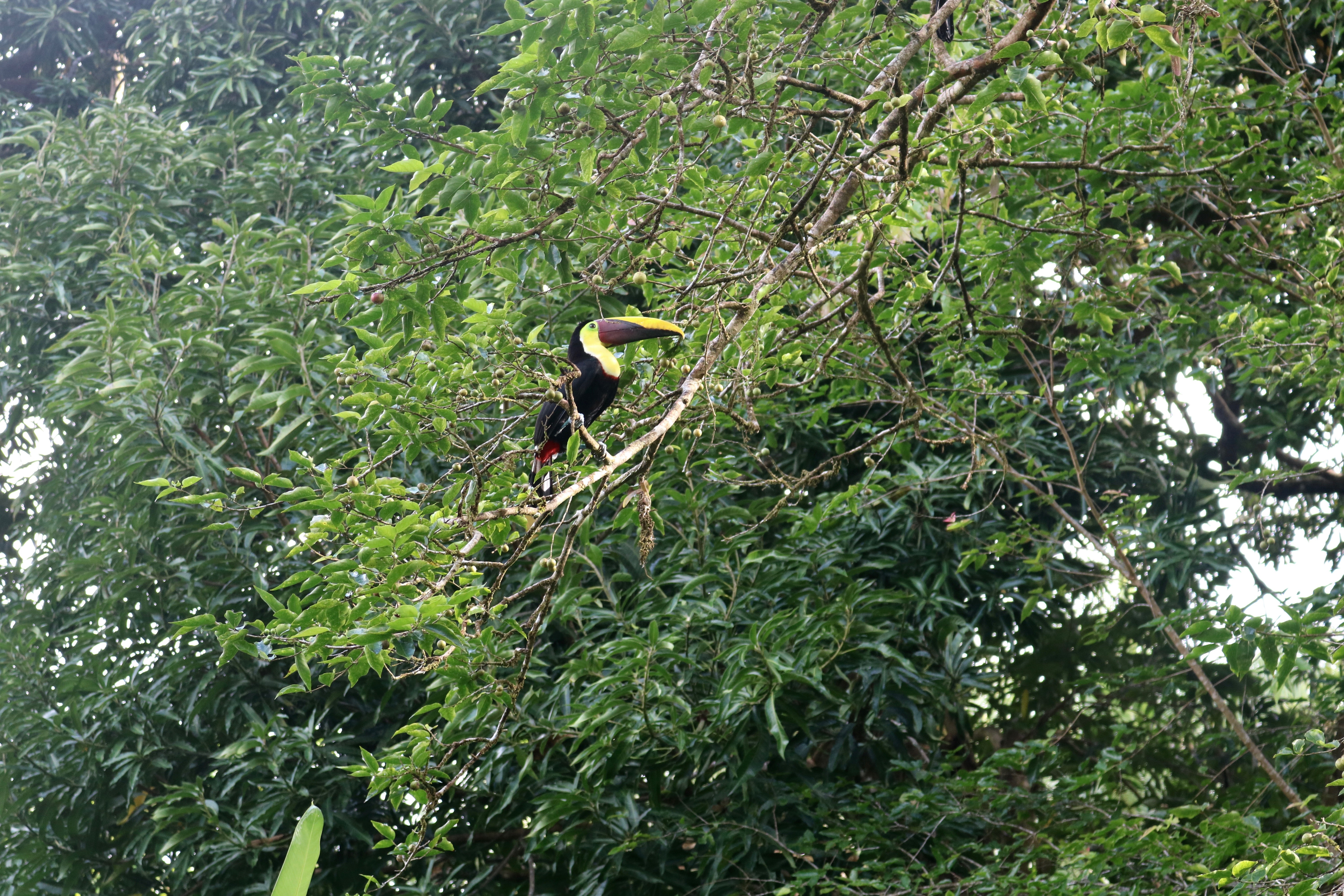
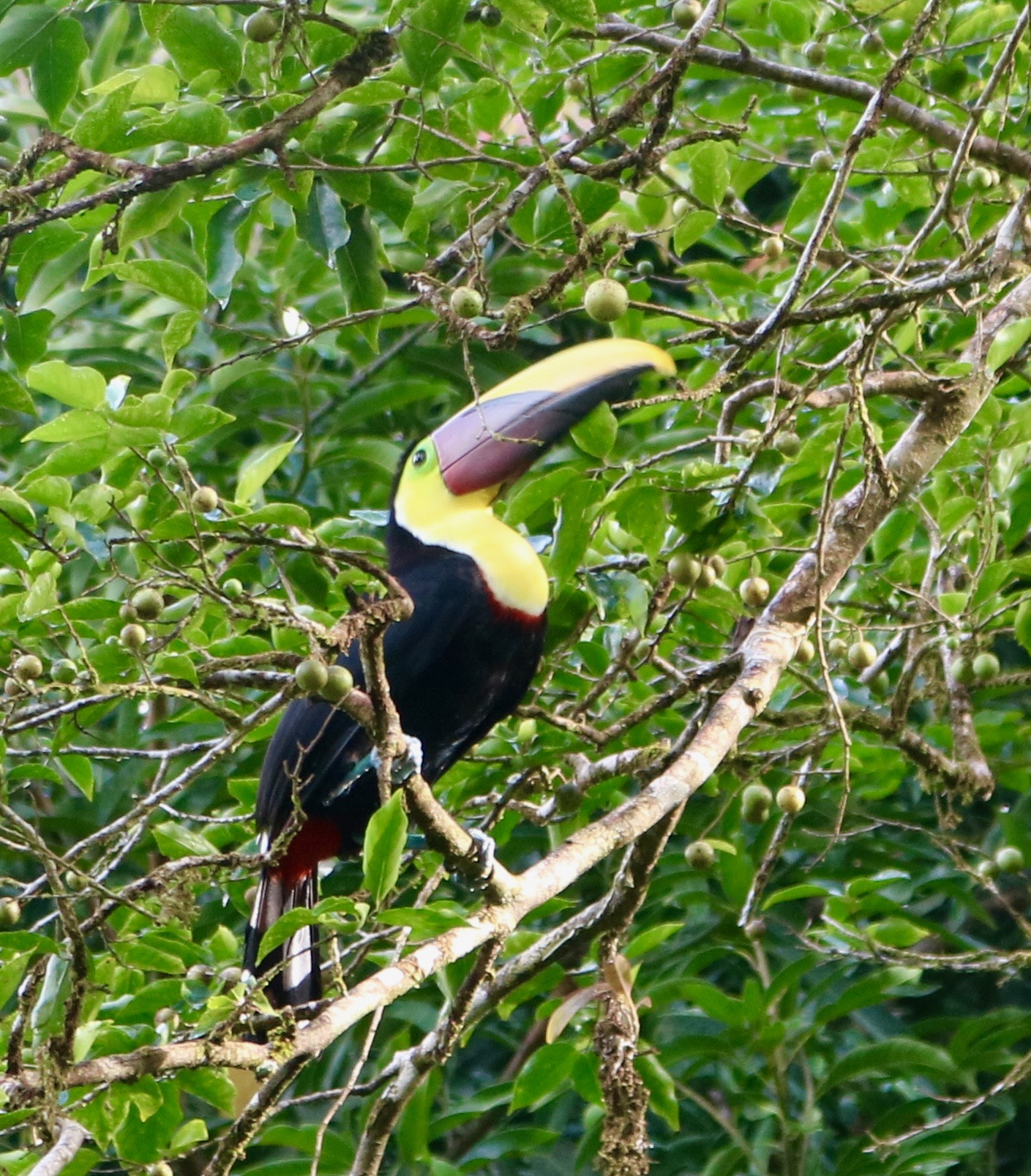
IMG_8604

IMG_8603

A Toucan in flight!

IMG_8244


CHAPTER THIRTEEN

As for the Scarlet Macaws. 😦  Costa Rica’s Osa Peninsula is a surviving outpost where these largest of parrots still exist in the wild. The birds are far too prized as pets and must be protected from poachers. They are intelligent, noisy, adorned with royal avian plumage, and several of them lived in the jungles along our beach.

Scarlet Macaws mate for life.
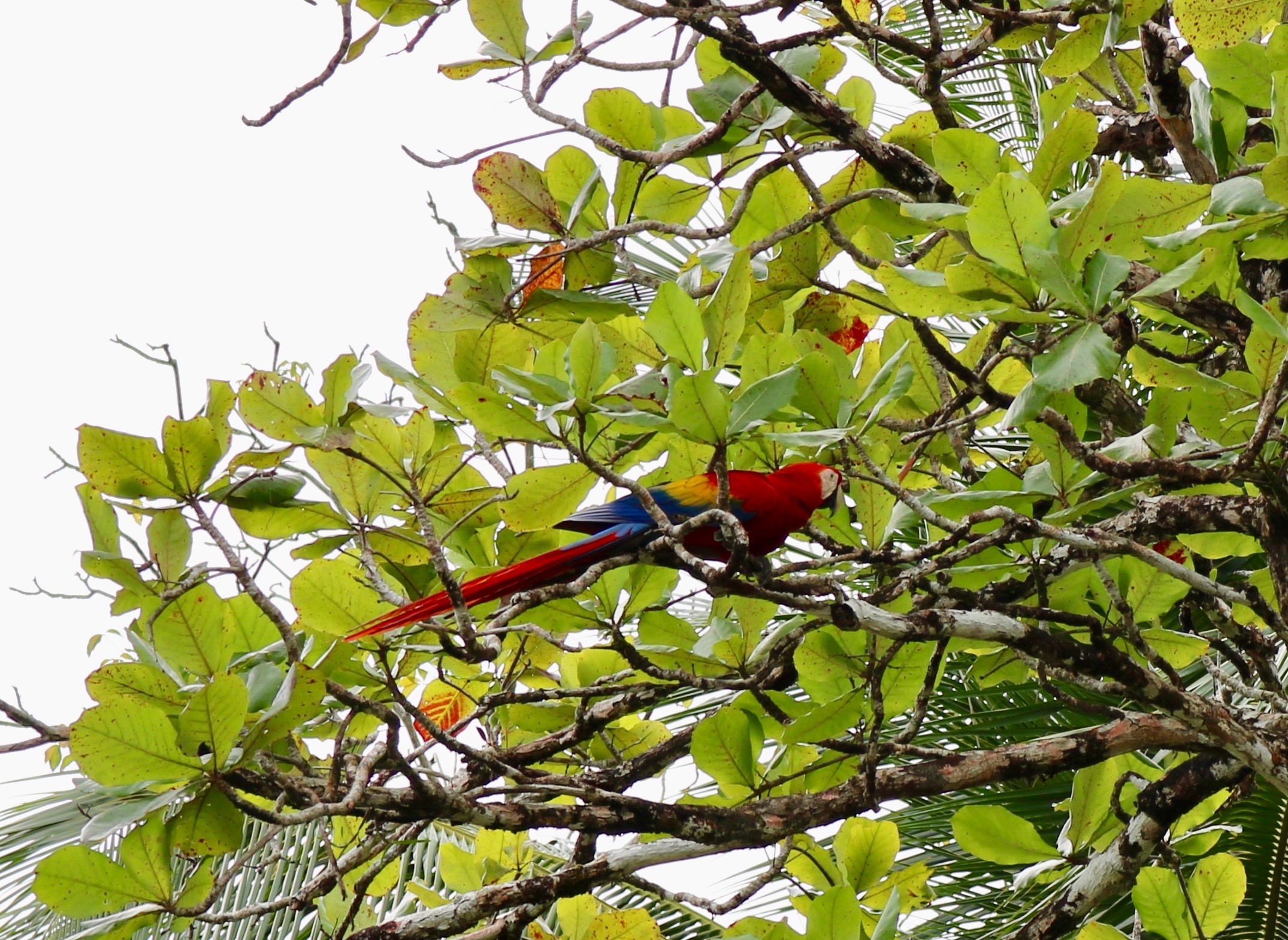
IMG_8189

IMG_8196

IMG_8213

IMG_8197


CHAPTER FOURTEEN

What about the monkeys? Captivating, cute, ferocious, and eerie. Never have the unfathomable spans of evolutionary history come to such a howling stop as the moment I watched a White-faced Capuchin Monkey—after days and days of observing them swinging, sailing, and lounging in the jungle canopies—stand up and take a few steps. Spine tingling and funny bone shivering.

All four species of Costa Rica’s native monkeys inhabit the Osa Peninsula. Three of them, the White-Faced Capuchin, Geoffrey’s Spider, and the Mantled Howler swing through the treetops using prehensile tails, which are like an added limb. A fourth species, the Central American Squirrel Monkey, uses its tail mostly for balance.

Those prehensile tails gave a colony of White-faced Capuchins an unfair advantage over us when we entered one of their fiercely protected territories while hiking from Casa Nirvanita to Playa San Josecito. The little rascals probably wanted any picnic hidden in our backpacks and from what I observed, they were good at getting what they wanted—the wrack line near their territory was cluttered with tourist debris. (But no dead bodies.) The monkeys outnumbered us by about 20 and they closed in from every direction, snarling, screaming, and chasing. We’d been enjoying the meditative daze of a good hike, weaving in and out of the jungle, up and onto sandy coves, over rocks and through rivers. The surprise attack left us no way out—we were the monkeys in the middle! So we picked up the pace. So did the monkeys. We hollered at them. They screamed back. My husband grabbed a giant stick. The monkeys grabbed sticks. Then, my husband began whipping a big palm tree branch around—trying to take out and sweep away as many agile aggressors as possible. And that’s when I saw an alpha male wrap his prehensile tail around one of those really big palm tree branches and begin running at us with it! The battle of wits only ceased when we made it through that monkey pit and out the other side, where Playa San Josecito sparkled in the sun.

We waited until the tide receded far out before hiking home. Low tide gave us a much-desired option for skirting the monkey zone (we could hike out on the beach, through rocks) and when we began to intrude too close to the monkey pit, they approached the edge of the jungle—some of them venturing out onto the rocks—just to let us know we’d made the right decision about where to walk.

Watching monkeys in the trees.
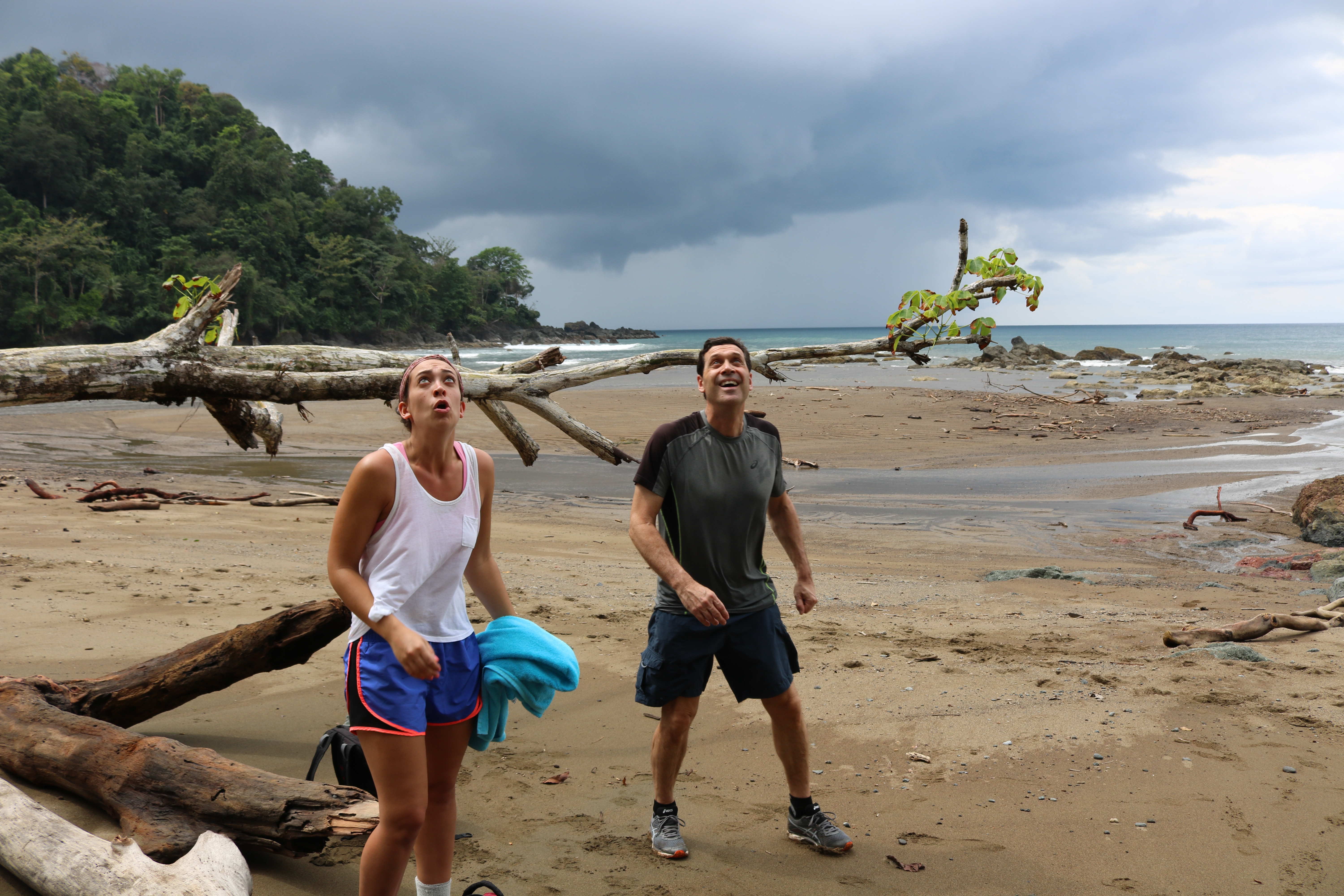
IMG_8021

White-faced Capuchin Monkeys.

Hiking through a colony of bold monkeys. Note the alpha male with a soldier on his back screaming in harmony at us.
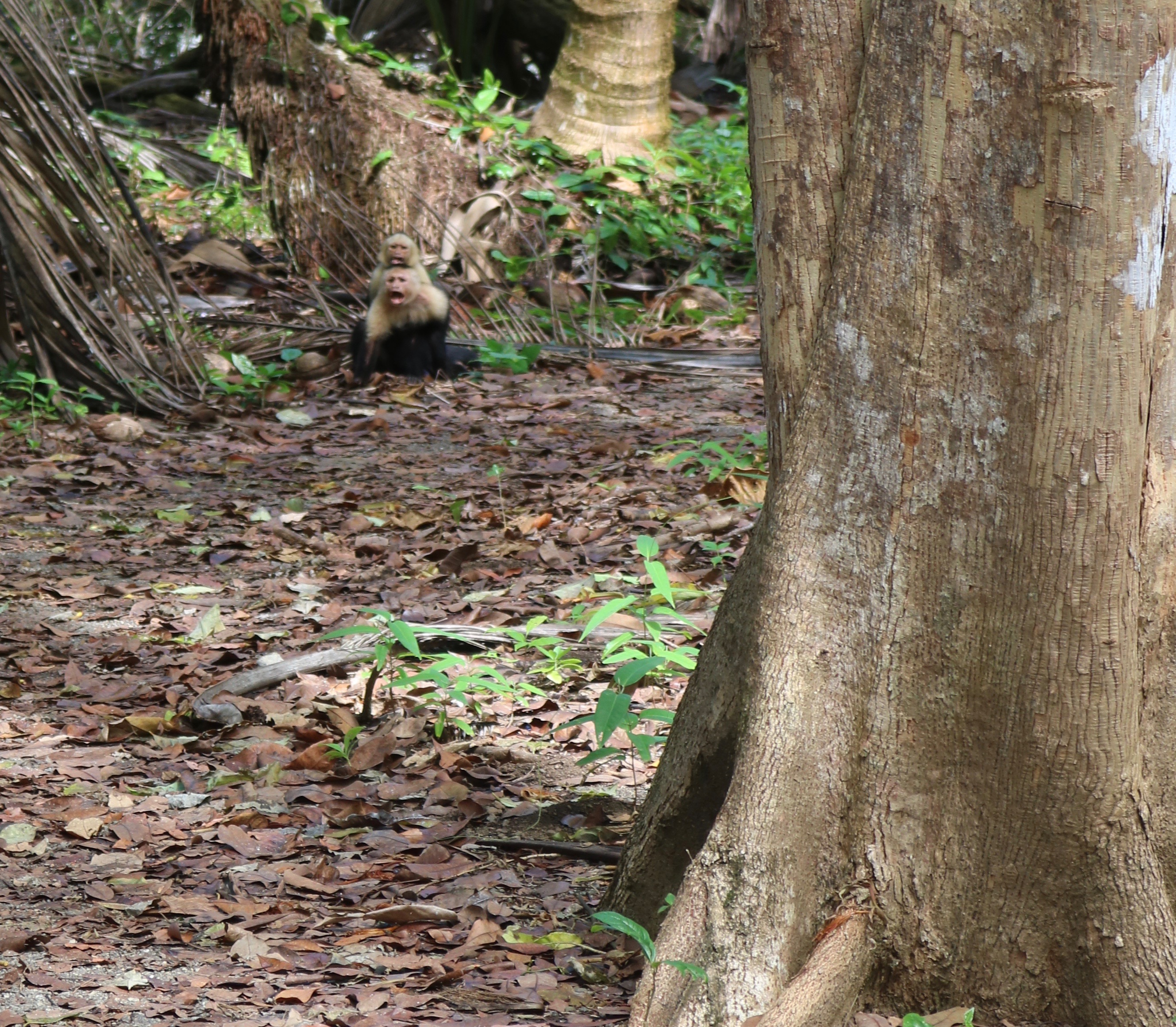
IMG_8658

The world-class hiking trail that passes in front of Casa Nirvanita to Playa San Josecito crosses Rio Claro (best to try it at low tide) near a sea turtle sanctuary.

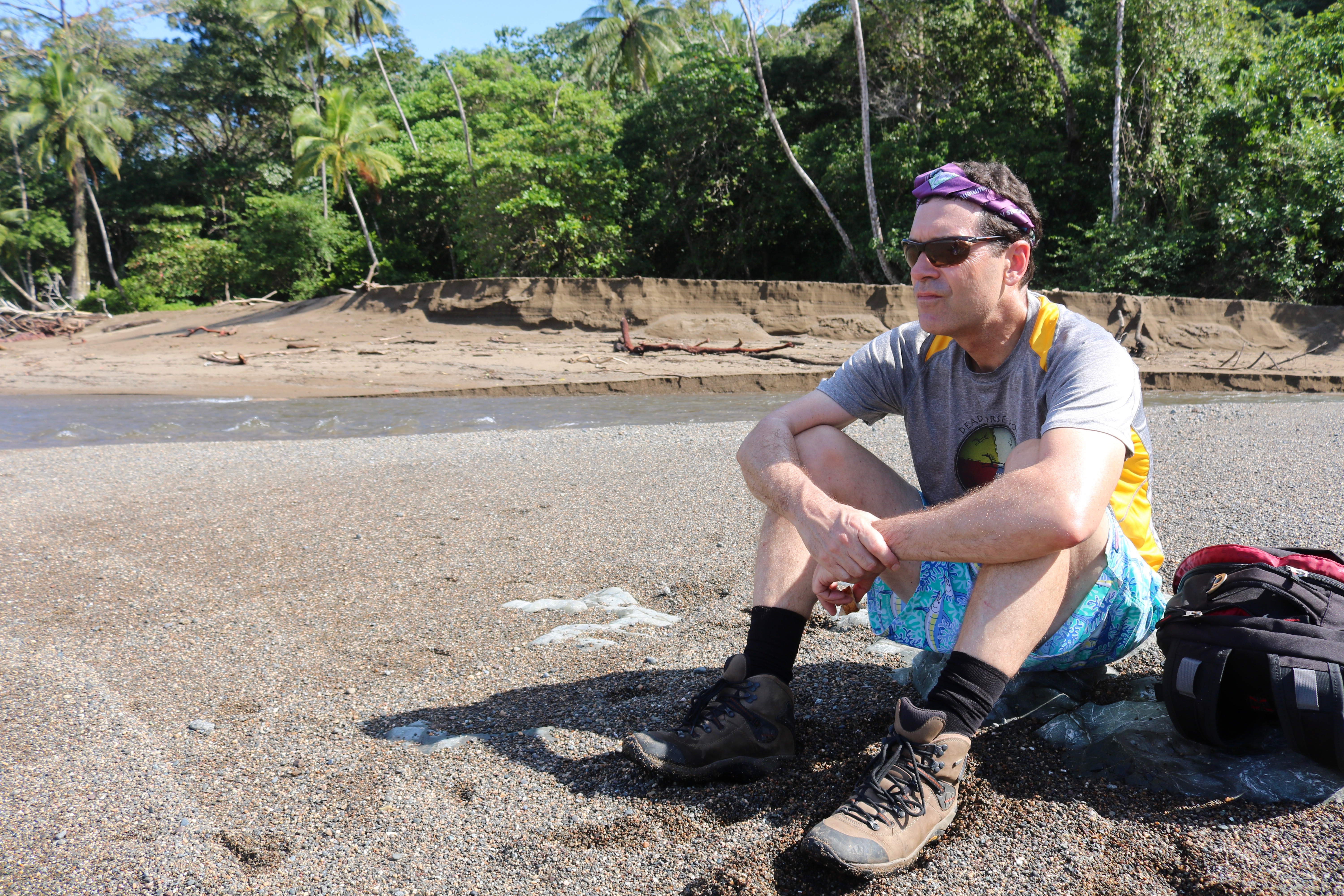
IMG_8644

IMG_8646

Newborn turtles at the sanctuary!

IMG_8650

The current in Rio Claro is strong. When the tide is high, or if you don’t want to try wading through, there’s an option to take a short boat ride over the river for a couple of bucks. The money funds the mostly-volunteer staffed turtle sanctuary.
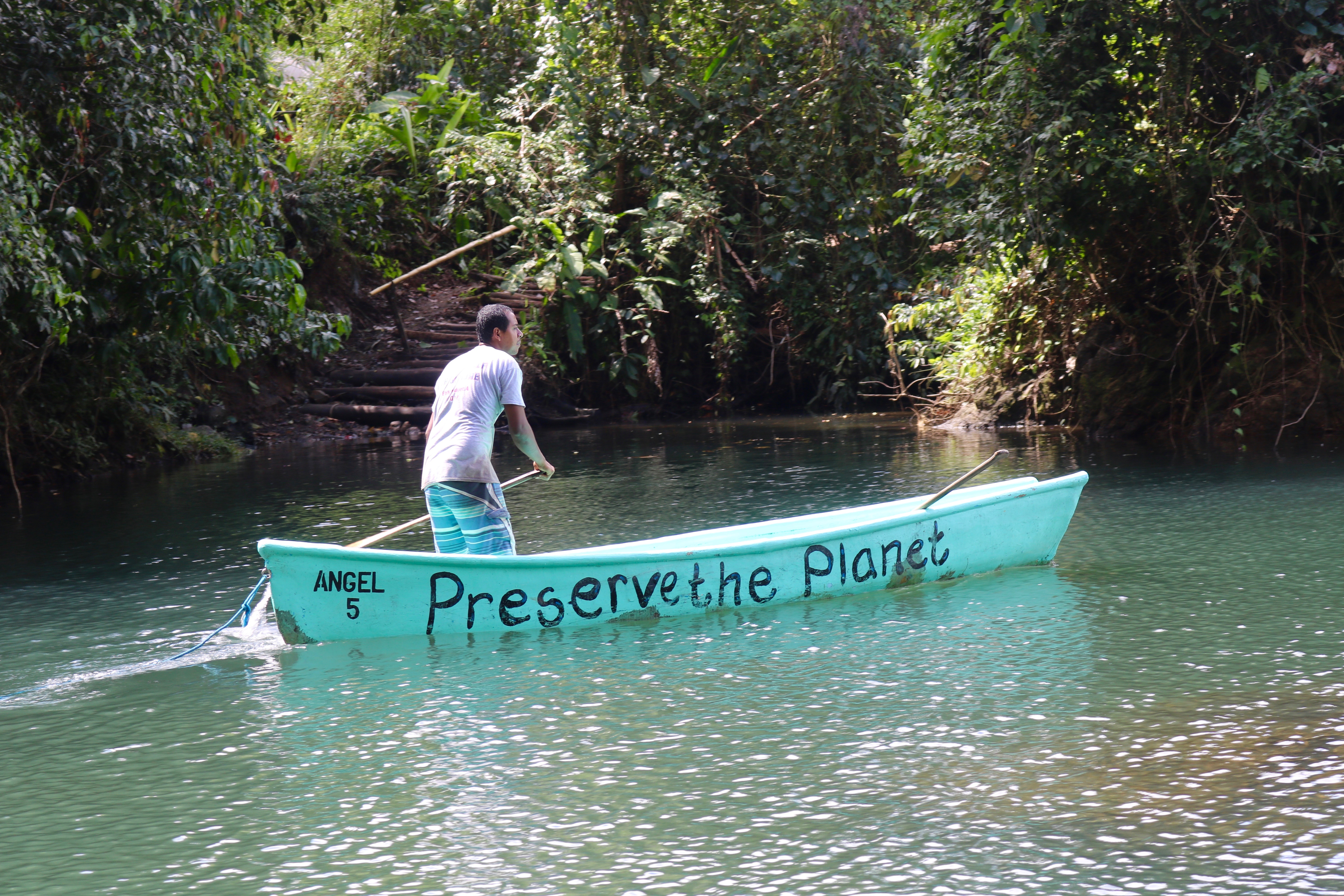
IMG_8699

Views from the trail inside the jungle.
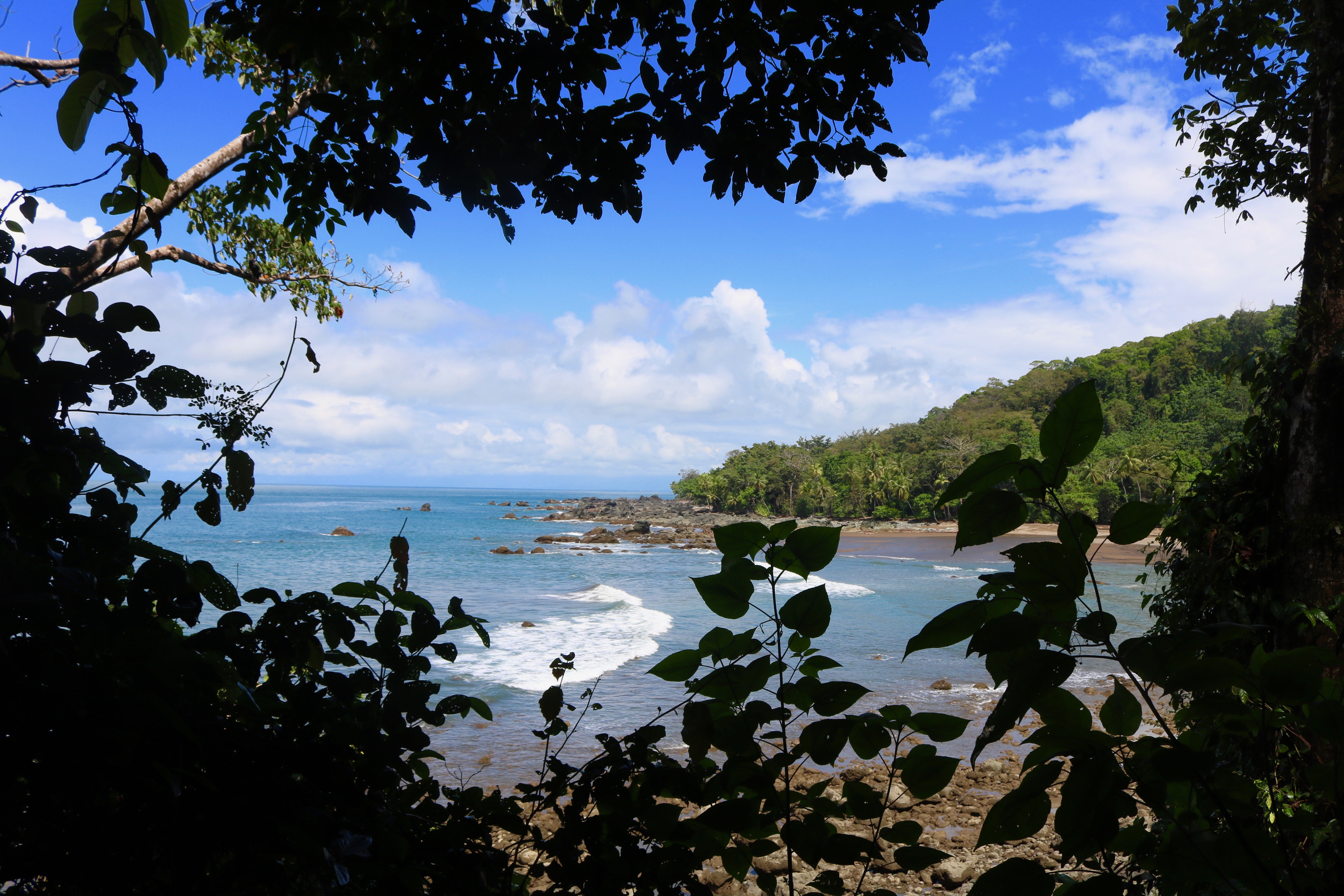
IMG_8686

Afloat at Playa San Josecito. Not a secret beach, but a beautiful one. Except for the nasty monkeys on the trail closer to the beach, the hike to get to San Josecito is mid-range rugged, spectacular, and muddy.

IMG_8666

A Ctenosaur? Iguana? Ticos walking home with their impressive daily catch. 


CHAPTER FIFTEEN

Confession time. We weren’t completely isolated from the real world at Casa Nirvanita. The same hiking trail leading to Playa Josecito in one direction, led to the modest (as of this writing) village of Agujitas about 3 miles away in the other direction. We took a walk one day, and found the trail linked up with one of the most elite eco-lodges on the Osa Peninsula. The town of Agujitas has a variety of good value lodgings too.

We left in the afternoon for our hike to Agujitas, found a great place to enjoy a drink and a snack, and hustled back onto the trail hoping to make a safe return to our Jungle Palace before dark. I was the last one—taking too much time to watch the sun set in various coves from too many stunning cliffs—and as the jungle was going dark, the Howler Monkeys began to cry out from the tree tops. Few experiences will raise the hair on your neck the way finding yourself alone in the jungle at night with Howlers hootin’ and yowling does. Their calls amplify sensations of feeling lost in an ancient (familiar?) and unnerving primordial otherworld.

This friendly dog hiked all the way to Agujitas with us.
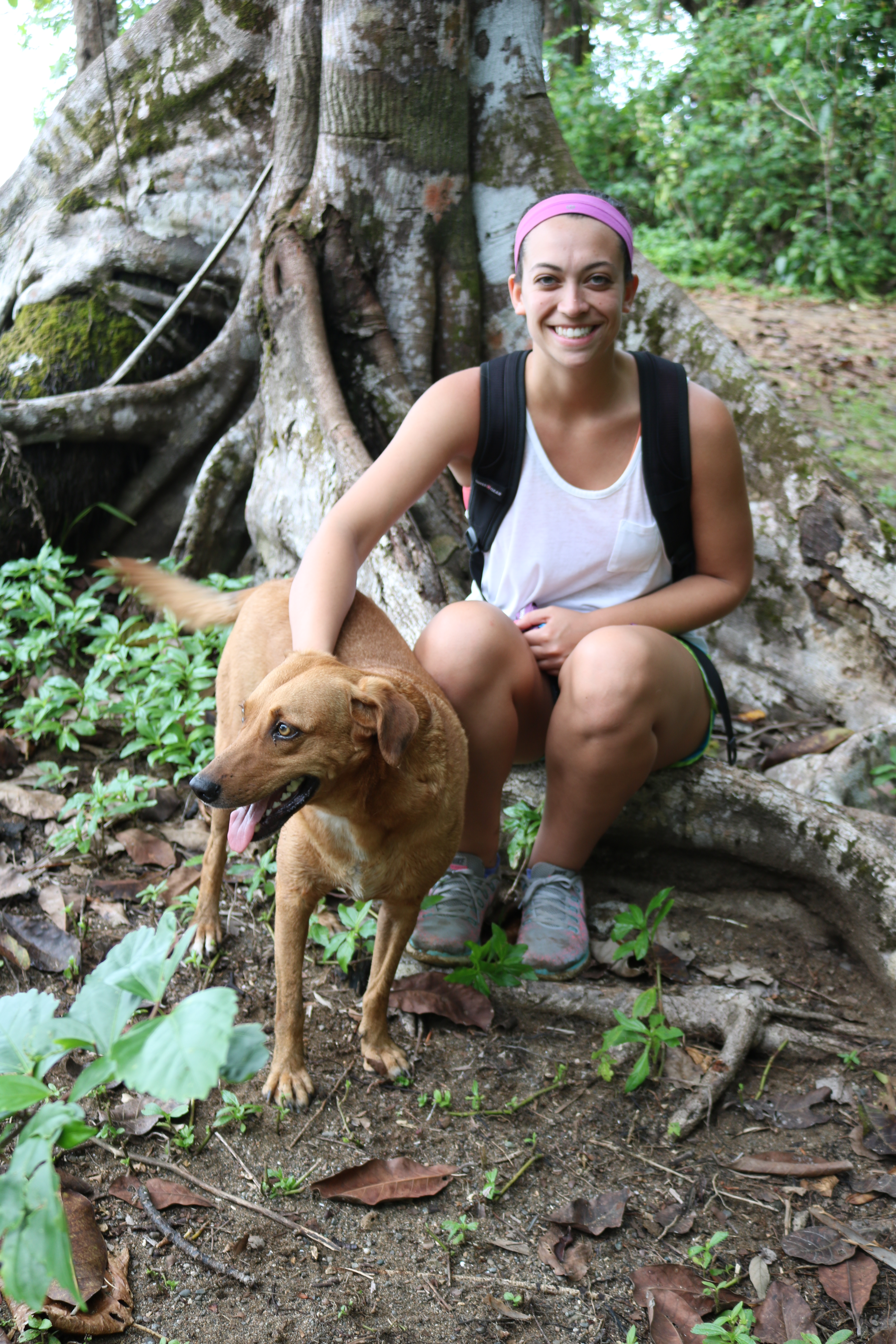
IMG_8279

IMG_8286

From Casa Nirvanita, it’s a 6-mile hike (round trip) to go have a beer or Piña colada or soda and a snack in Agujitas. Spectacular route with fun bridges over colorful rivers. 

IMG_8332

IMG_8354


CHAPTER SIXTEEN

Unofficial list of wildlife we encountered:

Howler, Spider, Capuchin, and Squirrel Monkeys. Pale-billed Woodpecker. Agouti. Blue Crayfish. Smoky Jungle Frog. Scarlet Macaws. Tiger Heron. Stingray. Zebra Moray Eel. A lot of tropical fish. Pecarries. Coati. Caiman. The greatest variety of Hermit Crabs we’ve ever observed, moving around both on and off the beaches. Halloween Moon Crabs. Other crabs. Pelicans. Sea Turtle. Bats. Opossum. Parrots. Toucans. Hummingbirds. Vultures. Blue Morpho Butterflies. Other butterflies. So many colorful birds I am so sorry I didn’t record their names. Termites. Spiders. Iguana or Ctenasaur. Geckos. Toads. Frogs. Blaberus giganteus. Tailless Whip Scorpion. Leaf-cutter Ants. The tracks of a Tapir.

IMG_7859


CHAPTER SEVENTEEN

Something has to be written about how we ate during our time as castaways on the Osa Peninsula: We forgot to buy crackers. There wasn’t any chocolate. No sugar. No ice cream. No cookies, cakes, muffins, or pies. No candies, syrups, or honey. No endless bags of various varieties of chips.

We prepared our meals using the foods of Costa Rica: Rice, beans, fruits, vegetables, eggs, chicken, shrimp, fish. We did have some peanut butter and jelly, too. After several days, we felt noticeably better. Perhaps this jungle diet has to be consumed while hiking every day, swimming in the Pacific Ocean everyday, and experiencing full-body pure humidity sweats all day/ everyday in order for it to bring on feelings of refreshment.

Maybe too, one is refreshed by the joys of preparing meals together and sitting down to eat them together while the music of the ocean plays in the background.

Artful meal prep in the kitchen at Casa Nirvanita.
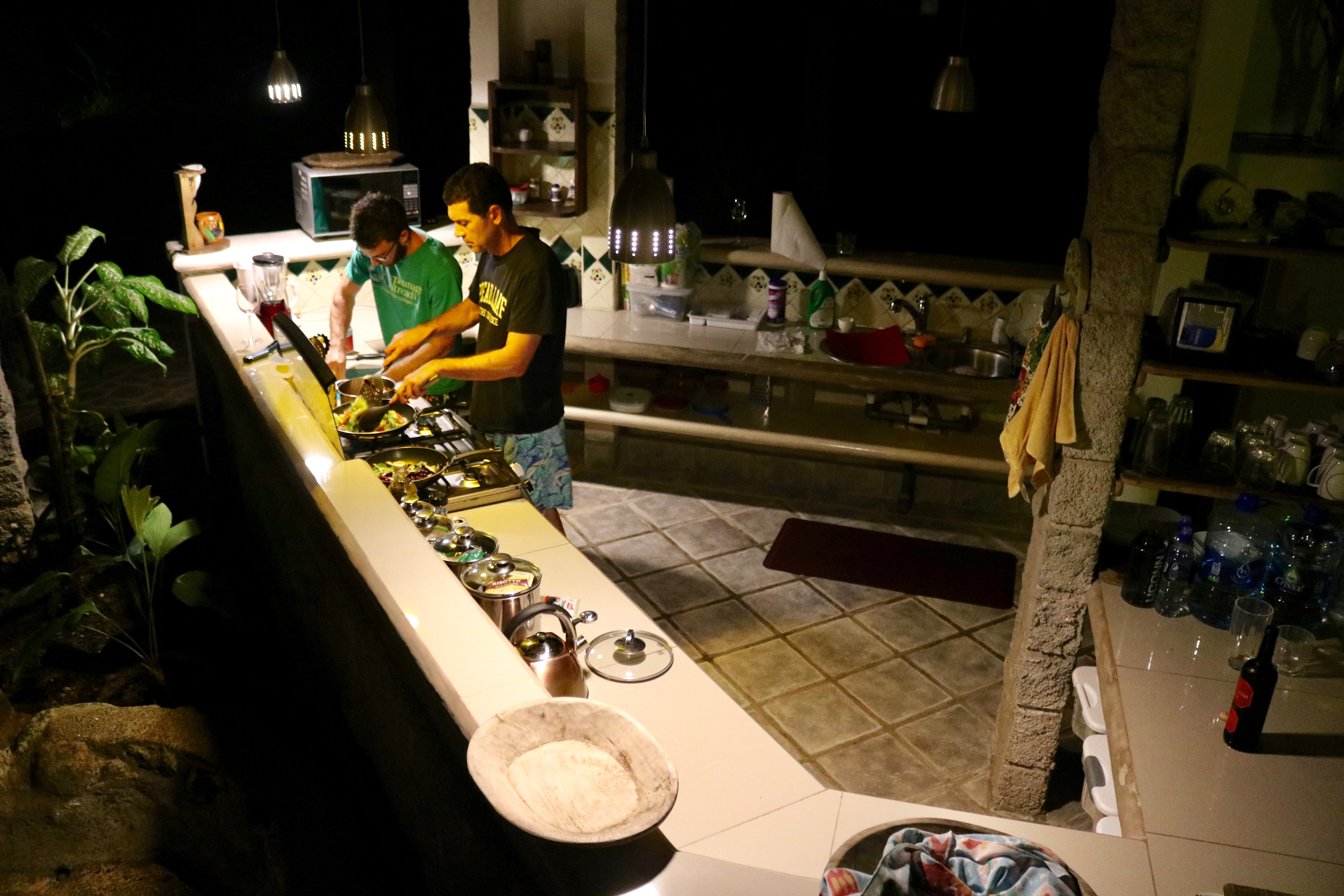
IMG_7985

Poetry readings during brunch. (Poetry written on location, Osa Peninsula.)

IMG_8231

I named several of our happy hour appetizers: Howler Monkey Nests. Pelican’s Pleasure. Green Iguana Slurp. Halloween Moon Crab Cakes. (Made with shredded carrots and rice, no crabs.)
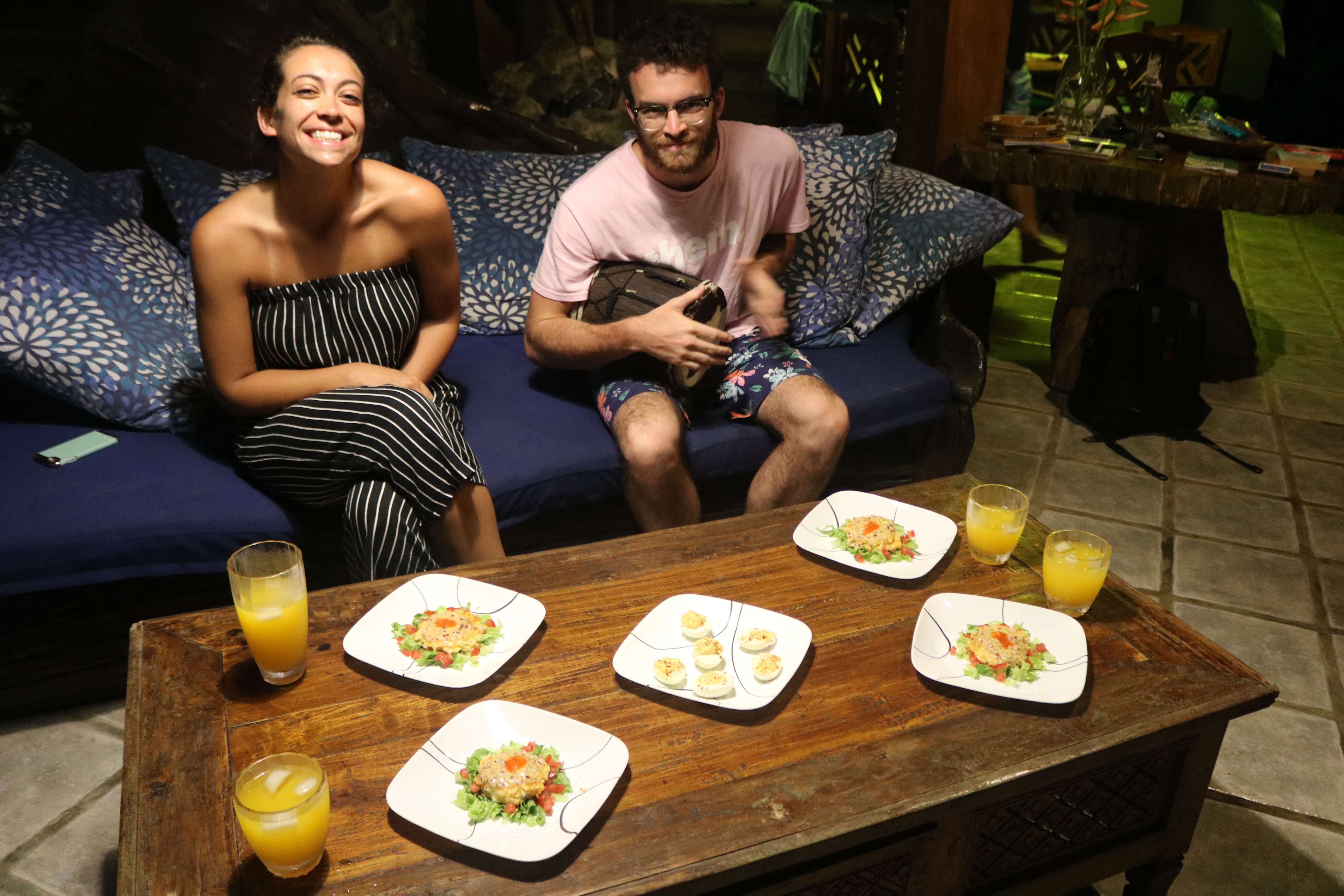
IMG_8515

Our hosts at both Eden’s Nest and Casa Nirvanita gave us chilled coconuts and we added the coconut milk to our fruit smoothie concoctions.
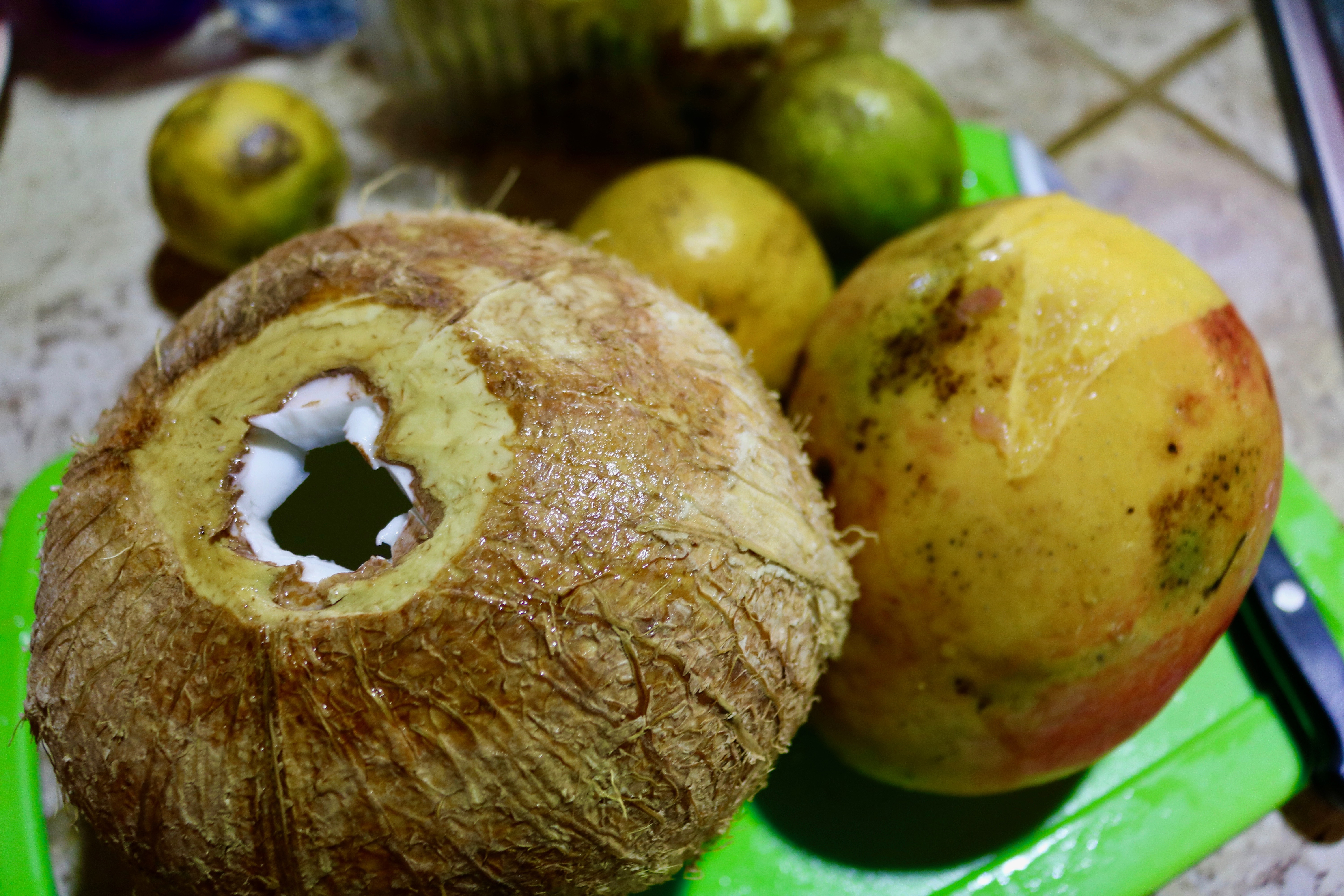
IMG_7759

CHAPTER EIGHTEEN

One more pass through the once-in-a-lifetime sanctuary of peace and tranquility where I never had to lock a door or close a window or turn on air conditioning or fire up a heating system.

IMG_8767

Farewell smiles with our host at Casa Nirvanita, Clara.

IMG_8771

Rio Sierpe, homeward bound.

IMG_8786

Grabbing some last-minute mana from one of the mysterious pre-Columbian stone  spheres in Sierpe.

IMG_8796


EPILOGUE

A traveler through the coastlines and jungles of Costa Rica’s Osa Peninsula won’t find grand monuments commemorating so-called glorious reigns of kings and queens. No cathedrals, tombs, or museums filled with artwork, weaponry, furnishings, or other tchotchkes of human existence disrupt the landscapes. It’s a small place, for sure. Maybe not much happened—in the storybooks of human history—on the long sweeps of curved shoreline where the Pacific Ocean has stroked the edges of magnificent jungles since forever ago. Or, perhaps, maybe some of the things that did happen—through the actions of humans recklessly searching for gold and other riches, exotic plants, exotic foods, exotic animals, slaves—were never deemed worthy of enshrinement.

All I know is that my luck did not fail me when I decided I wanted all of my family to see and learn more about one of Earth’s last surviving worlds of natural biodiversity. I hoped it would be one of those lost worlds still at work cranking out—for plucky travelers—soul sprints brought on by the one and only: Mother Nature. My good luck had to work overtime. Jungle safaris are undeniably booby-trapped with danger. Never did thoughts of Pit Vipers and the safety of my children leave me alone, especially at night when we spied an opossum in a tree and I remembered that the Fer-de-Lance likes to eat them and that a big snake was only recently seen in the very environs into which we had ventured. I also needed to find sanctuaries where we could merrily pass the time collecting shells and exploring tide pools while soaking up the sun. Somehow, we were able to sneak in 8 unforgettable days at Casa Nirvanita before the owners removed their Shangri-La from the rental market. Hopefully, it will come back on the market, because if I am ever lucky enough to return to the Osa Peninsula, I would stay at Casa Nirvanita again for all of my jungle safari adventures.

There is no other place on the planet like the Osa Peninsula.

From Osa Conservation.org:

Once an island floating in the Pacific, the Osa evolved in isolation until it merged with mainland Costa Rica by way of the same fault system that extends to California. Located along the Central American isthmus, Costa Rica itself is a hotspot of biological diversity, as innumerable species poured into the land bridge created when the two American hemispheres joined together. When the Osa Peninsula joined the mix nearly 2 million years ago, the area became a tropical landscape of unprecedented richness. The Peninsula is estimated to house 2.5% of the biodiversity of the entire world – while covering less than a thousandth of a percent of its total surface area – truly earning its title as the most biological intense place on earth.

One of the last places in Costa Rica to be settled and still sparsely populated, the Osa is covered almost entirely in magnificent, virgin rainforest extending all the way to the Pacific Ocean. Separating it from the mainland is the Golfo Dulce – one of only four tropical fjords on the planet. The Golfo Dulce is in fact the only place on the globe where populations of both Northern and Southern Humpback whales meet to birth their young. The Osa packs an unparalleled amount of land and marine species and diverse ecosystems in an incredibly small area, including:

  • The most significant wetland ecosystem and mangrove forests of Central America
  • The largest remaining tract of lowland rainforest in Pacific Mesoamerica
  • 2-3% of flora found nowhere else in the world
  • 323 endemic species of plants and vertebrates
  • The largest population of scarlet macaws in Central America
  • More than 4,000 vascular plants
  • More than 10,000 insects
  • More than 700 species of trees (which is more than all the Northern temperate regions combined)
  • 463 species of birds
  • 140 mammals, including 25 species of dolphins and whales
  • 4 species of sea turtles

These incredible ecosystems provide invaluable services to the people who depend on them for clean air, drinking water, food, jobs, cultural resources and a stable climate – and so their conservation is critical.

GO OSA. SAVE THE PLANET.

IMG_8498

Comfort Feast.
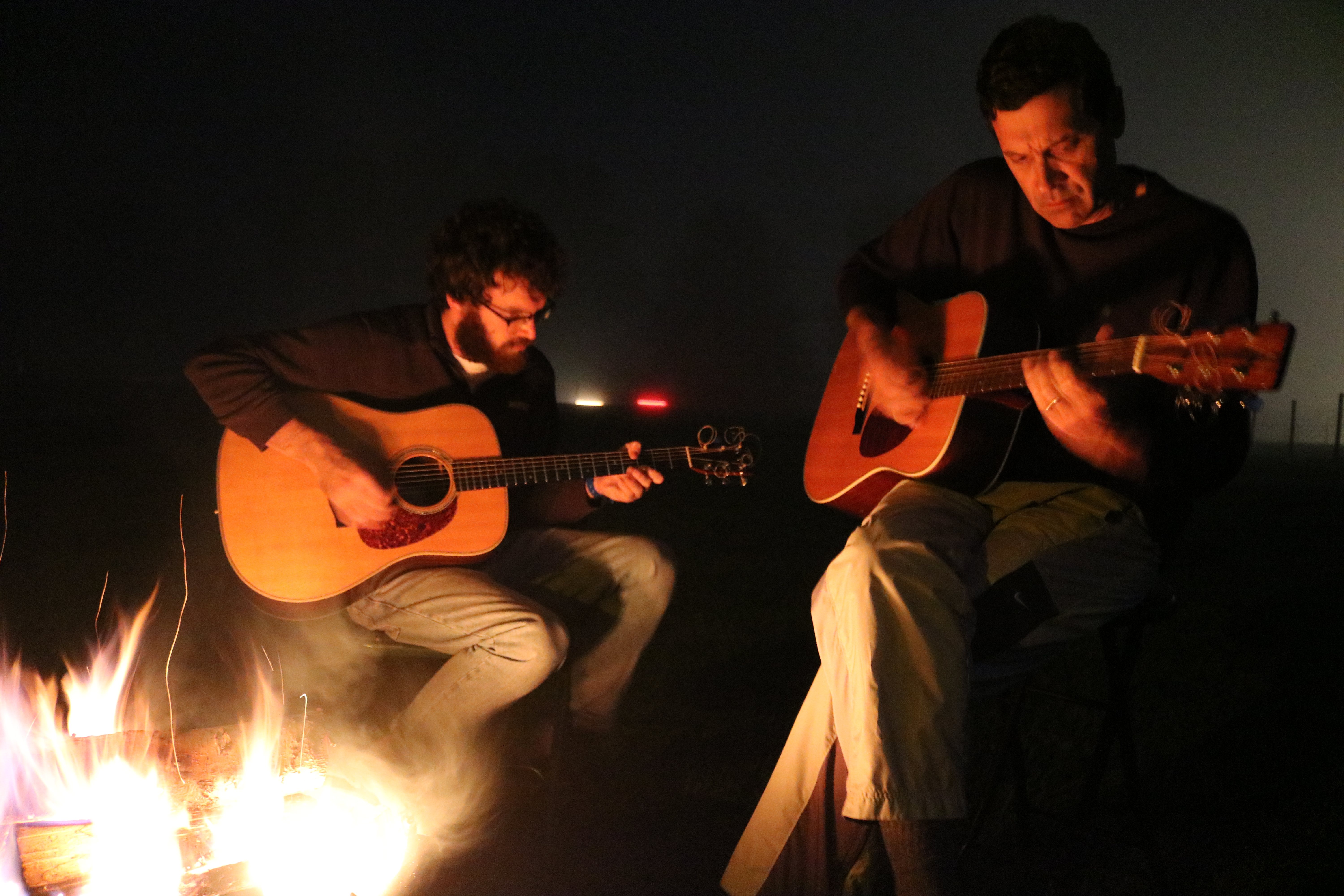
“Wise men forever have known that a nation lives on what its body
assimilates, as well as on what its mind acquires as knowledge.” MFK Fisher

One of my favorite December dinner parties takes place on the pages of the short story, “Babette’s Feast.” The year is 1885 (or so). Madame Babette Hersant, a French refugee from Paris, has lost her husband and her son to civil war and, for many years beyond, has been living in exile and working as a servant in Norway. She is, nevertheless, indomitable and when good fortune tracks her down, she resolves to bring transcendent joys to the devout sect of fussy eaters who took her in.

Whenever I indulge myself in the story of this feast, I travel to Berlevaag Fjord, Norway. It’s a snowy evening in the remote Norwegian village no matter what time of year I read the story, but it’s never bitter cold. As I advance toward the pages of the grand feast, I know twelve guests will arrive wearing black frocks with gold crosses. They will dine “in a low room, with bare floors and scanty furnishings” scented with smoldering juniper twigs. And, they will be resolute about one thing—-silence—-upon all matters of food and drink. Because although the villagers have agreed to a celebratory feast orchestrated and prepared by the refugee who has lived as a devoted, peaceful servant amongst them for many years, they have also allowed rumors about strange foods being delivered from odd places in the world for this very feast, to sway their sensibilities—-foods so unfamiliar, they must surely be harmful. Serpents. Turtles. Frogs. Snails. These kinds of foods, the devout sect at Berlevaag Fjord believes, could only be consumed by those who live one snowflake away from complete immoral seduction by “the flames of this world.”

On the December Sunday of Babette’s feast, a last-minute guest—-a traveler in low spirits—-arrives. This guest doesn’t know what he’s in for and as soon as his taste buds make contact with Babette’s first course—-and his first glass of wine—-his senses go berserk. This is when the party really gets going. The mysterious foods and wines are outed by the last-minute guest as the legendary dishes and drink pairings of “a person once known all over Paris as the greatest culinary genius of the age, and—-most surprisingly—-a woman!” Dinner conversations around the table simmer before rising to merry levels of humorous entertainment. Eventually, every guest surrenders to a festive holiday buzz and the reader (she has, by now, fetched her own goblet of good cheer) imagines herself far, far away having a wonderful time while sharing food with foreigners.

Babette’s feast goes on to reach a savory climax before boiling over with despair and heartbreak. I won’t give away what saves Babette, but I will say that her pious benefactors can hardly unwrap the complexity of their emotions. They comfort themselves with faith in a redemptive heaven filled with angels and second chances.

There’s a movie version of Babette’s Feast and it’s delicious entertainment. But the short story written by a writer I cherish—-the inimitable Isak Dinesen—-is best of all.

Like the unexpected guest at Babette’s feast, I often set out on my travels through the frightfully stormy year of 2017 in low spirits. I went in search of comfort feasts and dinner guests that wouldn’t knock me into monotonous stupors of gloom and doom. I was hungry. Hungry in the way MFK Fisher describes hunger in her book, The Gastronomical Me:

“….like most other humans, I am hungry. But there is more to it than that…We must eat. If, in the face of that dread fact, we can find other nourishment, and tolerance and compassion, we’ll be no less full of human dignity.”

And so, my husband and I took our children with us to taste Oaxaca (wah-HA-ka), Mexico. The choice to travel deep into the heart of Mexico was a deliberate one. I was on a mission to see Mexico from a new perspective and to rescue my family from the bombast of America’s president and his political supporters who blabbered on about Mexicans as “bad hombres.”

We found ourselves feeling woefully foreign and isolated in a place on the planet protected by four rugged mountain ranges. It was January. An earthquake shook our eyelids apart the first morning. Then it was mezcal, tasted all day long on a fascinating tour through the humble, artisanal outposts of authentic producers, which purified our tastebuds and bellies for more adventures to come. In Oaxaca, the languages, arts, customs, and cuisines of indigenous peoples have endured history’s continuous cycles of conquest, xenophobia, and modernization. We couldn’t speak the languages we heard in the vibrant markets nor could we seem to fully understand and translate the unfamiliar processes for creating the region’s cuisine within our own kitchen. Yet never have such cacophonous markets paired with a complicated cooking class felt so enchanting.

Perhaps it was the chili peppers. We learned from Nora Valencia, our cooking teacher, that the capsaicin in chilies guarantees fiery games of chance to everyone no matter where you come from. It’s not always possible to know how hot a pepper can be, so choosing to partake in their mysteries is like jumping into the heat of reckless love. Capsaicin in chilies is a stimulant and an analgesic with a reputation for triggering endorphins which means, of course, strange pleasures await. And, as with many peculiar amusements taken by mouth, chilies can be addicting.

Perhaps, on the other hand, it might have been the markets. At the Tlacolula Sunday Market outside of Oaxaca City there were women dressed in traditional Zapotec garb (still authentic) pouring selections of locally sourced chapulines into our hands, gratis. You know what I’m talking about. Roasted grasshoppers. The bugs might have been flavored with garlic, lime juice, salt infused with the extract of agave worms, or plain chile. We remembered we were foreigners and graciously accepted the offerings. But then what? Throw them away? (So rude!) Store them in our pockets for later? Eat them? We smiled then followed our noses to the distractions of an exciting setup for brave foodies—-long rows of sturdy, communal barbecue grills, aflame and smoking up a storm inside a roofed market. The grills were flanked by market stalls strung with cuts of meat from all parts of (within and without) cows, goats, and pigs. I think. But I still don’t know for sure because we had never seen so much meat displayed, in so many unfamiliar ways, without refrigeration. We bought some of the meats using the point-and-hope method of selection. Copying the locals, we bought vegetables too. Then, it was time to cook our feast. We chose a random grill.

Right away, our onions slipped through the grate and onto the hot coals. A handsome Zapotec family strolling through the market stopped to share guidance. The children were dressed in crispy white Sunday clothes and everyone’s face sparkled with good spirits. All communication happened via smiles back and forth through veils of foodie-fragrant smoke. I couldn’t believe it, but another Zapotec man—-with his bare hands—-lifted our barbecue grate to rescue the onions from the coals, which must have been glowing since pre-Columbian times. When no one was looking, I touched the grate to see if it was hot. (Ay caramba!)

For our final meal in Oaxaca City (after several days tasting the best mojitos in the world at the Pacific Oaxacan coastal outpost of Mazunte) we chose to dine at Casa Oaxaca. The exotic, flavorful, foodie performance art of this fine restaurant in a foreign land made our senses go berserk. So consumed by the “flames of this world” did we become, that after our once-fussy eater Wyatt ordered, to start: Tostada de gusanos de maguey, chapulines, mayonesa de chicatanas, aguacate, cebolla, rábanos (Fried tostada with agave worms, grasshoppers, chicatanas ants, guacomole, onion, radish, and mayonnaise infused with chicatanas ants), and after our server created a fiery salsa before our eyes, and after our meals arrived drenched in the storied moles (moh-LAYS) of the region, we requested, in the end, every single dessert on the menu and passed them around without a note of silence. Our expressions of pleasure and joy joined in with the music of the evening’s outstanding trio of musicians and the sounds of a timeless city in the dark of night. I dream of our rooftop table now. A place of peace, comfort, and exciting adventure.

By the time we returned to America, we would know new truths about the foods that fuel our passions and how other peoples of the world need them as much as we do. The state of Oaxaca, we discovered, is and always has been, one of the world’s greatest culinary epicenters. Indeed, every holiday feast prepared in America owes the abundance of its variety and traditions to so much of the genius culinary heritages of Mexico. For instance, the tomato came from Mesoamerica. (Not Italy.) Maybe you already knew that. But did you know it was Mexican chefs, preparing their own grand banquets a long, long, long time ago, who bravely introduced the tomato into the cooking pot? When Europeans first encountered the tomato, they feared it. To them, a fruit so bright and beautiful…colored red…taken by mouth and swallowed so close to the soul…could only lead to misfortune “in the flames of this world.” Ah, the tomato. Fake classified and declared by the US Supreme Court in 1893 (for purposes of 1887 tariff laws) to be a vegetable—-even though science-based botanical knowledge classifies the true existence of tomatoes as one of Earth’s most desirable fruits. A berry no less!

We know our travels aren’t suited for everyone. In Oaxaca, we stayed in an inn where the doors were never locked. We consumed a bottle of Pepto-Bismol too, but also learned that it isn’t just foreigners who are sensitive to unsafe water because no one “builds up a resistance” to bad water, not even the people of third world countries.

Nevertheless, after returning home we were inspired to prepare and present some of our tastiest works of art to be shared in our own extraordinary settings. In these ways, we became most of all like Babette—honoring our greatest artistic selves while enjoying, as Babette says, “something of which other people know nothing.”

********************

Eric and Theresa’s On-The-Road Crab Cakes

1 1/2 cups Maine Rock Crab
1/2 cup crushed Trader Joe’s oyster crackers (about 1 cup before crushed)
Just enough mayo to moisten (about 1 heaping tablespoon)
Squeeze of 1/2 lemon
Thyme
Salt and Pepper
(If you have it, you can add an egg, beaten. We didn’t have any eggs.)
Canadian Dulse (Seaweed/algae) fried in olive oil.
Arugula
Your own favorite remoulade, boosted with smoked and dangerous hot chili peppers from Oaxaca.

Shape the crab mixture into four, lofty cakes about 1” thick. Cook in olive oil, 4 minutes a side creating
a nice crust on each side. Arrange on a bed of arugula, surrounded by fried dulse, with remoulade.
Serve accompanied by a mezcal cocktail upon an extraordinary picnic table.

Markets and Cuisines of Oaxaca, Mexico—A Valley in the Sky at 5,102′ Deep in the Heart of Mexico. Cooking Class with Nora Valencia in Oaxaca City.

IMG_1076


IMG_1069


IMG_1063

Nora Valencia, our cooking teacher. We toured the market near her home before learning how to cook!

IMG_1066


IMG_1081


IMG_1085


IMG_1089


IMG_1090 2

At Nora’s home, I saw this on the wall—we weren’t aware she’d been featured in National Geographic Magazine. Good luck for us! Did her cooking class in Oaxaca City change our lives? Yes. In so many ways.


IMG_1192


IMG_1114

Like the cooking classes we have taken in Rome, Florence, and Paris, the kitchens of foreign chefs are often so small and yet the flavors and meals that are created in them are so big and wonderful!


IMG_1171


IMG_1189

IMG_1161

IMG_1175


IMG_1134

IMG_1070.JPG


IMG_1101

IMG_1152

IMG_1154


IMG_1167

IMG_1170

IMG_1185

Nora sculpts a blessing onto the tamale pot.


IMG_1095


IMG_1099

IMG_1137

IMG_1136


IMG_1141

IMG_1104

IMG_1123

Nora gave us tongs for the delicate work of roasting peppers and vegetables just right. She,though, is able to use her hands to deal with the heat!


IMG_1118

IMG_1124


IMG_1130


IMG_1205

IMG_1109

IMG_1111

IMG_1106

IMG_1147

IMG_1168


IMG_1218


The Sunday Tlacolula Market

IMG_0969

IMG_0936

Taking our chances and buying peppers from random vendors.


IMG_0942


IMG_0943

The point-and-hope method of meat selection.


IMG_0939


IMG_0956


IMG_0945


IMG_0953

IMG_0951

IMG_0952


IMG_0950

A beautiful Zapotec family stops to guide us in the market.


IMG_0958

We ate our grilled lunch in the Zocalo near the market, then tried to find our way back to  Oaxaca City. We ate two chocolate cupcakes, too.

IMG_0970 2


Fine Dining at Casa Oaxaca

IMG_2076

IMG_2080

Tostada de gusanos de maguey, chapulines, mayonesa de chicatanas, aguacate, cebolla, rábanos (Fried tostada with agave worms, grasshoppers, chicatanas ants, guacamole, onion radish, and mayonnaise infused with chicatanas ants.)

IMG_2090

We ordered every dessert on the menu.


Scenes of Oaxaca City and Monte Alban

IMG_0910


IMG_1023

IMG_0972

IMG_2052

IMG_1965

IMG_0980

IMG_1020

IMG_0975 2

IMG_1255


IMG_0985IMG_1250

IMG_0990

IMG_1002

IMG_1249

IMG_1252

IMG_1021

IMG_1236

IMG_1243

IMG_1244


IMG_0984


IMG_1450


IMG_1233

IMG_1228

Long line at the art museum.


IMG_0999


IMG_2097

IMG_2057


IMG_1295


IMG_1458

IMG_1263


IMG_2050

IMG_2036

IMG_1226

IMG_1459

IMG_2028

  Monte Alban—one of the earliest Mesoamerican cities and Zapotec center of political, economical, and cultural existence for 1,000 years. Pre-Columbian. Only partially excavated (80% of the site still hides from the modern world). The city which dates from at least 500BC was built on a mountaintop at 6,400′ which had been flattened. Zapotec Sacred Mountain of Life.

IMG_1358

IMG_1381

IMG_1393

IMG_1403

IMG_1366


IMG_1370

Resin of the Copal Tree used for incense in Mexican Churches. Used by the Mayans and Aztecs for ritual supplications and ancestral guidance.


IMG_1442

IMG_1376.JPG

IMG_1336

IMG_1427 2

As we departed, a dust devil whirled up around us. Our guide told us it was a great sign—that the power of Monte Alban was removing evil spirits from our family.

IMG_1429


IMG_1444

Our guide admired our son’s journal sketches, then recommended we try escamoles sautéed in butter and cilantro for lunch at a local restaurant. Ant larvae.

IMG_1448

IMG_1449

 Mezcal by Artisanal Producers

Private Guide Alvin Starkman’s Outstanding Educational Tours

IMG_0782.JPG


IMG_0744


IMG_0740

The pits where agave is roasted and from whence the rich, smoky flavors of mezcal are born.


IMG_0767


IMG_0797


IMG_0837

IMG_0787

IMG_0778

IMG_0851

IMG_0820

IMG_0824

IMG_0822

Scorpions in some bottles of mezcal.


IMG_0828

IMG_0815


IMG_0874


IMG_0879


Artisanal Chocolate Making and Weaving

IMG_0887

Stone grinding chocolate for hand-whipped hot chocolate. Note the abundant beauty of the family’s shrine. While sipping hot chocolate with them, we learned a lot about how one family continues to thrive, while living and working together, through the generations. Hint: Not only is it difficult to live with extended family members and their children, but even the family dogs can wreak havoc on relationships!


IMG_0893

IMG_0896

IMG_0897

IMG_0895.JPG


IMG_0900

Crushed cochineal (scale insects on cactus) revealing the coveted red dye they produce. This little insect, native to Oaxaca, created a sensation that rocked Europe for three centuries and threatened to destroy the cultures of Mexico completely. Read all about it. A Perfect Red: Empire, Espionage, and the Quest for the Color of Desire.

IMG_0906

IMG_1264

IMG_0918


An escape over the mountains to Mazunte on the Oaxacan coast in a small plane. (Aerotoucan Airlines—no flight attendants, no locked pilots cabin.) We stayed at Casa Pan de Miel. A heavenly hideaway on the rugged Pacific Coast.

IMG_1947

IMG_1733

IMG_1870

IMG_1902

IMG_1544

Balcony porch of our room.


IMG_1730


IMG_1562


IMG_1876.JPG

IMG_1911


IMG_1635

Night walk on the beach and—yes—some pizza! Barefoot dinners.


IMG_1644

IMG_1817

IMG_1736

More than 100 steps from our inn down the cliffside, through the gate, past all the iguanas and on to an expansive beach for long walks through pounding surf.


IMG_1575


IMG_1701.jpg

Mazunte is a center for sea turtle preservation.


IMG_1775

Street festivals and street food in Mazunte and a lot of barefootin’.


IMG_1943


IMG_1888

Walk the beach and stop to drink and/or eat in cafes dug into the sand.


IMG_1738


IMG_1795

Our digs in Oaxaca City. Casa Colonial. With a library that made it tough to ever leave the gardens and grounds.

IMG_1476


IMG_1302

IMG_1489

IMG_1287

IMG_1286

IMG_1484

Climate Change. Orgasms. Essential Sex.

A spring fever came over me. I slipped away and found myself surrounded by trees in an airship drifting under the command of its captain—Earth’s Climate. Horizon lines blurred behind a vibrant mist tinted ruby red. My neck extended. My head grew bigger and bigger. My eyes widened into bulging beads. Then, my airship wobbled and tipped. I fell out and landed in the canopy of a tree. Upon every branch, bouquets of mini red flowers unfurled. 

It all happened after I decided to deactivate my brain and social habits from Facebook for a little while.

There were fucking flowers everywhere. Everywhere. Some of the flowers had male reproductive parts and some of the flowers flaunted female reproductive parts. The sexually active botanical doohickies came in one size: teensy. 

I have a microscope. So I righted the airship, loaded it with some of the flowers, and brought them to my laboratory. There was no time to waste announcing these good vibrations of newfound joys on Facebook, or Twitter, or Instagram, or Snapchat.

Thank goodness, because springtime comes and goes before you know it—like all good orgasms. There was fucking flower power and fucking fast breeding going on in the trees and within the growing things hiding out in my favorite romantic forests and valleys and gardens. It was all happening without the use of nuclear power, batteries, engines, or viagra.

The red flowers casting a ruby mist over all of New England bloomed upon branches of the Swamp Maple—Acer rubrum—and an intense curiosity about the Acer rubrum launched my airship at the same time I deflated my social media networks.              .

The facts were simply these: After years of partaking in a slow and awkward cruise on social media, my brain had regressed and atrophied. Even though I had tried to believe the hype that social media was the wave of the future and a necessary learned behavior for creating connections and essential networks—the truth is, (for some of us), social media can be as vast a colossal failure as pesticides and nuclear weapons and heroin.

I went to my laboratories and decided to start repairing my brain by encouraging it to re-build new networks and connections.

My laboratories are inside of this restored and renovated old barn (on the second floor) and outside of it too (gardens created and tended by me):

IMG_3830

IMG_3837

I surrounded myself with twigs, branches, buds, flowers, nuts, leaves, galls, bugs—all of it collected during regular walking treks or bike riding jaunts or dreamy meditative strolls through my gardens and through wildlife conservation land near home.

Studying the little flowers of a common maple tree tossed me into adventure-lands booby trapped with rabbit holes into which I fell. Disorientation and fascination ensued. During one morning’s tumbles, I underlined the following passages inside eight random books on my quest to find out how the Swamp Maple was invented, how it works to make more Swamp Maples, and how its LEAVES are capable of manufacturing oxygen for all living beings. (Without ever using batteries, engines, or viagra.)

Here are some written passages I underlined:

“This process is based on the “doctrine of uniformitarianism,” which states simply, “The present is the key to the past.” 

“However, I have never clogged myself with the praises of pastoral life, not with nostalgia for an innocent past of perverted acts in pastures. No. One need never leave the confines of New York to get all the greenery one wishes—I can’t even enjoy a blade of grass unless I know there’s a subway handy, or a record store or some other sign that people do not totally regret life. It is more important to affirm the least sincere; the clouds get enough attention as it is and even they continue to pass. Do they know what they’re missing? Uh huh.”

“Follow your genius closely enough, and it will not fail to show you a fresh prospect every hour. Housework was a pleasant pastime. When my floor was dirty, I rose early, and, setting all my furniture out of doors on the grass, bed and bedstead making but one budget, dashed water on the floor, and sprinkled white sand from the pond on it, and then with a broom scrubbed it clean and white….It was pleasant to see my whole household effects out on the grass, making a little pile like a gypsy’s pack, and my three-legged table, from which I did not remove the books and pen and ink, standing amid the pines and hickories.”

“I have often noticed that these things, which obsess me, neither bother nor impress other people even slightly.”

“…shambles….elegant experiments….The oxygen in the atmosphere is the exhalation of the chloroplasts living in plants….most of the associations between the living things we know about are essentially cooperative ones….symbiotic to one degree or another….Every creature is, in some sense, connected to and dependent on the rest.”

“Seeds are extraordinary objects.”

“Here, away from the pleasant, unintentional, fatal seductions and unplanned blackmail of friends and acquaintances, away from the facade I had built over the years to impress a world with the self I wished I were—a false front that I was obliged continually to reinforce—perhaps I could find my real self, whether it be good or bad.”

***************************************

Will the real Earth last long enough? For embarking on our own magical mystery tours? Tours that lead us to discover the stunning essential existence of leaves, the crazy sex life of flowers, the undeniable links, connections, and networks our lives depend on through the generosities of Mother Earth?

***************************************

Here are some sketchbook drawings of my brain establishing new connections:

IMG_3787

IMG_3788

IMG_3790

IMG_3791

IMG_3789

I found grass growing under one Swamp Maple with red tints running through the graceful blades. What caused the colorations?

IMG_3844

My gardens. Catmint. Iris. Pinks. Phlox.

IMG_3831

I stand with the Paris Climate Agreement and France’s vow with all who do, to—

“Make The Planet Great Again.”

We need to save the birds and the bees.

IMG_3807

******************************************

BOSTON MARATHON Fearless261.

50 years ago in 1967, Kathrine Switzer, a student at Syracuse University, showed up prepared to become the first woman to officially run all 26.2 miles of the Boston Marathon.

But the race was for men only.

Two miles into the race, an angry race director assaulted Switzer and tried to prevent her from participating. With the help of her coach, her boyfriend, and a friend from the men’s cross country team at SU (Switzer trained with the team) Switzer was able to continue running and protect her bib from being ripped away.

kathrine-switzer-teaser-2

Today, April 17, 2017, Switzer will run in the Boston Marathon. She is 70 years old.

Kathrine Switzer ran 39 marathons. She won the New York City Marathon in 1974 and ran her personal best in Boston, 2:51:33, finishing second, in 1975.

When she first ran Boston, it took her more than four hours.

So don’t give up.

Overcome your doubts, your fears, your adversity, your roadblocks, your perceived existence in isolated struggle…

And become fearless.  Connect with Kathrine Switzer’s Fearless261 campaign: “A global community of women, be she a walker, jogger, or runner who have found strength, power and fearlessness from putting one foot in front of the other.”

“For all women who want to take on personal challenges through running or walking.”

And “For all women who want to become fearless through connection to others and realize you are not alone.”

http://www.261fearless.org/news/

For women who want to take on personal challenge through running or walking…today is a beautiful day in Boston to keep it going or to get it started.

Download Switzer’s bib number 261 from her Fearless website, pin it on, and go any distance, anywhere, with Switzer and her community of Fearless Women today.

Start something and keep it going! Conquer miles and miles, over heartbreak hills, through the taunts and jeers of the angry ignorants, past the nonbelievers and the non-doers—and don’t forget to run circles around the useless, madding crowd.

I’ve been a jogger, sometimes I’m a runner, mostly I’m a walker, hiker, biker, skier.

Today, I’m going to run in my heart and jog with my feet. I’ve downloaded Switzer’s bib, but I could only find one safety pin to secure it onto my shirt. While I was rummaging through drawers in my house, searching for more pins, I found something better to use—something my daughter gave me many years ago—a pin that says “Why Be Normal?”

At 9:32 AM, women will start running the Boston Marathon this morning.

I’ll be ready to go. My route isn’t far from the start line in Hopkinton and I’ll be running alone.

But not in spirit!

#RunwithKathrine   #FearlessRunner   #BeFearlessBeFree   #Run261

IMG_2810.jpg

A Helicopter Mom Crashes And Hands Over The Controls.

“The Jews are undoubtedly a race, but they are not human.” A.H. 

This quote comes before Chapter One of Art Spiegelman’s brilliant graphic novel, MAUS, a story about the Holocaust. I have picked the book up from a position of prominence on a shelf in my daughter’s quiet bedroom. It is one of her all-time favorite books. She read it, perhaps, when she might have been too young to process the intense themes throughout the story and I’m sitting in her room thinking about that because this daughter of mine is about to graduate from college and make her dreams come true.

A mother can never know the exact moments when dreams begin to formulate inside a child’s heart, although we do our best to create supportive and enriched dreamworlds. We set our children free to go leaping through books and movies, to go traveling among the peoples and places of the world, to go wandering in and out of classrooms and onto playing fields. And then, when we aren’t looking, our children escape to discover for themselves sanctuaries for hiding their most cherished dreams—places where no one will trample those dreams nor steal one bit of the sparkle necessary to keep them shining.

IMG_2776

I am remembering watching the movie Freedom Writers with my daughter. In the movie, a teacher devotes herself to a large group of the least-promising students in a California high school. The students, through the skills of learning how to become writers, achieve much more than their own personal goals—they also learn the devastating history of the The Holocaust and arrange a remarkable meeting with Miep Gies, the woman who risked her life to protect Ann Frank’s family from the Nazis. I am sure I felt the presence of The Dream Fairy sitting right next to my daughter while we watched that movie. The fairy was quiet, but my daughter was not: I am going to work with the kids no one believes in. She declared. She had not yet finished junior high.

Words from the preface of another book I have found on my daughter’s bookshelves, Black Like Me“This may not be all of it…but it is what it is like to be a Negro in a land where we keep the Negro down.   Some whites will say this is not really it.  But we no longer have time to atomize principles and beg the question.  The real story is the universal one of men who destroy the souls and bodies of other men (and in the process destroy themselves) for reasons neither really understands.  It is the story of the persecuted, the defrauded, the feared and detested.  I could have been a Jew in Germany, a Mexican in a number of states, or a member of any “inferior” group.  Only the details would have differed.  The story would be the same.   This began as a scientific research study of the Negro in the South, with careful compilation of data for analysis. But I filed the data, and here publish the journal of my own experience living as a Negro. I offer it in all its crudity and rawness. It traces the changes that occur to heart and body and intelligence when a so-called first-class citizen is cast on the junkheap of second-class citizenship.”  John Howard Griffin 1959

I keep time tripping through my daughter’s bedroom because she called me last night to let me know that she’d been offered a position as a counselor working with teens in a residential treatment center where she will deal with the diverse needs of those confronting mental health and behavioral problems, addiction problems, juvenile justice problems, personal trauma problems, and family dysfunction problems. The treatment center is not the kind of place where the rich and famous show up.

My daughter called after spending several hours at the treatment center during a second interview:

“Mom, ” she said, “I’m so excited. But I’m nervous. This job is outside my comfort zone.”

“What makes you uncomfortable?” I asked her.

“How will I know the right things to do?” She said. “Or how to handle difficult situations.”

“Do you feel safe?” I asked her.

“You know,” she said, “risks go along with the kind of work I want to do.”

“Well,” I said, “you’ll be trained and have to learn as you go.”

“I guess this is the real world.” She said.

“Yes,” I said, “so much more of a real world than any of the protected and hidden worlds where we’ve always lived.”

“Some kids just want to go home,” my daughter said. “They want to reach their goals and return home, but home is not safe for them.”

“All kids want home,” I said. “And so many begin their lives without any luck. It’s not fair.”

I told my daughter about the teachings of Mother Teresa:

From her book, In The Heart Of The World, (a gift from one of my sisters): “There is so much suffering in the world. Material suffering is suffering from hunger, suffering from homelessness, from all kinds of disease, but I still think that the greatest suffering is being lonely, feeling unloved, just having no one. I have come to realize that it is being unwanted that is the worst disease that any human being can ever experience. In these times of development, the whole world runs and is hurried. But there are some who fall down on the way and have no strength to go ahead. These are the ones we must care about.”

And from one of Mother Teresa’s letters, reproduced in Joseph Langford’s Mother Teresa’s Secret Fire“Poverty doesn’t only consist of being hungry for bread, but rather it is a tremendous hunger for human dignity. Not only have we denied the poor a piece of bread, but by thinking that they have no worth and leaving them abandoned in the streets, we have denied them the human dignity that is rightfully theirs as children of God. The world today is hungry not only for bread but hungry for love, hungry to be wanted, to be loved.”

I recall our family’s recent trip to Oaxaca, Mexico. One day, in a bookstore there, my daughter bought the book, Crossing With The Virgin, Stories From The Migrant Trail. The book tells the harrowing stories of Mexicans crossing into the dangerous deserts of Arizona and the people who choose to help them with food and water.

Mother Teresa encouraged people to find the “Calcuttas” in their own countries, their own states, and their own communities where they could work to restore the promises of humanity which include the basic values of human decency and dignity.

My daughter doesn’t believe in or practice religion, so when I tell her about the teachings of Mother Teresa, I remind her that I am sharing the teachings because I believe they have meanings for all of us.

She tells me, “Some people say that I should trust in God and that God will bless me.”

I say, “You know they mean well. I hope if there is a God that He will bless and protect you, too!”

“Well, ummmmm,” she says, “how about if I trust in myself! Duh!”

Which inspires me to return to the lands of literature with a quote from one of my daughter’s favorite dreamworlds, the world of Hermione Granger at Hogwart’s:

“Are you planning to follow a career in Magical Law, Miss Granger,” asked Scrimgeour. “No I’m not,” retorted Hermione. “I’m hoping to do some good in the world!”

********

From Erin Gruwell of Freedom Writers: 

“…if you change enough communities you can change the world.”

Here is a video of the challenging community where my daughter believes she will help change the world:

Preschool self-portrait by the little girl, now a woman on the move to heal our world,

who makes me a better person:

IMG_2774