Gypsies. Tramps. Thieves.

Peasants. Criminals. Prostitutes.

Slaves.

My husband. My son. My daughter. Myself.

Rome.

********

No one makes it through life without a little hunger.

And, we are all slaves—

to our stomachs, to the beat of our hearts, to the madness of our desires. It is, of course, best to become a slave to your own desires, rather than the desires and expectations of others.

Yet here I find myself, living in a time in history when people all around me wish to become the slaves of other masters promising to coach them, cut them apart, and put them back together into idealized forms of god and goddess-like perfections. They seek to confess their crimes, vanquish their poverty, and avoid being seduced by authentic beauty and pleasures. They worry about how people have sex, how people eat, and how people use grammar.

They worry about how people judge each other as authentic or not.

Maybe it’s just me.

Best to leave my American bourgeois grumblings for a week and go to Rome for some attitude adjustment, with my family. Because, as my son says, the Romans were so badass. It’s true—every time I go to Rome, I excavate more and more of my humanity and can never be sure how badass I might have once been. Could I have been a vestal virgin? A peasant? A papal servant? A champion gladiator? A designer of fountains? A stray cat? A chanting monk? A trapped lion? A good Catholic? A happy Pagan?

We decided to go to Rome in January, a time in America when the new year is celebrated with gatherings of great councils of experts and social media gurus at work selling post-humanist “ta-da!” processes for achieving perfection, and post-humanist wonder drug formulas for brain boosting, and post-humanist public humiliation platforms for incorrect use of the comma.

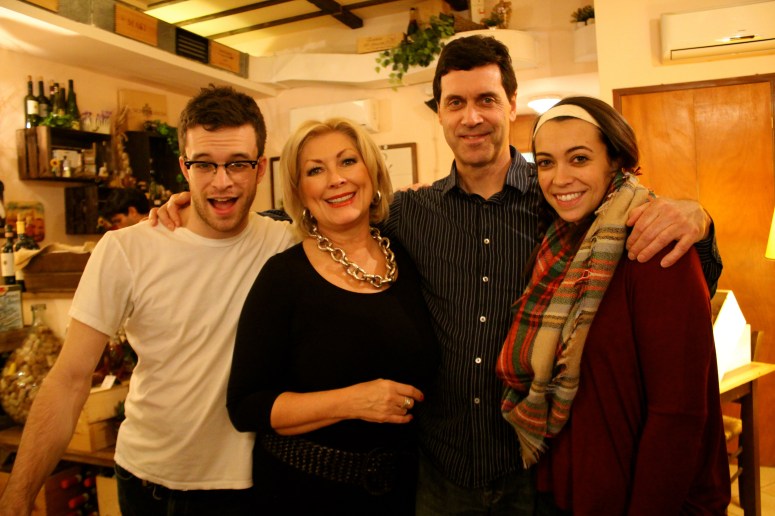
It’s also the time of year when colleges are on break which meant my daughter was able to travel with us.

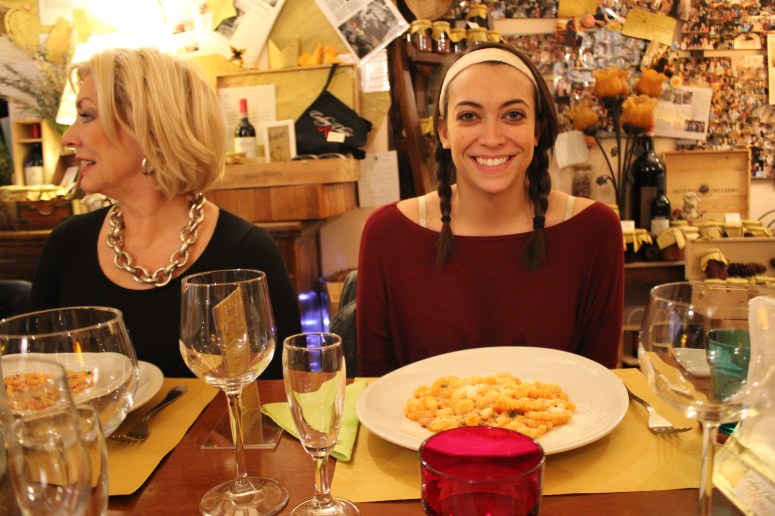
On our fifth day in the Eternal City, we walked from the ancient exile zone of the Jewish Ghetto (where we were staying) across the Tiber River to the ancient exile zone of Trastevere. We wanted to learn the art of preparing a typical Roman meal.

We were—every “perfect-American-family” one of us—hungry.

So hungry.

********

Sycamore trees bow into the now-walled-up Tiber River.
IMG_1760

IMG_1761

IMG_2129

********

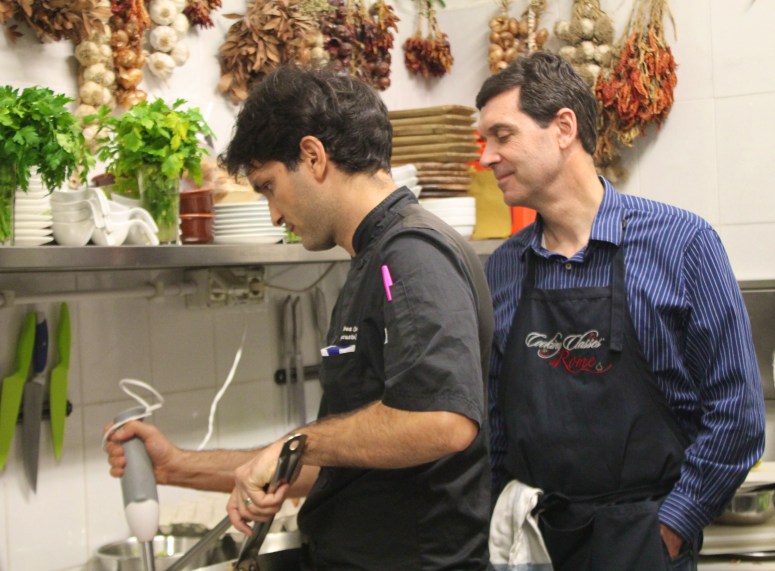
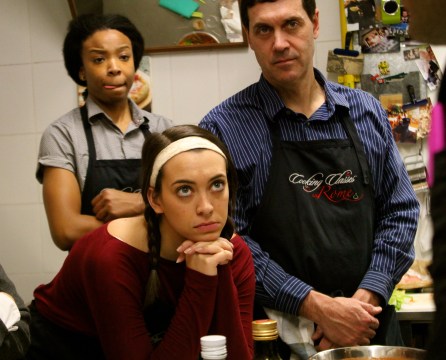
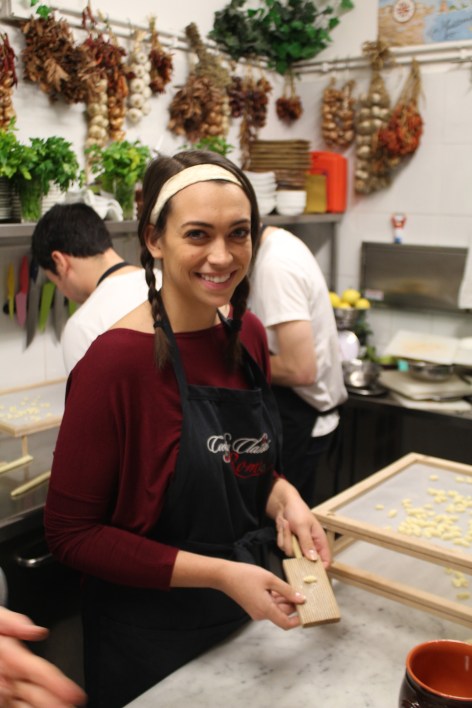
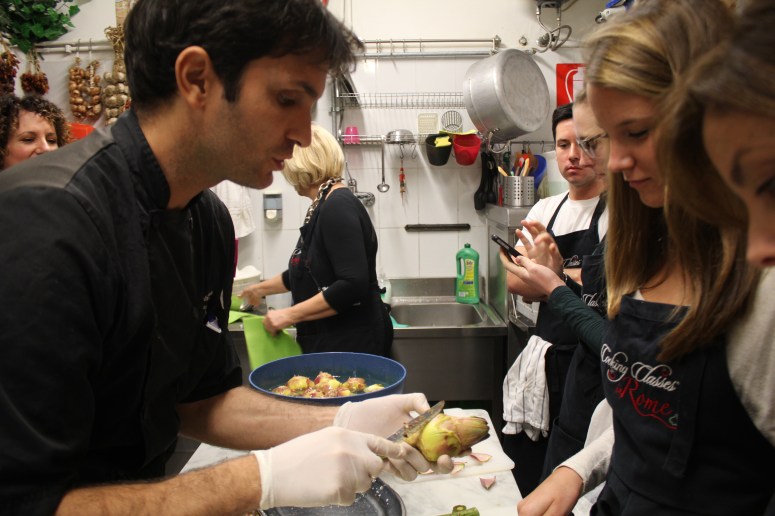
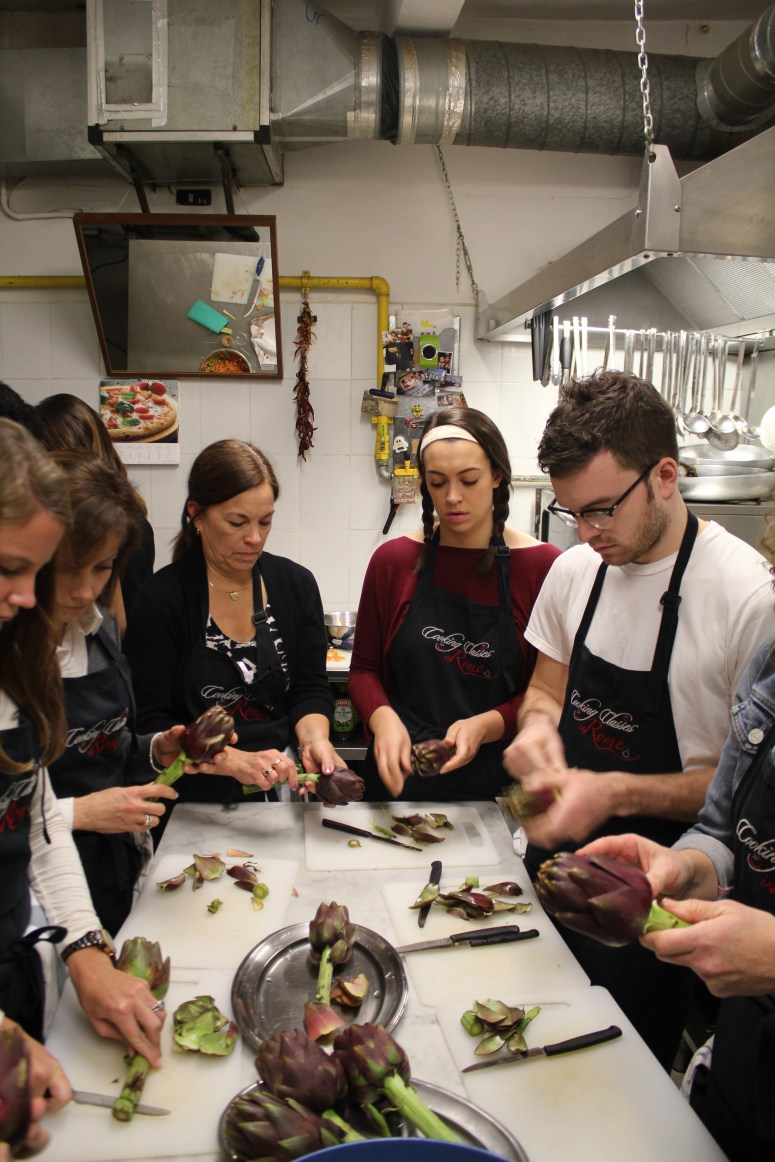
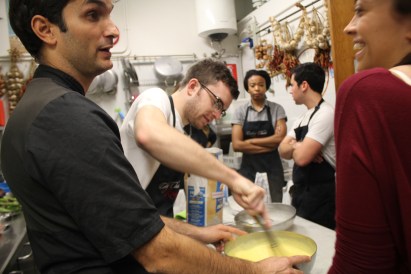
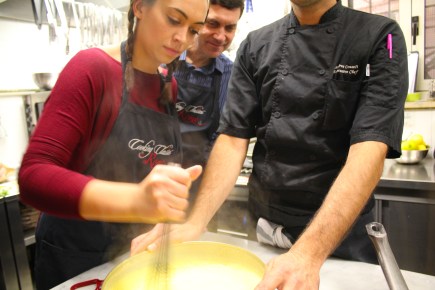
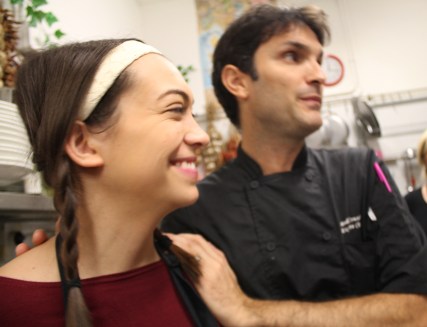
Somewhere in the maze of the narrow streets that make Trastevere so irresistibly charming, Chef Andrea welcomes students into his kitchen at Cooking Classes in Rome. Don’t be late—it was the ugliest American thing we did. I go to Europe to find beauty in details. If you are late to Chef Andrea’s class, you will miss out on his special attentions to delightful beginnings for your day.
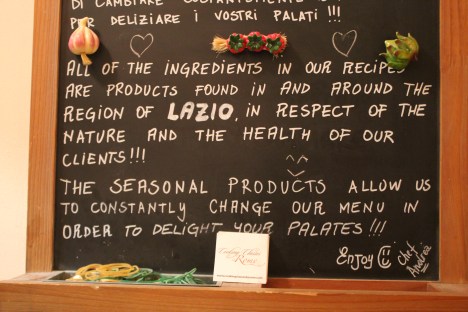
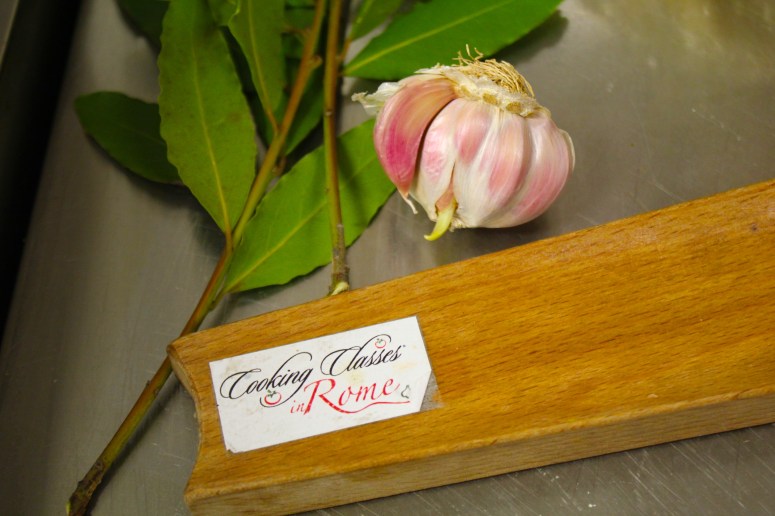
IMG_2249

IMG_2179

********

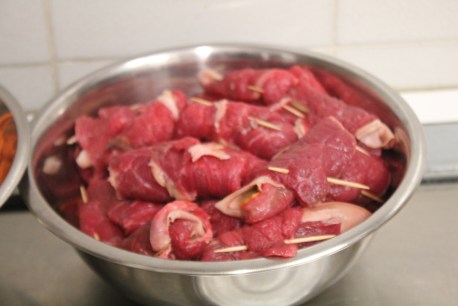
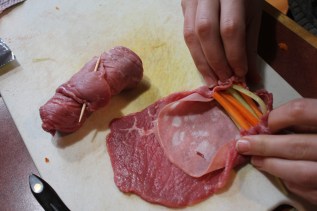
Involtini alla Romana. (Roman style beef rolls in tomato sauce.)

IMG_2147

IMG_2134

IMG_2135

IMG_2143

********

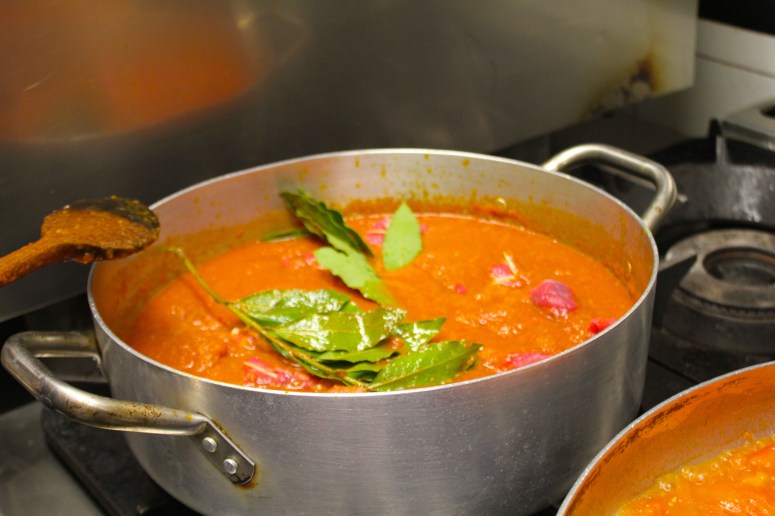
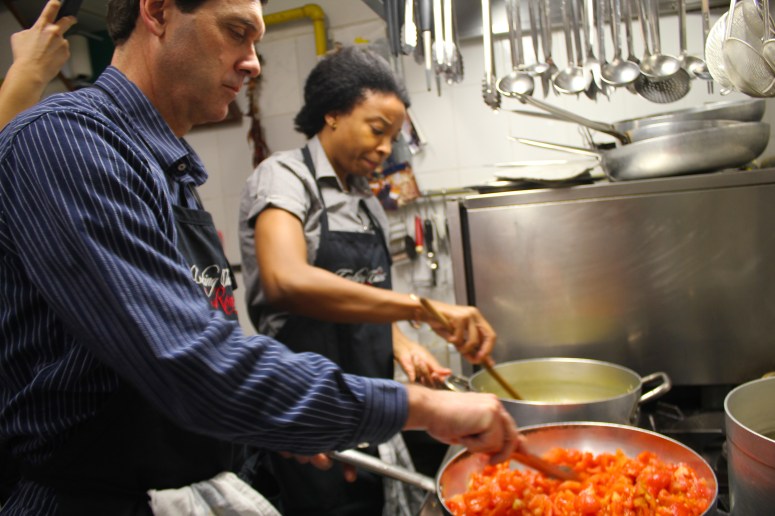
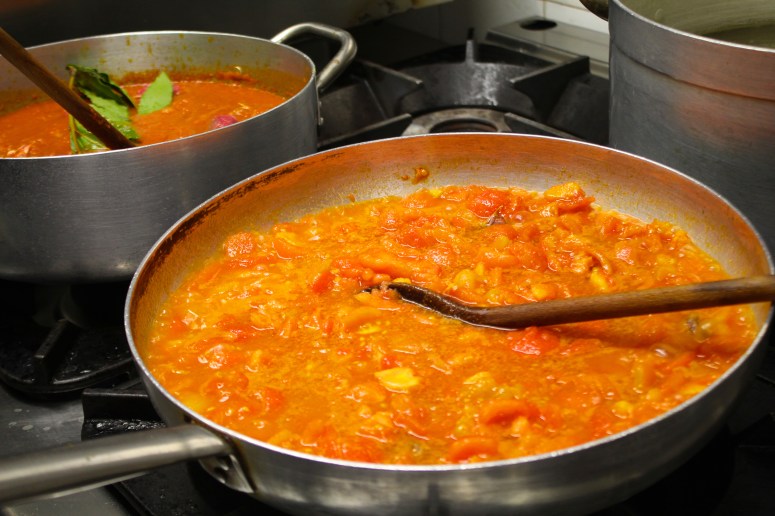
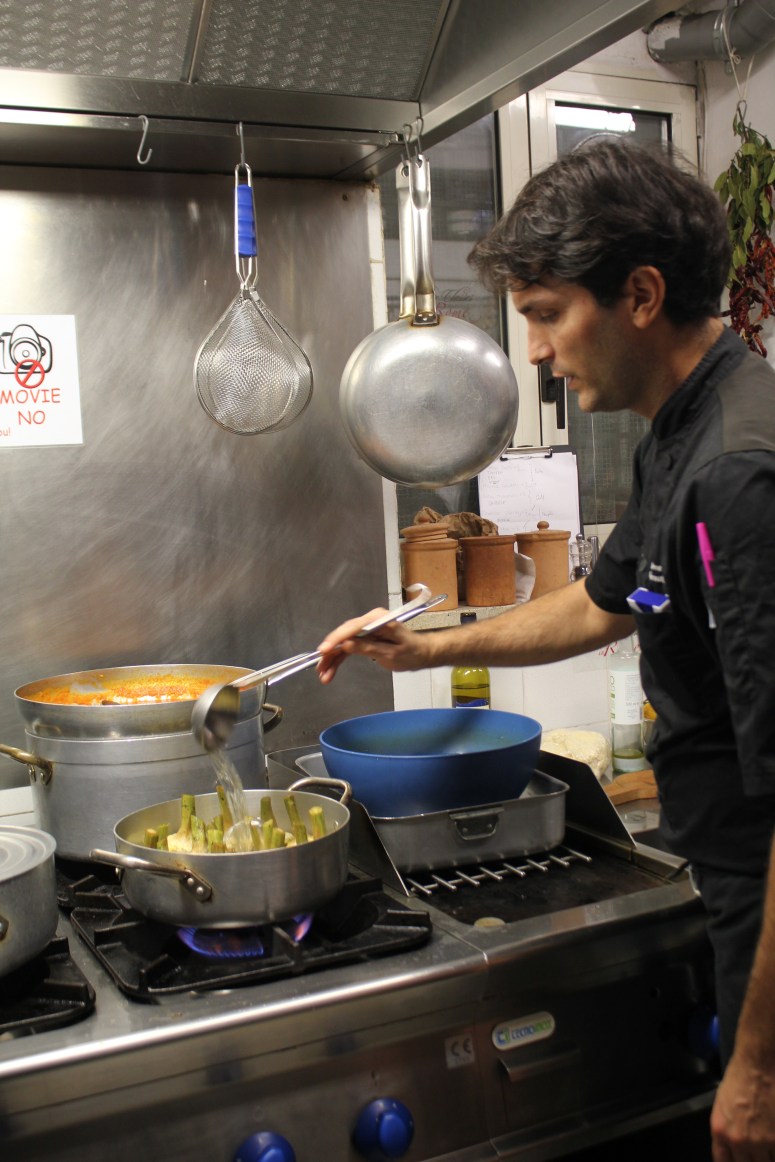
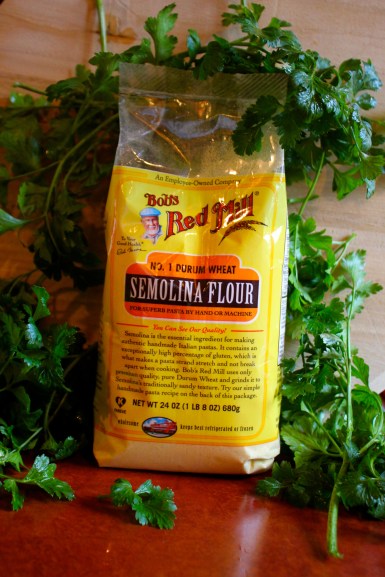
Bay Leaf. The Romans take it from plants growing everywhere. We learned how to prepare two forms of tomato sauce. One was used to submerge the Involtini alla Romana and let it cook, the other was for our handcrafted Cavatelli pasta.
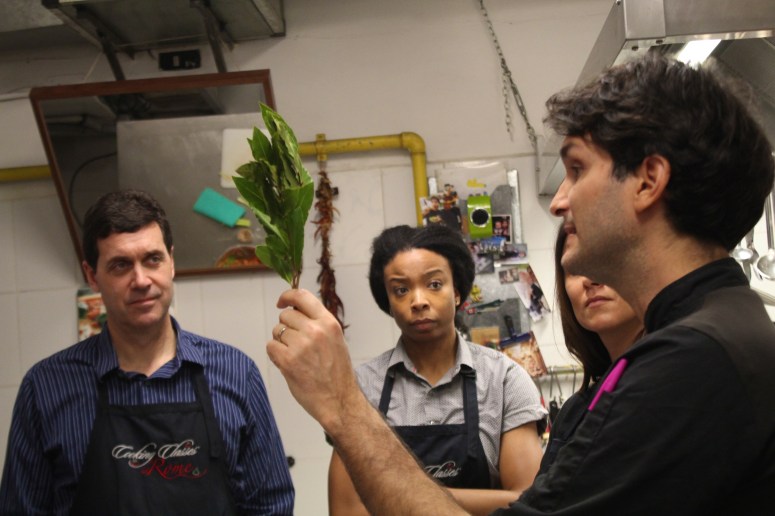
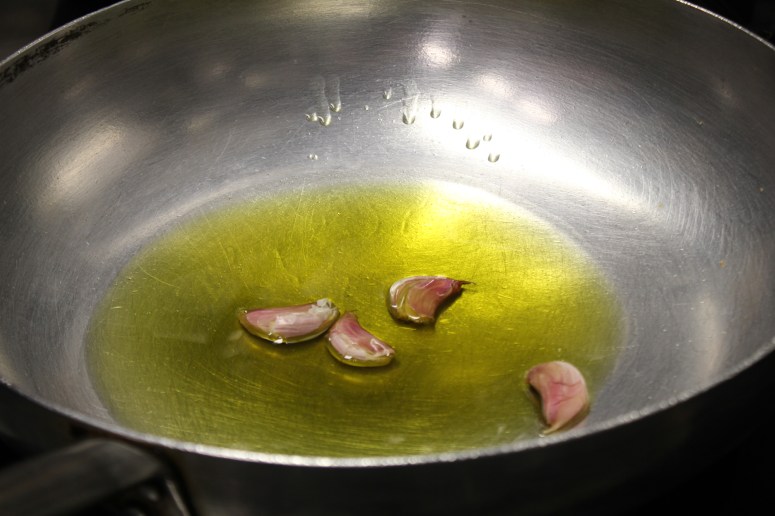
IMG_2184

IMG_2174

IMG_2187

IMG_2182

IMG_2217

IMG_2188IMG_2211

********

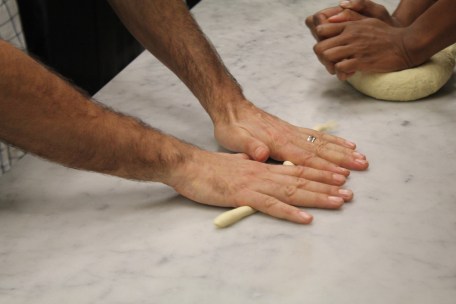
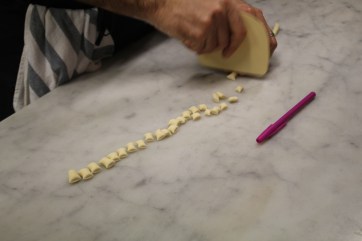
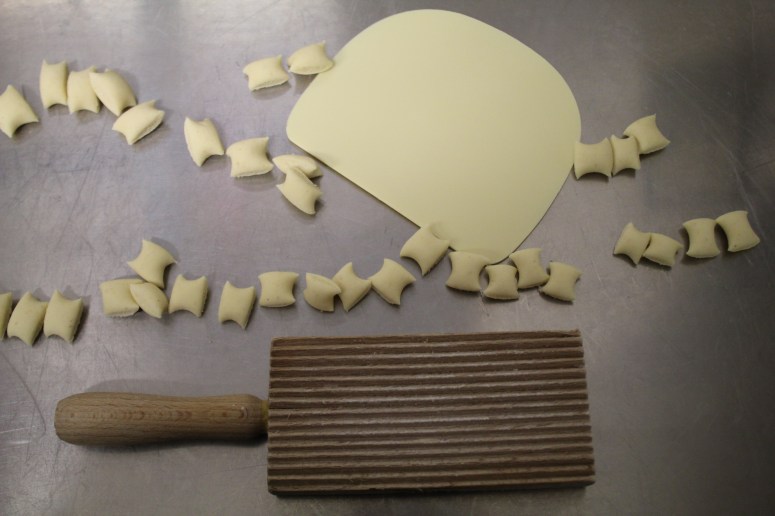
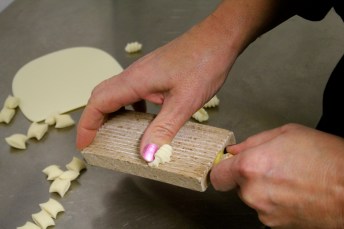
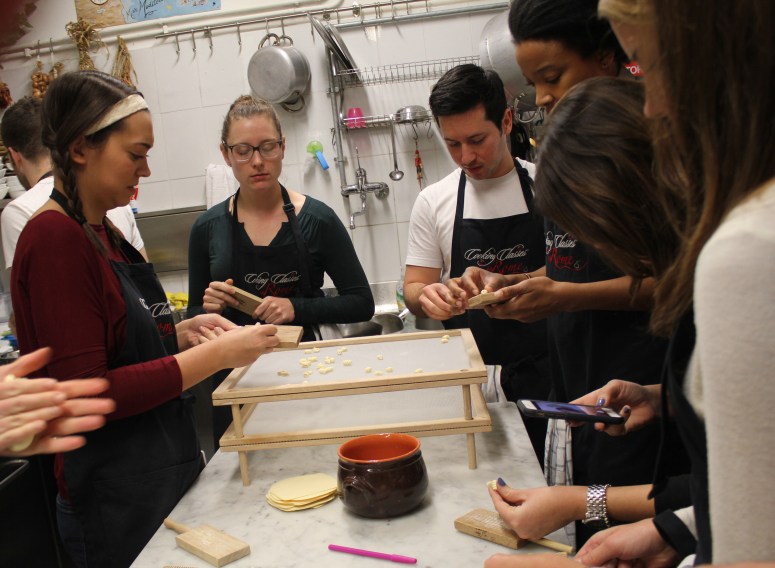
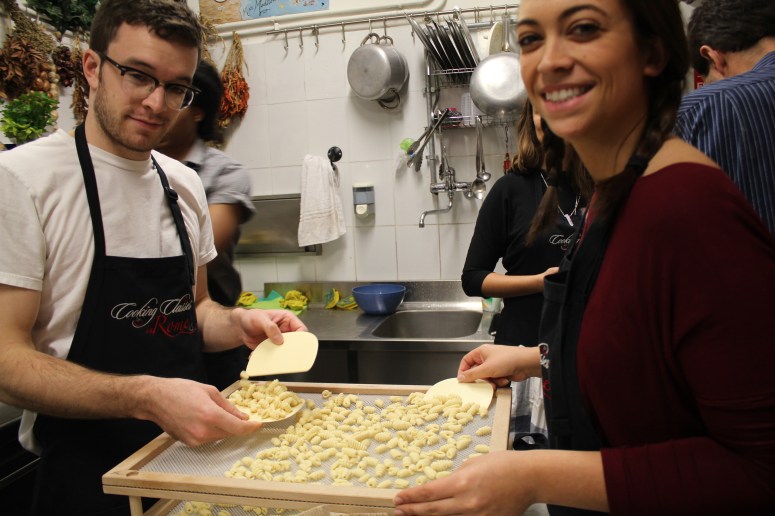
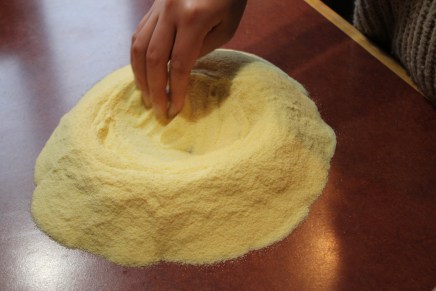
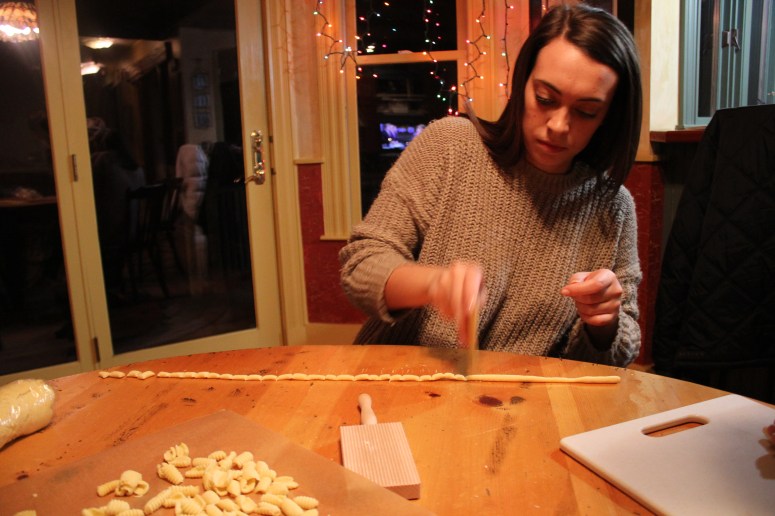
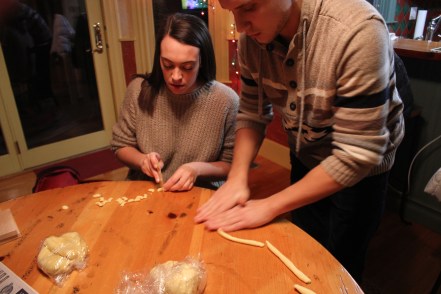
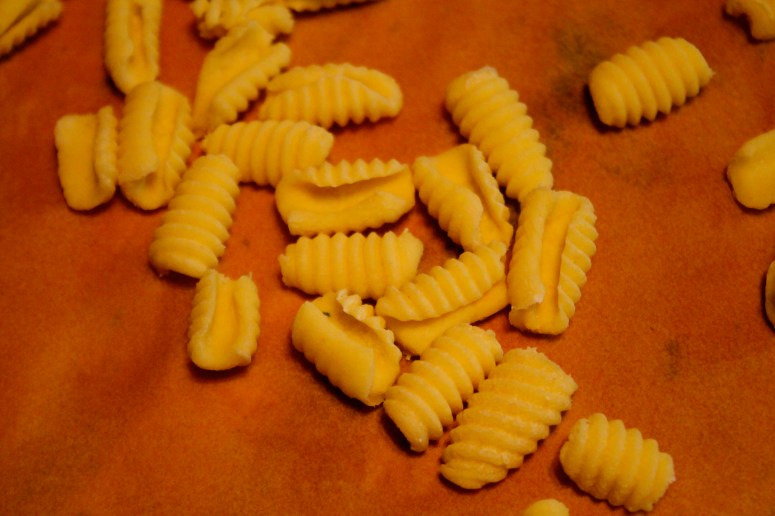
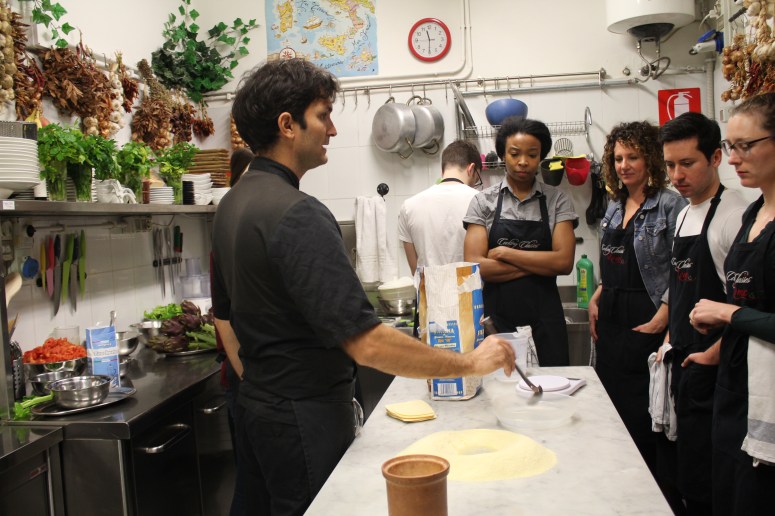
Using Italian-made hand tools to handcraft Cavatelli pasta. Very zen.

Every piece of pasta has someone’s heart rolled into it.
IMG_2141

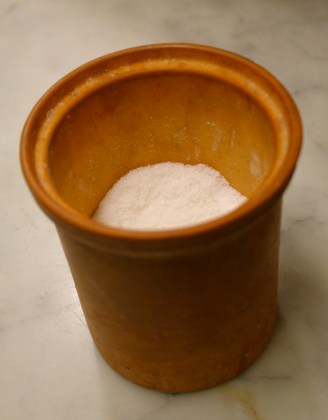
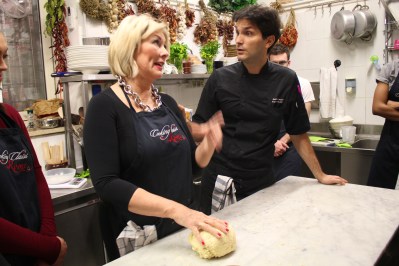
How much salt? One pinch per person.
IMG_2148

IMG_2154

IMG_2183

IMG_2223

IMG_2225

IMG_2233

IMG_2235

IMG_2239

IMG_2237

IMG_2231

IMG_2244

********

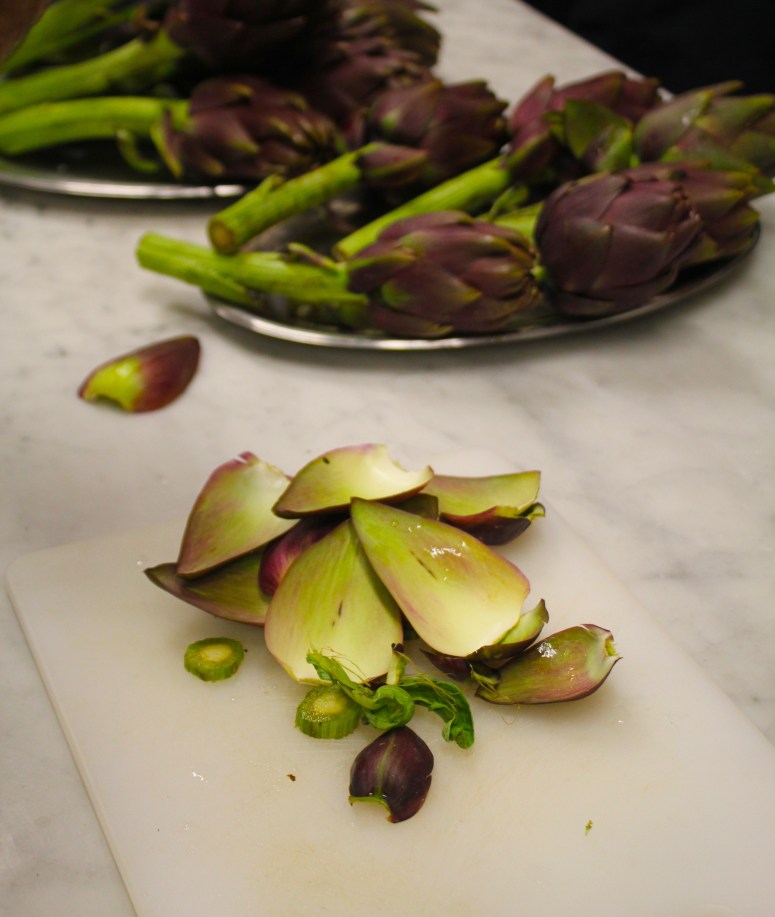
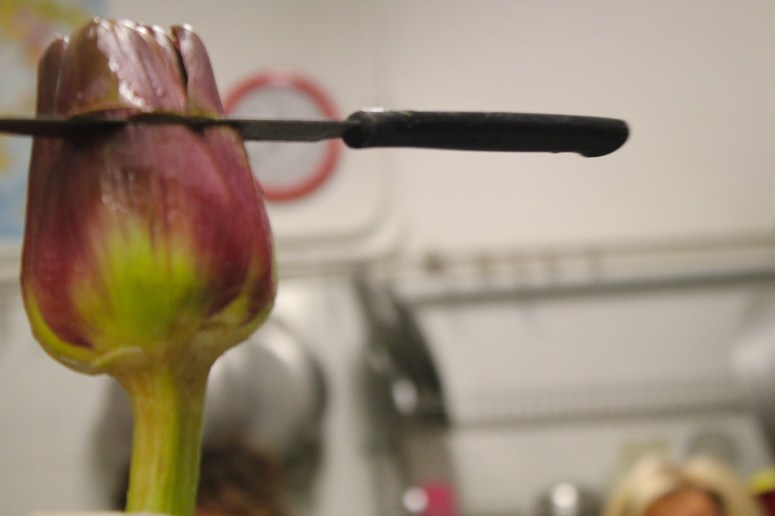
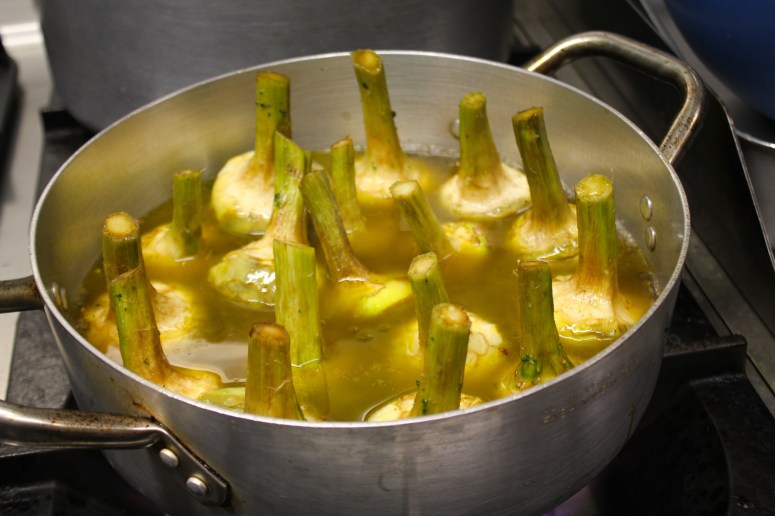
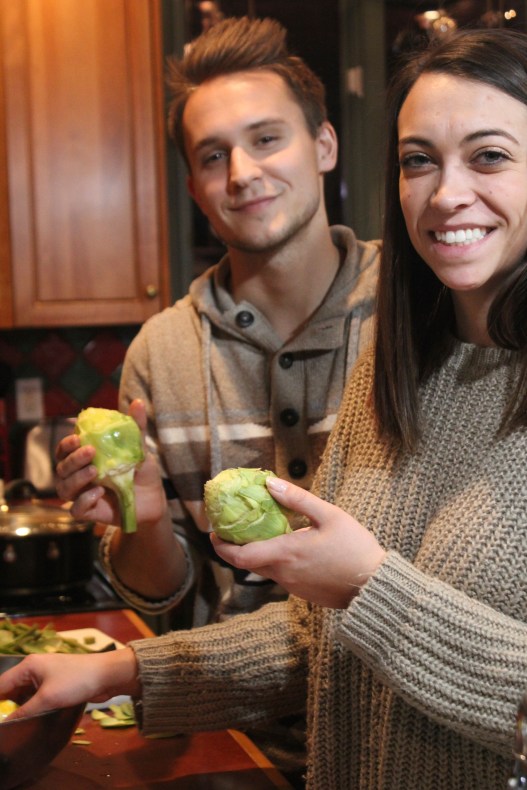
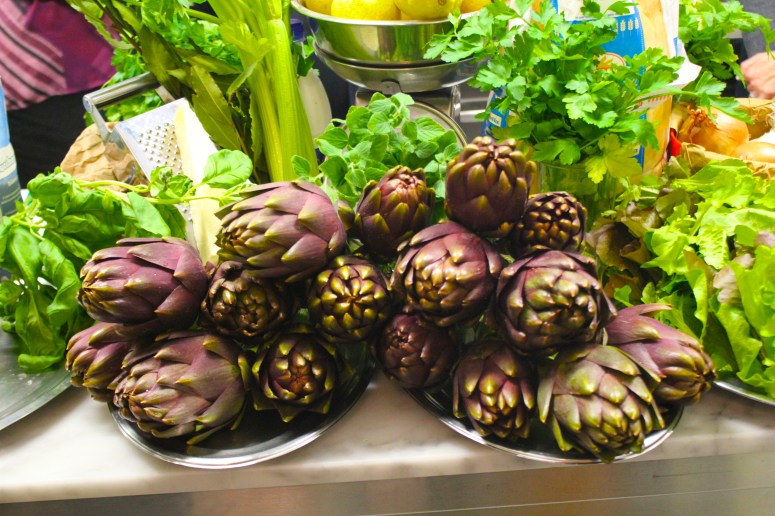
Carciofi alla Romana. (Roman style artichokes.) Roman-style artichokes are the food of the gods. American-style artichokes are for barbarians.

Goethe wrote in Travels through Italy: “The peasants eat thistles.” Supposedly it was a behavior he found too repugnant to ever enjoy.
IMG_2132

IMG_2192

IMG_2203

DO  NOT DO THIS:

IMG_2194

IMG_2200

IMG_2204

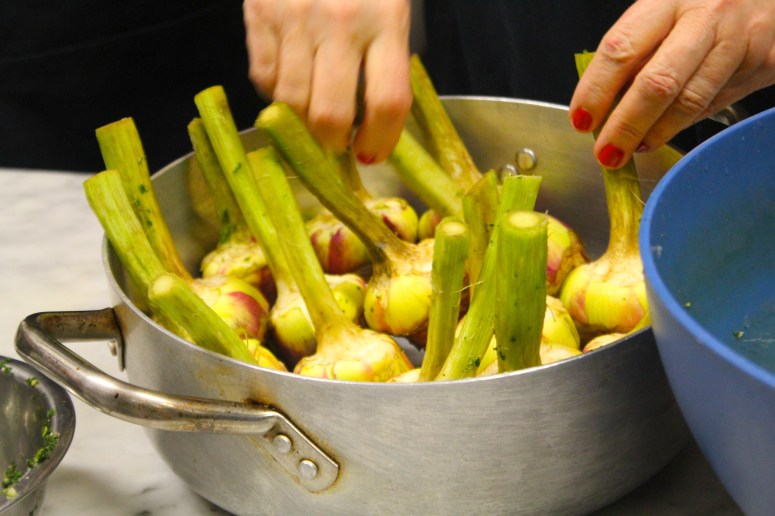
There is a secret stuffing prepared for the artichokes.

The most authentic stuffing uses a Roman herb growing wild along the Appian Way.
IMG_2210

IMG_2221

IMG_2222

********

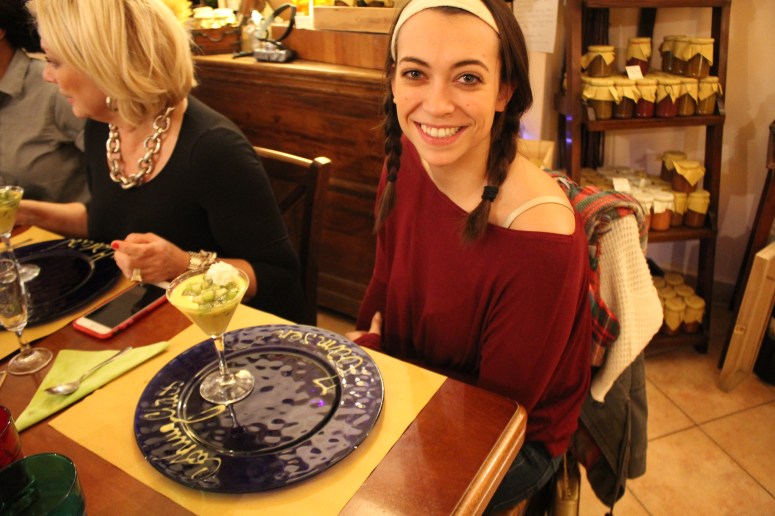
Dessert. Crema al Limone con Kiwi.

And a lesson in which is the male and which is the female lemon.

IMG_2155

IMG_2160

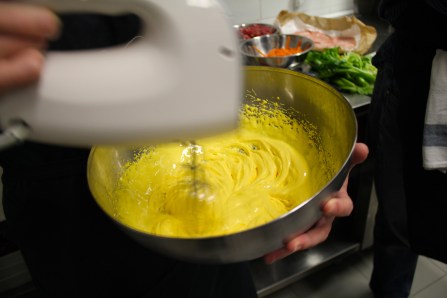
Using the electric whisk.

IMG_2161

IMG_2165

IMG_2163

IMG_2177

********

Our cooking instructions included intriguing history lessons and useful magical secrets about how to properly infuse artful details into your work as a chef in the kitchen. Many of the recipes are derived from necessity and are composed using the kinds of foods that were available to be used by the lower classes that lived on the “other side of the river” in Trastevere. The prostitutes learned to prepare and strategically place aromatic meals out into the narrow alleyways where the scents of sexy cooking became concentrated. Such tantalizing pleasures—on several levels—were impossible to resist by potential customers.

Indeed, cooking engages all the senses.

We opted to have wine pairings with our courses and Chef Andrea’s choices were exquisite.

My husband and I have enjoyed various styles of cooking classes in France, in other parts of Italy, and in the United States. Chef Andrea’s Cooking Classes in Rome exceeded our expectations and the price was surprisingly reasonable.

********

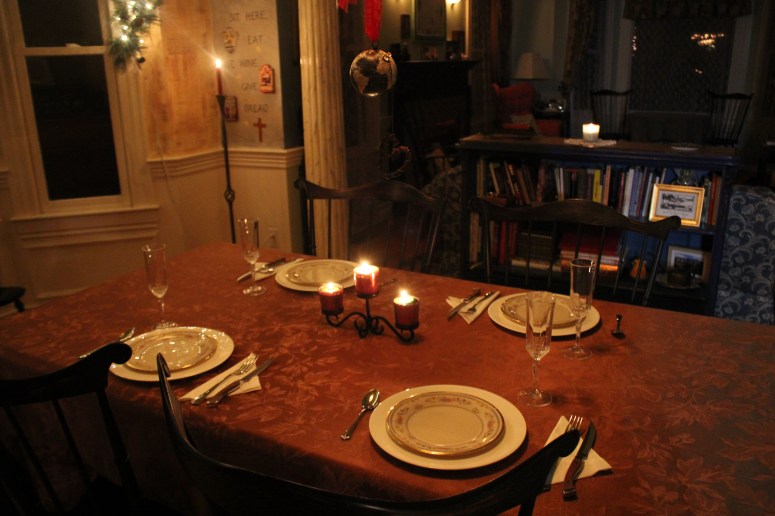
Time to eat our works of art with all of our new friends from all over the world.

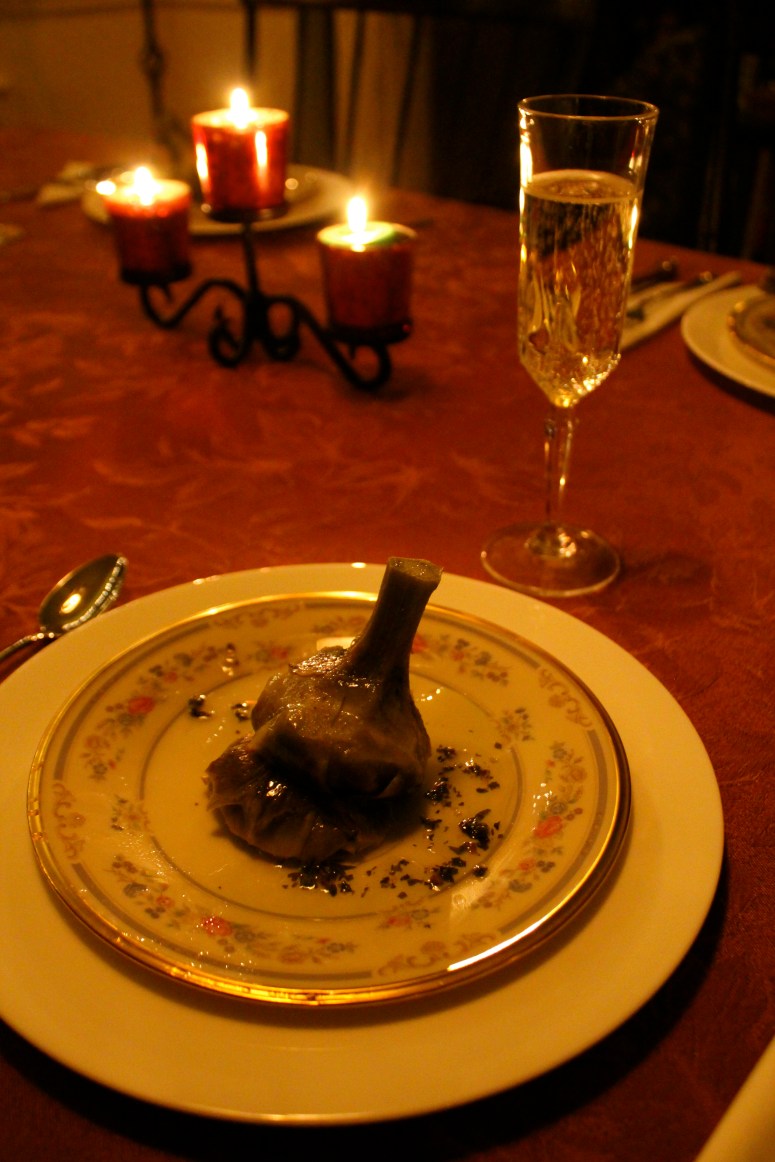
The Carciofi alla Romana appetizer.
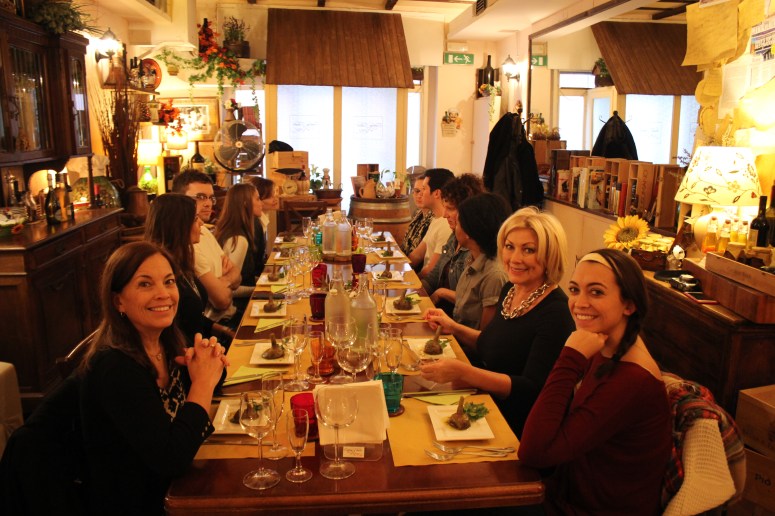
IMG_2257

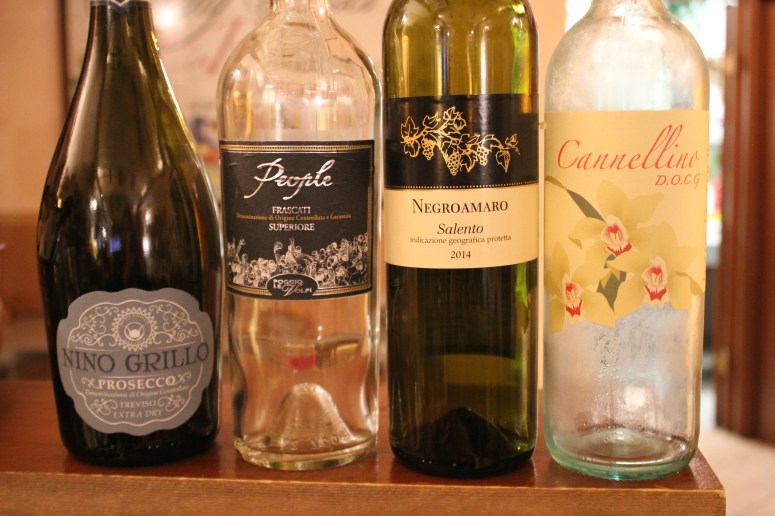
Paired with Prosecco di Valdobbiadene.
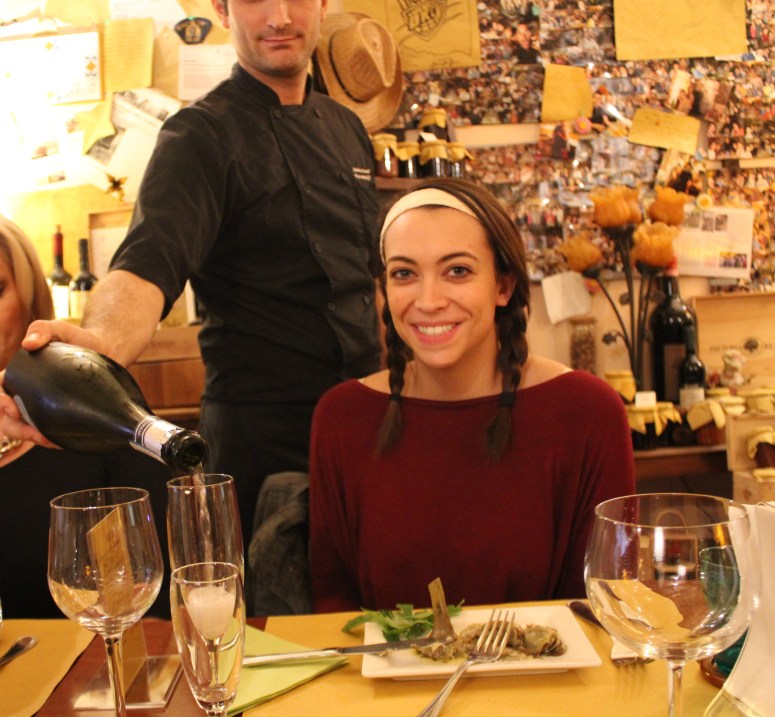
IMG_2260

First course: Handcrafted Cavatelli fatti a mano con sugo di pomodoro fresco e basilico.

Paired with Frascati Superiore DOC

IMG_2264

IMG_2263

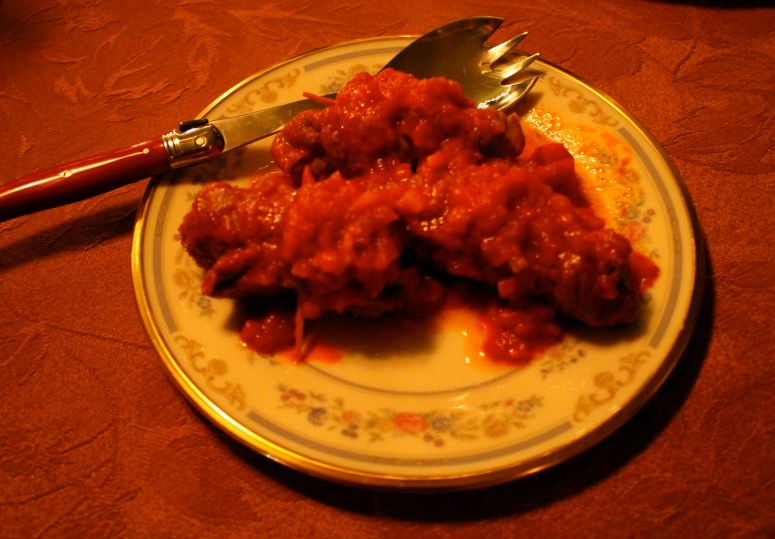
Second course: Involtini alla Romana.

Paired with Negramaro, from the heel of the boot in the famous and breathtaking

Puglia region in the south of Italy.
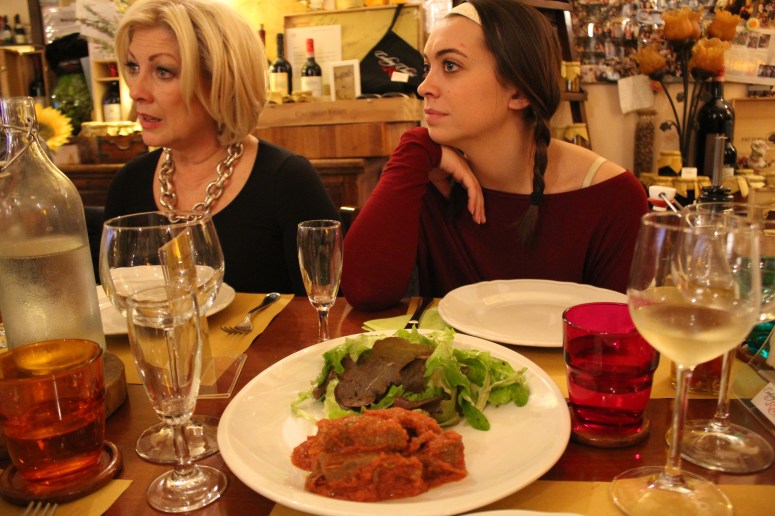
IMG_2270

IMG_2274

Dessert: Crema al Limone con Kiwi.

Paired with Moscato, 100% Malvasia del Lazio “gleaming golden yellow grapes”

harvested in late October.
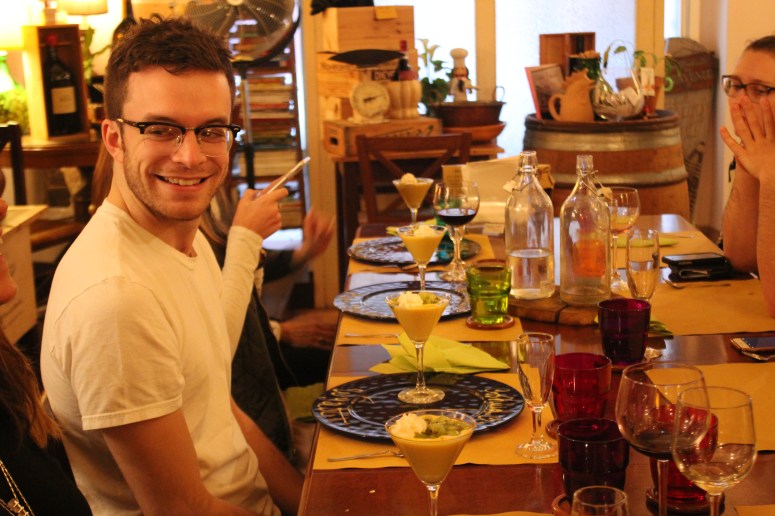
IMG_2277

IMG_2278

IMG_2291

IMG_2293

********

At the conclusion of our meal, Chef Andrea asked if any of us would one day use the secrets we learned back in our own countries. What artist does not wish to change the lives of others for the better? And why go to Rome if you do not want to be inspired to create something great?! Or be transformed?

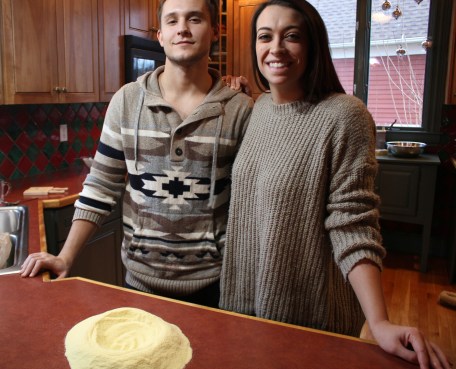
We returned home on a Saturday evening. By the next night—Sunday—our humble gypsy-camp kitchen in America was being transformed into a Trastevere-style trattoria. My daughter’s boyfriend wanted to learn everything we could remember from our day with Chef Andrea in Rome.

********

You don’t need a big, industrial, or high-tech kitchen in order to make art with food. In fact, most of our classes in Europe have taken place in kitchens as small, or smaller than, ours.

IMG_2588

Rome in January was lovely, about 60 degrees. I was happy to find some parsley hanging on in my herb gardens, even though snow was on the way.

IMG_2593

For the handcrafted pasta:

IMG_2595

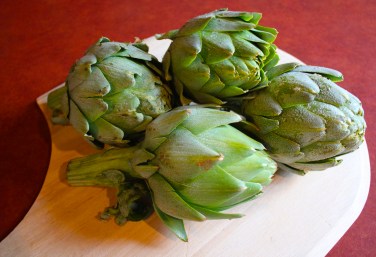
We had to ask for artichokes at the supermarket. They brought some out from the back storerooms. They weren’t as beautiful as the artichokes in Rome, but still worthy.
IMG_2599

In order to offer finely-grated Pecorino Romano,

this is the side of the cheese grater to use:

IMG_2604

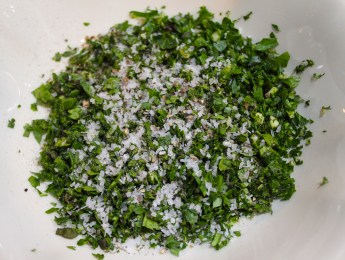
Chopped herbs and garlic and SALT.

IMG_2630

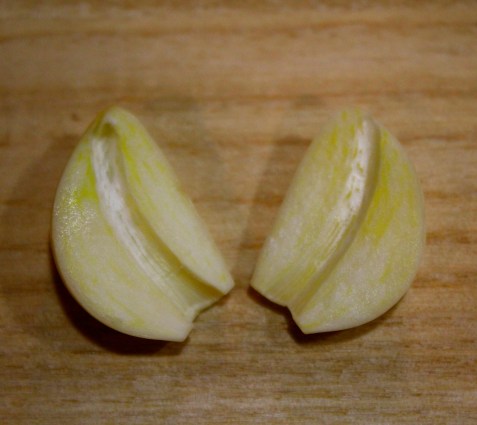
The secret to cooking and eating garlic,

and still being able to get a sweet (not smelly) kiss from your true love all over Rome:
IMG_2625

********

IMG_2606

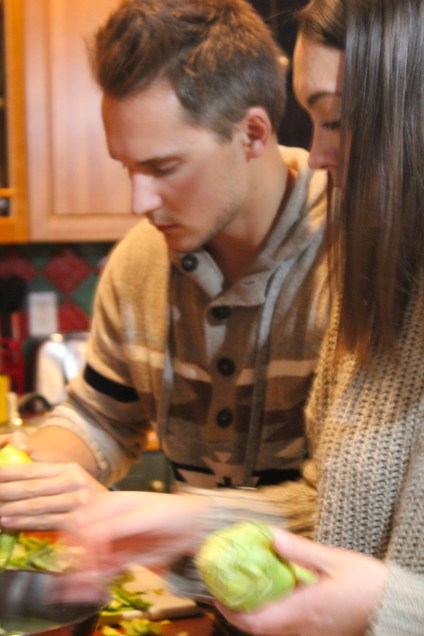
The artichokes will definitely require some more practice:
IMG_2628

IMG_2629

IMG_2607

IMG_2608

IMG_2612

IMG_2649

IMG_2633

IMG_2638

Lemon zest in the milk for the dessert:

IMG_2621

********

IMG_2655

IMG_2657

IMG_2666

IMG_2663

Beautiful snow began to fall during the last course. I set the dessert glasses out to be blessed before assembling the Crema al Limone con Kiwi into them.

IMG_2671

IMG_2675

A glass of limoncello for everyone.

IMG_2682

********

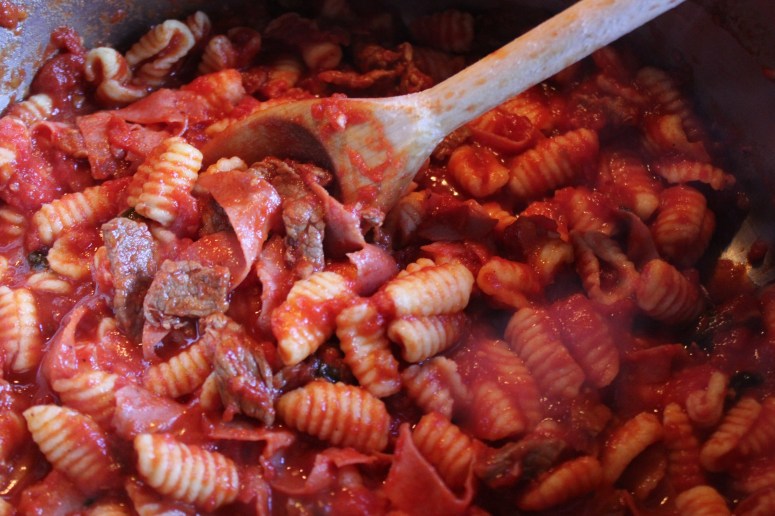
The next day, Monday, there was a generous slice of beef, a few slices of mortadella, and some pasta left over. I sliced the meats and dropped them, along with chopped garlic, into fresh tomato sauce and, borrowing a tip from the prostitutes of yore, began letting it cook. Sexy aromas floated up to—and swirled all around—the desk where my husband had returned to his workaholic self. (Monday was the Martin Luther King holiday. Though my husband had not driven into his office in Boston, he had begun work by 7AM and hadn’t left his desk even as the noon hour approached.) Soon, I heard my husband coming down the stairs, through the narrow alleyways, and finding his way into my kitchen.

We had a nice lunch together, planning our next trip to Italy, and a possible Roman feast at our son’s apartment in Brooklyn.
IMG_2692

IMG_2695

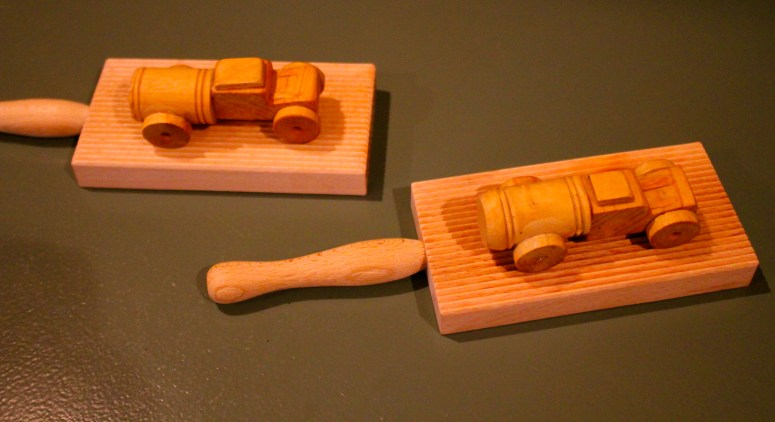
All roads leads to Rome. (Trucks created from random scraps of wood by my son when he was a toddler. Hand tools made in Italy for rolling out pasta.)
IMG_2687

********

If you want to know how to make the food Chef Andrea taught us how to make, you will have to visit him at his Cooking-Classes-in-Rome studio in Trastevere.

Is it worth it to travel all the way to Rome to learn how to make a typical Roman feast? And bring more beauty into your life? And spend time with your family making new friends over food? And feel more hopeful about our post-humanist world?

OMG.

Is the Pope Catholic?

********
A Truly Beautiful New Year’s Eve.

For about 58 pages or so into T Magazine’s (a NYT publication) Holiday 2015 issue, the reader flips through well-known worlds of conspicuous consumption ruled over by all the familiar party hosts. Ralph Lauren, Louis Vuitton, Prada, Cartier, Coach, Estee Lauder, Bloomie’s, Bergdorf Goodman, Tiffany (Since 1837!), and many more.

Maybe the magazine is not the best distraction for the start of what might be a lonely and/or disappointing New Year’s Eve.

But then the magazine presents a little letter from the editor declaring that the overall mood of the magazine will be set by an essay a few pages beyond (past Gucci and HUBLOT) making the case for the idea that “…when we try to create the perfect anything, we often end up stripping away the shaggier bits that may contain the spontaneous, the real, the personal and the one-of-a-kind—and thus, the truly beautiful.”

So then comes the essay, The Good Enough Holiday, about “gladsomeness” and the joys of family traditions and how the gift of a shiny penny used to make a starry-eyed child feel as though they’d become a millionaire.

And thenafter the essay, there are more and more and more seductive sexy alluring oh my gosh yes that and that and oh how thin and famous and RICH everyone is and look at those beards trimmed as perfect as the hedge around Versailles with revelers wearing diamonds on the soles of their shoes all aglitter like a Hall of Mirrors reflecting upon the sparkling and soothing salt waters of private lagoons and pre-fab fantasy forests! 

I can’t tell if I am supposed to take T Magazine completely seriously. It’s so absurd. It’s also funny, corny, interesting, and sumptuous. I think, based on the magazine’s website, that it strives to be influential, sophisticated, cultural, extraordinarily luxurious, stylish, and right on target with the “influences and ideas shaping this moment.”

The magazine came to my house a while ago tucked into a liberal newspaper—the New York Times—a prestigious newspaper that has done a great job reporting on wealth inequality in America which is an idea shaping the moment, but not an idea shaping T Magazine.

The magazine makes me wish I had a million available-to-spend-right-now dollars—a reflection of wealthy lifestyle influences bombarding Americans all the time.

The magazine feels, to me, like the energy at a gala charity event—money, money everywhere, a few good conversations, a few feel-good moments, and then that excessive “morning after” emptiness that can be so depressing when conspicuous consumption gets into bed with conspicuous contributing.

The magazine is like New Year’s Eve in America—it’s an enigmatic something marked by great expectations and foolish fantasies. It strokes the wondrous pleasures of indulging in ideas for fresh and trendy new beginnings. It sends exciting ideas tumbling into arenas of dream possibilities where attitude adjustments, fashion-upgrades, fine art acquisitions, exotic travel, and professional and personal lifestyle changes are casually woven into everyone’s everyday gig. Over a lot of drinks. And too much food. And loud laughter.

Though the magazine claims an affinity for the “shaggier bits” of spontaneity, and the real, and the personal, and the one-of-a-kind, I didn’t find any such “truly beautiful” examples of these treasures on the glossy pages. There were, most definitely, many beautiful things to look at and fascinating things to read about.

But to find truly beautiful, the magazine would have had to send their writers into the homes of the rest of us. For that is where the private galleries of the truly beautiful, one-of-a-kind treasures of the world are kept carefully displayed or robustly ready for joyful excursions into playtimes and gladsomeness.

I was charmed to notice, as I gazed at page after page of suggested purchases, that many of the beautiful items featured were similar to things I already have, and although the magazine’s chosen works of art were lovely, my works of art, in my humble opinion, are more truly beautiful.

What follows is my own version of a New Year’s Eve party game. Some of these things are not like the others. But they’re close.

********

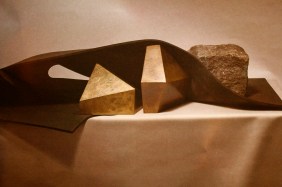
From T Magazine’s feature: Tangible Beauty. Exquisite, rare objects that honor the gift of giving. Photos by Anthony Cotsifas. Styled by Haidee Findlay-Levin.

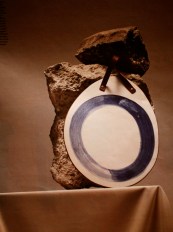
Polygonal bronze bookends as artful as they are useful, left untreated to attain a natural patina over time.  $1,250.00 each.

IMG_1558

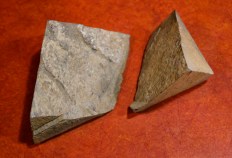
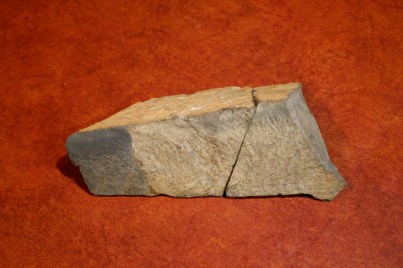
My Version of polygonal art: Ancient stone from the top of a random mountain (not a national park!) in Maine. An all-natural brain teaser made of sturdy materials bonded together by Earth’s own timeless forces. Found while hiking alone with my husband after locking our kids in the family camper at the trailhead because they were driving us crazy. Not as easy as it looks. (To be a parent, or to figure out this ancient puzzle.) Free.

IMG_1554

IMG_1547

IMG_1555

********
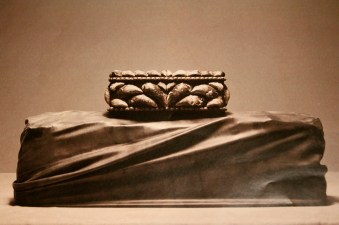
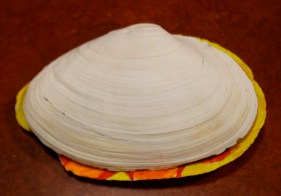
From Tangible Beauty. Wild mussels and periwinkles covering vintage objects, like a box. Wild, untamed sentimental keepsakes. About $300.00

IMG_1561

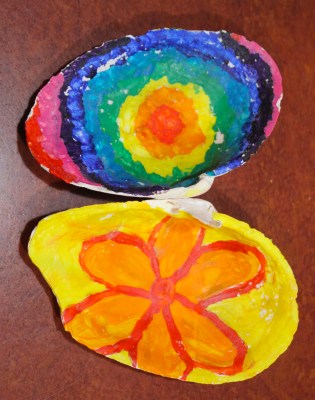
My version of sentimental shells and boxes: Wild clamshells claimed in the romantic Atlantic surf by my daughter. Sentimental glee painted by her own heart and hand inside. This shell is part of a series of shell paintings she called The Garden. Free.

IMG_1531


IMG_1533

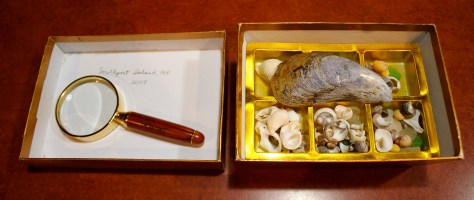
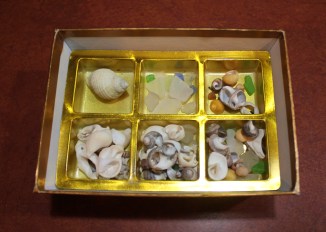
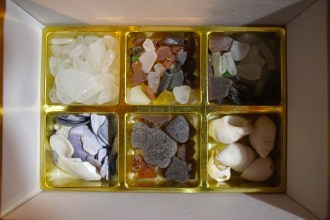
And, our version of a special box for treasures. An old chocolate box, repurposed as a box of curiosities found one day on a beach on an island in Maine. All shells might, or might not be, ancient. There is sea glass mixed in. You can rearrange the treasures however you like, in two tiers of compartments and closely examine them with the magnifying glass. Shells, free. Box of chocolates, can’t remember what they cost. Magnifying glass was a promo gift from an insurance company.

IMG_1570

IMG_1571

IMG_1572

IMG_1575

********

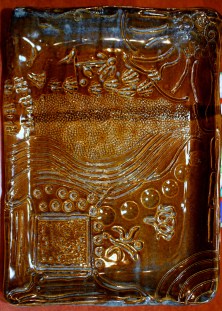
From Tangible Beauty. Refined and rustic terra-cotta platters influenced by folk architecture and agrarian tools and primitive symbols. The forms are affixed with leather handles which I like very much. $225.00

IMG_1560

My version of a folk art platter with primitive symbols: a slab of pottery produced by my daughter. Not free—the materials and studio at her school cost something.

IMG_1536

********
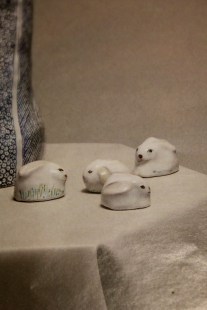
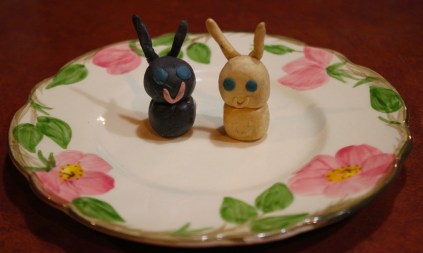
From Tangible Beauty. Sophisticated charm from the innocence of naive art. Whimsical creatures with free-spirits using a rare technique of maiolica dating back to the Renaissance. Baby rabbits, about $46.00 each. I love bunnies!

IMG_1564

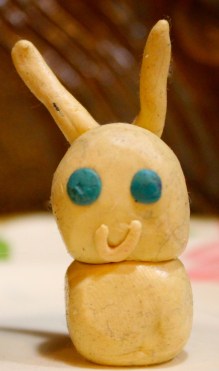
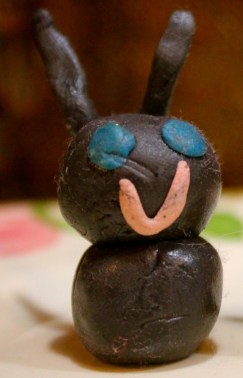
My version of precious, naive art bunnies. Sculpted clay creatures paired on a plate by my daughter—something my husband would joke about making a meal out of. But I have never disturbed the offering and after many years, there are lots of “shaggy bits” of dust on the bunnies. An all-natural effect of furriness! The white bunny has a pink tail on the back. Nice detail. Free.

IMG_1541

IMG_1538

IMG_1538 2

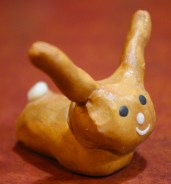
And another naive bunny I treasure, sculpted from baking clay, a gift from my niece when all of us had bunnies for pets.

IMG_1546

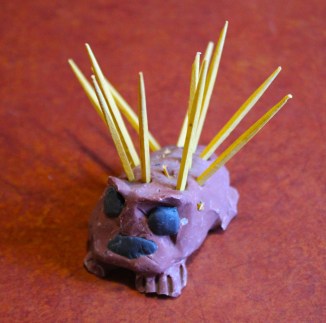
And one more naive creature. From my son. The gift of a clay porcupine using innocent toothpicks.

IMG_1579

********

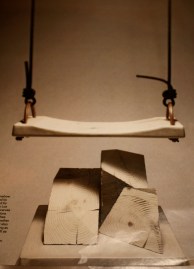
From Tangible Beauty. A swing. Hand carved with luxe leather loops. Functional and sculptural for swinging inside a grand loft space or for gliding in the great outdoors from a real tree. $2,500.00

IMG_1565

I don’t have a picture of my version of this. It was a disk cut from a hunk of oak that my husband drilled a hole into the middle of and secured on a single strand of rope with a heavy-duty, hand-tied knot. The rope was flung over a branch in the old elm tree in our backyard. The single-rope design meant you’d go flying in all directions and you had to hug the rope to save your life. A lot of spinning. Only one mishap—when a neighborhood daredevil jumped off and the swing swayed back into his forehead and left a delicate gash that needed a few stitches.

********
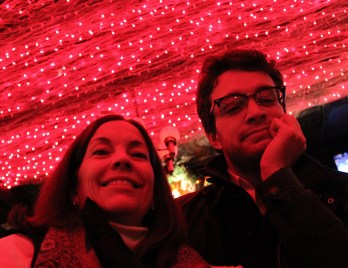
On New Year’s Eve, I hope we all spend some quiet time feeling starry eyed about the truly beautiful lives we already have and going for a stroll through our own galleries of priceless treasures.

And may 2016 bring more true, genuine beauty your way!

********

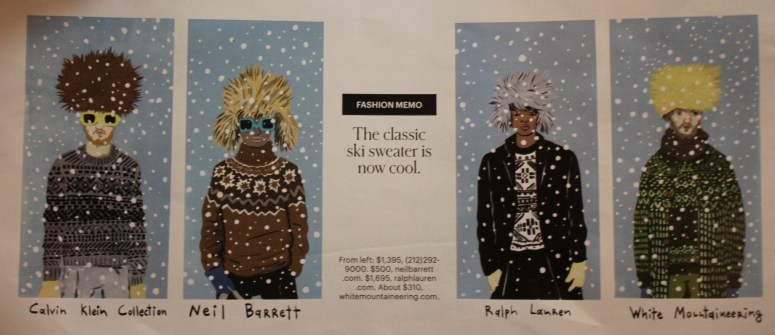
P.S. According to T Magazine:

IMG_1567

My take on this: The ski sweater, just like the ski mountain, just like the ski mountain bar, just like the ski mountain lodge, just like the ski mountain snowflake, just like the ski mountain french fries, just like the ski mountain home-packed lunch, has always been cool.

Think snow!

********
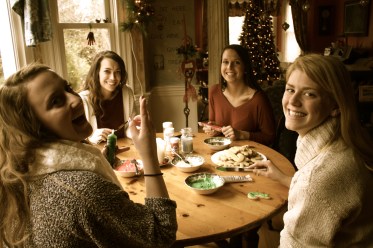


Ghosts Of Christmas Peace.

“Each December the people of Boston gather to witness the annual lighting of the Christmas tree. Some of them probably do not know why the people of Halifax send a tree every year or even that it is a gift from Nova Scotia. No one needs to know the story behind a tree to admire its beauty. But the people of Halifax know where it comes from and they remember the story.” —From the frontispiece with an illustration of Halifax Harbour in the award-winning book Curse of the Narrows, The Halifax Explosion 1917, by Laura M. Mac Donald. Mac Donald began researching and writing this book, about her hometown of Halifax, after emigrating from Toronto to New York City. While waiting for her green card and deciding that perhaps another book about the Halifax Explosion did not need to be written, Mac Donald experienced in person the September 11th terrorist attacks on New York City—“I watched in incredulity as so many of the details I’d just researched repeated themselves.”

Mac Donald’s book, and my excursions with my husband and my daughter last summer through Nova Scotia, affected me deeply.

********
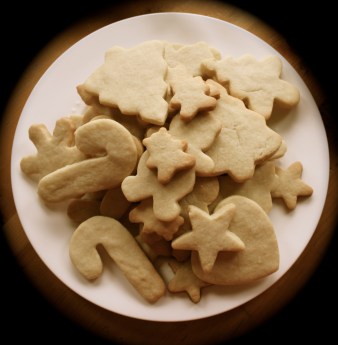
There is a display at the Maritime Museum of the Atlantic in Halifax of a child’s collection of pocket possessions. The collection includes a small, bouncy ball toy, made of translucent rubber the color of tumbled, light-green sea glass. There is also a stainless steel hair comb. There is an eraser, the corners rounded and worn away. And there are three wooden pencils—two yellow, one green—sharpened down to about two and a half inches each, with hand-carved leaded points. The soft wood on the end of one pencil still bears imprints from the child’s habit for gnawing on the pencil, perhaps while thinking, or feeling bored, or daydreaming.

The child was killed in the Halifax Explosion of December 6th, 1917, before enjoying another day of lessons and play at St. Joseph’s School where, it seems to me, no part of a pencil or an eraser ever went to waste, hair was kept neatly groomed, and bouncy ball toys might have been taken away by a stern nun from time to time.

This death, as far as I know, was never labeled collateral damage or an accident of friendly fire. Though, the way I see things, it was a little bit of both combined with too much innocent victim of the most devastating, man-made explosion ever to rip through wartime history prior to the dawn of the Atomic Age. (After that, the explosions at Hiroshima and Nagasaki usurped the Halifax Explosion for biggest and most destructive.)

The Halifax Explosion happened during World War I. It was an event of war that resulted in casualties and lifelong trauma for civilian citizens on North American soil. Like a lot of legendary war stories, the story of the Halifax Explosion is a tragic tale of unfathomable human recklessness tangled up with inspiring examples of humanitarian courage, comfort, and care.

The setting for this war story was Halifax Harbour, a place of prosperity due to its position as a significant port for naval warfare operations in North America. Through the harbour’s particularly tight passage, known as The Narrows, sailed ships in the business of organizing convoys to deliver munitions, supplies, and soldiers to the battlefields of Europe. One such ship, the French ship Mont-Blanc, carried a load of munitions so lavish and volatile that her cargo holds were secured by copper nails to prevent sparks—a detail as useful as designing a place to keep a bucket of water in the cargo hold of the Enola Gay, in case her infamous cargo blew too soon.

What was aboard the Mont-Blanc? 2,300 tons of picric acid. 250 tons of TNT. 62 tons of guns cotton. And 246 tons of high-octane fuel benzole, stored in barrels on the deck. She had sailed to Halifax from Gravesend, NY and was entering The Narrows at the same time the Norwegian ship, SS Imo, was leaving.

The SS Imo carried no cargo. She was sailing for New York to acquire emergency relief supplies to aid civilians in war-ravaged Belgium.

On the morning of December 6, 1917, the two ships collided as they tried to pass each other in The Narrows. Metal hulls ground together igniting sparks. Fire erupted and an oily, black cloud arose, drawing the attention of onlookers.

The residents of Halifax watched from windows at home, at businesses, and at schools. Mont-Blanc’s crew immediately abandoned ship, shouting out desperate warnings in French, but no one could hear them or understand what they were saying.

Mont-Blanc drifted toward the shores of doomed Halifax and within twenty minutes, exploded.

Her catastrophic blast released the energy of 2.9 kilotons of TNT sending a shock wave through the Earth at twenty three times the speed of sound which could be felt well over one hundred miles away. (So says one website.) Shock waves rocketed in all directions, at the destructive speed of 3,000 feet per second, shattering windows sixty miles away. (So says another website.) And—at the moment of detonation—the temperature of the explosion exceeded 9,000 degrees Fahrenheit.

The blast affected everything within almost two miles. It vaporized the waters of the harbour, resulting in a tsunami that roared forth to fill the void, surging sixty feet beyond the high water marks.

The citizens of Halifax thought sabateurs! German attack!

And fires raged throughout the city.

With night’s darkness, temperatures dropped to 16 degrees Fahrenheit.

Snow began to fall.

A bleak, bitter cold gripped the tortured city and did not set it free. Gale winds howled and the next day, a blizzard raged.

Temperatures plummeted to 20 degrees below zero.

********

2,000 people lost their lives, each as divine as yours, as mine.

9,000 were injured, (many of them suffered eye injuries from flying glass), and 6,000 were left without shelter. Some were orphaned. Some were never found or identified, their pocket possessions—all that was left of their lives—never claimed by a loved one.

What’s in your pocket? What are the things you carry?

IMG_5193

********
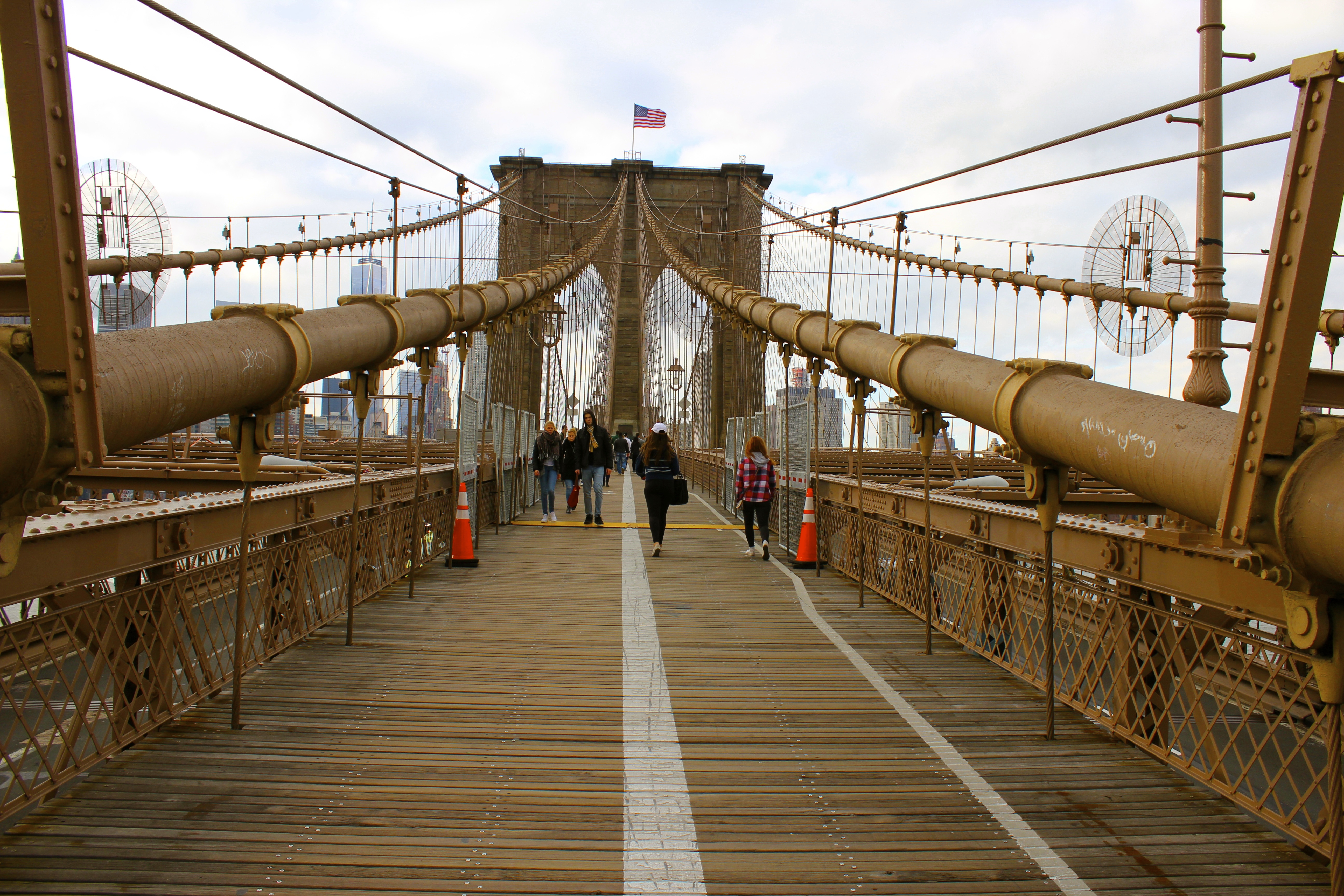
The State of Massachusetts sent immediate and sustained aid to Halifax, dispatching a train loaded up with supplies and medical personnel as soon as news of the disaster reached Boston.

IMG_5004

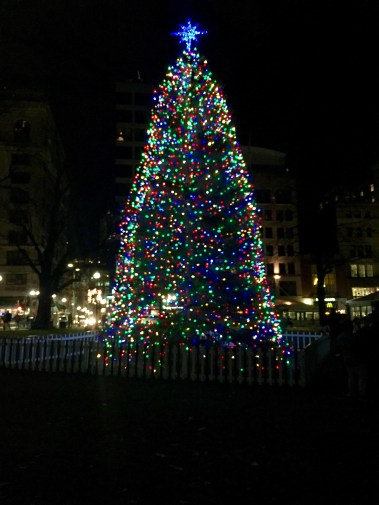
One year later, in 1918, the City of Halifax sent a Christmas tree to the city of Boston as a gesture of gratitude. Nova Scotia, in the spirit of good will and peace, memorialized this gesture in 1971 and began sending a tree to Boston every holiday season. For the people of Nova Scotia, it is considered a great honor to donate a tree from your own land to be sent to Boston Common.

********
I never knew the detailed story behind the Christmas tree on Boston Common, though for so many years I have enjoyed admiring it. But after traveling through the resplendent otherworlds of Cape Breton Island and exploring the foodieville fun and history of Halifax this summer with my husband and my daughter, I read Curse of the Narrows—a book that caused me to cry over and over again.

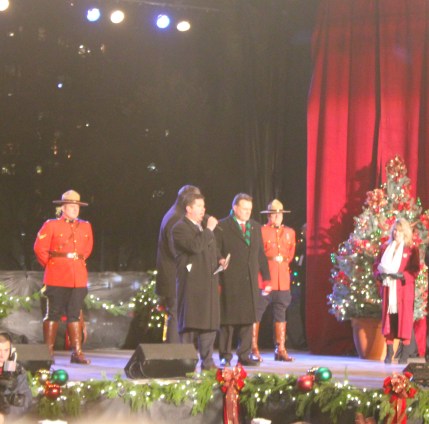
Then, I showed up to join in with the people of Massachusetts and people traveling from Nova Scotia to celebrate the lighting of the memorial tree on Boston Common this holiday season. The ceremony was a festive evening of entertainment and remembrances with dignitaries from Halifax taking the stage next to dignitaries from Boston.

IMG_1069

IMG_1066

A strong police presence dominated the Boston Common throughout the festivities and I am sure I wasn’t the only one wondering if the crowd included any suspicious persons carrying suspicious backpacks or hiding suspicious firearms under winter coats. This is our new normal—certainly in places like Boston where a terrorist attack on the Boston Marathon stunned the city and the state and the world of peaceful sporting events.

I think that now, more than ever, maybe we do need to know the story of the tree on Boston Common, because it’s a story of war and peace and it has never been useful for any of us to just wish for Peace on Earth, once a year, from the comfort of our faith, our chosen communities, and our civilized countries. Places of peace are once again battlefields all over the world. We are, all of us, direct targets of new kinds of world wars.

********

The writer and activist Natalia Ginzburg wrote of World War II in Italy: “There is no peace for the son of man…Each of us would dearly like to rest his head somewhere, to have a little warm, dry nest. But there is no peace for the son of man…all the certainties of the past have been snatched away from us, and faith has never, after all, been a place for sleeping.”

It’s true humankind has waged war since long before, and long after, Jesus, the Prince of Peace, was born. And the devastation at Halifax plus all the carnage of World War I on the battlefields of Europe, did not prevent World War II from happening. Indeed, weapons and ideologies of mass destruction grew more atrocious during World War II.

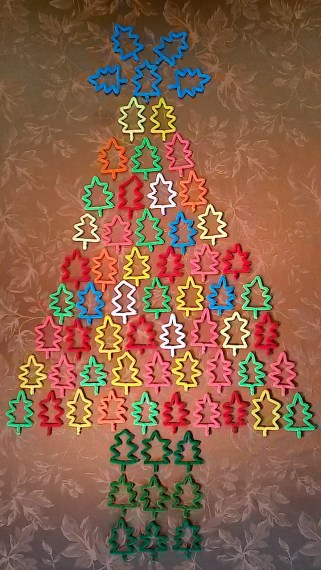
Yet I have experienced the graceful composure of my grandfather, a man who fought against depraved Japanese armies during World War II and was seriously injured, as he lived to see such tiny evidences of peace as those represented by the friendship of his great-grandchild, my daughter, with a classmate from Japan when she was in pre-school. When my daughter’s friend moved back to Japan, her family sent our family a holiday package with three hand-made ornaments bent from pipe cleaners into the simple shapes of a present, a candy cane, and a Christmas tree. This year, the ornaments inspired me to think of Sadako Sasaki, a Japanese girl who was two years old when the atomic bomb exploded over Hiroshima. Sadako did not escape the effects of the bomb’s radiation, even though she lived a mile away from the epicenter of the bomb, and she died of leukemia ten years later. She had hoped to save her life and send messages of peace to the world by honoring a Japanese legend that believes if you fold 1,000 paper cranes, your wishes will come true.

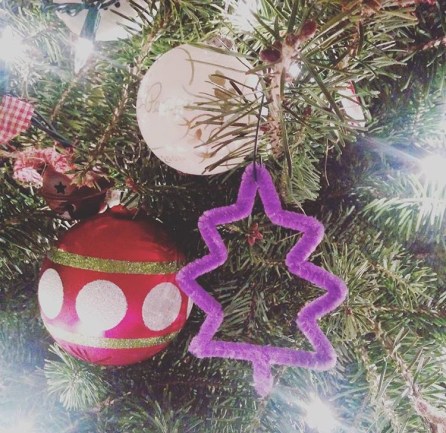
So I began to fold and bend pipe cleaners into Christmas trees this holiday season. I made them in different colors, representing the lights on the tree from Nova Scotia in Boston. My trees symbolize Peace on Earth and Good Will to All and I sent them, with a version of this blog post, to family and friends.

20151218_110223

I hope that people everywhere will begin to believe in doing the hard work of waging peace and, instead of joining war efforts, I hope people will join peace efforts.

From writer and activist Mahatma Gandhi: “As human beings, our greatness lies not so much in being able to remake the world—that is the myth of the Atomic Age—as in being able to remake ourselves.”

I have a wish that people will consider remaking themselves into intelligent, mindful activists ready to wage the struggles for peace. It can be as simple as beginning to write letters to elected officials. There are websites that will guide you through on how to do this. You might structure a letter around your own stories of peace. Or, you might have terrible stories of war. However it is you believe the laws of the nations of the world need to be established and/or changed in order to create a more peaceful world, put your beliefs in writing and send them to the people we’ve elected—and will be electing—to represent us. Maybe you have your own more proactive ideas for creating peace.

The work of creating peace is not futile.

Musician and activist Bono, of the Irish band U2, spoke about showing up to give a concert in Paris after this year’s terrorist attacks of November 13th: “How bizarre is it…that when we left Paris we went straight to Belfast and we found peace? We found hope. This was supposed to be an intractable problem. And this was a peace that was brutal. People had to really compromise to make this peace. When you get bleak about things and think, Gosh, is there an end to this? Yeah, there is, it just takes lots of work, lots of time. I was never a hippie—I’m punk rock, really. I was never into: ‘Let’s hold hands, and peace will come just because we’ll dream it into the world.’ No. Peace is the opposite of dreaming. It’s built slowly and surely through brutal compromises and tiny victories that you don’t even see. It’s a messy business, bringing peace into the world. But it can be done, I’m sure of that.”

***Boston Common, 2015***

FullSizeRender

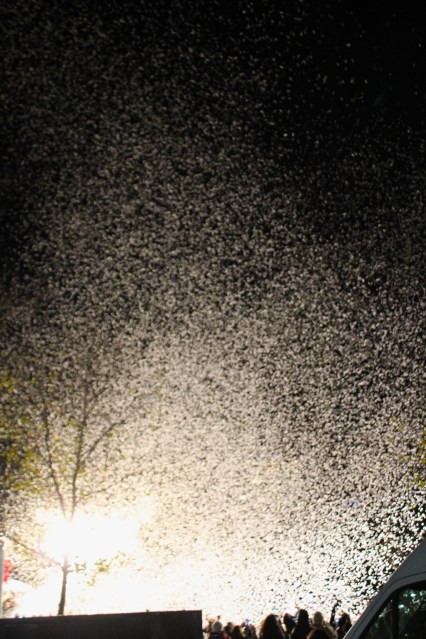
And a grand confetti shower over Boston and the Common after the lights on the tree started to sparkle.

IMG_1080

********
Views from our little house, Cape Breton Island, Nova Scotia, and the deck where I sat with tea and a notebook every morning.

IMG_4594

IMG_4802

********

From my home to your home, I wish you Peace.

20151219_224110-1-1

********

FullSizeRender-1

********
Bah Freakin Humbug.

There won’t be any snow for Christmas where I live in America’s northeastern Currier and Ivesville. The grass is green and supple, flowers are blooming, and the birds are taking baths without chattering beaks.

For some of us, 2015 has been the best of years and the worst of years. Worst of all, best didn’t do such a great job of overcoming worst. Sometimes, worst is worst—maybe the worst—and even if you were to fill the cathedrals of the world with every bit of your best from one year, your worst might still hum a mournful wail over the happy-ending high notes we all hope to hit at year end.

And then what!

Well, 2015 was one of the worst years for me. But not the worst. It was, however, the worst year for too many of the people I know and too many of the people I don’t know all around the world.

There is one tried and true practice that, in my humbug opinion, never fails to create notes of grace through times of troubles. It is simply this: Think of others.

Last night, my husband came home from work hauling his collection of briefcases and his guitar. “Why do you have your guitar?” I asked him. Had he auditioned for a rock band? Were we going to sell everything and return to the halcyon days of worry-free living in rent control with bold cockroaches? The days when happiness was stored one block away at the local dive, where we’d go to drink cheap beers and watch Larry Bird show Magic Johnson how Indiana comes to Boston to shoot hoops? Pre-craft-beer glory times! When we used to donate blood to the lab rats at Boston U Med every week or so—on our way to work—for twenty five bucks which was the price of one lift ticket at posh Sugarbush or a couple of lift tickets at wicked uber-rad Mad River Glen, and a whole season of tickets at forlorn Hogback, which is now just a ghost mountain.

No. My husband was not planning to abandon our troubles. We’ve been in this place before. Things have been worse for us. And they have been better. And so it goes. (Vonnegut, with a long face.) And it’s a wonderful thing to be married to a dude who is steady and sensible, because if he had loaded that guitar into our motorhome and stuffed every dollar we’ve ever earned into the overhead cabinets and said to me something like Baby we were born to run I would have clipped a blinking Rudolph nose above my Grinchy frown, harnessed myself to the front of that leviathan rig, and yanked it high into the sky. Far, far away. As far away as far can go.

“I took my guitar to a client meeting today,” my husband said. He told me who the clients were—a lovely couple he enjoys very much—and I remembered that 2015 hasn’t been the best of years for them. One of their daughters has been seriously ill and one grandchild continues to battle heroin addiction.

“What was it like when you brought your guitar in?” I asked.

“I didn’t bring it in right away,” my husband said. “I wanted to see how the meeting went first. But after we got through their financial reviews, I said I wanted to do something different for them and that I’d be right back. Then I went and got the guitar. I said that I was sorry they had had such a heart-breaking year and that I wanted to give them a few minutes to sit, relax, and listen to music.”

“Did you feel awkward?” I said.

“Kind of,” my husband said. “At first. But then, it was just—nice.”

He played: Do You See What I See? Silent Night. And, Angels We Have Heard on High for his clients. A private and intimate performance, unexpected, all in the comfort of their quiet home, on a warm winter’s evening. I know how sweetly beautiful he plays those songs and I am sure his clients were touched.

My husband asked how my day had been. “Well,” I said, “I cried a little bit in the morning. Talked to my sister. Talked to your sister. Went for a walk in the early evening. You know. Did some work. Cleaned up.”

He opened a beer. We split it. He took a hot dog out of the freezer and cooked it on the grill. We split the last scoops of ice cream.

Another night of beer and ice cream for dinner.

********
One day, during the recent fall season, we had a lot of fun tailgating at a UConn football game. My husband’s favorite cousin and his wife joined us for a day of sun, fun, food, and Left, Right & Center—which my husband’s cousin rallied a large group of my daughter’s friends to play. It was a happy day when my husband’s cousin and his wife showed up to care about us during the most stressful days of our 2015, and everyone had a great time.

Only a few weeks later, on the Sunday before Thanksgiving, this favorite cousin died unexpectedly the morning after his birthday—one of the best birthdays he had ever celebrated.

When we went to the funeral, the day after Thanksgiving, I wandered away from the crowd at the funeral home and found a small bookshelf in a private sitting area. The collection of books covered all kinds of grief, all kinds of death, all kinds of life’s challenges. I reached for Viktor Frankl’s Man’s Search For Meaning and settled down to read it. The book is filled with shocking passages about the depths of human cruelty, human suffering, and human triumph. There are pages and pages of wisdom, philosophy, psychology, and suggested life practices.

I don’t imagine it was a book my husband’s cousin ever read, though he was an avid reader. He just didn’t need such books. He was content with his life, including all of its attendant heartaches and joys, and accepted, without too much judgement, the ways of the world. All families need a cousin like him, more than they need books by people they will never know. We will always miss him, and will always be grateful to have his spirit to see us through.

12109969_10206730075881908_4042360677964198636_o

********

For those of us who are, no matter what, in need of books like Frankl’s Man Search for Meaning, and find ourselves often tormented during the holidays by the joys and sorrows of lives as layered as an enormous vat of figgy pudding prepared to feed the hordes of revelers whooshing around on the ice at Rockefeller Center, there are ways to enjoy navigating the emotional minefields of Christmastime.

Of course there are.

First of all, take your family and friends and Internet bloggers up on some of those out-of-the-ordinary suggestions for holiday-season entertainment. My sister recommended my husband and I go see “The Curious Incident of the Dog in the Nighttime” during a visit to New York City. Neither of us had read the book. We woke up early on a Saturday morning, dressed up, drove a fast three hours to our favorite cheap (but nice enough!) hotel in Long Island City, Queens, (written about in my first blog post when 2015 was just getting underway), took the 7 Train directly to the theater district and settled in for a matinee performance. We thoroughly enjoyed the inventive and exciting play.

20151212_135652

Afterwards, we let a pedicab rip us off for a thrilling ride through the insane crowds and tightly-packed vehicles of Times Square. (It was so warm out! We feared for our lives!)

20151212_165336

We were on the way to the Morgan Library Museum, where we met our son and rushed through exhibits on Matisse and Hemingway. After that, we strolled in the tropical temps to the lounge at The Bowery Hotel for a quiet place to have drinks before dinner at Upstate Beer and Oyster Bar in the East Village—a place recommended by one of our son’s good friends. We ordered oysters, sea urchin, smoked trout, crab cakes, clams and fettucine, all served small-plate style in an intimate, dark space that’s lucious with crazy-loud happy eaters.

Another fun place for drinks with festive decorations: Pete’s Tavern near Gramercy Park. O Henry lived nearby, but did not pen The Gift of the Magi while drinking craft beers at Pete’s.

IMG_2877

Another suggestion: Listen to Patrick Stewart’s A Christmas Carol on the CD player in your car if you have to drive long distances alone. So superb.

20151215_123708(0)-1

Another suggestion: Bake cookies that require a lot of time and effort. Lose yourself in the long moments required to make a big mess and clean it up. Don’t get all Martha Stewart about how to decorate them. Hand the job over to the kids. Even if they’re big kids.

IMG_2774

IMG_2775

IMG_2778

IMG_2783

IMG_2782

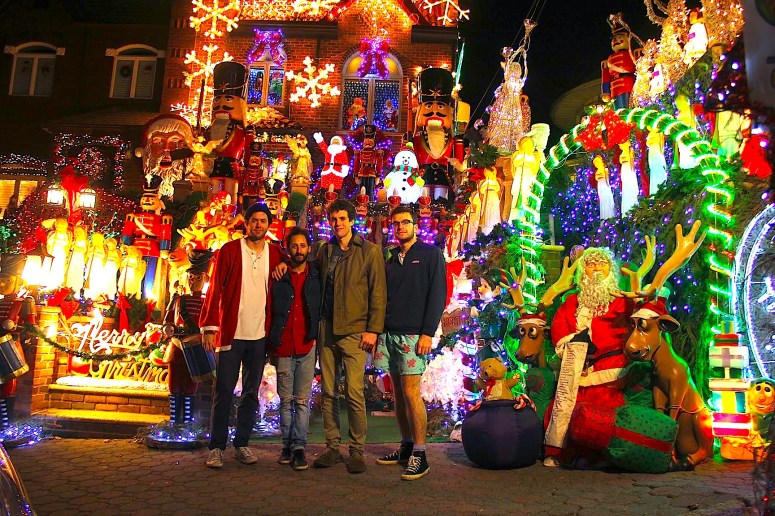
And the old stand-bys: WALK through the woods! Early mornings and late afternoons are lovely. Later, drive around and look at Christmas lights. Professional displays are nice:

IMG_2623

But neighborhoods are the best, by far. Here’s the best band of 2015, Teeth People, out and about enjoying the bling of Dyker Heights, Brooklyn.

Unknown

********

And now for some of my favorite words from A Christmas Carol by Charles Dickens. The book is so good.

“Bah!” said Scrooge. “Humbug!”

“Christmas a humbug, Uncle!” said Scrooge’s nephew.  “You don’t mean that I’m sure.”

“I do,” said Scrooge. “Merry Christmas! What right have you to be merry? What reason have you to be merry? You’re poor enough.”

“Come then,” returned the nephew gaily. “What right have you to be dismal? What reason have you to be morose? You’re rich enough.”

“Bah! Humbug!”

“Don’t be cross, Uncle!” said the nephew.

“What else can I be,” returned the uncle, “when I live in such a world of fools as this? Merry Christmas! Every idiot who goes about with ‘Merry Christmas’ on his lips should be boiled with his own pudding, and buried with a stake of holly through his heart. He should!”

“Uncle!” pleaded the nephew.

“Nephew!” returned the uncle, sternly, “keep Christmas in your own way, and let me keep it in mine.”

“Keep it!” repeated Scrooge’s nephew. “But you don’t keep it.”

“Let me leave it alone, then,” said Scrooge. “Much good may it do you! Much good it has ever done you!”

“There are many things from which I might have derived good, by which I have not profited, I dare say,” returned the nephew. “Christmas among the rest. But I am sure I have always thought of Christmas time, when it has come round—apart from the veneration due to its sacred name and origin, if anything belonging to it can be apart from that—as a good time; a kind, forgiving, charitable, pleasant time; the only time I know of, in the long calendar of the year when men and women seem by one consent to open their shut-up hearts freely, and to think of people below them as if they really were fellow-passengers to the grave, and not another race of creatures bound on other journeys. And therefore, Uncle, though it has never put a scrap of gold or silver in my pocket, I believe that it has done me good, and will do me good; and I say, God Bless it!”

********

I say, God Bless the Keeping of Christmas, too, however it is you choose to do it. Keeping Christmas has always done me good and sustained me, even when I’ve been called upon to bear the worst of years. And if this has been a worst of years for you, I am thinking of you, and hoping the best of Christmas will find you, and see you through.

IMG_2750

From a painting given to me by my daughter one Christmas.

********


Twenty Fun.

Do you remember when you believed reindeer could fly?

Close your eyes.

It’s nighttime.

The night is so big. The cold is so warm. The snow falls and falls and falls.

Every snowflake is smiling.

The reindeer appear in rainbowed arcs from another side of the nighttime, flying forth on a trail of shining stars that look as though they are bursting and popping, yet they are as quiet as the gentle swish of a salamander’s tail.

The reindeer land in your backyard. Their coats of brown fur glisten in moonshine that smells like fresh honey and tastes like bright yellow.

Shiny-belled harnesses ring—winter’s own music—a thousand joyful nightingales singing Christmas carols.

Majestic antlers reach almost as high as your bedroom window where you are watching from the second floor of your home. Everyone else is fast asleep.

The reindeer stamp their hooves deep into the snow, jingle their bells, and—looking up—find you in your bedroom window, believing.

This gives them the courage to keep flying.

********

IMG_1197

(Photo by Aunt Heidi.)

********

Today is my daughter’s 21st birthday. Twenty Fun she says.

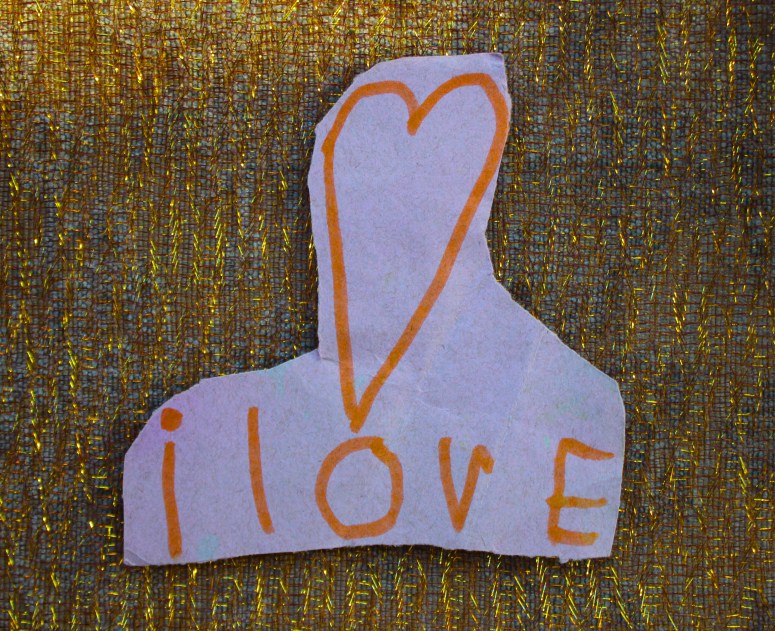
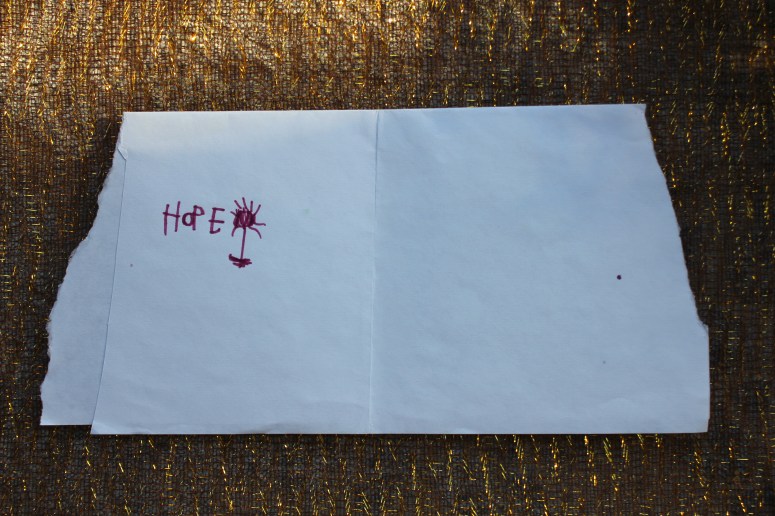
She was born to forever honor and keep special the expansive worlds of childhood play and creativity. She wrote her first manifesto as a toddler and has never doubted her words and all they can accomplish:

IMG_1186

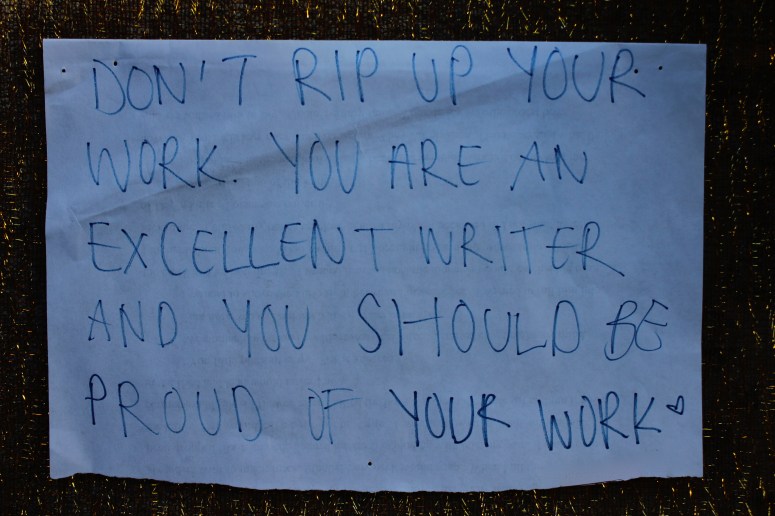
She believes reindeer can fly and she believes in you, too. If you’re having trouble finding your wings, or calming an aching heart, she might cook you an unforgettable meal or leave a note under your pillow or on your desk.

IMG_1187

IMG_1198

She’ll pick a posy of wildflowers and arrange them just so in a paper cup and place them in the middle of a picnic table. She’ll bring you a butterfly.

IMG_1188

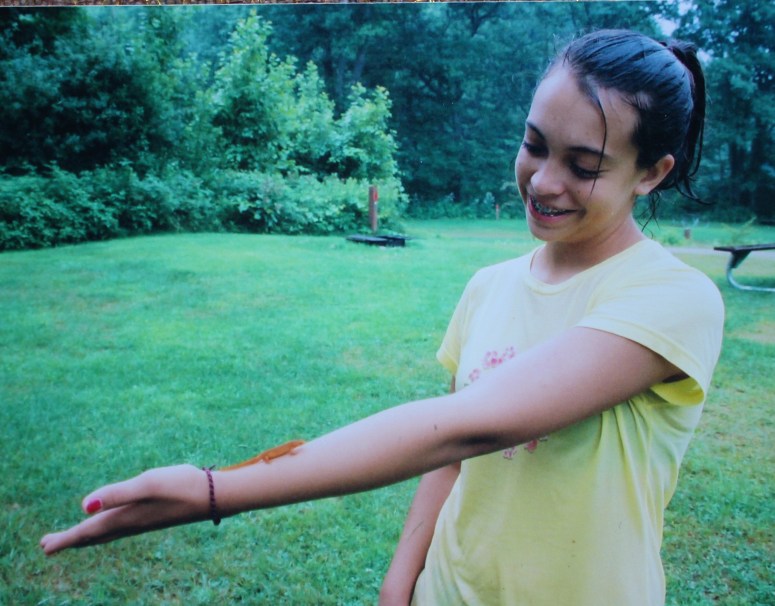
She’ll catch the biggest fish for you. Or the cutest creature colored orange.

IMG_1190

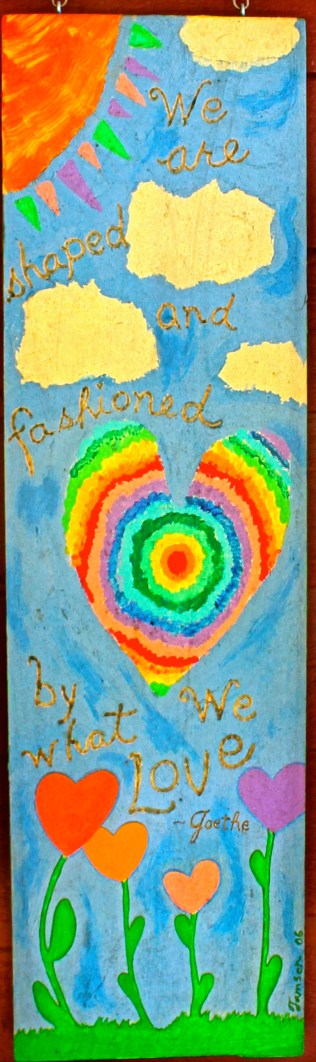
She’ll hike all day in the rain with you. She’ll bake for you. She’ll paint hearts and rainbows.

IMG_1610

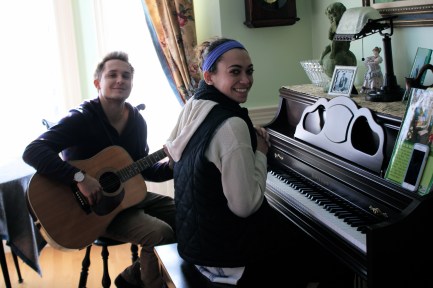
She cheers for the home teams. She plays Christmas carols on the piano. She plays love songs, too, with her boyfriend.

IMG_0925

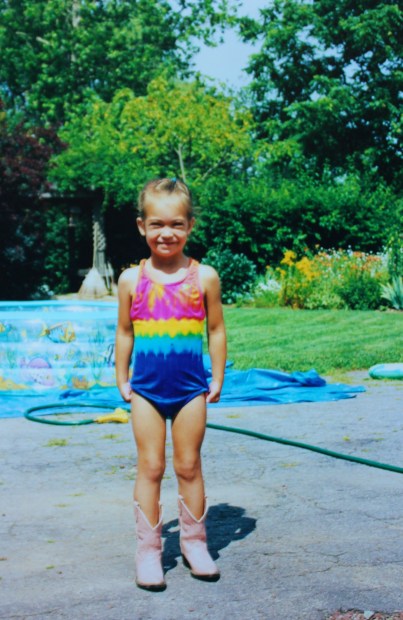
She’ll play board games and watch Disney movies, over and over again until everyone feels like going out for a night on the town, flying around, dressed in princess garb or mermaid skirts or cool boots. Get on your boots. Cowgirl boots. Hunting boots. Ski boots. Big city girl boots.

IMG_1194IMG_1195

IMG_1199IMG_3124

The spirit of party reigns in my daughter’s world. In fact, she has taught me that Party Spirit is the best remedy for the doldrums and the sads. It’s also a necessary component to most every day. When she was a toddler, she would awaken on random days and declare Dress Days. We had to wear dresses all day. You could choose different dresses throughout the day. I was a tomboy mother without dresses in my closet, but I became one fair lady on Dress Days.

The rules for Dress Day were simple. Wear what you want, in whatever combinations you like, all the way down to your shoes, which don’t have to go on a “right” foot.

IMG_1191

********

My daughter taught me to Fling a Little Festive into Everything You Do.

********

Joyce Carol Oates wrote in her essay, “Beginnings,” that the impulse to create is utterly mysterious. “…’art’—originates in play…it remains forever, in its deepest impulse…a celebration of the (child’s?) imagination…”

Oates headlines her essay with a quote from Andre Gide: “I will maintain that the artist needs only this; a special world of which he alone has the key.”

And Charles Baudelaire said: “Genius is no more than childhood captured at will.”

—And one day, recently, when I asked my daughter if she had had a happy childhood, she said:

“I don’t know. It’s not over yet.”

********

Is your childhood over yet? Have you stopped believing reindeer can fly?

Do you love your birthday?

—Or is age something that takes you further and further away from your youth and its attendant genius, instead of delivering you deeper and deeper into those special worlds where only your heart can unlock your own unique perspectives on what’s so wonderful about being alive—and then share them with the rest of us.

My daughter loves her birthday. It’s the one day every year when the party is about the arrival of her world into this world.

Everyone has a birthday. It’s a day better than New Year’s Day for beginnings and celebrations and the sharing of you with all of us.

Do you remember when your lungs drank up that first breath of air before you were plunged into childhood?

Close your eyes. Take a deep breath.

“There is a fountain of youth: It’s your mind, your talents, the creativity you bring to your life and the lives of the people you love. When you learn to tap this source, you will truly have defeated age.” Sophia Loren

Let the breath go. Follow it!

********

Happy Twenty Fun to my daughter! Drink up that first breath again. Keep drinking that energy. Keep playing. Keep sharing the creative genius of your youth.

It never gets old!

IMG_0212

********


Reach Out. Touch.

When my daughter attended preschool, she became friends with a lively classmate from Japan. The friendship was a brief one because her friend’s family moved back to Japan too soon. But what wonderful days our families shared during the time we had together.

The girls were possessed by a happy energy that caused them to leap into each other’s arms over every beautiful little thing that swirled around them. For instance, there was the precious thrill of cute! when my daughter’s pet rabbit gave birth. How carefully the girls snuggled those seven bunnies in their own eager preschool paws, giggling as though the kingdom of childhood and animals had finally come to rule the world.

And what a good time we had whenever my daughter’s friend invited us for lunch at her house. She would greet us at the door and properly instruct us on how to remove our shoes before entering her home. Next, she guided us through customary table manners, none of which restrained the girls from engaging in silly conversations throughout the meal.

When a large group of relatives visited from Japan just before Halloween, my daughter’s friend asked if she could bring them to our house to see our Halloween decorations. It became the first (and only) time I hosted a tourist event in my home. I wasn’t prepared to explain ghouls, tombstones, and spider webs, but polite bows, gentle nods, and cheerful smiles assured me it didn’t matter.

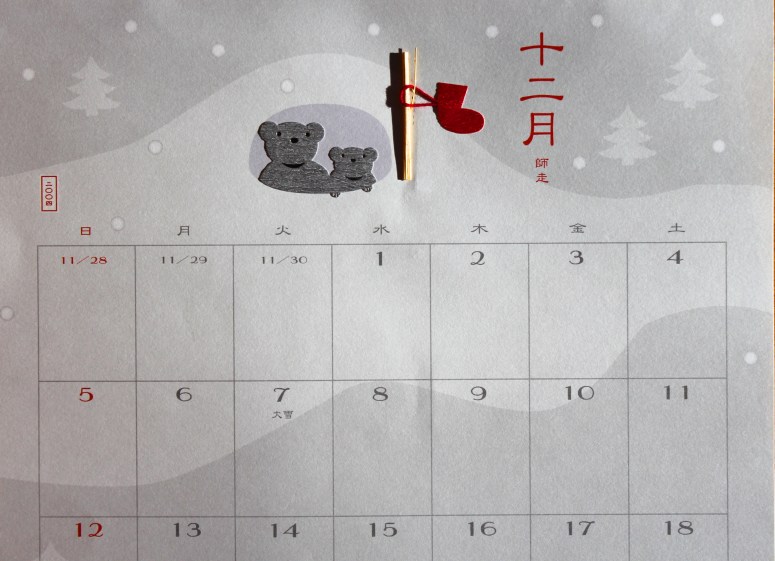
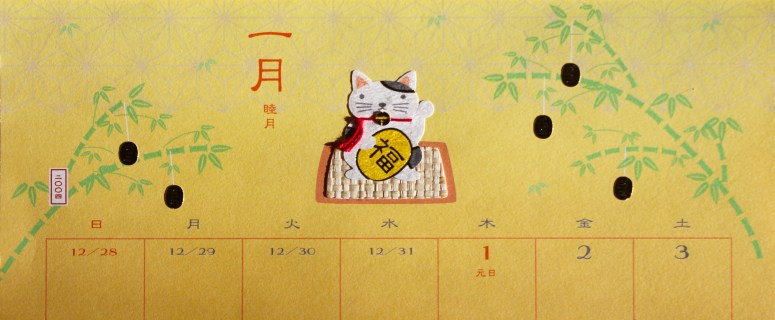
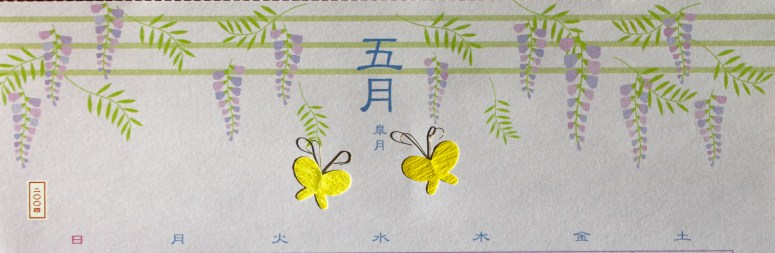
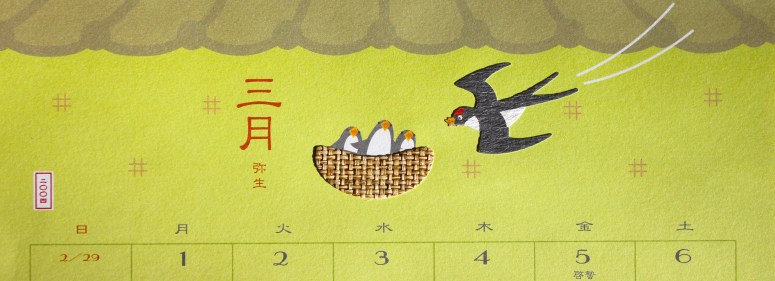
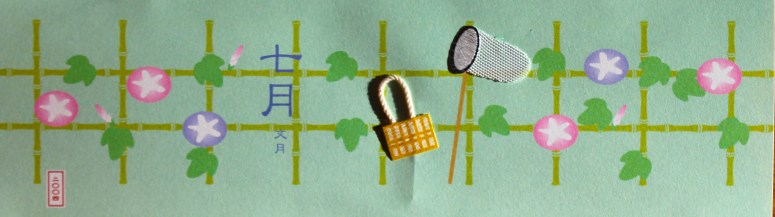
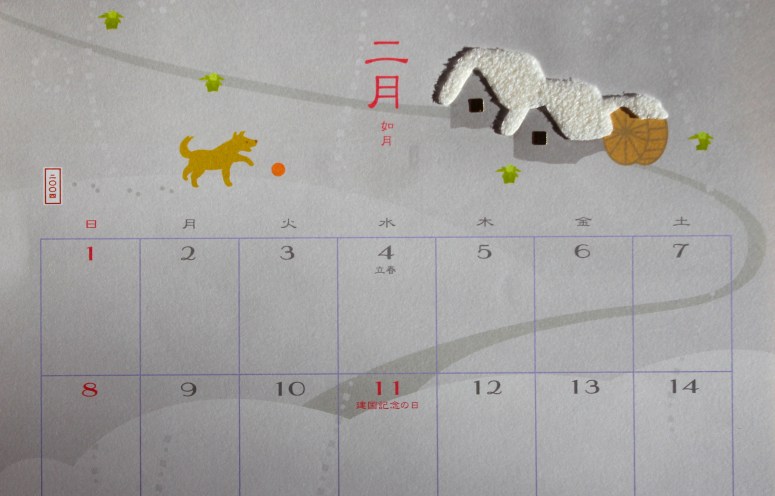
After my daughter’s friend returned to Japan, we received a simple gift at Christmastime. It was a Japanese calendar decorated with enchanting artwork on lovely paper along with some Japanese Christmas treats. I made the treats into ornaments and saved the calendar as a treasured artifact of a special friendship. Photos of my daughter’s friend showed her settled into a new school lined up with her Japanese classmates—all of them dressed in uniform, with matching shoes and socks and hats and backpacks.

********

Through my Filipino maternal grandfather, my family tree branches back into a landscape of Chinese ancestors I am only beginning to discover. I have trained in Korean martial arts, learned how to hand quilt with Japanese women, practiced Sumi-e brush painting with a German master, studied Chinese language, history, anthropology, and politics, and, I have immersed myself in learning the theories and practices of Japanese and Chinese garden design.

For me, Asian art and culture inspires devotions to finding and achieving precious.

I am a disciple of wabi-sabi, which is hard to explain, but you know it when you come upon it or create it. Although wabi-sabi considers the sublime beauty of perfect imperfection, there can be no fooling oneself that Asian art and culture often perfectly presents an illusion of simplicity that has only been achieved after arduous ritual, study, and lifelong practice.

Life is so complicated. And nowadays, due to the vast systems of connectedness that bear in on all of us, we are presented with a steady feed of tragic events as they happen in real time throughout the world. We are never left unaffected, and often forget how the simple act of making friends can lead to more and more good in the world, too.

Art can provide respite, too. And a chance to connect.

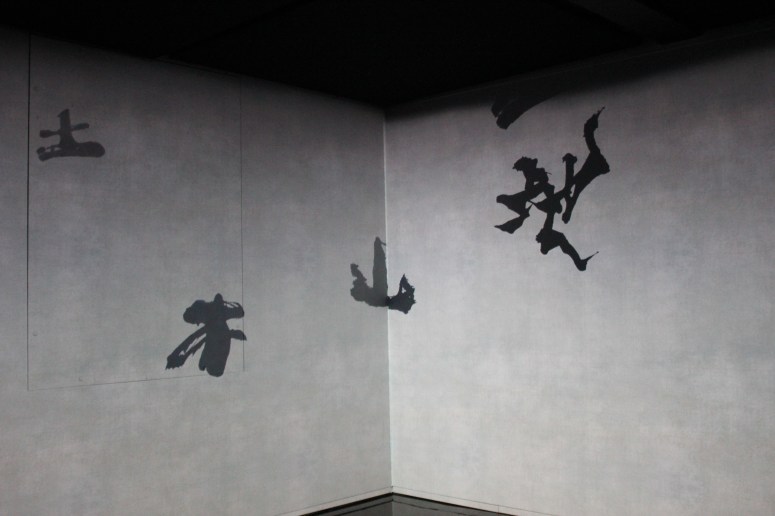
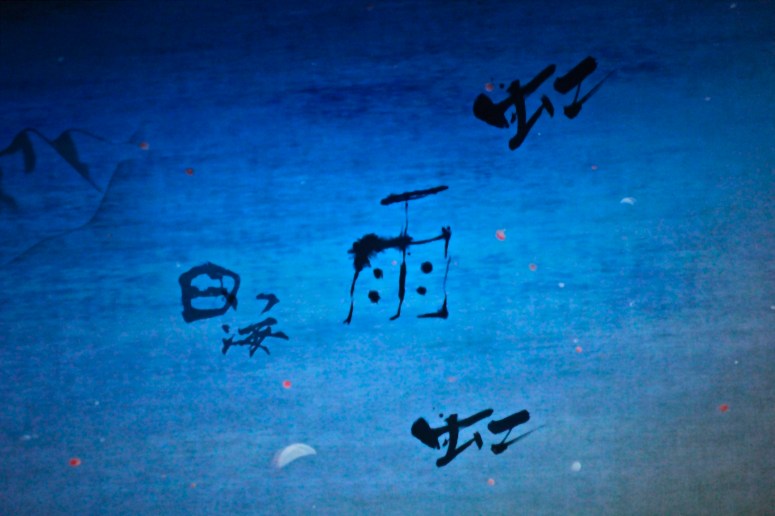
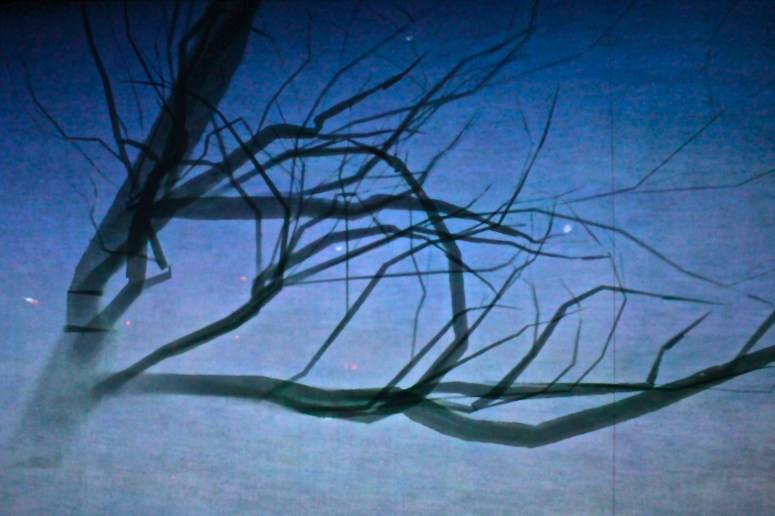
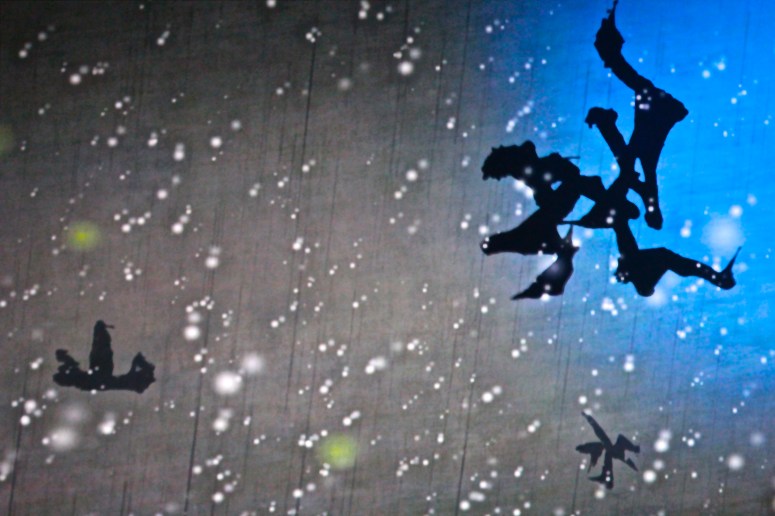
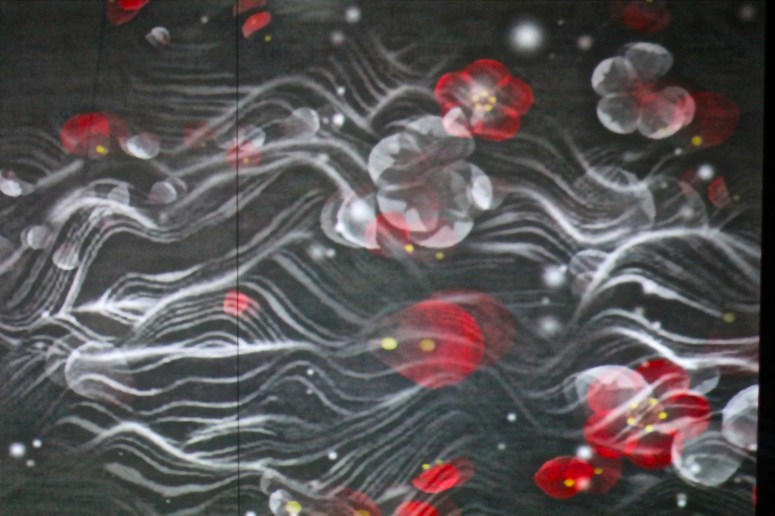
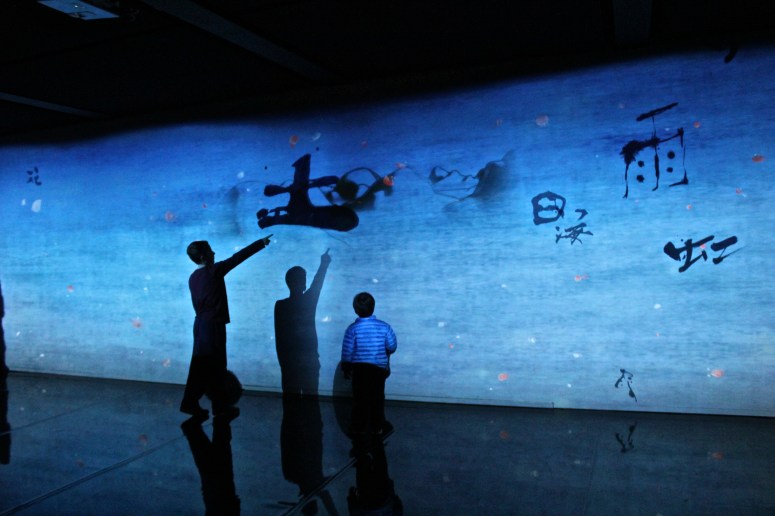
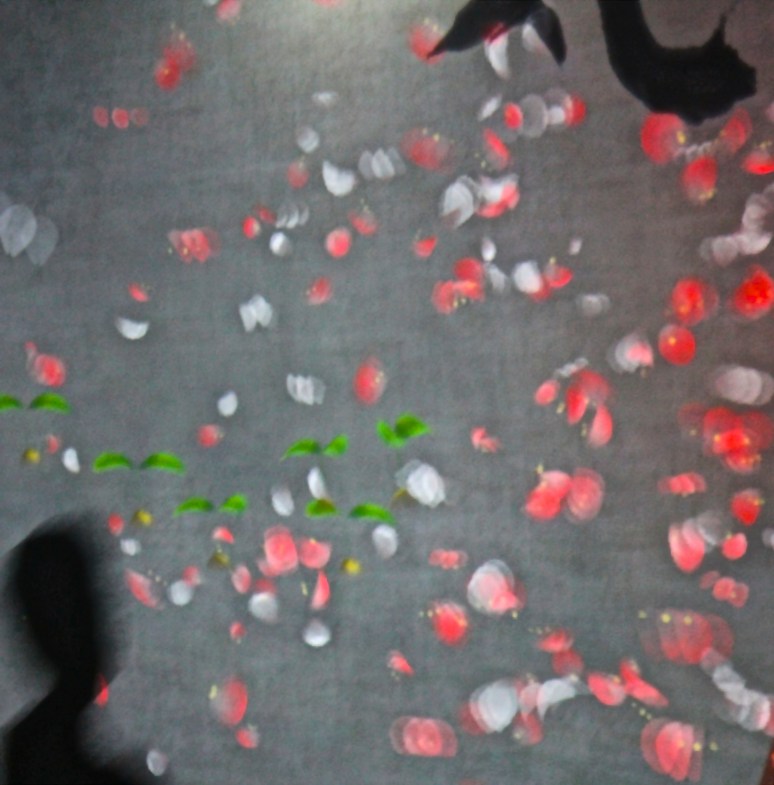
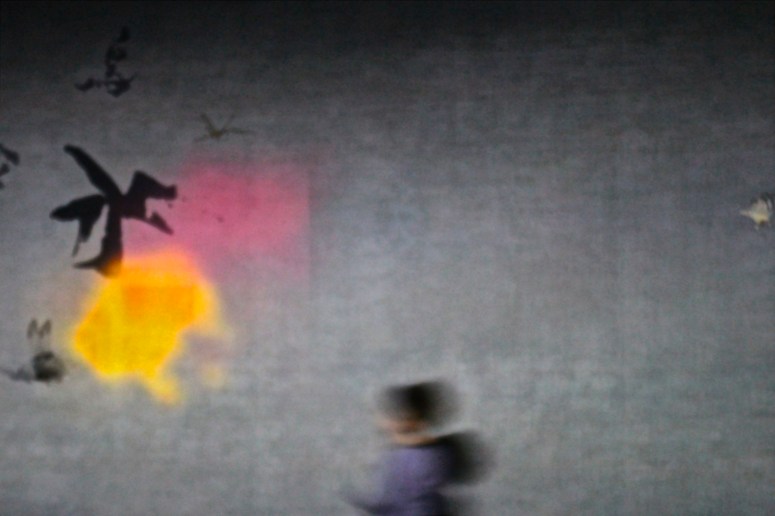
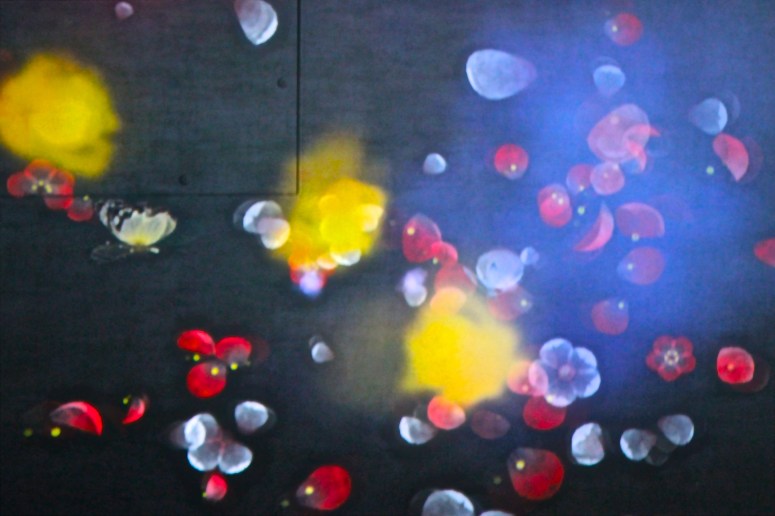
Right now, and for only a few more days, there is a multimedia, contemporary art installation created by a consortium of artists, engineers, mathematicians, and computer scientists based in Japan, on display at the Johnson-Kulukundis Family Gallery, Byerly Hall, Radcliffe Yard, Cambridge, MA.

The exhibition is called: What a Loving and Beautiful World.

It’s free and open to the public.

—You go into a room. Chinese and Japanese characters come floating down the walls. You reach out and touch them or wave your hand close to them. Dreamy things happen.

I was alone in the room at first. Then some children showed up. We reached out and touched the art, together. We started laughing. Your hand becomes like a magic wand. Birds. Butterflies. Rainbows. Snow. Sun. Moon. Fire. Trees. Mountains. Flowers.

I think we were creating new visual worlds through causes and effects, through the influences of collisions, of fear, of wind, of the laws of attraction, computer science, technology and music—all combined with the radical acts of passing through each other’s lives, in real time, in real space. In Peace. After taking an excursion into a real city on a real train and a real subway.

It’s all really cool.


IMG_1035

IMG_1036


IMG_1044

IMG_1056

IMG_1042

IMG_1058

IMG_1054

IMG_1057

IMG_1062

IMG_1043

IMG_1064

IMG_1051IMG_1060IMG_1059

********

***********

********

More Asian artwork from my prized gift of a Japanese calendar sent from long-ago friends.

Sublime simplicity.

IMG_1103

IMG_1109

IMG_1106

IMG_1107

IMG_1104

IMG_1101

IMG_1102IMG_1108

********

*****I WISH YOU A HAPPY END TO YOUR WEEK*****

********

Giving Thanks.

“Thanksgiving, after all, is a word of action.”

This quote, by W. J. Cameron, showed up in my Friends of Acadia newsletter. I agree that giving thanks is probably the best action we can take to honor our own place in the world and to be mindful of all the people and all the serendipitous good fortunes—here now, happening now and/or gone before, happening in the past—that have made our lives the best they can be and inspired us to continue to live joyful lives with meaning and purpose.

Thanksgiving is the one day of rest created for and celebrated by all. It is a day of rest with the kind of work, thanksgiving, that is good for everyone’s well-being.

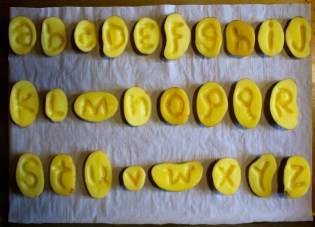
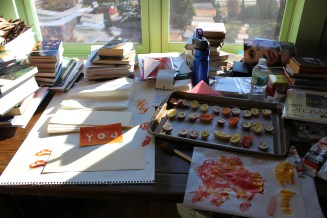
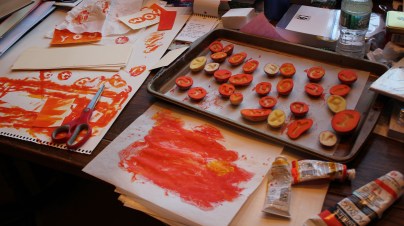
As a sincere expression of my gratitude toward the readers who read my blog this year, I decided to use the Thanksgiving potatoes to make a set of letters with which to create a note of happiness.

IMG_0927

IMG_0929

IMG_0931


********

You, Reader, are special to me. I think about you, with good cheer, when I am at work in my “blog studio” practicing how to write. I care very much about how my art is cyber-delivered into, and cyber-received by, the whole wide world.

Thank you for visiting my site this year. I hope you enjoy celebrating the heartwarming spirit of giving thanks with all of your favorite families and friends. And I hope the day’s work returns to you all varieties of  heartwarming goodness.

********

IMG_0936

********

This ephemeral work of art, created especially for my readers, is bordered with leaves I saved from my Sweetbay Magnolia Tree. It measures seven and a half feet by three and a half feet. The quote is from Percy Bysshe Shelley. I saw the quote painted into the elaborate crown molding of a grand room, opening onto a grand stone porch, overlooking America’s Hudson River Valley.


French Entrance. French Exit.

Come and sit in a Parisian cafe with your friends close to me. I want to write, but writing is a lonely way of making art and when I sit near other people, I feel some comfort. I want to sort things out on the page, entering and exiting trains of thought. If you ask the waiter to take a drink over to me, I know you won’t mind how I keep at my work. My smile for you is one of deep gratitude. And if we are blown to bits, we will agree it was only because we practiced and believed in, freely-chosen, broadly encompassing, and generously-shared education.

********

At dusk a week ago, in my peaceful garden far from Paris, a lingering leaf on the Japanese Snowbell Tree partied on like a plump house wren—the silhouette of its petiole became the distinct image of a delicate beak aimed for the heavens, ready to sing, and the curved edges of the leaf’s blade had softened into smoothed feathers. One last pear dangled lopsided at the top of the Pear Tree with a squirrel bite carved into it. Other flowers, leaves, twigs, fruits, and birds had already made their French exits—sparing my feelings, avoiding the unpleasantries of long goodbyes—by falling, blowing away, withering, packing up and moving on when I wasn’t watching.

The surface waters of the old garden pond rippled in slow motion, like the calm beat of a heart enchanted by poetry.

It was the news of more terrorist attacks—this time throughout the city of Paris—that had caused me to stop and appreciate the peacefulness surrounding me. I sought consolation, too, in Charles Baudelaire’s Paris Spleen, his book of prose poetry that never seems to get shelved in our house. Some days, Baudelaire’s writings make perfect sense to me and when that happens it is as though I have found a companion who will sit and write with me in a cafe on the streets of Paris for a long, long time. We drink and smoke and talk of how depraved humanity is. After we agree that mankind is the most evil beast, Baudelaire convinces me we must get more and more drunk, Drunk with what? With wine, with poetry, or with virtue, as you please. But get drunk. Which we do until our amplified laughter is shattered by dark discussions of our own deplorable and habitually sinful shortcomings. When it’s time for us to take our broken hearts home, or into bed together, we leave our small table crammed with empty glasses, smoldering cigarettes, and torn apart journals. (Though I save every page of what CB has abandoned.)  And then we go, hoping our chairs will stay warm for anyone else who needs to sit and think and talk and write as you please. In Paris.

********

While gazing at what was left of my gardens and thumbing through Paris Spleen, I was also expecting the arrival of five boys in a rock band from Brooklyn. The boys (one of them my son) had a scheduled gig nearby the next day.  Their journey would become a many-houred, several-moving-parts adventure beginning in Manhattan, with a detour to New Jersey before they circled north again. All of it led to one kitchen—mine—in New England’s safe and sound countryside, in the deep hours of a seasonably cold November night.

Dinner was set for midnight, and that’s when the boys showed up.

We decompressed over a candlelit repast that began with oysters before the next course was served, which was an offering of what I called jampalaeya—chicken, sausage, and fresh mussels from Prince Edward Island afloat in a spiced-up tomato broth with rice.  The drinking started with beer and wine and advanced to whiskey.

All of us tapped our glasses together. “To Paris!”

And then I said that it will never be enough for me to believe we will always have Paris which, if you’ve ever watched the movie Casablanca, was just a remark murmured between lovers in homage to the salve of fond memories.

The truth is, we might not always have Paris. Furthermore, any memories we have of our lovely selves in Paris will never serve to console us if we were to lose Paris.

The world cannot do without Paris.

Paris is not just about food and wine and champagne and hand-wrought loaves of bread and cute dogs prancing through a city with the most wonderful twinkling lights!

Paris is about the civilized world. And the civilized world includes any of us who have ever had our hearts broken, shredded, ravaged, persecuted, oppressed, and/or disregarded while, at the same time, we chose to madly believe that in the same world where endless evils and sadnesses exist, we will never tire of figuring out how to love and be loved.

We will always need Paris!

I notified the boys in the band—because I am a woman and I am a mother—that they cannot make a French exit in this life. They all have to do something, throughout their lives, to tip the heart of humankind toward its good side. They must stay at the party and never leave without saying goodbye. They can only say goodbye with a kiss to each side on the face of the good gods, one for gratitude and one for promises.

Yes, for sure. They agreed.

The most obvious thing everyone can do to tip the heart of humankind toward its good side, is to become educated.

I am standing up on a chair now, swinging my arms around in the air, trying to type. Education is under fire in my own country. We aren’t so sure how important it is to have a Liberal Arts education. We can’t seem to link such an education to making big bucks. When my son showed up for his Liberal Arts education at Bard College, the first thing they did was ask whether or not he was registered to vote. He was not yet 18. No problem, they said, if you’ll be 18 before the next election, we can register you now. Bard College makes a direct link to the crucial importance of becoming liberally educated, learning how to think, and employing your knowledge and skills to become a responsible citizen and voter. Education in the Liberal Arts is the most important process we have for preserving and continuing to create a functional and fair democratic society. Is it too expensive to become educated? We spend an enormous amount of money on weapons and jails to fight the consequences of ignorance, hate, and poverty. The value of education can’t be argued away. Furthermore, one doesn’t have to go to college for a Liberal Arts education. We are a nation that takes great pride in our free libraries. It’s hard to find a cafe in America that will allow you to sit and think and read and write for as long as you want, but not so hard to find a library.

We are, whether we like or not, a part of the battles to create a more peaceful world. It means we must do the hard work of learning how to think and how to become aware. We must continually go through the growing pains of intellectual evolution. We have to read—including work we don’t want to read. We have to look at art—including art we don’t get. We have to listen to music—including music we’re unfamiliar with.

We ought to walk through gardens. Admire architecture. Explore history. In our travels, it’s important to sit and talk to people we don’t know.

Most of all, we have to learn to listen.

********

At 1:30 AM, apres dinner and discussions with the boys in the band, I brew a pot of coffee. The boys charge up, then file out to the barn to begin rehearsing for their gig. They are all tired. It has been a long week of day jobs colliding with night jobs as artists and a lot of driving. Sleep is what they want most of all. But it has also been a week of their new record release called, “Let’s Go!”

On the release is a song that made me dance the first time I heard it in a vast warehouse-district, underground bar in Bushwick. Syrian landlords keep the urban campfires burning, on the sidewalk across the street. Artists come and go, free to perform and put their art out there.

The song is called French Entrance and it’s about coming out as a gay man. It makes one think of what it might be like to be a man suffering about his own real and true and normal self and how simple it would be for him to be able to tell a friend and have the friend say it’s okay fuck the people who can’t deal with it. The drumming and percussion pound out intricate rhythms of harmonious chaos with bass beats and guitar strumming that culminate in one fine blend of celebratory desperation. The vocals are casually Lou Reedish. Sexy casual. The song is a call to arms and legs and jumping up and down bodies—it’s time to get up and start dancing about the people at work making the world a place where everyone can live their own best life.

We can never settle ourselves into lives of comfort and complacency.

Abdellah Taia, an openly gay Arab writer and filmmaker, wrote an editorial for the New York Times after the attacks in Paris entitled, “Is Any Place Safe?” He writes of how much he needs Paris, yet how concerned he is for the future of the city:

“I came to Paris 16 years ago as a young, gay Muslim…”

“I made my life in Paris because I believe in its values: rationalist, humanist, universalist…”

“I left Morocco as a young and desperate gay man. In Paris, I found a place where I could fight for myself and for my dreams. But I know now that nowhere is totally free or safe.”

“But Paris is a city that has, in losing its borders, lost certain values as well. The neglect of a segment of our youth (especially those of Maghrebi origin, from countries like Morocco or Algeria) is an undeniable reality. This neglect has produced an environment conducive to radicalization, joyous nihilism and, now, carnage. Racist attitudes, ever more frequently espoused by certain politicians and intellectuals, have become the stuff of daily life.”

After I read Taia’s editorial, I was inspired to read something else he wrote: Homosexuality Explained to My Mother. The essay is completely astounding and grew my brain into new evolutionary worlds.

After listening to the new song by Teeth People called French Entrance, I resolved to move a book on my list of “must reads” to a more urgent position: Jean Genet’s A Thief’s Journal. 

I do these things because I want to think about and learn about and try to understand the ways we might be neglecting youth in this world and why they seek to join communities of evil or become increasingly evil as lone gunmen throughout the world, especially in my own country.

********

We will, indeed, always need Paris. It is a city where brave artists and freedom fighters (like the French Resistance during World War II) have found, and continue to find, their voices. I am grateful to them. The legacy of their work changes how I perceive the world and inspires me to join the battles for love and peace.

In that way, Paris keeps us alive through the darkest days of our lives. We are encouraged to get to work. To keep thinking and educating ourselves. To be brave and to Smash the Televisions. (Another great song on the new “Let’s Go!” record. The whole record is outstanding.)

 ********

Here’s a link to the new song by Teeth People called French Entrance. Promise that if you listen, and read the lyrics, you’ll never opt for the French exit when life asks you to tip the heart of humankind toward its good side. Actually—don’t wait to be asked. Get out there and start dancing.

https://teethpeople.bandcamp.com/track/french-entrance

Here is a picture of one last leaf playing the part of a house wren on the Snowbell Tree in my garden:

IMG_0905

********

Doing Lines in NYC.

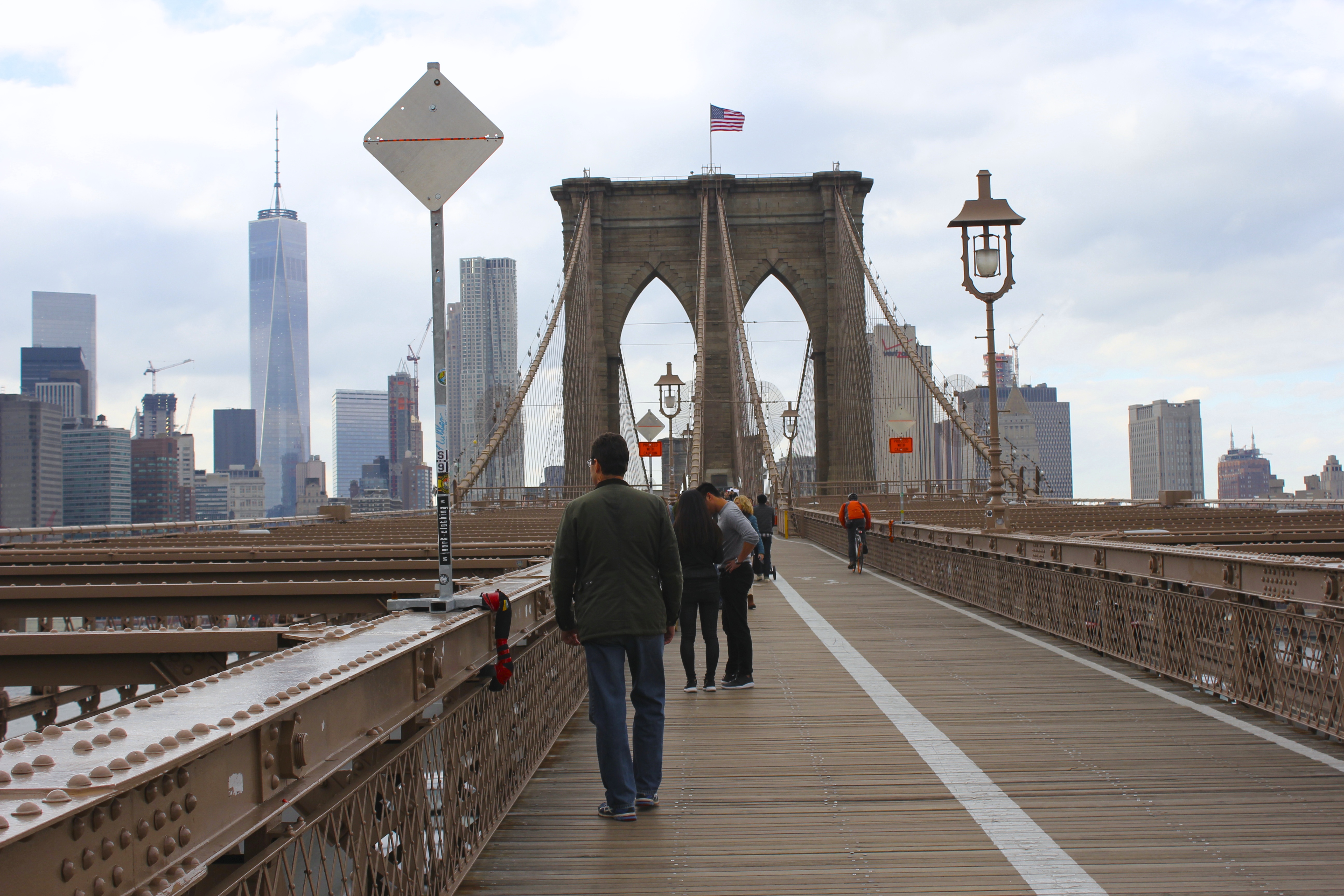
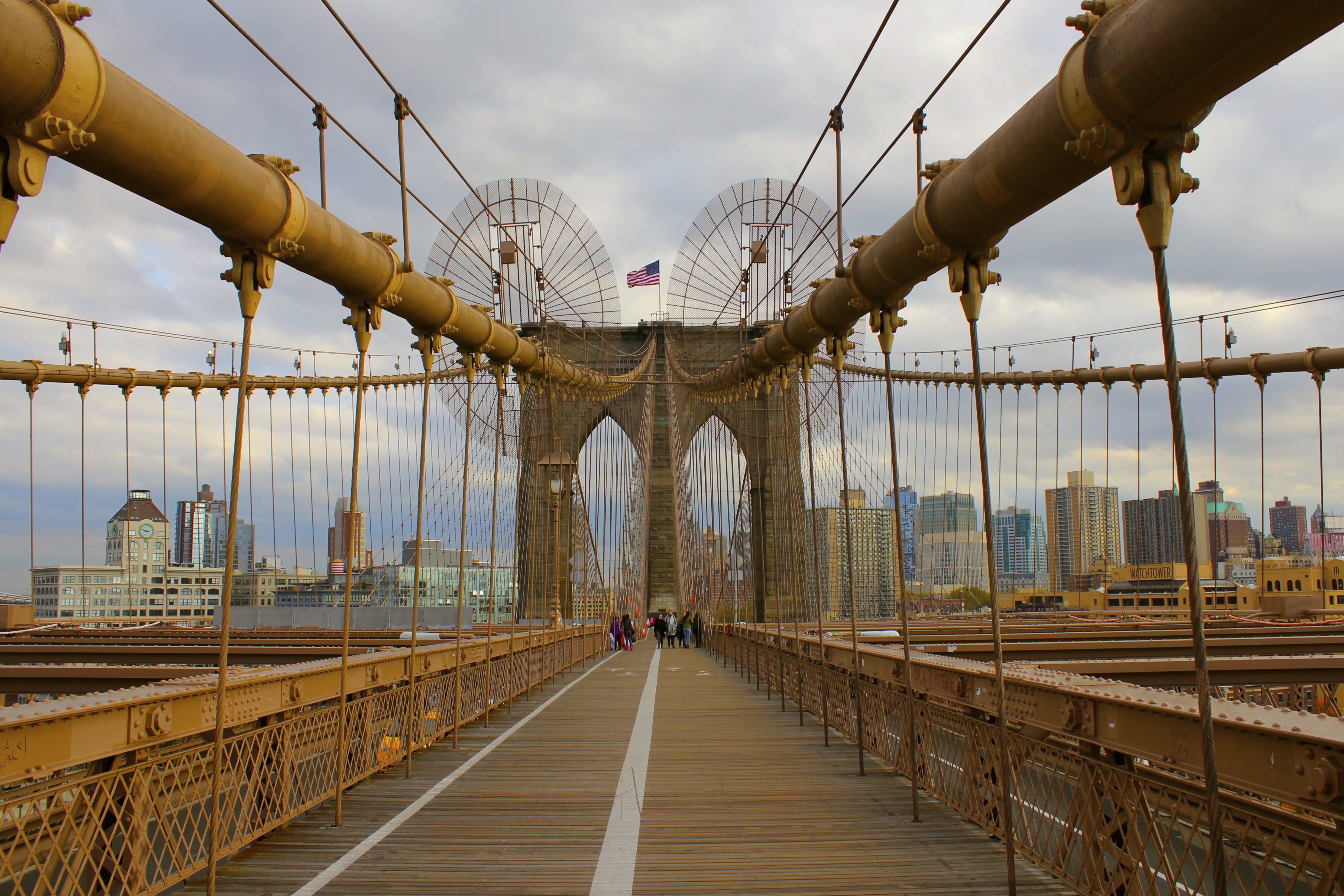
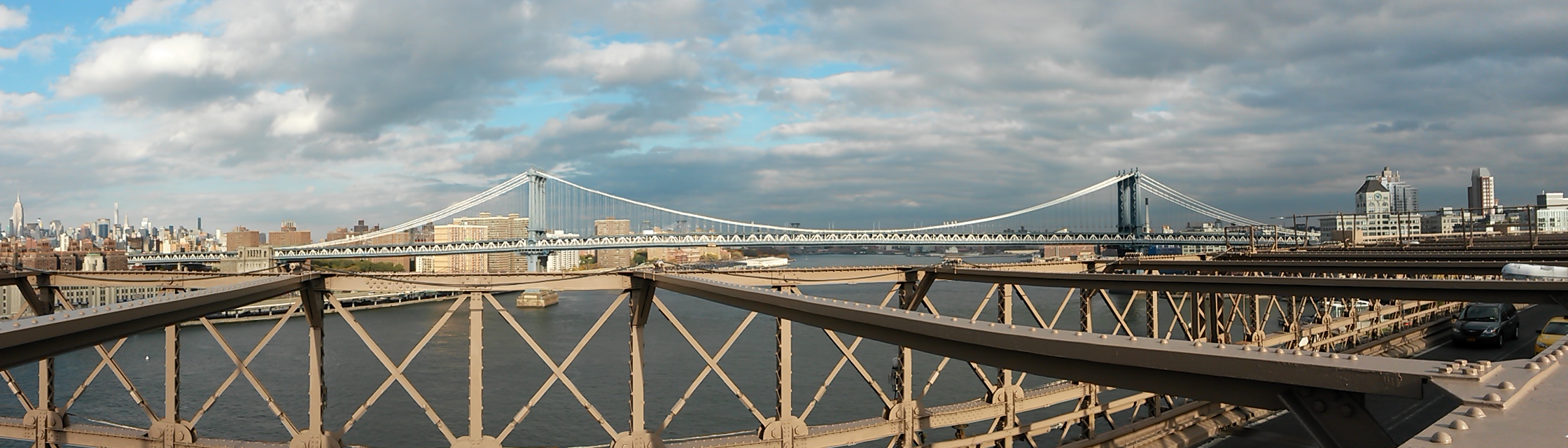
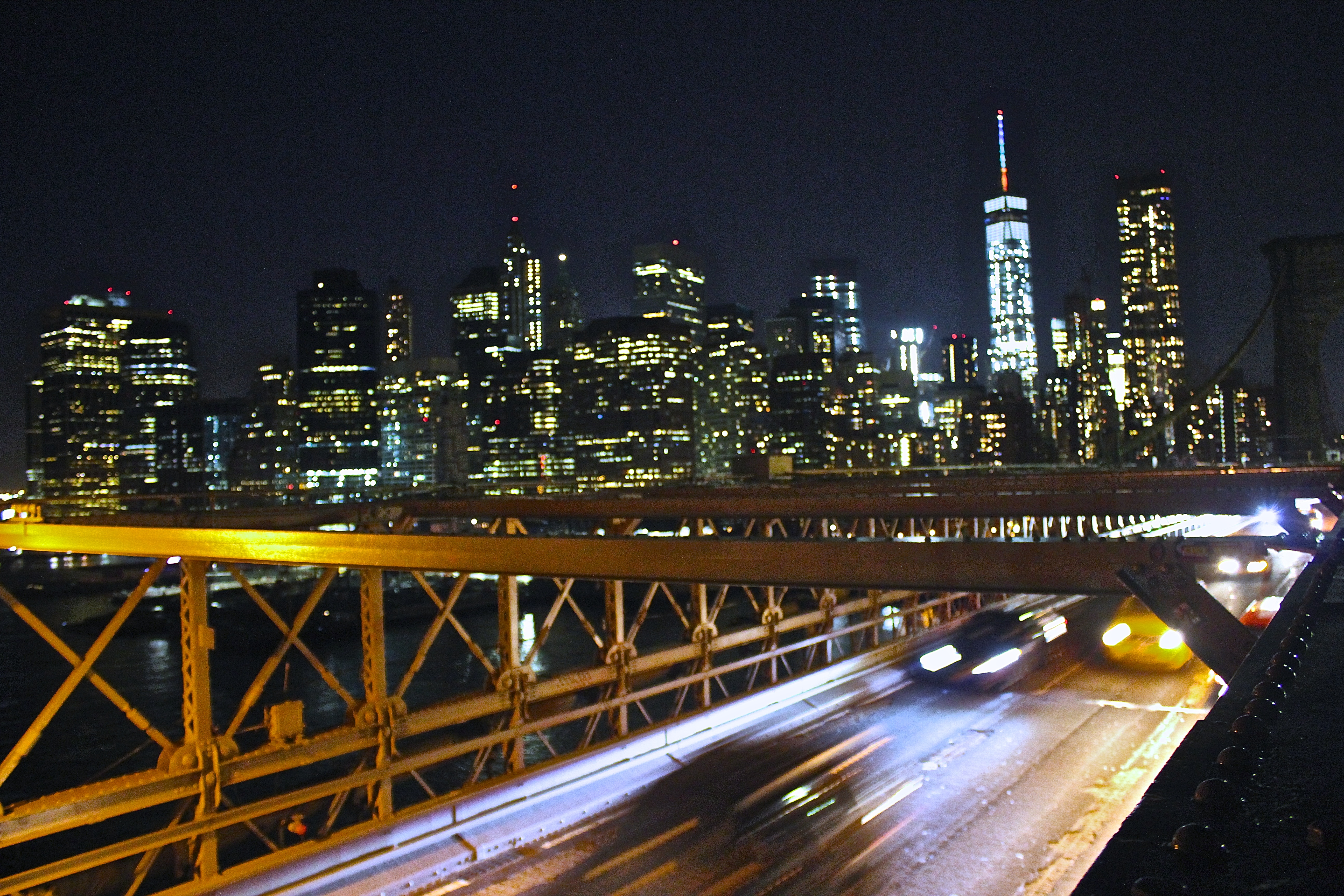
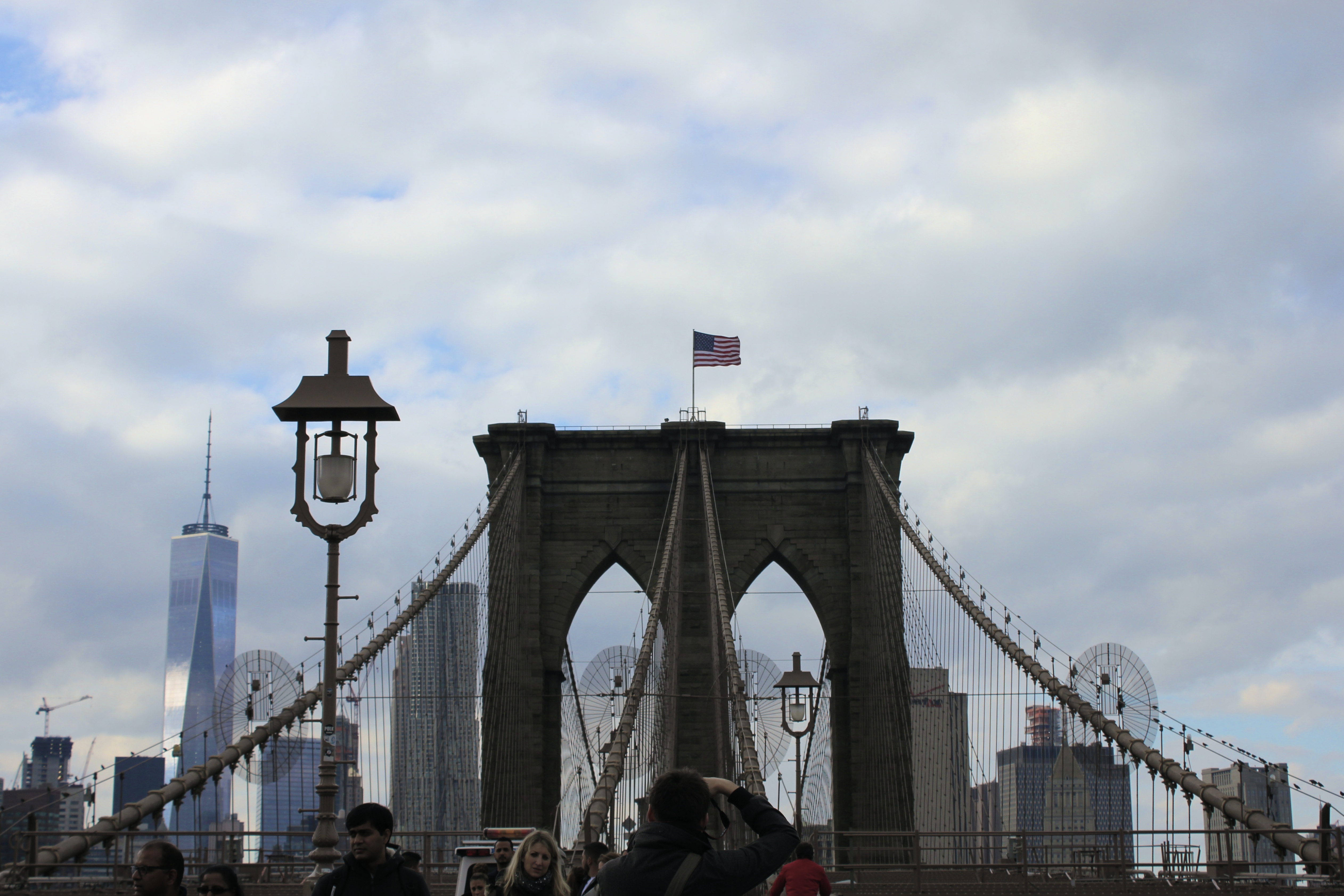
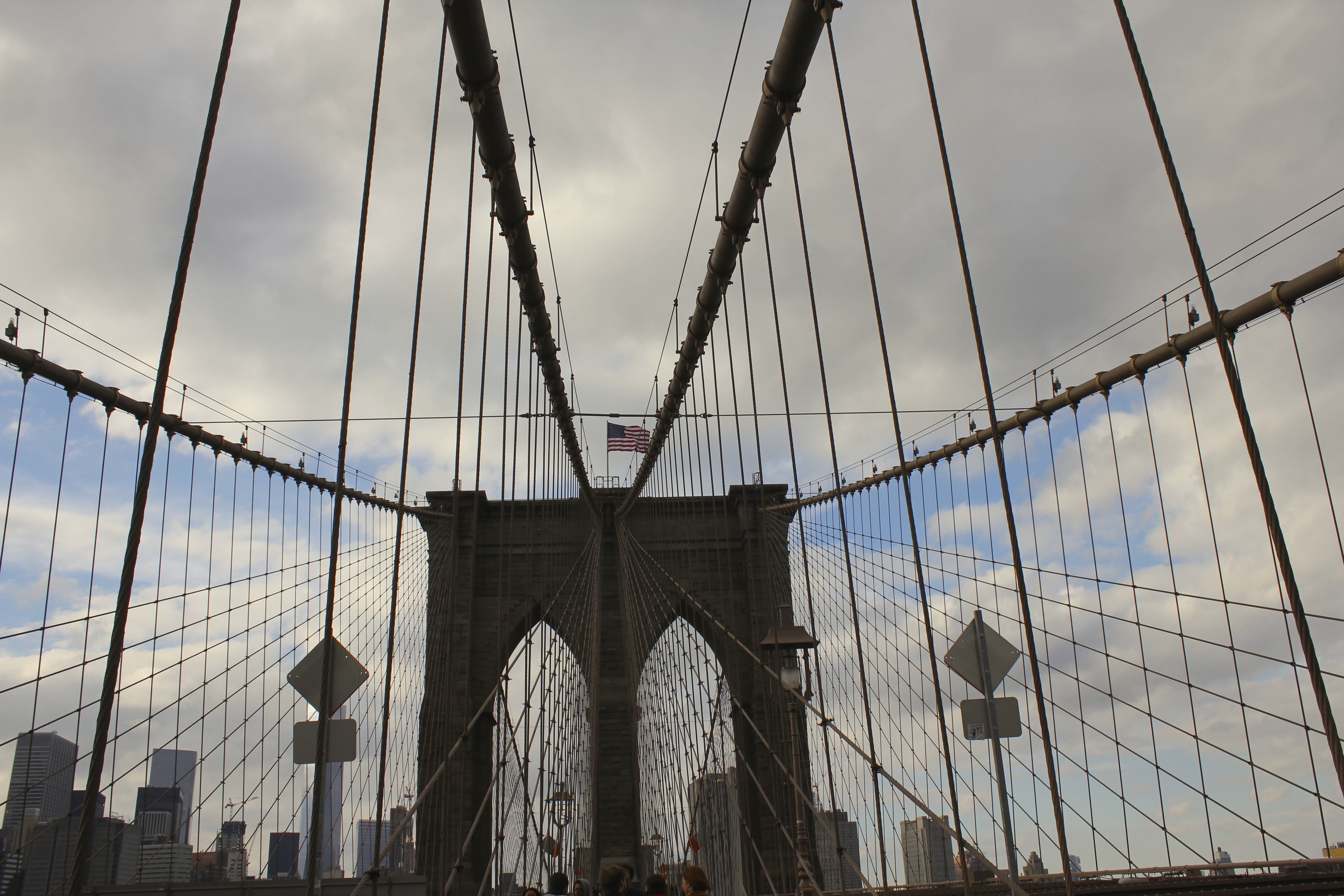
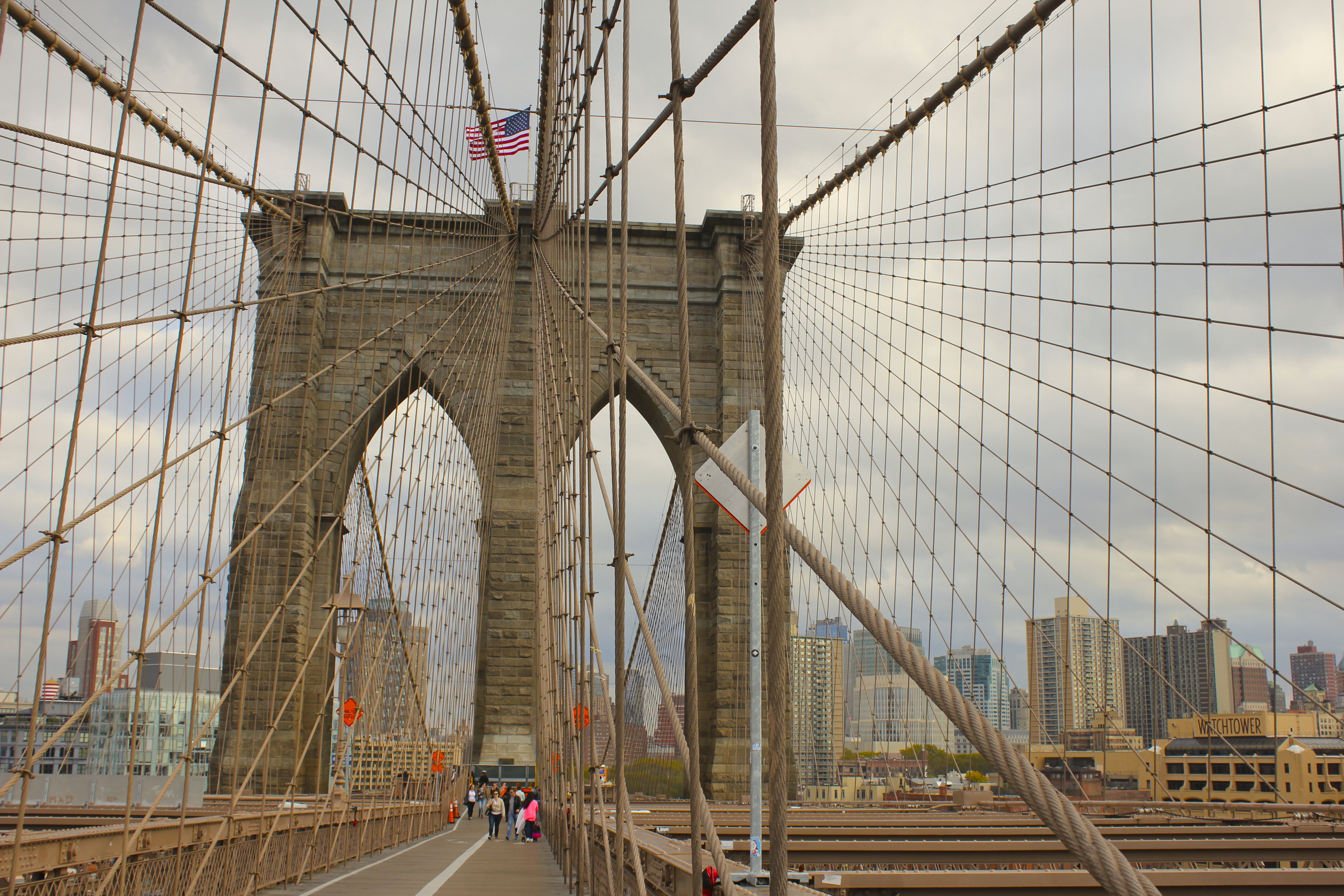
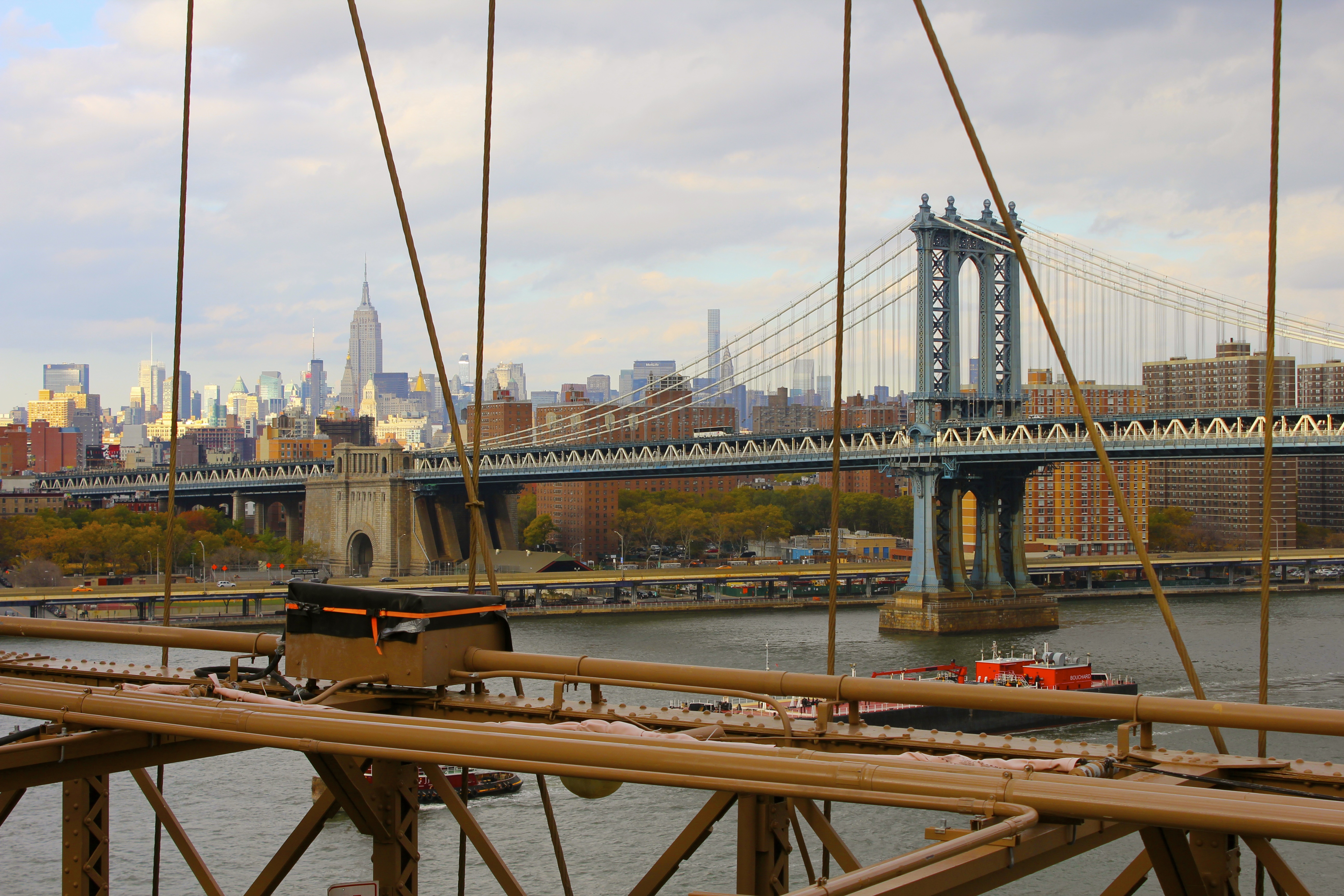
Walking to Manhattan Island, sun setting

over the Brooklyn Bridge west

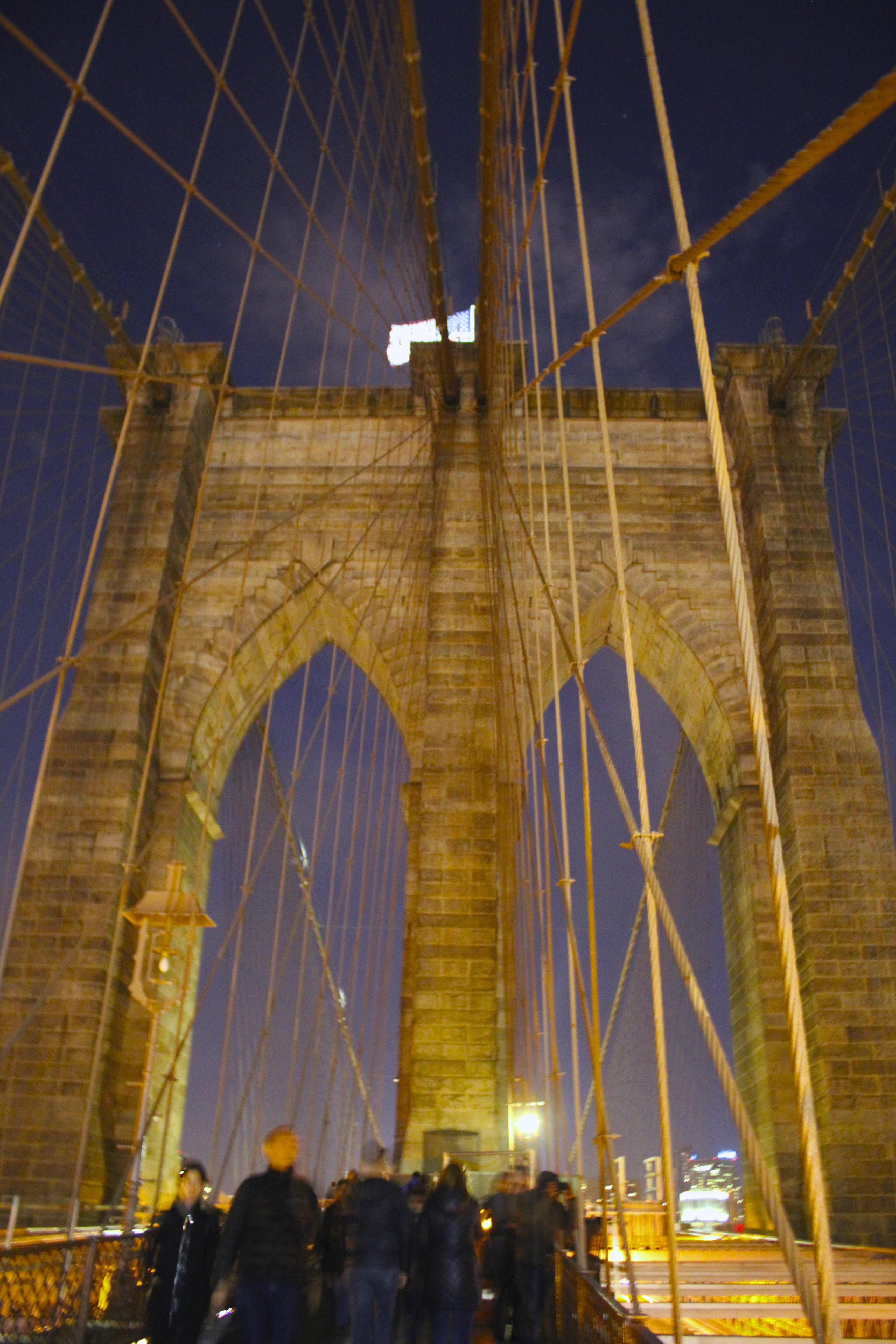
then back again, night rising

over the Brooklyn Bridge east

suspended in loud skyways

afloat with turbulent tides

never becoming the future

never settling the past

splashing uptown and downtown

east and west

dropping

dumbstruck

down to the bedrock where a gamble feels like a sure bet

and shoots out a line from one gothic tower to another

anchors it

reads it, sings it, speaks it

takes it striding into the tangled tension of lives from everywhere and all times

sniffing oooh and ah and

why and oh no and I give up and I believe and—

Let’s just kiss.

Let’s kiss like the bridge is falling down!

Yes! Yes! Yes! Oh Yes!

********

IMG_0485

IMG_0486IMG_0493

IMG_0512IMG_0504IMG_0495

IMG_0491

IMG_0490

IMG_0501

IMG_0503

IMG_0513

IMG_0509

IMG_0507

20151101_144753

IMG_0489

IMG_0499

IMG_0496

IMG_0538

IMG_0541

IMG_0546 (1)

********

My favorite shot coming up next. Birds on a wire. City on the edge.

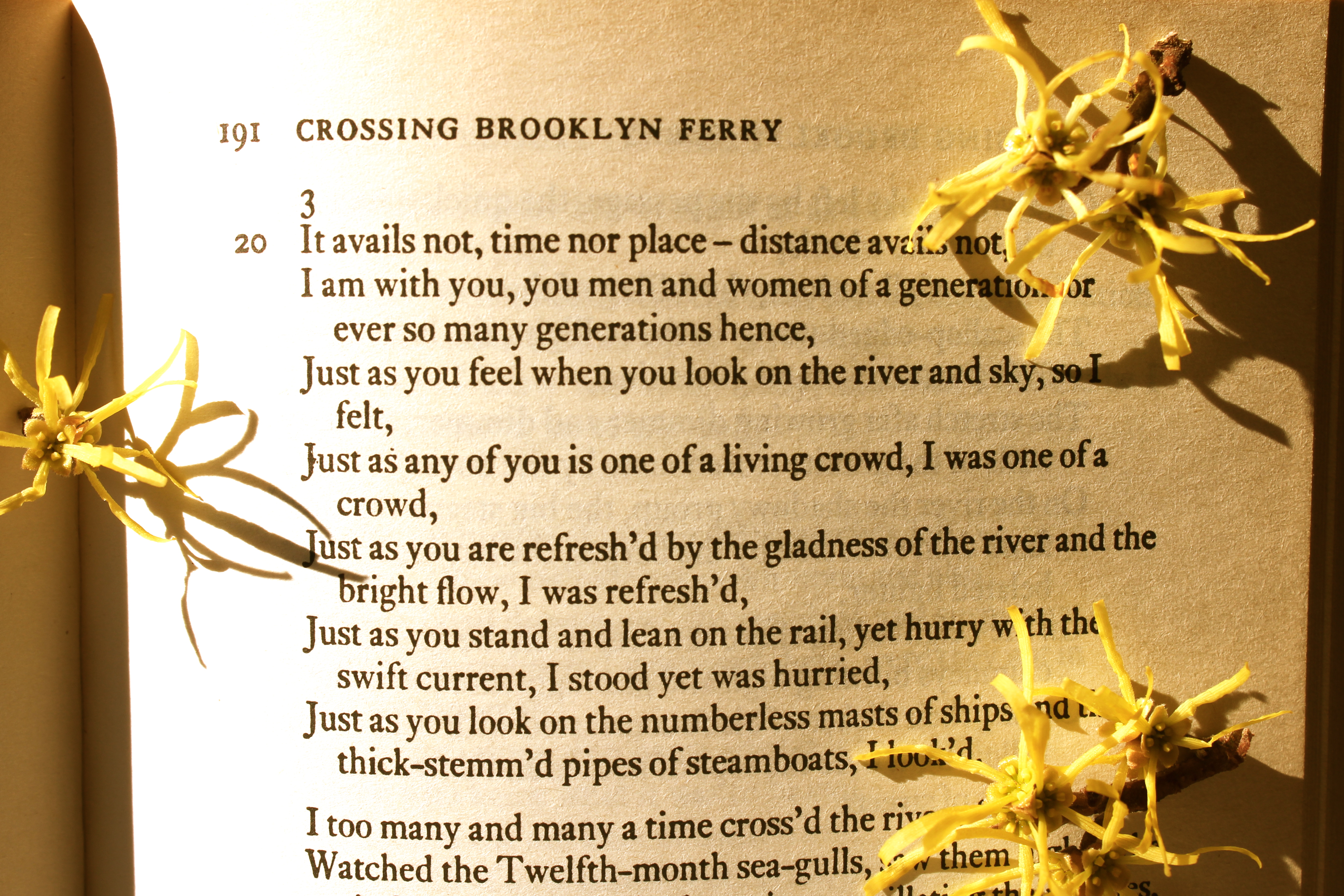
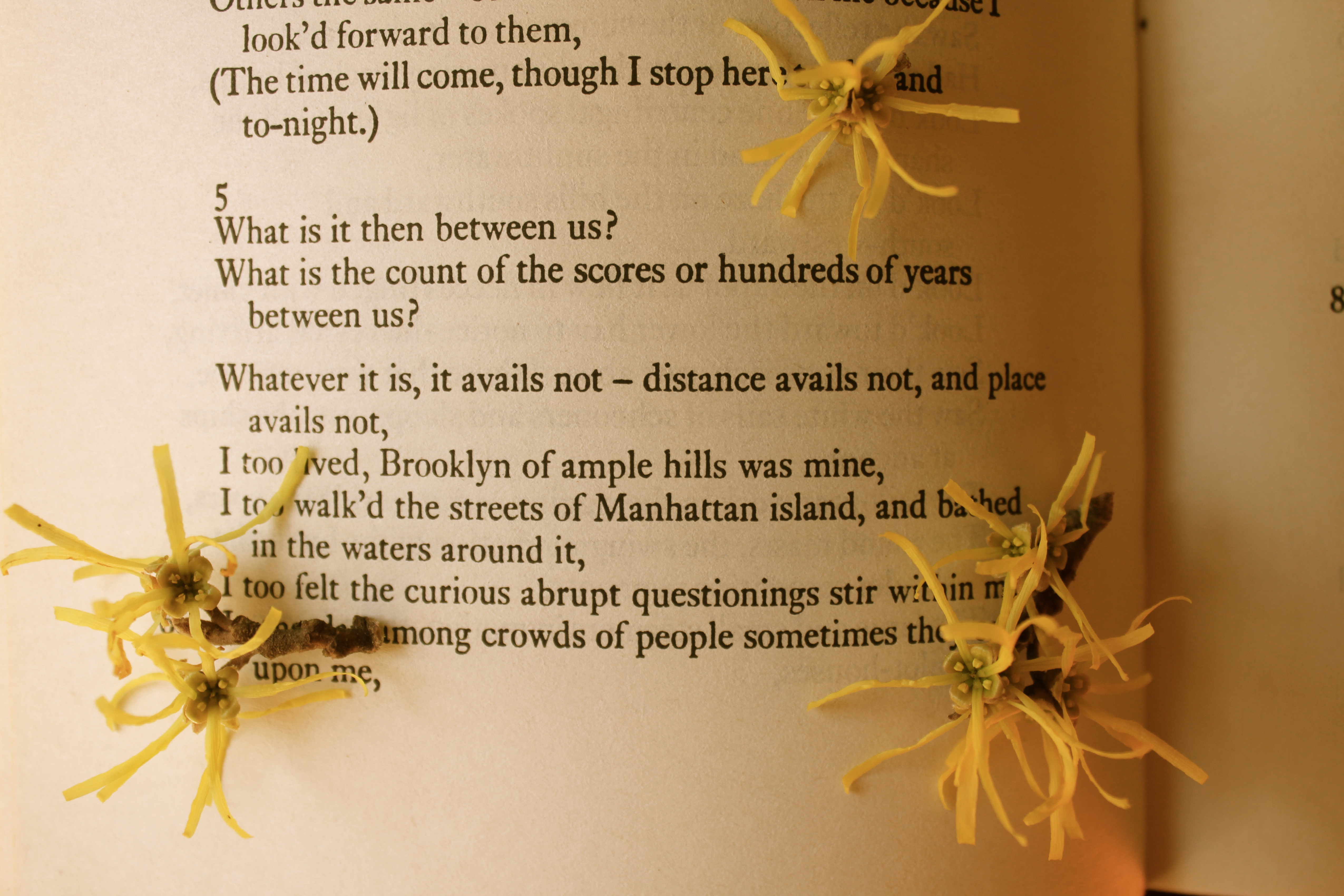
Followed by lines from the not-so-long-ago Bard of Brooklyn.

And Witch Hazel flowers I picked fresh just for you. They bloom in the November sun of my gardens.

Don’t jump.

IMG_0494

IMG_0609

IMG_0610

IMG_0613

********

The Monster Inside That Will Never Be Crushed.

Today is my son’s birthday. He’s twenty four. He was, from the very beginning, a double-black-diamond child to parent. (Experts Only!) At birth, his forehead was marked with a bright yellow triangle. (Caution!) And when the hospital presented him to us, he came swaddled in a roped-off basinet labeled with a last-chance bailout. (Parent Area Boundary! Not Patrolled!)

Every morning when he was in high school—all four fucking ferocious years—I dragged my son from bed at least three times before he’d agree to wake up. After that, he would stand in the shower until fish in the Quabbin Reservoir cried uncle. Then he wasted 20-30 minutes arguing why anyone should have to wear shoes anywhere. I’d wrestle his shirttails into tucked-in positions while muttering a litany of ultimatums he never once regarded as threats to his life.

And then, we’d drive to school. I had already searched his backpack for contraband. I had already cleared my calendar for sure-to-come meetings with the Head of School, the Dean of Students, the Disciplinary Committee, and his advisor. And, best of all, I had already set aside some of his school work to read while enjoying a cup of tea.

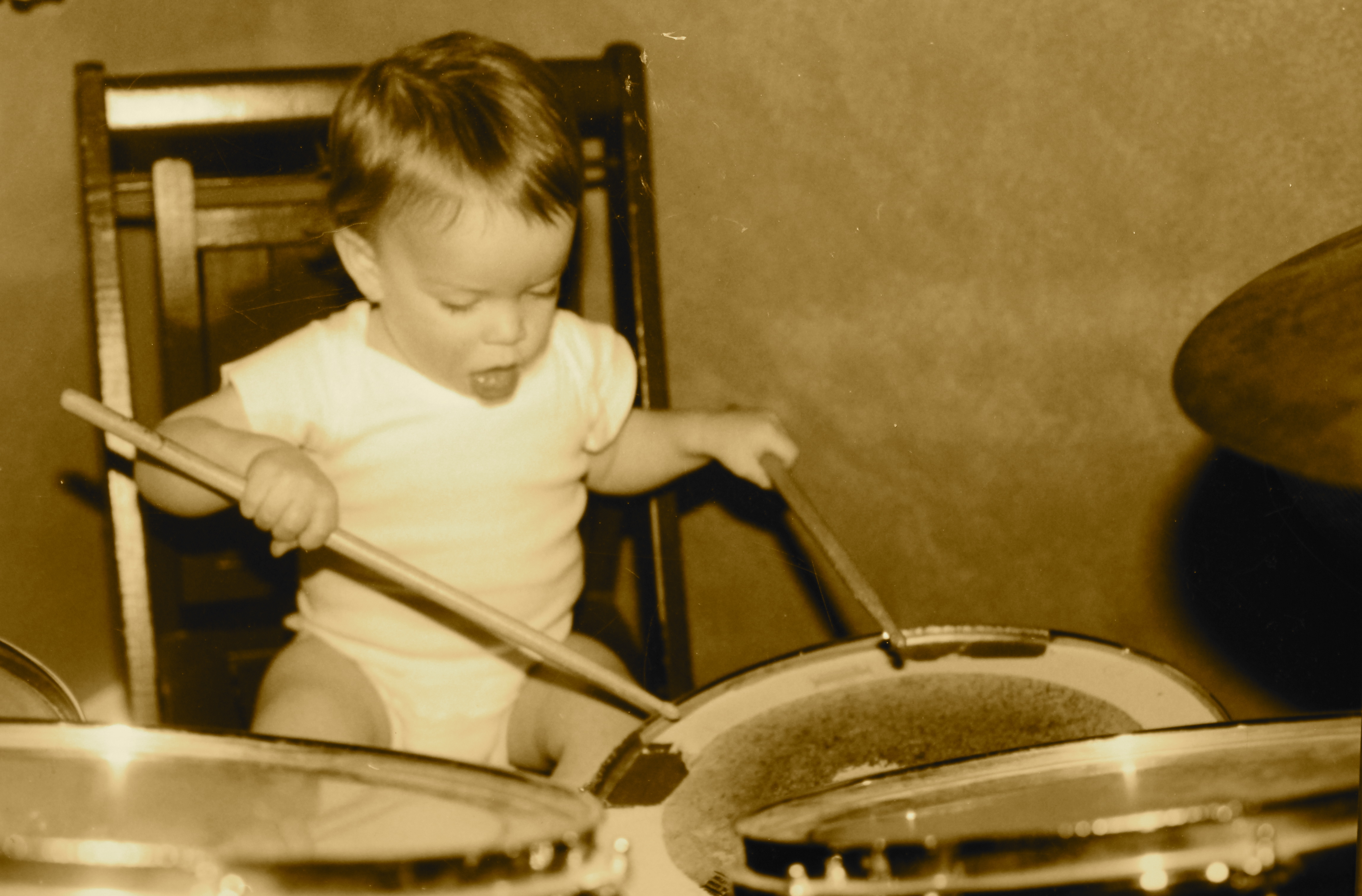
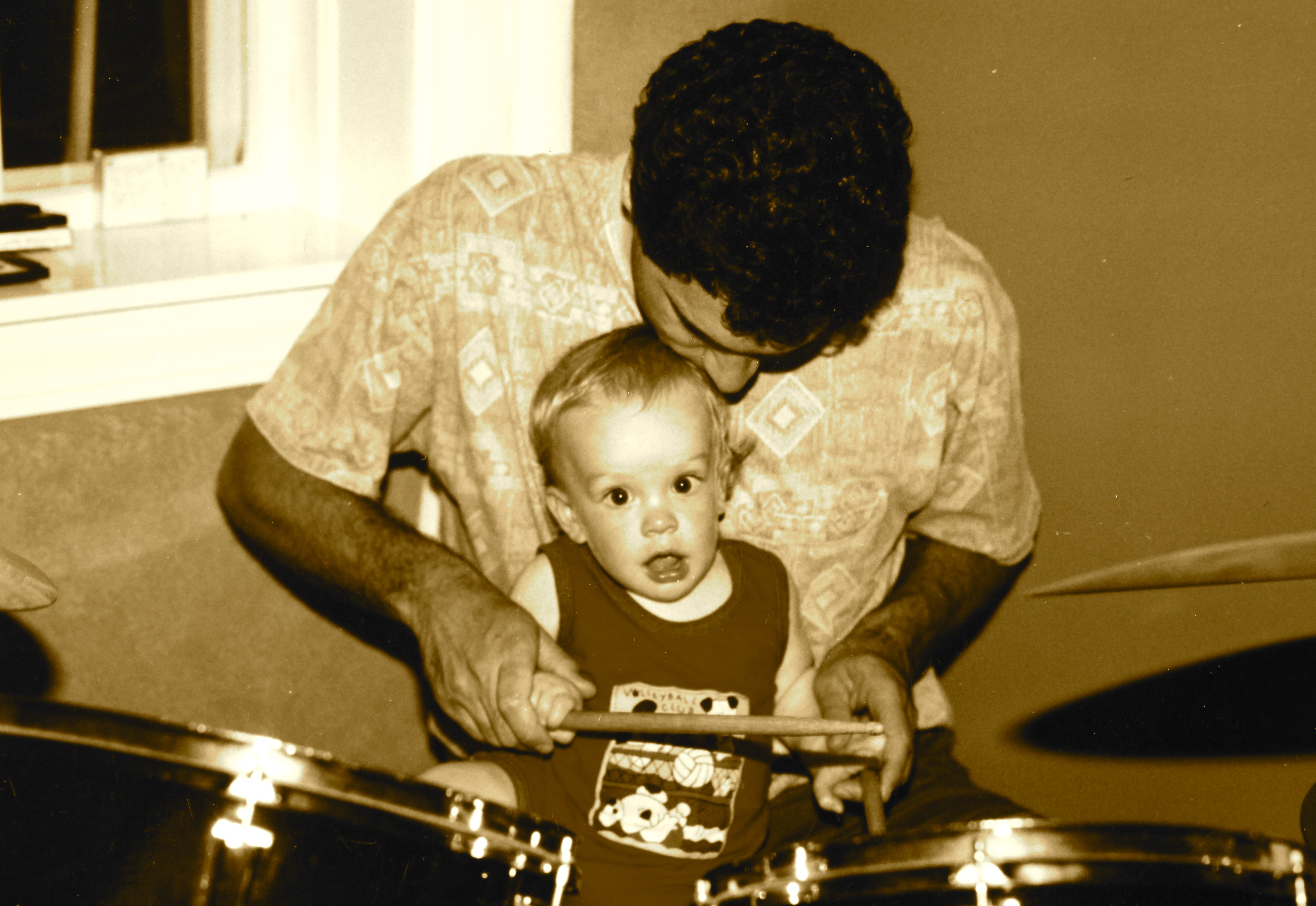
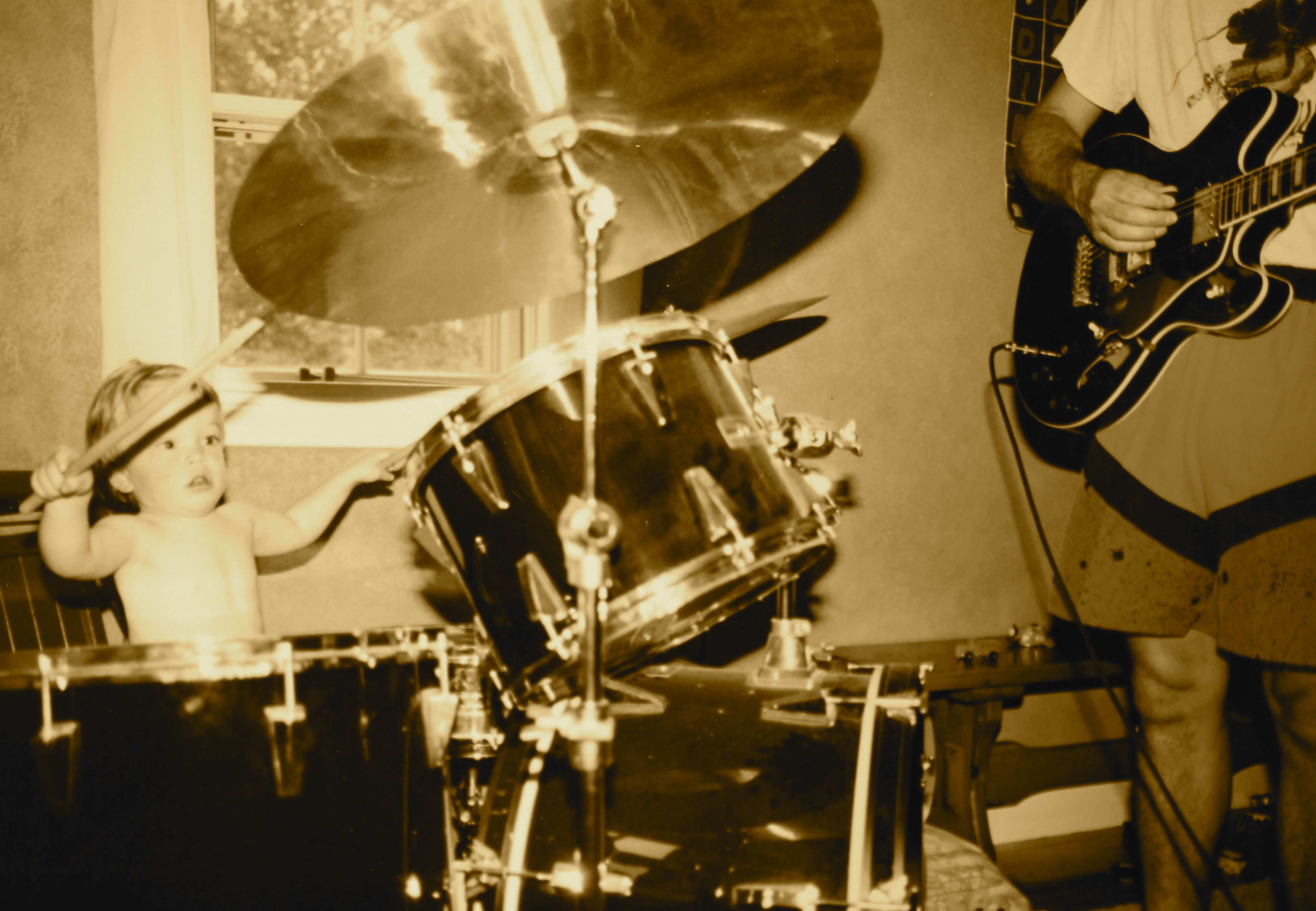
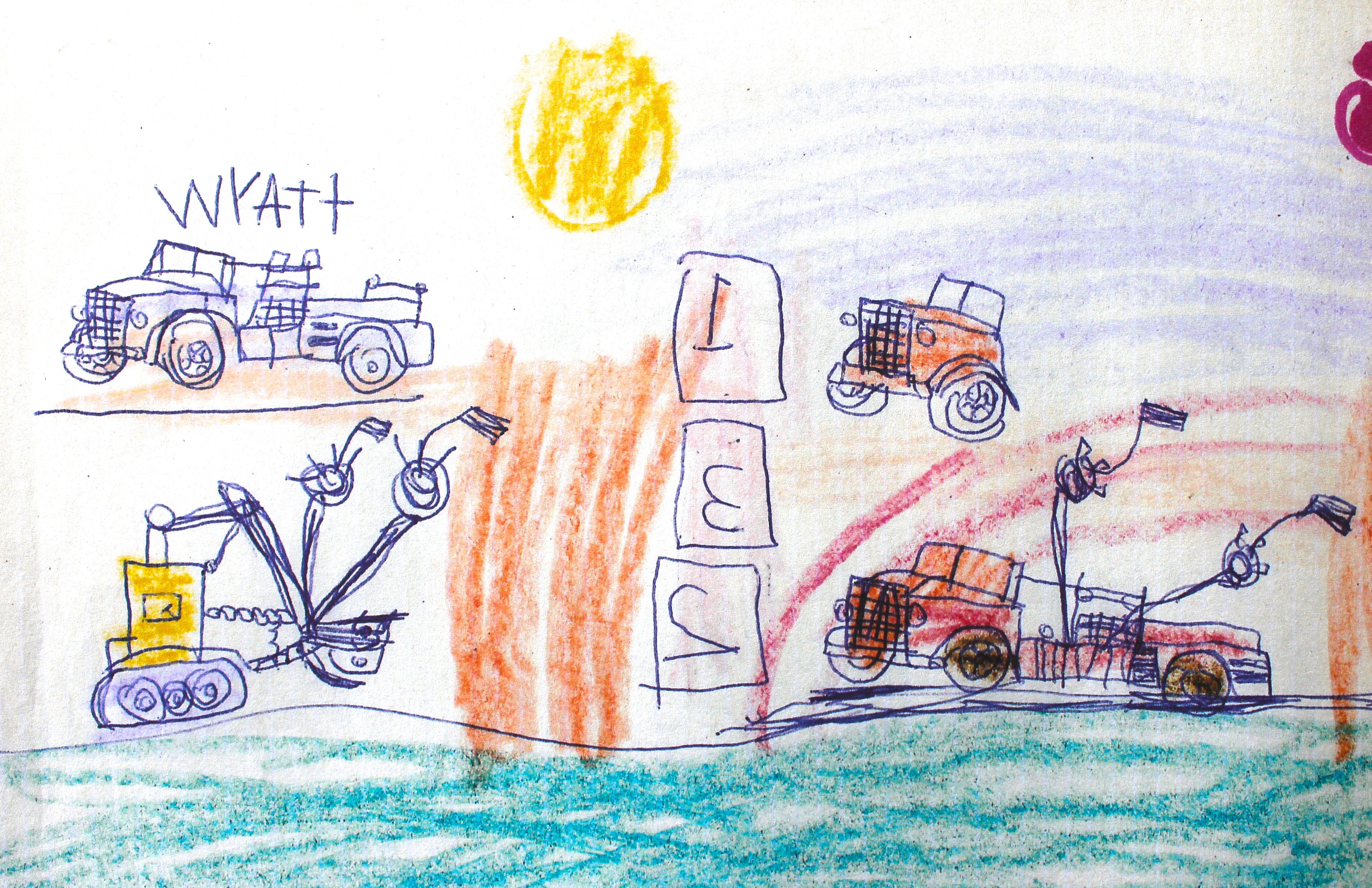
A lot of my son’s artwork—his drawings, his writings, and his musical performances—ignited disciplinary discussions and punishments. The troubles began by third grade when he came out as a manic reader and writer, a manic car and truck freak, a manic artist and cartoonist, and a manic, multi-talented musician. He accepted himself as he was and that was that.

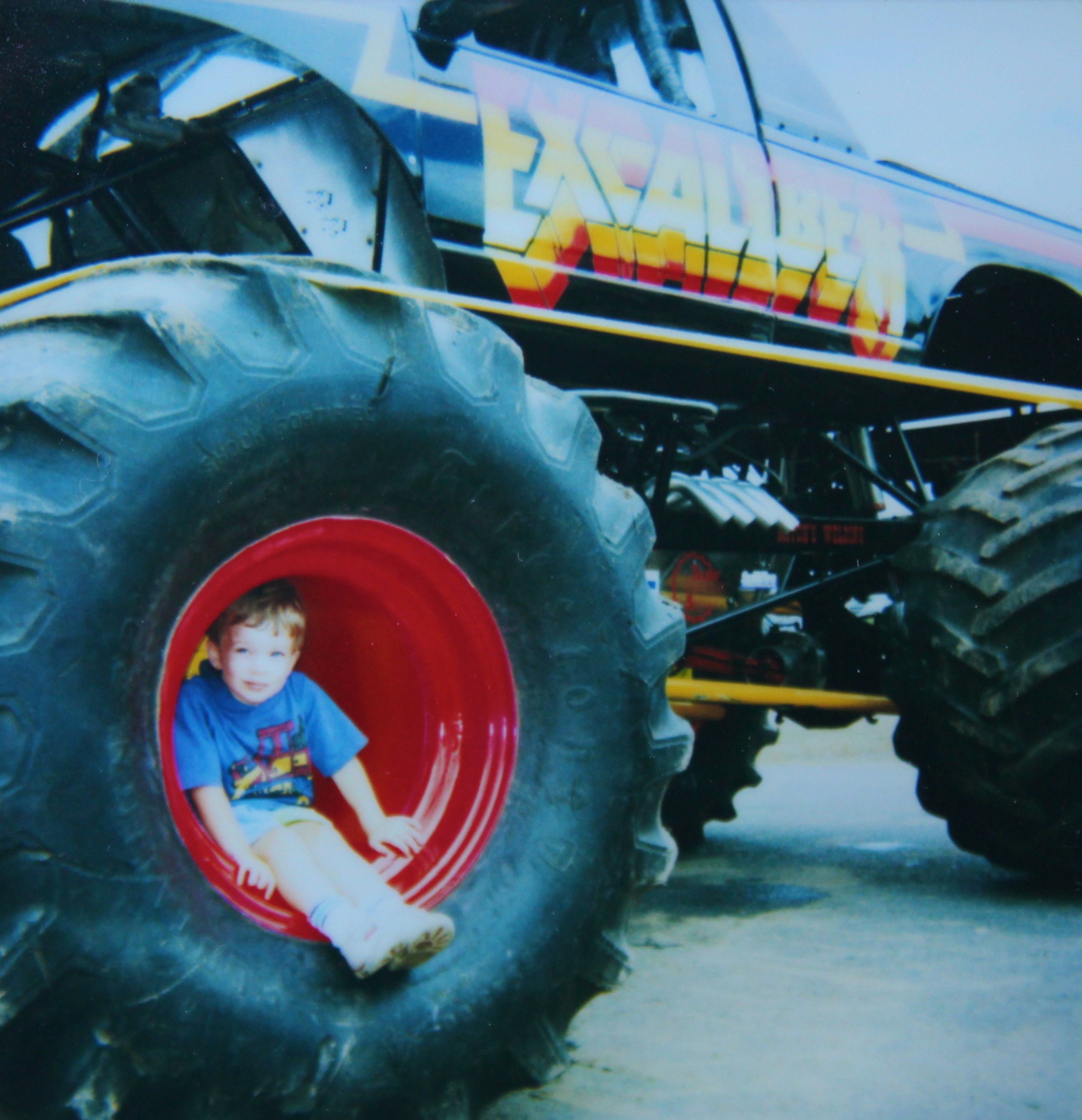
We took him to his first monster truck show when he was four.

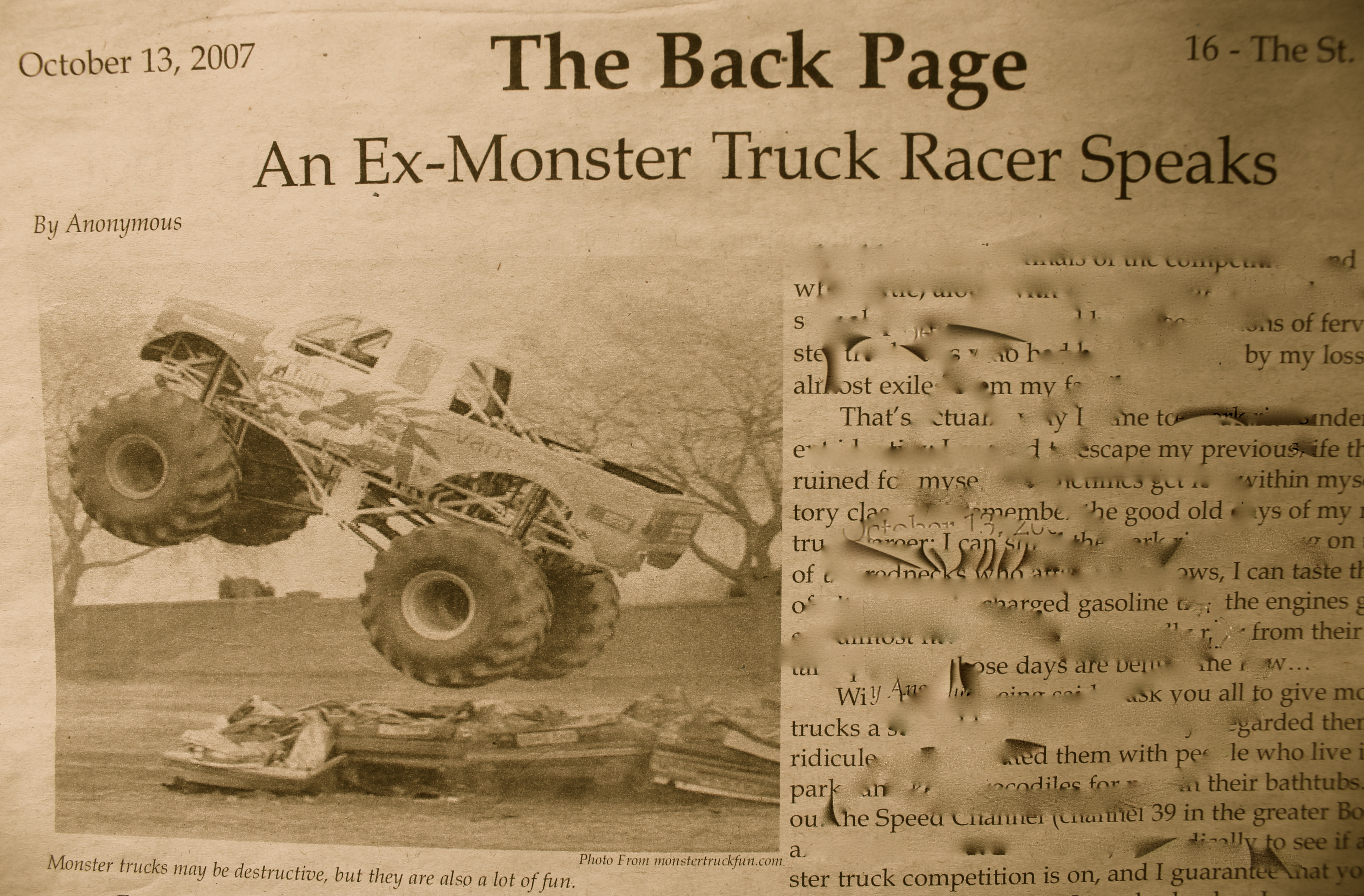
Ten years later, as a 14-year-old sophomore in high school, he wrote an article for his school’s newspaper encouraging the elite community of his peers to consider attending MTU (Monster Truck University) instead of MIT. It was one of the few works of art that made it through to the public without the censors hauling him off to the gallows in the town square.

I still derive pleasure from reading my son’s school work. I saved everything. In honor of his birthday, here’s his monster truck story, just for fun.

********

IMG_0352

********

An Ex-Monster Truck Racer Speaks  By Anonymous

Few of the festering beings that populate the bubble we live in have ever been graced by the presence of an ominous, looming monster truck. I still remember that fateful day, back when I was six years old and went to my first monster truck show.

As a wee lad, I could actually walk under the yellow caution tape withholding the beastly, leviathan trucks from millions of screaming, frenzied spectators. I could easily sit myself in the massive, hollow rim of the truck’s tire. I remember the experience so vividly, how I felt like an unborn bear cub resting snugly deep within his mammoth mother’s womb. At that moment in time, the monster truck and I were one, and the entire future of my life was decided. Some people as adults still haven’t found their one true love, their one true calling, but I am proud to say I found mine sitting in the 66″ Terra Tire of a monster truck when I was seven years old.

When I was nine, I drew up blueprints for my own mini-scaled monster truck. I spent every waking hour of the summer of fourth grade drawing these plans, and, using only duct tape, some WD40, the wood from a grove of oak trees I chopped down, and some granite I mined from Mount Wachusett, I built my own little state-of-the-art monster truck and was soon terrorizing the neighborhood.

When I was twelve, I was driving the Bigfoot truck—(only the most infamous, the most revered of all monster trucks)—in the professional monster truck circuit, the USHRA (United States Hot Rod Association) Monster Truck Nationals. Unfortunately, in an incredible twist of fate, the truck I was driving blew out its right rear tire when I was driving over a few school buses in the finals of the competition. I lost the whole title, along with my entire life. I was shunned in school, publicly accosted by those millions of fervent monster truck fans—all of them let down by my loss—and I was almost exiled from my family.

That’s actually why I came to prep school under a different identity; I needed to escape the previous life I had ruined for myself.

I sometimes get lost within myself in history class and remember the good old days of my monster truck career; I can smell the pork rinds sizzling on the grills of the rednecks who attend the show. I can taste the fumes of nitrous oxide-charged gasoline that the engines guzzle. I can almost hear the almighty, godly roar from their tailpipes.

But those days are behind me now…

With that all being said, I ask you all to give monster trucks a second look, especially if you’ve always regarded them with ridicule and associated them with people who live in trailer parks and keep crocodiles for pets in their bathtubs. Check out the Speed Channel (channel 39 in the greater Boston area extended cable network) sporadically to see if a monster truck competition is on and I guarantee that you too will be captivated just as I was back when I was a wee lad. Monster trucks have greatly influenced the outcome of my life and made me the person I am today—I want to share the gift of monster trucks with you all.

********

Go ahead, walk past the caution tapes you have tied around your heart.

IMG_0367

Excalibur!

IMG_0366

Reptoid!

********

IMG_0360

IMG_0358

IMG_0363

IMG_0359 2

********

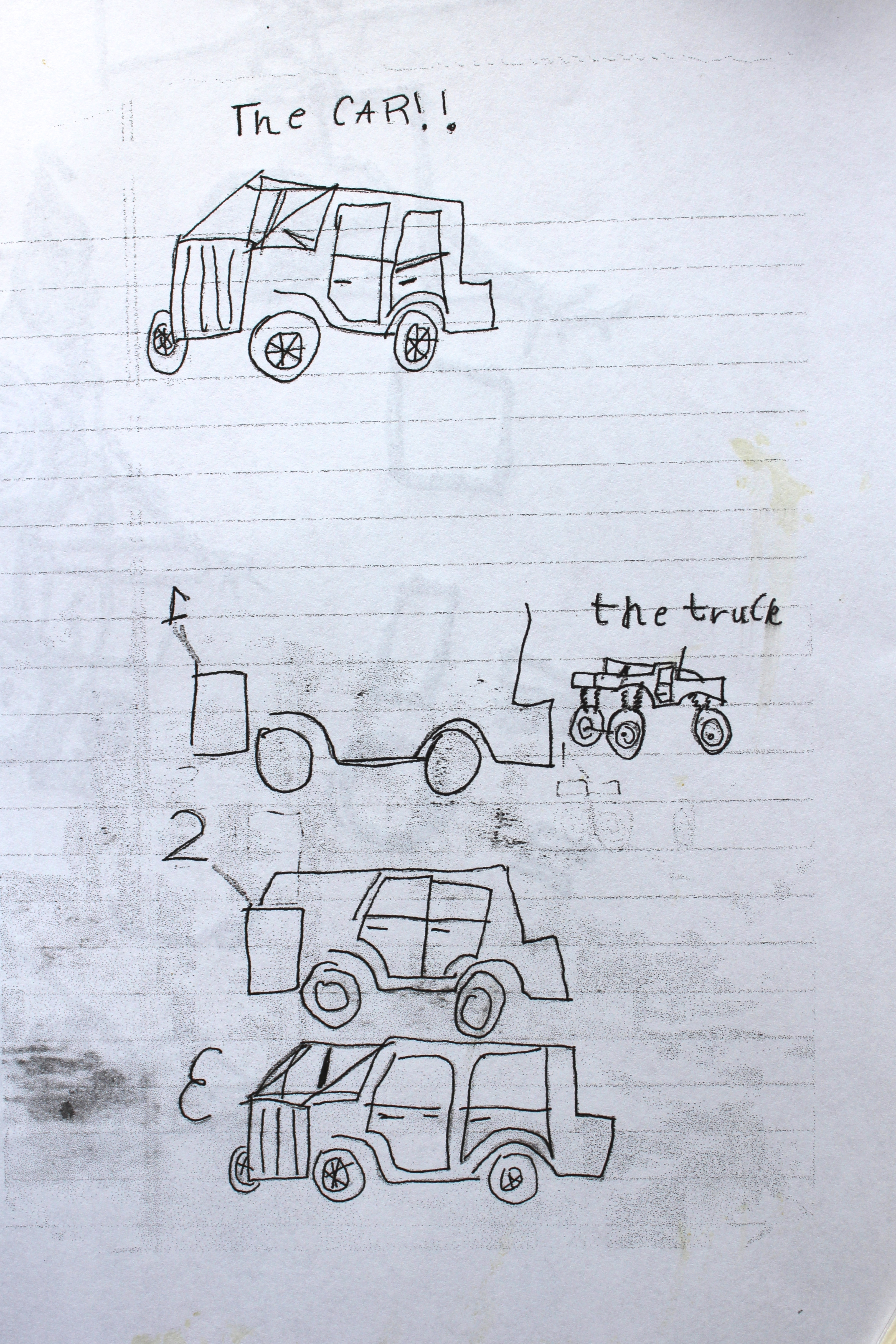
Before my son went off to kindergarten, I marveled at his drawings of cars and trucks.

“How do you know how to draw so well?” I would say. “I wish I could draw the way you do!”

And my son, taking my question to heart, would create “how to” drawings, with simple steps,

to help me (and anyone else) learn how to enjoy drawing cars and trucks!

IMG_0357

IMG_0356

By junior high, more and more elaborate trucks roared onto the pages of school notebooks.

IMG_0354

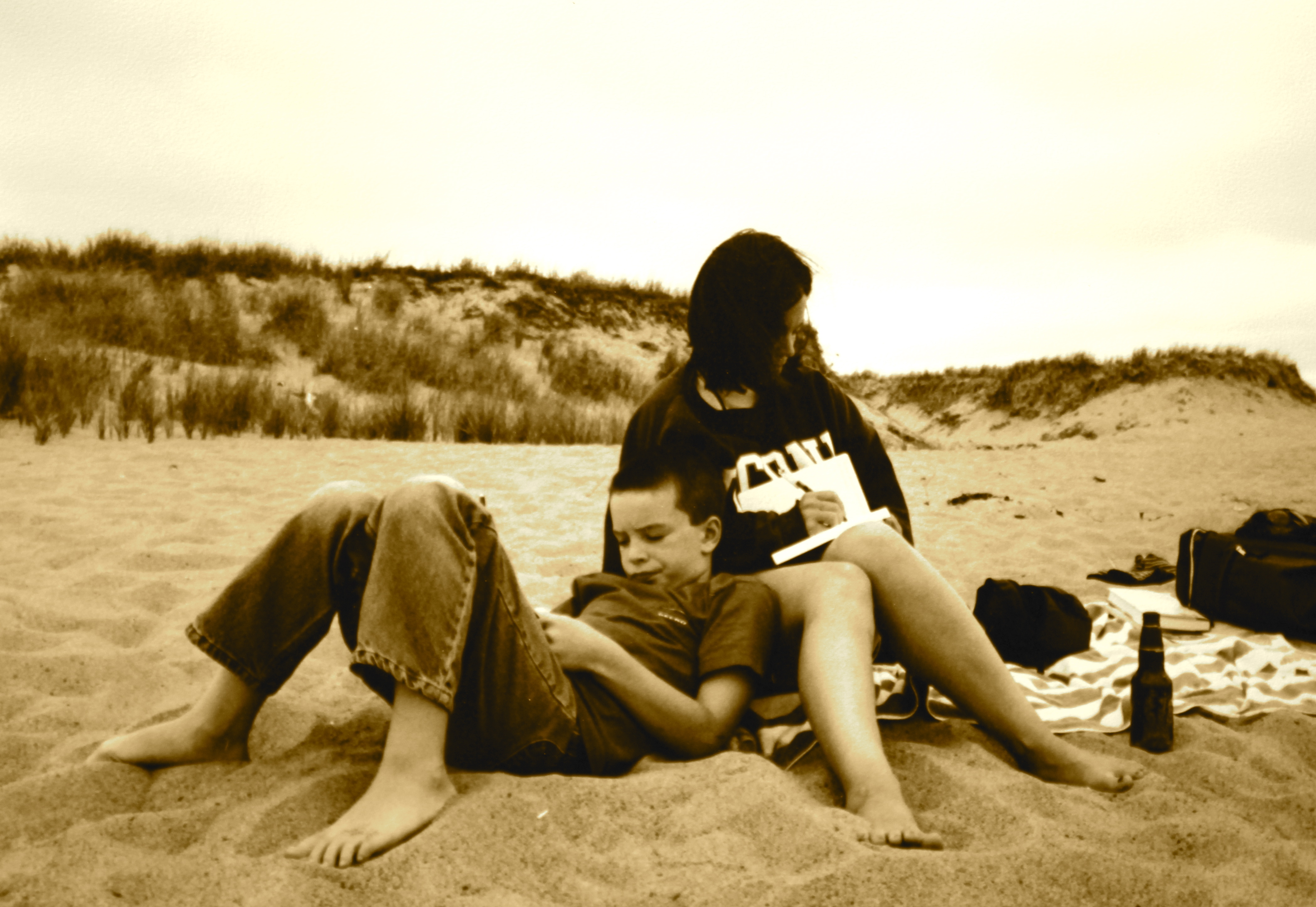
We always liked to read and write together.

IMG_0364 2

Happy Birthday to my son, a young man who has never abandoned his childhood passions.

IMG_4442

“We’re all going to die, all of us.

What a circus!

That alone should make us love each other, but it doesn’t.

We are terrorized and flattened by trivialities,

we are eaten up by nothing.”

A quote from Charles Bukowski, an unruly artist my son introduced to me.

********