Hellebores and Hell’s a Bore.

In the year 1958, Katharine S. White, an amateur gardener, began to write a gardening column, Onward and Upward in the GardenShe was an editor at The New Yorker and she was married to E.B. White.

She also tended her own garden in Maine and nurtured a fun little hobby she was sure was not hers alone–the pleasurable escape of reading garden catalogues.

Thank goodness she had enough time left over in her life, in those days, to begin writing about what she read in the flimsy pages of the catalogues. She joined in with the community of quirky, and seriously devoted, garden-writing stylists whose work existed in an exclusive, sumptuous, and untrammeled green forum.

It didn’t hurt that the garden catalogues, composed with fantastical flower, fruit, and veggie pictures, were delivered though the U.S. mail at a time of the year when Katharine S. White was probably cold, tired of snow, and, at times, weary of her job as an editor with its attendant frustrations over the puzzling art of poetry.

E.B. White documented one of his wife’s earnest pleas, directed at poets, in his essay, Poetry, from his book One Man’s Meat:

“I wish poets could be clearer,” shouted my wife angrily from the next room. Hers is a universal longing. We would all like it if the bards would make themselves plain, or we think we would. The poets however, are not easily diverted from their high mysterious ways. A poet dares be just so clear and no clearer; he approaches lucid ground warily, like a mariner who is determined not to scrape his bottom on anything solid. A poet’s pleasure is to withhold a little of his meaning, to intensify by mystification. He unzips the veil from beauty but does not remove it. A poet utterly clear is a trifle glaring.

White’s essay continues to ruminate about poetry. He injects a little humor: “I think Americans, perhaps more than any other people, are impressed by what they don’t understand and poets take advantage of this.” He also writes that he is jealous of poets and wishes, more than anything else, to be a poet.

Well, harumph to the days of sitting around dazed and confused about poetry, thumbs available for twiddling. Haha freakin harumph. How I long for them! I think Americans, nowadays, are impressed by how busy and preoccupied and stupendous their multiple electronic gadgets make them appear to be. Or, at least it started out that way. Now, now, they seem willfully seduced by all things glowing Google. They are so smitten, they claim they can’t help it. They’ve devoured every marshmallow of self-restraint on the researcher’s table and slept with every sexy plate of pasta tweeted by the Food Gurus. They are busier than Sheryl Sandberg leaning up against my front door, while giving birth, and running a meeting on her laptop, and having a happy marriage, and trying to sell me her book.

I think I am supposed to be feeling sorry for the busy people, because it’s not their fault. I watch them raise their syrupy eyes every now and then to make sure everyone else is wearing their favorite pair of fat busypants. Oooh. They’re so comfortable. The electronic wizards croon. I make a note to find out where I can purchase a pair.

But. The truth is. I drink alone.

Because there’s no one in the bar anymore. First, they took away the cigarettes. Then, they took away the band. They allowed phones on every table, computers too, and all other kinds of screens and toys that I am urged to swipe my fingers over. That’s gross.

I am drowning in mugs of beer gone stale because no one could sit still long enough to finish theirs.

God knows I am depending on Him to reserve a place in paradise for the poets and garden writers.

Because this hellish fad of busy buzzings is a damn bore. Or maybe I am just a big bore. And, I’m not even sure God exists or that the poets and gardeners will make it to His paradise if He does.

What if this is it?

I head for the woods.

*****

It’s springtime.

Upon the surface of the forest’s vernal pools floats the reflection of the cloud--an ugly crust of emails, downloaded photos, saved documents. I step in, sloshing about—sinking—getting all muddy and slicked over. It scares the salamanders, at work breeding the old-fashioned way, but ending up with extra toes, tails, and spots. And too many emails.

If you go to Starbucks, you can’t buy CD’s with your coffee anymore. I should have taken better care of mine. I have only been inside a Starbucks once in my life.

Someday, they’ll say we have to do everything we can to save the strange-spotted, toeful, double-tailed salamander. And the researchers will ask for donations to the Salve the Salamanders Project, which will fund safe, water-soluble forms of Xanax for vernal pools so the creatures can deal, gently, with all those emails, extra toes, tails, and spots.

I don’t understand literature or poetry. Or French. Or Russian. Or Chinese. Not even Spanish.

I don’t know how to use punctuation and I don’t know grammatical parts of speech. When I write, in English, which is the language of my youth, I am wriggling around, panting, laughing.

I will never catch up! I wasted my childhood playing, when I might-should-have-been reading and studying and obsessing over something I could do–and do like a champion–forever.

It snowed so much this winter, I wondered about the plants in my garden instead of my periods and commas and quotation marks.

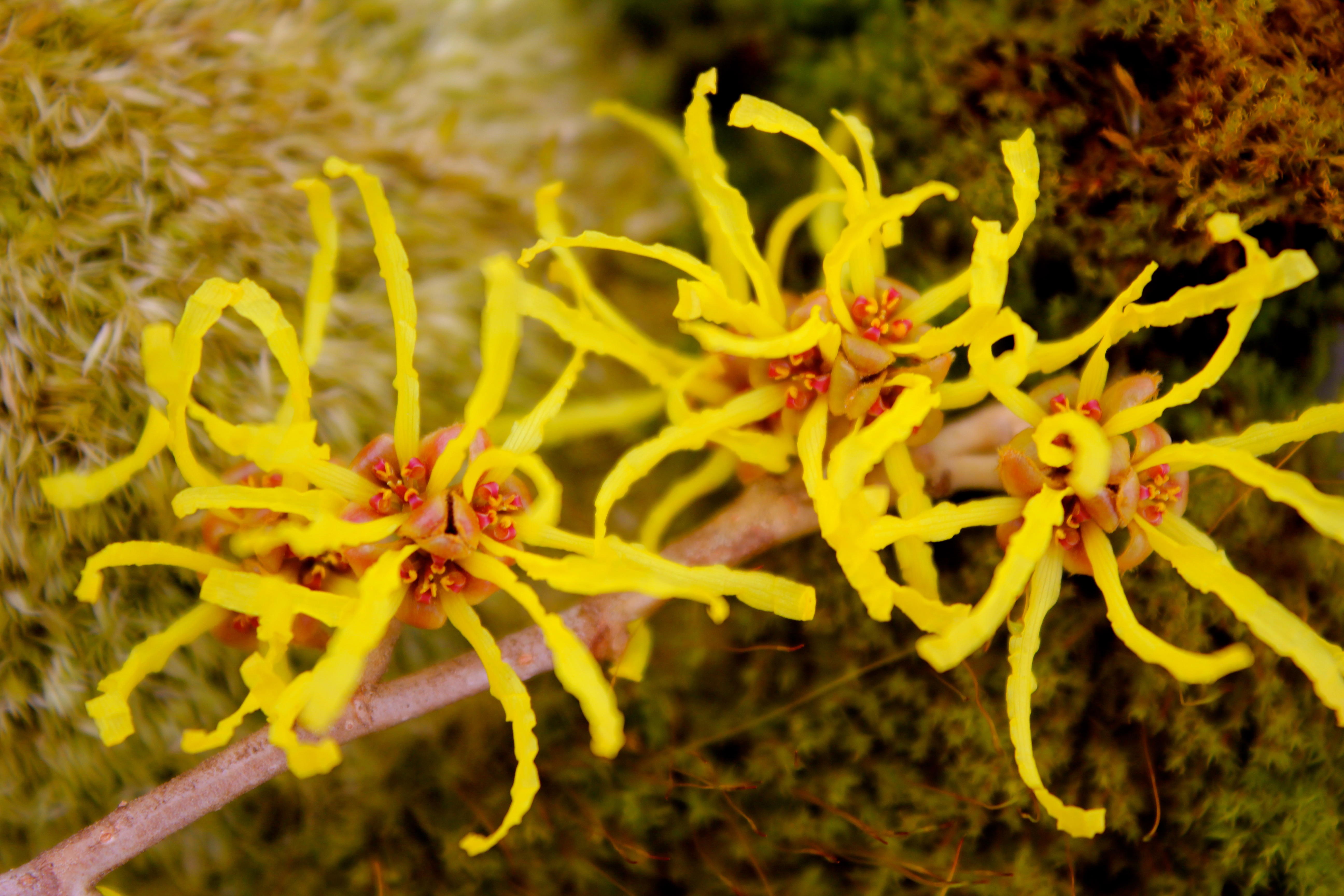
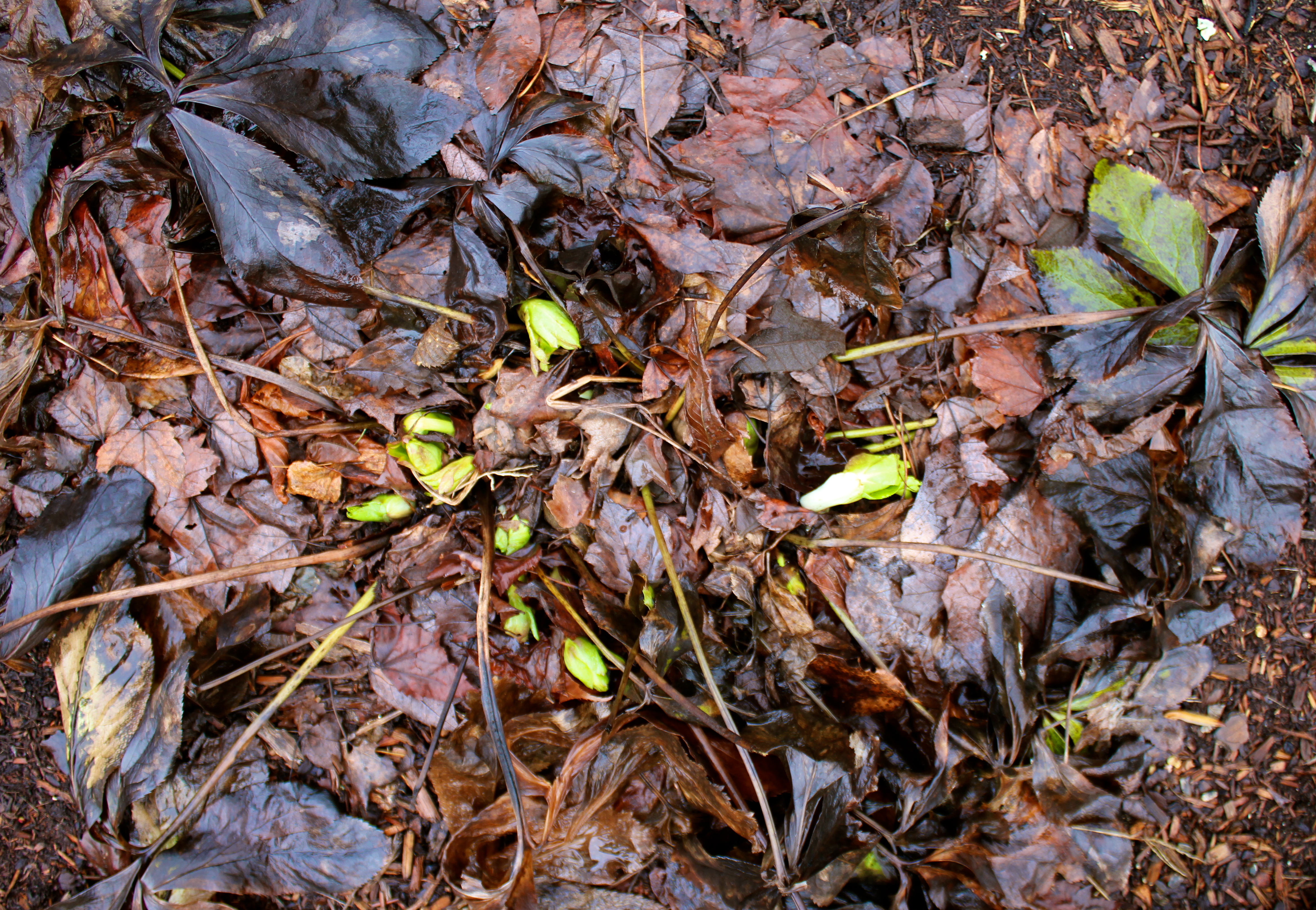
The snow has melted and my Hellebores look wasted. They’re a colorless, dull black and they are limp–splayed flat out in the garden. But there’s some hope in there. The little green buds.
IMG_0777

The Hellebores look like I feel because after I read about Starbuck’s, I read that the Apple watch will soon be strapped around the wrists of my countrymen. They will strap them around their chests and foreheads, too. Boomp, pa, boom. Boomp, pa, boom. Click. Click. Hummm.

What keeps you alive?

After a long walk in the woods, I stroll my garden. It looks like hell alright. There are cracked and dropped branches. Lots of prostrate, spent, plant debris begging me to bend over and get to work. A woodpile still needs to be stacked. It’s a security blanket. I’ll wrap myself up in that work on a day when I think about something else I read in the newspaper–that no one wants a garden anymore. It’s too much work and everyone is too busy. I know it’s true.

I only received three garden catalogues in the mail this year. I don’t want to look at them on line. I want to read them and hold them in my hands and smell them. Like my Weekly Reader back in grade school. Something fun, delivered. I want to dog-ear the pages that have all my dreams four-color-separated onto them.

*****

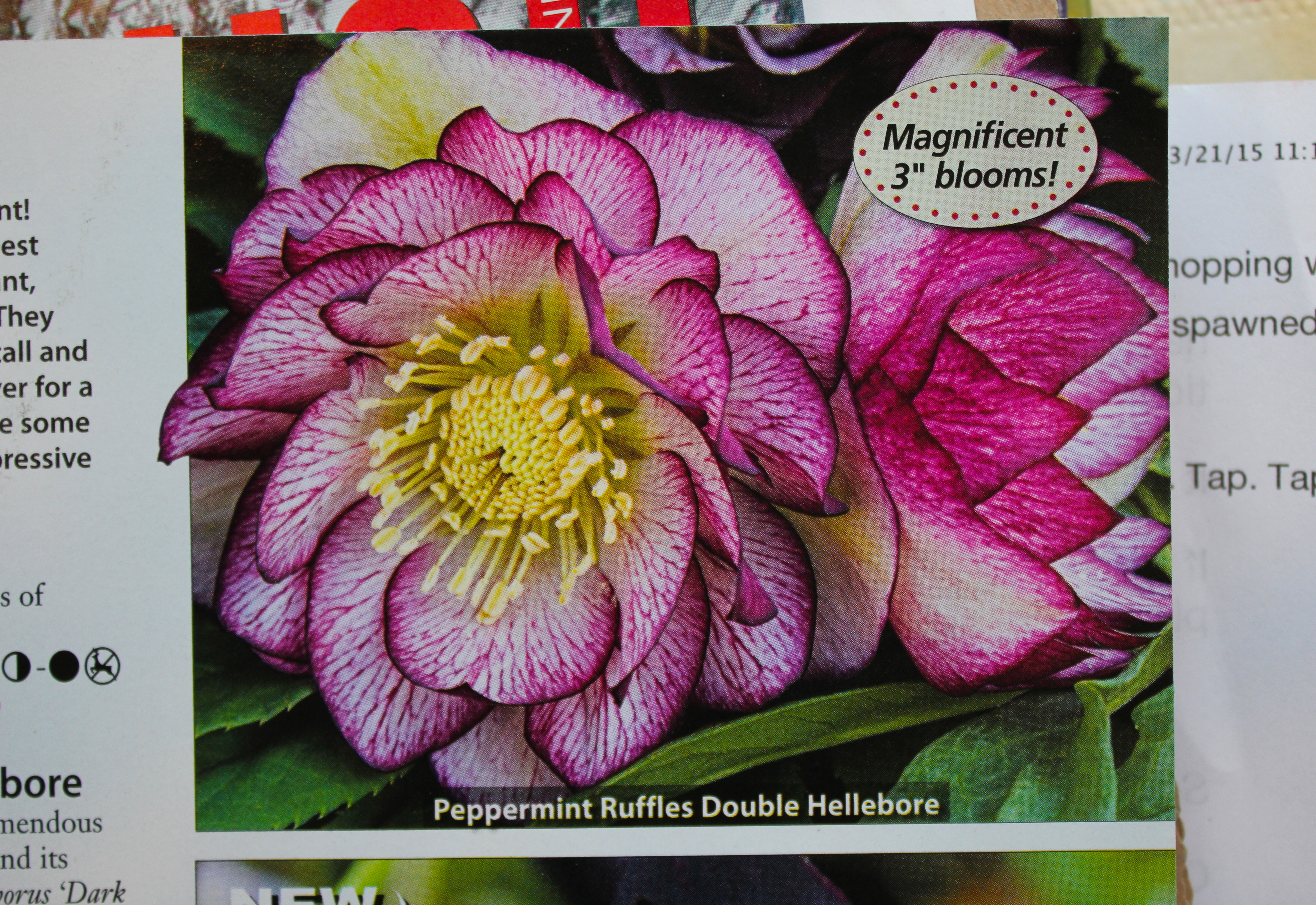
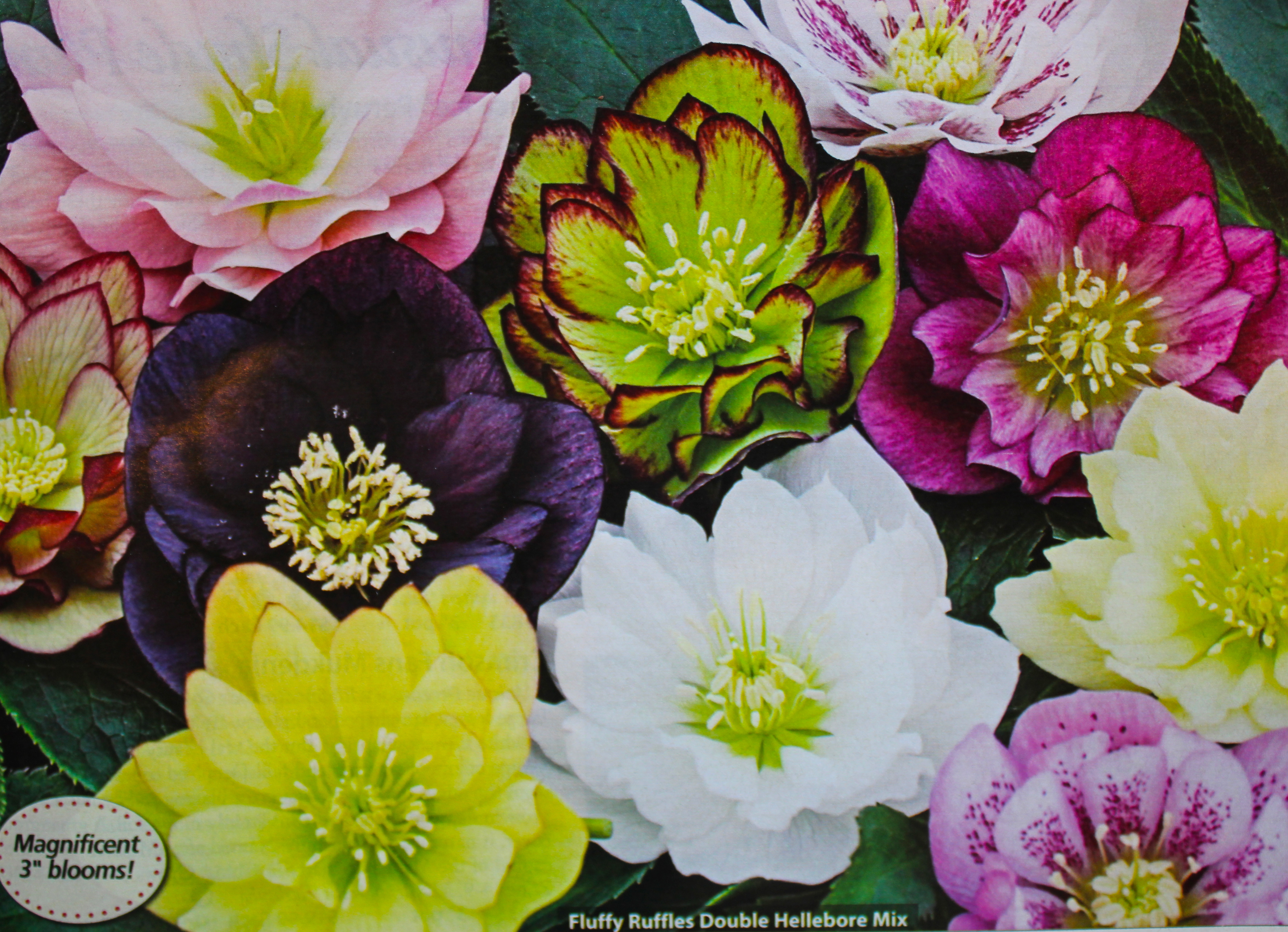
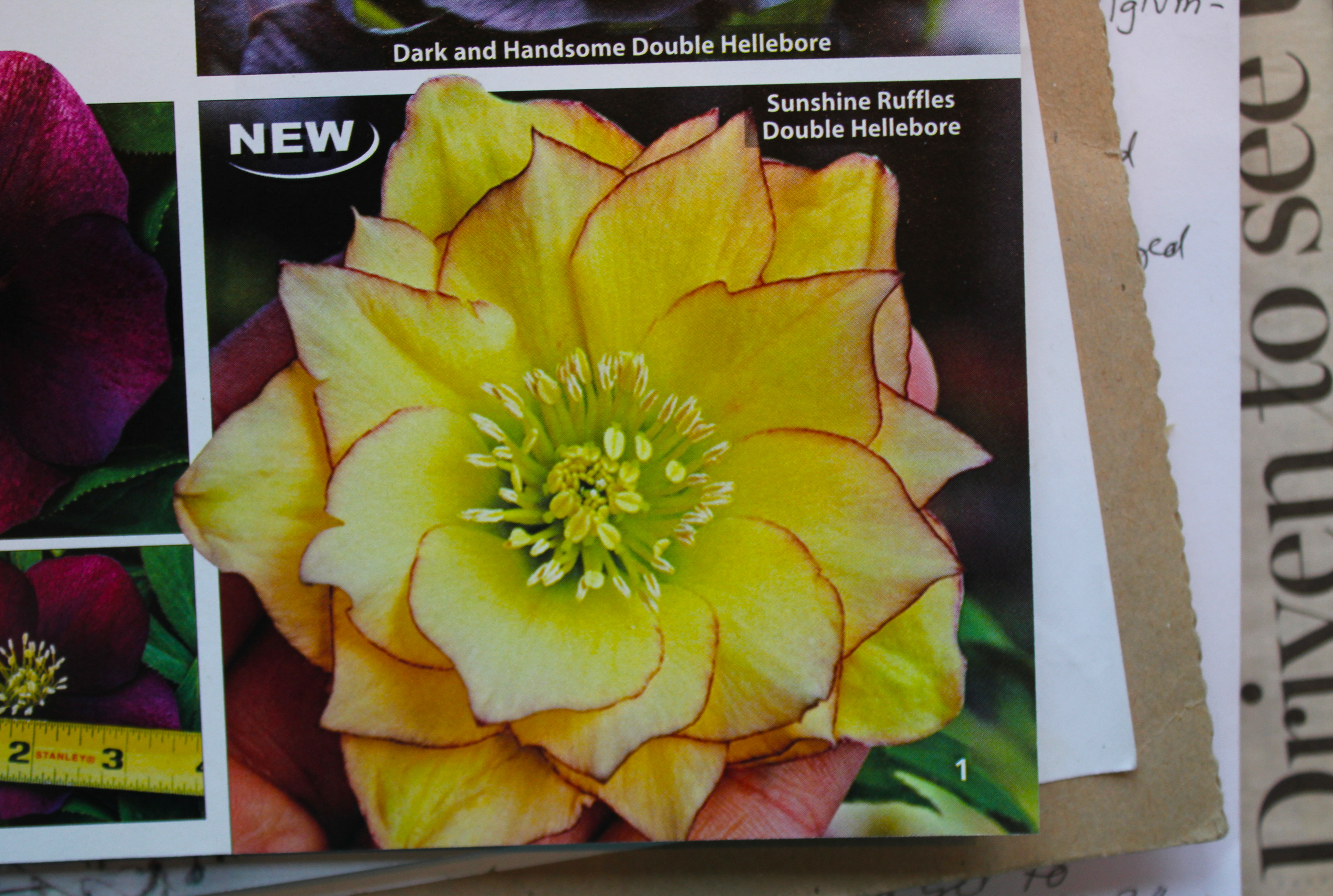
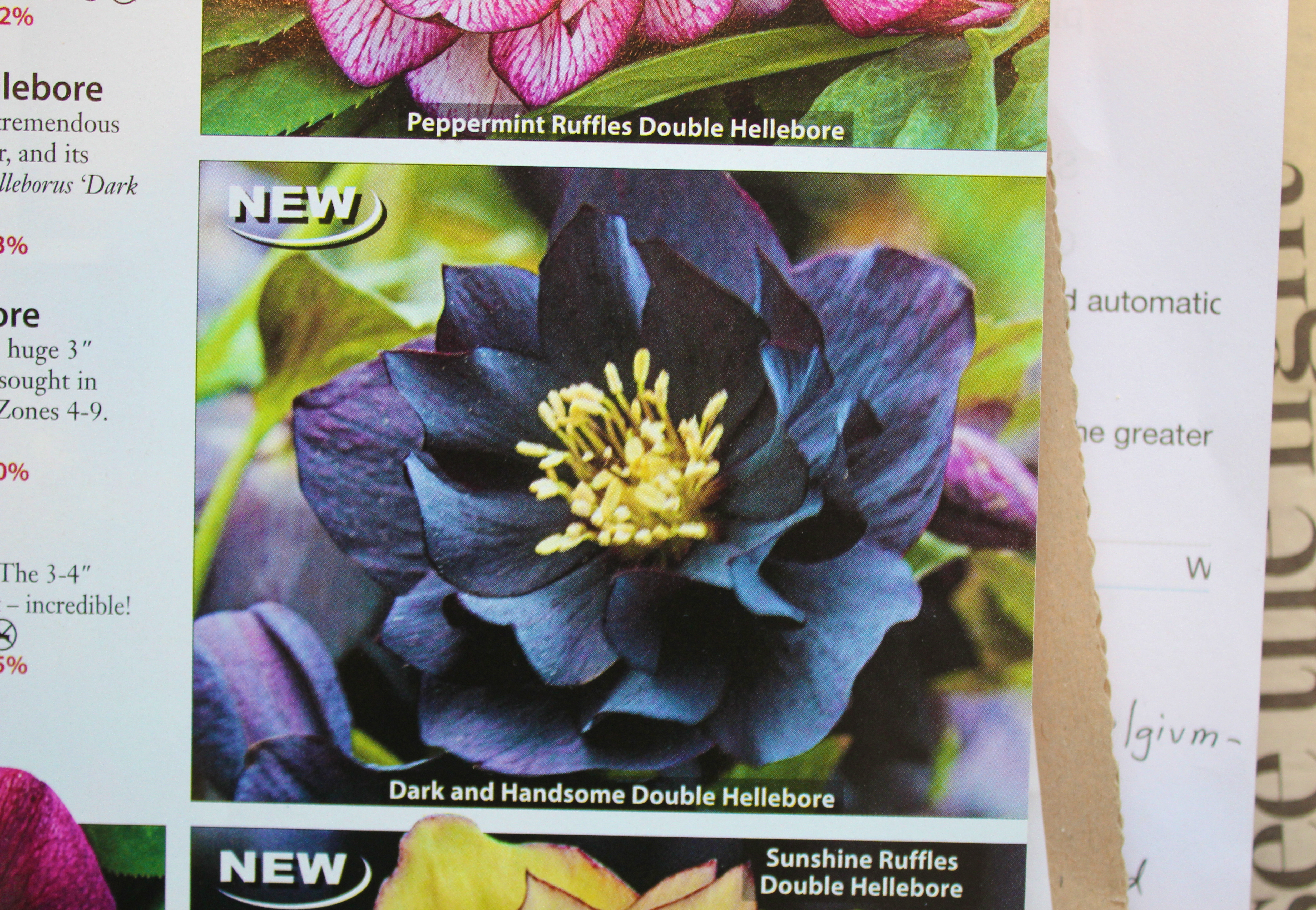
I’m going to wait for my Hellebores to get it together. But I saw some pictures in one garden catalogue that got me all two-stepping about ordering new ones. The pictures have been spread out across my desk for many days now. I’ve never ordered a plant nor seeds from any garden catalogue.
IMG_0756

IMG_0757

IMG_0758

IMG_0759

They look like so much fun! Next follows a picture of something I might buy from another catalogue I got from a place called Logee’s in Danielson, Connecticut. I took an excursion to their greenhouses in wintertime. It was like walking through the hollow of a tree, in a hidden forest, into a flowerscape of foliage and blooming weirdness. I felt like a bug, crawling around, smelling, dodging, getting lost, not caring if anything stepped on me or ate me.

IMG_0786

What will happen if I grow this tropical freak-out in my New England garden! It will remind me of the first time I went to Hawaii. My children were so little. We didn’t allow electronic games in our household. Not much television, either.

My babies in Hawaii!
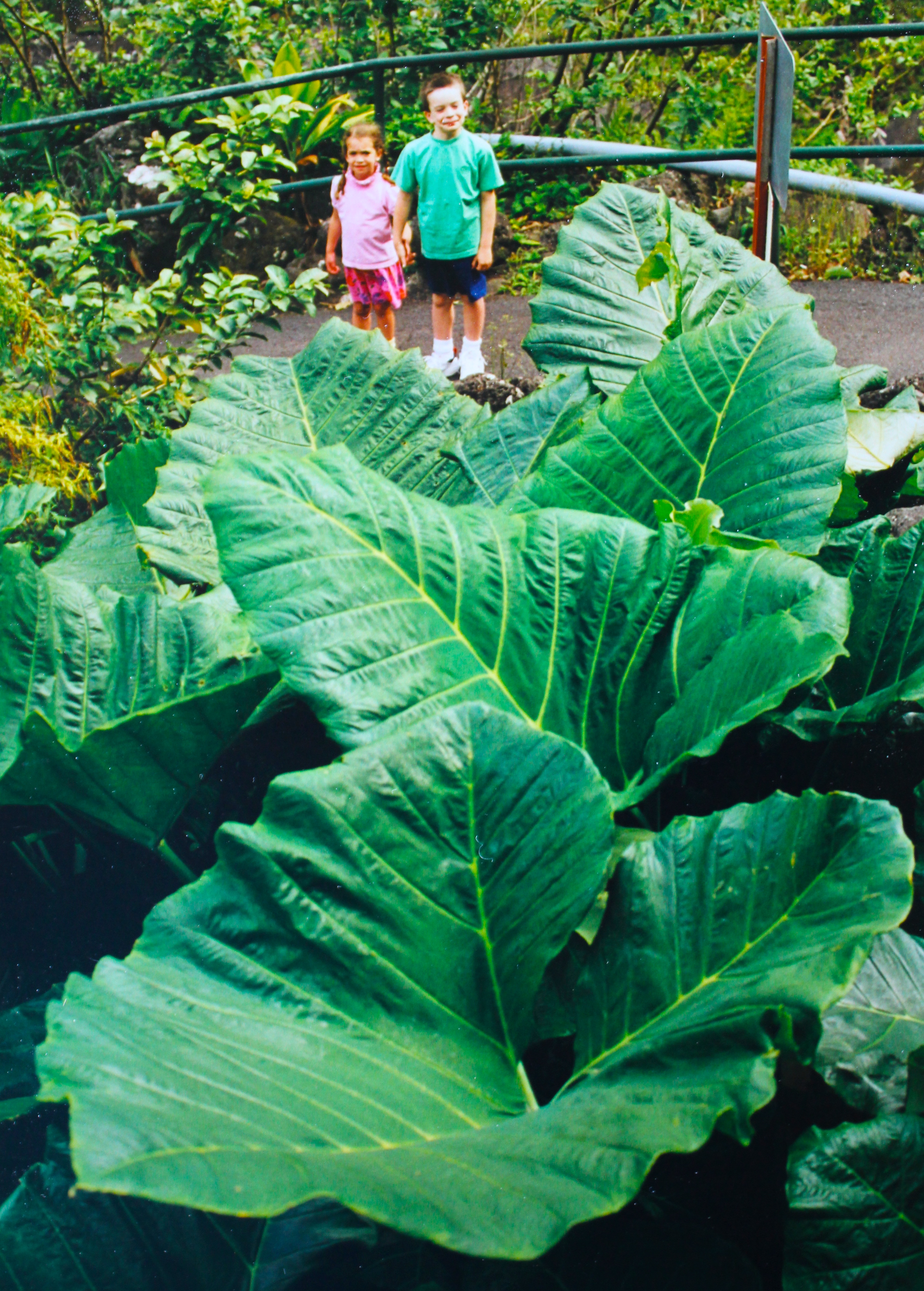
IMG_0785

*****

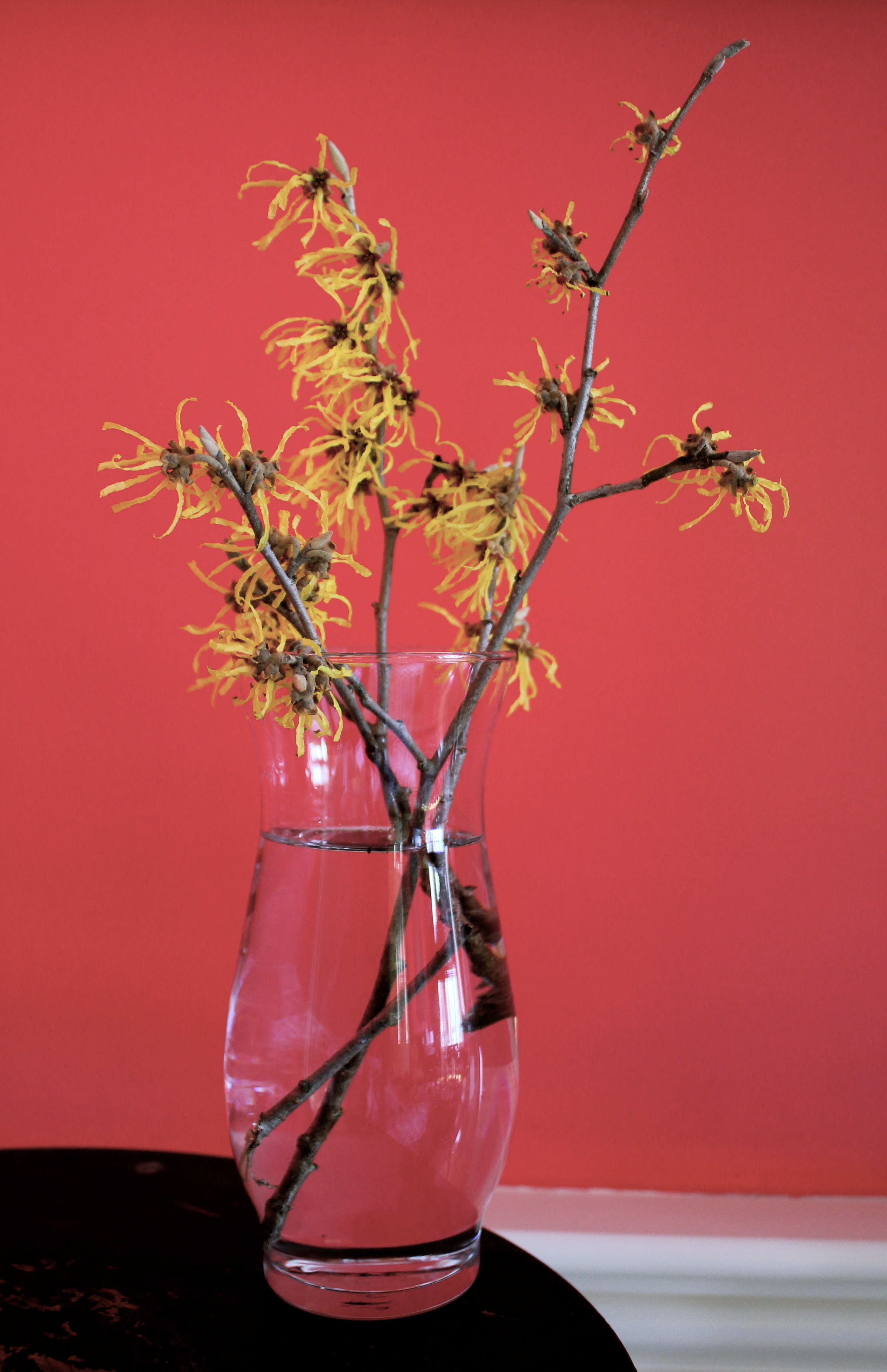
Come May, my Hellebores will be thriving again. I will float them in crystal bowls filled with water.
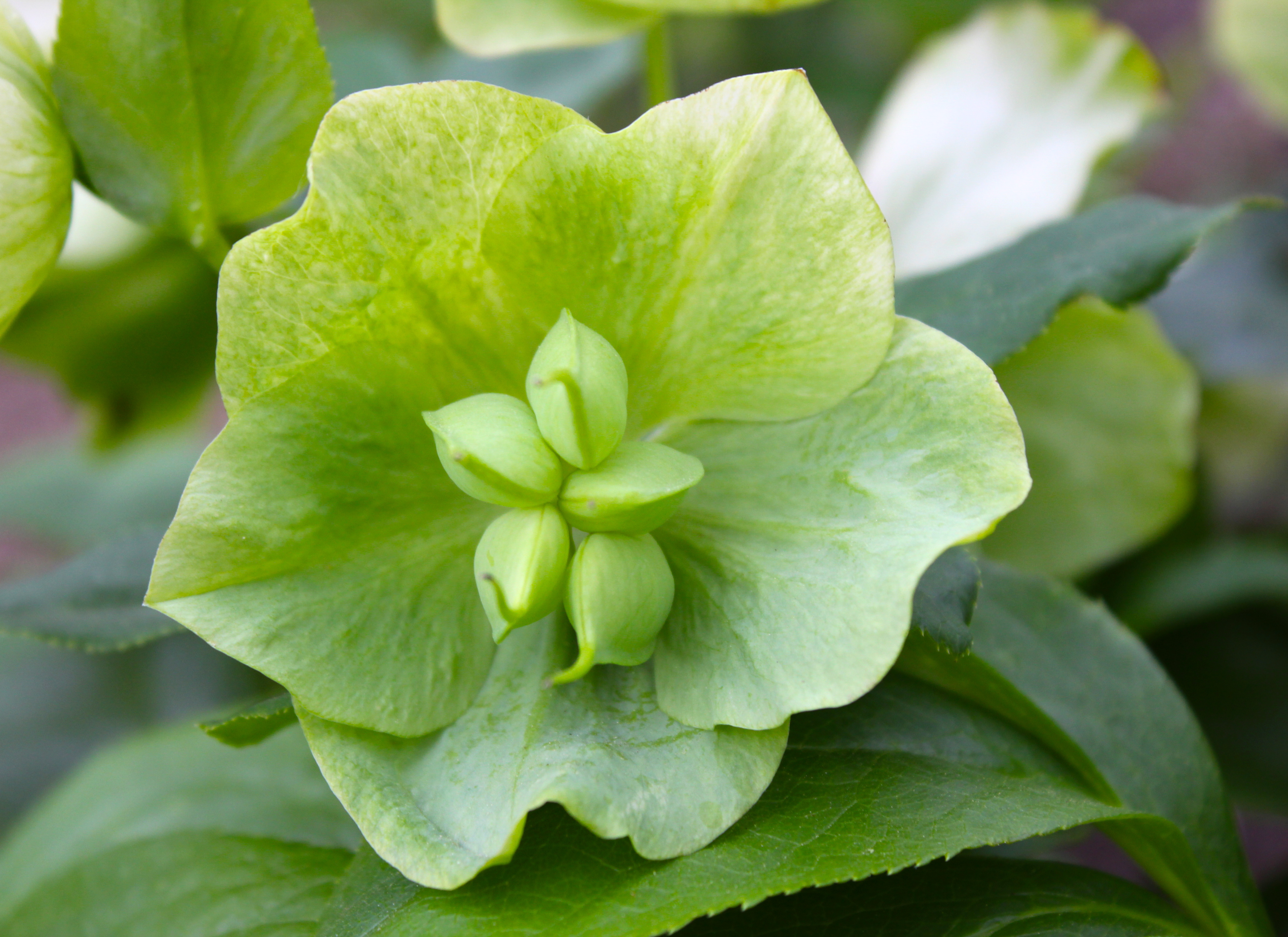
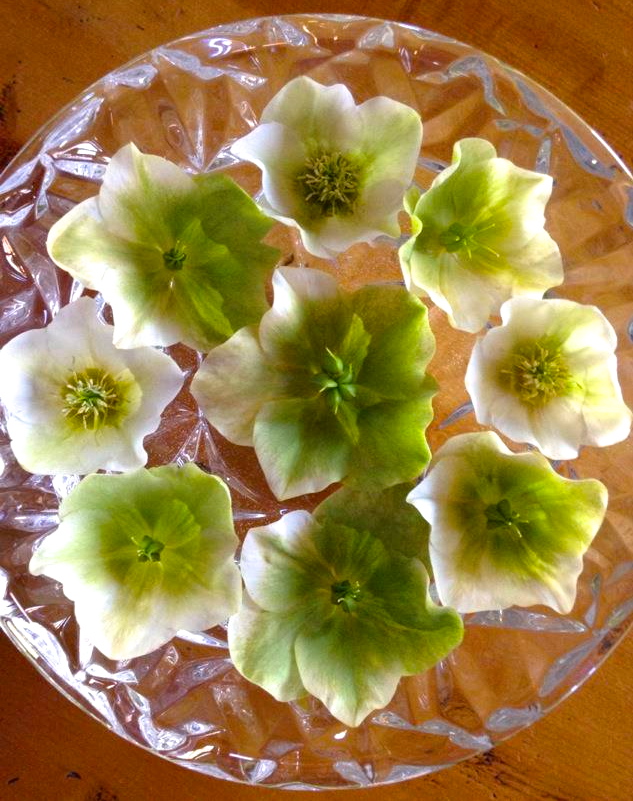
IMG_3054

603862_10151421171296915_1870869754_n

*****

Katharine S. White’s garden writing included recommendations for hand-held, real books. She wrote about The World of the Japanese Garden, from Chinese Origins to Modern Landscape Art, by Loraine Kuck: “This unusual book is my nomination for the most beautiful of the big, expensive garden books…”

She goes on to make a claim about the book’s photographs: “Takeji Iwamiya is Japan’s leading color photographer and his color plates are bright and airy, or cool and dark, and all of them are haunting.”

I bought the book. Seduced by all things Eden–I can’t help it–I have already begun to swipe my tongue across the pages.

I’m going to order Elephant Ear, “Thai Giant”, Colocasia gigantic, too.

I have some seed packages and I hope to get more for Mother’s Day.

My green thumbs are twitching like crazy.

But I’m a garden geek.

No matter how busy I get,

I will always long to remain immersed,

in this poetry of confusion called life.
 

The Witch Hazel’s Spell.

Where is it that we tend our gardens, beneath the heavens or upon the roofs of hell?

And what is the work we do there? Is it the repeated raking away at our own dreams, which grow back, only to be raked away again?

We are not gods. Yet how hopeful we gardeners remain—our tedious work such tranquil therapy for dealing with the experiences in life that can never be made right again.

Something horrible happens. It is permanent. It happens to us or it happens to someone we care about.

And the gardener is called upon to catch silver sparkles from clouds of doom. But she prefers, instead, to visit a flower or observe a honey bee or destroy a rogue weed. These are the things she can control.

Within the terrifying flames of unmanageable heartache, the gardener can be heard crying out loud, making her face ugly, and getting her hands dirty. She is defiant.

She retreats to her garden, because there is always work to do there, or something to look at, or a place to sit. Maybe angels hover—sympathetic to the steady work of creating calm, by growing altars.

*****

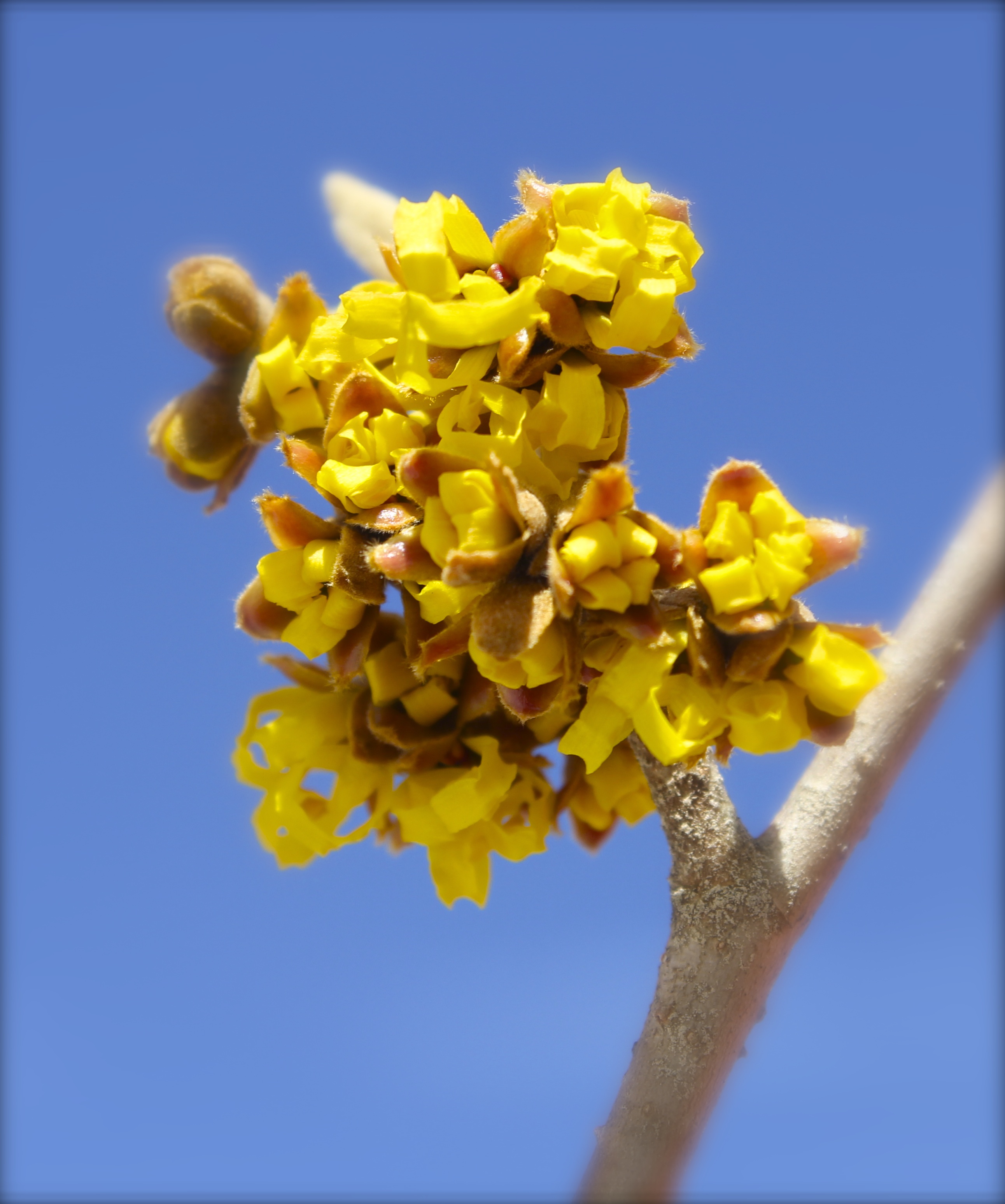
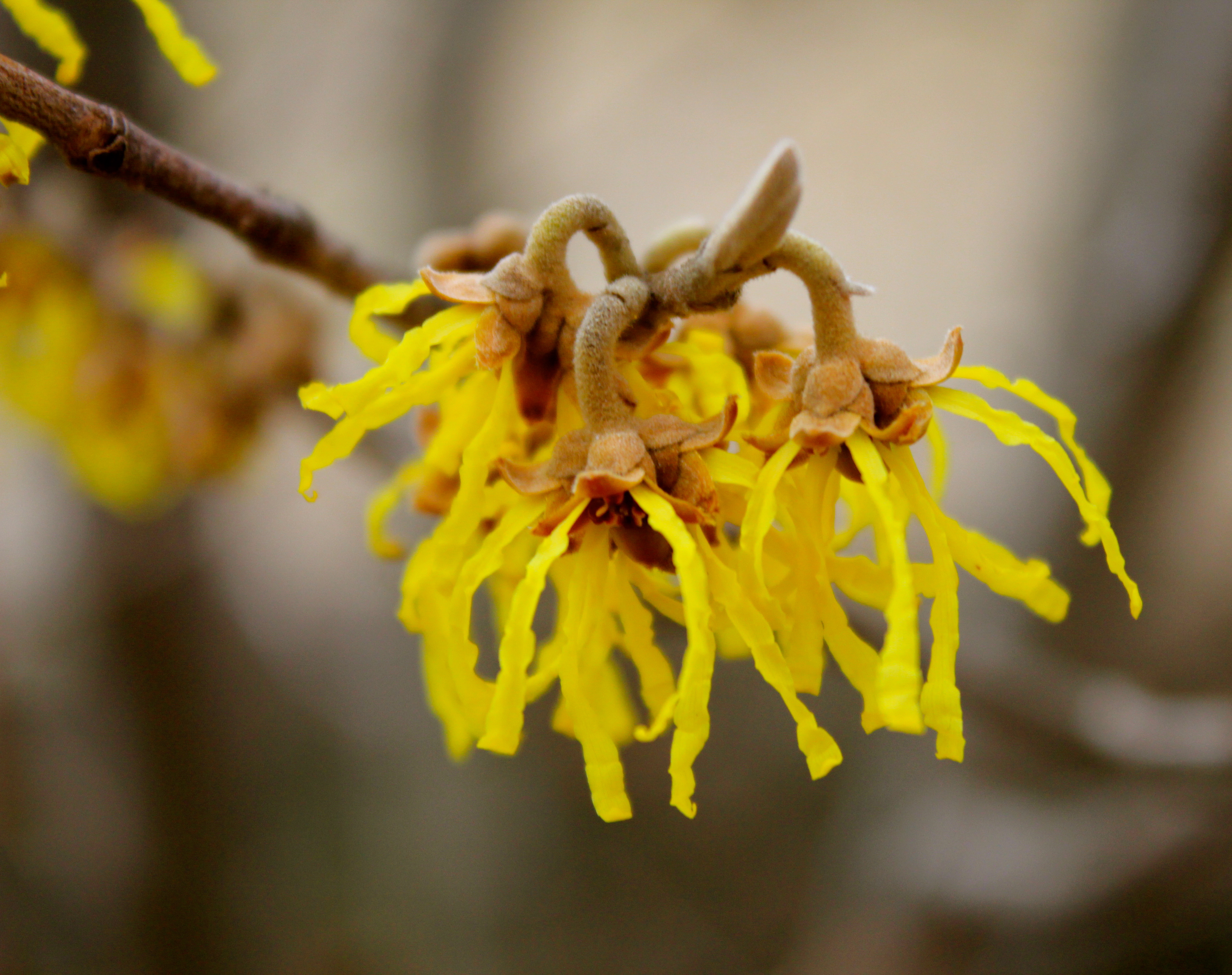
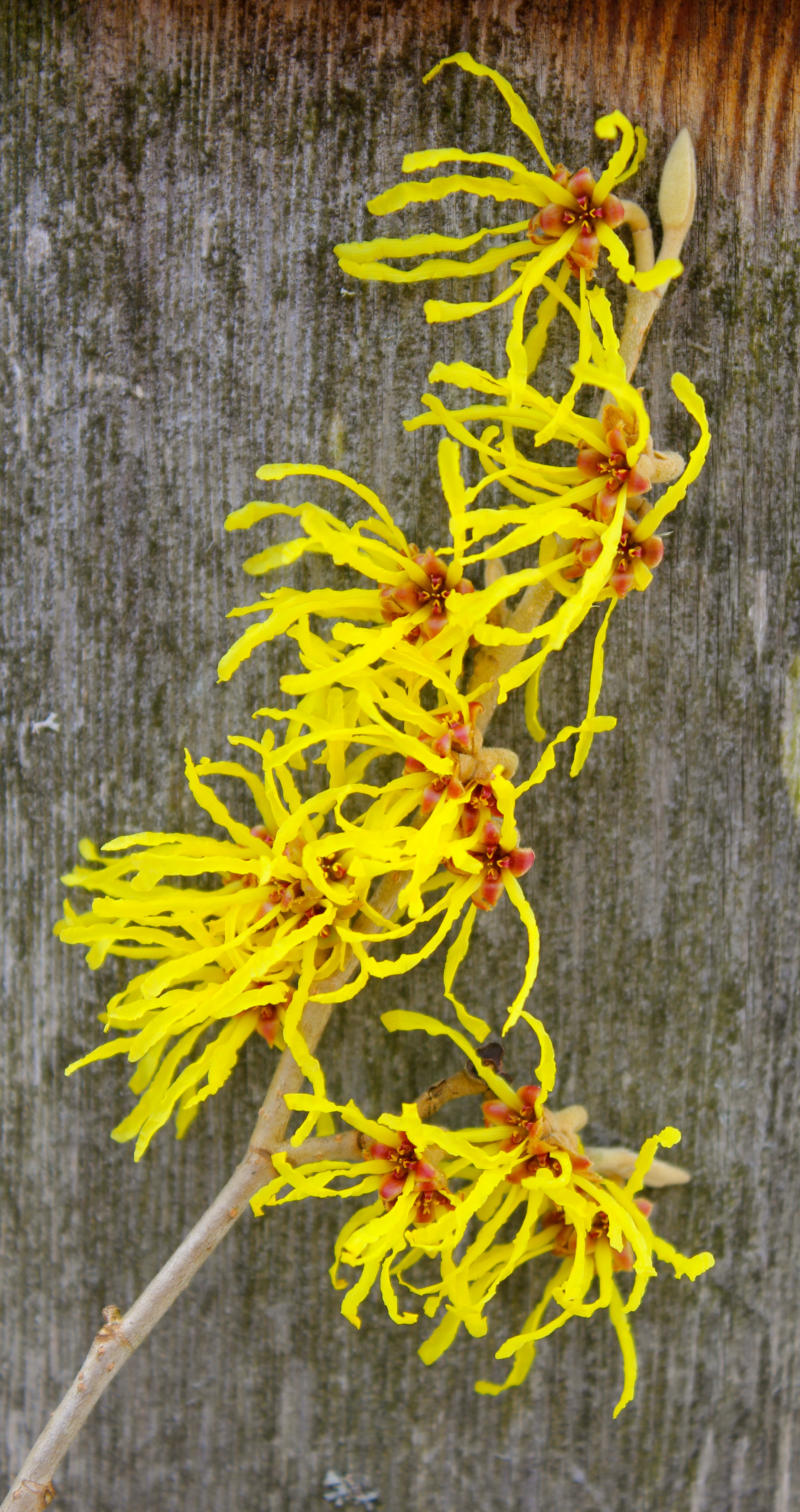
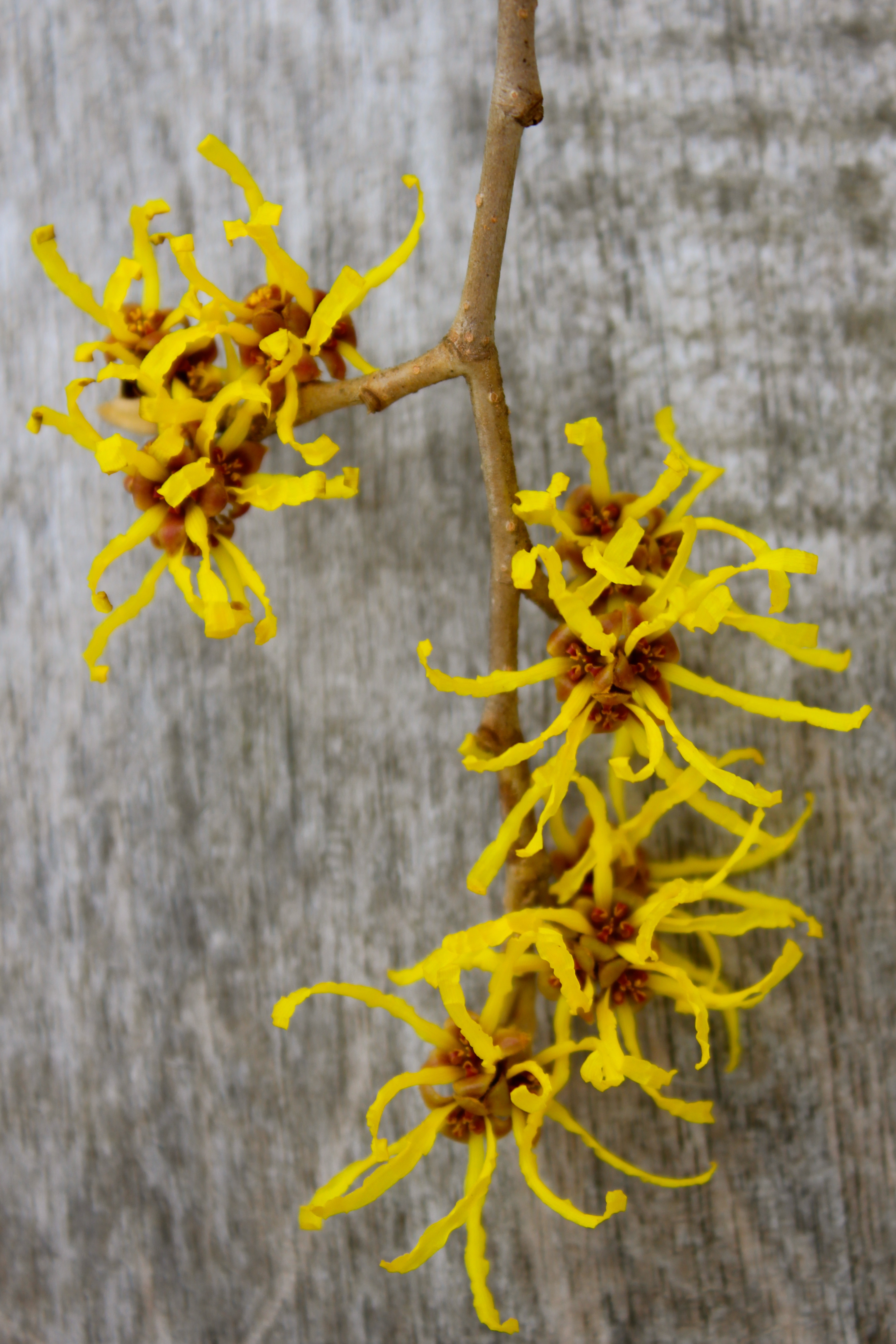
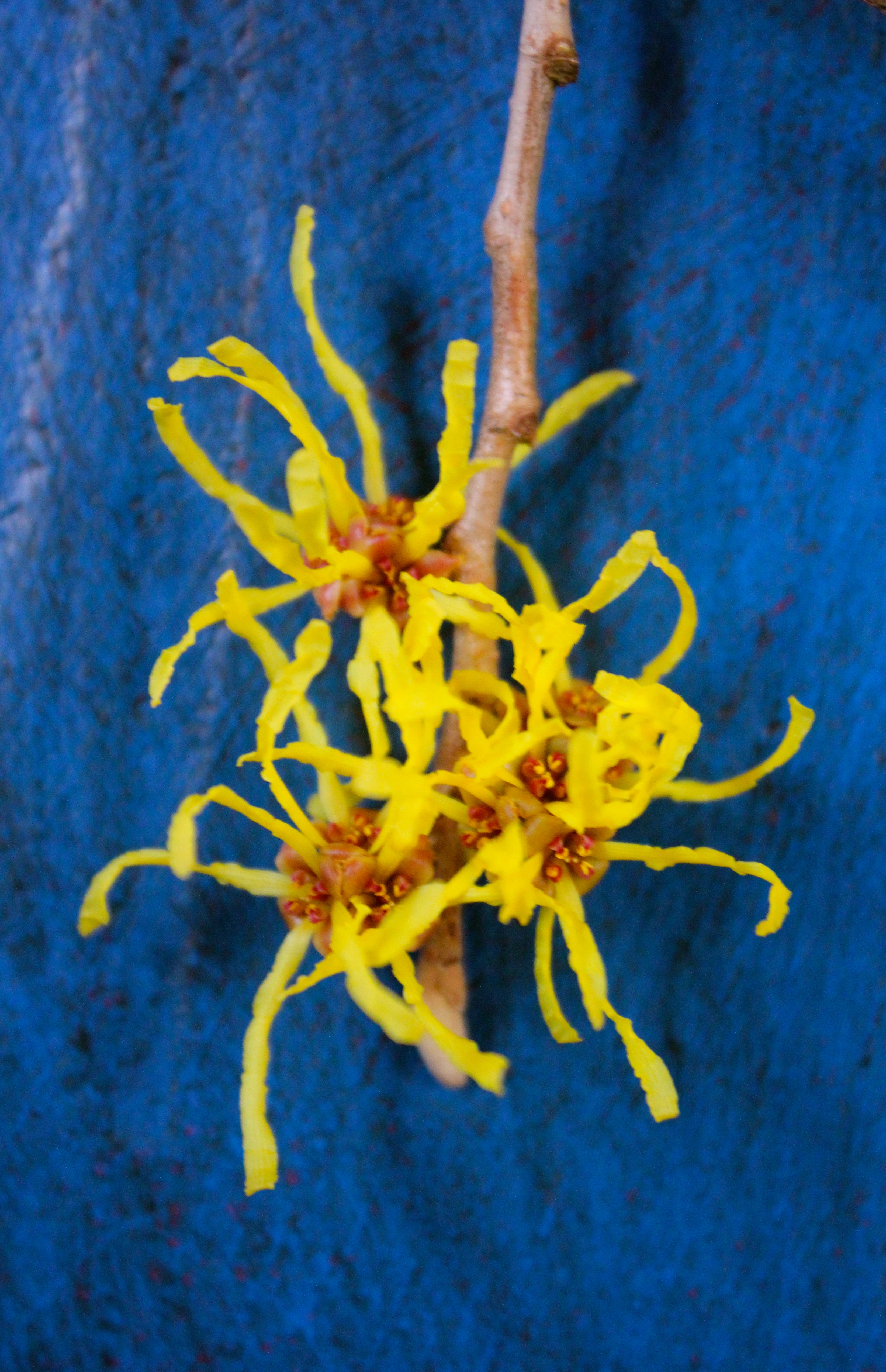
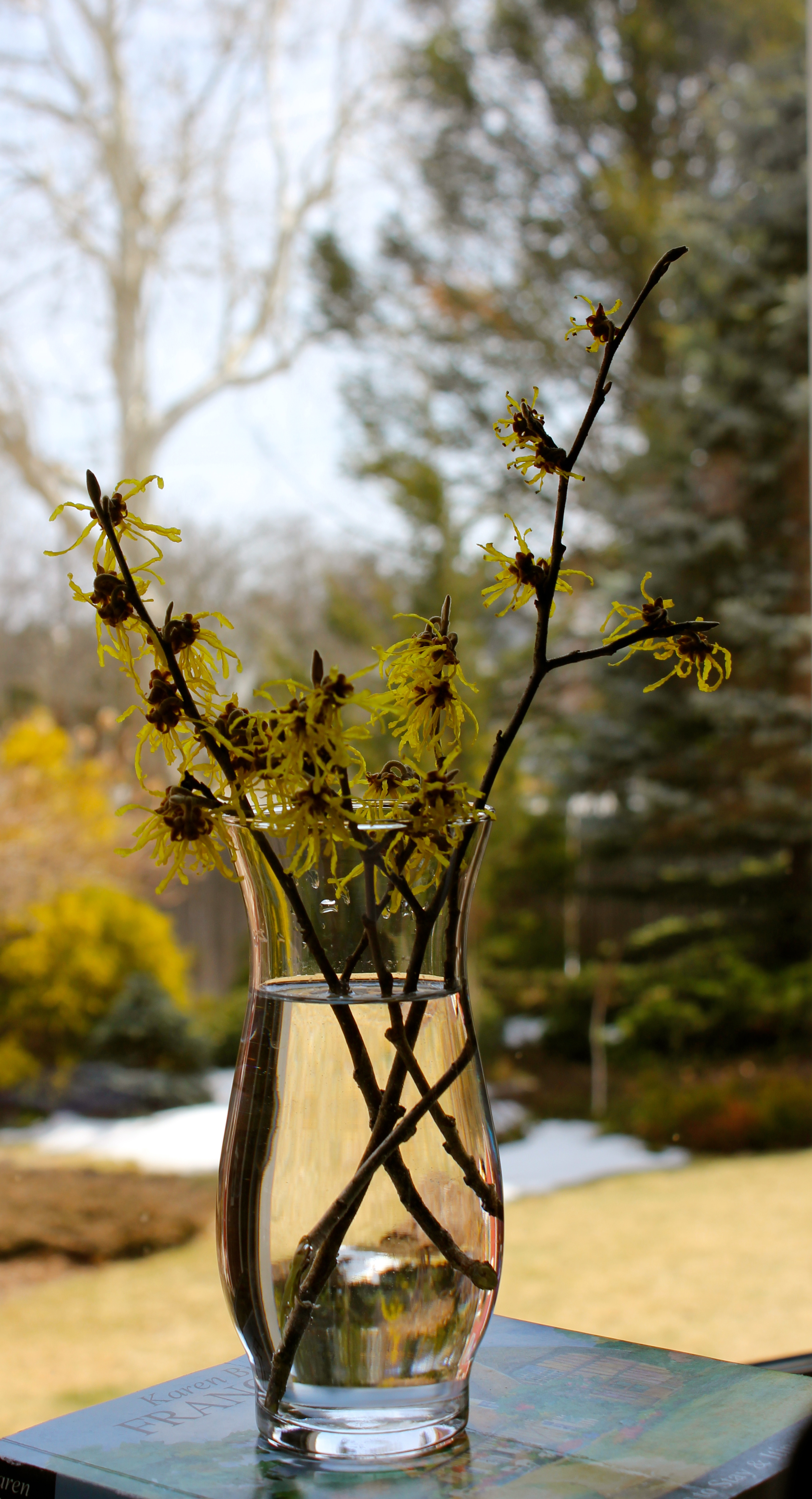
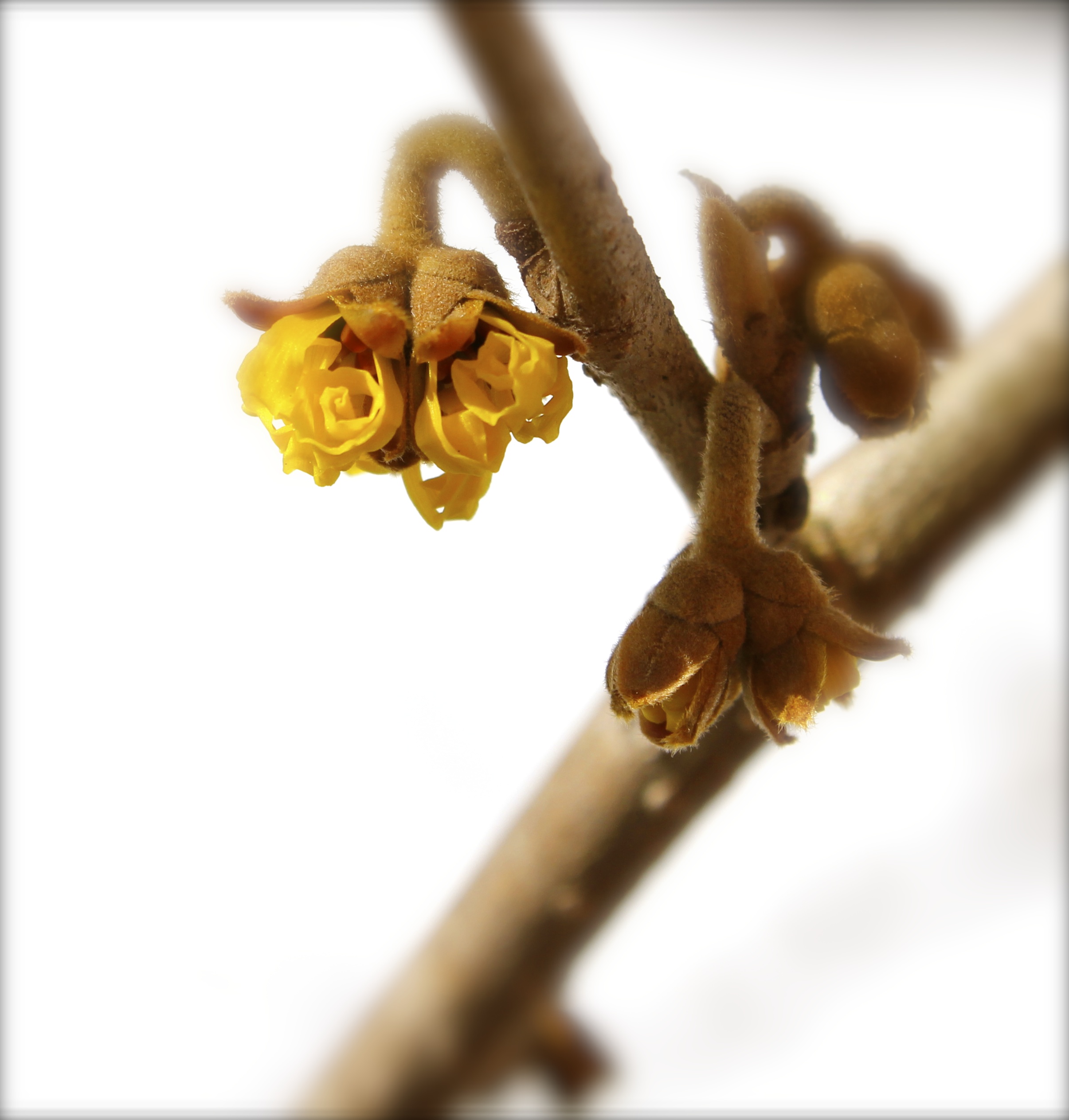
I watched spring come to my garden through the Witch Hazel, Hamamelis.

IMG_0471

IMG_0473

IMG_0472

IMG_0542

IMG_0619

The flowers unfurled over several days. They trembled in the passing breeze, like little hula skirts.

Honey bees showed up.

The bloom became profuse on a day when a friend called with tragic news. It was news of trauma that will never be okay.

After we talked, I went into my garden and gathered Witch Hazel blooms. The plant grows divining rods, dowsing sticks, and its twigs are thought to have the power to heal a broken heart.

IMG_0723

IMG_0726IMG_0728IMG_0729
IMG_0737

I arranged some blooming twigs in a vase. And carried them with me wherever I went.

IMG_0744IMG_0741

*****

What is this garden you have? The passerby says. It is so much work! 

Yes! I say.

Yes!

Yes!

To plant the flower and hope that it grows!

It is so much work!

IMG_0733

An Eccentric Easter Excursion.

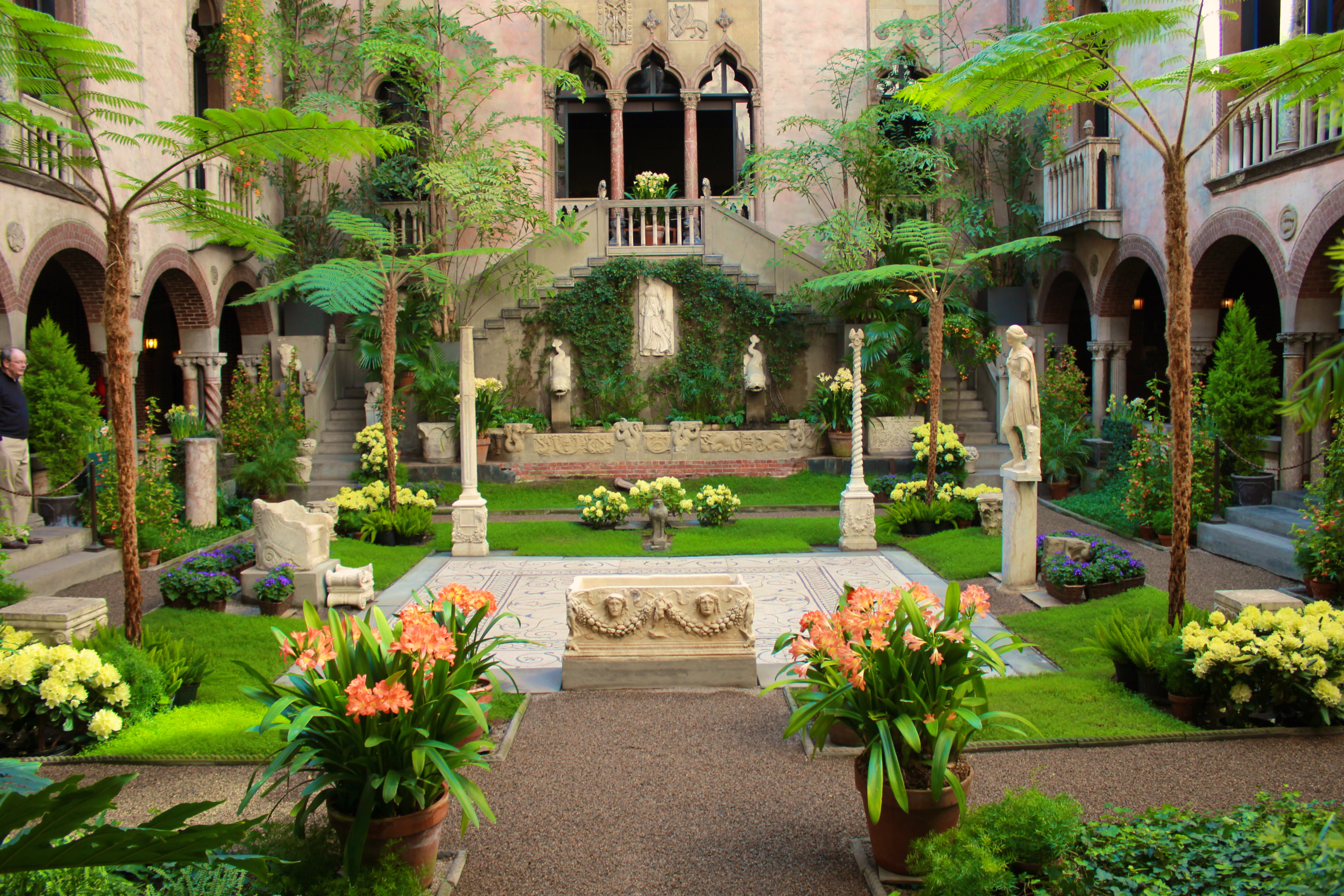
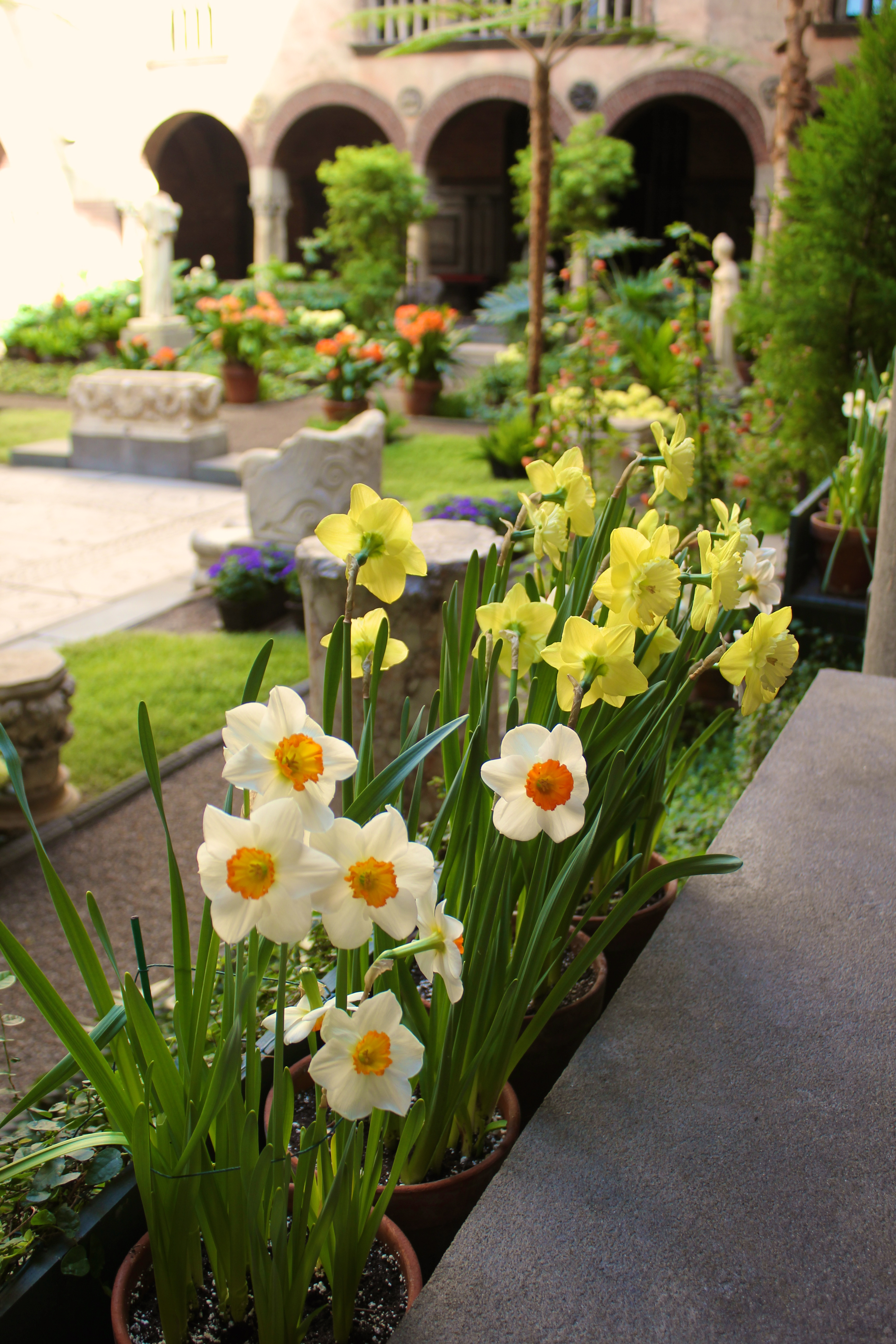
For a brief time in spring, beginning with the week before Easter, a sentimental tradition of floral joy appears at what is now known as the Isabella Stewart Gardner Museum in Boston.

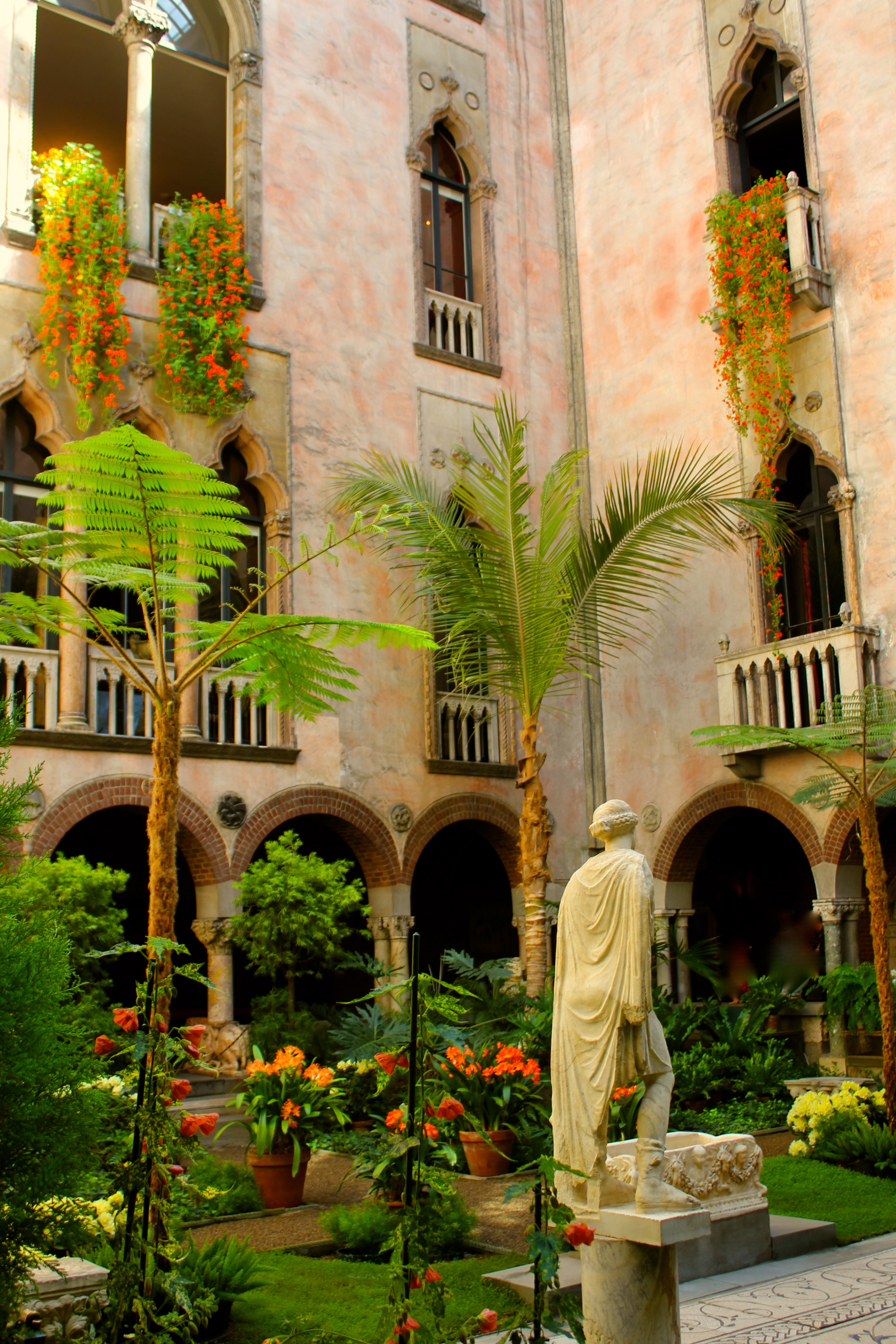
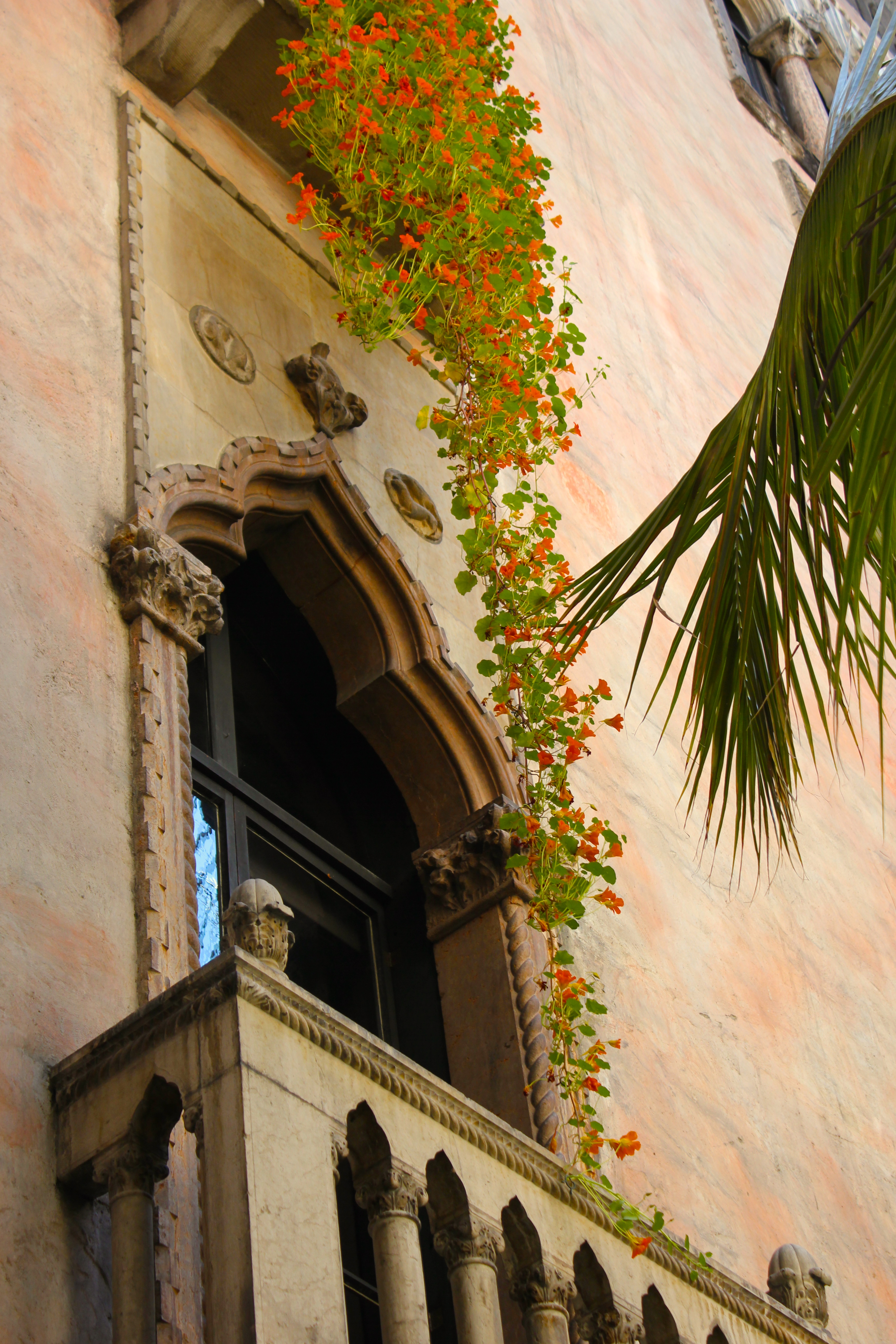
Nasturtium vines spill from third floor balconies, draping the walls of an interior courtyard with jeweled, painterly impressions of summer. The Venetian palace that hosts this happy display, known as Fenway Court when Mrs. Gardner built it in 1903, is a sanctuary for romantics. Gallery after gallery keeps precious the treasures of art that comforted one woman’s grieving soul. The treasures were arranged by that very soul. Think whatever you want to think about them. There are no labels or titles accompanying the art. Decide for yourself if you like it. Or not.

Sitting under archways in cloisters surrounding the courtyard, gentle, percussive patterings of garden fountains are meant to relax the visitor. Yet there is no rest for anyone who likes to grow things. The mind leaps, onto several paths, every one of them bound for another dream garden waiting to be realized. One season, I planted Nasturtiums in flower boxes so that they would cascade from one level of our deck, down to the next level, a la Isabella G. The simple plants, grown from fat seeds, accomplished so much in just a few months!

*****

IMG_0635 IMG_0665IMG_0650IMG_0660

*****

Isabella Stewart Gardner had a reputation—an easy thing for any unconventional woman in Boston to acquire. Gossip girls and boys followed her relentlessly, trying to figure her out and judge her. They still do. She is an intriguing personality.

I have always zeroed in on the defining tragedy of her life—the death of her only son, from pneumonia, when he was not yet two years old. After his death, Mrs. Gardner suffered a miscarriage. For two years, grief, depression, and illness consumed her. In a state of despair, she and her husband retreated for a year to travel the lands of Europe where she was encouraged to pursue her passions for art. Mrs. Gardner returned to America when her husband’s brother, a widower, died. He left three sons. Mr. and Mrs. Gardner adopted their nephews. History speculates that the beloved boys were gay, and that the oldest committed suicide at age 25 when he fell in love with another man who rejected his amorous affection.

Mrs. Gardner, to me, was a woman on a quest to fill the voids in her life. Voids that could never be filled.

She sought solace for relentless heartache.

*****

In the Spanish Cloister gallery on the first floor, a painting by John Singer Sargent, El Jaleo, gives moody homage to the human quest to feel happiness, without reservation or guilt. The painting depicts the experience of escaping into the music, dance, and dress of idealized Gypsy freedoms. The year it was painted, 1882, was a time when Gypsies were scorned by polite society because polite society judged the nomadic, exotic culture as one that believed in false magic and superstitions. Polite society honored magic and superstition only if it was wrapped up in the confines of organized religion—and called such things by other names: miracles, prayers, devotionals, sacraments.

From El Jaleo, Mrs. Gardner leads us into deeply intimate and personal journeys. Religious art abounds. The quest for faith, the search for happiness, and the desire for immortality are human struggles we are never sure of. The soul never stops seeking communion with the spirit of a true, supreme being.

*****

Since it is Easter season, I take interest in the Stations of the Cross, carved into stone, displayed near the tranquil courtyard.

I want the story of the resurrection to be true.

I want to be reunited with all the loved ones I’ve lost.

I seek a triumphant end to all the suffering my fellow human beings have endured.

I like Mrs. Gardner. She left all the doors, to all the rooms of her own, open. Her rooms are churches, sanctuaries, galleries, studios, dance halls, performance halls, dinner halls, salons, and quiet study halls.

She is the high priestess of the collection and she wants to share how art saved her.

She inscribed, upon a plaque for the museum: “C’est mon plaisir.”

It is my pleasure.

She wants art to save us, too.

*****

I walk upstairs from the courtyard and enter the Raphael Room. There, a little painting facing a chair and a desk, near a window, perpendicular to the room, captivates me. The painting is delicate in size. It is Raphael’s bittersweet Pieta. And, I have breezed past it on every other visit to the museum.

Mary and Saint John cradle the body of her dead son, Jesus, as Joseph of Arimathea and Nicodemus, who removed him from the cross, are present, prepared to assist in his final burial. Mary Magdalene kneels and kisses the feet of the adored Jesus.

Next to the painting, on the desk, is a vase holding stems of dried Teasel. The Teasel’s sharp points evoke the Crown of Thorns used to humiliate Jesus.

I think of how Mrs. Gardner must have chosen to sit, in the little chair near the window with this painting, during intense experiences of mourning. The painting might have soothed her into hoping for an afterlife. On other days, perhaps the painting assuaged her own despair, as she transferred some of her pain to Mary, another woman bearing the unfathomable pain of losing a beloved child.

Unknown-17

*****

From the Raphael Room, I walked into the Tapestry Room and stood in the darkened, atmospheric space near a painting of the Assumption of Mary and a horrid sculpture of painted lindenwold representing the head of Christ, crucified. The backlit greens and oranges of Nasturtium flowers and their circular leaves, hung past an open balcony, like a veil I wished to wrap all around me. I live in a modern world, where the savage torture of human beings continues. My shoulders slumped at the thought of a contemporary Christ, how his crucifixion would be broadcast through social media.

I left the Tapestry Room and walked through the elevator passage, stopping to admire the Asian art within it, and ascended the stairs to the third floor. One of my favorite rooms, the dark and sexy, leathery and lacy, Veronese Room led to the Titian Room where you can study the simple set up for the bountiful Nasturtiums. Pots with carefully-tended, planted vines are elevated on overturned pots and arranged in rows of three on wooden benches. Light streams into this room.

I have reached a pinnacle.

This is the gallery featuring Titian’s grand Europa. The painting is powerful and I engage in a spiritual conversation with Mrs. Gardner about her placement of the painting, in line with another small desk and chair, near a window, with a vase of fresh flowers, with another painting on the desk, Christ Carrying the Cross. I sit in the chair (in my mind), and consider the line up.

Human passion, ecstasy, seduction, loss, transformation, control, surrender, cruelty, deliverance, redemption, tragedy, triumph. Resurrection. Peace.

Where—and to whom—or to what—do we commend our spirit?

How do we fill the voids?

I am sure Mrs. Gardner sat here, numb, many hours. Never coming away with any answers.

Grateful for art.

What is more true than art?

*****

My impromptu Easter excursion continued as I stepped from the Titian Room into the Long Gallery. This is a fun part of the museum where cases filled with memorabilia are covered with cloths that can be lifted for personal exploration. There is a case with James McNeill Whistler’s walking stick, also known as his wand, which he gave to Mrs. Gardner in 1886. Underneath the walking stick is a letter he wrote to her, including wonderfully incorrect spelling and punctuation:

“The masterpiece should appear as the flower to the painter—perfect in it’s bud as in it’s bloom. With no reason to explain it’s presence—no mission to fulfil—a joy to the artist—a delusion to the philanthropist—a puzzle to the botanist—an accident of sentiment and alliteration to the literary man.”

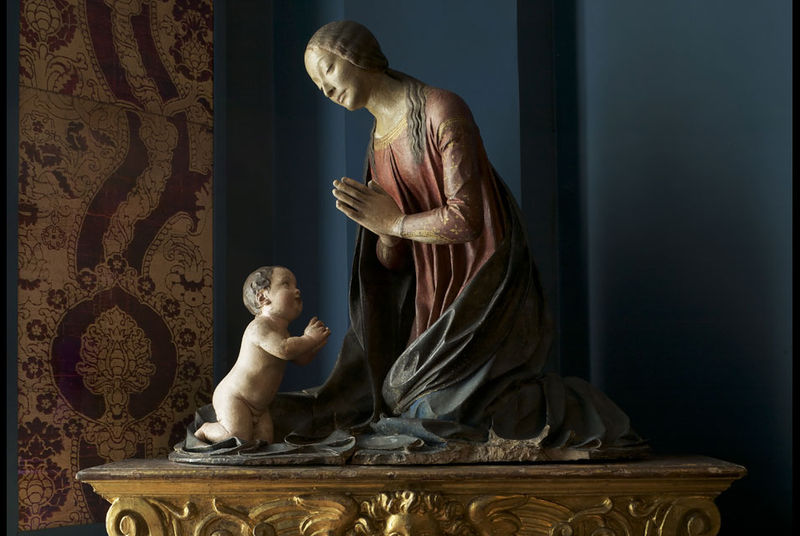
At one end of the Long Gallery there is a charming terra-cotta sculpture, Virgin Adoring Child. But I think it looks more like Mary teaching her little son Jesus how to pray.

50187706The other end of the Long Gallery is anchored by Mrs. Gardner’s personal chapel with French Gothic stained glass, carved saints, Italian choir stalls from the 16th century, and a prayer desk I wish I owned. There are two places to kneel here, facing the stained glass, and after walking all through the museum, this becomes a perfect respite. Kneeling, there is time to tip the eyes up and all around, admiring all of Mrs. Gardner’s spiritual nook. The stained glass transported me to Sainte Chapelle in Paris, the most beautiful and magical cathedral, built to house the Passion Relics, especially the Crown of Thorns.

*****

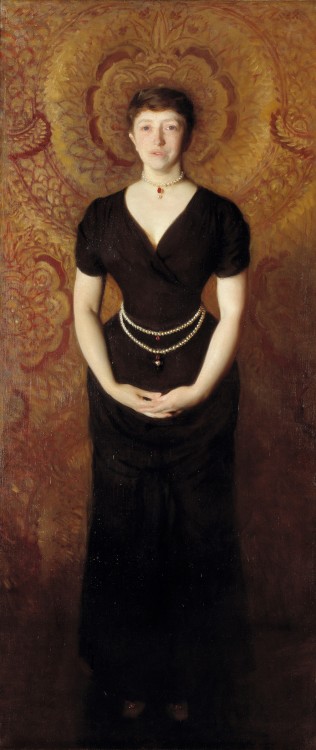
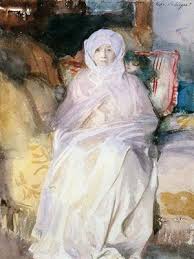
Before leaving the Gardner Museum, I stop into the MacKnight Room, a most intimate room of Mrs. Gardner’s own. There’s a bottle of collected sand from a trip to see the pyramids in Egypt. And, there is a reproduction of a watercolor, Mrs. Gardner in White, painted by her friend John Singer Sargent after she suffered a stroke. The iconic, scandalous portrait of a more youthful Isabella Stewart Gardner that hangs in the Gothic Room—the one that caused a great deal of vicious gossip in Boston— 1371 (and was never again exhibited until after her death), gives way to an intensely personal portrait of a woman who seems to have arrived at a state of peaceful acceptance with her own life. Unknown-18

*****

In the end, Mrs. Gardner was not ashamed of how she had lived, nor how she looked. Art sustained her and helped her recapture a dramatic zest for life. She wraps herself up in a white shroud and sits for a final portrait.

She was buried between her husband and her son at Mount Auburn Cemetery in Cambridge.

Because it is Easter, I prefer to believe she is with her husband and all of her lost children, including her nephews, in a paradise where there is no suffering,

in a kingdom without end.

*****

Gypsy Picnic. Gypsy Zing Sauce.

I have a new favorite salon and it’s in the drab and under-appreciated city of Worcester, Massachusetts. I’ve never been a spa or salon girl—in fact, if I could cut and color my own hair, as nicely as I cut the lawn and color the garden with flowers, I would do it.

Drab hip is what’s cool about Worcester—there’s a fragmented grunginess about the city that leaves itself alone. Not much legacy or nouveau riche, dreadfully fine* money polishes its urban edges. Go in search of somewhere to hang out, and you’ll feel yourself pulled into a pause. Disoriented, you could be right, you could be wrong about where you’re standing. Something creeps underneath the radar, maybe. There are no crowds to follow and no painted lines to a tourist kiosk. No costumed, smiling docents. The art museum is superb. The array of educational institutions is world class. There are great places to eat and drink. And there are businesses, like Barney’s Bike Shop, with an excellent link on their website about where to hit the road, or the trail, with a bike.

*Dreadfully Fine: I learned this from my son and his friends in college—it means you are depressed due to the fact that everything about your life is so dreadfully fine.

The beauty salon I found in Worcester is Tu Moda Spa and Salon on Pleasant Street. Their decor is American slash European-Hill-Town slash Almost-Chic, and the music piped in, at least during my last several visits, has been tres hip. (Important.)

The European thing lured me to this salon when I went looking for a place to take my daughter for her birthday. She is a spa girl. She is also a lucky charm and I ended up finding a hairstylist at Tu Moda I like a lot. My new hairstylist is tres tres tres tres tres hip. Five-star hip.

First of all, she loves Acadia National Park. So do I. She loves it through and through. She loves how she can go there with a group of friends, and there’s something for everyone. She loves how it’s hidden, but not really, in New England.

She loves to cook. Me too.

She loves to bake, but thinks it’s more challenging than cooking. Same.

She traveled to visit family, as a child, into the summertime countrysides near Amsterdam. The beauty formed within her while spending time with her family, (for she talks of it with joy), has not faded.

Today, when I sat in my hairstylist’s chair, I told her about the recipes I cut out of the Boston Globe and the New York Times. We gushed on and on about radishes fresh from the farm in summertime. There was a recipe in the paper for Butter-Stewed Radishes. I told her I think everyone should get a hard-copy of the newspaper, at least on the days featuring Food. You can tear out the recipes, and keep them. After reading through the newspaper food sections, first thing in the morning, right off the bat you’re ready to saddle up the horse and ride to a farmer’s market.

My hairstylist loves music festivals and following favorite bands.

She loves her dog. I don’t know her dog, but if I did, I am sure I would love her dog, too.

She likes to wander around Worcester and find great bakeries, great places to drink coffee, great bars to share beers with friends.

She tells me about unknown bakeries and funky shops and where to eat the best brunch.

She loves gardens and is helping her friend make a garden at her friend’s new house in Providence. I told her about the Beacon Hill Garden Tour. I said she and her friend should go on the tour together to find ideas for small, delicious, dreamy, urban gardens. She said spending money to go to Boston for a day with a friend to look at gardens, would be worth every penny.

She was an artist in high school, applied to art schools, was accepted, but couldn’t afford to attend any of them. So, she became a hairstylist, because it was something else she thought she would enjoy doing.

She is a cheerful artist who is a hairstylist—perhaps it’s a little bit like being a happy poet who is a therapist. But way more fun.

She lives with, and takes care of, her father. He had a stroke a few years ago.

She told me her father had always admired Bob Dylan, so she took him to a concert several years ago. Elvis Costello was the opening act. Dylan was horrible, she said, and she felt awful for her father. I told her we went to the same show and thought, thank goodness for Elvis Costello, because Dylan was lost in a caricature of his many selves, all of them muddied into one unappealing performance. We both said it can’t be easy to be an artist who is expected to perform, and live up to, great expectations.

I especially like when my hairstylist tells me gentle stories about her father. He used to enjoy cooking. So, she will ask him what he might want for dinners, they will talk about recipes, and then she will assemble the ingredients and orchestrate the process–making sure to allow him to cook as much as he can.

I tell her how much my husband loves to cook and how he will artfully arrange the food just so, taking his time to arrange perfect sprays of fresh herbs, perfect brush strokes of secret sauces, and perfect garnishes of fruit, flowers, or veggies. She says her father wants to do all of that, too. She said he used to work in the garden so she recently bought him small, terrarium gardens to tend, after she found them at an eclectic and strange shop in Worcester called Seed to Stem.

She told me I would probably like Seed to Stem.

I told her my husband’s father loved to cook, too, but he suffered a massive stroke almost three years ago and didn’t survive. He liked to garden, too, and used to grow pleasing varieties of tomatoes for all of his children, from seed, in a unique set-up of lights and growing trays down in his basement. I looked forward to his special deliveries every spring, and his concentrated instructions for transferring the plants into the Earth. After I situated the tomato plants into the garden, my father-in-law never ceased to check in on how they were doing. I made sure to give him frequent updates on the details of our flavorful excursions through the ripe skins of those precious tomatoes.

*****

Today, my appointment was early, so my hairstylist asked if I had any plans for the rest of the day. I said that after reading all the foodie pages in the newspaper, I wanted to design a picnic because my husband and I were going to Vermont to ski and I wanted to pack something new for our lunch.

So far this season, I told her, I’d made homemade chicken salad sandwiches and outrageous homemade meatloaf sandwiches for our ski trip lunch picnics. The meatloaf was an experiment using leftover beef, veal, and pork after my husband made bolognese.

I said I planned to stop at BirchTree Bread, (drab hip warehouse space), over in the Blackstone Canal District to have a cup of soup and check out the breads. The chef there is no hobbyist. He’s focused on food. The morning’s newspaper had included some press about his hideout in Worcester.

Then I hoped to stop at Trader Joe’s.

But now, I said to my hairstylist, I would add her recommended detour to the funky shop—Seed to Stem.

*****

When I got to BirchTree Bread, I tried a killer cup of celery root soup. Great music played on the sound system. (Important.) I slurped the soup surrounded by gray-toned scales of urban decay, blending old warehouse and mill buildings into a sturdy mid-day wash of melting snow, mud, and wet fog. The restaurant space is vast. Computers glowed. One little boy, wearing a bright yellow slicker, laughed. A man conducted business on his phone. People socialized. I was alone, anonymous, content. The pace of my breath slowed to imaginative thoughts. Efforts to preserve history loitered on city streets so deserted, I could make a U-turn on them, in a tandem-tractor trailer, in one fell swooping turn.

God bless BirchTree Bread for bringing some faith to the city. I bought a fresh loaf of their rosemary ciabatta and commenced hunting for the rest of a designer picnic lunch.

Next, I stopped at Seed to Stem. Good music playing! My hairstylist didn’t divulge details about the shop, so when I arrived, surprises were well appreciated. I took some pictures of things that were not for sale.

20150326_124822

20150326_124738

20150326_130033-1

I found something that was for sale, about another city I like a lot:

IMG_0537

At Trader Joe’s, I bought flowers. (Best flowers, best prices, best displays.)

I bought Trader Joe’s thick slices of cooked and salted turkey.

I bought Italian dry salami and pepper jack cheese.

Ideas for sandwich designs began rising and falling in my mind.

For the picnic side dish, I selected a bag of sweet-potato snack chips.

And for dessert, I bought Trader Joe’s dark-chocolate peanut butter cups.

I drove home, unloaded the groceries, and rummaged through the fridge for sandwich start-ups and add-ons.

There was a half can of tomato paste calling out to be rescued.

*****

Final design:

GYPSY SKI PICNIC ZINGWICH

Trader Joe’s cooked, sliced turkey.

Italian dry salami.

Pepper jack cheese.

Lettuce. Tomato.

Fresh cilantro.

Gypsy Zing Sauce.

BirchTree rosemary ciabatta bread.

(Sweet bread and butter pickles—optional.)

Gypsy Zing Sauce: 1/4 c. mayonnaise—3 or so tablespoons of tomato paste—a teaspoon and a dash more of Worcestershire sauce (Worcester!)—half a lemon squeezed out (probably about a tablespoon)—sea salt—coarse ground pepper.

The sandwich contains multitudinous flavors of drab hip, gypsy grit—with zing.

Bon appétit, picnic lovers!

The Ruffed Grouse.

On a sunny, bitterly cold day in Vermont, the snowpack depths grew deeper as springtime approached. It flowed in soft routes around and over tree trunks, boulders, streams, farm fields and well-worn hillsides.

Beautiful as ever, it was, to all of us.

Our daughter had come home from college for spring break and we had decided to spend the time together, retreating into winter’s encore and greeting spring from the tops of Vermont’s ski mountains.

*****

IMG_0462

The daylight flashed sparks of winter’s last light, beckoning us to come walking in the woods, just before sunset on our first day in Vermont. We packed up some appetizers with cold beers and traveled only a couple of miles deep into the forest where we made a campfire and sat, feeling how cold it still was and how glorious a campfire will always be. We had arrived, again, to a second-to-last day of winter. Over the years, the last days of winter had taken us to the world’s most beautiful snowcapped mountaintops. I arrive at those summits, ancient. Yet in all my lifetimes, never have I, nor never shall I, conquer the mountaintop. I am destroyed by the sublime magnificence of being there, every time. My tears barely drop, before the high-alpine air changes them into snowflakes that take flight. I follow them. Some I catch. Some disappear forever.

One of those timeless snowflakes flew from the top of Rendezvous Bowl in Jackson Hole, Wyoming where so many years ago, my daughter and I skied through deep powder snow that buried her strong little body. She had to go potty, now, and the potty was all the way at the bottom of the mountain, 4,000 vertical feel away. “I can wait till I ski down the mountain, Mommy,” she said. I followed her rainbow-shining trail of snowflakes, and have continued to do so, through the stratosphere of times gone by, and into the triumphs, trials, and tribulations of our lives together, today.

A mother slips into such memories, whenever she is spending time with her children.

Our campfire blazed heat, but the sun was setting fast with no moonlight to guide our way out. It was time to break our spare snow camp, and leave the forest. We walked until the trees, blackened, weaved paths to the stars through teal-flavored blues, glowing beyond.

IMG_0431

IMG_0427

Turning from the sunset, there was Jupiter, though we weren’t sure what we saw. It was a dazzling light acting like the most gigantic snowflake that ever hesitated to fall from the sky. We were lucky. Our feet left the ground at the sight of it and we soared, tumbling and gliding through the final hurrahs of the day.

IMG_0435

*****

Every season has its last call. When I sense it’s coming, it makes me anxious. I never get enough and will wave my arms at the heavens, shouting out to, and pleading with, the Great Bartender in the Sky:

One more round!

Winter’s sun moves, the light comes up, and I am at last kicked out of one season and left to go in search of the next.

I nurse the long goodbyes, the indulgent farewells. Like time spent with our dearly beloveds, time within New England’s seasons is a joyful, focused existence for anyone fortunate enough to live a long life traveling through spring to summer to fall to winter.

Nowadays, I awaken to the sun bouncing along the eastern horizon like a white ball pointing out lyrics to a song. Bird song, frog song, flower song. It has been moving from the right to the left, every day, making leaps one-whole-sun-circle width wide. I can’t stop it. Spring is here.

The signs are everywhere.

*****

Of course, one sign of spring is the annoying chirp of grouchy New Englanders. They are sick of snow, ice, cold and dark days. I’m not from New England. But I’ve lived here for a long time, almost forty years. When I first moved to New England, from the sunny southwestern Mexican/American borderlands of Arizona, I noticed that the natives weren’t the friendliest pickles in the barrel. I gave them the benefit of the doubt. Maybe they are just unhappy about the weather.

There was a pond on the campus of my university where I went on winter mornings with a pair of ice skates. I went there to feel happy. As alone as a seed cast by wintry winds to nowhere, I skated around my own private au natural ice rink. Next, I thought it would be fun to learn how to ski.

Winter was a long season—as long as all the rest, but colder and darker. It was too long of a season to give over to feelings of dissatisfaction. Furthermore, I made an acute observation about winter in the modern world—we have the technology to be outside in wintertime all day long. High-tech gear suits us up like bold adventurers traveling into outer space—and protects us while we cavort and gavotte—down mountains, through woodlands, and over icy lakes and ponds.

There is a poem by William Carlos Williams. Danse Russe. After I found the poem, I often thought of it while twirling around New England in search of people who knew how to enjoy wintertime. One year, I won the spring skiing  mogul competition on Outer Limits at Killington. I was a novice skier and a woman, competing against guys. We revisited those old playground ski trails on the first day of spring with my daughter. I asked my husband to tell it to me straight—had I won the mogul competition because I was the best skier or was it because I skied topless like the guys?

*****

Danse Russe

If I when my wife is sleeping
and the baby and Kathleen
are sleeping
and the sun is a flame-white disc
in silken mists
above shining trees,—
if I in my north room
dance naked, grotesquely
before my mirror
waving my shirt round my head
and singing softly to myself:
“I am lonely, lonely.
I was born to be lonely,
I am best so!”
If I admire my arms, my face,
my shoulders, flanks, buttocks
against the yellow drawn shades,—

Who shall say I am not
the happy genius of my household?

*****

Or had I won the competition, as a happy, lonely genius, in my dreams?

I am only kidding about skiing topless. And I’ve never entered any skiing competitions.

But our family does have a tradition for engaging in friendly forms of competition when we are out and about outside. We hand out Rusticator of the Day awards to anyone who earns them. The awards are named after the Rusticators of Acadia National Park, who seized the great outdoors while wearing suits and ties and petticoats.

Our competitions are wide open and there aren’t any rules. You never know if you will earn a Rusticator of the Day Award. It is merely an atta boy or atta girl bestowed upon anyone who carpe diems the rest of us when we least expect it.

My daughter is a great competitor for Rusticator of the Day awards. She is a natural source for magic and creative fun.

*****

As I have gone through the last days of this historic winter season in the Boston area, letting it go, muttering prayers of gratitude for such an epic experience of endless snowstorms, I have considered the scorn such a beautiful season, filled with so many surprises, arouses in people. Another William Carlos Williams poem comes to mind, The Last Words of My English Grandmother. Here follows last lines from the poem, about his grandmother nearing the end of her life, while in an ambulance heading for the hospital:

What are all those
fuzzy looking things out there?
Trees? Well, I’m tired
of them and rolled her head away.

I hope to never lose my reverence for the power of life in all its forms.

*****

On the very last day of winter, we were riding the chairlift together, when my daughter pointed to a fat, feathered beast in a grove of trees. “What is that?” She laughed. Everyone’s eyes grew wide with wonder.

Her father said it must be a grouse.

A what? 

A grouse. A Ruffed Grouse.

We have lived, camped, hiked, and biked in the woodlands of New England for all of her twenty years. And it has taken her this long to spot a grouse, hiding out.

She earned the Rusticator of the Day award. I’d never seen one, either. When you see something you’ve never seen before, it feels magical.

Which makes me think of the words Hokusai, one of my favorite artists, said before he died:

“If only Heaven will give me just another ten years… Just another five more years, then I could become a real painter.”

But back to the Ruffed Grouse we saw. They are shy birds and they hide in the snow. Their lives often end in violence, because they hold a vulnerable and valuable position in the food chain. The males create an interesting drumming sound with their wings. In wintertime, they grow projections from the sides of their feet which might be a form of seasonal snowshoe. And, Aldo Leopold wrote this about them: “The autumn landscape in the north woods is the land, plus a red maple, plus a Ruffed Grouse. In terms of conventional physics, the grouse represents only a millionth of either the mass or the energy of an acre, yet subtract the grouse and the whole thing is dead.”

*****

In terms of conventional time, my life represents the tip of a blip of a snowflake, in the blizzards of one Solar System’s infinite winter storms, melting in the warmth of a spring breeze.

The thought of it makes me hope to never subtract a day from any that belong to all the seasons of my life, because every one of them is a possible harbinger of unexpected magic.

Magic like the rare sighting of a Ruffed Grouse, emerging from a big New England winter, ready for spring.

Work. Skiing. Roses.

IMG_0451

The Aloha Rose. Fragrant. Velvety petals. Blooms all summer, till frost.

*****

Two weeks ago, I wrote about weather in the Mad River Valley of Vermont. This past weekend, we skied through some of the toughest weather in years—a lively combination of snow, wind, pea-soup fog, and dangerously cold temperatures. It’s a lot of work to arrive at the summit of a mountain being battered by weather and to ski back to Earth from that summit. The work is worth it—you get the trails all to yourself, you get to exist as part of a storm, and you get to collapse, later, brand new.

We went to dinner with a nice group of old and new friends. Some are still working, others are retired. The question What do you do for work? blessedly, never made it all the way around the table to where I sat, with my glass of wine and my ideas for an answer. There are so many things I do for work.

I love work.

*****

Oh, work—if thou were a rose, indeed, thou would grow the sharpest, most plentiful thorns along lengthy, overarching, invasive, multi-branched stems. Beneath thy bowers would accumulate the crumpled forms of bloodied, harassed little beings, hissing and cursing and writhing about. Trapped in your web of jammed and twisted traffic routes, ladders to the top, and paths to recognition, the hard workers would brag about how bloody you caused them to become, how unfairly you paid them, and how cruelly you blocked the ways to, and beyond, the summits of joy.

Furthermore, though your rosebuds unfurl, casting heavenly scents to sweeten neglected happiness—your brambles, it seems, remain consistently smeared with the bloodied bodies, plugged up noses and blinded eyes of grumblers.

They were never able to stop and notice the soft touch of your rose petals, falling to the ground, brushing away tears and smoothing out wounds.

******

I grow roses.

I planted them in my gardens without knowing much about them. They stabbed me. Ensnared my hair. Bloodied my days with wounds that throbbed to the pulse of my heart muscle.

I like to collect rose petals and arrange them into luxurious shapes.

IMG_0852

I cook the rose petals until they are transformed into botanical clay and then I roll the clay into beads.

I make tea with rose hips. I dry the rose hips and save them to study or to use in fairy house construction.

I make sure to leave rose hips on the plants for wildlife treats in wintertime.

I make rose water, distilling the fragrance from the petals. It makes my entire house smell rosy.

Roses are a lot of work.

I’m not paid to work with roses. I’ll never become famous because I like roses in my gardens, or because I like to visit them in other gardens of the world, or because I love to read about them and hear songs about them and see artwork that honors them.

Roses can be a bad-boy kind of thing to fall in love with.

*****

I work hard to grow rosebushes near the front porch where I keep a small bistro table with two chairs. You can place onto that table the nicest glasses of wine from the most prestigious vineyards of the world. Next to the wine, you can set out a plate of artisan-baked bread, with cheese—artfully produced in Vermont or France or Italy. The wine maker, the bread baker, and the cheese maker will all be there—in spirit—their hard work appreciated, revered, savored.

I can rely on the promise that a breeze, religiously drifting forth into this romantic setting, will find my roses and rustle them gently. The breeze will rise up, travel some more, and push away the bouquet of the wine, the musk of the bread, and the stink of the cheese. All dressed up in the sensational perfume formed by a once-in-a-lifetime blend of faraway winds, swirled up with sunshine, soil, and my roses—that genteel, sweet breeze will make anyone feel brand new.

One of my roses grew like a heart.

IMG_0969

*****

Graham Rose, who was a gardener and a writer, and a correspondent for the London Sunday Times, wrote that the gardener “contrives to make us ignore the world outside and believe that the impossible is readily attainable. The very best of them can take a miserable yard and, by clever construction and planting, lead us down an enchanting track to the idyllic corner of Arcadia, while blinding us to eyesores beyond and suppressing our awareness of noisy neighbors or the rumbling trucks that throng the road outside its walls.”

Graham Rose also wrote that gardeners are romantics and romancers who enjoy connecting themselves to extravagant fictions—remote from ordinary life.

Skiing inside a raging snowstorm feels, to me, like existing inside an extravagant fiction, remote from ordinary life.

Gardening and growing roses, too, is work I do to find and create fantasy lands where anyone can go to escape what is ordinary and become inspired to believe in what might be impossible.

I’ve worked to grow gardens on a miserable acre of land in Massachusetts for a long time. Trucks rumble by every day.

What do I do for work?

I was glad the question never made it around the apres-ski table to where I was sitting—

with my glass of wine

and a bouquet of roses

in the middle of a raging snowstorm.

Gypsy Pole Dancing.

A neat woman I know asked about my artwork. She linked me to other neat women she knows who have developed slick businesses selling their artwork.

A song runs through my head. It’s the White Stripes I Just Don’t Know What to do With Myself.

I’m feeling discouraged, so I pull the song up on youtube. There’s Kate Moss, pole dancing to the song. It is very funny. That’s me. Squirming around with a vacant look in my eyes. But it’s not me, because I don’t know how to market my afflictions.

Distraction. 

I watch Kate Moss and begin to wonder about pole dancing. It looks so dumb. But, whatever. People do it. I watch it some more. Laugh, laugh, laugh. I lose patience with my own dumb self.

And then I think: why do people dance with a pole when there’s tango? Once, I went to Argentina. My niece, who was studying abroad in Buenos Aires, took us to a tango parlor in a shifty warehouse in a shifty part of the city—though just about every part of Buenos Aires is shifty. As we fell deeper and deeper into the night, and drank more and more of the house wine, musicians and dancers began to arrive. After midnight, guitar and harp players showed up and sat arranged in an arc near the generous dance floor. They filled the old, abandoned space with the music of lustful desire. Every note of passion hung in the air the way the sultry sweat of lovers, on a hot summer’s night, drips from every petal on every flower in a meadow where they sway, kissing and dancing to the sounds of insects seeking mates.

The real deal tango dancers emerged from the darkened perimeters of the warehouse as the night ran away from the world. They stood so still, until they could feel the music. And then, the musicians led the men, who led the women, who wrapped their bodies all around the men, to the beat of every life that ever wanted to live free.

So anyone who likes pole dancing, should go to Argentina and watch the people dance the tango. A pole is so dumb. But a man and a woman and a group of musicians, that’s the kind of public display, group sex that doesn’t leave anyone out. You can watch, or you can join in.

After watching Kate Moss ruin I Just Don’t Know What to do With Myself, (original by Burt Bacharach and Hal David; there’s a youtube video of Tommy Hunt singing it with the big-band, bluesy woosey sound that will smear a salve of solace over any artist’s distracted soul), I tried to find a video of the tango. I got distracted and found Ode to Tango instead, which includes pole dancing, with some mighty big poles. If you watch it to the end, you will see why pole dancing is dangerous. Being your most corny woman self, on the other hand, is really fun:

*****

Dancing around the pole of distraction has not ever earned me an audience. In fact, it often caused me to be sent from the classroom to stand out in the hall until I stopped dancing. The meanest teachers would send you out to the hall and make you stand, facing the wall. I can still smell the cinder block, commingling with my sighs, the heat of my shame boiling the condensation of my breath into a stench that—

Distracted me. What if my exhalations came out in colors? I dreamed of painting the hallways with my puffs of color and making them prettier.

*****

E.B. White wrote in Here is New York, “…creation is in part merely the business of forgoing the great and small distractions.”

I’m cursed. I cannot forgo neither great nor—worst of all—small distractions. E.B. says, though, that creation is only in part the forgoing of distraction.

I will say that when the neat woman I know asked about my artwork, and suggested that I do something with it, I sent a reply that read: “I don’t know why I can’t figure out what to do with my art. It drives me so crazy, that sometimes I want to steal every bottle of Ritalin and Adderall out of every school backpack in America.”

This morning, I was standing up with my cup of tea staring out the window. I saw a delicate droop of last summer’s bloom, covered in dewdrops, on the smokebush:

IMG_0335

It made me do this:

IMG_0339

And then I did this:

IMG_0338 2

I drank some more of my tea. And then I did this:

IMG_0338

And then this:

IMG_0342

*****

I don’t know how to balance the pole of distraction over the fulcrum of the heart. Our culture has developed an impressive selection of drugs to quell the spells of distraction, and it leaves all of us dancing around with vacant eyes, playing games of Russian roulette with corporate marketing, medical research, misguided expectations, and one unique human being’s chaotic destiny. Would drugs make me fit in with more successful human beings? Students? Money makers?

I am capable of paying attention and drawing, as exactly as possible, what God has created and the teacher wants me to see:

IMG_0350

Even when I’m distracted by the beauty of a dried-up sunflower leaf, I can concentrate long enough to draw it:

IMG_0349

But God gave us our own brains. If we are fortunate enough to live a long life, we become creators, too. It’s fun. I found the following, unfinished drawing from another class. It’s some kind of seed head:

IMG_0351

Everyone else had completed their drawings. But, I had been distracted by a pattern I saw:

IMG_0352

After I saw the pattern, I started to daydream and play around with the seed head, and stare at it, instead of just putting it down and starting to draw it. As a kid, this was the moment when the teacher zeroed in on me, and wanted to know what I was doing. “I don’t know.” I would say, which was a little bit of the truth.

Last weekend, my husband had some friends over for a music jam. I was upstairs in my studio painting. The keyboard player led the jam with a tune I’d never heard before and I was distracted by it. It made me paint this:

IMG_0346

Before bed, I looked up the video of the song they played–Lonely Boy, by the Black Keys.

I think I’m a combination of the joyful spirit of the girl in Ode to Tango and the improvisational spirit of the lip-synching dude in the Lonely Boy video by the Black Keys. This video inspires me to keep dancing my lonely girl groove around the teeter totter pole of distraction—in the kitchen with my tea, in the studio, and out in the garden—wherever the spirit moves me and whenever I just don’t know what to do with myself.

Oh, oh oh—I got a love that keeps me waiting.

A love for art.

Rock out, pole dancers. Here’s a link to distract you:

Gypsy Art Show.

If a writer

is also an artist

is also a designer

(of gardens and homes and journeys)

is also a lover

is also loose loosey in the brain

and is,

most ALSO of all

a mother–

there comes a day,

it’s sunny

it’s Friday

when she is supposed to be doing some things

but ends up doing some other things.

Looks at abandoned sketch books

years and years of scribbled remembrances

and thinks

I like it.

*****

I pulled sketch books off one shelf: (There are more, on more shelves, and in more drawers.)

IMG_0308

And picked a sketch book to look at.

IMG_0300It was a long time ago when I did these drawings. I carried sketch books wherever I went and committed fast drawings to the papers hoping to return to them someday.

What a pleasure, to arrive at a time and place when my own artwork is making me smile. For that reason alone, I think it’s worthwhile to carry a sketch book and draw–even if you are always busy tending to other people and other things.

I consistently failed at most kinds of conventional schooling. The voices of teachers “speaking to me” and memories of their eyes rolling into convulsions over my wiggly butt, have kept me out on my own, trying to learn what I can, with the brain I was born with.

The voice of the critics can be so loud. Beware of it. I have no trouble engaging in the practice of drawing, but after I draw, I do have trouble learning to like what I’ve done.

I’m not a scholar. But there is a “call to artists” for work depicting plants and I’m hoping to mine my piles of sketches and put together some things to submit.

Here are the naked sketches:

IMG_0284

Look carefully at this next sketch. It’s kind of cool–it’s trees in a sort of hedge? I don’t know. Inside the trees grow my ideas for designs:

IMG_0286IMG_0288

Here follows a sketch of one day in spring when I was wandering through the garden and spied a fledgling cowering on the lower branches of a tree. I called my son to come and see and we stood there together laughing at the poor little bird–its feathers were scraggly and unkempt. I have watched so many fledglings in my gardens, I have watched their parents frantically bringing them food, I’ve watched the crows circling, and every season, I worry about all of them!

IMG_0289

IMG_0296

IMG_0292

I don’t know what this next drawing is. But I do know that whenever I was caught drawing these kinds of mind relaxers during class, I got into trouble. In the last couple of years, these same kinds of drawings, elicit similar suggestions from odd ducks who might be sitting next to me in a lecture–have you considered what a psychologist would say about your doodles:

IMG_0293

IMG_0298

SELF PORTRAIT!

IMG_0287

I think this must have been drawn when I was thinking of garden arbors:

IMG_0290

Dried milkweed pods in the meadows where I walk most days:

IMG_0294

More garden design-y brain work:

IMG_0297

A windy day when the plants get blown over and onto my walking paths:

IMG_0299

A rose is a rose is only a rose is necessary, necessary, necessary:

IMG_0301 2

SELF PORTRAIT!

IMG_0295

And then, after I sketch and sketch and sketch, one day I go into my studio and, without looking at any of my sketches, I start painting. After I painted this zinnia, I didn’t like it. But today, I do. That’s Friday for you!

IMG_0305

Here’s a painting I did after a week-long outdoor sketching class in Provincetown. On the horizon, are the sand dunes with little trails. The green part is the marsh as the tide is draining the sea away:

IMG_0303

NOW–look at the same painting in sepia tones! It looks like a cool map. I love maps.

IMG_0303 2

Art is inside everyone.

I really believe that.

The Worm Moon.

Native Americans called the full moon in March: The Worm Moon. It was also known as the Crow Moon and the Sap Moon. In March, worms returned to the surface of Earth, the sounds of crows calling returned to the skies, and the flow of Maple tree sap returned to groves in the forests.

I have been watching crows chasing after hawks, high in the skies, the last several days. A-ha, it makes me think. The daredevil dive-bombing routine of defending nesting sites has returned to the skies! It’s Let’s-Find-Nesting-Sites season again!

The Worm Moon is winter’s last, bright, nightly glow. For Native Americans in historic New England, it was a light of hope. Many Algonquin Tribes roamed the New England territories: Mohican, Pequot, Narragansett, Wampanoag, Massachusetts, Penacook. They farmed, hunted, and fished. But once wintertime settled in, they relied on stored foods to see them through the months of February and March. For all who survived those coldest, darkest months, the Worm Moon was a welcomed arrival–as was the increase in sunlight and daily temperatures.

I began this week, on Monday, with an early evening excursion out to the woods to watch alpenglow give way to the waxing Worm Moon, which will be full tomorrow, March 5th. All day Monday, prior to my outing in the woods, wintry winds whipped through the trees and over the rooftops, herding loose snow into chaotic, blustery portents of woefully cold wind chills.

But Monday was also a day with few clouds and there was a fresh coating of snow from a storm the night before, so I knew the trails in the woods would be perfect for cross country skiing under Mother Nature’s shine of moonlight cool–wicked cool.

We hit the trail just before sunset, hoping to catch the sun dropping and the alpenglow rising. I’m drawn to this time of day in winter’s woods and fields. If cloud cover is spare, a performance of light ends the day and begins the night through a series of brief verses, sung in harmonies of prayerful color. It happens on a grand scale, but to the sounds of silence. Silence as special as a well-protected wish.

I have–many times–watched, as memories of my newborns’ first breaths have been manifested into soft tones of pinks and blues, onto eastern horizons where winter’s setting suns reflect every day’s last light. The colors–ethereal, soft, yet deeply hued–have struck me with such awe, that any winds battering my body as I watch, end up feeling, to me, like waves of childhood laughter. I recognize those colors. They are almost as perfect as the colors of newborn baby love. Those colors used to overcome me at 3:30 AM, after nursing my babies and rocking them off to sleep. I never put them back to bed on those kinds of heavenly-colored nights.

I rocked them, and rocked them, and rocked them.

Alpenglow creates another exciting effect in the woods where I walk, and, as far as I have noticed, it only happens in wintertime. It is the luminous revelation of Ancient Earth, growing into and out of the trees that line woodland fields, meadows, lakes, and rivers blanketed with snow. Everyone knows that once upon a time, volcanic fury and glacial pressure lived in these places. It’s still part of the rock star, glacial soil. Alpenglow casts otherworldly, vivid light onto the trees growing out of these soils and the trees respond–glowing gneiss, granite, slate, schist. There’s power in the colors, like the heat of igneous and metamorphic rock. Smoky sparkles of quartz, feldspar, and mica blend with glassy glazes of steely blues, blacks, silvers, and hints of reds to create a final breath of brilliance, in every direction, when the day ends.

Reverent radiance. Subdued shine.

And then, the moon takes over.

Mother Nature’s shine of wicked cool moonlight, especially upon rivers of snow that wend through dark forests, is a dreamy thing to walk through.

*****

This week, the Worm Moon arrives. The snow is deep, but the soil down under is wiggling with foraging, herbivorous annelids just as anxious for spring as the rest of us. The crows are cawing. The sap is running.

If you live in snow country, you have one more chance to walk in winter’s bright, night light. After March 5th, the Worm Moon wanes and the alpenglow will do the same.

Spring will come, temperatures will rise, fledglings will learn to fly.

Find a friend, go for a walk.

IMG_0255

“May the sun bring you energy by day, may the moon softly restore you by night, may you walk gently through the world and know its beauty all the days of your life.” Excerpted from a Native American prayer.

Get a little moonstruck.

Sugar-Coated Romance.

It’s March, the best month for alpine skiing. I like heading for the Mad River Valley, an imaginary happy place in Vermont I found 35 years ago. Magic, Mad River Valley style, has held court in my heart for many years. But, the magic vibe is beginning to feel endangered. I’m afraid it’s because the number of people who still believe in magic, is declining. Rapidly.

*****

Three imaginary ski mountains rise out of the Mad River Valley: Sugarbush. Sugarbush North. And Mad River Glen. They’re all big, with commanding views of one mighty lake, lots of bluesy green-and-white mountain ranges, and protected, mysterious lairs woven throughout the valleys and woodlands.

Out of bounds is the in thing in the Mad River Valley. It’s the old, the new, and the forever black. Black diamond black.

Standing on top of the mountains, one can detect clouds arriving from outer space. One can leap onto the clouds as they float by. One can smile through the shine of snow that falls like glitter, high above the world. Glitter snow is pixie dust from the heavens and has one purpose–to bless the soul with a good dose of foolish joy.

*****

There has never been an elite, established selection process for deciding who is and who isn’t worthy of Mad River Valley cult membership, because the mountains–in cahoots with weather–are very good at weeding out those who should and shouldn’t be there.

What is weather? Weather is the consistent comings and goings of unpredictable atmospheric conditions. Sometimes you’re right and sometimes you’re wrong about weather. Skiers will spend all day, in wintertime, outside. Still, weather, is Earth’s own performance art, without a beginning nor an end. It is a kind of divine intervention, with uncontrollable power. Weather is as unruly as the heart of a true artist. The One True Artist.

*****

Here’s a map of the neverlands where I go for full bone and muscle massages–and attitude adjustments–all day long, outside, in wintertime. On the left side of the map, there’s a chair lift called the Valley House Double–which is constructed from a series of towers, with steel cables looped one to the other with chairs dangling from the cable, bolted into the mountainside. The chairs are big enough to fit only two skiers at a time. The Valley House Double is a surviving throwback to the days of yore when chairlifts cranked skiers up the hill at a slow rate of return. In other words, only a few skiers went up the hill, and only a few came down.

IMG_0254

High-tech, high-speed and high-capacity lifts changed that dynamic. Now there are lifts engineered to zip skiers up the mountain, grouped into quad-packs or six-packs on the ski-lift chairs. I think there might even be eight-packs. The chairs are spaced closer together–and so, the rate of return down the hill is a sad thing. There are too many skiers on the trails. It is really, really sad on a powder day because the fresh powder snow on the trails gets shredded and reduced to crud before the buzz-brain rewards from your first cup of coffee, or tea, or bag of M&M’s, has even had a chance to kick in.

*****

When I was skiing at Sugarbush this weekend, I heard a rumor that the Valley House Double is going to be replaced with a high-speed quad chair at the end of this year’s ski season. Tears began to drip into my beer where I sat at the bar staring into the eyes of my best ski buddy who happens to be my husband. “I don’t ever want to ski again,” I sniffed. “What is wrong with the world?” “Why does the real world keep encroaching on my imaginary world?”

High-speed lifts have been a part of my life for a long time. They are superb when used on big brute ski mountains out west. But a classic, New England ski mountain only needs a few high-speed lifts.

The real reason I hate to see the Valley House Double go is because taking that chair off the mountain is like taking the wide-bench, front-seat design out of cars. When I met my best ski buddy, he had an unfortunate kind of car–a bright blue AMC Hornet. But, the car had a wide-bench front seat that elevated memories of the car to the categories of romance–I was able to sit snug up against my new boyfriend for every mile of any road trip. Cars nowadays are so boring for lovers. There are center consoles in most all of them, and they are as ugly and useless and boring as having a television in the bedroom.

When I first learned to ski, my best ski buddy and I sat on double chairlifts that drifted–in slow motion–through the most brutal weather. We pressed our bodies together, as close as we could without crawling inside of each other’s ski suit. Huddled and shivering, we talked about everything on those long rides. Our hilarious dreams and ragged laughter tracked through the sky with wintry winds that sculpted icicles from the tips of our noses and, by the time we got to the top of the mountain, had frozen our lips into hysterical smiles. We ducked into the woods for relief from the wind only to find that the trees grew as close together as snowflakes in a blizzard, and they clung to terrain so steep, it slid out from under our skis relentlessly–as unforgiving as the slope on the snorting nose of the evil warden who sneered at truants like me, in after-school detention halls.

Powering through the snow and the terrain and the weather exhausted us. Waiting in line to do it all again, and riding the slow chair up, gave me a chance to rest next to the warm body of a boy I hoped to be in love with forever.

*****

One double chair will remain at Sugarbush after the Valley House Double is laid to rest. It’s the Castle Rock Double. That one is a doozy, though. If the Valley House Double is like riding in my ski buddy’s old AMC Hornet to the ice cream shop, the Castle Rock Double is like riding in a hand-built Jeep to a bonfire in the woods, where all the wildest partiers have hauled in kegs, and set them up next to swimming holes with cliffs and gushing waterfalls.

When I was a fresh and brand-new skier, I rode the old Castle Rock Double for the first time with my best ski buddy. He promised to coach me down those “toughest trails in the east” and add territory I hadn’t yet tried to my repertoire. The lift broke down when we were about midway to the top. We sat there for a long time, falling in love some more, complaining about the long wait on the lift. Then, we noticed that our chair wasn’t dangling too far from the surface of the Earth. Maybe we could jump off. We thought about it, surveyed the jump zone and committed to our flight patterns. We lifted up the safety bar, then we threw down our ski poles, then my ski buddy jumped first–his bravery made my heart flutter as he called up to me, “It was nothing.” I barely heard him over the sound of the lift chugging to life. There was a lurch along the cable and my chair resumed its motion uphill, with me on it, all alone, without my coach and without my ski poles. I remember turning around and seeing my ski buddy’s body get smaller and smaller as he waved at me, smiling, until I lost sight of him behind enchanted cliffs and iced-over rocks.

*****

After I cried all I could about the loss of the Valley House Double, I decided I never wanted to ski again because ski country is handing over its soul to the real world, little by little, as I get older and older. I sobbed about how romance isn’t any fun anymore–not in the car, not on the chair lift–and everything has to be so fast and so big and so now. My ski buddy listened, then tried to cheer me up by asking me out on a date. He had made a reservation for two at a restaurant we’d never been to, called Peasant in Waitsfield Village.

Every part of the meal was outstanding. And romantic. The chef had been a stockbroker in New York City. After 9-11 he abandoned the city for the Mad River Valley. He didn’t go to cooking school; instead, he learned to cook the slow, old-fashioned way–by growing up in a big Italian family.

Peasant is appointed with tables made from lumber salvaged from Hurricane Irene, a storm that destroyed so many parts of Vermont a few years ago. The townspeople brought their village back to life, slowly, after the storm. Some businesses survived, others didn’t.

And some, like Peasant, took a chance on creating some new magic in the Mad River Valley.

*****

I’ll have a few more classic rides on the old Valley House Double chairlift this season. And then, I’ll be left with my memories which will grow more and more romantic as the years pass on.

I guess if you’re going to believe in magic, you have to keep looking to find it.

Or, better than that, you have to keep working to create it.

Here’s a picture of the Waitsfield Village covered bridge, lit up at night, down the street from Peasant Restaurant.

20150228_222425-1

See you on the slopes!