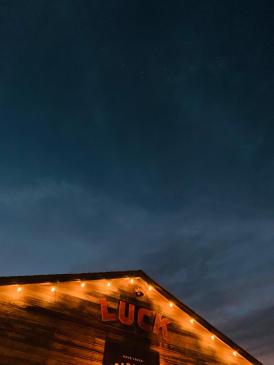
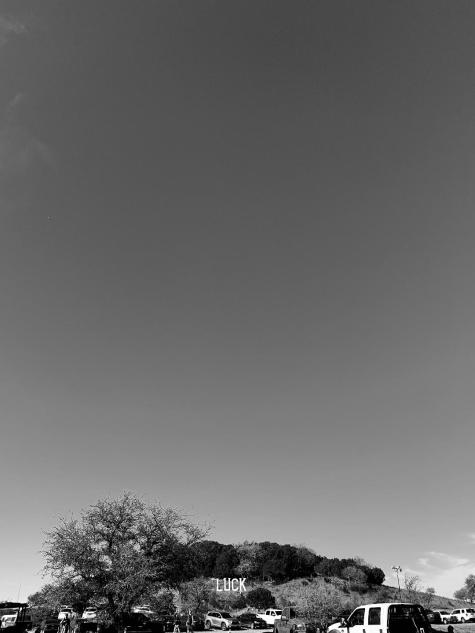
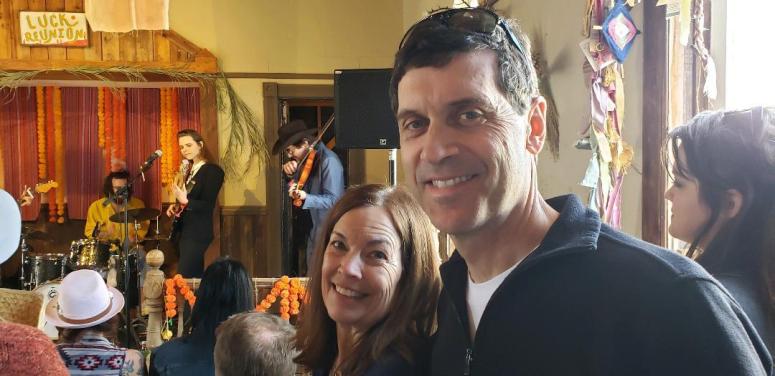
Willie. Weed. Luck.

A radiant Willie Nelson beams through a veil of marijuana smoke on the cover of Rolling Stone. It’s May, 2019 and he’s eighty-six years old. The photo was taken March 15th, one day after Willie rocked Texas Hill Country at an exclusive, intimate music festival he hosts known as Luck Reunion. Some critics said Willie’s performance this year at Luck was his best in the eight years since the festival began. He still tours, too. How does Willie do it? He gives a lot of credit to weed. He also notes that loving well and working hard continue to keep him in the game. And, there’s this: Like me, Willie is a self-proclaimed sentimental and nostalgic sap.

I know all of this because recently I became a little obsessed with Willie Nelson. First of all, his music has always been a part of my life; everyone knows the man is a legendary American roots music outlaw. (He’s also an American stoner outlaw; a country boy raised by his grandparents during the Great Depression who went on to became a longhair more apt to smoke a bong than drink a beer.) Second of all, several years ago Willie came into my life unexpectedly through the mail. Thirdly and best of all, this year Willie came into my life just in time to redirect a run of bad luck. The fact is, there isn’t anything more exciting than getting blindsided by luck. And when it comes to Luck, Texas style, Willie is the man.

The Luck Reunion Music Festival takes place at Willie’s own Luck Ranch in Spicewood, Texas just outside of Austin during the days of the SXSW Music Festival. Tickets are hard to come by and highly coveted. To keep things fair and prices right, Luck Reunion uses a system of four lucky draws. If your name comes up, you can buy two tickets. Only about 2,000 tickets are sold, so if you never win a draw, you are basically out of luck because the chances for scalping tickets are slim.

If you do get lucky and have a chance to make it through the gates at Luck for the festival, you’ll enjoy a full day of the best in American roots music on six stages, you’ll get all drinks on the house, you’ll find the best in local food creations and art, and, of course, you’ll get to hear a grand finale featuring Willie and his family band (yes, that includes his kids and Sister Bobbie) delivering one hit after another with all the feel-good fun you would expect from a successful, satisfied Texan. The entire scene won’t just get you high, it’ll get you feeling sentimental and nostalgic, too. Turns out, science is beginning to extol the benefits of healthy doses of weed, sentimentalism, and nostalgia. But the funny thing is, if anyone has become the unexpected poster child for the joys of weed and faith and fun and luck, it has to be Willie Nelson.

* * * * *

I first heard about Willie Nelson’s Luck Reunion in late February of this year at the same time a long run of personal bad luck seemed to be gaining steam instead of puttering out. My new year, from the get-go, had been defined by bad news: The diagnosis of a serious, painful, chronic illness (son), two consecutive, compromising injuries (husband), life-goal roadblocks (daughter), and serious injury (sister). The crappy blends of bad luck not only cancelled (at the last minute) our traditional family trip and our yearly skiing adventures, but it also snuffed out a few dreams, flooded the worry chambers of my racing brain, and just plain bummed me out.

So after groveling through the early months of 2019 like a timid mouse without a Pixar contract, it finally happened.  Luck came my way and when it did, I found myself taking a second look at a misfit guitar hanging on my wall. The one everyone makes fun of. The one that arrived in the mail, from across the country, in a flimsy, torn-up cardboard box. Somehow, the guitar escaped harm. It was more ornamental than instrumental, nevertheless I hung it up on the wall next to other guitars that are played all the time. Why did I hang the guitar up? For two reasons. One: The guitar was purchased at a charitable auction by my brother in a spirit of generosity. Not one to collect things, nor own much of anything, he sent the guitar to me because my husband, my son, and my daughter are all musicians and he thought we might like it. Two: The guitar was signed by Willie Nelson. Yes, of course there are thousands of charitable guitars signed by Willie Nelson; so it isn’t a rare thing to own. But Willie Nelson, himself, is a rare thing. He’s that rare human being who overcomes adversity, isn’t afraid to be an outlaw for art and activism, and doesn’t focus on bitterness, self pity, or despair in spite of running into (and through) more heart shredding episodes of bad behavior and bad luck than anyone deserves. He’s also open minded. Willie Nelson is eager to reconsider long-held positions and take a look at situations from different, often better, perspectives.

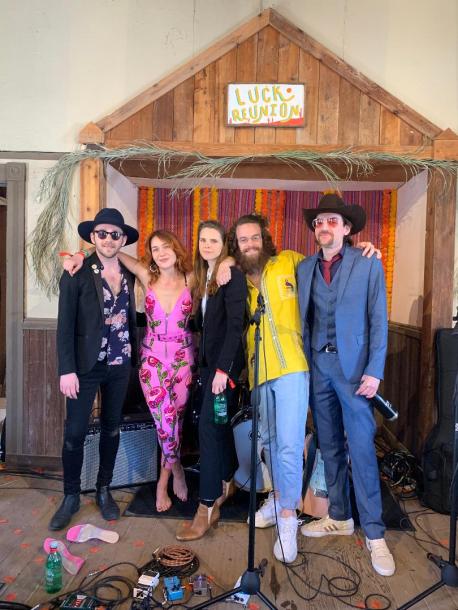
Could it be? That the guitar on my wall was a good luck charm? Some kind of fate-filled talisman just hanging around in my home waiting for the right time to make me kick up my heels when all I wanted to do was sit on my butt and stare out the window? Because something kind of cool happened in February when I was sitting on my butt staring out a window on a wall just opposite Willie Nelson’s guitar. My son, the professional musician and an outlaw since long before he was born, called. “Hi Mom.” He said. “I’m playing drums with Lola Kirke at SXSW in Austin. We have two shows. We’ve also been invited to play at Willie Nelson’s Luck Reunion.”

My son.

Performing music as part of a day of peace and love at Willie Nelson’s ranch.

In Texas.

Where Willie Nelson would be performing, too.

I let those thoughts sink in for about a second before I bolted for my computer and looked up how to get tickets. No go. I’d missed all four rounds of the lucky draw. It was enough that I wanted to see my son perform, but then I discovered that the lineup included Mavis Staples. Mavis effing Staples. My heart beat faster. Both Willie Nelson and Mavis Staples are heroic outliers in the realms of American music and American activism. They’d been through a lot. Mavis marched from Montgomery to Selma. I wanted to go to Luck, Texas and get some inspiration from that kind of living history. I had to get to Luck, Texas. Spooky, but true: our family trip, which had been cancelled due to illness and injury, was to have been an excursion to Big Bend National Park near the Rio Grande in Texas…

stared up at that Willie Nelson guitar hanging on my wall again…

It’s impossible to express the feelings of excitement that kept washing over me as I realized my son would be a part of a peaceful celebration of music and history and passion and art and food and drink hosted by Willie Nelson at one of Willie’s most beloved homes. The mission statement on the Luck Reunion website made every sentimental and nostalgic drop of sap running through my blood simmer with high hopes that luck would get me there: “…Luck Reunion is a movement dedicated to cultivating and spreading the culture of Luck, Texas and the evolution of our American roots. Our goal is to attract and celebrate musicians, artists, and chefs who, like the outlaws and outliers before them, follow their dreams without compromise. By collaborating with a group of creators who share our vision, we aim to celebrate the legacies still among us, while lifting up a crop of individuals who share a respect for those who blazed the trails before them. We are on a mission to cultivate the new while showing honor to influence. Join us in preserving the legacy of Luck, Texas.”  (If this mission statement makes your heart flutter, go to the website and get on the mailing list for next year’s lucky draw.)

As February ended, and March began, I still hadn’t heard from my son about tickets to Luck Reunion. I considered writing a letter to Willie Nelson and pleading with him to let me in. I repeatedly checked the Internet for ticket options.

Nothing.

And then one Sunday night, three days before the 2019 Luck Reunion,  I heard a twang near the Willie Nelson guitar hanging on the wall. It was my husband’s phone. I knew it had to be my son texting us. I closed my eyes, crossed my fingers, and hoped to fucking die…and go to Texas heaven.

The text: “I can get you in.”

My husband and I flew to our computers and booked flights, a car, and a little cabin near a lake. I bought Willie’s book, It’s a Long Story. My Life. I watched videos of Mavis Staples. We asked friends which acts they thought we should make sure to see. (All of them!) I pored over maps and decided we’d stay near Austin for the music, then spend time touring through the wildflowers of Texas Hill Country and the history and riverwalk festivities of San Antonio, then return to Austin and fly home. It would be a pilgrimage; because when it comes to religion, I believe in good luck and bad luck. I also believe in the laws of physics. Good luck has to follow bad luck, eventually.

As fast as I could (the trip was only a few days away), I scrambled to pack my things and button up our house and affairs so I’d have some time to start dreaming about sitting with a heaping plate of smokey Texas barbecue and a tall glass of crispy American beer. I sighed just thinking about my clothes getting drenched in the sweet, smokey scent of Big Texas Dreams. If bad luck had taken away hikes with my family in Big Bend and skiing powder in the Canadian Rockies with my true love, you can bet your country-girl boots I sure as hell would take the trade of listening to live music while strolling the dusty lanes of Luck, Texas where Willie Nelson holds his unique party in the ruins of an old west town he built to film one of his movies, “The Red Headed Stranger.” (He nurtures rescued wild horses on his ranch, too!) Furthermore, my son was scheduled to play with Lola Kirke in the Chapel. I love chapels. What could be better than a chapel where the altar is a stage for music? At Luck, the chapel is one of the most intimate stages with great sound. The lineup at The Chapel was superb. In fact, the lineup at the entire festival kept my stomach filled with butterflies. After being down on my luck for so long, I couldn’t wait to lift our spirits in Texas Hill Country.

And so we did. We started out on Rainey Street in Austin, fully energized by SXSW revelers. To our great joy, we found a Oaxacan restaurant down the street from the club where my son was booked to play with Lola Kirke. What a blast.


The next day was Luck Reunion. We didn’t know the details of how we would get into the festival, so we lined up with everyone else, living on a prayer, hoping our names were on a guest list. Eventually, the nerves were too much for me. I held our place in line and my husband went looking for some information. When he returned, he brought two, sparkling VIP passes for the parents (us, of course) of one of New York City’s most dedicated outlaw musicians.

The wows kept coming all day. Fabulous details like fresh flowers on tables and elaborate shrines to the departed souls in American music enhanced the feeling of “being a part of the Luck family.” Hearing and watching as many outstanding musical performances as we could, made us feel so fortunate. In fact, we didn’t stick our VIP passes onto our clothes. We kept them carefully protected inside our pockets. One can never have too many lucky charms.

IMG_2585

As for inspiration, it was everywhere. When Mavis Staples took the stage—a stage dedicated to female artists—nostalgia flooded forth. She started with “Slippery People” by the Talking Heads. She belted out “Freedom Highway,” the first protest song her father wrote at the time of the tragic case of Emmett Till and just as the famed Staple Singers were joining Martin Luther King’s fight for civil rights in America. She finished with a fresh performance of “The Weight,” inviting the female performers at Luck on stage to join in. Here’s a fun fact: The iconic version of “The Weight” performed by The Band…for the Last Waltz film…the one with those soulful gospel voices… features The Staple Singers. Pops sings a lead and so does Mavis. Pull it up on the Internet and give it a listen. (That injection of nostalgia? Those chills? It’s all good for you.)

Mavis Staples hasn’t let a bit of her soul wilt. She still believes in the power of music and she still believes in her ability to lead the people forward through her art. She’s almost eighty-years old; totally blessed with superpowers. And how about the way “respect for those who blazed the trails before us” plays out among the up and coming crop of new musicians invited to Luck? My son drummed out Lola Kirke’s new rendition of Rick Danko’s “Sip the Wine” at Luck.

Before Willie Nelson took the stage, my son herded us into the VIP area for something to eat. He showed up with a barbecued (or maybe it was roasted?) alligator head. I hesitated. “Mom.” He said. “Peel away a piece of meat and try it. Don’t you want to say you ate alligator head at Willie Nelson’s ranch?” Like a lot of strange meats, it tasted a little bit like chicken. Then my son said, “I just found out we’re going to be playing at Bonnaroo.” As if the day didn’t already have enough excitement to it.

IMG_2609

Willie and his family band took the stage at about 11 PM. It was an epic concert under the party lights of one man’s grand Texas dreams. Willie played hit after hit; every song a crowd pleaser. How the heck does he do it? As he writes in his book, he is a sentimental man. And, like I said earlier, science claims there’s something to be said about the benefits of allowing sappy vulnerability to soothe your soul. Willie writes: “My eyes are closed, my prayers are aimed towards the heavens, but in my gut, I don’t feel worthy of so much good fortune. I sing okay, I play okay, and I know I can write a good song, but I still feel like I’ve been given a whole lot more than I deserve…The fuel is love—love of people, places, animals, plants, water. Love of sound, love of space, love of fireflies and star-filled skies. Love of life. Love of home.”

Seems so simple to believe in love. But it’s not. More Willie: “I’d had my share of low moments, but I was learning that there’s always something you can do. You can train your mind to look up, not down and not back.” But then again: “I try to live in the present tense, but I’m always aware of the power of my past.” If you read Willie’s book, keep a computer handy for the interactive experience of listening in on the extensive varieties of music he’s studied and performed both on his own and with a thrilling collection of the world’s greatest musical artists.

Hope to see you at Luck Reunion next year!

IMG_2625


Whiskey river, take my mind

Don’t let her memory torture me

Whiskey river, don’t run dry

You’re all I got, take care of me


IMG_2560


The Chapel at Luck.


20190314_130627


IMG_2604

Lola Kirke and band in The Chapel at Luck.


IMG_2536

My son and his friend Lola Kirke after their gig in Austin at the SXSW Music Festival.


20190314_152710

All performers are presented with an exclusive Luck Reunion ring and become a forever member of the Luck Reunion family.


IMG_3086


IMG_3090


IMG_2641


IMG_3223


Music is magic. It not only takes us back, but also leads us forward.

❤ Show Mercy to the Unlucky ❤

* * * * *


Finding The (Fading) Wild In Costa Rica.

One mother’s adventure travel narrative and photographic essay.

IMG_8725

PROLOGUE

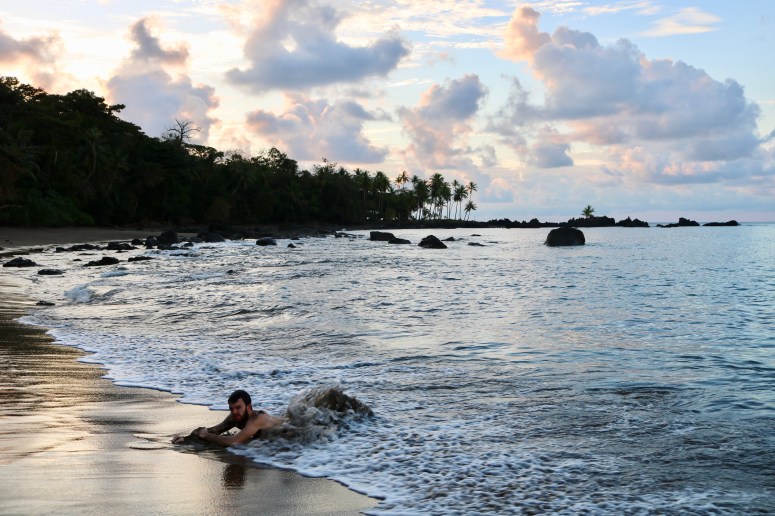
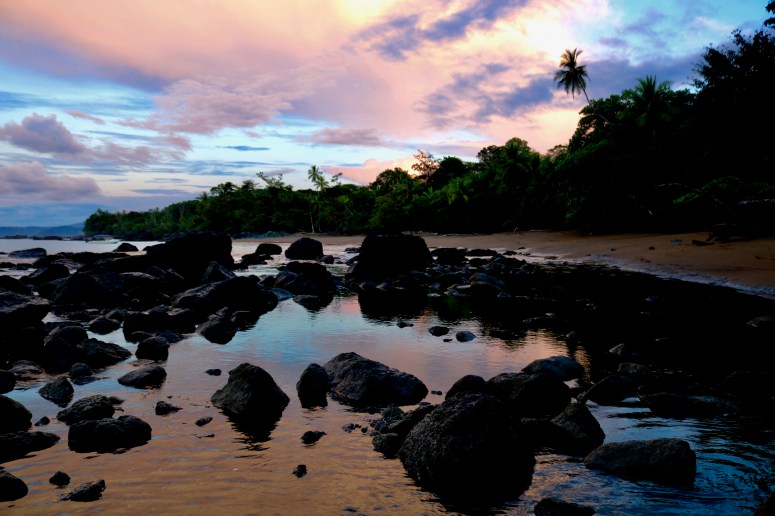
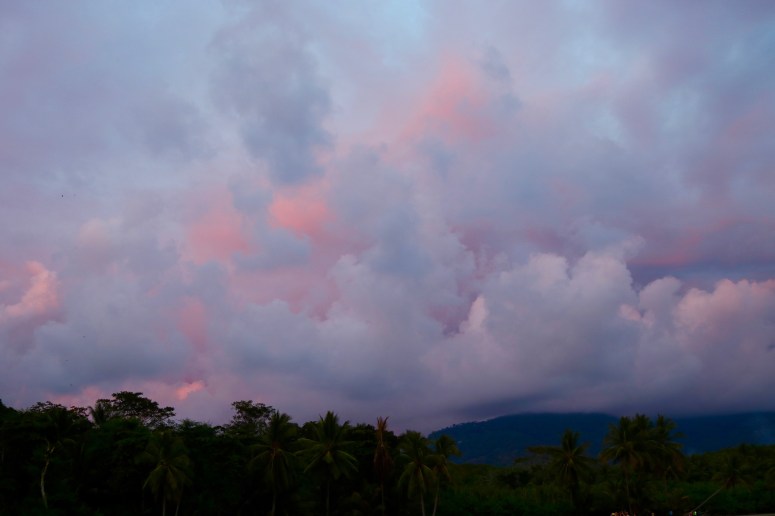
Close to the equator in the phantasmagorically green jungles of Costa Rica’s Peninsula de Osa, a traveler is blessed with about twelve hours of light and twelve hours of darkness every day. The sun rises bright, glows brilliant by midday, and then—after the traveler enjoys a late afternoon snooze in the sand, a pleasant happy hour drink before dinner, and one more swim—the sun flings a heavenly radiance over everything before slipping away. You might describe the sunsets as riots of color, except they don’t make a sound. From my vantage point, in a year dated 2018 by humans on Planet Earth, I’ve been taught that the sun (if we could hear it) would sound terrifying. This is because most of us believe the sun is an explosive, fiery thing.

And I think that’s probably true.

But I love the sun more than I fear it and have only felt anger for its power once in my life when it continued to shine on me (a whit of short-lived, organic matter in its boundless universe) at a time when I wished to die rather than endure the despair and physical pain of grief. Indeed, that phenomenal Superstar—aged more than 4-and-a-half-billion years old—has become my go-to guiding, wishing, and good luck star.

After the sun sets on the Osa Peninsula, the jungle goes dark.  One stands in the dense tangle of it and notices how the darkness settles in, first through the eyes, then down the throat, and finally into the soul where it dominates the imagination. Osa Jungle Black neither fades nor intensifies, but is resolute and vast. It feels fresh, smells lush, and pulsates with loud alive-liness. If a traveler turns on her headlamp, and aims its beam of light in every direction, she won’t believe how many eyes are watching. There are big eyes, little eyes, and tiny eyes. There are watery eyes, too, staring through the murk of swamps and calm streams and dangerous rivers.

Embraced by the purity of Osa Jungle Black with my family, after 12 days at peace alongside extraordinary nature, solitude, and the restorative wonders of the Pacific Ocean, I felt a haunting—not from hidden creatures waiting to bite me, sting me, or enjoy my entire family for a midnight snack. Nor from a ghostly sensation—or romantic fantasy—that tribes of the restless dead were guarding a wild paradise at risk.

What haunted me was my own good luck.

What if it had failed me?
IMG_7188

IMG_7516


CHAPTER ONE

When I first began planning a trip for my family to see Costa Rica, I thought it best to avoid a futile chase for some kind of utopia. After all, Costa Rica’s ecotourist destinations have been on the travel industry’s radar for a long time. I knew I was late to the party.

My husband thought he’d reduce my anguish by giving me a copy of a customized travel itinerary through Costa Rica, prepared by an elite travel consultant for friends taking a getaway trip for two. Their tour included must-see sites, luxury accommodations, and fun activities organized in a stress-free (and appealing) style with chauffeur-driven car rides and plane rides from Palm Tree A to Palm Tree B to Volcano to Cloud Forest to Coffee Plantation to Eco Resort with meals included and personal needs fulfilled.

All I had to do, according to my husband, was study the blueprint for the luxury tour and design something for twice the number of travelers at half the number of colones. Extra credit: Pull it off last minute during the busiest tourist season. Honors: Take our family where all those tourists are not going to be. Cum laude: Include culinary and cultural enrichment. Magna cum laude: Could we go ziplining. Summa cum laude: No shared bedrooms except, of course, for the mom and the dad.

After several fitful starts and stops (Costa Rica really is on every tourist’s radar) and some tense marital discussions, I summoned the goddesses of utopian escapes for help.

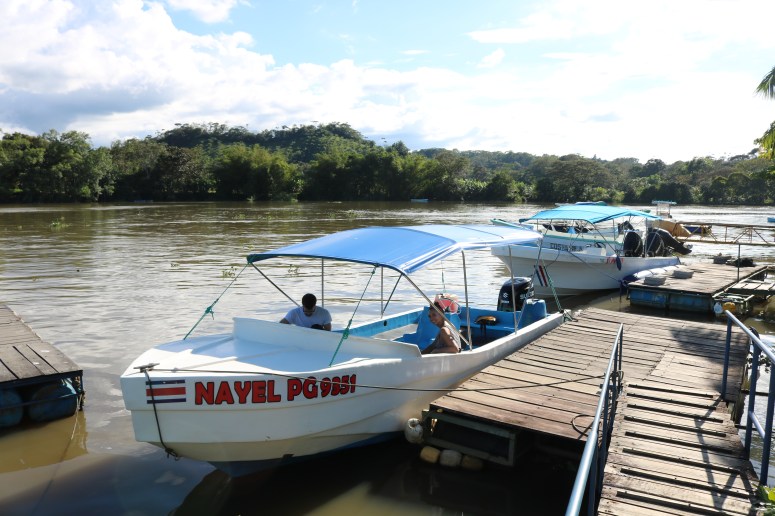
Soon, I found an enchanting place for rent in the wild jungles of the Osa Peninsula. The dreamy dwelling, named Casa Nirvanita, was portrayed by its gracious owners as a luxurious shelter, open to nature (“a biological jewel”) set in both secondary and primary rainforest with fruit trees and flowers growing amid rivers that flowed to the Pacific Ocean. Jungle creatures and critters lived all around (and often in) the dwelling, which had three bedrooms, four bathrooms, and several hammocks. We’d need to purchase food and drink for our entire stay, box and load it into a small boat, then take a voyage down the Sierpe River and into the (often turbulent) Pacific Ocean for a run across Drake Bay and over to a beach where we’d rock and roll in the surf while bringing our provisions ashore. Once arrived, we’d have no car, no take-out deliveries, no grocery stores. Not even a neighboring home from whence to borrow an egg.

IMG_7779

On approach to the Pacific Ocean and Bahia Drake from the Sierpe River.


CHAPTER TWO

Before setting off for the Osa Peninsula, though, we needed a place to stay for the first four nights of our vacation. The dates fell during the New Year’s weekend holiday and, of course, not much showed up as available. But I did find one curious option made all the more intriguing due to the fact that it didn’t have a collection of 5-star reviews. In fact, it didn’t have any reviews at. It was a new-to-the-market, up-and-coming ecolodge. The name, Eden’s Nest, sounded fun, the price was right, and the digs were neat. They were called jungalows (bungalows built into the jungle canopy) and the property was located in Ojochal, a tranquil village on the way to Sierpe, the port town where we’d be storing our car for several days near the boat launch for travel to the Osa Peninsula. Each newly-renovated jungalow had a kitchenette, a balcony, and a bathroom and they were so well priced (less than $100/night!) that everyone could have their own hideaway. Our potential host, Carlo, offered to custom design a tour for us through the mountains, cloud forests, farms, and markets of a Costa Rica he had grown to love, beyond the beaten tourist paths.

We sent a lot money to Carlo and hoped we wouldn’t be adding a dumb luck story to our family’s tales of travel. After all, the jungalows had no reviews and the village of Ojochal wasn’t on the tourist radar.
IMG_7269


CHAPTER THREE

As soon as you come bounding into the jungles of Costa Rica, it seems like everyone you meet is saying everything you want to believe:

There is nothing here that will harm you!

Enjoy yourself!

Pura Vida!

When it first happened to us, we had already managed the airport hustle, retrieved our rental car, and conquered one of Costa Rica’s legendary steep, narrow, rutted, muddy, slick, twisty, and unmarked roads (two attempts) in the dark after a long drive from San Jose and upon final approach to Eden’s Nest. (Like this: Drive up a dark road in a little bit of rain, the road gets surprisingly steep, car wheels start spinning in some slurp, shift into reverse for a long, long ride backwards perhaps a quarter of a mile in the dark to where you started, then switch to first gear and gun the engine never letting your foot off the gas and never loosening your grip on the steering wheel no matter how many ruts throw you off course or how many cliff sides get too close.) And hopefully no other cars are coming at you from the opposite direction.

Welcome to the jungle!

IMG_7111

A fairy tale jungalow-of-one’s-own at Eden’s Nest in Ojochal.

Writing, reading, working, drinking Costa Rican coffee, smoothies, and finding local swimming holes (thanks to Carlo’s tips) with waterfalls.

IMG_7119

IMG_7139

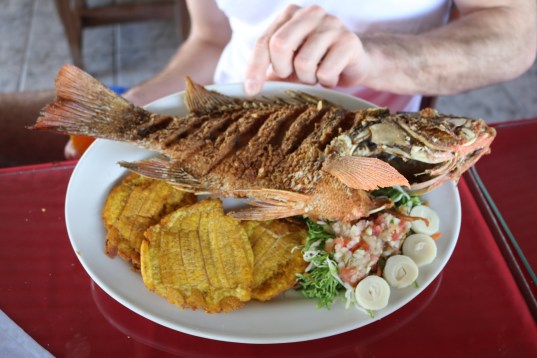
Lunch after swimming. The lemons looked like oranges and that’s what we thought they were until we bit into them! Whole cooked fish with fried plantains.

IMG_7740

IMG_7734

Belly rubs for Jessica at Eden’s Nest—the most lovable dog in Costa Rica!


CHAPTER FOUR

Talk about lucky.

The jungalows at Eden’s Nest were clean, comfortable, charming, and eco friendly. Sure, there were a few quirks…like Carlo’s recommendation that if our family wanted to go on tour with him, and see as much as we could in one day, his truck would be heading for the mountains before 6AM.

So we set the alarms on our phones and woke up laughing out loud

because early-morning-wake-up calls in a rowdy jungle don’t need one iota of technology!


CHAPTER FIVE

The most common question I’m asked about my family’s trip to Costa Rica is this one: Your kids travel with you? It’s a good question. My “kids” are adults—my son is 26, my daughter is 23—and they haven’t lived at home since they graduated high school and left for college. My son lives in Brooklyn, his favorite city, and my daughter lives in Somerville, MA wrapped up with her favorite city, Boston.

They’ve got it going on.

So whenever (3x so far) I’ve decided to hire a private guide for an entire day during our travels, I hope for good luck and good fun because I want my kids to enjoy traveling with us. (One of the most outstanding all-day tours our family took was with Alvin Starkman’s Mezcal Educational Tours in Oaxaca, Mexico. At the end of that long day, my daughter gave the tour an A+ grade.)

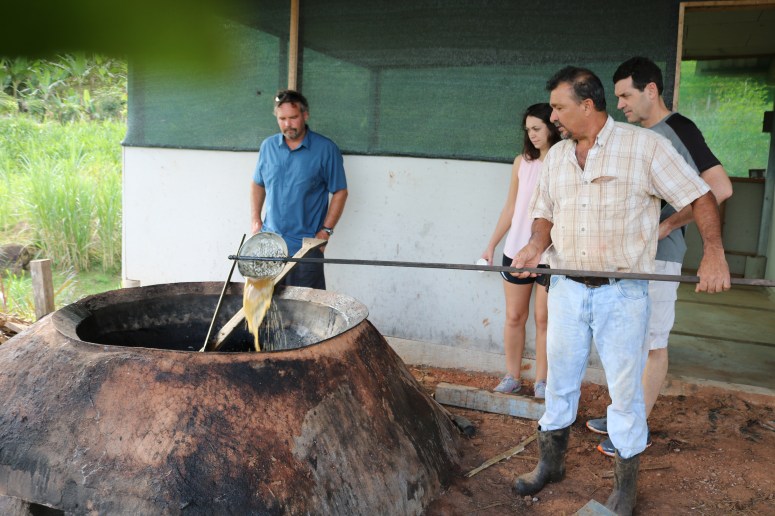
Carlo had it going on for a Costa Rica we hoped to find. He drove us into the Talamanca mountains, past waterfalls, through cloud forests, and onto a farm where a family welcomed us, proudly showed us their lands, crops, and livestock; how they make sugar and grow coffee, and then they bestowed generous gifts of organic fruits upon us after sharing wholesome cups of Costa Rican coffee on their porch. We visited San Isidro and ate in the market. We hiked at Cloudbridge Nature Reserve. We stopped for a typical Costa Rican afternoon snack at a roadside restaurant. All along the winding, scenic, narrow routes, we passed farmers on horseback sharing the roads with people out walking and people out riding motorcycles. Carlo’s tour included unexpected surprises about the culture, customs, cuisines, and beauty of Costa Rica.

At the end of the day, Carlo took us to the seaside in Dominical. He backed his truck up to the beach, opened the tailgate, and offered all of us a cold beer as local families were gathering on the beach to build campfires and watch the moon rise, almost full, before the start of a new year.
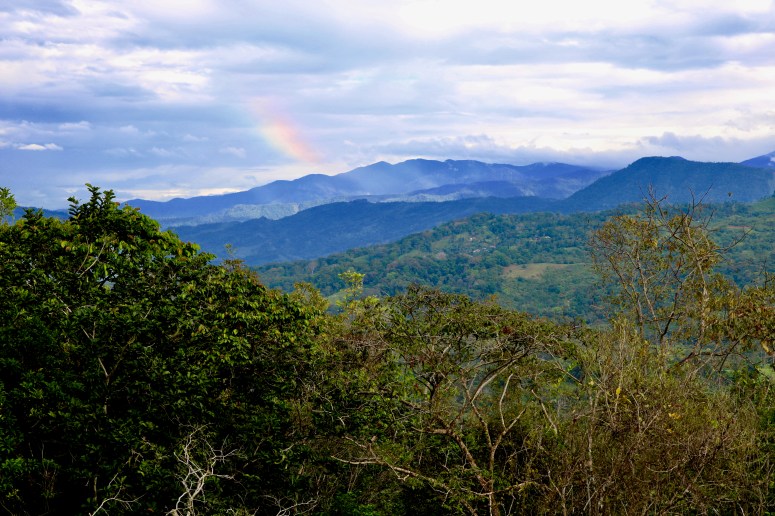
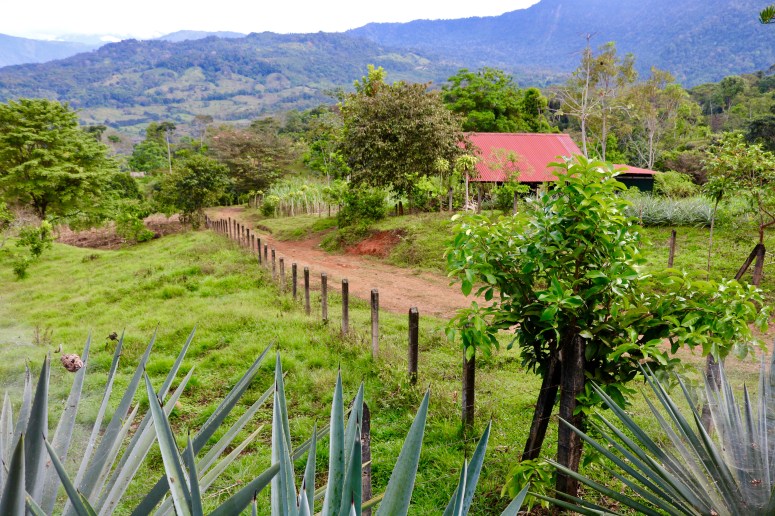
IMG_7239

IMG_7271

IMG_7322


Beautiful pineapples hand picked for us.

IMG_7310

IMG_7318

A necessary tool, the machete, completely and quickly whittles sugar cane into sticks of true sweetness.

IMG_7345

Making sugar.

IMG_7293

Taking home sugar and coffee.

The family’s twin grandsons picked shirt-fuls of oranges and grapefruits for us.

IMG_7381

Organic fruit for making smoothies back in our jungalows at Eden’s Nest.
IMG_7253


A PLEASANT HIKE TO PACIFICA FALLS AT CLOUDBRIDGE NATURE RESERVE
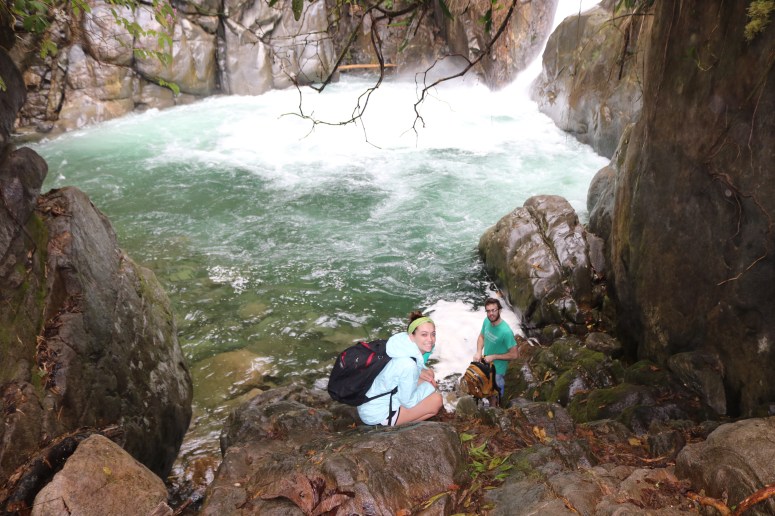
IMG_7432

My son playing his Brazilian pandeiro—a hand frame drum—with the falls. 

IMG_7435


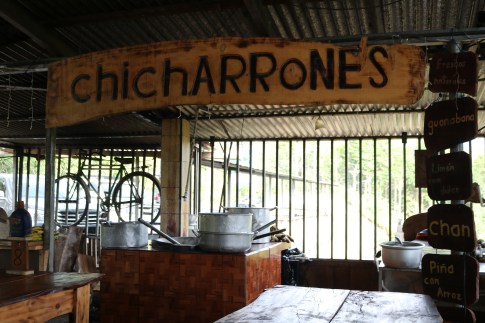
STOPPING TO ENJOY A TYPICAL COSTA RICAN AFTERNOON SNACK
IMG_7487

IMG_7504

IMG_7226


CHAPTER SIX

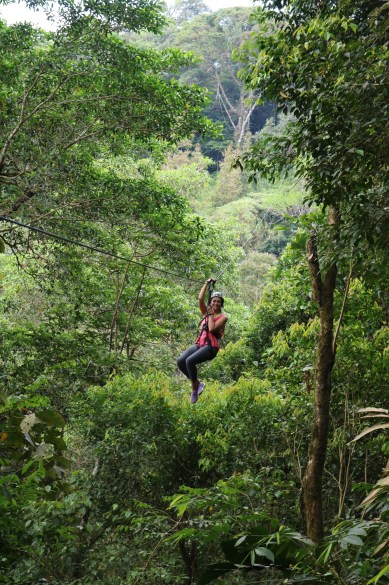
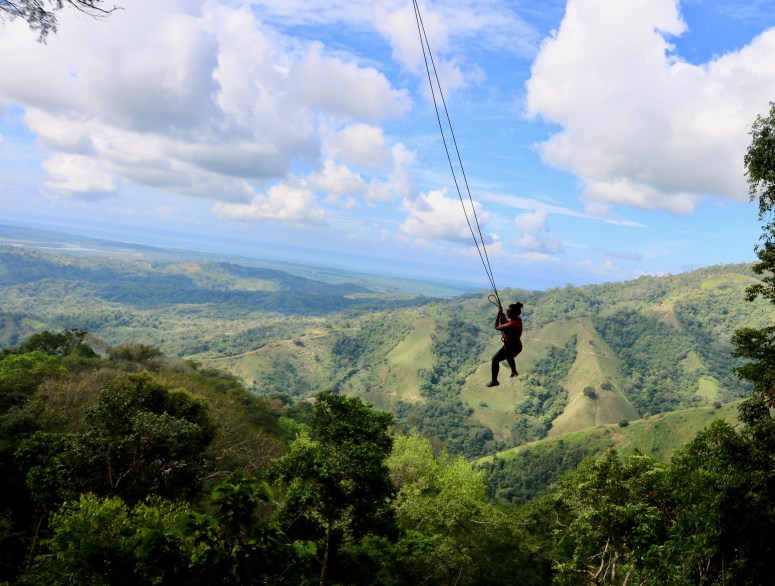
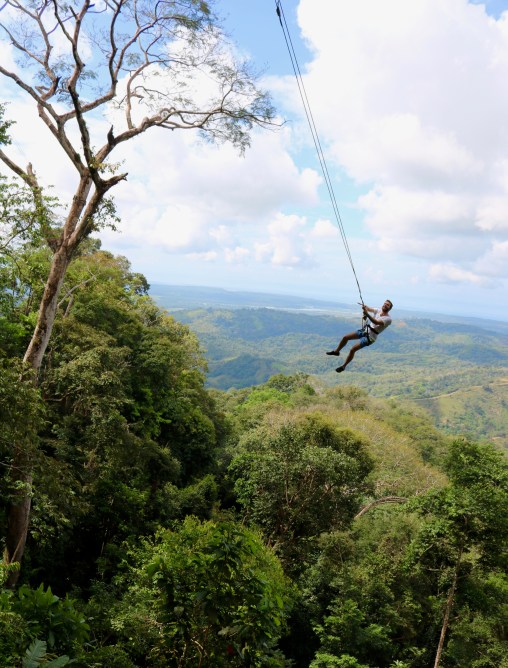
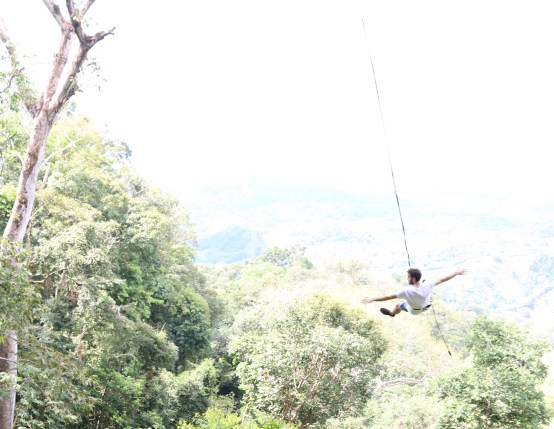
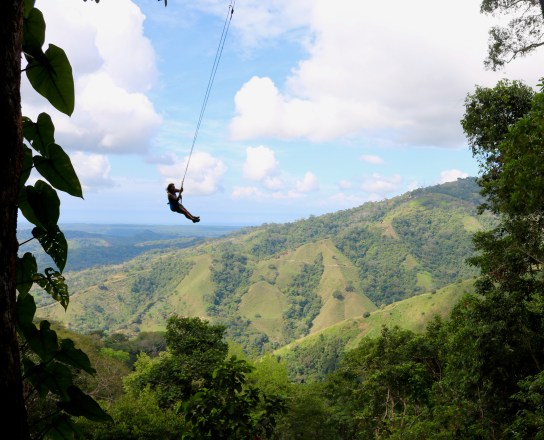
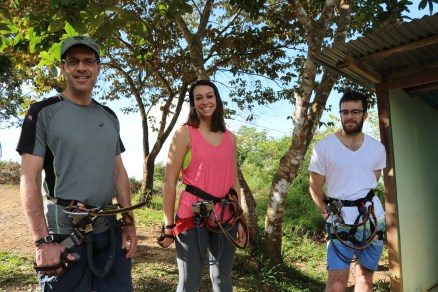
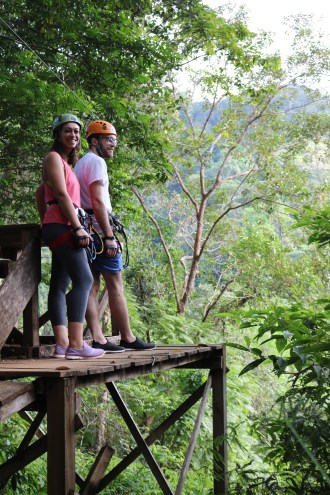
You can’t go to Costa Rica and pass up a chance to zip-line way up high and fast through the canopies of tropical rainforests and jungles. Lucky for us, Osa Canopy Tour was close to Eden’s Nest offering 9 zips, 11 platforms, 2 wobbly bridges, 2 scary drops, and one woohoo Tarzan swing to send you soaring over views of the Pacific Ocean. The adrenaline rush was a good one—it didn’t stop my heart, but it did take my breath away.

I will always remember zip-lining in Costa Rica as one of the most joyful and thrilling excursions I’ve ever shared with my family.
IMG_7552

IMG_7573

IMG_7585

IMG_7638

IMG_7660

IMG_7669

IMG_7663

IMG_7646


CHAPTER SEVEN

Our time at Eden’s Nest ended on January 1st, 2018 and our boat for the Osa Peninsula was scheduled to depart Sierpe for Bahia Drake and Casa Nirvanita at 3:00 the same day. We said goodbye to Carlo, gave Jessica (the most adorable pooch) some belly rubs, and promised to visit again. Carlo and his wife Tineka have exciting dreams for developing Eden’s Nest and they are ready to offer any services that might make a trip to Costa Rica more appealing. Carlo gave us useful advice consistently, including where to find ATM’s and where to grocery shop. It’s fun to check in on their website to watch Eden’s Nest become more and more of a destination ecolodge. One memory I won’t forget: Watching luminous Blue Morpho Butterflies, from a perch on our balcony, taking magical flights through the vibrant greens of Ojochal’s forests.

After grocery shopping (8 days provisions/four foodies), we crammed eight boxes of food/drink/one cooler into our rental car and set off for the outpost town of Sierpe. I immediately worried about how we would fit our suitcases, plus eight boxes of food and drink and one cooler, plus every member of our family onto a 28′ boat hired to help us find utopia.

Pura Vida! My husband, my son, and my daughter said. And they were right. The boat handled everything just fine. By the time the sun set on the first day of a new year,

the real world had fallen off our radar.
IMG_7764

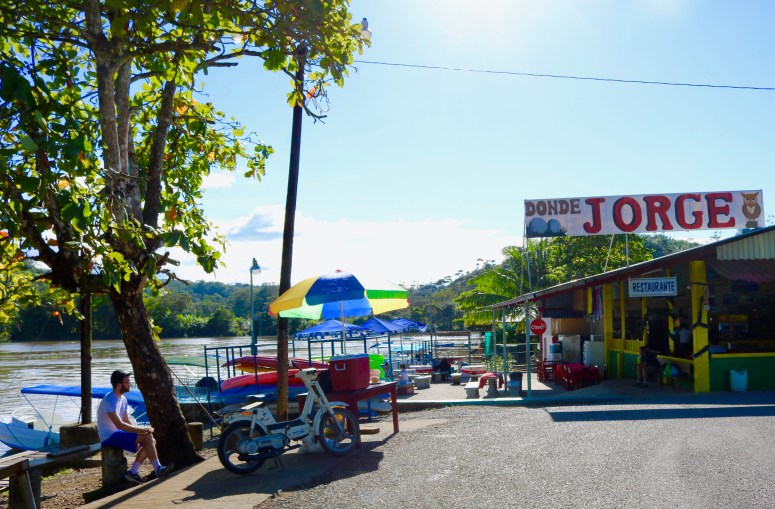
Last supper before departure from the port of Sierpe, Costa Rica.
IMG_7762

Our cruise ship.

IMG_7765


Landing somewhere near the equator in Central America.

IMG_7804

IMG_7805

IMG_7812


CHAPTER EIGHT

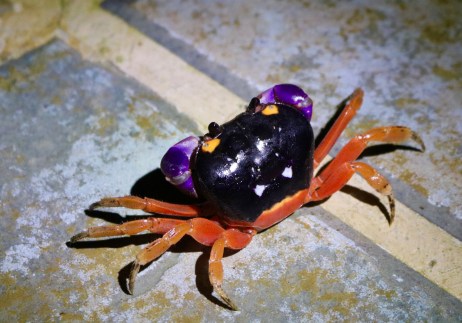
The first of many wild friends in our newfound utopia on the Osa Peninsula greeted us by moving into our shoes while we ate dinner after arriving. Halloween Moon Crabs. We didn’t know what they were when my husband noticed shadows moving on the porch. But our hosts had ensured us, “there is nothing here that will harm you!” so we shook the colorful crustaceans out of the shoes and found them to be somewhat likable.
IMG_7846

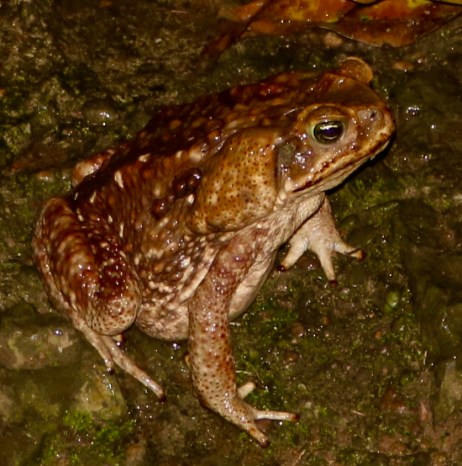
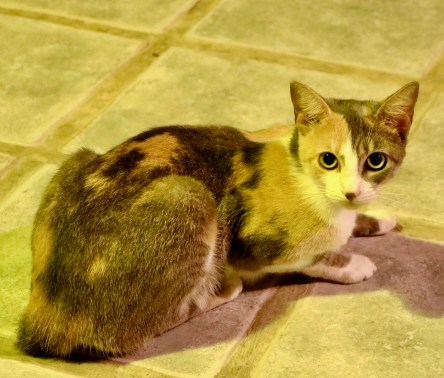
The house came with a cute cat, even so, Cute Cat didn’t seem interested in the crabs or giant Smoky Jungle Frogs (one of Costa Rica’s largest amphibians) that shared our living spaces and environs. The Smoky Jungle Frog we met could have been a prince. It was first spotted by my daughter on a night hike several pitch-black trails away from our house. “O.M.F.G.” She whispered.  “Don’t anyone move. There is something BIG looking right at me.” Here is an example of another reason why I travel with my children. My daughter, though she isn’t loopy over strange things that stare at you in the night, is a champion huntress. She’ll never miss a creature feature party, especially one promising unexpected guests in unusual settings. Later that evening, she spied an even bigger amphibian watching her from the comfort of damp, leafy jungle brush close to the house after she had settled in to enjoy a glass of wine. Surely, we joked, Smoky Jungle Frog had followed her and was hoping for a kiss that might change its life forever.

Trying to kiss a Smoky Jungle Frog in Costa Rica probably wouldn’t end well, according to a random Internet fun search: “In addition to inflating its body to appear larger, the Smoky Jungle Frog protects itself by secreting a toxin known as leptodactylin. This poison is released from its skin when it is handled, and it can cause rashes or a stinging sensation in humans, especially on any open cuts. The frog is capable of vaporizing this toxin into the air, potentially affecting people who are nearby without touching it.” 

As it turns out, it wasn’t a Smoky Jungle Frog disturbing the peace of my daughter’s evening. It looked more like the largest toad in the world, the Cane Toad, and although there are those who promote the licking of these toads to bring on hallucinogenic visions, that probably wouldn’t end well either. The Cane Toad’s glands are packed with enough poison to kill large animals. Science is studying the toad’s medicinal healing possibilities, but human reaction to recreational experimentation with the toxin can be unpredictable and potentially lethal.
IMG_8753

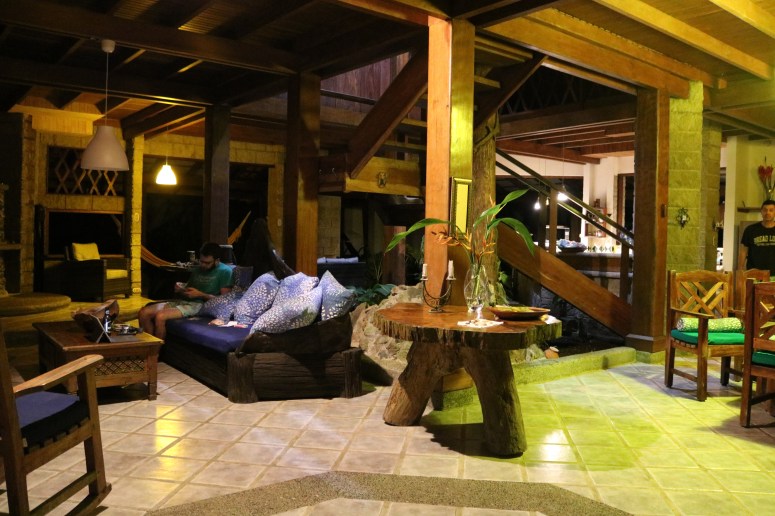
As the days and nights passed in our Jungle Palace (we lit the house with candles at night and it felt like we were living in a wonderful, mystical, lost-world palace) it became evident that Cute Cat had no desire whatsoever to patrol our living and sleeping quarters for creepy crawlies, creepy hoppers, creepy flying things, and/or super creepy slitherers. Perhaps it was because the Osa Peninsula jungles remain, for now, a stronghold for one of the greatest cats on Earth—the elusive Jaguar—and our palace cat shared some of that coolest-of-cats attitude.
IMG_7826

View from the porch into Casa Nirvanita, a luxurious Jungle Palace.
IMG_7830

Perfect sand, surf, and tidal pools.

IMG_7938

Paddleboarding.

IMG_7899

Early morning kayaking.

IMG_8182

IMG_8130

Tide in.

IMG_7935

Tide out.

IMG_7906

IMG_8159IMG_8368

IMG_8586


CHAPTER NINE

Ecotourism: Responsible travel to natural areas that conserve the environment, sustain the well-being of local people, and support interpretation and education. (TIES. The International Ecotourism Society.)

The Sixth Extinction: “Though it might be nice to imagine there once was a time when man lived in harmony with nature, it’s not clear that he ever really did.” Elizabeth Kolbert

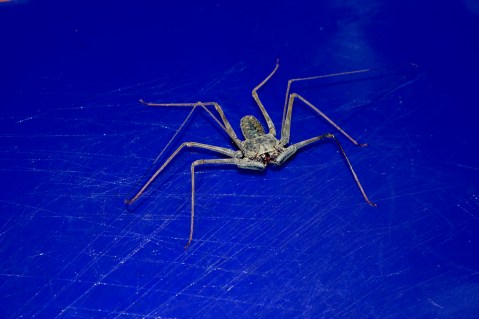
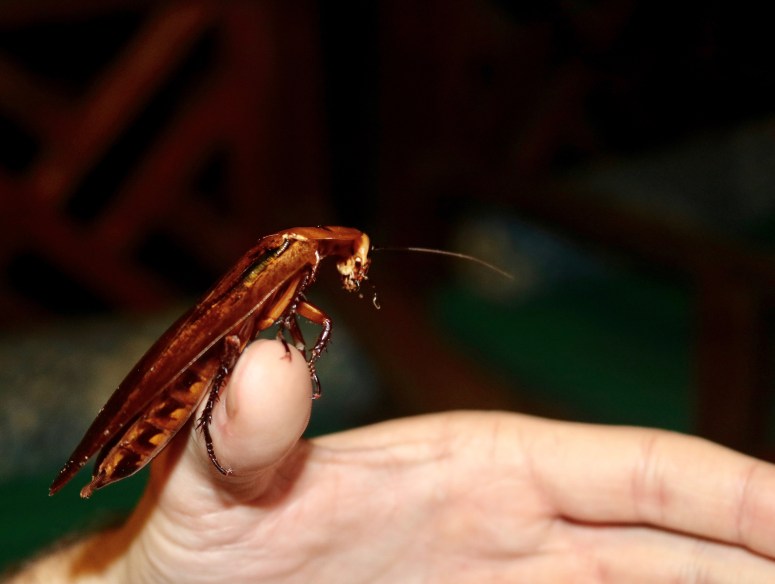
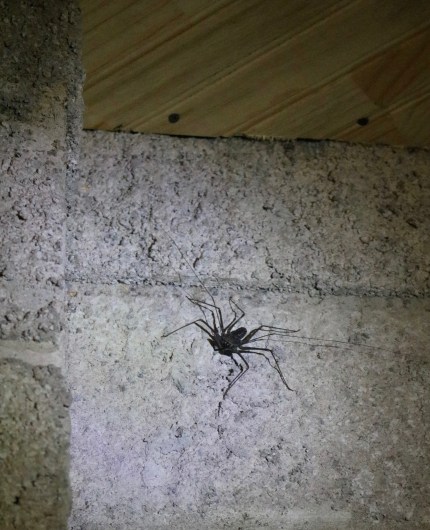
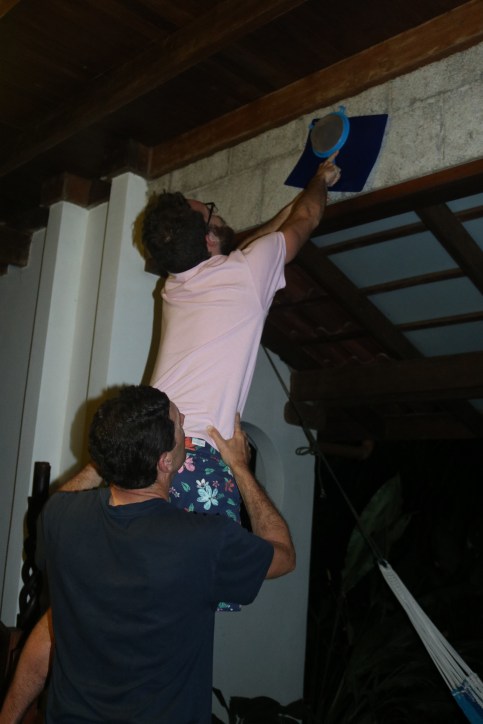
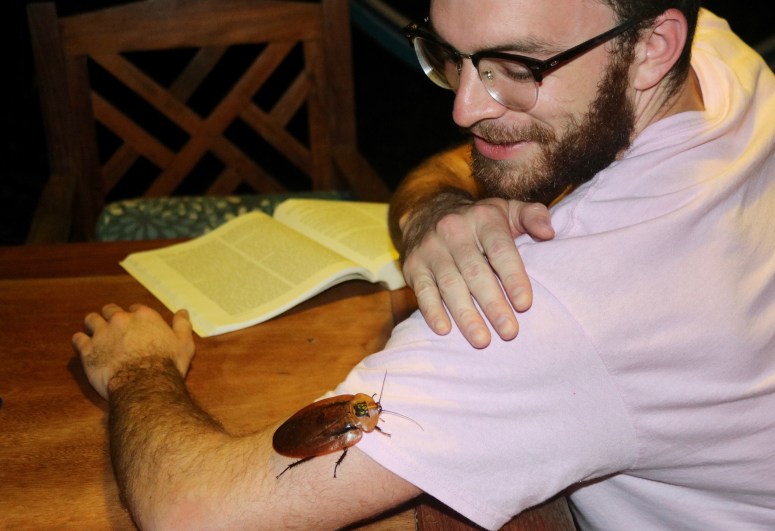
One evening a deluge of rain poured from the night sky, keeping us inside our palace shelter. Refugees from the storm soon appeared on the kitchen shelves (Common Tink Frog), on the walls (Giant Cockroach, Tailless Whip Scorpion), in the ceilings (bats), and in the corners (more amphibians of the toad variety). It became a night of great excitement and adventurous education. Fortunately for us, my son had devoted one summer during college to the pastime of happily skipping through the woods and fields of the Hudson River Valley collecting insects. Through his guidance, we developed a bit of a crush on Blaberus giganteus, a giant cockroach, and Amblypygi, a Tailless Whip Scorpion. The relief that calmed me when my son could immediately identify the astonishing bugs made the trials and tribulations of raising my kids feel even more triumphant. I didn’t question his authority—I could tell by the levels of admiration and rapture percolating through the humid atmosphere of a wet night in a rainforesty jungle, that my son had waited a long time to meet these impressive creatures on their own turf.

As for the frogs and toads coming in from the rain, what a story they can’t tell about their evolution and survival since long before the dinosaurs walked the Earth and long before flowers bloomed on plants, up until these days of present history when research begun in the 1980’s in Costa Rica reported a somber decline in, and vanishing numbers of, frogs.

But it’s a story we can try to understand through science, research, and the deliberate choice to free our minds from the confines of chosen ignorance while opening them to the possibilities of genuine truths about Planet Earth and Life. If all of this sounds like an exhausting and boring way to spend a vacation in paradise, it isn’t. Brain massages administered through the art of thinking can stimulate long periods of obsessed excitement over novel discoveries and wonders of the world. These massages have been proven to ward off the evils of ignorance, apathy, and cynicism while stimulating brilliance, courage, awareness, and—best of all—activism.

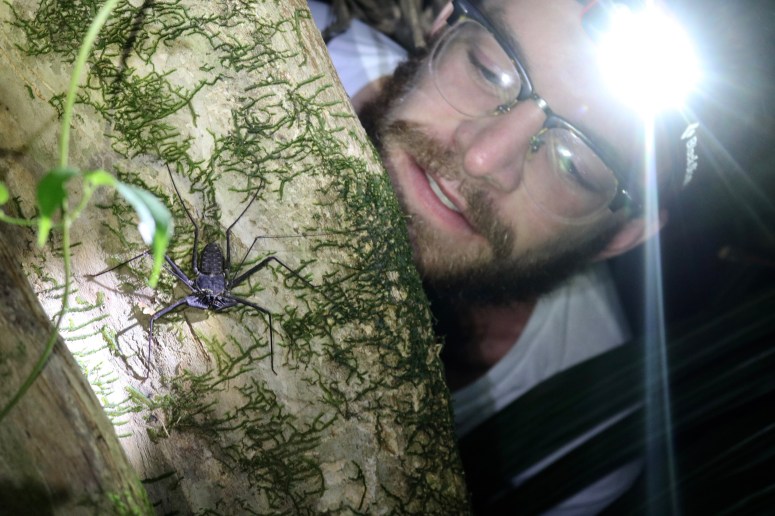
Tailless Whip Scorpion. Harmless.
IMG_8545

IMG_8563

Few adventures are as exciting as spending a rainy night in paradise catching bugs in one of Earth’s most biologically intense jungles. Note the improvisational use of common kitchen utensils and containers as hunting and observation devices.
IMG_8523

IMG_8525

Blaberus giganteus. Our host, German, names this jungle bug his favorite.
IMG_8539IMG_8536

In the night jungle: Tiny frogs. Blue dragonflies. Blue crayfish. Opossum in a tree. Smoky Jungle Frog. Spiders. A lot of the handsome Tailless Whip Scorpions.

The Tailless Whip Scorpion on a tree in the jungle at night. This bug, in spite of having what appears to be an awkward, cumbersome collection of legs, can actually scamper rapidly up and down trees.
IMG_8745


CHAPTER TEN

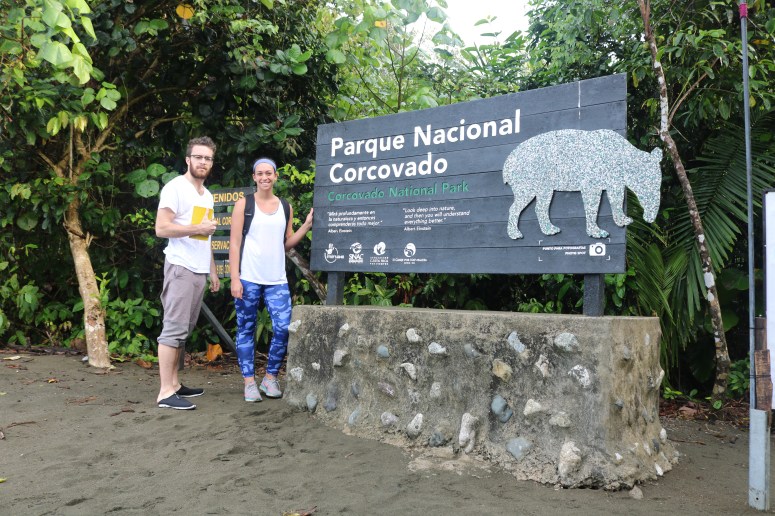
A short walk from Casa Nirvanita, one of the transportation “hubs” for the Osa Peninsula has been set up.  It’s marked by a spare, wooden shelter where backpackers, day hikers, eco-lodge tourists, and other travelers wade through the water to hop on small boats for guided (required) tours to the Sirena contact station at Parque Nacional Corcovado and/or guided (also required) snorkeling tours to Isla del Caño. Our Casa Nirvanita hosts arranged a wildlife tour of Corcovado National Park and a snorkeling tour of Caño Island for us.

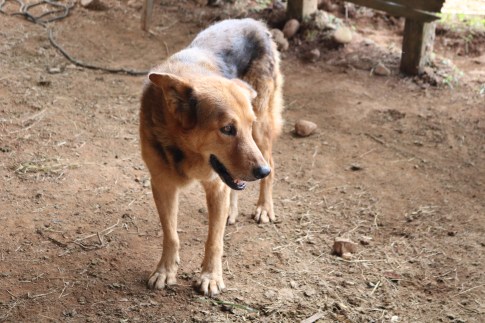
A public transport hub in Drake Bay and one of the many community pooches. In Costa Rica, we noticed stray dogs were friendly and well fed.

IMG_8373

IMG_8066

Corcovado National Park is a vibrant habitat for wildlife on the Osa Peninsula. Everything Exciting and Everything Scary and Everything Endangered exists somewhere in Corcovado National Park. (There’s gold in them ‘thar hills too.) For me, a guide added a layer of possible protection from the Everything Scary category of wild animals. I carried a first aid kit everywhere we went (because everywhere we went required walking through a jungle) but after researching the feared Terciopelo (aka: the highly venomous Fer-de-Lance Pit Viper) and noting its aggressive nature, the first aid kit had come to feel like dead weight in my backpack.

A typical day tour through Corcovado takes a group of 10-12 people quietly into the park with a competent guide carrying a powerful scope. Everyone gets a turn peeking at whatever the guide finds and if the animal behaves and sits still long enough, cell phone cameras can be pressed against the scope’s lens for pics. After a few hours of stalking wild beasts, lunch is served at the park headquarters before another round of quiet walks in search of magical creatures.

It was hot and muggy and since I didn’t get to see a three-toed sloth, I wasn’t sure if the tour satisfied me. I asked my kids what they thought of it. We did see a lot of animals! But there is something about sloths, and we were in Costa Rica…and I knew I might not pass that way again for a long time, if ever. My son’s review of the day rescued me. “Mom,” he said, “it was a Pokemon day. I mean everywhere we went, some animal came popping up out of nowhere.”

It’s true, the animals we saw weren’t like any we’d ever seen. And there they were, hiding out in their own habitats. There are no guarantees in Corcovado National Park that you will see wildlife. The animals are free range.

Short hike to the boat-stop for a one-hour ride to Corcovado National Park.
IMG_8073

IMG_8088

Sirena Contact Station for lunch. Note the large cabin with stacked bunks inside mosquito netting. Overnight tours are now on my bucket list. (Awakening at 3AM for breakfast by 3:30 in order to hit the trail early enough to find animals.)

Can you spot the hidden Pokemon?

IMG_8081

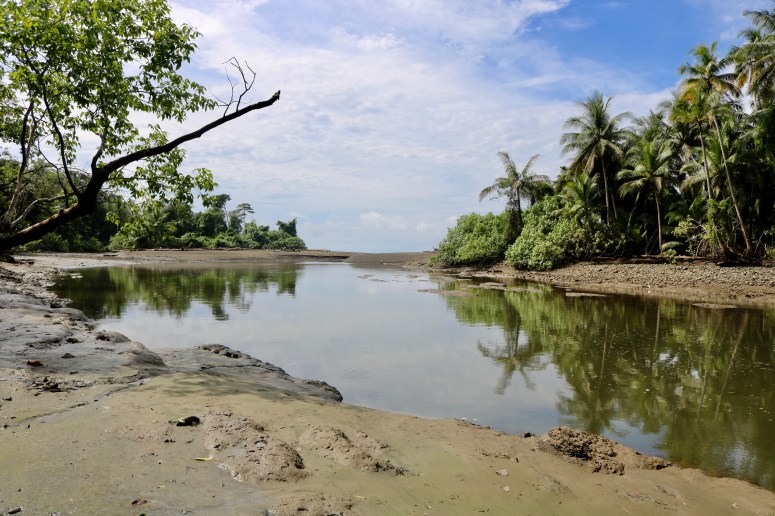
It’s a Caiman and it was hiding out in a stream with three others nearby. Below is a boring pic of Rio Sirena during our hike. Such a calm and muddy river…flowing to the Pacific Ocean…and hosting populations of American Crocodiles and Bull Sharks. It’s a long journey from this place to emergency medical care.
IMG_8093

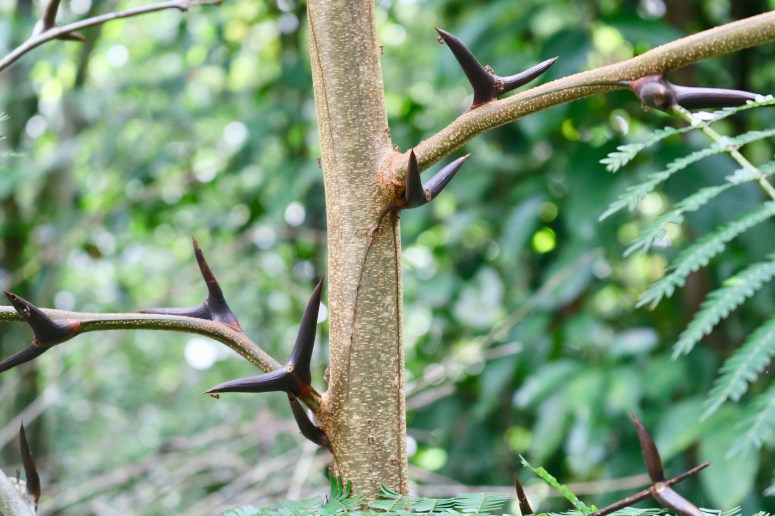
Wherever you go hiking or walking through slick mud, be cautious when grabbing onto trailside flora for support.
IMG_8122


CHAPTER ELEVEN

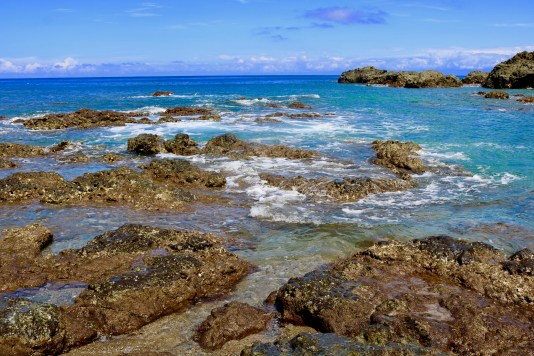
Isla del Caño Biological Reserve off the coast of Parque Nacional Corcovado doesn’t seem to have a chance in a world where alarms are sounding throughout the scientific community about the future for Earth’s coral reefs. Some warn the Earth might lose 90% of its coral reefs in the next 30 years. Others say all of Earth’s essential and irreplaceable coral reefs will be gone in 30 years.

You can still dive and snorkel through the protected and splendid coral reefs of Caño Island with a guide. A tour allows time to relax on the island’s remote beaches with the most charming collections of hermit crabs crawling around and hiding inside individually precious shell houses. Our guide, a marine biologist decorated with tattoos of marine life, told us one story of an unfortunate encounter with a Stingray. The side of her foot made contact with the animal’s vicious tail as she stepped into the Pacific Ocean to go for a swim. “I just didn’t see it,” she said. She also said the pain was excruciating, there were stitches and meds, and it wasn’t a big deal. After proceeding to educate us about the marine life we might encounter and raising our consciousness about the fragility of the biological reserve, she made a final announcement: “Please, remember to enjoy yourselves!”

We snorkeled along walls of coral teeming with a lot of our favorite fish, got accepted into an elite school of high-achieving fish, saw a Zebra Moray Eel, and observed several graceful Stingrays gliding through their own marvelous worlds under the sea.

IMG_8385

IMG_8438

IMG_8388

IMG_8442

IMG_8439


CHAPTER TWELVE

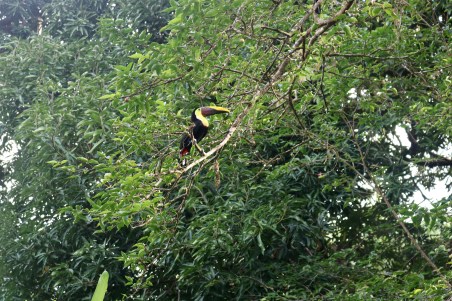
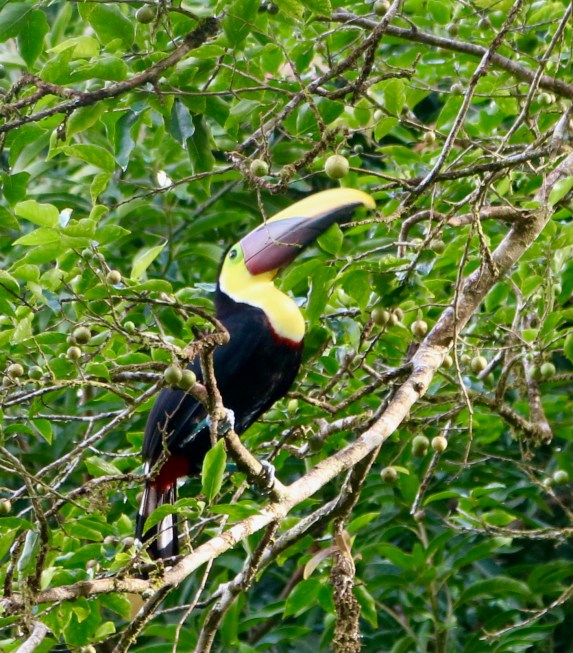
“Toucan!”

Such extravagant achievements of Mother Nature! Up close and personal (they delighted us every day at Casa Nirvanita) these birds supersede their images as cartoon characters and cereal box ambassadors.
IMG_8604

IMG_8603

A Toucan in flight!

IMG_8244


CHAPTER THIRTEEN

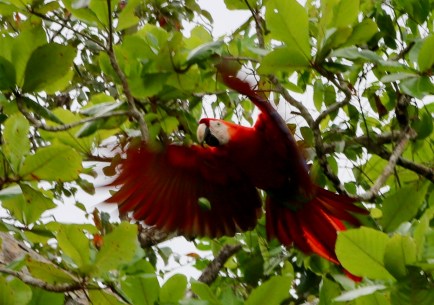
As for the Scarlet Macaws. 😦  Costa Rica’s Osa Peninsula is a surviving outpost where these largest of parrots still exist in the wild. The birds are far too prized as pets and must be protected from poachers. They are intelligent, noisy, adorned with royal avian plumage, and several of them lived in the jungles along our beach.

Scarlet Macaws mate for life.

IMG_8189

IMG_8196

IMG_8213

IMG_8197


CHAPTER FOURTEEN

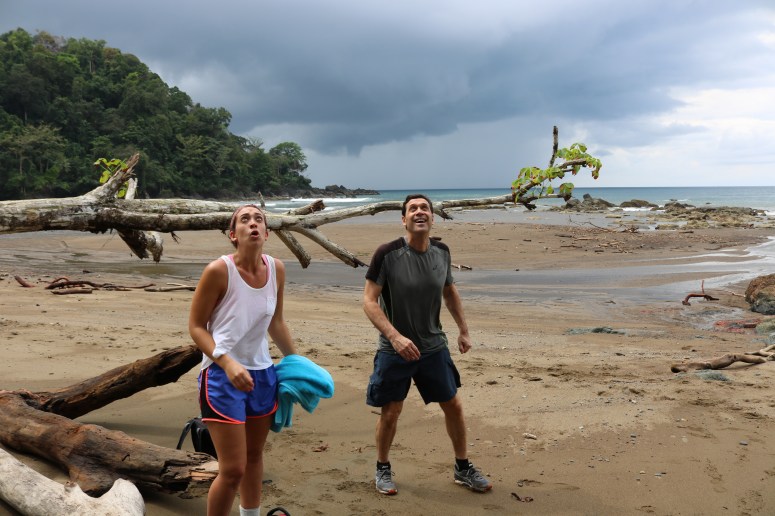
What about the monkeys? Captivating, cute, ferocious, and eerie. Never have the unfathomable spans of evolutionary history come to such a howling stop as the moment I watched a White-faced Capuchin Monkey—after days and days of observing them swinging, sailing, and lounging in the jungle canopies—stand up and take a few steps. Spine tingling and funny bone shivering.

All four species of Costa Rica’s native monkeys inhabit the Osa Peninsula. Three of them, the White-Faced Capuchin, Geoffrey’s Spider, and the Mantled Howler swing through the treetops using prehensile tails, which are like an added limb. A fourth species, the Central American Squirrel Monkey, uses its tail mostly for balance.

Those prehensile tails gave a colony of White-faced Capuchins an unfair advantage over us when we entered one of their fiercely protected territories while hiking from Casa Nirvanita to Playa San Josecito. The little rascals probably wanted any picnic hidden in our backpacks and from what I observed, they were good at getting what they wanted—the wrack line near their territory was cluttered with tourist debris. (But no dead bodies.) The monkeys outnumbered us by about 20 and they closed in from every direction, snarling, screaming, and chasing. We’d been enjoying the meditative daze of a good hike, weaving in and out of the jungle, up and onto sandy coves, over rocks and through rivers. The surprise attack left us no way out—we were the monkeys in the middle! So we picked up the pace. So did the monkeys. We hollered at them. They screamed back. My husband grabbed a giant stick. The monkeys grabbed sticks. Then, my husband began whipping a big palm tree branch around—trying to take out and sweep away as many agile aggressors as possible. And that’s when I saw an alpha male wrap his prehensile tail around one of those really big palm tree branches and begin running at us with it! The battle of wits only ceased when we made it through that monkey pit and out the other side, where Playa San Josecito sparkled in the sun.

We waited until the tide receded far out before hiking home. Low tide gave us a much-desired option for skirting the monkey zone (we could hike out on the beach, through rocks) and when we began to intrude too close to the monkey pit, they approached the edge of the jungle—some of them venturing out onto the rocks—just to let us know we’d made the right decision about where to walk.

Watching monkeys in the trees.
IMG_8021

White-faced Capuchin Monkeys.

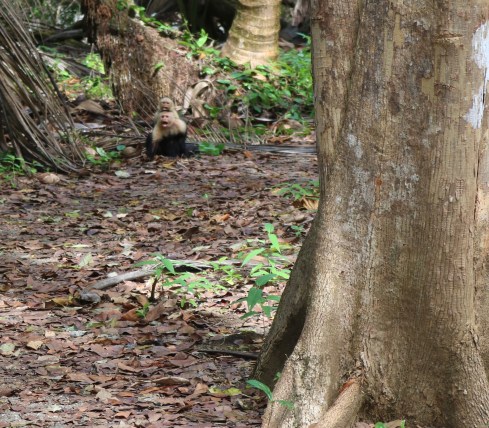
Hiking through a colony of bold monkeys. Note the alpha male with a soldier on his back screaming in harmony at us.
IMG_8658

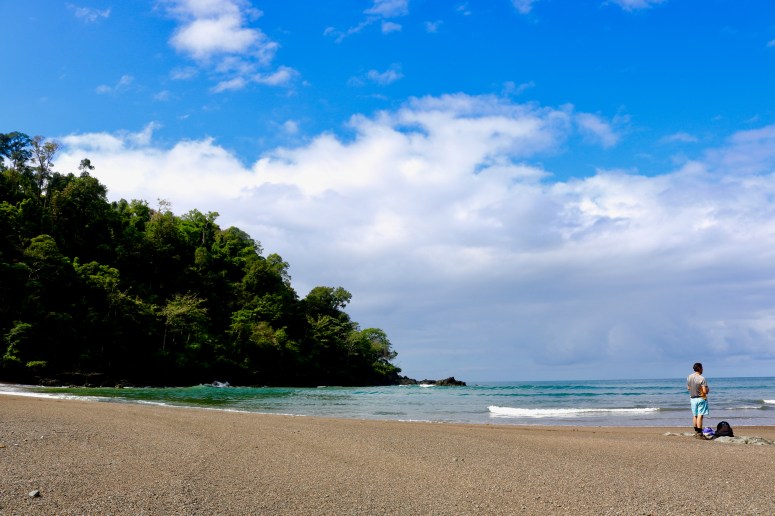
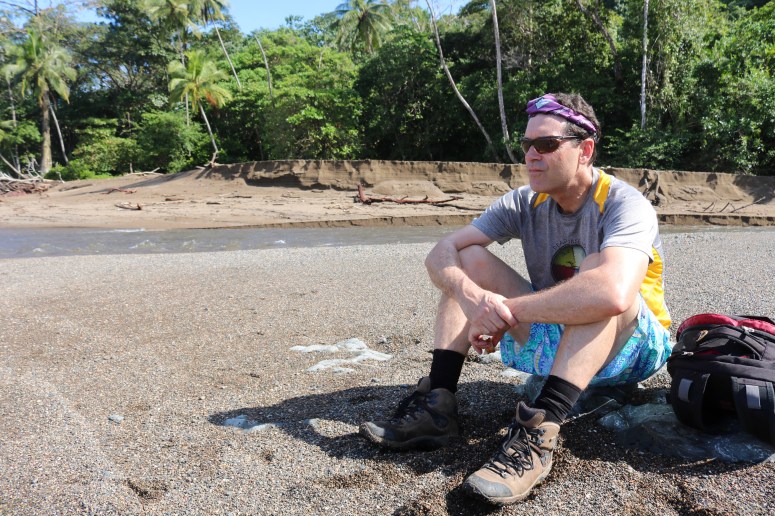
The world-class hiking trail that passes in front of Casa Nirvanita to Playa San Josecito crosses Rio Claro (best to try it at low tide) near a sea turtle sanctuary.
IMG_8644

IMG_8646

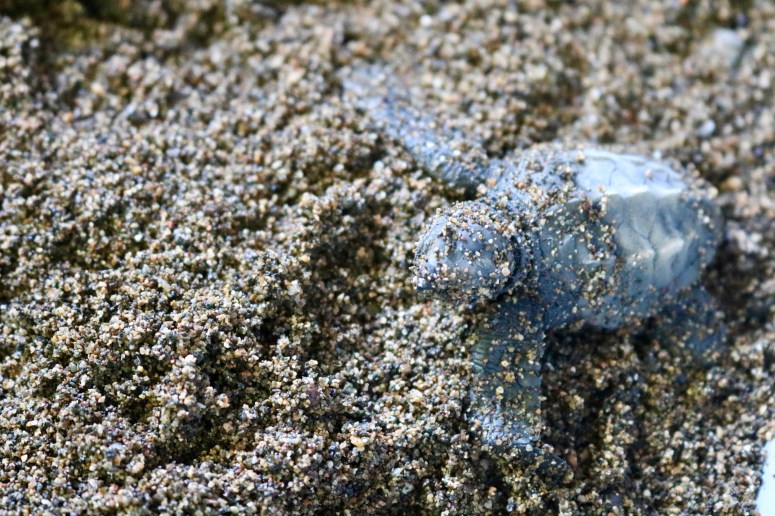
Newborn turtles at the sanctuary!

IMG_8650

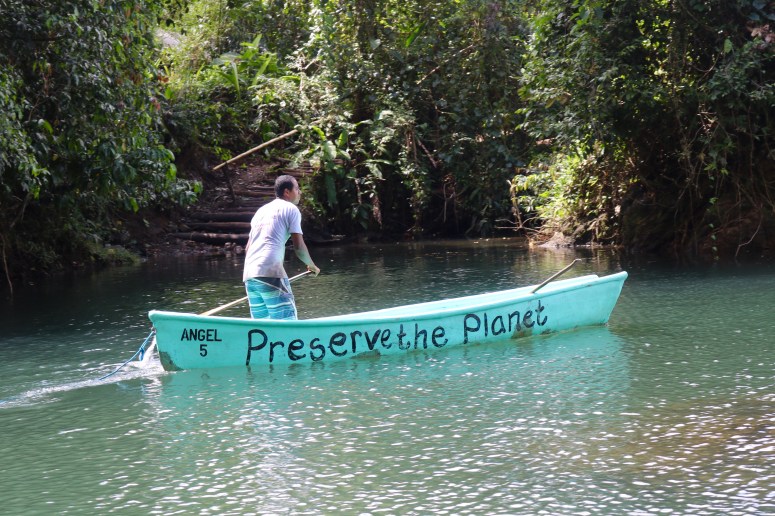
The current in Rio Claro is strong. When the tide is high, or if you don’t want to try wading through, there’s an option to take a short boat ride over the river for a couple of bucks. The money funds the mostly-volunteer staffed turtle sanctuary.
IMG_8699

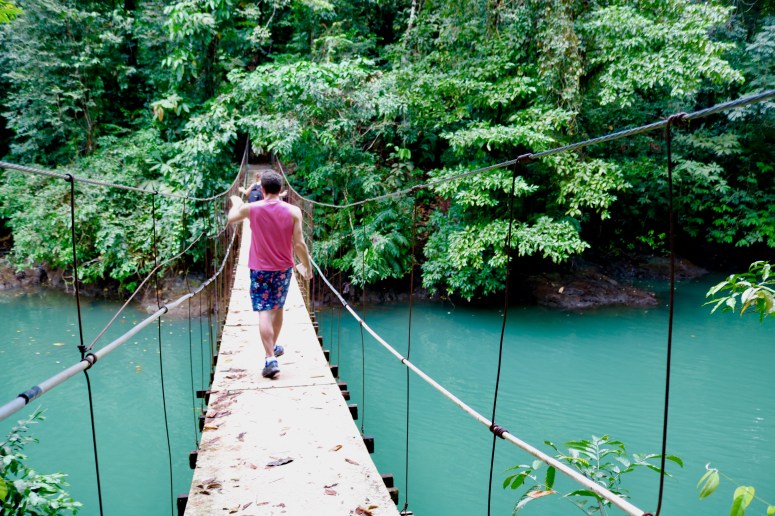
Views from the trail inside the jungle.

IMG_8686

Afloat at Playa San Josecito. Not a secret beach, but a beautiful one. Except for the nasty monkeys on the trail closer to the beach, the hike to get to San Josecito is mid-range rugged, spectacular, and muddy.

IMG_8666

A Ctenosaur? Iguana? Ticos walking home with their impressive daily catch. 


CHAPTER FIFTEEN

Confession time. We weren’t completely isolated from the real world at Casa Nirvanita. The same hiking trail leading to Playa Josecito in one direction, led to the modest (as of this writing) village of Agujitas about 3 miles away in the other direction. We took a walk one day, and found the trail linked up with one of the most elite eco-lodges on the Osa Peninsula. The town of Agujitas has a variety of good value lodgings too.

We left in the afternoon for our hike to Agujitas, found a great place to enjoy a drink and a snack, and hustled back onto the trail hoping to make a safe return to our Jungle Palace before dark. I was the last one—taking too much time to watch the sun set in various coves from too many stunning cliffs—and as the jungle was going dark, the Howler Monkeys began to cry out from the tree tops. Few experiences will raise the hair on your neck the way finding yourself alone in the jungle at night with Howlers hootin’ and yowling does. Their calls amplify sensations of feeling lost in an ancient (familiar?) and unnerving primordial otherworld.

This friendly dog hiked all the way to Agujitas with us.
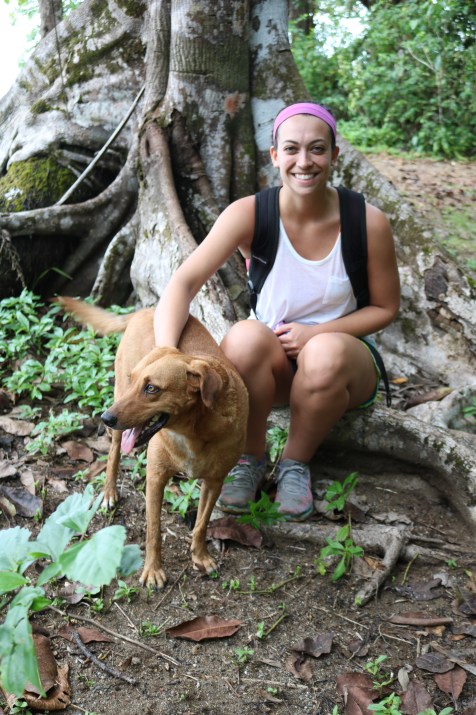
IMG_8279

IMG_8286

From Casa Nirvanita, it’s a 6-mile hike (round trip) to go have a beer or Piña colada or soda and a snack in Agujitas. Spectacular route with fun bridges over colorful rivers. 
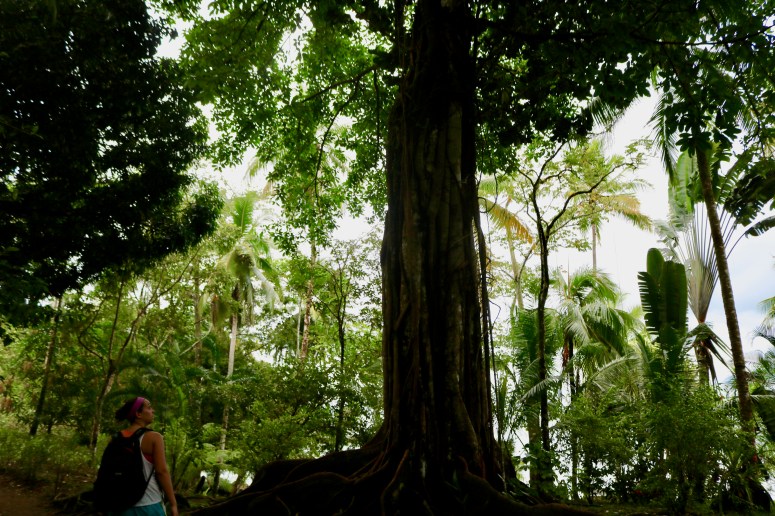
IMG_8332

IMG_8354


CHAPTER SIXTEEN

Unofficial list of wildlife we encountered:

Howler, Spider, Capuchin, and Squirrel Monkeys. Pale-billed Woodpecker. Agouti. Blue Crayfish. Smoky Jungle Frog. Scarlet Macaws. Tiger Heron. Stingray. Zebra Moray Eel. A lot of tropical fish. Pecarries. Coati. Caiman. The greatest variety of Hermit Crabs we’ve ever observed, moving around both on and off the beaches. Halloween Moon Crabs. Other crabs. Pelicans. Sea Turtle. Bats. Opossum. Parrots. Toucans. Hummingbirds. Vultures. Blue Morpho Butterflies. Other butterflies. So many colorful birds I am so sorry I didn’t record their names. Termites. Spiders. Iguana or Ctenasaur. Geckos. Toads. Frogs. Blaberus giganteus. Tailless Whip Scorpion. Leaf-cutter Ants. The tracks of a Tapir.
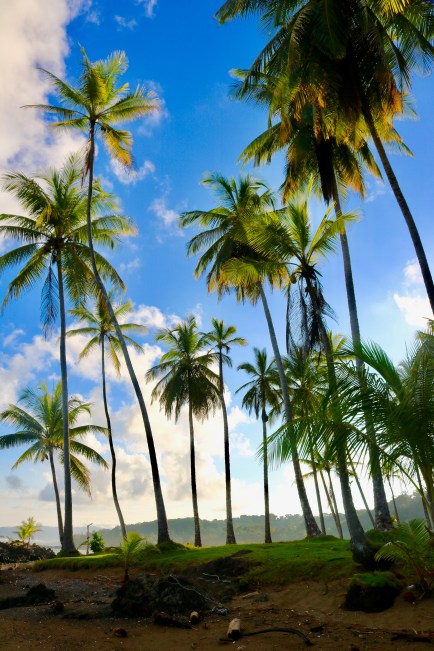
IMG_7859


CHAPTER SEVENTEEN

Something has to be written about how we ate during our time as castaways on the Osa Peninsula: We forgot to buy crackers. There wasn’t any chocolate. No sugar. No ice cream. No cookies, cakes, muffins, or pies. No candies, syrups, or honey. No endless bags of various varieties of chips.

We prepared our meals using the foods of Costa Rica: Rice, beans, fruits, vegetables, eggs, chicken, shrimp, fish. We did have some peanut butter and jelly, too. After several days, we felt noticeably better. Perhaps this jungle diet has to be consumed while hiking every day, swimming in the Pacific Ocean everyday, and experiencing full-body pure humidity sweats all day/ everyday in order for it to bring on feelings of refreshment.

Maybe too, one is refreshed by the joys of preparing meals together and sitting down to eat them together while the music of the ocean plays in the background.

Artful meal prep in the kitchen at Casa Nirvanita.
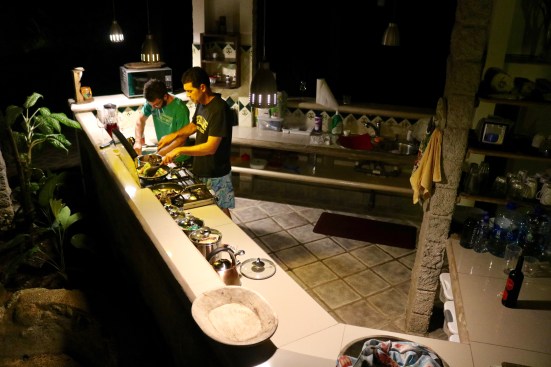
IMG_7985

Poetry readings during brunch. (Poetry written on location, Osa Peninsula.)
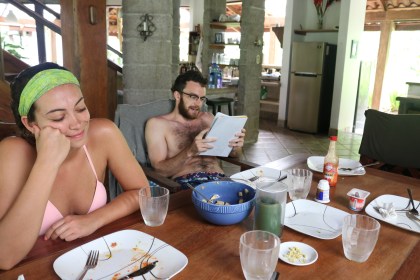
IMG_8231

I named several of our happy hour appetizers: Howler Monkey Nests. Pelican’s Pleasure. Green Iguana Slurp. Halloween Moon Crab Cakes. (Made with shredded carrots and rice, no crabs.)

IMG_8515

Our hosts at both Eden’s Nest and Casa Nirvanita gave us chilled coconuts and we added the coconut milk to our fruit smoothie concoctions.

IMG_7759

CHAPTER EIGHTEEN

One more pass through the once-in-a-lifetime sanctuary of peace and tranquility where I never had to lock a door or close a window or turn on air conditioning or fire up a heating system.

IMG_8767

Farewell smiles with our host at Casa Nirvanita, Clara.
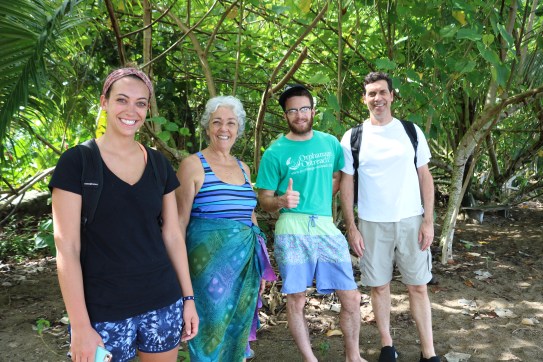
IMG_8771

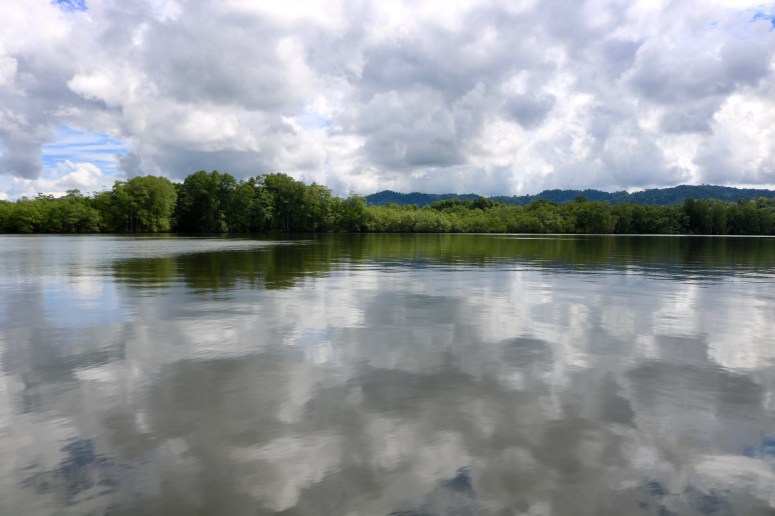
Rio Sierpe, homeward bound.

IMG_8786

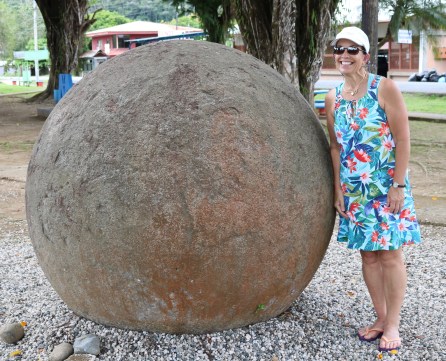
Grabbing some last-minute mana from one of the mysterious pre-Columbian stone  spheres in Sierpe.
IMG_8796


EPILOGUE

A traveler through the coastlines and jungles of Costa Rica’s Osa Peninsula won’t find grand monuments commemorating so-called glorious reigns of kings and queens. No cathedrals, tombs, or museums filled with artwork, weaponry, furnishings, or other tchotchkes of human existence disrupt the landscapes. It’s a small place, for sure. Maybe not much happened—in the storybooks of human history—on the long sweeps of curved shoreline where the Pacific Ocean has stroked the edges of magnificent jungles since forever ago. Or, perhaps, maybe some of the things that did happen—through the actions of humans recklessly searching for gold and other riches, exotic plants, exotic foods, exotic animals, slaves—were never deemed worthy of enshrinement.

All I know is that my luck did not fail me when I decided I wanted all of my family to see and learn more about one of Earth’s last surviving worlds of natural biodiversity. I hoped it would be one of those lost worlds still at work cranking out—for plucky travelers—soul sprints brought on by the one and only: Mother Nature. My good luck had to work overtime. Jungle safaris are undeniably booby-trapped with danger. Never did thoughts of Pit Vipers and the safety of my children leave me alone, especially at night when we spied an opossum in a tree and I remembered that the Fer-de-Lance likes to eat them and that a big snake was only recently seen in the very environs into which we had ventured. I also needed to find sanctuaries where we could merrily pass the time collecting shells and exploring tide pools while soaking up the sun. Somehow, we were able to sneak in 8 unforgettable days at Casa Nirvanita before the owners removed their Shangri-La from the rental market. Hopefully, it will come back on the market, because if I am ever lucky enough to return to the Osa Peninsula, I would stay at Casa Nirvanita again for all of my jungle safari adventures.

There is no other place on the planet like the Osa Peninsula.

From Osa Conservation.org:

Once an island floating in the Pacific, the Osa evolved in isolation until it merged with mainland Costa Rica by way of the same fault system that extends to California. Located along the Central American isthmus, Costa Rica itself is a hotspot of biological diversity, as innumerable species poured into the land bridge created when the two American hemispheres joined together. When the Osa Peninsula joined the mix nearly 2 million years ago, the area became a tropical landscape of unprecedented richness. The Peninsula is estimated to house 2.5% of the biodiversity of the entire world – while covering less than a thousandth of a percent of its total surface area – truly earning its title as the most biological intense place on earth.

One of the last places in Costa Rica to be settled and still sparsely populated, the Osa is covered almost entirely in magnificent, virgin rainforest extending all the way to the Pacific Ocean. Separating it from the mainland is the Golfo Dulce – one of only four tropical fjords on the planet. The Golfo Dulce is in fact the only place on the globe where populations of both Northern and Southern Humpback whales meet to birth their young. The Osa packs an unparalleled amount of land and marine species and diverse ecosystems in an incredibly small area, including:

  • The most significant wetland ecosystem and mangrove forests of Central America
  • The largest remaining tract of lowland rainforest in Pacific Mesoamerica
  • 2-3% of flora found nowhere else in the world
  • 323 endemic species of plants and vertebrates
  • The largest population of scarlet macaws in Central America
  • More than 4,000 vascular plants
  • More than 10,000 insects
  • More than 700 species of trees (which is more than all the Northern temperate regions combined)
  • 463 species of birds
  • 140 mammals, including 25 species of dolphins and whales
  • 4 species of sea turtles

These incredible ecosystems provide invaluable services to the people who depend on them for clean air, drinking water, food, jobs, cultural resources and a stable climate – and so their conservation is critical.

GO OSA. SAVE THE PLANET.

IMG_8498

Brooklyn. Over and Over Again.

“I look out the window and I see the lights and the skyline and the people on the streets rushing around looking for action, love, and the world’s greatest chocolate chip cookie, and my heart does a little dance.” Nora Ephron, Heartburn.

This blog post is dedicated to my neighbor down the street, Lisa, who, like me, has lost a child to Brooklyn. She wanted some ideas for things to do in Brooklyn. First of all, anyone who has lost a child to Brooklyn should buy this book: City Secrets New York City, Robert Kahn, editor. I’ve had the book for a long time, but ever since my son added his heartbeat (four years ago) to all the others keeping the Center of the Universe alive and vibrant, I’ve started to make my way through all the dog-eared pages of the book. It’s been a lot of fun.

img_2372

Wintertime in the northeast can be cold and snowy. If you’re looking for some heat, there’s good news: This weekend’s forecast for New York City is promising BALMY temps. So put on your stylish boots, sassy scarves, and go.

We usually base ourselves in Brooklyn because, like everyone else, we love Brooklyn. Here are some of the things we might do on a warm winter’s weekend in Brooklyn:

Stroll the neighborhoods of Brooklyn to enjoy adorable dogs, graffiti decorated buildings and warehouses, charming ethnic enclaves of cultural foods and languages, parks, colorful human beings, neat architecture, cool cemeteries—it’s everywhere in all parts of Brooklyn.

If we are feeling brain dead, we might choose to go to a museum. The Brooklyn Museum of Art is filled with surprises. Try going without researching what is there. One of the  treasures I came upon the first time I went to the Brooklyn Museum of Art was their fabulous Art Nouveau Butterfly Gate by Emile Robert. Can wrought iron be sensuous? It sure can!

In Long Island City (not far from the borders of Greenpoint/Williamsburg) there’s the Isamu Noguchi Museum. Perhaps a bit too esoteric for some, but maybe not. Restful, civilized. Tres serene.

We have a process for visiting the Metropolitan Museum of Art in Manhattan which is to slowly see the permanent exhibits by choosing one or two exhibits, instead of trying to walk through the entire museum. That way, we don’t have to spend an entire day in the museum or subject our brains to a meltdown. The Met has a suggested admission price—you can decide for yourself how much you want to pay or you can choose not to pay at all if you can’t afford to pay. If you are only heading in to see one thing and planning to stay for under two hours, (probably not possible, but maybe), you could pay less for your admission. That’s what we do. Since it’s going to be a balmy weekend, a walk through Central Park to the Met (or from nearby subway stops) would be very nice. Here are a couple of cools things to choose to see at the Met. (Don’t be surprised to find yourself falling down rabbit holes as you try to see just one thing):

  1. The Gubbio Studiolo featuring mesmerizing intarsia—an elaborate form of wood inlay marquetry created in 15th century Italy. Bazillions of pieces of walnut, beech, rosewood, oak, and fruitwoods have been used to create a stunning interior. This Italian studio from the Ducal Palace is a masterpiece of human obsession and a surprisingly charming place to find oneself in NYC. You will feel such delight if you go. It’s the most fascinating treasure hunt to find objects in this artwork. Hopefully you’ll have the studio all to yourself.
  2. The 6th century BC Etruscan chariot. Craftsmanship? Without climate-changing industrial manufacturing plants? Whoa.
  3. Not far from the chariot display there are Roman rooms with lovely frescoes, including one from Boscoreale, a village north of Pompeii, which was buried in the infamous eruption of AD79.
  4. The Damascus Room. Here you will find, of all things to find on a winter’s weekend in NYC, the residential winter reception chamber from a wealthy Syrian 18th century residence. Poetry is inscribed on its walls—forty stanzas—inspired most likely by the 13th century poet, the eminent Sufi, Imam al-Busiri of Egypt. He wrote what many believe to be the most recited religious poem in human history, the Qasidah al-Burdah, also called The Poem of the Mantle and The Celestial Lights in Praise of the Best of Creation; written as an ode praising the Islamic prophet Mohammad at a time when the poet had suffered paralysis from a stroke and was healed in a dream.

You can find translations for the poetry in the Damascus Room on the Met’s website and read it while you are riding the subway. (You do ride the subway, right?)

img_0185

Back in Brooklyn:

If it’s balmy, walk over the Brooklyn Bridge. Read Walt Whitman’s Crossing Brooklyn Ferry and an old blog post of mine Doing Lines in Brooklyn. 😀

https://theresajohnsonbertz.wordpress.com/2015/11/05/doing-lines-in-nyc/

It’s fun to walk to Manhattan at sunset, watching the sun fade away. Then walk back in the dark with all the city lights. Remember to spot the Statue of Liberty on the horizon!

Saturday morning: Grand Army Plaza Green Market—a farmer’s market I’ve never been to during wintertime, but I would check it out on a warm winter’s day.

FOOD! Here are some fun food stops in Brooklyn:

Radegast Hall and Biergarten. Afternoon happy hour with lively bands. My husband and I were the oldest partiers there during one afternoon in October. Our kids didn’t mind.

img_0193

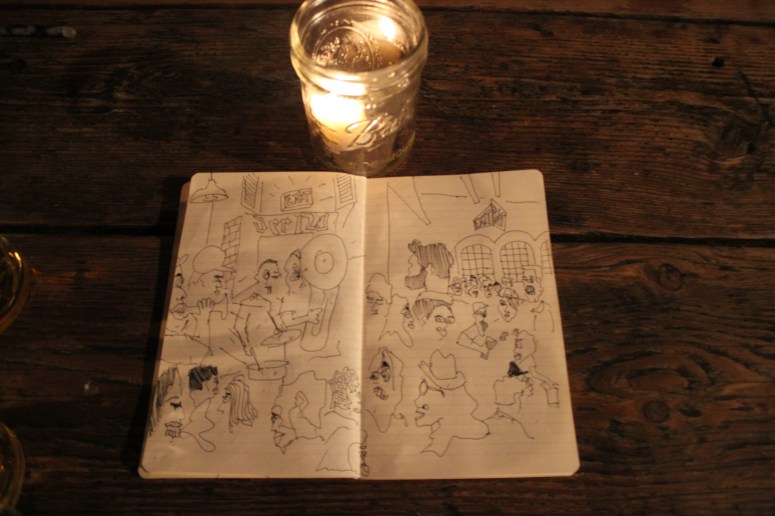
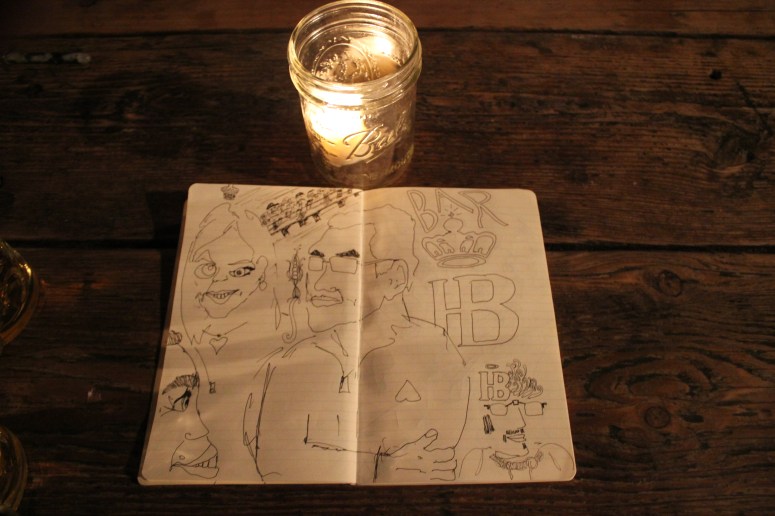
We all like to draw in my son’s journal when we are observing, and participating in, beer hall behavior.

img_0202

img_0209

img_0229

img_0230

img_0231

PEACHES HOT HOUSE. Bedford-Stuyvesant. Southern comfort food. You will want to be comforted by everything on the menu. Nashville-style HOT chicken. Not a fancy place. GOOD food.

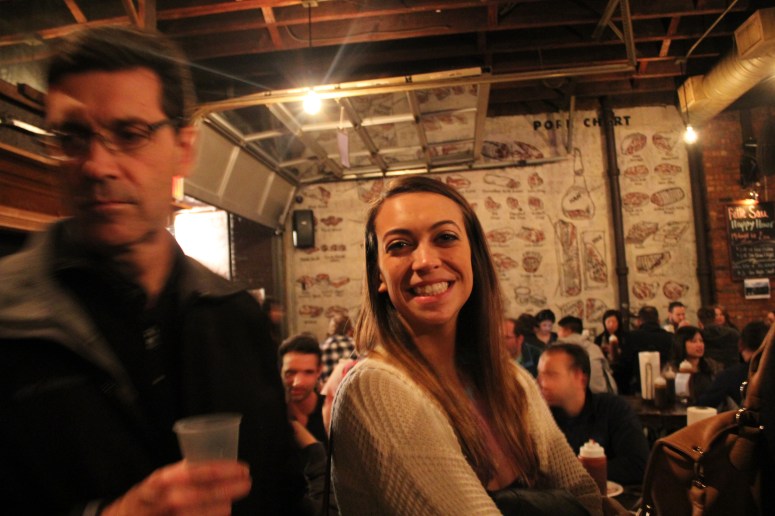
FETTE SAU. (Williamsburg I think.) It means “fat pig” and it’s a barbecue place in a converted garage (so, you know, HIP) where the chaos of craft beer, beef, and American whiskey will make you feel like a jolly fat pig. We stood in a line that snaked outside and we ended up eating outside. Maybe it will be warm enough to eat outside during the upcoming balmy weekend.

img_0243

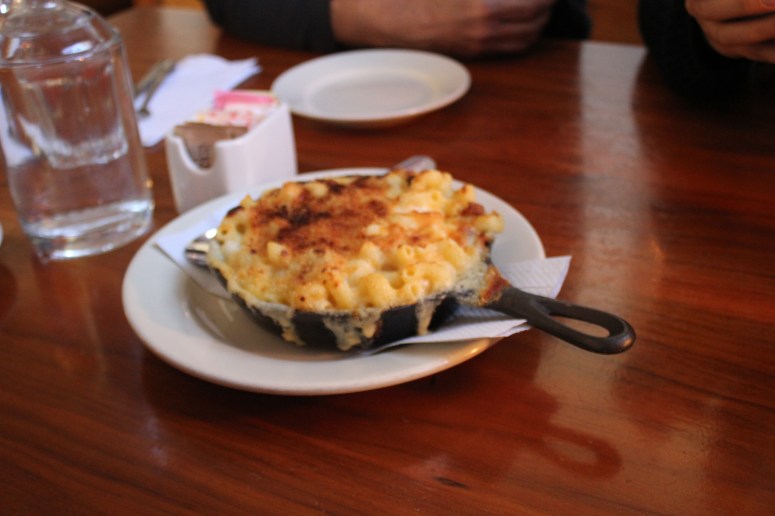
THE BROOKLYN STAR (Williamsburg.) Great for Sunday brunch. All kinds of comfort food and drinks to soothe overstimulated, overfed, and overindulged brains before you exit The Center of the Universe at the end of your weekend. Get in line early. Family bonding over shared mac-n-cheese is a new kind of religion for Sunday mornings in Brooklyn:

img_0277

As always, before traveling to Brooklyn,

REMEMBER TO READ THE FINE PRINT:

img_0261

img_0262-2

***ALSO***

***THE NEW YORK TIMES TRAVEL SECTION JUST DID A “36 HOURS IN BROOKLYN” FEATURE THIS WEEK with a lot of great ideas! You can find it on the Internet!***

img_0258

img_0085

We love Brooklyn. Share your ideas with us too!

O! Canada. And a Recipe for Relief.

America keeps coming undone. We act so shocked, but, honestly, what would America do without the drama of dysfunction? It’s as though a plague of uncivilized humanity has escaped from Hater’s Anonymous rehab to indulge in PDR’s: Public Displays of Relapse. They dream of reestablishing a culture of coddled cads who think PDBB’s—Public Displays of Boorish Behavior—should be acceptable forms of discourse.

It’s utterly repulsive. I don’t like America right now. I’m not feeling the love and I loathe what is becoming of my country. America—with its farce of an election—is being dominated by a cesspool of withered minds and floppy mouths belching forth a stench so foul, I can’t breathe without gagging. This does not mean I’ve lost faith in America. But still—my broken heart!

The good news is, there are some bright horizons—like the one to our north, and downeast from Maine. If any Americans out there, (like me), are seeking some relief, stop for a minute and say a prayer of gratitude for our position on the planet next to Canada.

Because across the border and into the Maritime Provinces, my husband and I have always found kindness, resplendent scenery, powerful tides, rejuvenating hikes and bike rides, nurturing food and drink, and wonderful music. These maritime—“of the sea”—lands include Nova Scotia and Cape Breton Island, Prince Edward Island, and New Brunswick. I’ve traveled to all of Canada’s Maritime Provinces, though not as often as I’d like. From where I live, Halifax is an easy flight out of Boston. Prince Edward Island and New Brunswick are road trip excursions. At the end of those road trips, a soulful and quiet peace awaits. It’s a welcomed type of slow travel that rarely moves beyond first gear, especially if you travel late into autumn which is what my husband and I just did.

On one hand, the Canadian Maritimes-style peace is so slow and so quiet that I don’t want to tell anyone about it. On the other hand, I’m not so sure people are interested in true peace anymore.

—Or their own souls.

—Or the souls of others.


Upon arrival in Canada, we stayed in a campground overlooking the Bay of Fundy from the town of St. Andrews, New Brunswick. The date was Canada’s Thanksgiving holiday weekend. We cooked dinner outside, the sun set, and soon a fellow camper stopped by our campsite to invite us over to his campsite for an evening of music. Thus passed our first night away from America as we found ourselves taken in—and taken away—by a fiddle player, guitar players, and singers performing songs and hymns in the distinctive, Celtic-derived traditions one looks forward to hearing in the Canadian Maritimes.

A few days later, my husband steered our motorhome into the belly of a ferry bound for Grand Manan Island—part of an archipelago of islands afloat in the mouth of the Bay of Fundy. The great American woman and writer, Willa Cather, spent many peaceful summers on Grand Manan, which is how I first learned about the island.

img_2238

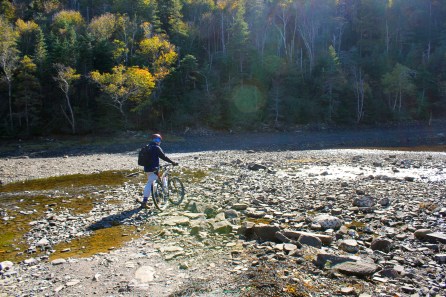
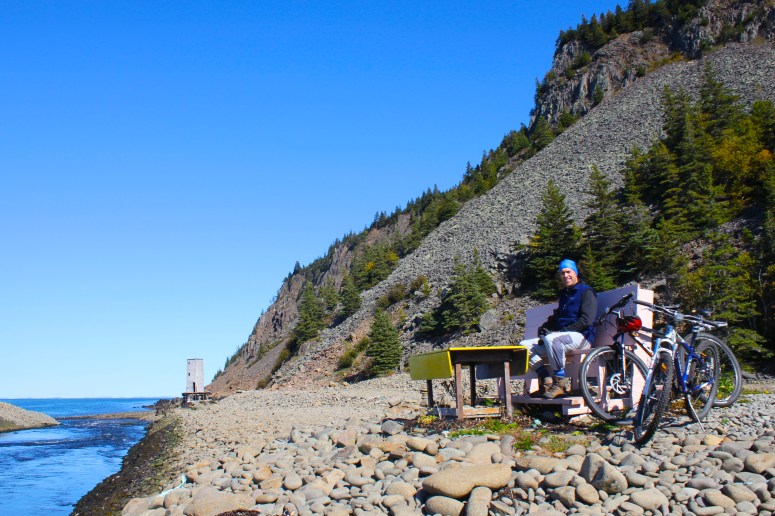
On Grand Manan, we found North Head Bakery and bought ginger molasses cookies, macaroons, warm baguette, sugar donuts, and still-steaming raisin bread. We found walking trails at the very edge of majestic cliffs with only fresh air to steady our wobbling legs. We found islanders that waved hello whether we were driving our huge motorhome on their narrow roads or riding our mountain bikes up and down their hilly routes.

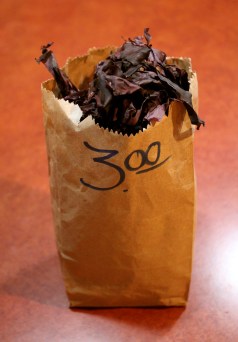
We biked to the infamous island outpost of Dark Harbour where we enjoyed a unique place to have a picnic. We discovered dulse, a superfood sea vegetable (aka seaweed) harvested by hand from the ocean and dried on rocks under the summer’s sun.

img_2107

img_2146

img_2152

img_2136

img_2142

img_2156

img_2163

img_2141

img_2160

img_2164

Willa Cather wrote: When kindness has left people, even for a few moments, we become afraid of them as if their reason had left them. When it has left a place where we have always found it, it is like shipwreck; we drop from security into something malevolent and bottomless.

America is shipwrecked. It has been sunk by malevolent and bottomless madding crowds.

A history of shipwrecks surrounds Grand Manan Island. Her cliffs are dangerous, wild, and windswept. One stands on the edges of the island in the year 2016 and considers the consistent tug of Earth’s greatest tides, those forces always at work eroding the truths we no longer seem to value and uphold as self evident. Indeed, a faraway island can leave a traveler like me, a woman unmoored from her own country, feeling hopeless and stranded. I found myself wishing the tides of the sea could take me away. Then I wanted them to promise to bring me back. I wanted to present the Bay of Fundy tides to the rest of the world, so everyone could notice how powerful and precious and vast they were, and how small each and every one of us becomes when we stand facing the phenomenon of Earth’s relentless waters.

img_2229-2

img_2231

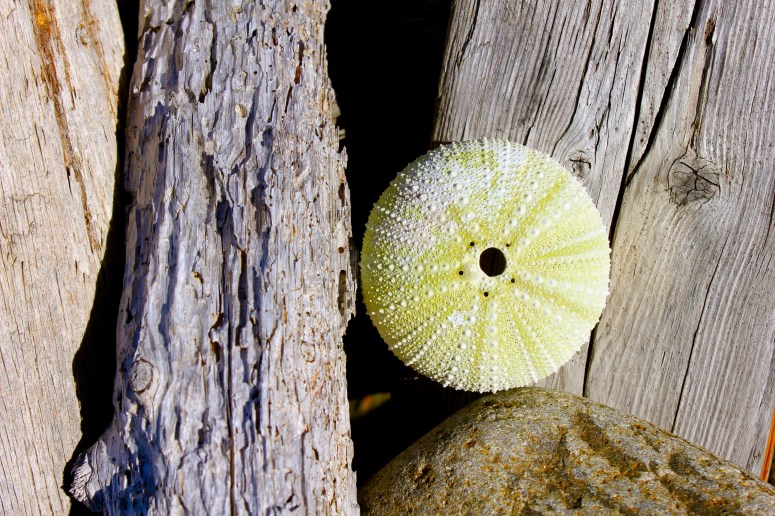
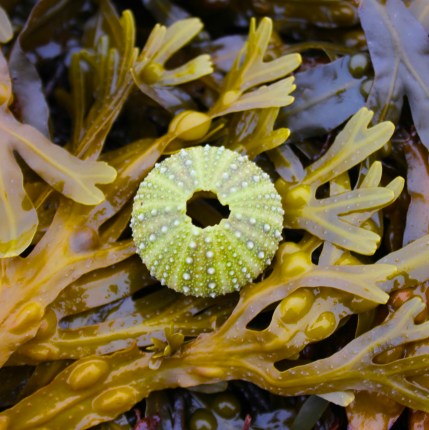
I asked the tide to bring me sand dollars—

Intact sea urchins—

Pretty sea shells—

Fossils from a time when the Earth was not yet ravaged by the egos of men and women.

img_2172

img_2187

img_2167

img_2177

img_1962

img_2224

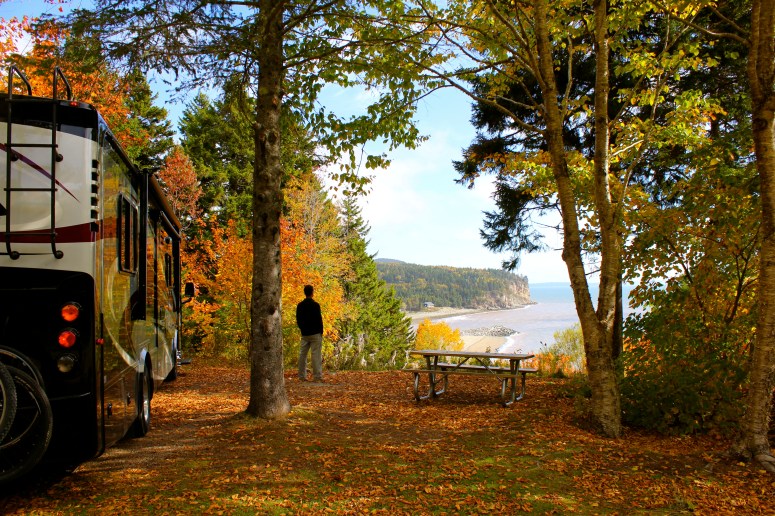
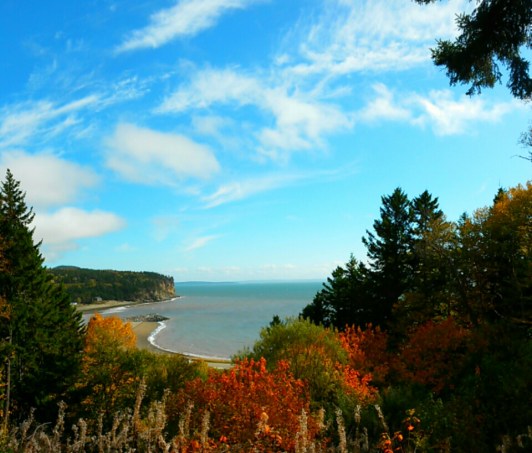
The tide took me from the island of Grand Manan to Fundy National Park where one of the most stunning campsites, Site 59, overlooked the whole wide world, in peace.

img_2257

2016-10-13-10-57-38

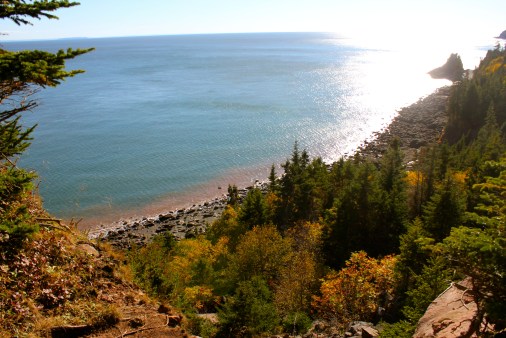
Our hikes there included premier trails through coastal forests, good doses of satisfying physical exertion, and solitude. Our bike rides and walks upon the ocean’s exposed floors elevated our spirits to our most grateful selves while pastoral settings inspired us to believe romantic thoughts about life. Cliffside picnics made our egg salad sandwiches taste royal enough to be served on golden paper plates.

img_2391

img_2264

img_2314

img_2382

img_2376

img_2417

img_2299

img_2310

We found friendship in the small, small village of Alma at the base of Fundy National Park where we were given the last of the season’s fish chowder on an outside deck at Tipsy Tails as the weather began to turn. Our server said: “Two bowls of chowder, two beers, and two blankets?” then she invited us to join in with the town later that night to celebrate the morning’s anticipated launch of the lobster fishing fleets when the tide would be high enough to float all boats. From our campsite, perched over the village, we heard the music commence as the moon was rising. We bundled up and walked into town using a sturdy, cliffside staircase comprised of more than 100 steps. Sea ballads, Scottish and Irish folk songs, and more hymns filled the night. The next morning, a bagpiper played as gale winds and dark clouds cast shadows over the faces of babies snuggled in the arms of mothers and grandmothers and aunties. Young men clung to boats jammed with lobster traps and before long, the boats sailed through the winds and out of sight. All of the fishermen faced long, hard, hopeful days at sea.

img_2323

img_2319

img_2317img_2329

IMG_2349.jpg

img_2366

20161014_080727


Upon re-entry into the United States, a guard asked us if we had any plants, fruits, or vegetables from Canada in our motorhome. We said no. He said he was going to have to come on board and see for himself. He opened our fridge, seemed satisfied, handed us our passports and said, “Welcome home.”

We did have one vegetable on board and I’m glad it wasn’t confiscated. It was the dulse, which hid itself well in spite of smelling like the boldest of low tides. The taste of it, right out of the bag, is just as strong and gamey as the aroma. But it is a legendary superfood with phantasmagoric health benefits and I was determined to learn how to cook with it.

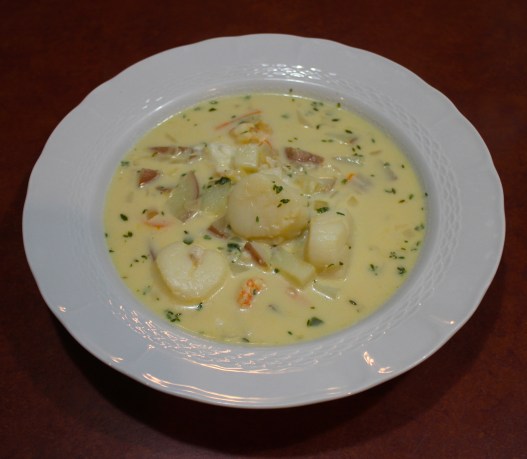
Within a day of our return, I created my own version of fish chowder inspired by travels through the Canadian Maritimes and our discovery of the world-renowned dulse harvested in Dark Harbour, on Grand Manan Island. I used simple ingredients kept stocked in our kitchen. As I cooked, I reminded myself of how kind the people in Canada had been to us. When speaking about America’s sordid election, the Canadians we met didn’t hesitate to express their faith in America and many showed compassion for the unfortunate relapse into dinosaur-brained recklessness going on throughout every state. One man assured me, “America will do the right thing.”

But I don’t know…Willa Cather’s peaceful visits to Grand Manan ended in 1940 when safe passage to the island was threatened by German submarine activity in the Bay of Fundy.

If America wants to be great again, it must become kind first. Where there is kindness, there is reason. Where there is reason, there is peace.


COMFORT AND KINDNESS FISH CHOWDER

4 cups chicken stock (I used a 32 oz. store-bought carton)

2 cups chopped onion

1 T butter

1 T flour

1 cup half and half

1 big carrot, peeled and cut into half moons

6 red potatoes chopped into half inch squares

8 scallops (I keep a bag of Trader Joe’s jumbo frozen scallops handy)

1 handful of langostino tails (also a Trader Joe’s frozen seafood product—tastes like a combo of lobster, shrimp, crayfish)

3/4 lb. of fresh cod, cut into one inch pieces

Chopped thyme, chives, and parsley from the garden

2 T chopped dulse 

2 handfuls of dulse, cut into strips for frying in olive oil

Slices of baguette bread

Saute the onion in the butter until soft, but not brown. Blend in the flour, cook slowly and remove from heat. Slowly pour and stir in two cups of the broth. (This is a Julia Child all-purpose chowder base.) Add the carrots, add the rest of the broth and cook until just before the carrots are tender. Cook the potatoes in a separate pot of water until just before they are tender. Drain them and add them to the broth and carrots. Heat on low. Add spices, salt and pepper, and chopped dulse to taste. Pour in the half and half and gently heat up without boiling. Place all of the seafood into the chowder and let cook for ten minutes. The fish will break up, adding texture and flavor to the broth.

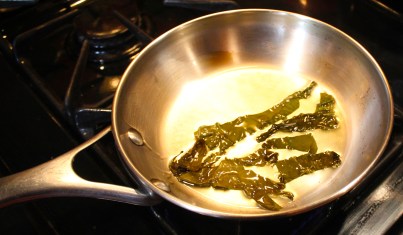
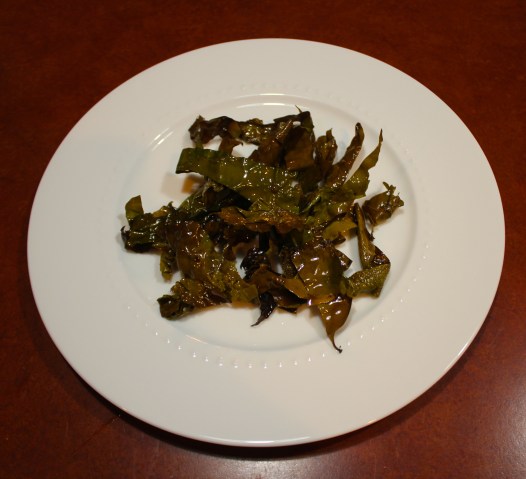
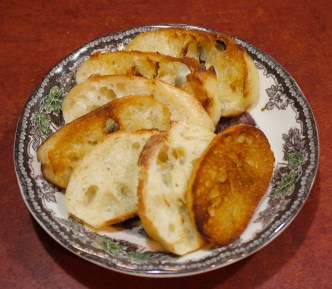
Heat olive oil in a pan. Working quickly, fry the strips of dulse, turning them once and draining them on paper towels. Toast a few slices of baguette in the olive oil. Fried dulse is tasty! It’s good dipped in salsa, too.

Serve the chowder hot with fried dulse on top and on the side.


Dulse from the market in Canada.

img_2462

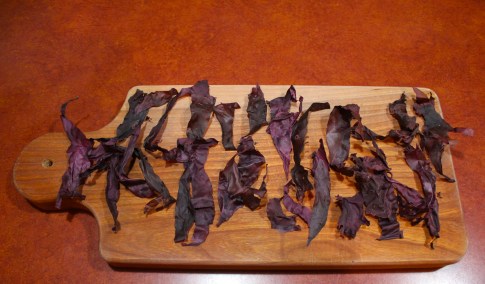
A handful of dulse.

img_2468

Dulse separated into strips for frying.

img_2469

Fried to a crisp, glossy green.

img_2470

img_2471

Baguette dulse-flavored by toasting in the remaining olive oil.

img_2473

The chowder only needs some pepper and fried dulse on top.

img_2477


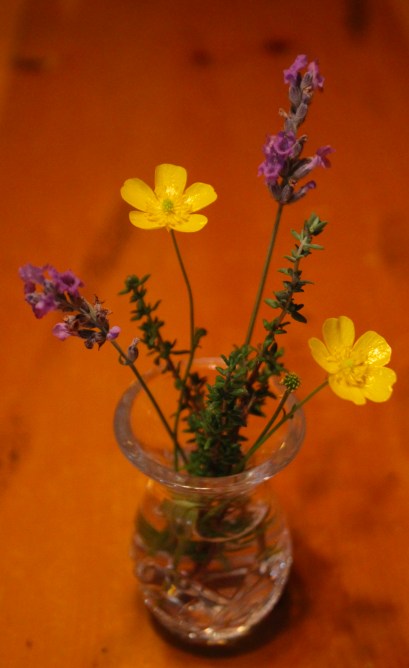
I set our table with a small arrangement of buttercups I found on the edge of our last mountain biking trail in Fundy National Park and some thyme and lavender still blooming in my garden went we came home. I found the vase at NovaScotian Crystal in Halifax when we traveled through on our way to Cape Breton two summers ago. The vase is perfect for small and sweet bouquets from the garden.

img_2464

Believe in kindness.

Tools for Sustainable Loneliness.

What do you have to show for all of your loneliness? Destructive addictions? Obsessive behaviors? Too many hours spent staring at the cobwebs cluttering up your vast funks? You ask the spiders: Are you depressed? Or are you lonely? They bite you.

Same.

One of the most pleasurable obsessions I have to show for all of my loneliness is an attraction for tools. I especially love hand tools and have loved them since my own days of yore when we young ones were neglected and allowed to play with really cool, authentic things that didn’t come to us road-blocked behind rules, regulations, age restrictions, or trigger warnings.

On any given summer’s day in the times of yore, I’d take a few slow laps around the family garage before setting out to wander through the fading frontiers of America’s un-gentrified, suburban free ranges. Many family garages displayed a good selection of random tools and mine was one of the best being managed, as it was, by my dad, the United States Air Force man who grew up as the oldest boy on a farm. I went for Dad’s hammers, saws, shovels, maybe some pliers, and an ax. I’d load my wagon with Dad’s tools and leave home. Texting Dad in order to ask permission for engaging in the behavior of helping myself to his tools was, blessedly, not possible. Besides, I was following orders from Mom: Go outside and play.

On my way to the ancient childhood hinterlands, I’d stop at new-home construction sites, peruse their junk piles for lumber and add choice finds to my wagon. I planned to repurpose everything into an outpost. My outposts were repeatedly attacked, sacked, and plundered. I repeatedly rebuilt and reinforced. Dad would ask, whenever one of his carefully maintained tools went missing: Why? Why can’t you remember to bring the tools home? Why can’t you put them back where they belong? Why can’t you return them in the same condition you found them? Where are they?

They are somewhere in the woods of Indiana and/or the foothills of the Sonoran Desert in Arizona. It was in those places where I learned, on my own, how to love being lonely. A lot of children discover how to love their loneliness within the pages of books. For me, it was tools. If you take a hammer and hold it like you mean it, it becomes like a divining rod—leading you on to worlds of creative possibilities and sustainable satisfaction. Pounding a nail true, hits the spot every time. Success. Pleasure. Purpose.

I’m still a lonely girl, and I’m still loving—and losing—tools. Recently I lost one of my favorite gardening tools—my soil knife. She is a substantial hunk of steel fastened onto a sturdy handle. Her hunk-of-steel blade has one sharp edge and one serrated edge, making her a champ for slicing into the soil to lift out weeds and/or for sawing apart the gnarly root balls of plants. There’s also a handy v-notch cut out of her blade for ripping through twine. The handle of this tool, BTW, is neon orange—designed especially to help lonely wanderers, afflicted with an array of distraction disorders, find their tools when they lose track of life. My gardening tool will come back to me when my prayers to Saint Anthony make it though the queue. Until then, I’ve distracted myself with the old pitchfork, an outstanding hand tool for the quiet work of digging out unsustainable turf in order to replace it with beautiful, and more sustainable, gardens.

********

So it should come as no biggie surprise that when a lonely girl like me lands, in her luxury gypsy motorhome, in the parking lot of a truck stop near Gardiner, Maine, late at night, with the husband she met when she was too lonely to care about boys, and that husband says what do you want to do tomorrow—Lonely Girl looks at a map, opens a couple of cold beers, and can’t wait to answer the question. I open the windows, too, and speak to the hum of idling truck engines, all at rest after long days on the road. I keep romantic ideals about what I want to do and what I hope to find tucked in, and simply suggest a list of options for the next day’s adventures:

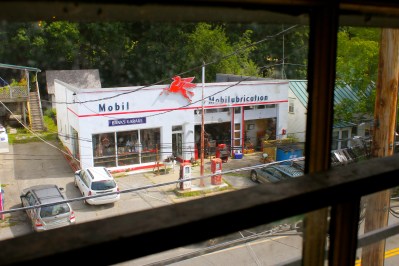
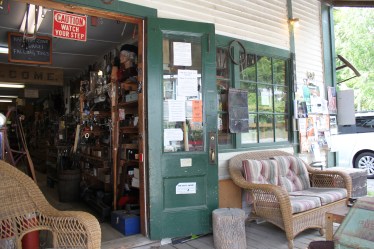
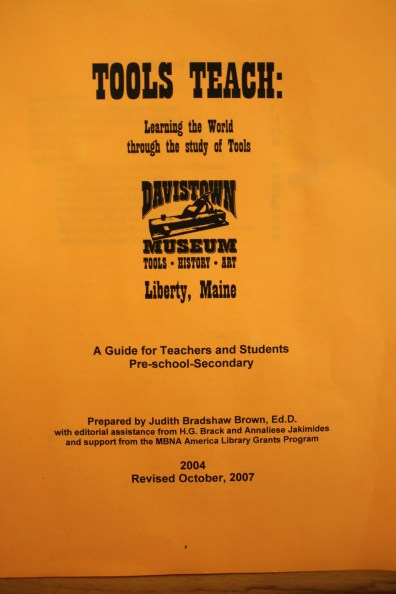
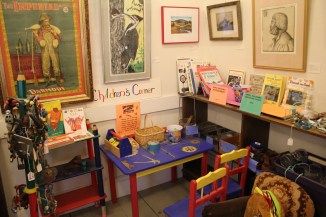
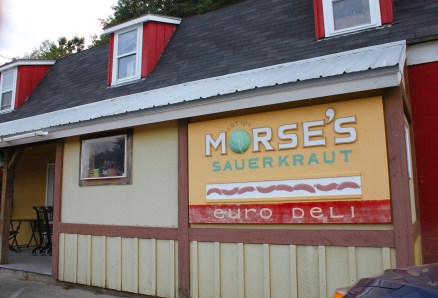
The Liberty Tool Company in Liberty, Maine. The Davistown Museum, across the street from Liberty Tool. And Morse’s Sauerkraut Euro Deli in the middle of one-of-the-best nowheres, which just happens to be on our route to Camden, Maine, the next day’s destination.

To lonely people everywhere, I say go to where lively spirits live their obsessions. You might discover that what you thought was loneliness might only be a longing—for what’s real and what’s cool and what’s peace and what’s good.

There are a lot of places in Maine where scholars, intellectuals, and classic passionate folks maintain playgrounds for those of us who choose to sustain our most lovely lonelinesses through the practice of learning all we can about what we like. For those of us who aren’t lonely at all, unexpected excursions and serendipitous discoveries are just plain fun. Liberty, Maine is an amusement park for the brain. (Go before the bourgeoisie litter the sidewalks with their Starbuck’s cups.) Even just watching the following video, about The Liberty Tool Company, offers the viewer a restful excursion:


********

If you go to Liberty, remember to pace yourself. The Tool Company will take you far, far away. I found a prayer card for fifty cents, a book by William Trevor for a buck, (The Day We Got Drunk On Cake), a chisel engraved S. J. Addis from London (late 1800’s?) for $2.50, an L.S. Starrett Co. divider for $3.00, and two Road and Track Magazines for $3.00 each. My husband found tools to keep in the motorhome for random repair work.

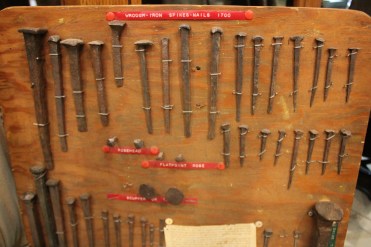
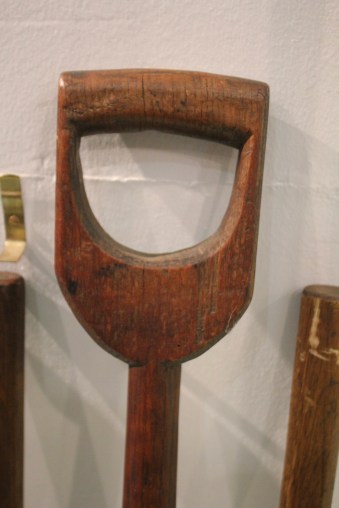
Hopefully you’ll reserve some brain power after your excursions through the tool store, because a trip across the street to the Davistown Museum will pretty much set your brain on fire. It’s a hands-on experience. You can touch and hold tools from a long time ago. Like a pitchfork from the days of the Revolutionary War, procured from Concord, MA. Slip your hands through the wooden handle and think about the work you might have performed, while keeping three day’s worth of provisions and weaponry strapped onto your body. You were an elite Minuteman, one of the Sons of Liberty in Massachusetts and, as such, you lived your life ever ready to enter into battle at a moment’s notice.

Or kneel beside the cobbler’s bench and examine its piles of tools. All of those tools and one artisan needed to fashion shoes, by hand.

Peer through a hazy glass case at a curious collection of wampum, one of the largest in New England on public display.

There’s a historic Wantage Rule—used to measure the volume of beer—it’s one of the earliest examples of American colonist’s Robert Merchant’s fine workmanship which came to equal the quality of work being produced in England long before the Revolutionary War.

There’s a fabulous children’s corner. Children can invent and build tools. Adults can gain access to research and resources supporting the value of studying the art and history of toolmaking.

There’s art—a lot of great art by contemporary artists at work in Maine.

There are so many tools, from so many chapters in history, to admire.

There’s a Civil War crutch.

There’s a chilling display of prison tools—made to be used as weapons by prisoners.

Some things are for sale. I bought a painting and two hammers. One of the hammers is completely hand made.

If you need to take a rest, there’s a nice porch where you can sit awhile.

********

After our time in Liberty, we hit the road for Camden State Park where we planned to set up camp for the next several nights. En route we had no choice but to stop at Morse’s Sauerkraut Euro Deli as per a recommendation from our son. He goes to Union, Maine with his comrade-in-drumming arms and fellow Slow Roasters musician, Freedom, to mine stone from ancient quarries for building percussion instruments. They also study drumming and percussion practices from secret sources. Upon hearing that we would be rolling through Union on our way to Camden, our son alerted us to the existence of a gastronomic outpost known for serving and supplying all comers with the most flavorful German food in the universe.

As it turns out, Morse’s wasn’t the only unexpected German-themed thing that happened to me as a result of my road trip via Liberty, Maine to Camden. There was a surprise literary excursion into one of those Road and Track magazines I’d acquired…an issue dated May 1972…which I thumbed through before packing them up to be sent away to my son in Brooklyn.

That part of my adventures and special finds in Liberty, Maine must remain secret until my son receives the magazines. He is the most passionate automobile enthusiast I’ve ever known—and Maine has plenty of places where that kind of lovely loneliness is sustained, too. Like the Owl’s Head Transportation Museum in Owl’s Head, Maine, (not far from Camden), where we went a few times when he was a little boy. There, his lovely, often lonely, attraction to automobiles and cool airplanes was sustained. We enjoyed car shows and once, we flipped out over the super-exciting experience of watching—and listening to—a GeeBee Racer airplane fly.

The state park at Owl’s Head is free. The rock beach there still rocks.

Random collections of Porsches were sunbathing in the parking lot of Owl’s Head State Park when we made our most recent journey there while camped in Camden.

And the tide pools…

It all makes me want to get lonely.

********

Liberty, Maine.

IMG_0297

IMG_0300


IMG_0307

You can buy books and a wedding dress.

IMG_0304


Children’s Corner at Davistown Museum.

IMG_0316

IMG_0313

IMG_0311.JPG

IMG_0315


Cobbler’s Bench.

IMG_0338


Historic tools.

IMG_0321

IMG_0327


The hand-carved handle on a pitch fork from Concord, MA

Revolutionary War period.

IMG_0324

Creepy weapons made by prisoners.

IMG_0336


Always-welcome Maine humor.

IMG_0343


On the road to Morse’s Euro Deli in Maine.

IMG_0357

IMG_0373


It’s no secret. You might have to wait a while.

IMG_0368

Sunny day display at Owl’s Head State Park.

A group of enthusiasts, no doubt, cruising the coast.

IMG_0442


Our rainbow beach umbrella, propped up with rocks.

Lovely loneliness.


IMG_0453

Along the tide’s edge, there is an underwater world to obsess over

as you stand in Penobscot Bay

and never notice how cold the water is.

IMG_0451

IMG_0471


The Princess and the Pea*ce.

If you’ve ever wondered whether or not royal blood pumps through your veins, try this: wander the earth for days and days in the rain until you find a castle where a prince and/or a princess lives with a dad (the king) and/or a mom (the queen). Or two dads as kings or two queens as moms. Or the dads can be moms and the queens can be kings.

Knock on the door, introduce yourself, and say that you are so exhausted you’d appreciate a warm, dry bed with a fresh pea under the pillow. If you wake up the next morning with a pounding headache, chances are someone in the castle put a frozen pea under your pillow, not a fresh one.

IMG_5845

At the breakfast table, ask a simple question. Did someone put a frozen pea under my pillow last night?

If this question causes the castle dwellers to drop their tea cups onto their eyefones and crack the selfie screens they use to put their pictures on the app Cinder, (which helps people find a real prince and/or a real princess), brace yourself. Someone is going to pop a gasket and say: How dare you suggest we believe in frozen peas in this castle!

Ask the next question. I woke up with a wicked bad headache and that never happens when I sleep with a fresh pea under my pillow. Did someone put a stone under my pillow?

Now you’ve done it. Hold up a piece of toast to shield your face from the spray of saliva aimed right for you when they sputter, collectively: Are you calling us stoners?

Keep your composure and say: Okay then. Does anyone know the answer to this question: Is a pea a vegetable or a fruit?

If everyone starts to laugh, offer to prepare a peas-ful dinner for later in the day.

********

IMG_5843

This blog post and the recipe that follows were inspired by a dull day of wandering around all the way over to the local farm where a pile of fat pea pods looked really good. I bought about 30 of the plumpest pods. I bought two ears of fresh corn. I bought some okra. I bought tomatoes from Maine.

IMG_5852

I took everything back to my castle. (And really wished it would rain. We need rain!)

The plan: Cook some form of succotash. Pile it onto a plate. Rest a skewer of barbecued shrimp on top. (Using Dinosaur Bar-B-Que Wango Tango Habanero HOT Bar-B-Que Sauce.)

Here’s the recipe, for use during the season of FRESH peas:

SUFFERIN’ SUCCOTASH

Saute FRESH peas in butter or olive oil with chopped onions and garlic.

Saute fresh peeled and chopped tomato with okra sliced into half inch pieces. (Drop tomatoes in boiling water for a few seconds to get the skins to peel off easily.)

Cook fresh corn, then slice the corn off the cob.

Mix all the vegetables together and add seasonings of salt and pepper and a teaspoon of sugar with a tablespoon of cider vinegar. (Or something like that or other seasonings you like.)

Add fresh chopped or hand-torn basil.

Barbecue some shrimp. Put the shrimp on the succotash.

My husband and I loved the meal. It was a great alternative to serving fish over rice. (We ate the leftovers the next day with grilled salmon on top.) My husband had never tasted a fresh pea, raw or cooked, in his life!

********

IMG_5859

IMG_5860

IMG_5840

IMG_5848

IMG_5837

********PEAS BE WITH YOU********

Gypsies. Tramps. Thieves.

Peasants. Criminals. Prostitutes.

Slaves.

My husband. My son. My daughter. Myself.

Rome.

********

No one makes it through life without a little hunger.

And, we are all slaves—

to our stomachs, to the beat of our hearts, to the madness of our desires. It is, of course, best to become a slave to your own desires, rather than the desires and expectations of others.

Yet here I find myself, living in a time in history when people all around me wish to become the slaves of other masters promising to coach them, cut them apart, and put them back together into idealized forms of god and goddess-like perfections. They seek to confess their crimes, vanquish their poverty, and avoid being seduced by authentic beauty and pleasures. They worry about how people have sex, how people eat, and how people use grammar.

They worry about how people judge each other as authentic or not.

Maybe it’s just me.

Best to leave my American bourgeois grumblings for a week and go to Rome for some attitude adjustment, with my family. Because, as my son says, the Romans were so badass. It’s true—every time I go to Rome, I excavate more and more of my humanity and can never be sure how badass I might have once been. Could I have been a vestal virgin? A peasant? A papal servant? A champion gladiator? A designer of fountains? A stray cat? A chanting monk? A trapped lion? A good Catholic? A happy Pagan?

We decided to go to Rome in January, a time in America when the new year is celebrated with gatherings of great councils of experts and social media gurus at work selling post-humanist “ta-da!” processes for achieving perfection, and post-humanist wonder drug formulas for brain boosting, and post-humanist public humiliation platforms for incorrect use of the comma.

It’s also the time of year when colleges are on break which meant my daughter was able to travel with us.

On our fifth day in the Eternal City, we walked from the ancient exile zone of the Jewish Ghetto (where we were staying) across the Tiber River to the ancient exile zone of Trastevere. We wanted to learn the art of preparing a typical Roman meal.

We were—every “perfect-American-family” one of us—hungry.

So hungry.

********

Sycamore trees bow into the now-walled-up Tiber River.

IMG_1760

IMG_1761

IMG_2129

********

Somewhere in the maze of the narrow streets that make Trastevere so irresistibly charming, Chef Andrea welcomes students into his kitchen at Cooking Classes in Rome. Don’t be late—it was the ugliest American thing we did. I go to Europe to find beauty in details. If you are late to Chef Andrea’s class, you will miss out on his special attentions to delightful beginnings for your day.

IMG_2249

IMG_2179

********

Involtini alla Romana. (Roman style beef rolls in tomato sauce.)

IMG_2147

IMG_2134

IMG_2135

IMG_2143

********

Bay Leaf. The Romans take it from plants growing everywhere. We learned how to prepare two forms of tomato sauce. One was used to submerge the Involtini alla Romana and let it cook, the other was for our handcrafted Cavatelli pasta.

IMG_2184

IMG_2174

IMG_2187

IMG_2182

IMG_2217

IMG_2188IMG_2211

********

Using Italian-made hand tools to handcraft Cavatelli pasta. Very zen.

Every piece of pasta has someone’s heart rolled into it.

IMG_2141

How much salt? One pinch per person.

IMG_2148

IMG_2154

IMG_2183

IMG_2223

IMG_2225

IMG_2233

IMG_2235

IMG_2239

IMG_2237

IMG_2231

IMG_2244

********

Carciofi alla Romana. (Roman style artichokes.) Roman-style artichokes are the food of the gods. American-style artichokes are for barbarians.

Goethe wrote in Travels through Italy: “The peasants eat thistles.” Supposedly it was a behavior he found too repugnant to ever enjoy.

IMG_2132

IMG_2192

IMG_2203

DO  NOT DO THIS:

IMG_2194

IMG_2200

IMG_2204

There is a secret stuffing prepared for the artichokes.

The most authentic stuffing uses a Roman herb growing wild along the Appian Way.

IMG_2210

IMG_2221

IMG_2222

********

Dessert. Crema al Limone con Kiwi.

And a lesson in which is the male and which is the female lemon.

IMG_2155

IMG_2160

Using the electric whisk.

IMG_2161

IMG_2165

IMG_2163

IMG_2177

********

Our cooking instructions included intriguing history lessons and useful magical secrets about how to properly infuse artful details into your work as a chef in the kitchen. Many of the recipes are derived from necessity and are composed using the kinds of foods that were available to be used by the lower classes that lived on the “other side of the river” in Trastevere. The prostitutes learned to prepare and strategically place aromatic meals out into the narrow alleyways where the scents of sexy cooking became concentrated. Such tantalizing pleasures—on several levels—were impossible to resist by potential customers.

Indeed, cooking engages all the senses.

We opted to have wine pairings with our courses and Chef Andrea’s choices were exquisite.

My husband and I have enjoyed various styles of cooking classes in France, in other parts of Italy, and in the United States. Chef Andrea’s Cooking Classes in Rome exceeded our expectations and the price was surprisingly reasonable.

********

Time to eat our works of art with all of our new friends from all over the world.

The Carciofi alla Romana appetizer.

IMG_2257

Paired with Prosecco di Valdobbiadene.

IMG_2260

First course: Handcrafted Cavatelli fatti a mano con sugo di pomodoro fresco e basilico.

Paired with Frascati Superiore DOC

IMG_2264

IMG_2263

Second course: Involtini alla Romana.

Paired with Negramaro, from the heel of the boot in the famous and breathtaking

Puglia region in the south of Italy.

IMG_2270

IMG_2274

Dessert: Crema al Limone con Kiwi.

Paired with Moscato, 100% Malvasia del Lazio “gleaming golden yellow grapes”

harvested in late October.

IMG_2277

IMG_2278

IMG_2291

IMG_2293

********

At the conclusion of our meal, Chef Andrea asked if any of us would one day use the secrets we learned back in our own countries. What artist does not wish to change the lives of others for the better? And why go to Rome if you do not want to be inspired to create something great?! Or be transformed?

We returned home on a Saturday evening. By the next night—Sunday—our humble gypsy-camp kitchen in America was being transformed into a Trastevere-style trattoria. My daughter’s boyfriend wanted to learn everything we could remember from our day with Chef Andrea in Rome.

********

You don’t need a big, industrial, or high-tech kitchen in order to make art with food. In fact, most of our classes in Europe have taken place in kitchens as small, or smaller than, ours.

IMG_2588

Rome in January was lovely, about 60 degrees. I was happy to find some parsley hanging on in my herb gardens, even though snow was on the way.

IMG_2593

For the handcrafted pasta:

IMG_2595

We had to ask for artichokes at the supermarket. They brought some out from the back storerooms. They weren’t as beautiful as the artichokes in Rome, but still worthy.

IMG_2599

In order to offer finely-grated Pecorino Romano,

this is the side of the cheese grater to use:

IMG_2604

Chopped herbs and garlic and SALT.

IMG_2630

The secret to cooking and eating garlic,

and still being able to get a sweet (not smelly) kiss from your true love all over Rome:

IMG_2625

********

IMG_2606

The artichokes will definitely require some more practice:

IMG_2628

IMG_2629

IMG_2607

IMG_2608

IMG_2612

IMG_2649

IMG_2633

IMG_2638

Lemon zest in the milk for the dessert:

IMG_2621

********

IMG_2655

IMG_2657

IMG_2666

IMG_2663

Beautiful snow began to fall during the last course. I set the dessert glasses out to be blessed before assembling the Crema al Limone con Kiwi into them.

IMG_2671

IMG_2675

A glass of limoncello for everyone.

IMG_2682

********

The next day, Monday, there was a generous slice of beef, a few slices of mortadella, and some pasta left over. I sliced the meats and dropped them, along with chopped garlic, into fresh tomato sauce and, borrowing a tip from the prostitutes of yore, began letting it cook. Sexy aromas floated up to—and swirled all around—the desk where my husband had returned to his workaholic self. (Monday was the Martin Luther King holiday. Though my husband had not driven into his office in Boston, he had begun work by 7AM and hadn’t left his desk even as the noon hour approached.) Soon, I heard my husband coming down the stairs, through the narrow alleyways, and finding his way into my kitchen.

We had a nice lunch together, planning our next trip to Italy, and a possible Roman feast at our son’s apartment in Brooklyn.

IMG_2692

IMG_2695

All roads leads to Rome. (Trucks created from random scraps of wood by my son when he was a toddler. Hand tools made in Italy for rolling out pasta.)

IMG_2687

********

If you want to know how to make the food Chef Andrea taught us how to make, you will have to visit him at his Cooking-Classes-in-Rome studio in Trastevere.

Is it worth it to travel all the way to Rome to learn how to make a typical Roman feast? And bring more beauty into your life? And spend time with your family making new friends over food? And feel more hopeful about our post-humanist world?

OMG.

Is the Pope Catholic?

********

Bah Freakin Humbug.

There won’t be any snow for Christmas where I live in America’s northeastern Currier and Ivesville. The grass is green and supple, flowers are blooming, and the birds are taking baths without chattering beaks.

For some of us, 2015 has been the best of years and the worst of years. Worst of all, best didn’t do such a great job of overcoming worst. Sometimes, worst is worst—maybe the worst—and even if you were to fill the cathedrals of the world with every bit of your best from one year, your worst might still hum a mournful wail over the happy-ending high notes we all hope to hit at year end.

And then what!

Well, 2015 was one of the worst years for me. But not the worst. It was, however, the worst year for too many of the people I know and too many of the people I don’t know all around the world.

There is one tried and true practice that, in my humbug opinion, never fails to create notes of grace through times of troubles. It is simply this: Think of others.

Last night, my husband came home from work hauling his collection of briefcases and his guitar. “Why do you have your guitar?” I asked him. Had he auditioned for a rock band? Were we going to sell everything and return to the halcyon days of worry-free living in rent control with bold cockroaches? The days when happiness was stored one block away at the local dive, where we’d go to drink cheap beers and watch Larry Bird show Magic Johnson how Indiana comes to Boston to shoot hoops? Pre-craft-beer glory times! When we used to donate blood to the lab rats at Boston U Med every week or so—on our way to work—for twenty five bucks which was the price of one lift ticket at posh Sugarbush or a couple of lift tickets at wicked uber-rad Mad River Glen, and a whole season of tickets at forlorn Hogback, which is now just a ghost mountain.

No. My husband was not planning to abandon our troubles. We’ve been in this place before. Things have been worse for us. And they have been better. And so it goes. (Vonnegut, with a long face.) And it’s a wonderful thing to be married to a dude who is steady and sensible, because if he had loaded that guitar into our motorhome and stuffed every dollar we’ve ever earned into the overhead cabinets and said to me something like Baby we were born to run I would have clipped a blinking Rudolph nose above my Grinchy frown, harnessed myself to the front of that leviathan rig, and yanked it high into the sky. Far, far away. As far away as far can go.

“I took my guitar to a client meeting today,” my husband said. He told me who the clients were—a lovely couple he enjoys very much—and I remembered that 2015 hasn’t been the best of years for them. One of their daughters has been seriously ill and one grandchild continues to battle heroin addiction.

“What was it like when you brought your guitar in?” I asked.

“I didn’t bring it in right away,” my husband said. “I wanted to see how the meeting went first. But after we got through their financial reviews, I said I wanted to do something different for them and that I’d be right back. Then I went and got the guitar. I said that I was sorry they had had such a heart-breaking year and that I wanted to give them a few minutes to sit, relax, and listen to music.”

“Did you feel awkward?” I said.

“Kind of,” my husband said. “At first. But then, it was just—nice.”

He played: Do You See What I See? Silent Night. And, Angels We Have Heard on High for his clients. A private and intimate performance, unexpected, all in the comfort of their quiet home, on a warm winter’s evening. I know how sweetly beautiful he plays those songs and I am sure his clients were touched.

My husband asked how my day had been. “Well,” I said, “I cried a little bit in the morning. Talked to my sister. Talked to your sister. Went for a walk in the early evening. You know. Did some work. Cleaned up.”

He opened a beer. We split it. He took a hot dog out of the freezer and cooked it on the grill. We split the last scoops of ice cream.

Another night of beer and ice cream for dinner.

********

One day, during the recent fall season, we had a lot of fun tailgating at a UConn football game. My husband’s favorite cousin and his wife joined us for a day of sun, fun, food, and Left, Right & Center—which my husband’s cousin rallied a large group of my daughter’s friends to play. It was a happy day when my husband’s cousin and his wife showed up to care about us during the most stressful days of our 2015, and everyone had a great time.

Only a few weeks later, on the Sunday before Thanksgiving, this favorite cousin died unexpectedly the morning after his birthday—one of the best birthdays he had ever celebrated.

When we went to the funeral, the day after Thanksgiving, I wandered away from the crowd at the funeral home and found a small bookshelf in a private sitting area. The collection of books covered all kinds of grief, all kinds of death, all kinds of life’s challenges. I reached for Viktor Frankl’s Man’s Search For Meaning and settled down to read it. The book is filled with shocking passages about the depths of human cruelty, human suffering, and human triumph. There are pages and pages of wisdom, philosophy, psychology, and suggested life practices.

I don’t imagine it was a book my husband’s cousin ever read, though he was an avid reader. He just didn’t need such books. He was content with his life, including all of its attendant heartaches and joys, and accepted, without too much judgement, the ways of the world. All families need a cousin like him, more than they need books by people they will never know. We will always miss him, and will always be grateful to have his spirit to see us through.

12109969_10206730075881908_4042360677964198636_o

********

For those of us who are, no matter what, in need of books like Frankl’s Man Search for Meaning, and find ourselves often tormented during the holidays by the joys and sorrows of lives as layered as an enormous vat of figgy pudding prepared to feed the hordes of revelers whooshing around on the ice at Rockefeller Center, there are ways to enjoy navigating the emotional minefields of Christmastime.

Of course there are.

First of all, take your family and friends and Internet bloggers up on some of those out-of-the-ordinary suggestions for holiday-season entertainment. My sister recommended my husband and I go see “The Curious Incident of the Dog in the Nighttime” during a visit to New York City. Neither of us had read the book. We woke up early on a Saturday morning, dressed up, drove a fast three hours to our favorite cheap (but nice enough!) hotel in Long Island City, Queens, (written about in my first blog post when 2015 was just getting underway), took the 7 Train directly to the theater district and settled in for a matinee performance. We thoroughly enjoyed the inventive and exciting play.

20151212_135652

Afterwards, we let a pedicab rip us off for a thrilling ride through the insane crowds and tightly-packed vehicles of Times Square. (It was so warm out! We feared for our lives!)

20151212_165336

We were on the way to the Morgan Library Museum, where we met our son and rushed through exhibits on Matisse and Hemingway. After that, we strolled in the tropical temps to the lounge at The Bowery Hotel for a quiet place to have drinks before dinner at Upstate Beer and Oyster Bar in the East Village—a place recommended by one of our son’s good friends. We ordered oysters, sea urchin, smoked trout, crab cakes, clams and fettucine, all served small-plate style in an intimate, dark space that’s lucious with crazy-loud happy eaters.

Another fun place for drinks with festive decorations: Pete’s Tavern near Gramercy Park. O Henry lived nearby, but did not pen The Gift of the Magi while drinking craft beers at Pete’s.

IMG_2877

Another suggestion: Listen to Patrick Stewart’s A Christmas Carol on the CD player in your car if you have to drive long distances alone. So superb.

20151215_123708(0)-1

Another suggestion: Bake cookies that require a lot of time and effort. Lose yourself in the long moments required to make a big mess and clean it up. Don’t get all Martha Stewart about how to decorate them. Hand the job over to the kids. Even if they’re big kids.

IMG_2774

IMG_2775

IMG_2778

IMG_2783

IMG_2782

And the old stand-bys: WALK through the woods! Early mornings and late afternoons are lovely. Later, drive around and look at Christmas lights. Professional displays are nice:

IMG_2623

But neighborhoods are the best, by far. Here’s the best band of 2015, Teeth People, out and about enjoying the bling of Dyker Heights, Brooklyn.

Unknown

********

And now for some of my favorite words from A Christmas Carol by Charles Dickens. The book is so good.

“Bah!” said Scrooge. “Humbug!”

“Christmas a humbug, Uncle!” said Scrooge’s nephew.  “You don’t mean that I’m sure.”

“I do,” said Scrooge. “Merry Christmas! What right have you to be merry? What reason have you to be merry? You’re poor enough.”

“Come then,” returned the nephew gaily. “What right have you to be dismal? What reason have you to be morose? You’re rich enough.”

“Bah! Humbug!”

“Don’t be cross, Uncle!” said the nephew.

“What else can I be,” returned the uncle, “when I live in such a world of fools as this? Merry Christmas! Every idiot who goes about with ‘Merry Christmas’ on his lips should be boiled with his own pudding, and buried with a stake of holly through his heart. He should!”

“Uncle!” pleaded the nephew.

“Nephew!” returned the uncle, sternly, “keep Christmas in your own way, and let me keep it in mine.”

“Keep it!” repeated Scrooge’s nephew. “But you don’t keep it.”

“Let me leave it alone, then,” said Scrooge. “Much good may it do you! Much good it has ever done you!”

“There are many things from which I might have derived good, by which I have not profited, I dare say,” returned the nephew. “Christmas among the rest. But I am sure I have always thought of Christmas time, when it has come round—apart from the veneration due to its sacred name and origin, if anything belonging to it can be apart from that—as a good time; a kind, forgiving, charitable, pleasant time; the only time I know of, in the long calendar of the year when men and women seem by one consent to open their shut-up hearts freely, and to think of people below them as if they really were fellow-passengers to the grave, and not another race of creatures bound on other journeys. And therefore, Uncle, though it has never put a scrap of gold or silver in my pocket, I believe that it has done me good, and will do me good; and I say, God Bless it!”

********

I say, God Bless the Keeping of Christmas, too, however it is you choose to do it. Keeping Christmas has always done me good and sustained me, even when I’ve been called upon to bear the worst of years. And if this has been a worst of years for you, I am thinking of you, and hoping the best of Christmas will find you, and see you through.

IMG_2750

From a painting given to me by my daughter one Christmas.

********


Twenty Fun.

Do you remember when you believed reindeer could fly?

Close your eyes.

It’s nighttime.

The night is so big. The cold is so warm. The snow falls and falls and falls.

Every snowflake is smiling.

The reindeer appear in rainbowed arcs from another side of the nighttime, flying forth on a trail of shining stars that look as though they are bursting and popping, yet they are as quiet as the gentle swish of a salamander’s tail.

The reindeer land in your backyard. Their coats of brown fur glisten in moonshine that smells like fresh honey and tastes like bright yellow.

Shiny-belled harnesses ring—winter’s own music—a thousand joyful nightingales singing Christmas carols.

Majestic antlers reach almost as high as your bedroom window where you are watching from the second floor of your home. Everyone else is fast asleep.

The reindeer stamp their hooves deep into the snow, jingle their bells, and—looking up—find you in your bedroom window, believing.

This gives them the courage to keep flying.

********

IMG_1197

(Photo by Aunt Heidi.)

********

Today is my daughter’s 21st birthday. Twenty Fun she says.

She was born to forever honor and keep special the expansive worlds of childhood play and creativity. She wrote her first manifesto as a toddler and has never doubted her words and all they can accomplish:

IMG_1186

She believes reindeer can fly and she believes in you, too. If you’re having trouble finding your wings, or calming an aching heart, she might cook you an unforgettable meal or leave a note under your pillow or on your desk.

IMG_1187

IMG_1198

She’ll pick a posy of wildflowers and arrange them just so in a paper cup and place them in the middle of a picnic table. She’ll bring you a butterfly.

IMG_1188

She’ll catch the biggest fish for you. Or the cutest creature colored orange.

IMG_1190

She’ll hike all day in the rain with you. She’ll bake for you. She’ll paint hearts and rainbows.

IMG_1610

She cheers for the home teams. She plays Christmas carols on the piano. She plays love songs, too, with her boyfriend.

IMG_0925

She’ll play board games and watch Disney movies, over and over again until everyone feels like going out for a night on the town, flying around, dressed in princess garb or mermaid skirts or cool boots. Get on your boots. Cowgirl boots. Hunting boots. Ski boots. Big city girl boots.

IMG_1194IMG_1195

IMG_1199IMG_3124

The spirit of party reigns in my daughter’s world. In fact, she has taught me that Party Spirit is the best remedy for the doldrums and the sads. It’s also a necessary component to most every day. When she was a toddler, she would awaken on random days and declare Dress Days. We had to wear dresses all day. You could choose different dresses throughout the day. I was a tomboy mother without dresses in my closet, but I became one fair lady on Dress Days.

The rules for Dress Day were simple. Wear what you want, in whatever combinations you like, all the way down to your shoes, which don’t have to go on a “right” foot.

IMG_1191

********

My daughter taught me to Fling a Little Festive into Everything You Do.

********

Joyce Carol Oates wrote in her essay, “Beginnings,” that the impulse to create is utterly mysterious. “…’art’—originates in play…it remains forever, in its deepest impulse…a celebration of the (child’s?) imagination…”

Oates headlines her essay with a quote from Andre Gide: “I will maintain that the artist needs only this; a special world of which he alone has the key.”

And Charles Baudelaire said: “Genius is no more than childhood captured at will.”

—And one day, recently, when I asked my daughter if she had had a happy childhood, she said:

“I don’t know. It’s not over yet.”

********

Is your childhood over yet? Have you stopped believing reindeer can fly?

Do you love your birthday?

—Or is age something that takes you further and further away from your youth and its attendant genius, instead of delivering you deeper and deeper into those special worlds where only your heart can unlock your own unique perspectives on what’s so wonderful about being alive—and then share them with the rest of us.

My daughter loves her birthday. It’s the one day every year when the party is about the arrival of her world into this world.

Everyone has a birthday. It’s a day better than New Year’s Day for beginnings and celebrations and the sharing of you with all of us.

Do you remember when your lungs drank up that first breath of air before you were plunged into childhood?

Close your eyes. Take a deep breath.

“There is a fountain of youth: It’s your mind, your talents, the creativity you bring to your life and the lives of the people you love. When you learn to tap this source, you will truly have defeated age.” Sophia Loren

Let the breath go. Follow it!

********

Happy Twenty Fun to my daughter! Drink up that first breath again. Keep drinking that energy. Keep playing. Keep sharing the creative genius of your youth.

It never gets old!

IMG_0212

********


Giving Thanks.

“Thanksgiving, after all, is a word of action.”

This quote, by W. J. Cameron, showed up in my Friends of Acadia newsletter. I agree that giving thanks is probably the best action we can take to honor our own place in the world and to be mindful of all the people and all the serendipitous good fortunes—here now, happening now and/or gone before, happening in the past—that have made our lives the best they can be and inspired us to continue to live joyful lives with meaning and purpose.

Thanksgiving is the one day of rest created for and celebrated by all. It is a day of rest with the kind of work, thanksgiving, that is good for everyone’s well-being.

As a sincere expression of my gratitude toward the readers who read my blog this year, I decided to use the Thanksgiving potatoes to make a set of letters with which to create a note of happiness.

IMG_0927

IMG_0929

IMG_0931


********

You, Reader, are special to me. I think about you, with good cheer, when I am at work in my “blog studio” practicing how to write. I care very much about how my art is cyber-delivered into, and cyber-received by, the whole wide world.

Thank you for visiting my site this year. I hope you enjoy celebrating the heartwarming spirit of giving thanks with all of your favorite families and friends. And I hope the day’s work returns to you all varieties of  heartwarming goodness.

********

IMG_0936

********

This ephemeral work of art, created especially for my readers, is bordered with leaves I saved from my Sweetbay Magnolia Tree. It measures seven and a half feet by three and a half feet. The quote is from Percy Bysshe Shelley. I saw the quote painted into the elaborate crown molding of a grand room, opening onto a grand stone porch, overlooking America’s Hudson River Valley.