O! Canada. And a Recipe for Relief.

America keeps coming undone. We act so shocked, but, honestly, what would America do without the drama of dysfunction? It’s as though a plague of uncivilized humanity has escaped from Hater’s Anonymous rehab to indulge in PDR’s: Public Displays of Relapse. They dream of reestablishing a culture of coddled cads who think PDBB’s—Public Displays of Boorish Behavior—should be acceptable forms of discourse.

It’s utterly repulsive. I don’t like America right now. I’m not feeling the love and I loathe what is becoming of my country. America—with its farce of an election—is being dominated by a cesspool of withered minds and floppy mouths belching forth a stench so foul, I can’t breathe without gagging. This does not mean I’ve lost faith in America. But still—my broken heart!

The good news is, there are some bright horizons—like the one to our north, and downeast from Maine. If any Americans out there, (like me), are seeking some relief, stop for a minute and say a prayer of gratitude for our position on the planet next to Canada.

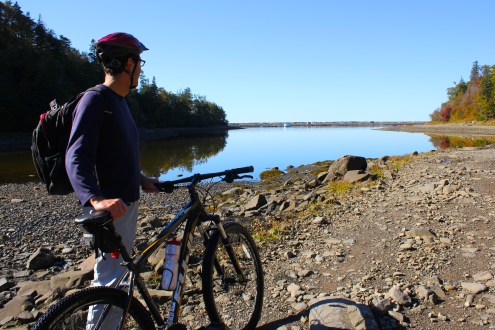
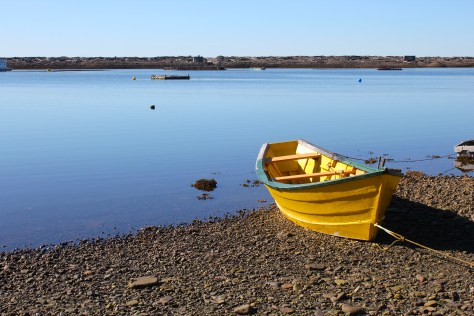
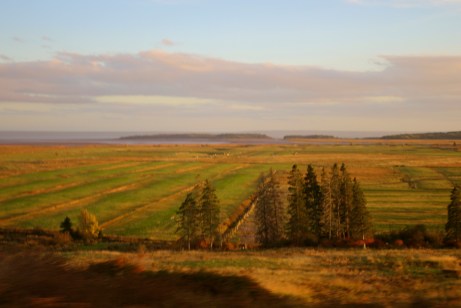
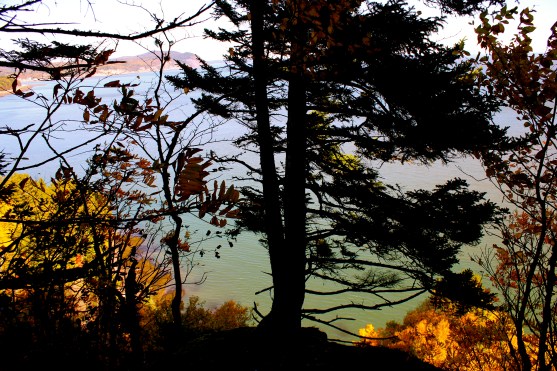
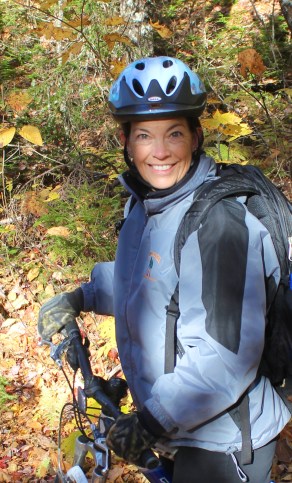
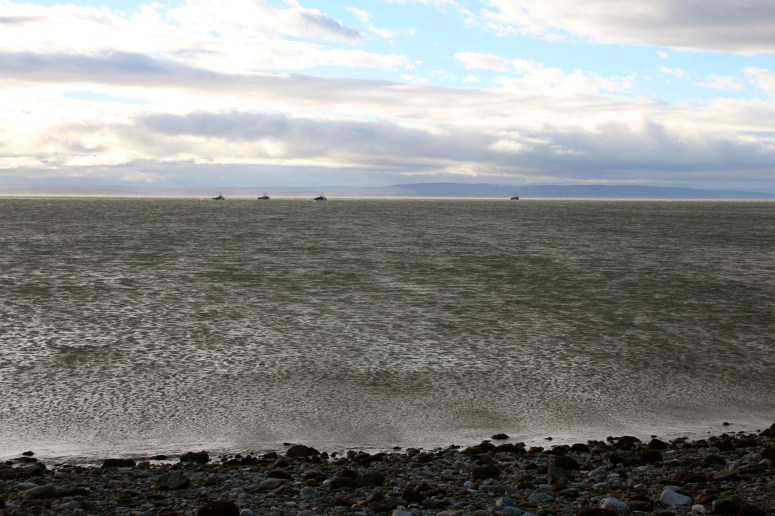
Because across the border and into the Maritime Provinces, my husband and I have always found kindness, resplendent scenery, powerful tides, rejuvenating hikes and bike rides, nurturing food and drink, and wonderful music. These maritime—“of the sea”—lands include Nova Scotia and Cape Breton Island, Prince Edward Island, and New Brunswick. I’ve traveled to all of Canada’s Maritime Provinces, though not as often as I’d like. From where I live, Halifax is an easy flight out of Boston. Prince Edward Island and New Brunswick are road trip excursions. At the end of those road trips, a soulful and quiet peace awaits. It’s a welcomed type of slow travel that rarely moves beyond first gear, especially if you travel late into autumn which is what my husband and I just did.

On one hand, the Canadian Maritimes-style peace is so slow and so quiet that I don’t want to tell anyone about it. On the other hand, I’m not so sure people are interested in true peace anymore.

—Or their own souls.

—Or the souls of others.


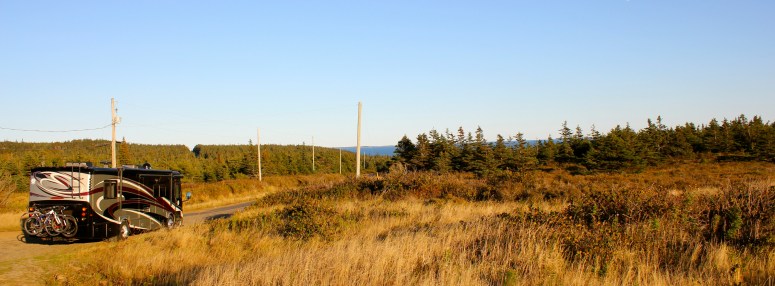
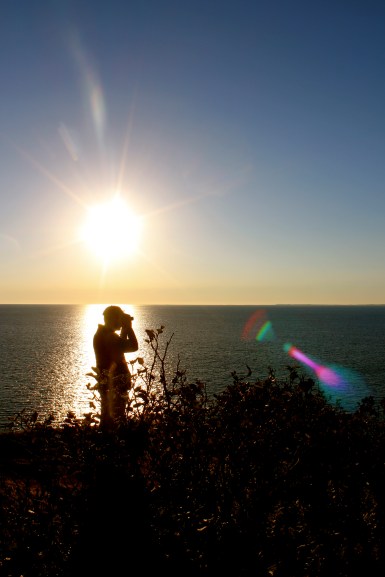
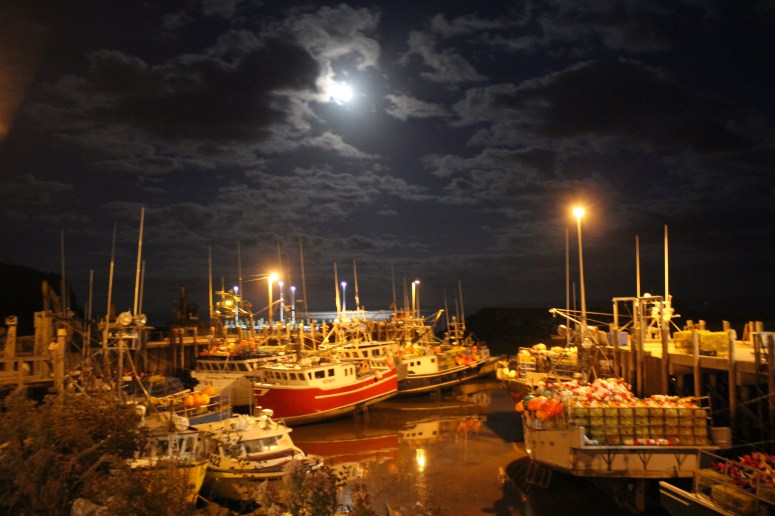
Upon arrival in Canada, we stayed in a campground overlooking the Bay of Fundy from the town of St. Andrews, New Brunswick. The date was Canada’s Thanksgiving holiday weekend. We cooked dinner outside, the sun set, and soon a fellow camper stopped by our campsite to invite us over to his campsite for an evening of music. Thus passed our first night away from America as we found ourselves taken in—and taken away—by a fiddle player, guitar players, and singers performing songs and hymns in the distinctive, Celtic-derived traditions one looks forward to hearing in the Canadian Maritimes.

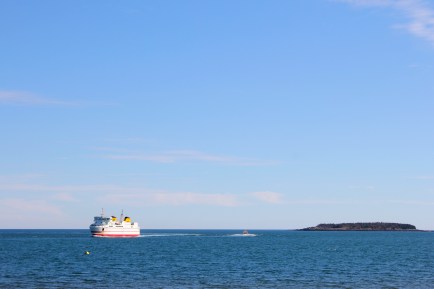
A few days later, my husband steered our motorhome into the belly of a ferry bound for Grand Manan Island—part of an archipelago of islands afloat in the mouth of the Bay of Fundy. The great American woman and writer, Willa Cather, spent many peaceful summers on Grand Manan, which is how I first learned about the island.
img_2238

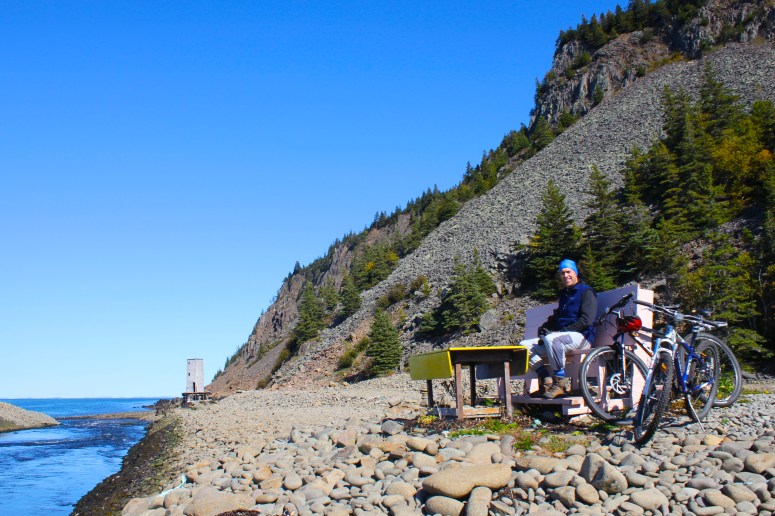
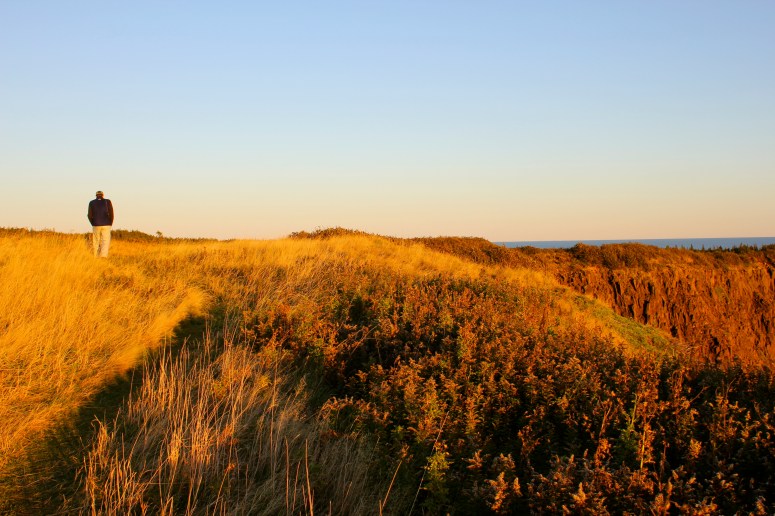
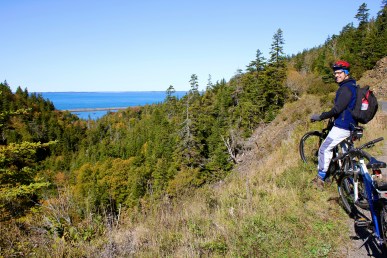
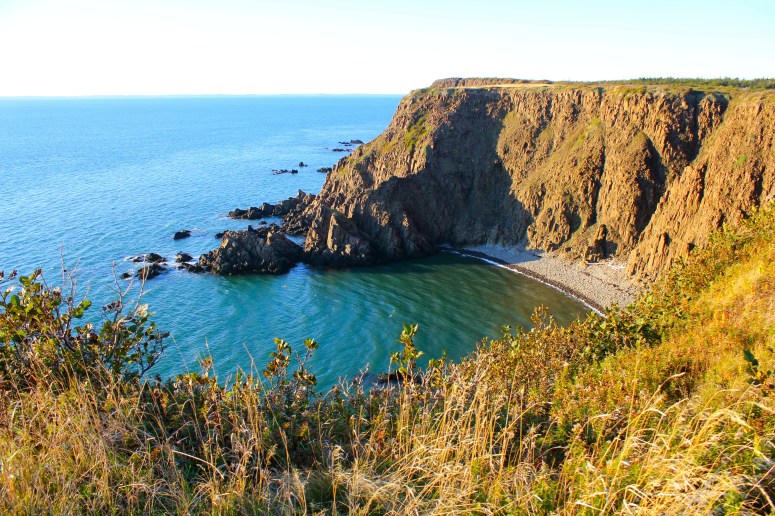
On Grand Manan, we found North Head Bakery and bought ginger molasses cookies, macaroons, warm baguette, sugar donuts, and still-steaming raisin bread. We found walking trails at the very edge of majestic cliffs with only fresh air to steady our wobbling legs. We found islanders that waved hello whether we were driving our huge motorhome on their narrow roads or riding our mountain bikes up and down their hilly routes.

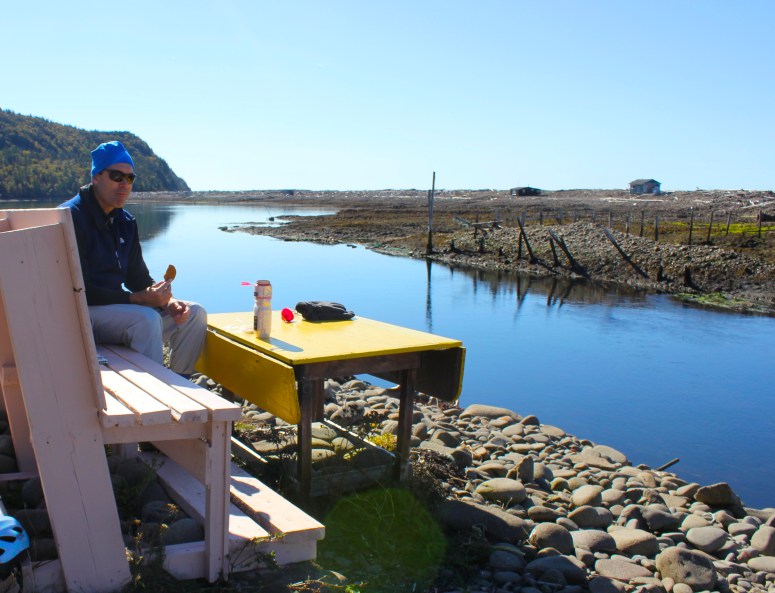
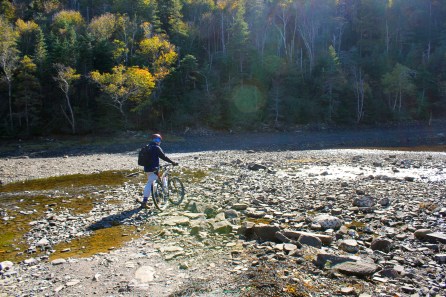
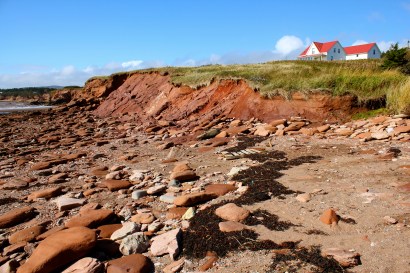
We biked to the infamous island outpost of Dark Harbour where we enjoyed a unique place to have a picnic. We discovered dulse, a superfood sea vegetable (aka seaweed) harvested by hand from the ocean and dried on rocks under the summer’s sun.
img_2107

img_2146

img_2152

img_2136

img_2142

img_2156

img_2163

img_2141

img_2160

img_2164

Willa Cather wrote: When kindness has left people, even for a few moments, we become afraid of them as if their reason had left them. When it has left a place where we have always found it, it is like shipwreck; we drop from security into something malevolent and bottomless.

America is shipwrecked. It has been sunk by malevolent and bottomless madding crowds.

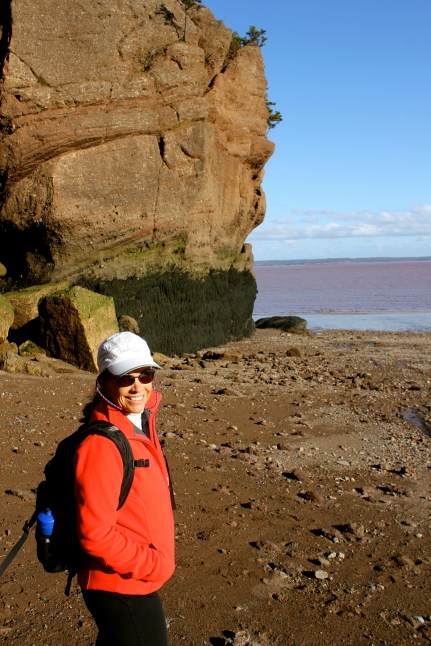
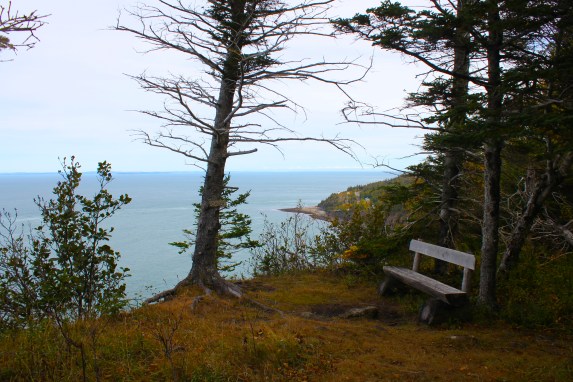
A history of shipwrecks surrounds Grand Manan Island. Her cliffs are dangerous, wild, and windswept. One stands on the edges of the island in the year 2016 and considers the consistent tug of Earth’s greatest tides, those forces always at work eroding the truths we no longer seem to value and uphold as self evident. Indeed, a faraway island can leave a traveler like me, a woman unmoored from her own country, feeling hopeless and stranded. I found myself wishing the tides of the sea could take me away. Then I wanted them to promise to bring me back. I wanted to present the Bay of Fundy tides to the rest of the world, so everyone could notice how powerful and precious and vast they were, and how small each and every one of us becomes when we stand facing the phenomenon of Earth’s relentless waters.

img_2229-2

img_2231

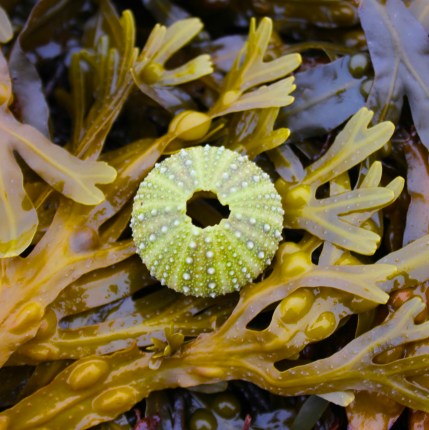
I asked the tide to bring me sand dollars—

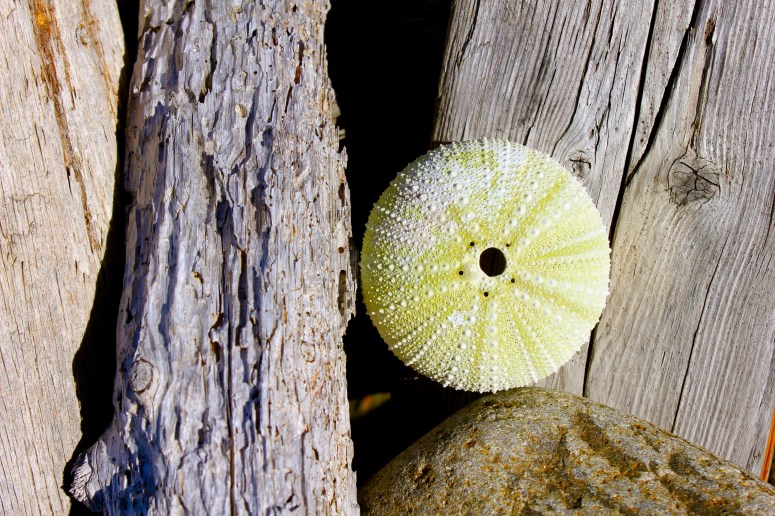
Intact sea urchins—

Pretty sea shells—

Fossils from a time when the Earth was not yet ravaged by the egos of men and women.
img_2172

img_2187

img_2167

img_2177

img_1962

img_2224

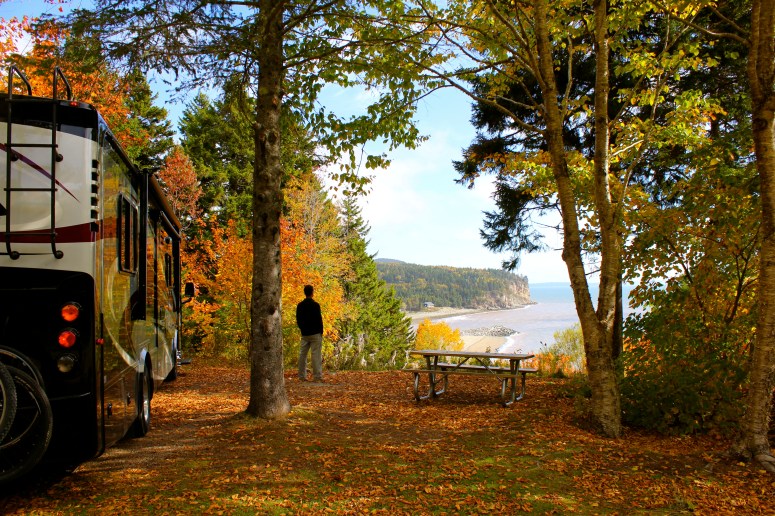
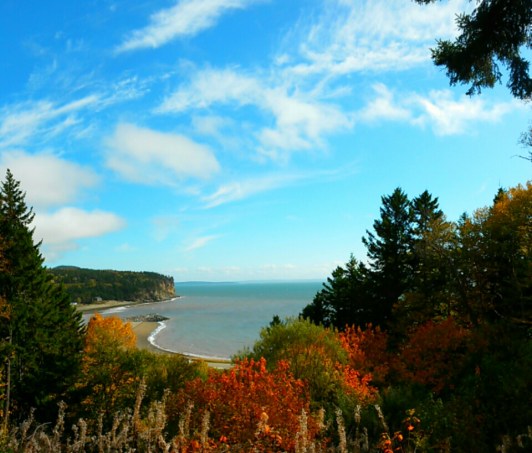
The tide took me from the island of Grand Manan to Fundy National Park where one of the most stunning campsites, Site 59, overlooked the whole wide world, in peace.
img_2257

2016-10-13-10-57-38

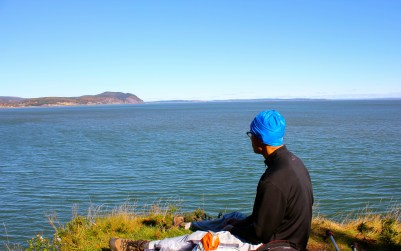
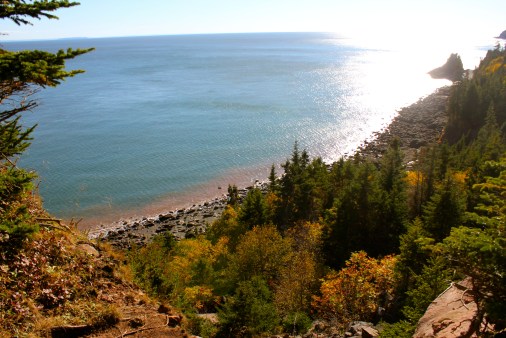
Our hikes there included premier trails through coastal forests, good doses of satisfying physical exertion, and solitude. Our bike rides and walks upon the ocean’s exposed floors elevated our spirits to our most grateful selves while pastoral settings inspired us to believe romantic thoughts about life. Cliffside picnics made our egg salad sandwiches taste royal enough to be served on golden paper plates.
img_2391

img_2264

img_2314

img_2382

img_2376

img_2417

img_2299

img_2310

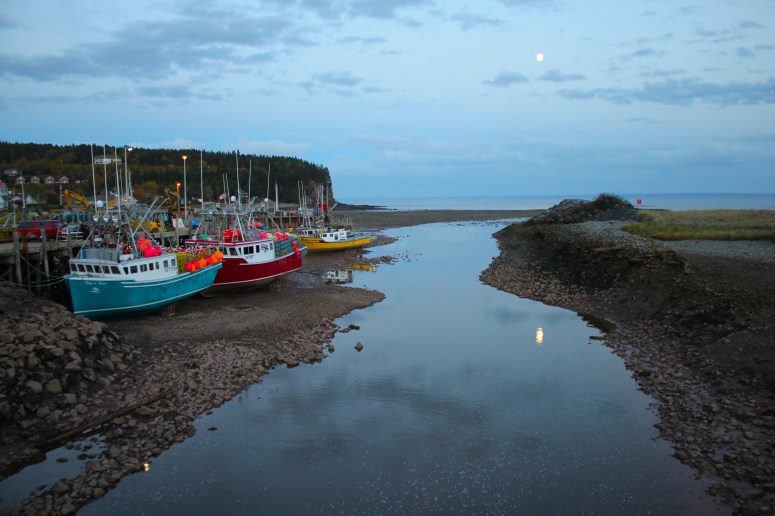
We found friendship in the small, small village of Alma at the base of Fundy National Park where we were given the last of the season’s fish chowder on an outside deck at Tipsy Tails as the weather began to turn. Our server said: “Two bowls of chowder, two beers, and two blankets?” then she invited us to join in with the town later that night to celebrate the morning’s anticipated launch of the lobster fishing fleets when the tide would be high enough to float all boats. From our campsite, perched over the village, we heard the music commence as the moon was rising. We bundled up and walked into town using a sturdy, cliffside staircase comprised of more than 100 steps. Sea ballads, Scottish and Irish folk songs, and more hymns filled the night. The next morning, a bagpiper played as gale winds and dark clouds cast shadows over the faces of babies snuggled in the arms of mothers and grandmothers and aunties. Young men clung to boats jammed with lobster traps and before long, the boats sailed through the winds and out of sight. All of the fishermen faced long, hard, hopeful days at sea.

img_2323

img_2319

img_2317img_2329

IMG_2349.jpg

img_2366

20161014_080727


Upon re-entry into the United States, a guard asked us if we had any plants, fruits, or vegetables from Canada in our motorhome. We said no. He said he was going to have to come on board and see for himself. He opened our fridge, seemed satisfied, handed us our passports and said, “Welcome home.”

We did have one vegetable on board and I’m glad it wasn’t confiscated. It was the dulse, which hid itself well in spite of smelling like the boldest of low tides. The taste of it, right out of the bag, is just as strong and gamey as the aroma. But it is a legendary superfood with phantasmagoric health benefits and I was determined to learn how to cook with it.

Within a day of our return, I created my own version of fish chowder inspired by travels through the Canadian Maritimes and our discovery of the world-renowned dulse harvested in Dark Harbour, on Grand Manan Island. I used simple ingredients kept stocked in our kitchen. As I cooked, I reminded myself of how kind the people in Canada had been to us. When speaking about America’s sordid election, the Canadians we met didn’t hesitate to express their faith in America and many showed compassion for the unfortunate relapse into dinosaur-brained recklessness going on throughout every state. One man assured me, “America will do the right thing.”

But I don’t know…Willa Cather’s peaceful visits to Grand Manan ended in 1940 when safe passage to the island was threatened by German submarine activity in the Bay of Fundy.

If America wants to be great again, it must become kind first. Where there is kindness, there is reason. Where there is reason, there is peace.


COMFORT AND KINDNESS FISH CHOWDER

4 cups chicken stock (I used a 32 oz. store-bought carton)

2 cups chopped onion

1 T butter

1 T flour

1 cup half and half

1 big carrot, peeled and cut into half moons

6 red potatoes chopped into half inch squares

8 scallops (I keep a bag of Trader Joe’s jumbo frozen scallops handy)

1 handful of langostino tails (also a Trader Joe’s frozen seafood product—tastes like a combo of lobster, shrimp, crayfish)

3/4 lb. of fresh cod, cut into one inch pieces

Chopped thyme, chives, and parsley from the garden

2 T chopped dulse 

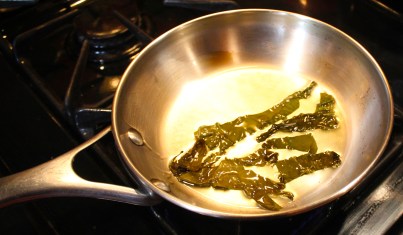
2 handfuls of dulse, cut into strips for frying in olive oil

Slices of baguette bread

Saute the onion in the butter until soft, but not brown. Blend in the flour, cook slowly and remove from heat. Slowly pour and stir in two cups of the broth. (This is a Julia Child all-purpose chowder base.) Add the carrots, add the rest of the broth and cook until just before the carrots are tender. Cook the potatoes in a separate pot of water until just before they are tender. Drain them and add them to the broth and carrots. Heat on low. Add spices, salt and pepper, and chopped dulse to taste. Pour in the half and half and gently heat up without boiling. Place all of the seafood into the chowder and let cook for ten minutes. The fish will break up, adding texture and flavor to the broth.

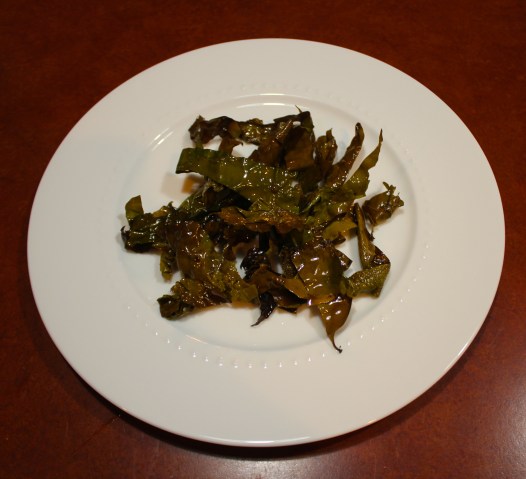
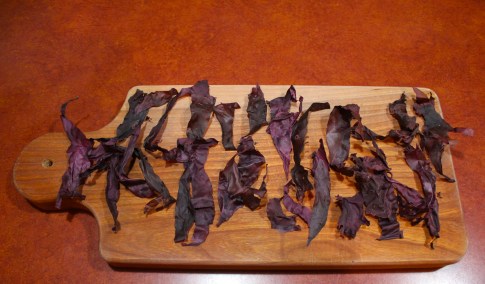
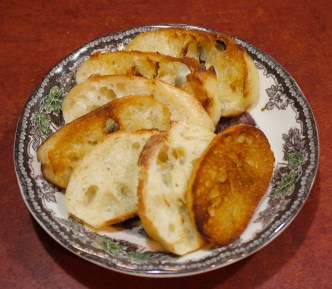
Heat olive oil in a pan. Working quickly, fry the strips of dulse, turning them once and draining them on paper towels. Toast a few slices of baguette in the olive oil. Fried dulse is tasty! It’s good dipped in salsa, too.

Serve the chowder hot with fried dulse on top and on the side.


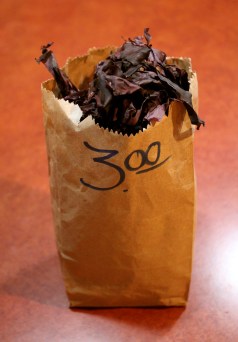
Dulse from the market in Canada.
img_2462

A handful of dulse.

img_2468

Dulse separated into strips for frying.
img_2469

Fried to a crisp, glossy green.

img_2470

img_2471

Baguette dulse-flavored by toasting in the remaining olive oil.
img_2473

The chowder only needs some pepper and fried dulse on top.
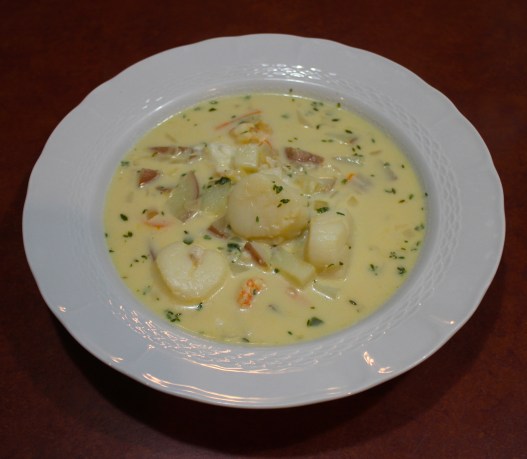
img_2477


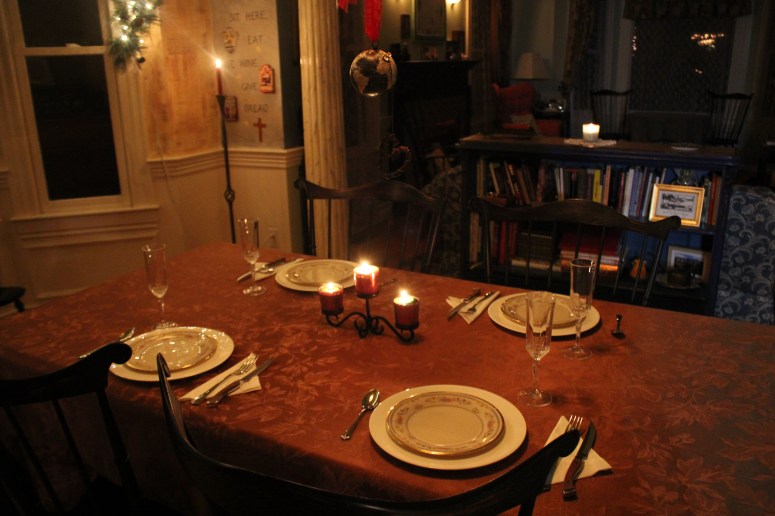
I set our table with a small arrangement of buttercups I found on the edge of our last mountain biking trail in Fundy National Park and some thyme and lavender still blooming in my garden went we came home. I found the vase at NovaScotian Crystal in Halifax when we traveled through on our way to Cape Breton two summers ago. The vase is perfect for small and sweet bouquets from the garden.
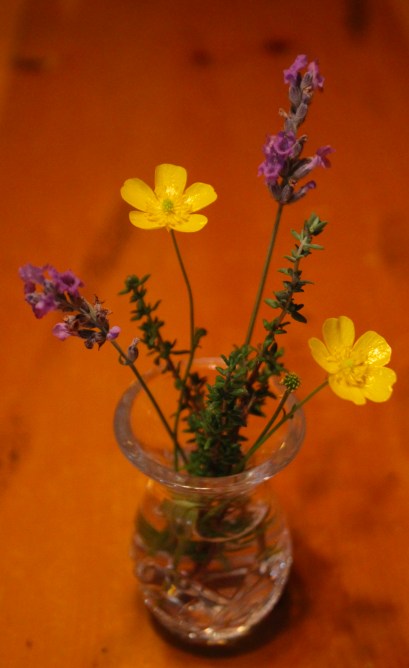
img_2464

Believe in kindness.

An Agonized Voter Tries Thinking.

img_1534There are some of us in America who feel as though we are doing our best to enjoy another brilliant autumn season in our increasingly separate and strangely isolated other worlds. These worlds of ours—where the leaves are turning colors and children have returned to school to learn how to read, write, do the numbers, and think intelligently—are feeling threatened by the existence of an alien world embroiled in an election season governed by complete insanity. The alien world is not far enough away. It’s right next to us, in the same time in contemporary history, on Planet Earth. Within the alien world’s election season, insanity has become manifest as acceptable behavior, where the word insanity can be defined as:
…a state of mind that prevents normal perception, behavior, or social interaction…a state of extreme annoyance or distraction…as for an action or a policy: behaving and/or making decisions in extremely foolish, irrational or illogical ways…

Even as the lexical roots of the word insanity keep sprouting up all over the place in the alien world, no one seems to notice how often they trip over them, knocking their brains asunder. I don’t know. Is it possible an epidemic of concussions has afflicted the brains of Americans?

Insanity, from the Latin: insanus:  in “not” + sanus “healthy”

Not. Healthy.

Americans are not healthy. Their current election season and the dark world from which it has emerged is not going to make them well. Furthermore, it threatens to harm global communities of non-Americans with its stealth compounds of mood and mind-altering poisons. It seems as though there has been an enormous explosion…as if all the human waste we have sunk into our oceans and blasted into outer space has come slamming back to Earth where it has morphed into herds of fire-breathing monsters.  Everywhere one searches for relief, one only finds 150 proof moonshine to throw on the fires. (Where moonshine can be defined as:…foolish talk or ideas…and 150 proof can be defined as the opposite of insightful: incite-ful.)

As much as I would like to hide away in more desirable other worlds, I ventured forth to watch the first round of America’s general election debates on television. The good news, for me, is that I don’t need to watch any more debates or any more television regarding the 2016 presidential elections in America. I get it.

Here’s what I get: I get that I should have screamed a lot louder and stamped my feet with more conviction when I refused to allow reality tv to invade my home when it first started glowing in the pleasure centers of American brains. It wasn’t enough for me to discourage the watching of that crap in just my own home. Reality tv marketed real meanness, bullying, and public humiliation as entertainment and real stupidity as escape. Real stupidity as escape. Cruelty, meanness, and bullying as entertainment. This is what tickles the brains of citizens living in a country drenched in freedom? Please note, it is real and enabled stupidity and cruelty I abhor. I am not against portrayed stupidity and cruelty in the arts.

Here’s what else I get: I get that it might not matter what happens after this season of elections. Because however much I fear our post-election world, the truth is the post-election world is already up and running. Most of us already know this because we’ve been noticing for a long time America’s bogus shift into the not-brave-at-all worlds where polarized dystopias, parading around as utopias, take root. These are the newfangled comfie, cozy, and convenient worlds where human beings don’t have to think, don’t have to deal with disagreements, don’t have to confront their own shortcomings, and don’t have to do the hard work of evolving. 

Not even humor can make these false-utopias desirable because it’s not funny anymore. It’s fucking insane and the collective insanity of humans is never good. Furthermore, Americans are not immune to fucking up. No one is—no one person, no one community, no one system of government is immune to becoming fucked up or to fucking up other parts of the world or to fucking up the individual lives of other human beings.

If you want to know what I think is the single, most urgent issue of the current election season, it’s the same issue that has always been, and should always be, the most important issue. No matter where we, as deeply-flawed humans, exist in history, we must be vigilant and progressive and visionary. We must care most of all about each other: Human Rights have to matter more to us than anything else.

There is no one person that we can elect into a position of power to save us from this epidemic of insanity.

Somebody throw me a reason to stop banging my head against my voting ballot. No don’t!

I am a woman. I am a mother. I know the choice for the next American president has been reduced to an unfortunate act of desperation. I can vote to sink the ship or I can vote to keep it listing in rough seas. I tell myself: At least if I keep it bobbing up and down, it might find its way into a safe harbor.

I also remind myself of the facts: I am ON the ship. CHILDREN are on the ship. Daughters. Sons. Grandchildren.

The seas are rough and we have a long way to go. We need a captain and we have only two choices. Neither choice is Eleanor Roosevelt or Abraham Lincoln.

This is why we played those games in school—the ones linked in with literature and the liberal arts. The ones that were supposed to help us become critical thinkers. Like the game we played in junior high after we all read Lord of the Flies: We were all put on an imaginary island…we had to decide who our leaders were going to be…and how they were going to affect the way we think and the behavior we chose to engage in…and we were supposed to be aware of the fact that we’d be responsible for the decisions we made and the things we did and what we believed when under the influences of the leaders we chose.

But here’s what else I get: I get that too many of the boys and girls playing games like those in junior high—and in high school—and in the best colleges and universities of the world—

those games where we all got placed on an island with each other,

the boys with the girls,

without rules,

and some people were popular and some people weren’t—

———

Too many of the boys and too many of the girls playing those games

Didn’t get it.

They never learned how to evolve.


Tools for Sustainable Loneliness.

What do you have to show for all of your loneliness? Destructive addictions? Obsessive behaviors? Too many hours spent staring at the cobwebs cluttering up your vast funks? You ask the spiders: Are you depressed? Or are you lonely? They bite you.

Same.

One of the most pleasurable obsessions I have to show for all of my loneliness is an attraction for tools. I especially love hand tools and have loved them since my own days of yore when we young ones were neglected and allowed to play with really cool, authentic things that didn’t come to us road-blocked behind rules, regulations, age restrictions, or trigger warnings.

On any given summer’s day in the times of yore, I’d take a few slow laps around the family garage before setting out to wander through the fading frontiers of America’s un-gentrified, suburban free ranges. Many family garages displayed a good selection of random tools and mine was one of the best being managed, as it was, by my dad, the United States Air Force man who grew up as the oldest boy on a farm. I went for Dad’s hammers, saws, shovels, maybe some pliers, and an ax. I’d load my wagon with Dad’s tools and leave home. Texting Dad in order to ask permission for engaging in the behavior of helping myself to his tools was, blessedly, not possible. Besides, I was following orders from Mom: Go outside and play.

On my way to the ancient childhood hinterlands, I’d stop at new-home construction sites, peruse their junk piles for lumber and add choice finds to my wagon. I planned to repurpose everything into an outpost. My outposts were repeatedly attacked, sacked, and plundered. I repeatedly rebuilt and reinforced. Dad would ask, whenever one of his carefully maintained tools went missing: Why? Why can’t you remember to bring the tools home? Why can’t you put them back where they belong? Why can’t you return them in the same condition you found them? Where are they?

They are somewhere in the woods of Indiana and/or the foothills of the Sonoran Desert in Arizona. It was in those places where I learned, on my own, how to love being lonely. A lot of children discover how to love their loneliness within the pages of books. For me, it was tools. If you take a hammer and hold it like you mean it, it becomes like a divining rod—leading you on to worlds of creative possibilities and sustainable satisfaction. Pounding a nail true, hits the spot every time. Success. Pleasure. Purpose.

I’m still a lonely girl, and I’m still loving—and losing—tools. Recently I lost one of my favorite gardening tools—my soil knife. She is a substantial hunk of steel fastened onto a sturdy handle. Her hunk-of-steel blade has one sharp edge and one serrated edge, making her a champ for slicing into the soil to lift out weeds and/or for sawing apart the gnarly root balls of plants. There’s also a handy v-notch cut out of her blade for ripping through twine. The handle of this tool, BTW, is neon orange—designed especially to help lonely wanderers, afflicted with an array of distraction disorders, find their tools when they lose track of life. My gardening tool will come back to me when my prayers to Saint Anthony make it though the queue. Until then, I’ve distracted myself with the old pitchfork, an outstanding hand tool for the quiet work of digging out unsustainable turf in order to replace it with beautiful, and more sustainable, gardens.

********

So it should come as no biggie surprise that when a lonely girl like me lands, in her luxury gypsy motorhome, in the parking lot of a truck stop near Gardiner, Maine, late at night, with the husband she met when she was too lonely to care about boys, and that husband says what do you want to do tomorrow—Lonely Girl looks at a map, opens a couple of cold beers, and can’t wait to answer the question. I open the windows, too, and speak to the hum of idling truck engines, all at rest after long days on the road. I keep romantic ideals about what I want to do and what I hope to find tucked in, and simply suggest a list of options for the next day’s adventures:

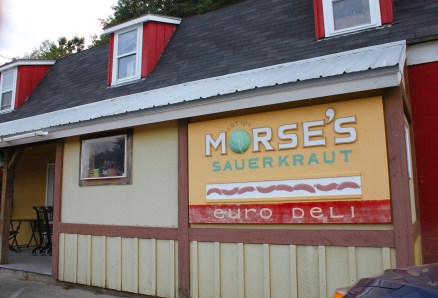
The Liberty Tool Company in Liberty, Maine. The Davistown Museum, across the street from Liberty Tool. And Morse’s Sauerkraut Euro Deli in the middle of one-of-the-best nowheres, which just happens to be on our route to Camden, Maine, the next day’s destination.

To lonely people everywhere, I say go to where lively spirits live their obsessions. You might discover that what you thought was loneliness might only be a longing—for what’s real and what’s cool and what’s peace and what’s good.

There are a lot of places in Maine where scholars, intellectuals, and classic passionate folks maintain playgrounds for those of us who choose to sustain our most lovely lonelinesses through the practice of learning all we can about what we like. For those of us who aren’t lonely at all, unexpected excursions and serendipitous discoveries are just plain fun. Liberty, Maine is an amusement park for the brain. (Go before the bourgeoisie litter the sidewalks with their Starbuck’s cups.) Even just watching the following video, about The Liberty Tool Company, offers the viewer a restful excursion:


********

If you go to Liberty, remember to pace yourself. The Tool Company will take you far, far away. I found a prayer card for fifty cents, a book by William Trevor for a buck, (The Day We Got Drunk On Cake), a chisel engraved S. J. Addis from London (late 1800’s?) for $2.50, an L.S. Starrett Co. divider for $3.00, and two Road and Track Magazines for $3.00 each. My husband found tools to keep in the motorhome for random repair work.

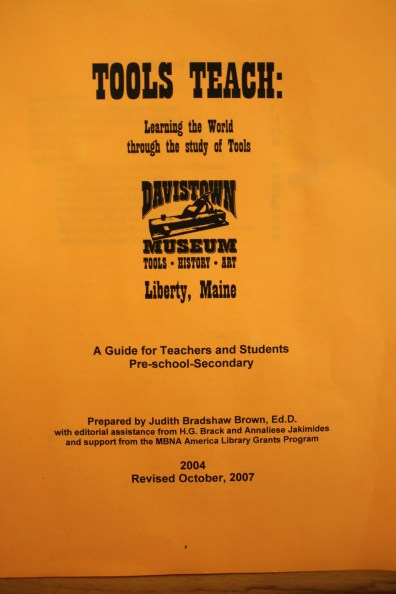
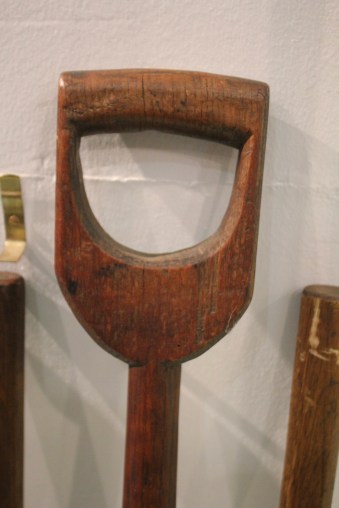
Hopefully you’ll reserve some brain power after your excursions through the tool store, because a trip across the street to the Davistown Museum will pretty much set your brain on fire. It’s a hands-on experience. You can touch and hold tools from a long time ago. Like a pitchfork from the days of the Revolutionary War, procured from Concord, MA. Slip your hands through the wooden handle and think about the work you might have performed, while keeping three day’s worth of provisions and weaponry strapped onto your body. You were an elite Minuteman, one of the Sons of Liberty in Massachusetts and, as such, you lived your life ever ready to enter into battle at a moment’s notice.

Or kneel beside the cobbler’s bench and examine its piles of tools. All of those tools and one artisan needed to fashion shoes, by hand.

Peer through a hazy glass case at a curious collection of wampum, one of the largest in New England on public display.

There’s a historic Wantage Rule—used to measure the volume of beer—it’s one of the earliest examples of American colonist’s Robert Merchant’s fine workmanship which came to equal the quality of work being produced in England long before the Revolutionary War.

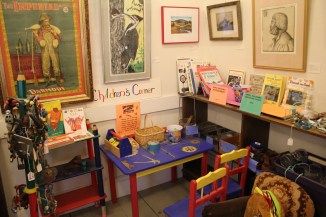
There’s a fabulous children’s corner. Children can invent and build tools. Adults can gain access to research and resources supporting the value of studying the art and history of toolmaking.

There’s art—a lot of great art by contemporary artists at work in Maine.

There are so many tools, from so many chapters in history, to admire.

There’s a Civil War crutch.

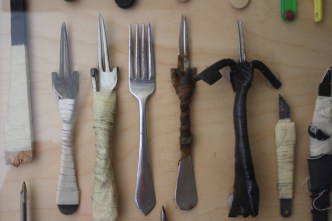
There’s a chilling display of prison tools—made to be used as weapons by prisoners.

Some things are for sale. I bought a painting and two hammers. One of the hammers is completely hand made.

If you need to take a rest, there’s a nice porch where you can sit awhile.

********

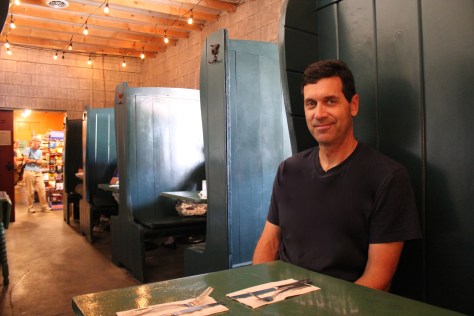
After our time in Liberty, we hit the road for Camden State Park where we planned to set up camp for the next several nights. En route we had no choice but to stop at Morse’s Sauerkraut Euro Deli as per a recommendation from our son. He goes to Union, Maine with his comrade-in-drumming arms and fellow Slow Roasters musician, Freedom, to mine stone from ancient quarries for building percussion instruments. They also study drumming and percussion practices from secret sources. Upon hearing that we would be rolling through Union on our way to Camden, our son alerted us to the existence of a gastronomic outpost known for serving and supplying all comers with the most flavorful German food in the universe.

As it turns out, Morse’s wasn’t the only unexpected German-themed thing that happened to me as a result of my road trip via Liberty, Maine to Camden. There was a surprise literary excursion into one of those Road and Track magazines I’d acquired…an issue dated May 1972…which I thumbed through before packing them up to be sent away to my son in Brooklyn.

That part of my adventures and special finds in Liberty, Maine must remain secret until my son receives the magazines. He is the most passionate automobile enthusiast I’ve ever known—and Maine has plenty of places where that kind of lovely loneliness is sustained, too. Like the Owl’s Head Transportation Museum in Owl’s Head, Maine, (not far from Camden), where we went a few times when he was a little boy. There, his lovely, often lonely, attraction to automobiles and cool airplanes was sustained. We enjoyed car shows and once, we flipped out over the super-exciting experience of watching—and listening to—a GeeBee Racer airplane fly.

The state park at Owl’s Head is free. The rock beach there still rocks.

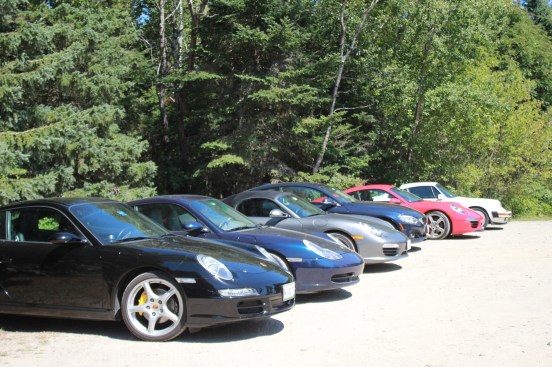
Random collections of Porsches were sunbathing in the parking lot of Owl’s Head State Park when we made our most recent journey there while camped in Camden.

And the tide pools…

It all makes me want to get lonely.

********

Liberty, Maine.

IMG_0297

IMG_0300


IMG_0307

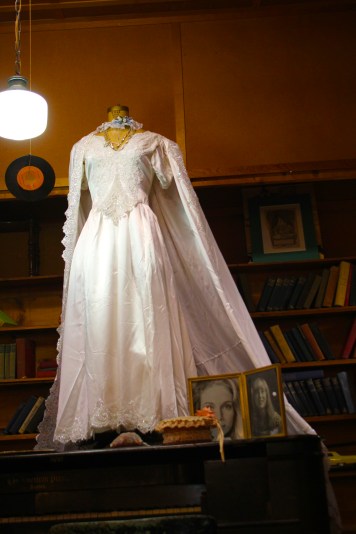
You can buy books and a wedding dress.

IMG_0304


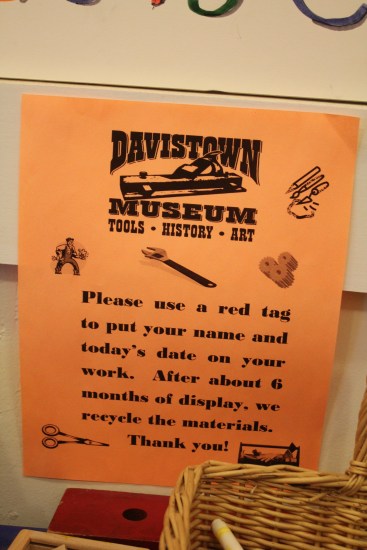
Children’s Corner at Davistown Museum.

IMG_0316

IMG_0313

IMG_0311.JPG

IMG_0315


Cobbler’s Bench.

IMG_0338


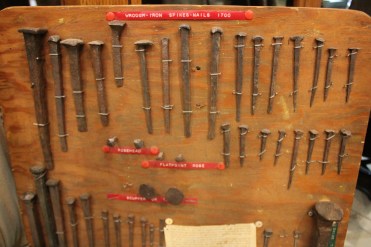
Historic tools.

IMG_0321

IMG_0327


The hand-carved handle on a pitch fork from Concord, MA

Revolutionary War period.

IMG_0324

Creepy weapons made by prisoners.

IMG_0336


Always-welcome Maine humor.

IMG_0343


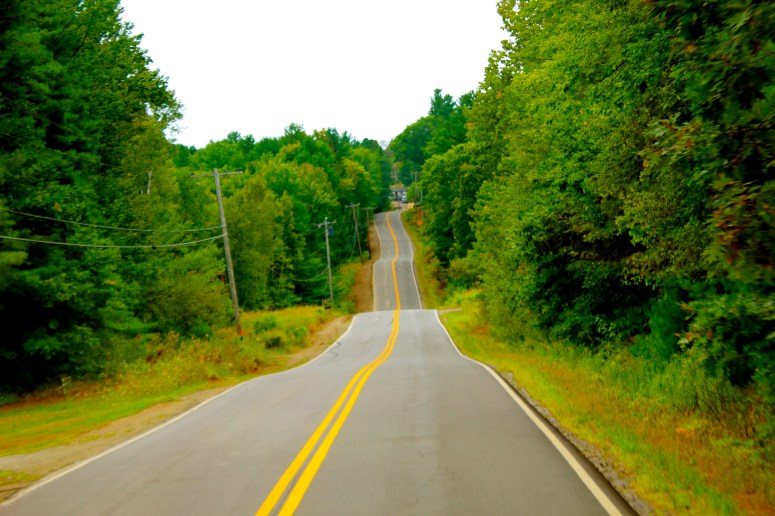
On the road to Morse’s Euro Deli in Maine.

IMG_0357

IMG_0373


It’s no secret. You might have to wait a while.

IMG_0368

Sunny day display at Owl’s Head State Park.

A group of enthusiasts, no doubt, cruising the coast.

IMG_0442


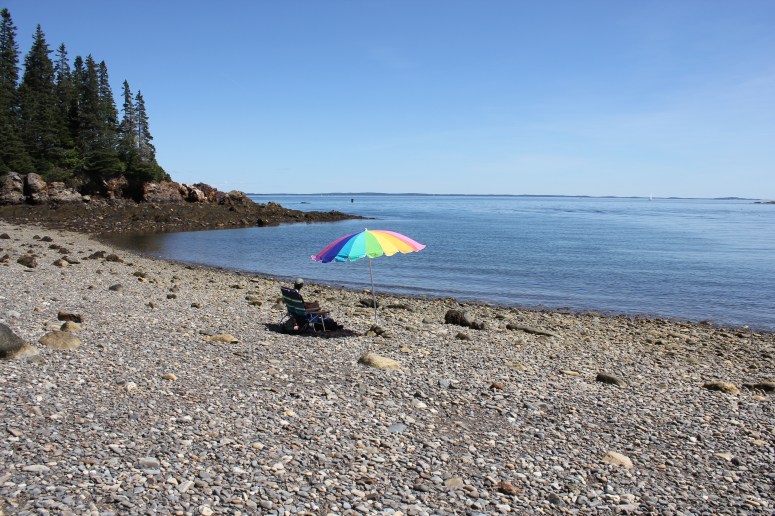
Our rainbow beach umbrella, propped up with rocks.

Lovely loneliness.


IMG_0453

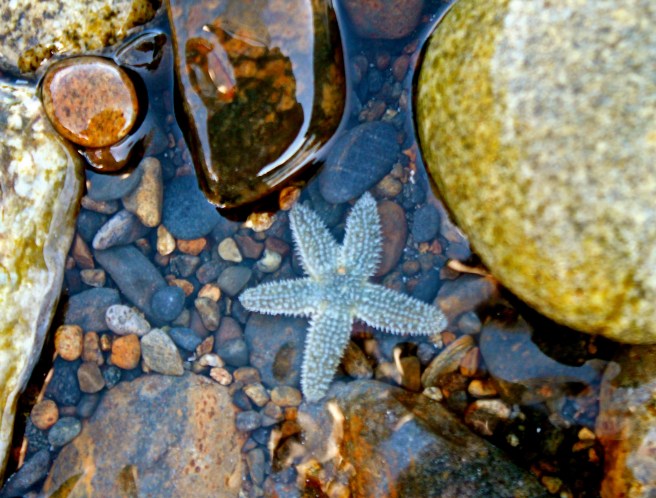
Along the tide’s edge, there is an underwater world to obsess over

as you stand in Penobscot Bay

and never notice how cold the water is.

IMG_0451

IMG_0471


Seductions. Irresponsibility. Italy.

IMG_4662The soul concentrates, wholly, on strong impressions of pleasure or pain—so writes Dante.

Yes.

And desires to experience pleasure instead of pain often lead to hapless experiences of seduction.

Which are often followed by consequences.

(Perhaps such consequences are worth every journey through Italian flavored, frescoed, and hand-crafted purgatorios?)

Yes even more!


*************

We (humankind since forever ago) obsess over the desires of our fugitive souls. Then we obsess over whether or not we can ever control those desires. Then we obsess over discovering a way to find, or establish, a heavenly paradise where our obsessions rule the world. (Led there by our true loves!) Then the pain of obsessing over what we wantbut cannot have—becomes such a waste of time that we engage ourselves in the useful arts of Deliberate Distraction:

We weed the garden. Reply to emails. Earn our keep. Think of others. Play with social media. Paint pictures. Arrange flowers into vases. Meditate. (“There is more right with you than wrong with you.”) Breathe into the tips of our toes and the ends of our earlobes. Eat right. Exercise. (Walkwalkwalk.) Stop at one glass of wine. Get some rest.
I’ve been distracting myself in all the right ways.

But I still want to board a plane and fly to Italy. Now.

I went to Italy in January of this year. I was there a few weeks ago. I’ve been there for two other trips of a lifetime long before January.

But I want to board a plane and fly to Italy again.

I want to check out. Go away without leave. Just do it.

For once in my life, I want to wave arrivederci while standing on my toes in a pair of sassy-ass shoes. I want my hair to be colored perfectly and cut bouncy. I wish to be sporting a smart piece of luggage stuffed with sketch pads and intense works of literature and M&M’s.

I want to have some money to take with me. Enough money.

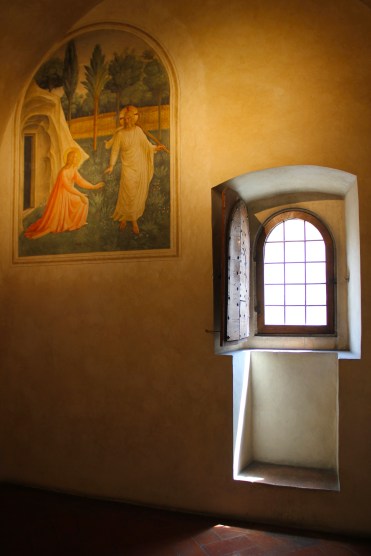
I want to leave behind the piece of my heart that would pump weepy and worried for my family, and take only the pieces that will throb gushy and gorgeous over every little thing. (Like the frescoes! By Fra’ Angelico in Florence. Seduction via the renowned Annunciation at the top of stairs leading to austere hallways with doors opening into small cells where Dominican monks lived their medieval lives. Every little thing is in the lawn and Angel Gabriel’s wings—I am trying to grow a lawn like that and am contemplating sprucing up the colors of my own wings. Coming upon this work of art is a long-remembered experience of pleasurable feminine grace in a city dominated by masculine stone and little boy grittiness.)

IMG_4526

********

Flights to Italy.

I’ve looked them up.

Places to stay. Monasteries.

I google and google and google. Then I reject my computer and cuddle up with my books. About Italy.

ItalyItalyItaly.

I’m not even Italian, but I was raised Roman Catholic.

And ended up far more Roman than Catholic.

This happens all the time. I get obsessed about something. The next thing you know, I paint the walls of the house all over again and install new gardens, (designed in the spirit of a Renaissance palace overlooking the Tiber River with a loggia painted by Raphael), or I come home too pooped to clean, cook, and save the world because I spent the day walking to the moons of Saturn and back, (the ones named by Galileo), or I polish off a box of Trader Joe’s Dark Chocolate Peanut Butter Cups while scribbling nonsense into journals, (in the spirit of Marcus Aurelius and his Meditations I attempt to make myself perfect and well managed, yet I become perplexed, wondering why Marcus was never struck by an amazing grace that would have ended savage gladiator battles, Christian persecution, and his own failures as a parent to protect the Roman Empire from the cruelest son a man could ever have, that fully wicked Commodus!)

Once the chocolate sets in, I let the wish centers inside the insatiable pleasure zones of my brain seduce me. Deliberate Distraction goes awry. Pleasure zones that are stoked by myth and romanticism and idealized versions of time travel and pretend play conquer rational thought. Even at my age. Let’s pretend we’ve cashed in our savings, abandoned America and its contentious politics, and we’ve been hired to prepare a Roman feast to be served at an opening featuring my artwork on display at Peggy Guggenheim’s Venetian palace, (overlooking the Grand Canal!), for a guest list to include a cast of reincarnated characters from Florence.

********

When I arrived in Italy a few weeks ago, my husband hid our travel euros in the apartment we rented in Rome. We brought the load of cash with us to pay for VRBO accommodations all along our route from Rome to Florence to Venice. We often rent charming, owner-operated digs in which the owners might not speak English very well and/or prefer to do business on a cyber handshake. (No down payments.) In other words, we hang our travel dreams on excursions that may or may not be realized, with human beings and agreements that may or may not exist in the universe.

If all goes well, an accomplished musician might play enchanting music that will float through our fourth-floor medieval hideaway on its way to heaven.

IMG_4500

Renting owner-managed VRBO’s can feel like taking a free fall dive into a desperate trust, for sure, but I continue to allow myself to be seduced by the fairy-tale potential of the found travel poetry that arises from these kinds of acts of desperation. Using excerpts from an exchange of emails regarding a place to stay in Venice, here’s how such emails blossom into poems my fugitive soul can’t quit:

Found Travel Poem, 2016 AD

You don’t need to send any advances

So please you’ll pay cash at your arrive

in Venice Thanks

I’ll give you apartment when you arrive

I prefer meet you under the clock at train station

I will wait with my small dog Boston Terrier

Together we will go to the apartment only ten minutes I prefer walk

We wait.

Sincerely.

********

Darkness threatened to wilt the glow of our romantic spells when my husband forgot to pack the money hidden in our Roman love nest. He didn’t remember this divine tragedy until our train was puffing forth from Rome to Florence. Who cared? We’d deal with it in Florence.

In Italy.

We’d deal with our divine comic tragedy in Florence Italy where we were going to meet up with our daughter, who was studying abroad.

The process to rescue our money took part of a morning and all of another afternoon. There were anguished calls followed by missed deliveries followed by siestas and a lot of not today maybe tomorrow. It was the one afternoon we had set aside for shopping with our daughter, who was doing what we had always dreamed of doing when we were her age—taking art classes in Italy. It’s true what they say about helicopter parents—they encourage their children to experience the dreams they (the nutso parents) never realized.

My husband and I didn’t go to Europe until we were well into our 30’s.

By the time I first saw the David.

The rest of the world was so done with David.

But the thing is, if you stare long enough and David senses you’re a goner, he’ll wink at you. All your sins! Forgiven in the wink of an eye!

ItalyItalyItaly.

Italy!

********

So now I have journeyed more than half of my blog’s way, I have found myself within a shadowed forest, I have lost, as usual, the path that does not stray. (Apologies Dante!)

Furthermore, instead of getting on a plane and going back to Italy, I am resolved to the fact that the best I can do is send my daughter a list of the shops where I’d hoped we could have spent an afternoon getting all gushy and gorgeous over every little beautifully-Italian-made thing.

Only in  I T A L Y. 

Before sending the email, I asked the spirits of my new Murano glass rosary, (purchased near our Venetian hideaway) to remove the pain of glumness and bratty regret from my soul. I chose this rosary for the rainbow beads and the big yellow “any-prayer-of-intention” bead at the center. Yellow is my daughter’s favorite color. This rosary was presented to me as an option from a collection of unseen rosaries stored away inside a drawer in the back room of an art gallery, by a young lady as bright and beautiful as my daughter. The young lady watched me examine other rosaries on display and asked if I wanted to see one of her favorite rosaries. She told me she hand picks the beads from the Murano glassmakers and then the owner of the gallery strings them into rosaries.

IMG_5472

Soon, after I sent my email to my daughter and rubbed the yellow bead on my rosary, I received a found poem via email from my daughter about her experiences going on one of the shopping excursions from my list. After reading my daughter’s email, the pleasures of laughter condemned the pain of my glum brattiness to the infernos of hell:

Found OMG Poem, 2016 AD

OMG!!!!! Aquaflor is such a beautiful store! And the ladies who work there are so nice! I wanted to smell and buy everything! It was too expensive for me though!!!

It was in a small alleyway I would have never gone down! The door was so small I walked up and down the street! Then I found it!

I’m reading on my little balcony now. Nice peace and time to myself.

Except

I did have a run in with a pigeon!

I’m resting and reading and I hear something slamming into the walls!

Then I see it come walking into the living room!

It flew into our living room!

They are so annoying!

I locked myself in the bathroom until I heard it fly outhahaha!!!

*********

Ittaleeeeee!

********

Boston Terrier. Waiting for us at the train station. Venice.

IMG_4914

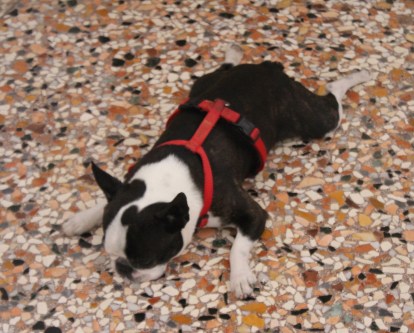
Boston Terrier wiped out after climbing up and over all the canal bridges.

IMG_4918

********

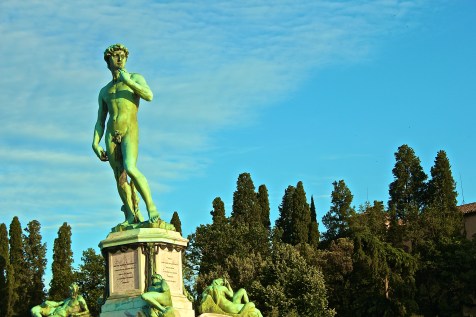
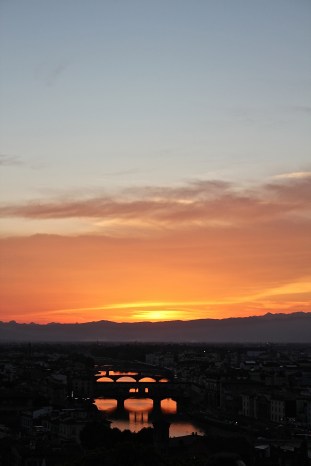
Fake David watches the sun set over Florence and the Arno River every day.

With tourists more fashionably dressed up.

Festive and fun Piazzale Michelangelo.

IMG_4594


IMG_4625

********

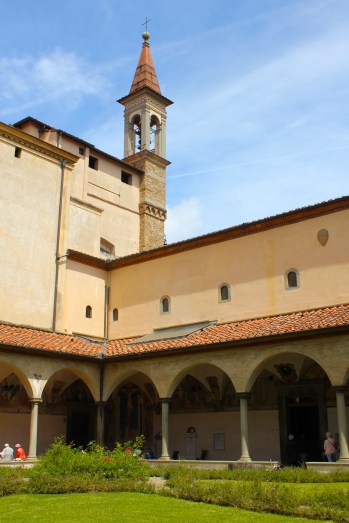
One medieval monk’s cell overlooking the cloisters at Museo di San Marco, Florence.

Artist and Saint Fra’ Angelico painted frescoes to aid the monks in commanding their souls to control all forms of harmful pleasure and pain.

IMG_4527


IMG_4514

********

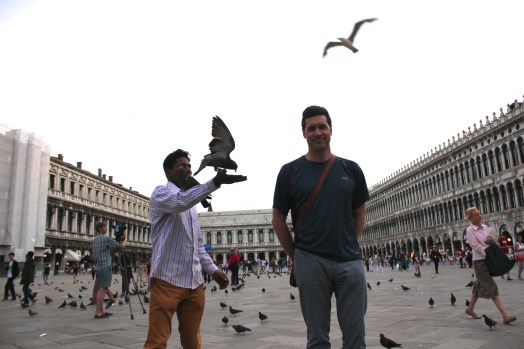
The annoying pigeons and their more annoying partners in crime

appear in your snapshots whether you want them or not.

Piazza San Marco, Venice.

IMG_4987

********

My daughter in Europe.

OMG!!!  ITALY!!!!!  EUROPE!!!

13498154_10153763556066849_8851170691873799038_o

SEDUCE OUR FUGITIVE SOULS FOREVER!!!

IMG_4649

********


Gypsies. Tramps. Thieves.

Peasants. Criminals. Prostitutes.

Slaves.

My husband. My son. My daughter. Myself.

Rome.

********

No one makes it through life without a little hunger.

And, we are all slaves—

to our stomachs, to the beat of our hearts, to the madness of our desires. It is, of course, best to become a slave to your own desires, rather than the desires and expectations of others.

Yet here I find myself, living in a time in history when people all around me wish to become the slaves of other masters promising to coach them, cut them apart, and put them back together into idealized forms of god and goddess-like perfections. They seek to confess their crimes, vanquish their poverty, and avoid being seduced by authentic beauty and pleasures. They worry about how people have sex, how people eat, and how people use grammar.

They worry about how people judge each other as authentic or not.

Maybe it’s just me.

Best to leave my American bourgeois grumblings for a week and go to Rome for some attitude adjustment, with my family. Because, as my son says, the Romans were so badass. It’s true—every time I go to Rome, I excavate more and more of my humanity and can never be sure how badass I might have once been. Could I have been a vestal virgin? A peasant? A papal servant? A champion gladiator? A designer of fountains? A stray cat? A chanting monk? A trapped lion? A good Catholic? A happy Pagan?

We decided to go to Rome in January, a time in America when the new year is celebrated with gatherings of great councils of experts and social media gurus at work selling post-humanist “ta-da!” processes for achieving perfection, and post-humanist wonder drug formulas for brain boosting, and post-humanist public humiliation platforms for incorrect use of the comma.

It’s also the time of year when colleges are on break which meant my daughter was able to travel with us.

On our fifth day in the Eternal City, we walked from the ancient exile zone of the Jewish Ghetto (where we were staying) across the Tiber River to the ancient exile zone of Trastevere. We wanted to learn the art of preparing a typical Roman meal.

We were—every “perfect-American-family” one of us—hungry.

So hungry.

********

Sycamore trees bow into the now-walled-up Tiber River.

IMG_1760

IMG_1761

IMG_2129

********

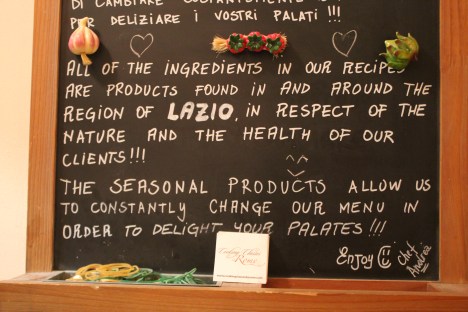
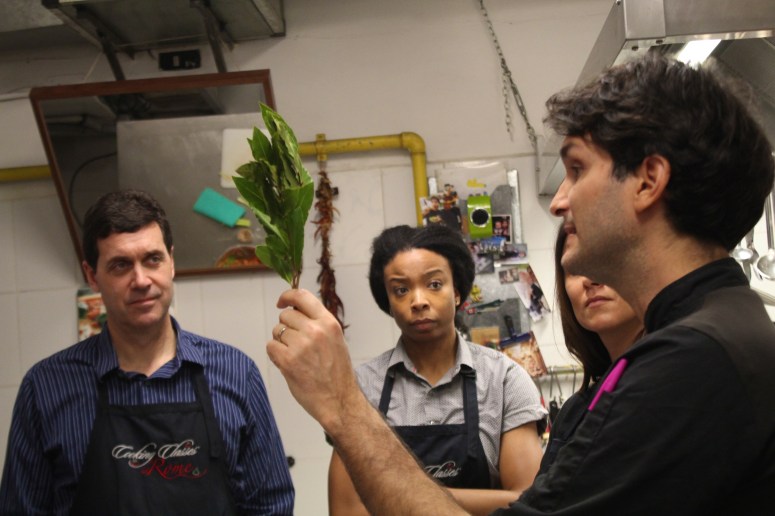
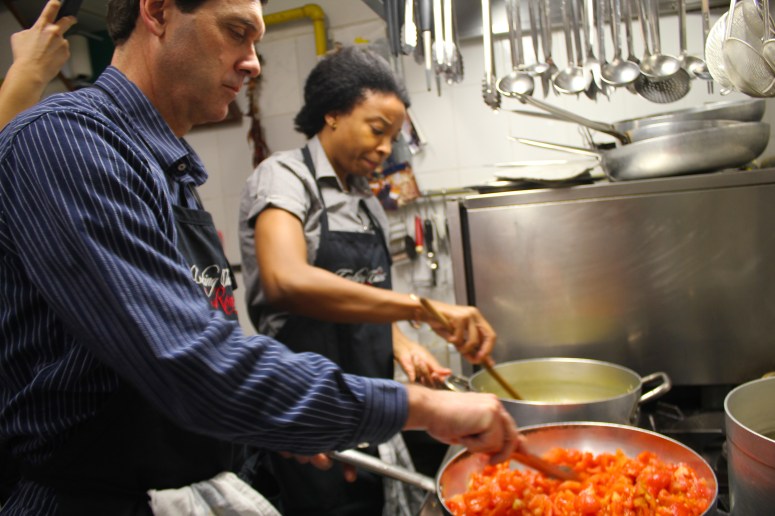
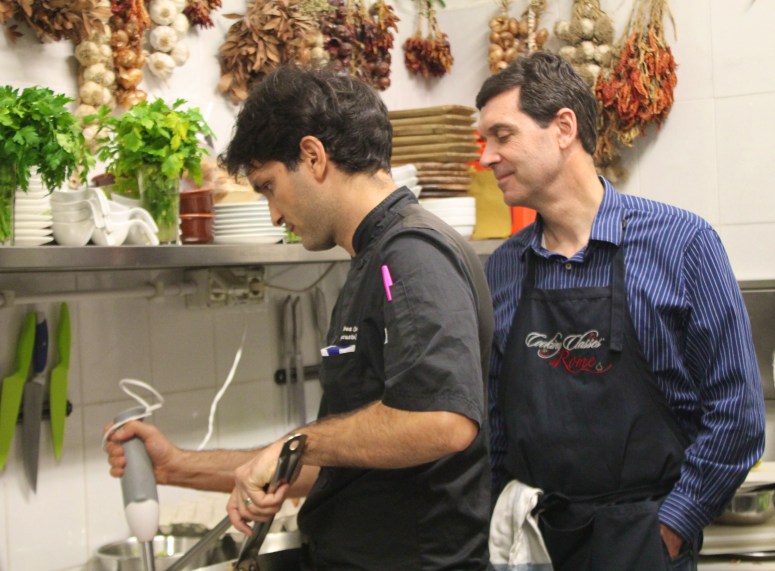
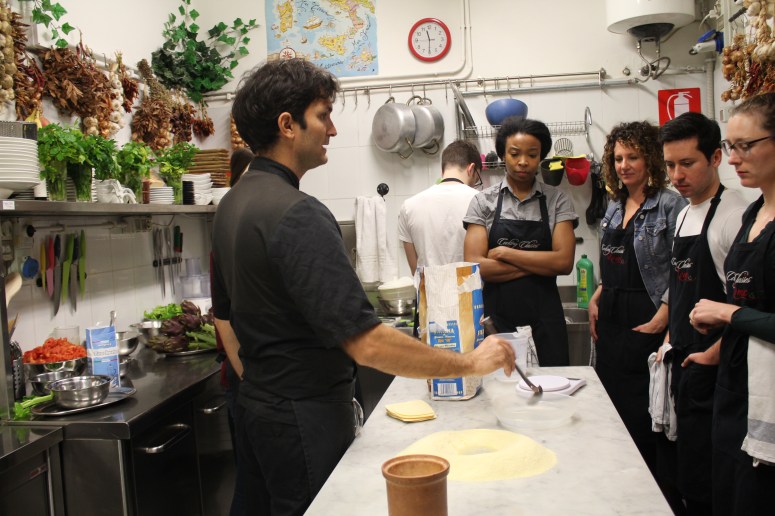
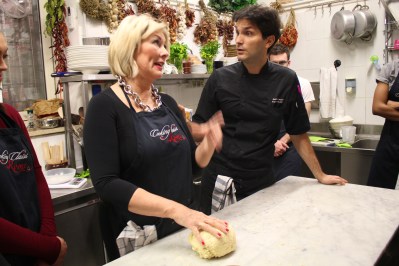
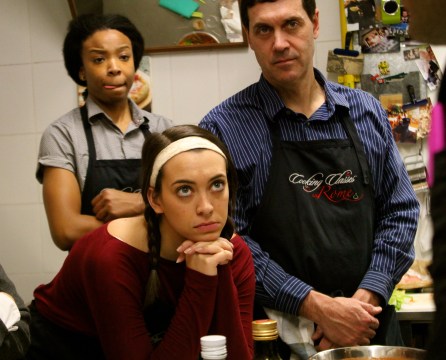
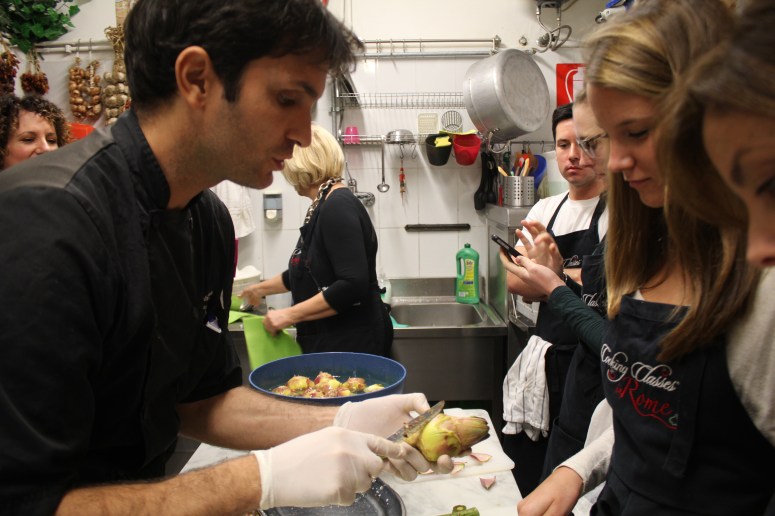
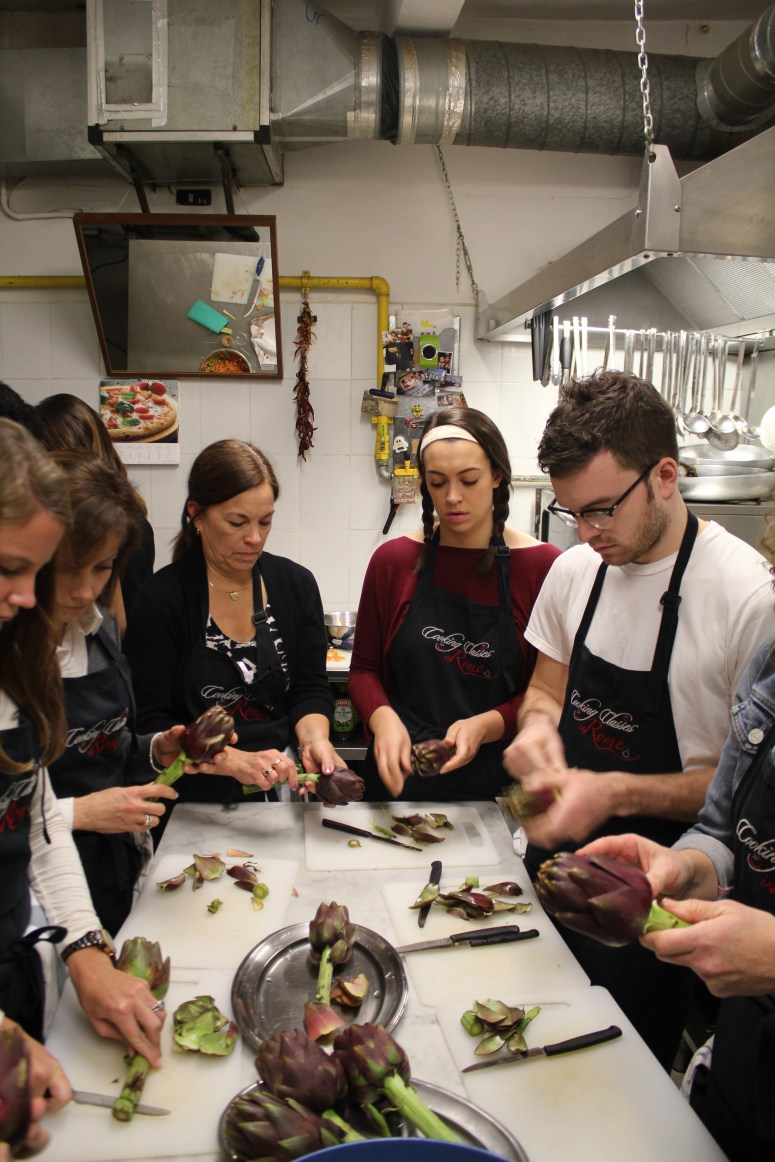
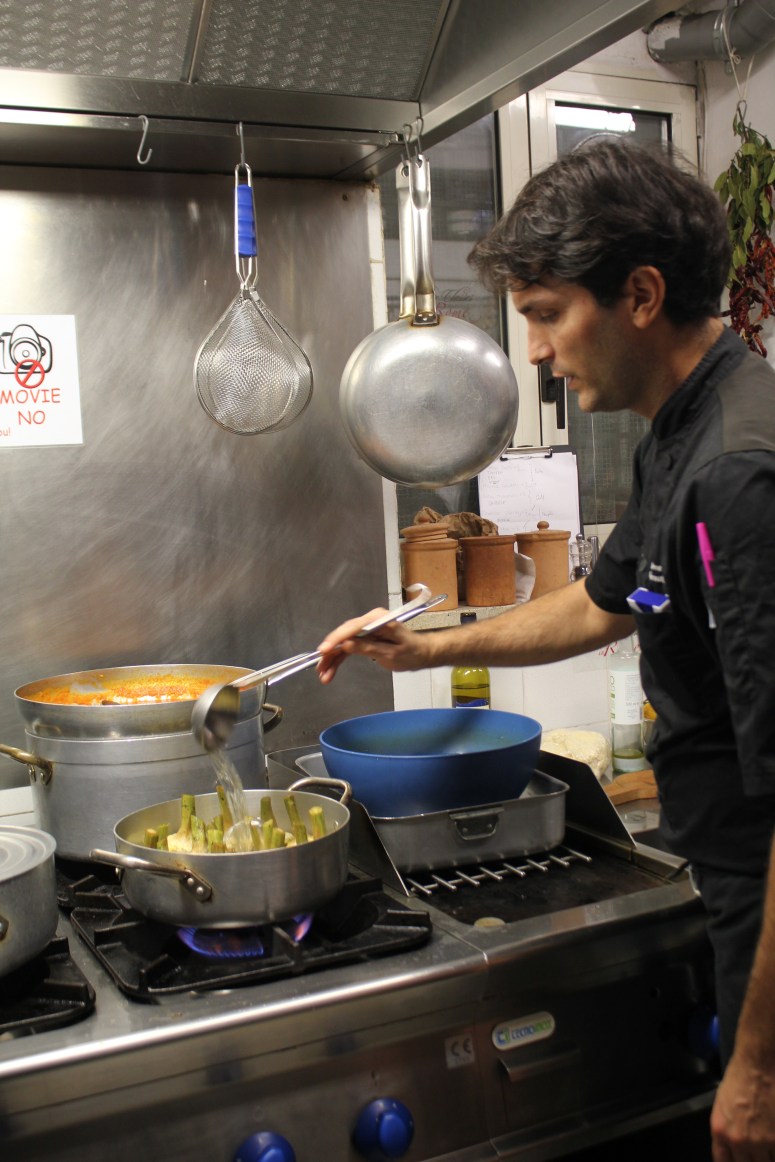
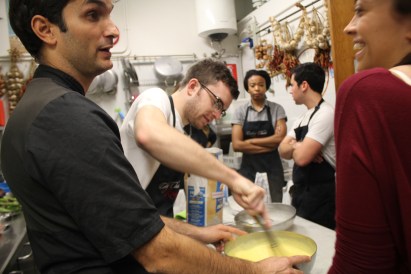
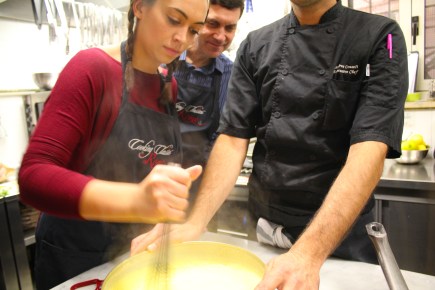
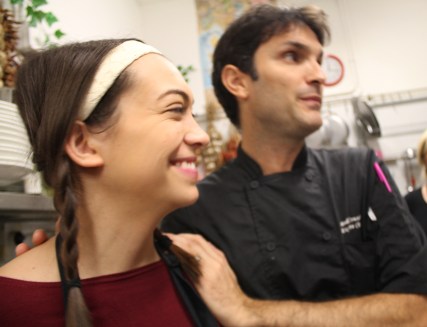
Somewhere in the maze of the narrow streets that make Trastevere so irresistibly charming, Chef Andrea welcomes students into his kitchen at Cooking Classes in Rome. Don’t be late—it was the ugliest American thing we did. I go to Europe to find beauty in details. If you are late to Chef Andrea’s class, you will miss out on his special attentions to delightful beginnings for your day.

IMG_2249

IMG_2179

********

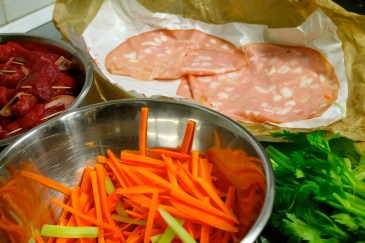
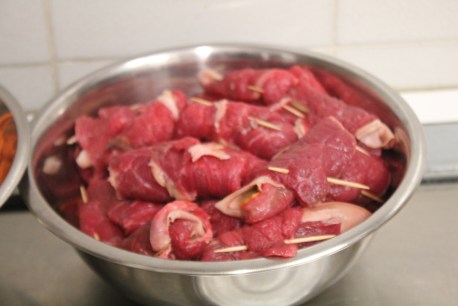
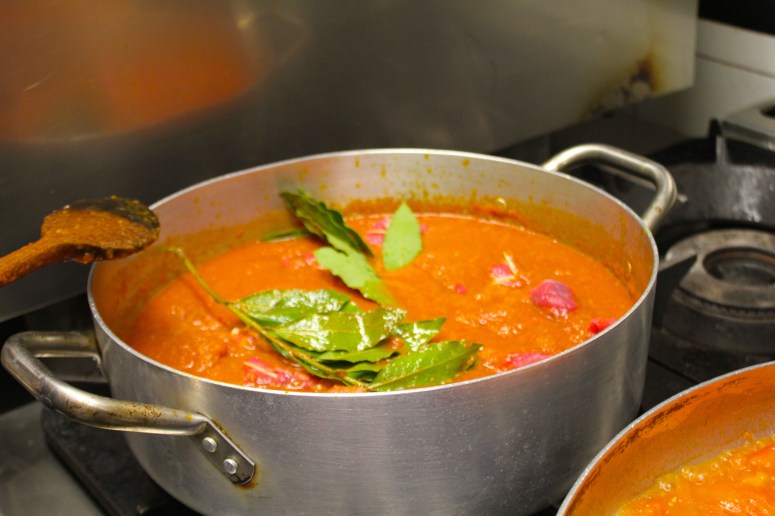
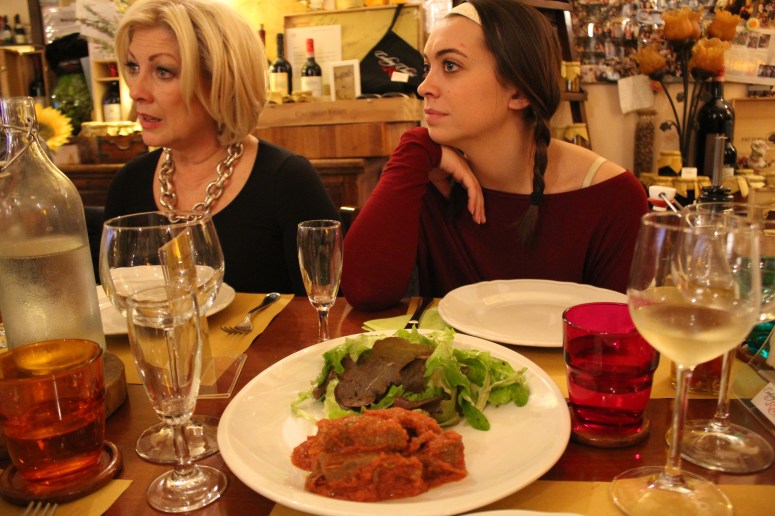
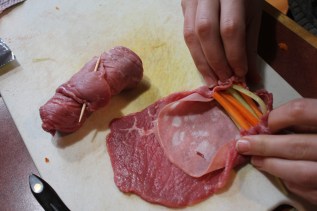
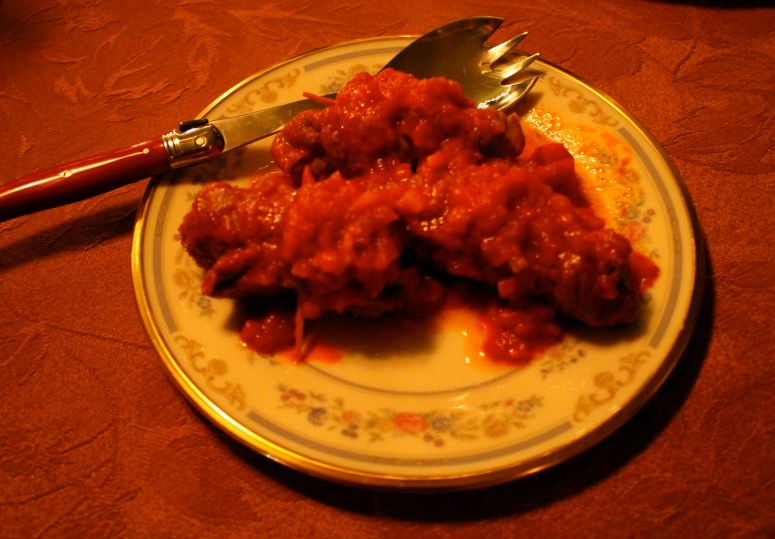
Involtini alla Romana. (Roman style beef rolls in tomato sauce.)

IMG_2147

IMG_2134

IMG_2135

IMG_2143

********

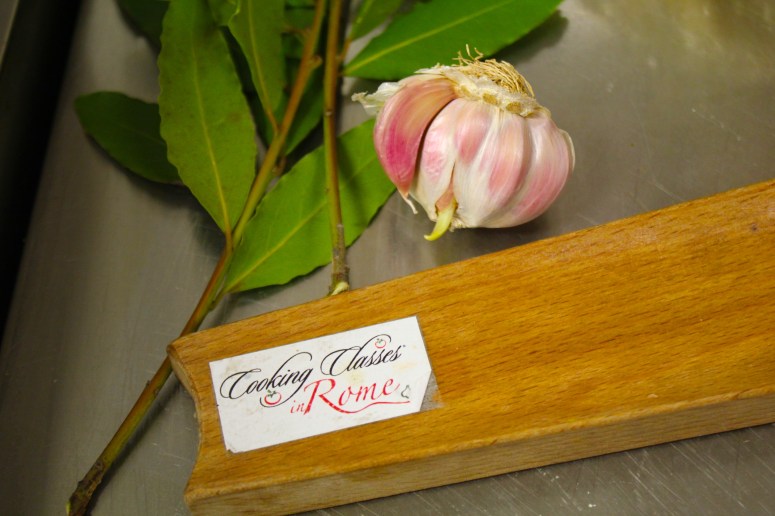
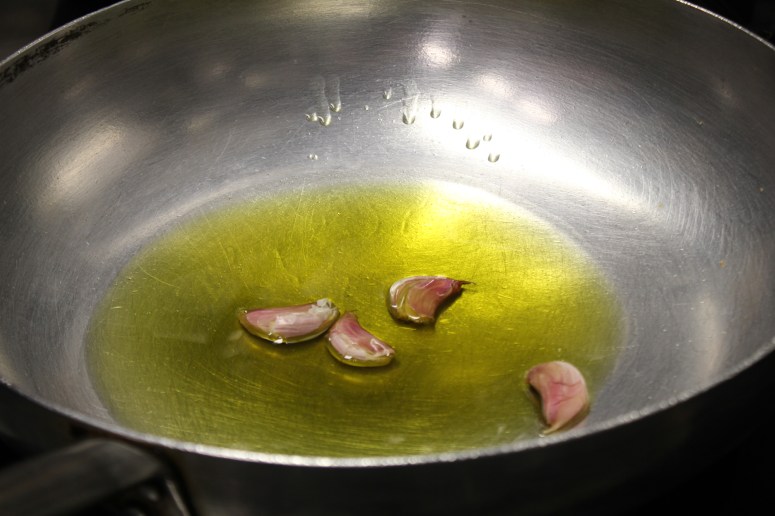
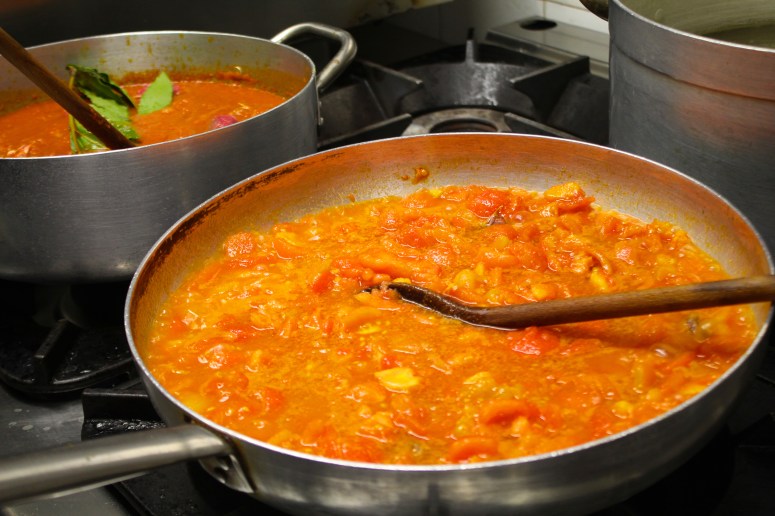
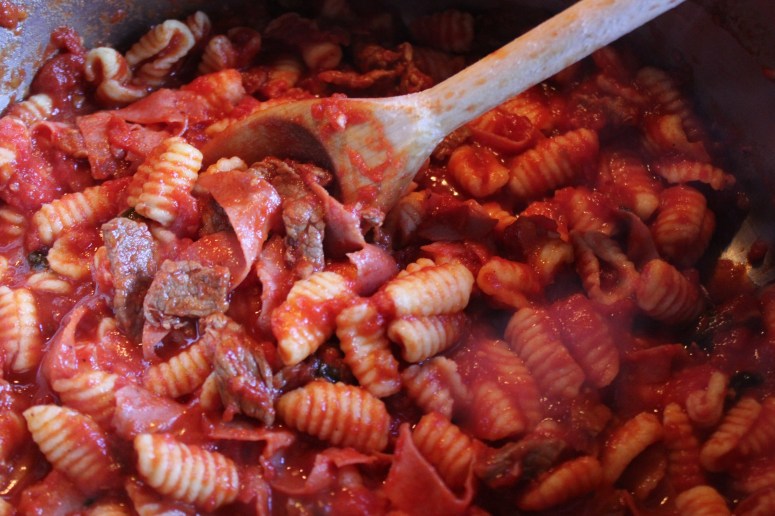
Bay Leaf. The Romans take it from plants growing everywhere. We learned how to prepare two forms of tomato sauce. One was used to submerge the Involtini alla Romana and let it cook, the other was for our handcrafted Cavatelli pasta.

IMG_2184

IMG_2174

IMG_2187

IMG_2182

IMG_2217

IMG_2188IMG_2211

********

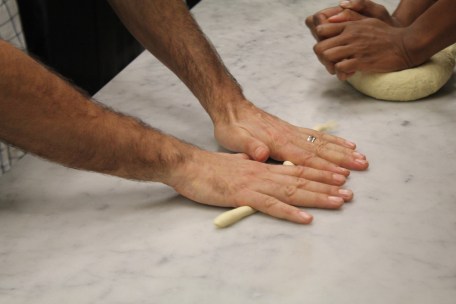
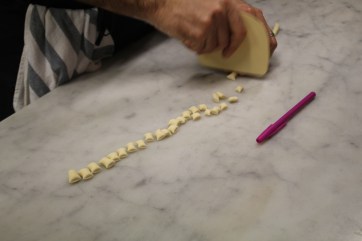
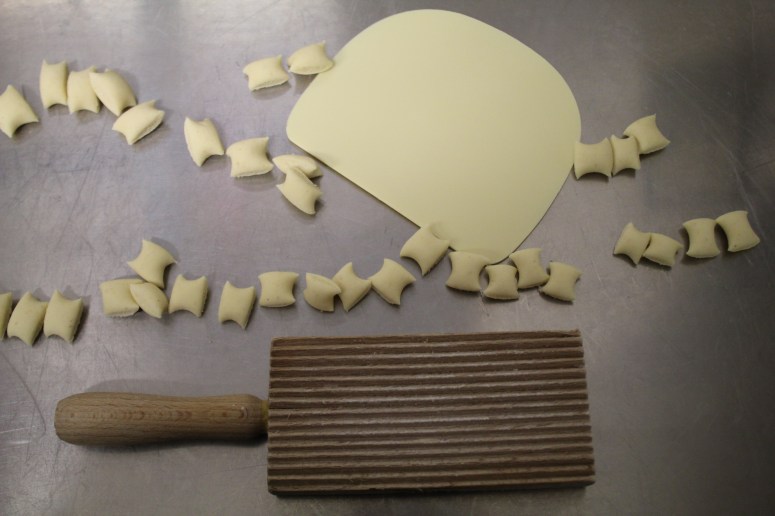
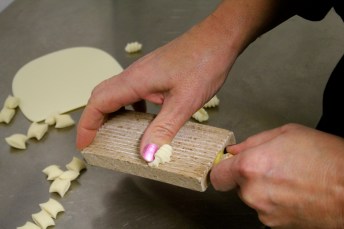
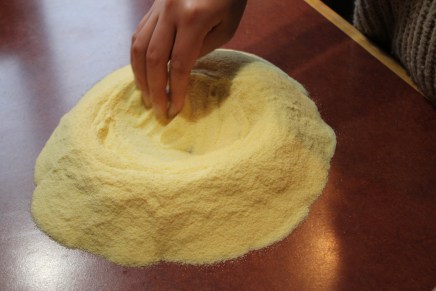
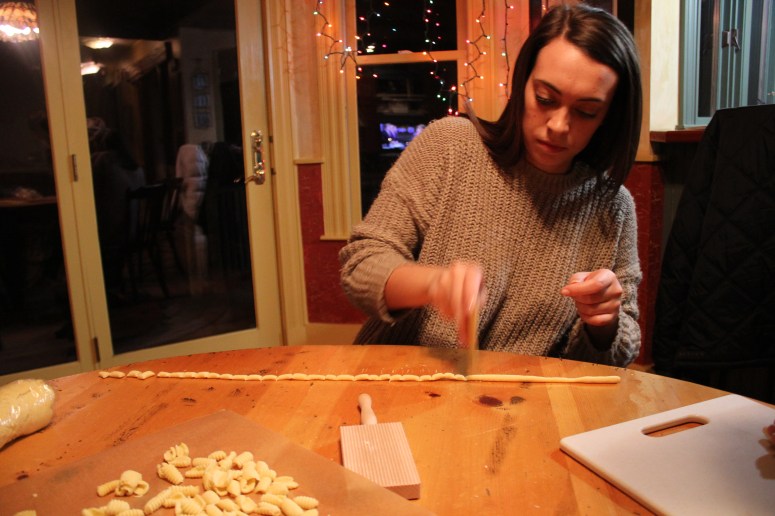
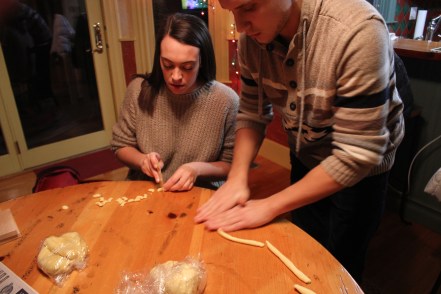
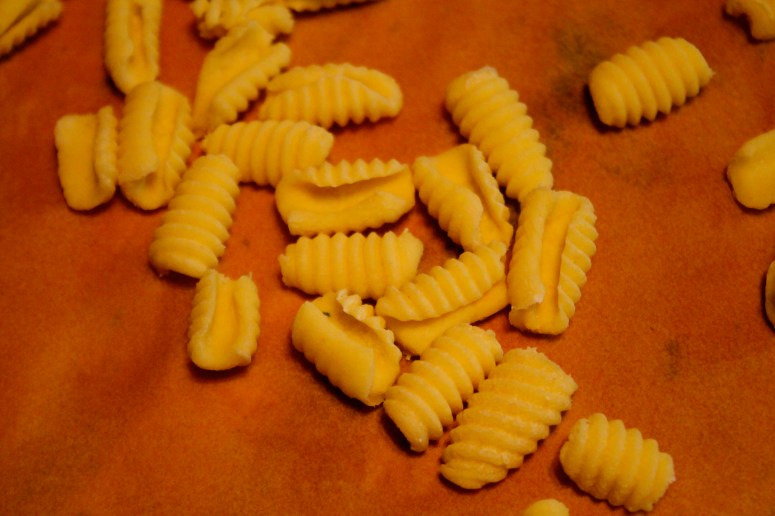
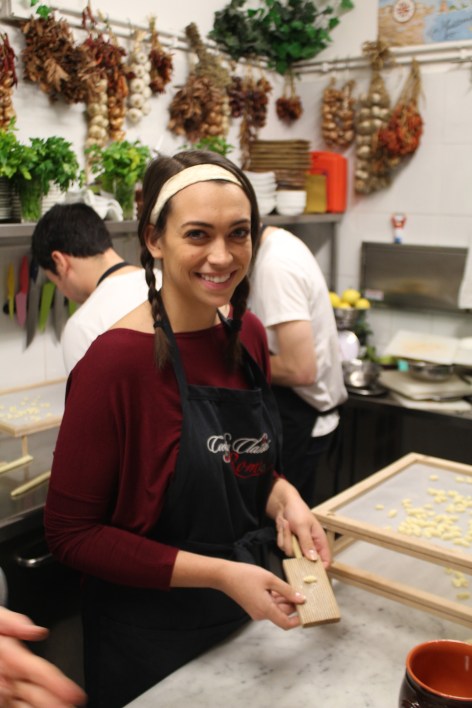
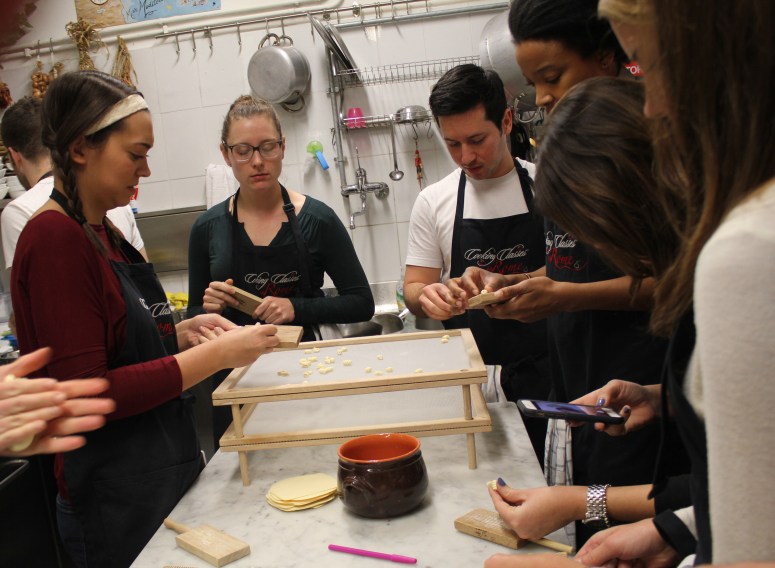
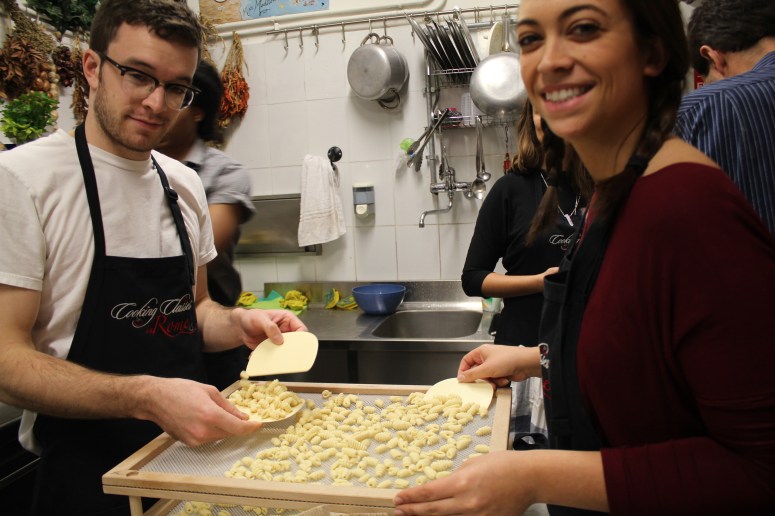
Using Italian-made hand tools to handcraft Cavatelli pasta. Very zen.

Every piece of pasta has someone’s heart rolled into it.

IMG_2141

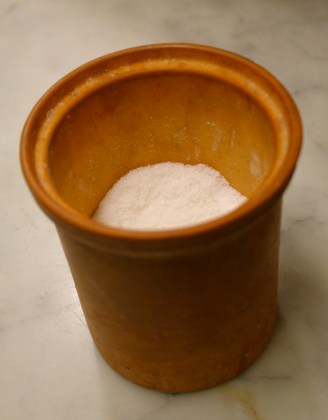
How much salt? One pinch per person.

IMG_2148

IMG_2154

IMG_2183

IMG_2223

IMG_2225

IMG_2233

IMG_2235

IMG_2239

IMG_2237

IMG_2231

IMG_2244

********

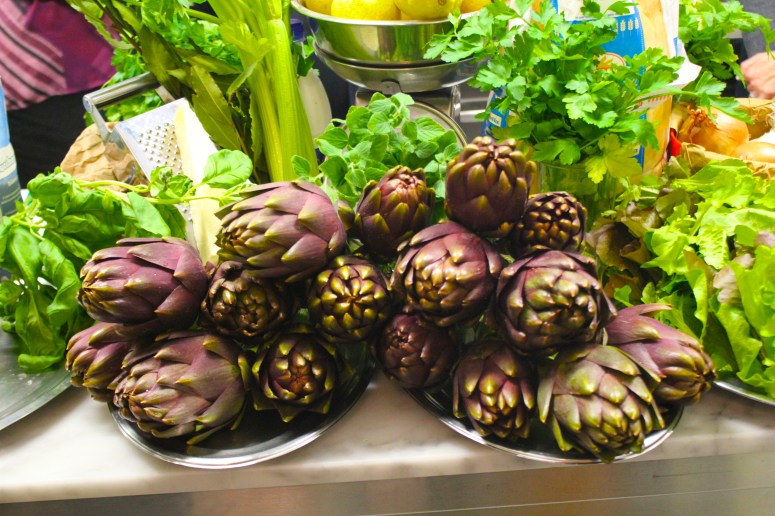
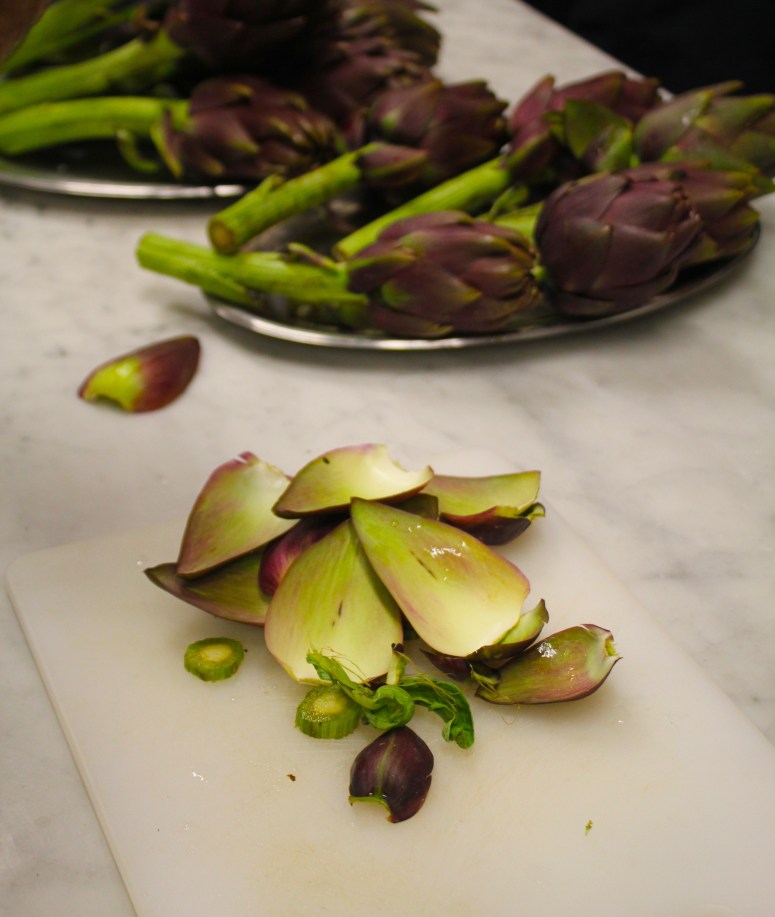
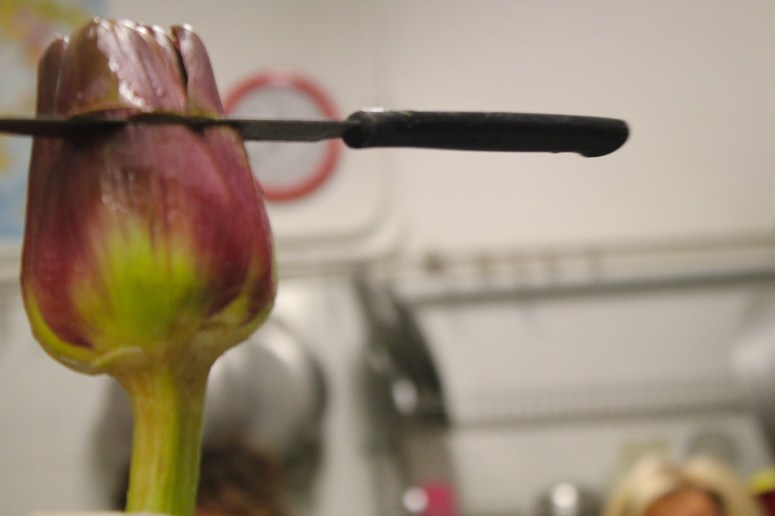
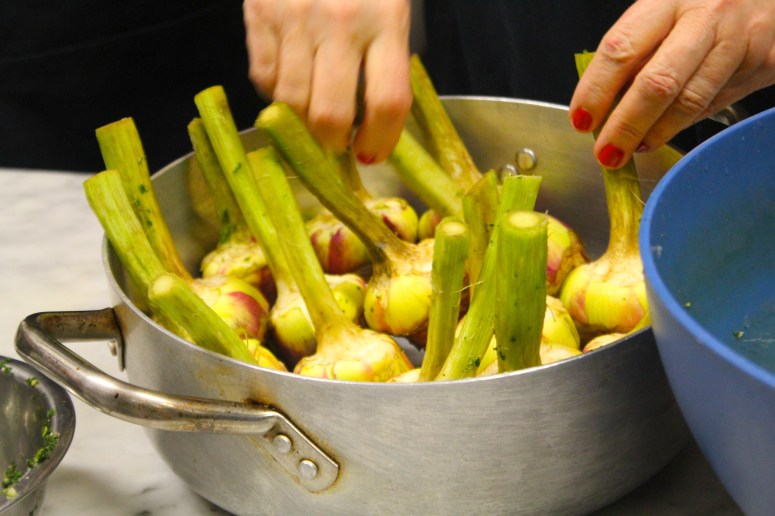
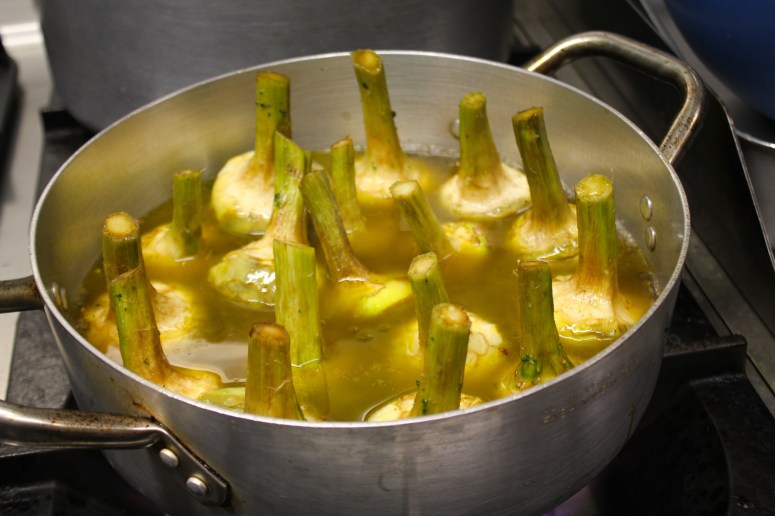
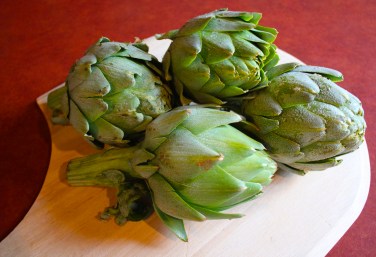
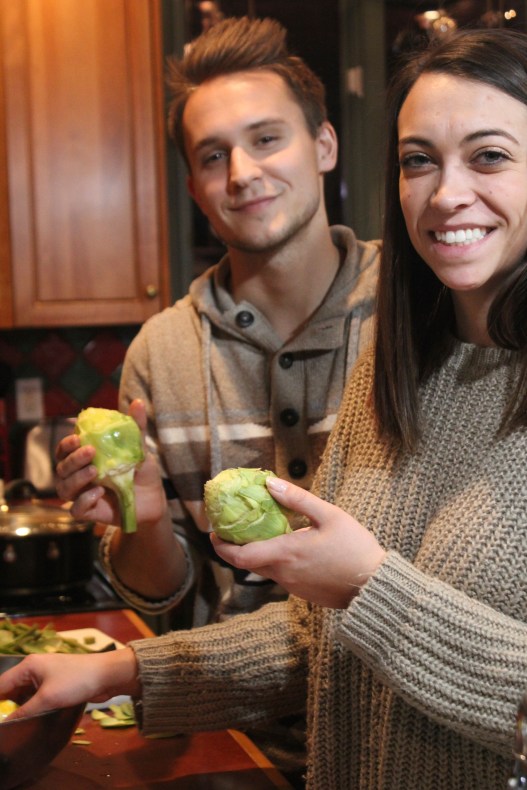
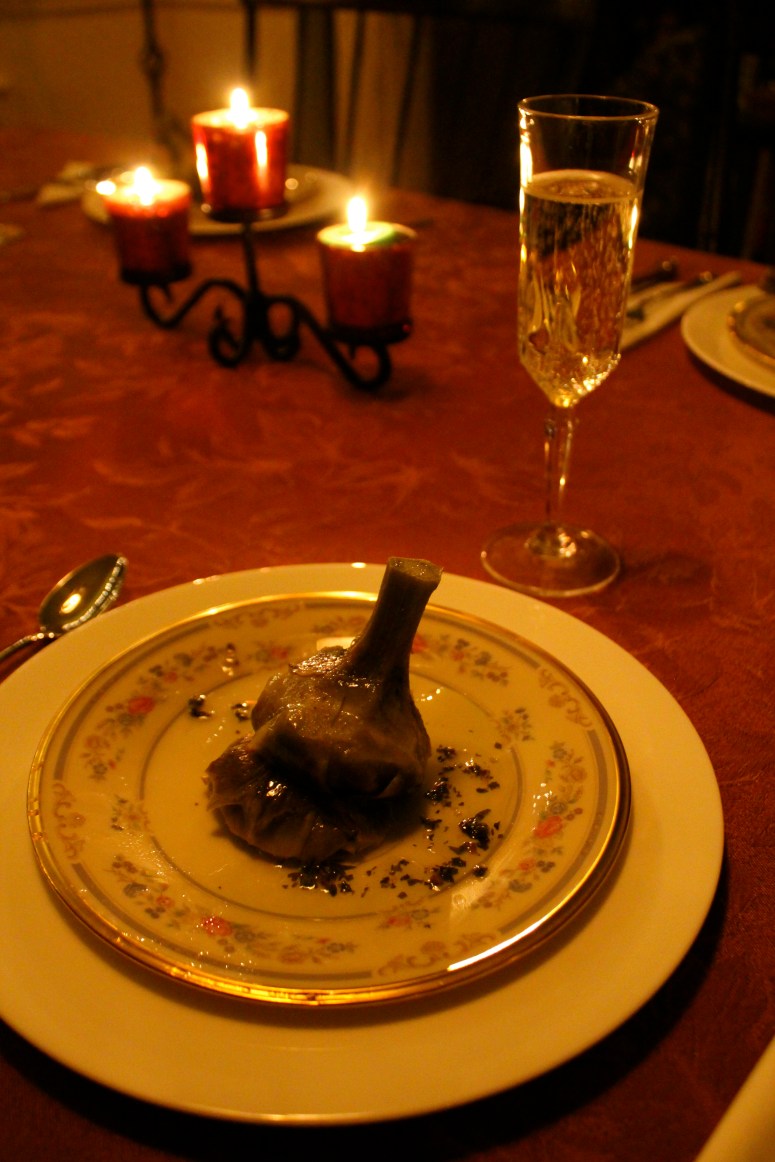
Carciofi alla Romana. (Roman style artichokes.) Roman-style artichokes are the food of the gods. American-style artichokes are for barbarians.

Goethe wrote in Travels through Italy: “The peasants eat thistles.” Supposedly it was a behavior he found too repugnant to ever enjoy.

IMG_2132

IMG_2192

IMG_2203

DO  NOT DO THIS:

IMG_2194

IMG_2200

IMG_2204

There is a secret stuffing prepared for the artichokes.

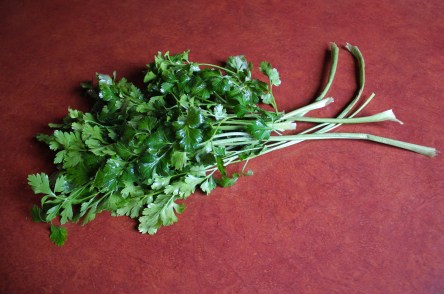
The most authentic stuffing uses a Roman herb growing wild along the Appian Way.

IMG_2210

IMG_2221

IMG_2222

********

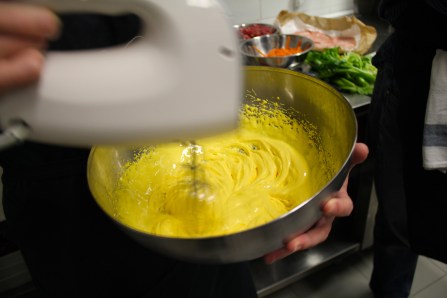
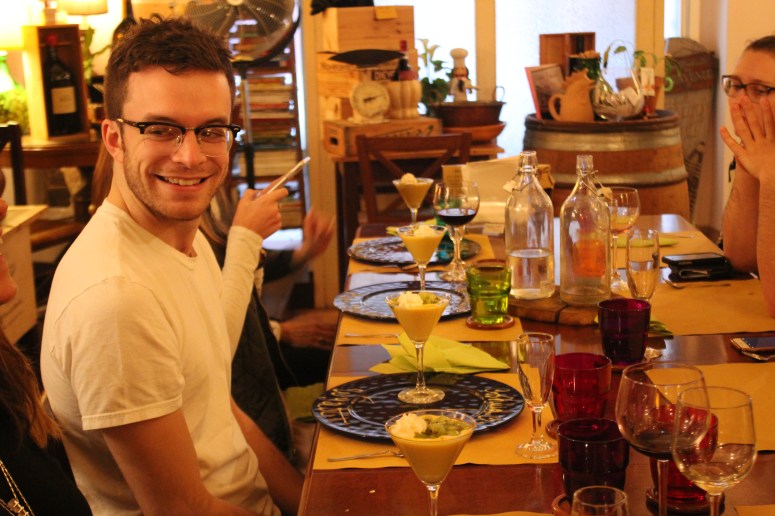
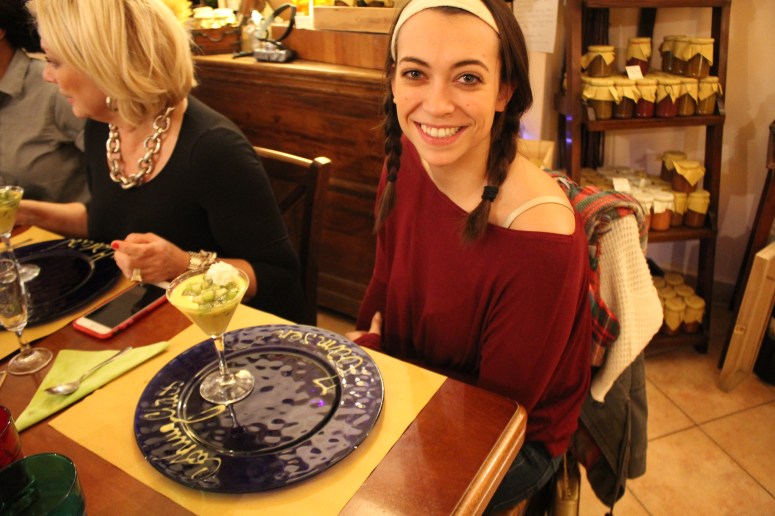
Dessert. Crema al Limone con Kiwi.

And a lesson in which is the male and which is the female lemon.

IMG_2155

IMG_2160

Using the electric whisk.

IMG_2161

IMG_2165

IMG_2163

IMG_2177

********

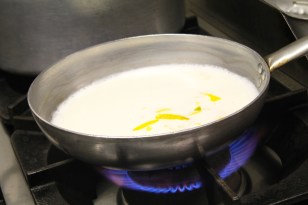
Our cooking instructions included intriguing history lessons and useful magical secrets about how to properly infuse artful details into your work as a chef in the kitchen. Many of the recipes are derived from necessity and are composed using the kinds of foods that were available to be used by the lower classes that lived on the “other side of the river” in Trastevere. The prostitutes learned to prepare and strategically place aromatic meals out into the narrow alleyways where the scents of sexy cooking became concentrated. Such tantalizing pleasures—on several levels—were impossible to resist by potential customers.

Indeed, cooking engages all the senses.

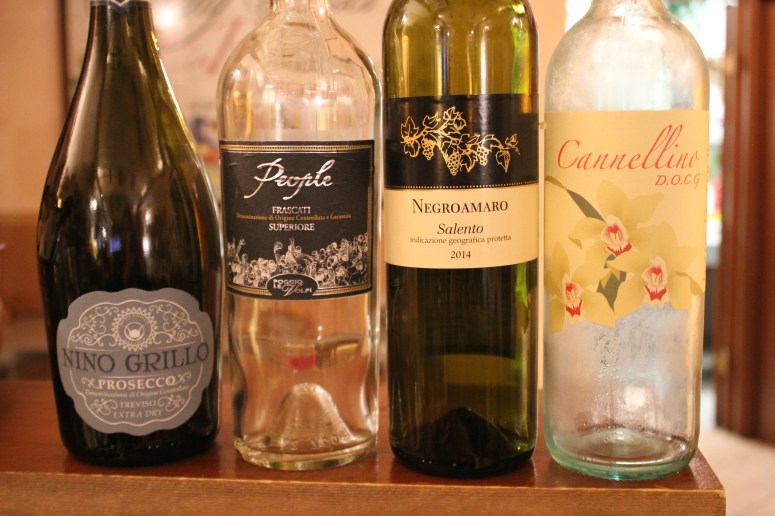
We opted to have wine pairings with our courses and Chef Andrea’s choices were exquisite.
My husband and I have enjoyed various styles of cooking classes in France, in other parts of Italy, and in the United States. Chef Andrea’s Cooking Classes in Rome exceeded our expectations and the price was surprisingly reasonable.
********

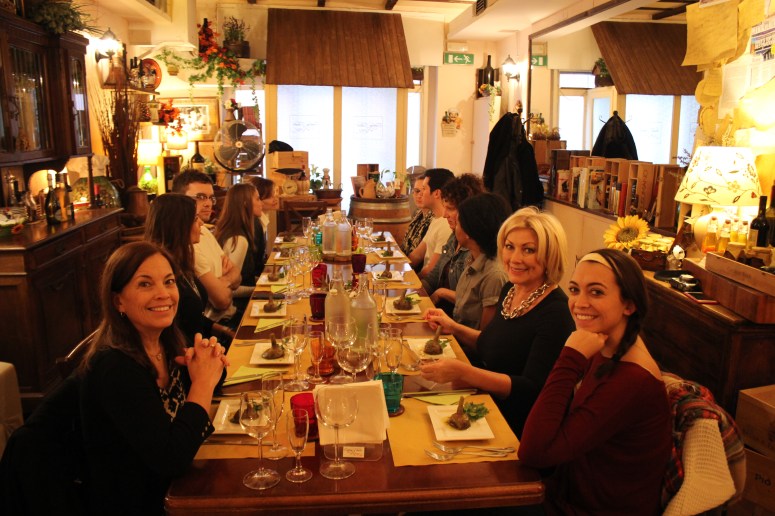
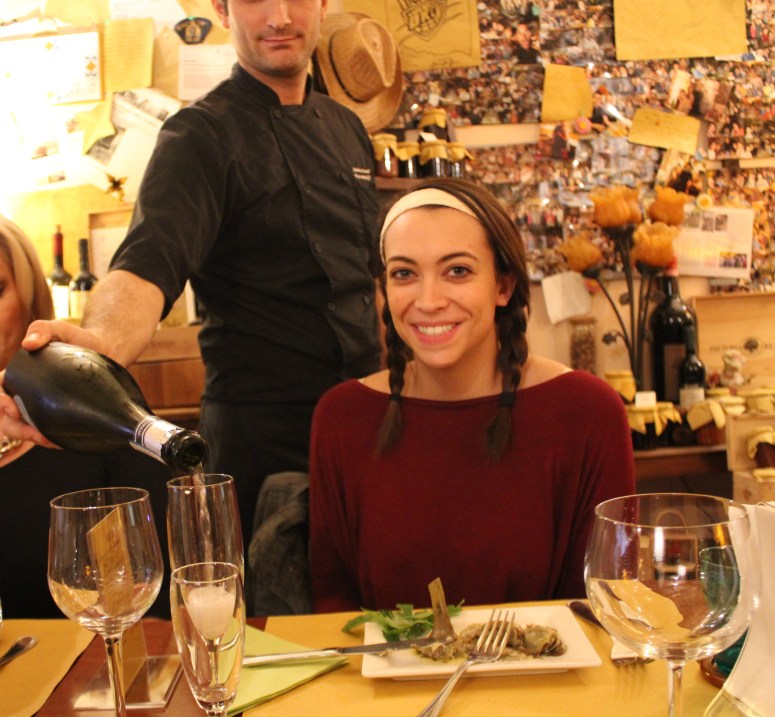
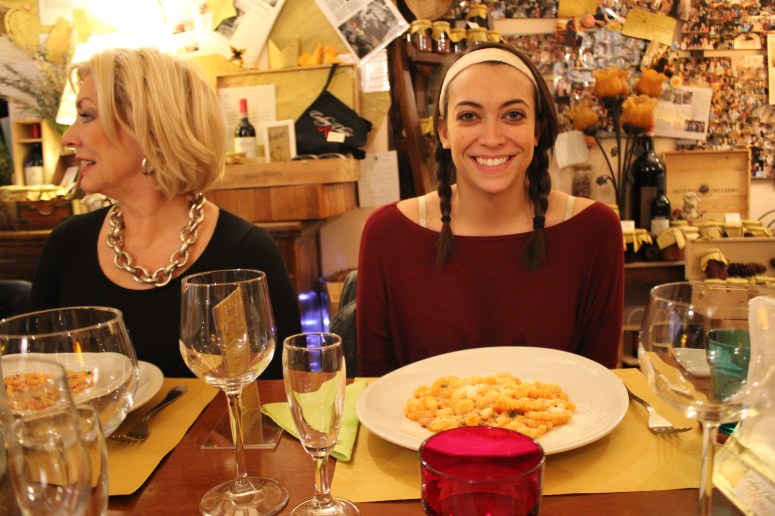
Time to eat our works of art with all of our new friends from all over the world.

The Carciofi alla Romana appetizer.

IMG_2257

Paired with Prosecco di Valdobbiadene.

IMG_2260

First course: Handcrafted Cavatelli fatti a mano con sugo di pomodoro fresco e basilico.

Paired with Frascati Superiore DOC

IMG_2264

IMG_2263

Second course: Involtini alla Romana.

Paired with Negramaro, from the heel of the boot in the famous and breathtaking

Puglia region in the south of Italy.

IMG_2270

IMG_2274

Dessert: Crema al Limone con Kiwi.

Paired with Moscato, 100% Malvasia del Lazio “gleaming golden yellow grapes”

harvested in late October.

IMG_2277

IMG_2278

IMG_2291

IMG_2293

********

At the conclusion of our meal, Chef Andrea asked if any of us would one day use the secrets we learned back in our own countries. What artist does not wish to change the lives of others for the better? And why go to Rome if you do not want to be inspired to create something great?! Or be transformed?

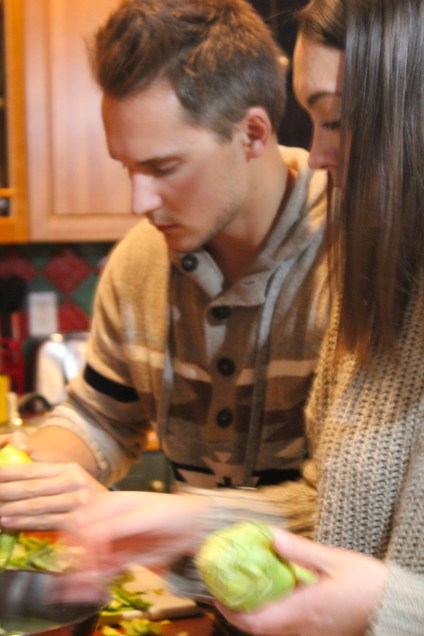
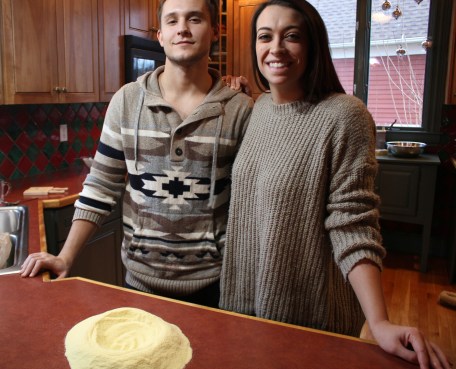
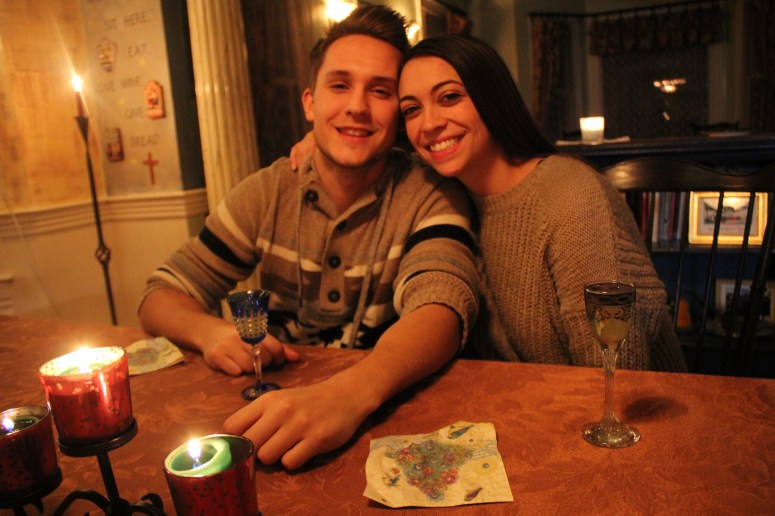
We returned home on a Saturday evening. By the next night—Sunday—our humble gypsy-camp kitchen in America was being transformed into a Trastevere-style trattoria. My daughter’s boyfriend wanted to learn everything we could remember from our day with Chef Andrea in Rome.

********

You don’t need a big, industrial, or high-tech kitchen in order to make art with food. In fact, most of our classes in Europe have taken place in kitchens as small, or smaller than, ours.

IMG_2588

Rome in January was lovely, about 60 degrees. I was happy to find some parsley hanging on in my herb gardens, even though snow was on the way.

IMG_2593

For the handcrafted pasta:

IMG_2595

We had to ask for artichokes at the supermarket. They brought some out from the back storerooms. They weren’t as beautiful as the artichokes in Rome, but still worthy.

IMG_2599

In order to offer finely-grated Pecorino Romano,

this is the side of the cheese grater to use:

IMG_2604

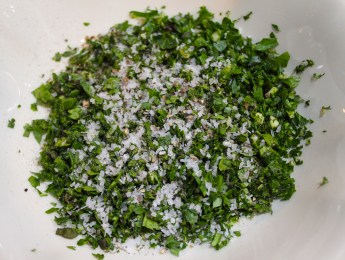
Chopped herbs and garlic and SALT.

IMG_2630

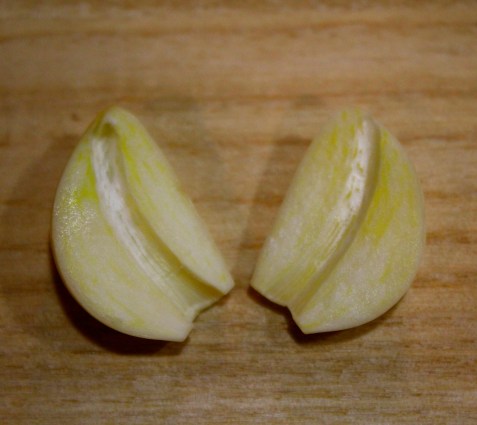
The secret to cooking and eating garlic,

and still being able to get a sweet (not smelly) kiss from your true love all over Rome:

IMG_2625

********

IMG_2606

The artichokes will definitely require some more practice:

IMG_2628

IMG_2629

IMG_2607

IMG_2608

IMG_2612

IMG_2649

IMG_2633

IMG_2638

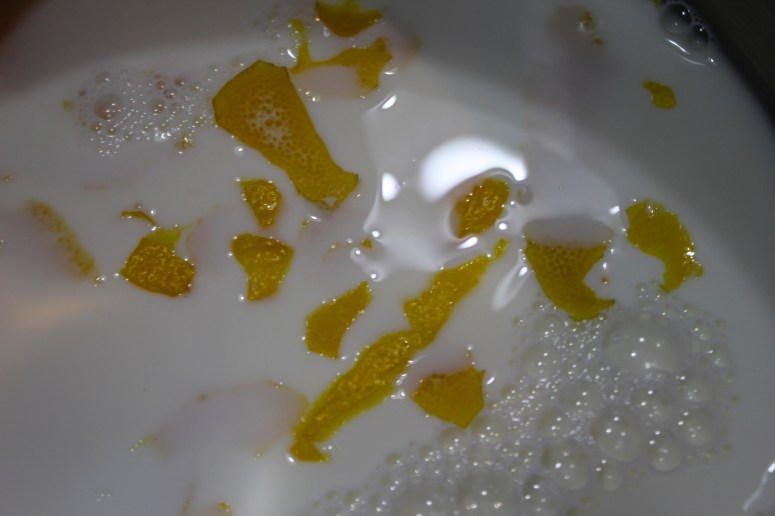
Lemon zest in the milk for the dessert:

IMG_2621

********

IMG_2655

IMG_2657

IMG_2666

IMG_2663

Beautiful snow began to fall during the last course. I set the dessert glasses out to be blessed before assembling the Crema al Limone con Kiwi into them.

IMG_2671

IMG_2675

A glass of limoncello for everyone.

IMG_2682

********

The next day, Monday, there was a generous slice of beef, a few slices of mortadella, and some pasta left over. I sliced the meats and dropped them, along with chopped garlic, into fresh tomato sauce and, borrowing a tip from the prostitutes of yore, began letting it cook. Sexy aromas floated up to—and swirled all around—the desk where my husband had returned to his workaholic self. (Monday was the Martin Luther King holiday. Though my husband had not driven into his office in Boston, he had begun work by 7AM and hadn’t left his desk even as the noon hour approached.) Soon, I heard my husband coming down the stairs, through the narrow alleyways, and finding his way into my kitchen.

We had a nice lunch together, planning our next trip to Italy, and a possible Roman feast at our son’s apartment in Brooklyn.

IMG_2692

IMG_2695

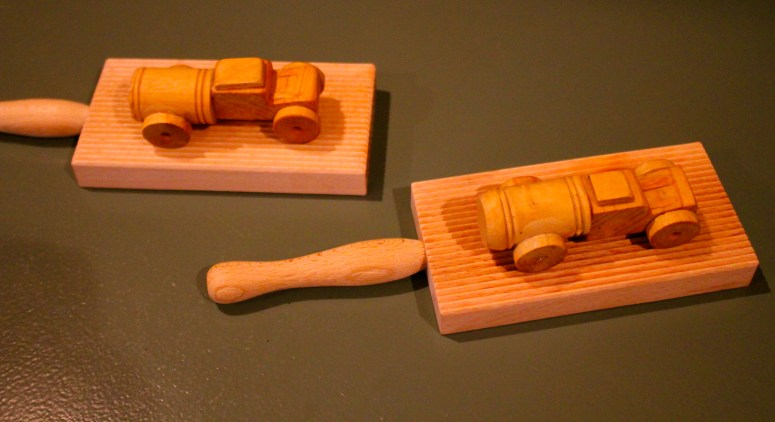
All roads leads to Rome. (Trucks created from random scraps of wood by my son when he was a toddler. Hand tools made in Italy for rolling out pasta.)

IMG_2687

********

If you want to know how to make the food Chef Andrea taught us how to make, you will have to visit him at his Cooking-Classes-in-Rome studio in Trastevere.

Is it worth it to travel all the way to Rome to learn how to make a typical Roman feast? And bring more beauty into your life? And spend time with your family making new friends over food? And feel more hopeful about our post-humanist world?

OMG.

Is the Pope Catholic?

********

Ghosts Of Christmas Peace.

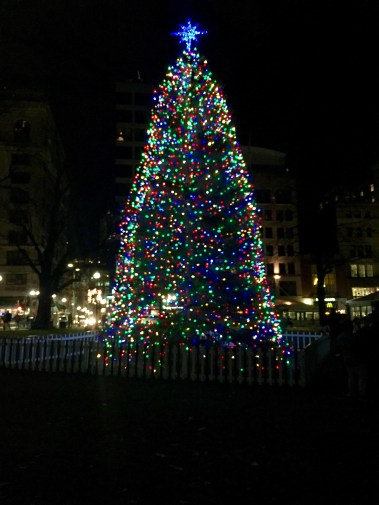
“Each December the people of Boston gather to witness the annual lighting of the Christmas tree. Some of them probably do not know why the people of Halifax send a tree every year or even that it is a gift from Nova Scotia. No one needs to know the story behind a tree to admire its beauty. But the people of Halifax know where it comes from and they remember the story.” —From the frontispiece with an illustration of Halifax Harbour in the award-winning book Curse of the Narrows, The Halifax Explosion 1917, by Laura M. Mac Donald. Mac Donald began researching and writing this book, about her hometown of Halifax, after emigrating from Toronto to New York City. While waiting for her green card and deciding that perhaps another book about the Halifax Explosion did not need to be written, Mac Donald experienced in person the September 11th terrorist attacks on New York City—“I watched in incredulity as so many of the details I’d just researched repeated themselves.”

Mac Donald’s book, and my excursions with my husband and my daughter last summer through Nova Scotia, affected me deeply.

********

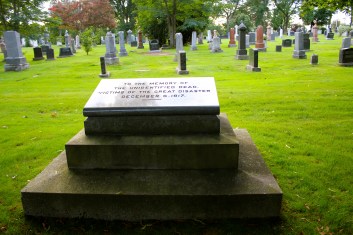
There is a display at the Maritime Museum of the Atlantic in Halifax of a child’s collection of pocket possessions. The collection includes a small, bouncy ball toy, made of translucent rubber the color of tumbled, light-green sea glass. There is also a stainless steel hair comb. There is an eraser, the corners rounded and worn away. And there are three wooden pencils—two yellow, one green—sharpened down to about two and a half inches each, with hand-carved leaded points. The soft wood on the end of one pencil still bears imprints from the child’s habit for gnawing on the pencil, perhaps while thinking, or feeling bored, or daydreaming.

The child was killed in the Halifax Explosion of December 6th, 1917, before enjoying another day of lessons and play at St. Joseph’s School where, it seems to me, no part of a pencil or an eraser ever went to waste, hair was kept neatly groomed, and bouncy ball toys might have been taken away by a stern nun from time to time.

This death, as far as I know, was never labeled collateral damage or an accident of friendly fire. Though, the way I see things, it was a little bit of both combined with too much innocent victim of the most devastating, man-made explosion ever to rip through wartime history prior to the dawn of the Atomic Age. (After that, the explosions at Hiroshima and Nagasaki usurped the Halifax Explosion for biggest and most destructive.)

The Halifax Explosion happened during World War I. It was an event of war that resulted in casualties and lifelong trauma for civilian citizens on North American soil. Like a lot of legendary war stories, the story of the Halifax Explosion is a tragic tale of unfathomable human recklessness tangled up with inspiring examples of humanitarian courage, comfort, and care.

The setting for this war story was Halifax Harbour, a place of prosperity due to its position as a significant port for naval warfare operations in North America. Through the harbour’s particularly tight passage, known as The Narrows, sailed ships in the business of organizing convoys to deliver munitions, supplies, and soldiers to the battlefields of Europe. One such ship, the French ship Mont-Blanc, carried a load of munitions so lavish and volatile that her cargo holds were secured by copper nails to prevent sparks—a detail as useful as designing a place to keep a bucket of water in the cargo hold of the Enola Gay, in case her infamous cargo blew too soon.

What was aboard the Mont-Blanc? 2,300 tons of picric acid. 250 tons of TNT. 62 tons of guns cotton. And 246 tons of high-octane fuel benzole, stored in barrels on the deck. She had sailed to Halifax from Gravesend, NY and was entering The Narrows at the same time the Norwegian ship, SS Imo, was leaving.

The SS Imo carried no cargo. She was sailing for New York to acquire emergency relief supplies to aid civilians in war-ravaged Belgium.

On the morning of December 6, 1917, the two ships collided as they tried to pass each other in The Narrows. Metal hulls ground together igniting sparks. Fire erupted and an oily, black cloud arose, drawing the attention of onlookers.

The residents of Halifax watched from windows at home, at businesses, and at schools. Mont-Blanc’s crew immediately abandoned ship, shouting out desperate warnings in French, but no one could hear them or understand what they were saying.

Mont-Blanc drifted toward the shores of doomed Halifax and within twenty minutes, exploded.

Her catastrophic blast released the energy of 2.9 kilotons of TNT sending a shock wave through the Earth at twenty three times the speed of sound which could be felt well over one hundred miles away. (So says one website.) Shock waves rocketed in all directions, at the destructive speed of 3,000 feet per second, shattering windows sixty miles away. (So says another website.) And—at the moment of detonation—the temperature of the explosion exceeded 9,000 degrees Fahrenheit.

The blast affected everything within almost two miles. It vaporized the waters of the harbour, resulting in a tsunami that roared forth to fill the void, surging sixty feet beyond the high water marks.

The citizens of Halifax thought sabateurs! German attack!

And fires raged throughout the city.

With night’s darkness, temperatures dropped to 16 degrees Fahrenheit.

Snow began to fall.

A bleak, bitter cold gripped the tortured city and did not set it free. Gale winds howled and the next day, a blizzard raged.

Temperatures plummeted to 20 degrees below zero.

********

2,000 people lost their lives, each as divine as yours, as mine.

9,000 were injured, (many of them suffered eye injuries from flying glass), and 6,000 were left without shelter. Some were orphaned. Some were never found or identified, their pocket possessions—all that was left of their lives—never claimed by a loved one.

What’s in your pocket? What are the things you carry?

IMG_5193

********

The State of Massachusetts sent immediate and sustained aid to Halifax, dispatching a train loaded up with supplies and medical personnel as soon as news of the disaster reached Boston.

IMG_5004

One year later, in 1918, the City of Halifax sent a Christmas tree to the city of Boston as a gesture of gratitude. Nova Scotia, in the spirit of good will and peace, memorialized this gesture in 1971 and began sending a tree to Boston every holiday season. For the people of Nova Scotia, it is considered a great honor to donate a tree from your own land to be sent to Boston Common.

********

I never knew the detailed story behind the Christmas tree on Boston Common, though for so many years I have enjoyed admiring it. But after traveling through the resplendent otherworlds of Cape Breton Island and exploring the foodieville fun and history of Halifax this summer with my husband and my daughter, I read Curse of the Narrows—a book that caused me to cry over and over again.

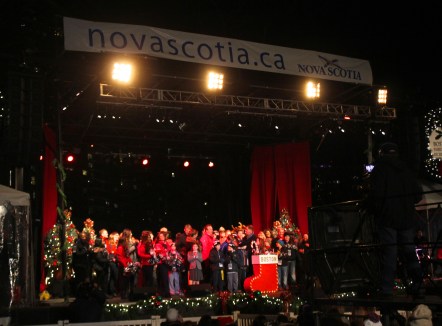
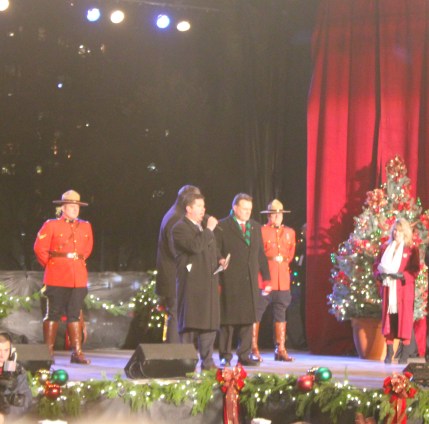
Then, I showed up to join in with the people of Massachusetts and people traveling from Nova Scotia to celebrate the lighting of the memorial tree on Boston Common this holiday season. The ceremony was a festive evening of entertainment and remembrances with dignitaries from Halifax taking the stage next to dignitaries from Boston.

IMG_1069

IMG_1066

A strong police presence dominated the Boston Common throughout the festivities and I am sure I wasn’t the only one wondering if the crowd included any suspicious persons carrying suspicious backpacks or hiding suspicious firearms under winter coats. This is our new normal—certainly in places like Boston where a terrorist attack on the Boston Marathon stunned the city and the state and the world of peaceful sporting events.

I think that now, more than ever, maybe we do need to know the story of the tree on Boston Common, because it’s a story of war and peace and it has never been useful for any of us to just wish for Peace on Earth, once a year, from the comfort of our faith, our chosen communities, and our civilized countries. Places of peace are once again battlefields all over the world. We are, all of us, direct targets of new kinds of world wars.

********

The writer and activist Natalia Ginzburg wrote of World War II in Italy: “There is no peace for the son of man…Each of us would dearly like to rest his head somewhere, to have a little warm, dry nest. But there is no peace for the son of man…all the certainties of the past have been snatched away from us, and faith has never, after all, been a place for sleeping.”

It’s true humankind has waged war since long before, and long after, Jesus, the Prince of Peace, was born. And the devastation at Halifax plus all the carnage of World War I on the battlefields of Europe, did not prevent World War II from happening. Indeed, weapons and ideologies of mass destruction grew more atrocious during World War II.

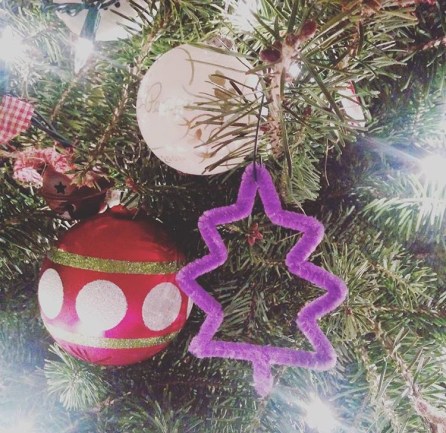
Yet I have experienced the graceful composure of my grandfather, a man who fought against depraved Japanese armies during World War II and was seriously injured, as he lived to see such tiny evidences of peace as those represented by the friendship of his great-grandchild, my daughter, with a classmate from Japan when she was in pre-school. When my daughter’s friend moved back to Japan, her family sent our family a holiday package with three hand-made ornaments bent from pipe cleaners into the simple shapes of a present, a candy cane, and a Christmas tree. This year, the ornaments inspired me to think of Sadako Sasaki, a Japanese girl who was two years old when the atomic bomb exploded over Hiroshima. Sadako did not escape the effects of the bomb’s radiation, even though she lived a mile away from the epicenter of the bomb, and she died of leukemia ten years later. She had hoped to save her life and send messages of peace to the world by honoring a Japanese legend that believes if you fold 1,000 paper cranes, your wishes will come true.

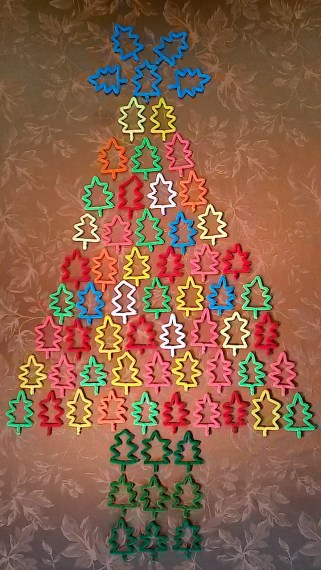
So I began to fold and bend pipe cleaners into Christmas trees this holiday season. I made them in different colors, representing the lights on the tree from Nova Scotia in Boston. My trees symbolize Peace on Earth and Good Will to All and I sent them, with a version of this blog post, to family and friends.

20151218_110223

I hope that people everywhere will begin to believe in doing the hard work of waging peace and, instead of joining war efforts, I hope people will join peace efforts.

From writer and activist Mahatma Gandhi: “As human beings, our greatness lies not so much in being able to remake the world—that is the myth of the Atomic Age—as in being able to remake ourselves.”

I have a wish that people will consider remaking themselves into intelligent, mindful activists ready to wage the struggles for peace. It can be as simple as beginning to write letters to elected officials. There are websites that will guide you through on how to do this. You might structure a letter around your own stories of peace. Or, you might have terrible stories of war. However it is you believe the laws of the nations of the world need to be established and/or changed in order to create a more peaceful world, put your beliefs in writing and send them to the people we’ve elected—and will be electing—to represent us. Maybe you have your own more proactive ideas for creating peace.

The work of creating peace is not futile.

Musician and activist Bono, of the Irish band U2, spoke about showing up to give a concert in Paris after this year’s terrorist attacks of November 13th: “How bizarre is it…that when we left Paris we went straight to Belfast and we found peace? We found hope. This was supposed to be an intractable problem. And this was a peace that was brutal. People had to really compromise to make this peace. When you get bleak about things and think, Gosh, is there an end to this? Yeah, there is, it just takes lots of work, lots of time. I was never a hippie—I’m punk rock, really. I was never into: ‘Let’s hold hands, and peace will come just because we’ll dream it into the world.’ No. Peace is the opposite of dreaming. It’s built slowly and surely through brutal compromises and tiny victories that you don’t even see. It’s a messy business, bringing peace into the world. But it can be done, I’m sure of that.”

***Boston Common, 2015***

FullSizeRender

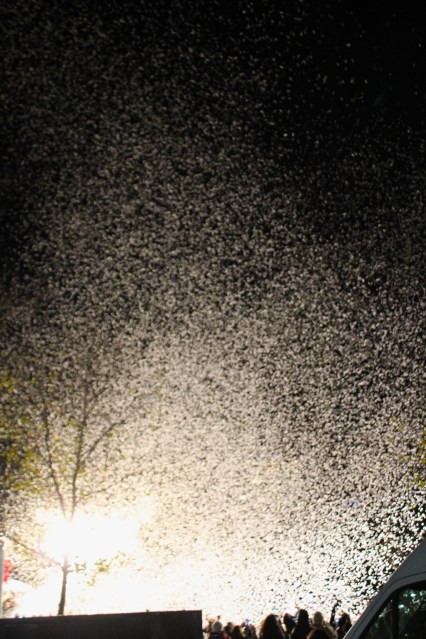
And a grand confetti shower over Boston and the Common after the lights on the tree started to sparkle.

IMG_1080

********

Views from our little house, Cape Breton Island, Nova Scotia, and the deck where I sat with tea and a notebook every morning.

IMG_4594

IMG_4802

********

From my home to your home, I wish you Peace.

20151219_224110-1-1

********

FullSizeRender-1

********

Bah Freakin Humbug.

There won’t be any snow for Christmas where I live in America’s northeastern Currier and Ivesville. The grass is green and supple, flowers are blooming, and the birds are taking baths without chattering beaks.

For some of us, 2015 has been the best of years and the worst of years. Worst of all, best didn’t do such a great job of overcoming worst. Sometimes, worst is worst—maybe the worst—and even if you were to fill the cathedrals of the world with every bit of your best from one year, your worst might still hum a mournful wail over the happy-ending high notes we all hope to hit at year end.

And then what!

Well, 2015 was one of the worst years for me. But not the worst. It was, however, the worst year for too many of the people I know and too many of the people I don’t know all around the world.

There is one tried and true practice that, in my humbug opinion, never fails to create notes of grace through times of troubles. It is simply this: Think of others.

Last night, my husband came home from work hauling his collection of briefcases and his guitar. “Why do you have your guitar?” I asked him. Had he auditioned for a rock band? Were we going to sell everything and return to the halcyon days of worry-free living in rent control with bold cockroaches? The days when happiness was stored one block away at the local dive, where we’d go to drink cheap beers and watch Larry Bird show Magic Johnson how Indiana comes to Boston to shoot hoops? Pre-craft-beer glory times! When we used to donate blood to the lab rats at Boston U Med every week or so—on our way to work—for twenty five bucks which was the price of one lift ticket at posh Sugarbush or a couple of lift tickets at wicked uber-rad Mad River Glen, and a whole season of tickets at forlorn Hogback, which is now just a ghost mountain.

No. My husband was not planning to abandon our troubles. We’ve been in this place before. Things have been worse for us. And they have been better. And so it goes. (Vonnegut, with a long face.) And it’s a wonderful thing to be married to a dude who is steady and sensible, because if he had loaded that guitar into our motorhome and stuffed every dollar we’ve ever earned into the overhead cabinets and said to me something like Baby we were born to run I would have clipped a blinking Rudolph nose above my Grinchy frown, harnessed myself to the front of that leviathan rig, and yanked it high into the sky. Far, far away. As far away as far can go.

“I took my guitar to a client meeting today,” my husband said. He told me who the clients were—a lovely couple he enjoys very much—and I remembered that 2015 hasn’t been the best of years for them. One of their daughters has been seriously ill and one grandchild continues to battle heroin addiction.

“What was it like when you brought your guitar in?” I asked.

“I didn’t bring it in right away,” my husband said. “I wanted to see how the meeting went first. But after we got through their financial reviews, I said I wanted to do something different for them and that I’d be right back. Then I went and got the guitar. I said that I was sorry they had had such a heart-breaking year and that I wanted to give them a few minutes to sit, relax, and listen to music.”

“Did you feel awkward?” I said.

“Kind of,” my husband said. “At first. But then, it was just—nice.”

He played: Do You See What I See? Silent Night. And, Angels We Have Heard on High for his clients. A private and intimate performance, unexpected, all in the comfort of their quiet home, on a warm winter’s evening. I know how sweetly beautiful he plays those songs and I am sure his clients were touched.

My husband asked how my day had been. “Well,” I said, “I cried a little bit in the morning. Talked to my sister. Talked to your sister. Went for a walk in the early evening. You know. Did some work. Cleaned up.”

He opened a beer. We split it. He took a hot dog out of the freezer and cooked it on the grill. We split the last scoops of ice cream.

Another night of beer and ice cream for dinner.

********

One day, during the recent fall season, we had a lot of fun tailgating at a UConn football game. My husband’s favorite cousin and his wife joined us for a day of sun, fun, food, and Left, Right & Center—which my husband’s cousin rallied a large group of my daughter’s friends to play. It was a happy day when my husband’s cousin and his wife showed up to care about us during the most stressful days of our 2015, and everyone had a great time.

Only a few weeks later, on the Sunday before Thanksgiving, this favorite cousin died unexpectedly the morning after his birthday—one of the best birthdays he had ever celebrated.

When we went to the funeral, the day after Thanksgiving, I wandered away from the crowd at the funeral home and found a small bookshelf in a private sitting area. The collection of books covered all kinds of grief, all kinds of death, all kinds of life’s challenges. I reached for Viktor Frankl’s Man’s Search For Meaning and settled down to read it. The book is filled with shocking passages about the depths of human cruelty, human suffering, and human triumph. There are pages and pages of wisdom, philosophy, psychology, and suggested life practices.

I don’t imagine it was a book my husband’s cousin ever read, though he was an avid reader. He just didn’t need such books. He was content with his life, including all of its attendant heartaches and joys, and accepted, without too much judgement, the ways of the world. All families need a cousin like him, more than they need books by people they will never know. We will always miss him, and will always be grateful to have his spirit to see us through.

12109969_10206730075881908_4042360677964198636_o

********

For those of us who are, no matter what, in need of books like Frankl’s Man Search for Meaning, and find ourselves often tormented during the holidays by the joys and sorrows of lives as layered as an enormous vat of figgy pudding prepared to feed the hordes of revelers whooshing around on the ice at Rockefeller Center, there are ways to enjoy navigating the emotional minefields of Christmastime.

Of course there are.

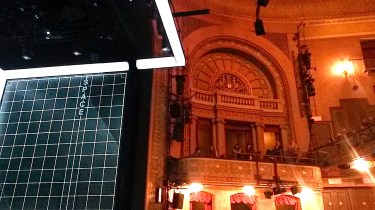
First of all, take your family and friends and Internet bloggers up on some of those out-of-the-ordinary suggestions for holiday-season entertainment. My sister recommended my husband and I go see “The Curious Incident of the Dog in the Nighttime” during a visit to New York City. Neither of us had read the book. We woke up early on a Saturday morning, dressed up, drove a fast three hours to our favorite cheap (but nice enough!) hotel in Long Island City, Queens, (written about in my first blog post when 2015 was just getting underway), took the 7 Train directly to the theater district and settled in for a matinee performance. We thoroughly enjoyed the inventive and exciting play.

20151212_135652

Afterwards, we let a pedicab rip us off for a thrilling ride through the insane crowds and tightly-packed vehicles of Times Square. (It was so warm out! We feared for our lives!)

20151212_165336

We were on the way to the Morgan Library Museum, where we met our son and rushed through exhibits on Matisse and Hemingway. After that, we strolled in the tropical temps to the lounge at The Bowery Hotel for a quiet place to have drinks before dinner at Upstate Beer and Oyster Bar in the East Village—a place recommended by one of our son’s good friends. We ordered oysters, sea urchin, smoked trout, crab cakes, clams and fettucine, all served small-plate style in an intimate, dark space that’s lucious with crazy-loud happy eaters.

Another fun place for drinks with festive decorations: Pete’s Tavern near Gramercy Park. O Henry lived nearby, but did not pen The Gift of the Magi while drinking craft beers at Pete’s.

IMG_2877

Another suggestion: Listen to Patrick Stewart’s A Christmas Carol on the CD player in your car if you have to drive long distances alone. So superb.

20151215_123708(0)-1

Another suggestion: Bake cookies that require a lot of time and effort. Lose yourself in the long moments required to make a big mess and clean it up. Don’t get all Martha Stewart about how to decorate them. Hand the job over to the kids. Even if they’re big kids.

IMG_2774

IMG_2775

IMG_2778

IMG_2783

IMG_2782

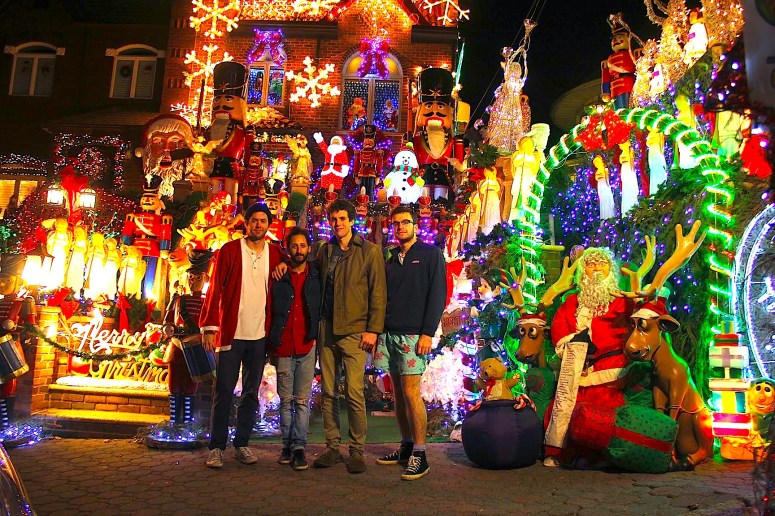
And the old stand-bys: WALK through the woods! Early mornings and late afternoons are lovely. Later, drive around and look at Christmas lights. Professional displays are nice:

IMG_2623

But neighborhoods are the best, by far. Here’s the best band of 2015, Teeth People, out and about enjoying the bling of Dyker Heights, Brooklyn.

Unknown

********

And now for some of my favorite words from A Christmas Carol by Charles Dickens. The book is so good.

“Bah!” said Scrooge. “Humbug!”

“Christmas a humbug, Uncle!” said Scrooge’s nephew.  “You don’t mean that I’m sure.”

“I do,” said Scrooge. “Merry Christmas! What right have you to be merry? What reason have you to be merry? You’re poor enough.”

“Come then,” returned the nephew gaily. “What right have you to be dismal? What reason have you to be morose? You’re rich enough.”

“Bah! Humbug!”

“Don’t be cross, Uncle!” said the nephew.

“What else can I be,” returned the uncle, “when I live in such a world of fools as this? Merry Christmas! Every idiot who goes about with ‘Merry Christmas’ on his lips should be boiled with his own pudding, and buried with a stake of holly through his heart. He should!”

“Uncle!” pleaded the nephew.

“Nephew!” returned the uncle, sternly, “keep Christmas in your own way, and let me keep it in mine.”

“Keep it!” repeated Scrooge’s nephew. “But you don’t keep it.”

“Let me leave it alone, then,” said Scrooge. “Much good may it do you! Much good it has ever done you!”

“There are many things from which I might have derived good, by which I have not profited, I dare say,” returned the nephew. “Christmas among the rest. But I am sure I have always thought of Christmas time, when it has come round—apart from the veneration due to its sacred name and origin, if anything belonging to it can be apart from that—as a good time; a kind, forgiving, charitable, pleasant time; the only time I know of, in the long calendar of the year when men and women seem by one consent to open their shut-up hearts freely, and to think of people below them as if they really were fellow-passengers to the grave, and not another race of creatures bound on other journeys. And therefore, Uncle, though it has never put a scrap of gold or silver in my pocket, I believe that it has done me good, and will do me good; and I say, God Bless it!”

********

I say, God Bless the Keeping of Christmas, too, however it is you choose to do it. Keeping Christmas has always done me good and sustained me, even when I’ve been called upon to bear the worst of years. And if this has been a worst of years for you, I am thinking of you, and hoping the best of Christmas will find you, and see you through.

IMG_2750

From a painting given to me by my daughter one Christmas.

********


Reach Out. Touch.

When my daughter attended preschool, she became friends with a lively classmate from Japan. The friendship was a brief one because her friend’s family moved back to Japan too soon. But what wonderful days our families shared during the time we had together.

The girls were possessed by a happy energy that caused them to leap into each other’s arms over every beautiful little thing that swirled around them. For instance, there was the precious thrill of cute! when my daughter’s pet rabbit gave birth. How carefully the girls snuggled those seven bunnies in their own eager preschool paws, giggling as though the kingdom of childhood and animals had finally come to rule the world.

And what a good time we had whenever my daughter’s friend invited us for lunch at her house. She would greet us at the door and properly instruct us on how to remove our shoes before entering her home. Next, she guided us through customary table manners, none of which restrained the girls from engaging in silly conversations throughout the meal.

When a large group of relatives visited from Japan just before Halloween, my daughter’s friend asked if she could bring them to our house to see our Halloween decorations. It became the first (and only) time I hosted a tourist event in my home. I wasn’t prepared to explain ghouls, tombstones, and spider webs, but polite bows, gentle nods, and cheerful smiles assured me it didn’t matter.

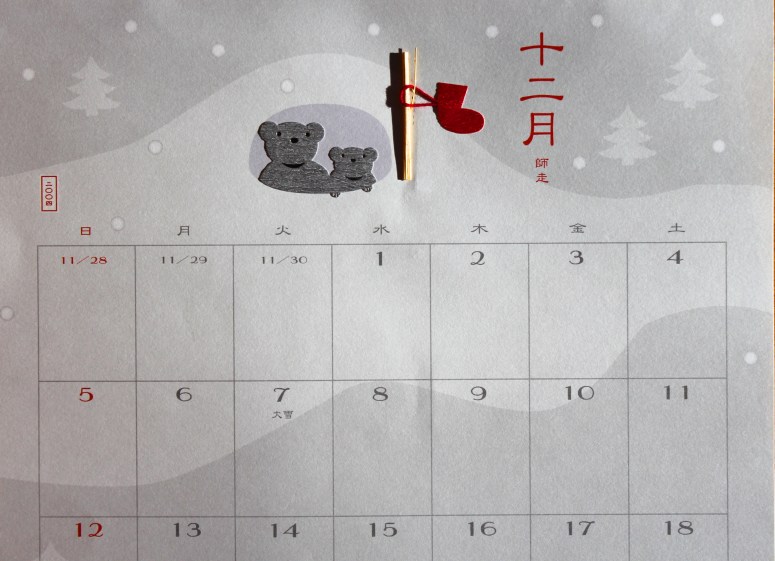
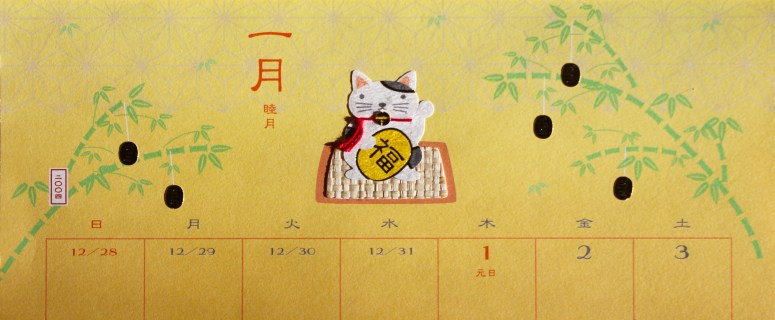
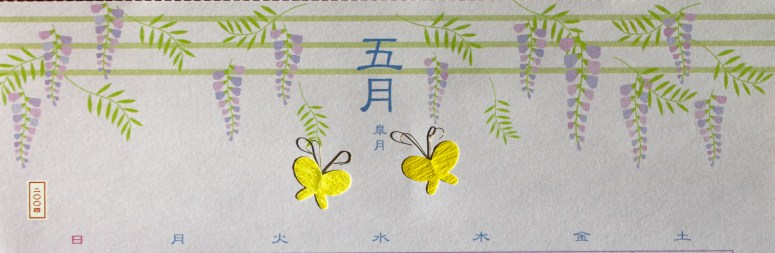
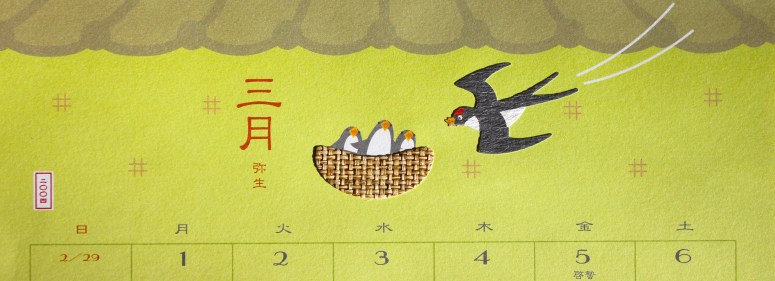
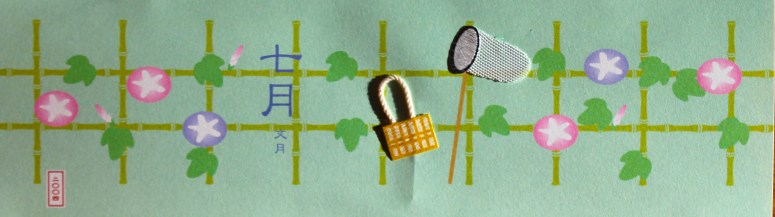
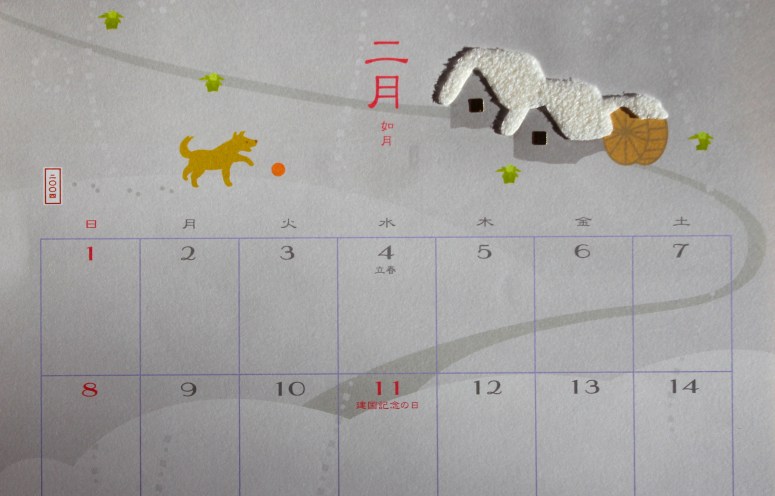
After my daughter’s friend returned to Japan, we received a simple gift at Christmastime. It was a Japanese calendar decorated with enchanting artwork on lovely paper along with some Japanese Christmas treats. I made the treats into ornaments and saved the calendar as a treasured artifact of a special friendship. Photos of my daughter’s friend showed her settled into a new school lined up with her Japanese classmates—all of them dressed in uniform, with matching shoes and socks and hats and backpacks.

********

Through my Filipino maternal grandfather, my family tree branches back into a landscape of Chinese ancestors I am only beginning to discover. I have trained in Korean martial arts, learned how to hand quilt with Japanese women, practiced Sumi-e brush painting with a German master, studied Chinese language, history, anthropology, and politics, and, I have immersed myself in learning the theories and practices of Japanese and Chinese garden design.

For me, Asian art and culture inspires devotions to finding and achieving precious.

I am a disciple of wabi-sabi, which is hard to explain, but you know it when you come upon it or create it. Although wabi-sabi considers the sublime beauty of perfect imperfection, there can be no fooling oneself that Asian art and culture often perfectly presents an illusion of simplicity that has only been achieved after arduous ritual, study, and lifelong practice.

Life is so complicated. And nowadays, due to the vast systems of connectedness that bear in on all of us, we are presented with a steady feed of tragic events as they happen in real time throughout the world. We are never left unaffected, and often forget how the simple act of making friends can lead to more and more good in the world, too.

Art can provide respite, too. And a chance to connect.

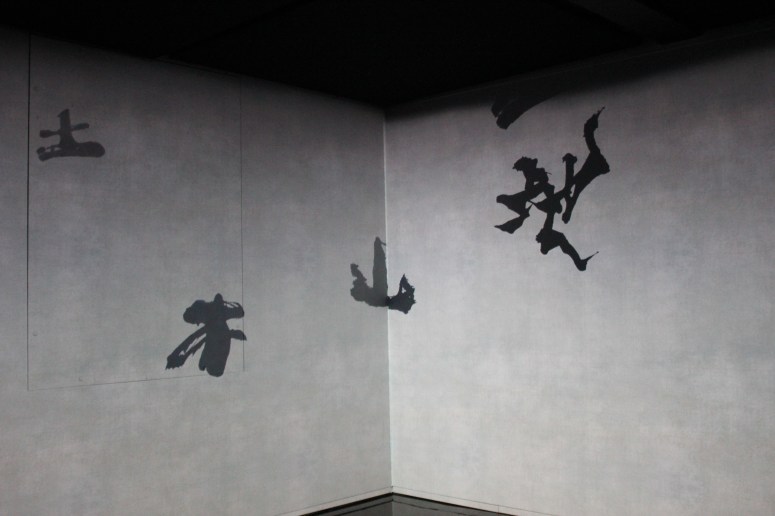
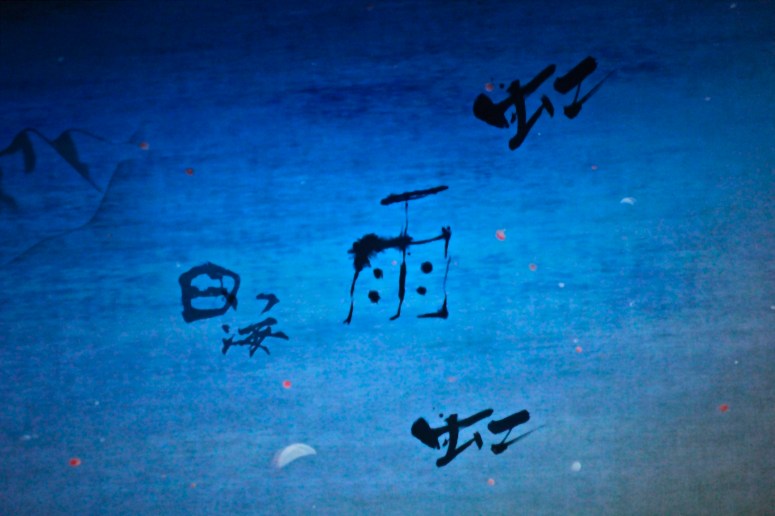
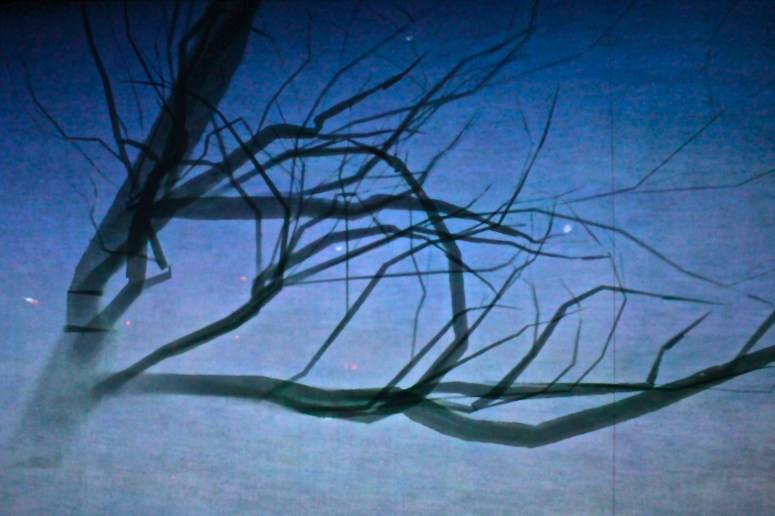
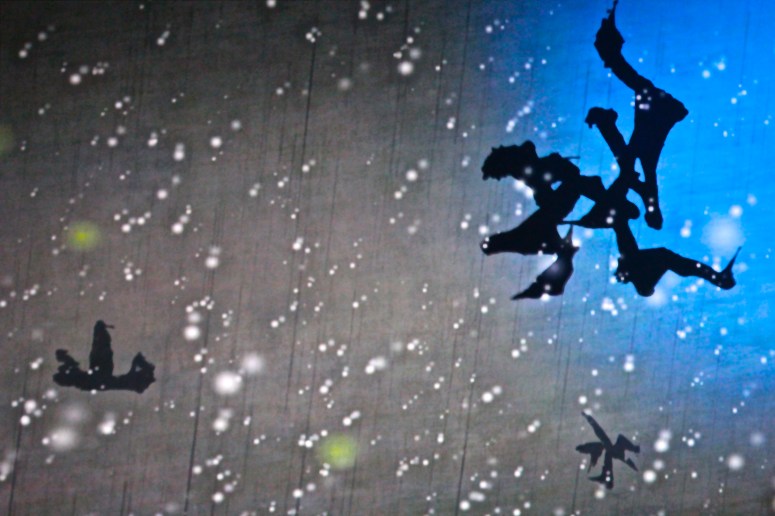
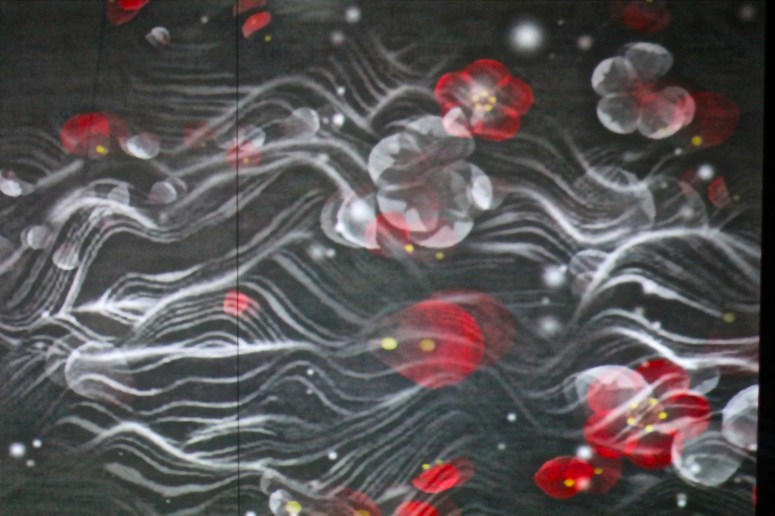
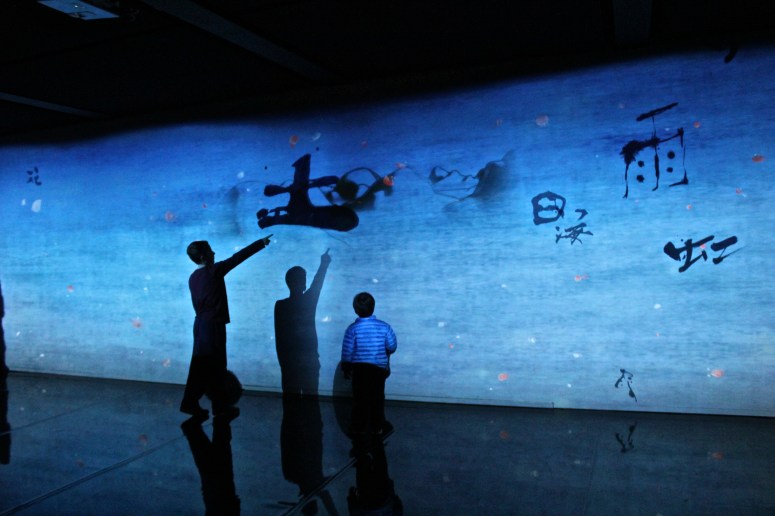
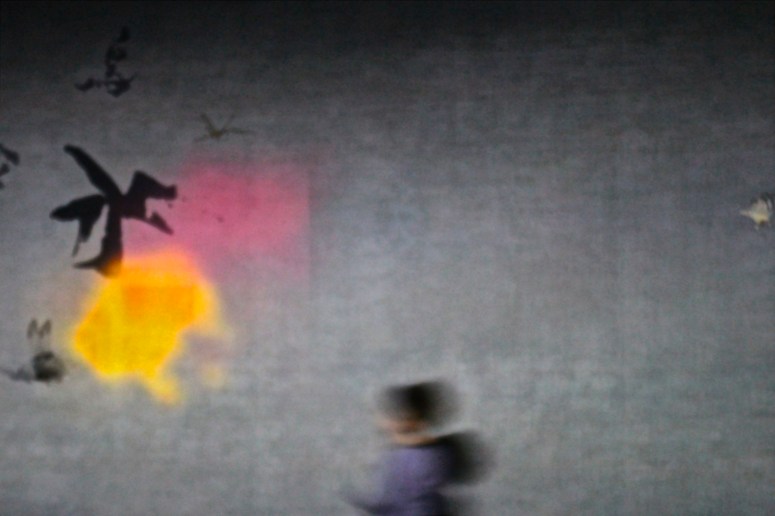
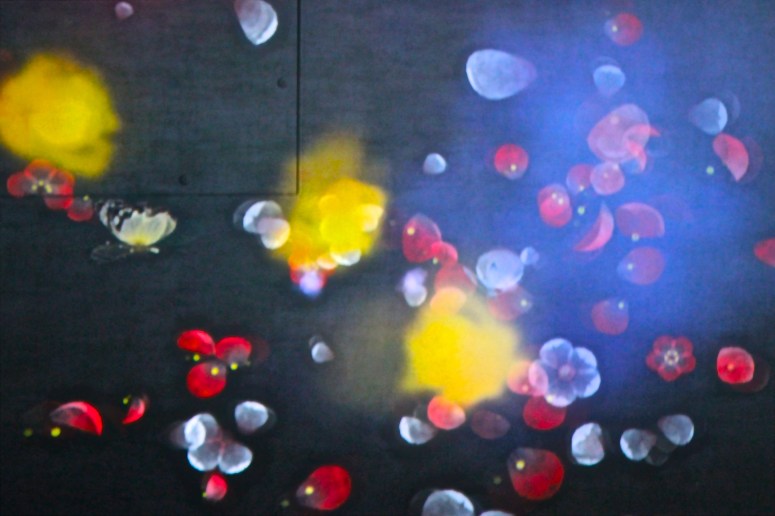
Right now, and for only a few more days, there is a multimedia, contemporary art installation created by a consortium of artists, engineers, mathematicians, and computer scientists based in Japan, on display at the Johnson-Kulukundis Family Gallery, Byerly Hall, Radcliffe Yard, Cambridge, MA.

The exhibition is called: What a Loving and Beautiful World.

It’s free and open to the public.

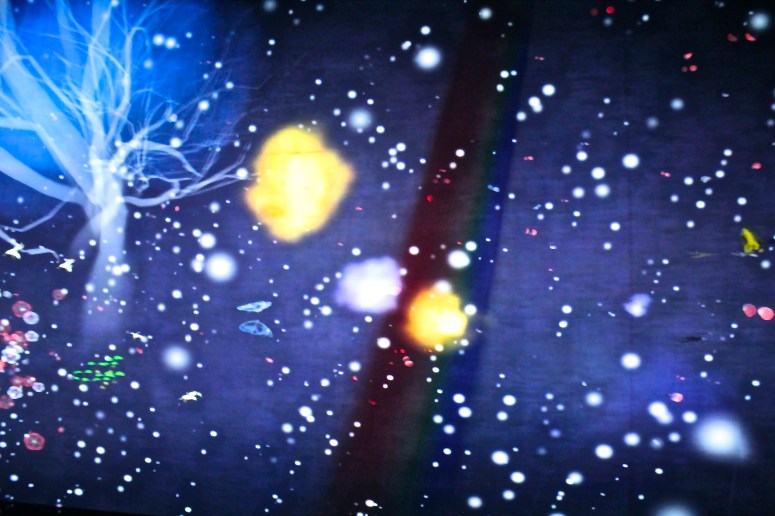
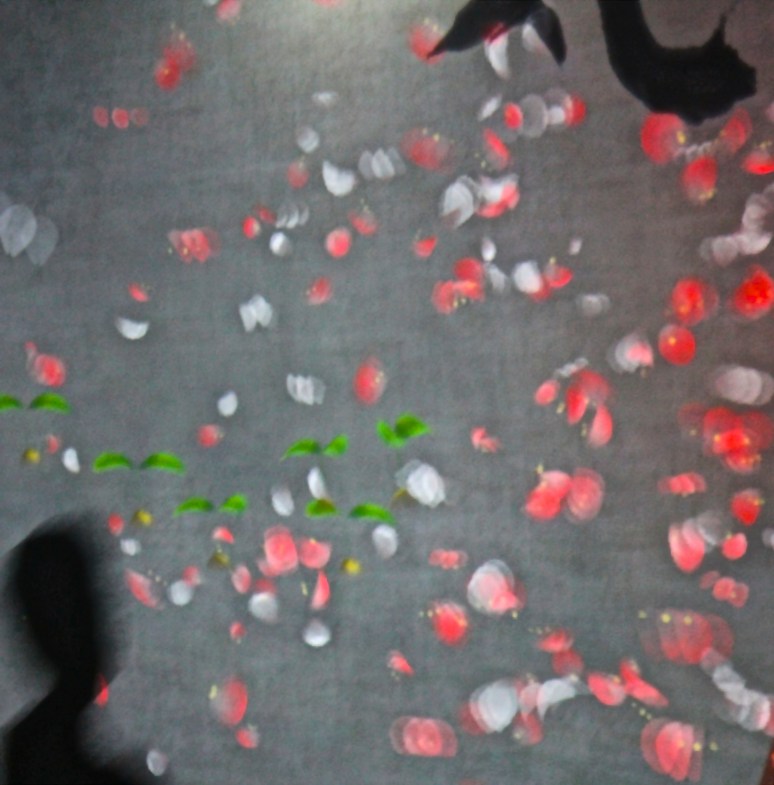
—You go into a room. Chinese and Japanese characters come floating down the walls. You reach out and touch them or wave your hand close to them. Dreamy things happen.

I was alone in the room at first. Then some children showed up. We reached out and touched the art, together. We started laughing. Your hand becomes like a magic wand. Birds. Butterflies. Rainbows. Snow. Sun. Moon. Fire. Trees. Mountains. Flowers.

I think we were creating new visual worlds through causes and effects, through the influences of collisions, of fear, of wind, of the laws of attraction, computer science, technology and music—all combined with the radical acts of passing through each other’s lives, in real time, in real space. In Peace. After taking an excursion into a real city on a real train and a real subway.

It’s all really cool.


IMG_1035

IMG_1036


IMG_1044

IMG_1056

IMG_1042

IMG_1058

IMG_1054

IMG_1057

IMG_1062

IMG_1043

IMG_1064

IMG_1051IMG_1060IMG_1059

********

***********

********

More Asian artwork from my prized gift of a Japanese calendar sent from long-ago friends.

Sublime simplicity.

IMG_1103

IMG_1109

IMG_1106

IMG_1107

IMG_1104

IMG_1101

IMG_1102IMG_1108

********

*****I WISH YOU A HAPPY END TO YOUR WEEK*****

********

Giving Thanks.

“Thanksgiving, after all, is a word of action.”

This quote, by W. J. Cameron, showed up in my Friends of Acadia newsletter. I agree that giving thanks is probably the best action we can take to honor our own place in the world and to be mindful of all the people and all the serendipitous good fortunes—here now, happening now and/or gone before, happening in the past—that have made our lives the best they can be and inspired us to continue to live joyful lives with meaning and purpose.

Thanksgiving is the one day of rest created for and celebrated by all. It is a day of rest with the kind of work, thanksgiving, that is good for everyone’s well-being.

As a sincere expression of my gratitude toward the readers who read my blog this year, I decided to use the Thanksgiving potatoes to make a set of letters with which to create a note of happiness.

IMG_0927

IMG_0929

IMG_0931


********

You, Reader, are special to me. I think about you, with good cheer, when I am at work in my “blog studio” practicing how to write. I care very much about how my art is cyber-delivered into, and cyber-received by, the whole wide world.

Thank you for visiting my site this year. I hope you enjoy celebrating the heartwarming spirit of giving thanks with all of your favorite families and friends. And I hope the day’s work returns to you all varieties of  heartwarming goodness.

********

IMG_0936

********

This ephemeral work of art, created especially for my readers, is bordered with leaves I saved from my Sweetbay Magnolia Tree. It measures seven and a half feet by three and a half feet. The quote is from Percy Bysshe Shelley. I saw the quote painted into the elaborate crown molding of a grand room, opening onto a grand stone porch, overlooking America’s Hudson River Valley.


French Entrance. French Exit.

Come and sit in a Parisian cafe with your friends close to me. I want to write, but writing is a lonely way of making art and when I sit near other people, I feel some comfort. I want to sort things out on the page, entering and exiting trains of thought. If you ask the waiter to take a drink over to me, I know you won’t mind how I keep at my work. My smile for you is one of deep gratitude. And if we are blown to bits, we will agree it was only because we practiced and believed in, freely-chosen, broadly encompassing, and generously-shared education.

********

At dusk a week ago, in my peaceful garden far from Paris, a lingering leaf on the Japanese Snowbell Tree partied on like a plump house wren—the silhouette of its petiole became the distinct image of a delicate beak aimed for the heavens, ready to sing, and the curved edges of the leaf’s blade had softened into smoothed feathers. One last pear dangled lopsided at the top of the Pear Tree with a squirrel bite carved into it. Other flowers, leaves, twigs, fruits, and birds had already made their French exits—sparing my feelings, avoiding the unpleasantries of long goodbyes—by falling, blowing away, withering, packing up and moving on when I wasn’t watching.

The surface waters of the old garden pond rippled in slow motion, like the calm beat of a heart enchanted by poetry.

It was the news of more terrorist attacks—this time throughout the city of Paris—that had caused me to stop and appreciate the peacefulness surrounding me. I sought consolation, too, in Charles Baudelaire’s Paris Spleen, his book of prose poetry that never seems to get shelved in our house. Some days, Baudelaire’s writings make perfect sense to me and when that happens it is as though I have found a companion who will sit and write with me in a cafe on the streets of Paris for a long, long time. We drink and smoke and talk of how depraved humanity is. After we agree that mankind is the most evil beast, Baudelaire convinces me we must get more and more drunk, Drunk with what? With wine, with poetry, or with virtue, as you please. But get drunk. Which we do until our amplified laughter is shattered by dark discussions of our own deplorable and habitually sinful shortcomings. When it’s time for us to take our broken hearts home, or into bed together, we leave our small table crammed with empty glasses, smoldering cigarettes, and torn apart journals. (Though I save every page of what CB has abandoned.)  And then we go, hoping our chairs will stay warm for anyone else who needs to sit and think and talk and write as you please. In Paris.

********

While gazing at what was left of my gardens and thumbing through Paris Spleen, I was also expecting the arrival of five boys in a rock band from Brooklyn. The boys (one of them my son) had a scheduled gig nearby the next day.  Their journey would become a many-houred, several-moving-parts adventure beginning in Manhattan, with a detour to New Jersey before they circled north again. All of it led to one kitchen—mine—in New England’s safe and sound countryside, in the deep hours of a seasonably cold November night.

Dinner was set for midnight, and that’s when the boys showed up.

We decompressed over a candlelit repast that began with oysters before the next course was served, which was an offering of what I called jampalaeya—chicken, sausage, and fresh mussels from Prince Edward Island afloat in a spiced-up tomato broth with rice.  The drinking started with beer and wine and advanced to whiskey.

All of us tapped our glasses together. “To Paris!”

And then I said that it will never be enough for me to believe we will always have Paris which, if you’ve ever watched the movie Casablanca, was just a remark murmured between lovers in homage to the salve of fond memories.

The truth is, we might not always have Paris. Furthermore, any memories we have of our lovely selves in Paris will never serve to console us if we were to lose Paris.

The world cannot do without Paris.

Paris is not just about food and wine and champagne and hand-wrought loaves of bread and cute dogs prancing through a city with the most wonderful twinkling lights!

Paris is about the civilized world. And the civilized world includes any of us who have ever had our hearts broken, shredded, ravaged, persecuted, oppressed, and/or disregarded while, at the same time, we chose to madly believe that in the same world where endless evils and sadnesses exist, we will never tire of figuring out how to love and be loved.

We will always need Paris!

I notified the boys in the band—because I am a woman and I am a mother—that they cannot make a French exit in this life. They all have to do something, throughout their lives, to tip the heart of humankind toward its good side. They must stay at the party and never leave without saying goodbye. They can only say goodbye with a kiss to each side on the face of the good gods, one for gratitude and one for promises.

Yes, for sure. They agreed.

The most obvious thing everyone can do to tip the heart of humankind toward its good side, is to become educated.

I am standing up on a chair now, swinging my arms around in the air, trying to type. Education is under fire in my own country. We aren’t so sure how important it is to have a Liberal Arts education. We can’t seem to link such an education to making big bucks. When my son showed up for his Liberal Arts education at Bard College, the first thing they did was ask whether or not he was registered to vote. He was not yet 18. No problem, they said, if you’ll be 18 before the next election, we can register you now. Bard College makes a direct link to the crucial importance of becoming liberally educated, learning how to think, and employing your knowledge and skills to become a responsible citizen and voter. Education in the Liberal Arts is the most important process we have for preserving and continuing to create a functional and fair democratic society. Is it too expensive to become educated? We spend an enormous amount of money on weapons and jails to fight the consequences of ignorance, hate, and poverty. The value of education can’t be argued away. Furthermore, one doesn’t have to go to college for a Liberal Arts education. We are a nation that takes great pride in our free libraries. It’s hard to find a cafe in America that will allow you to sit and think and read and write for as long as you want, but not so hard to find a library.

We are, whether we like or not, a part of the battles to create a more peaceful world. It means we must do the hard work of learning how to think and how to become aware. We must continually go through the growing pains of intellectual evolution. We have to read—including work we don’t want to read. We have to look at art—including art we don’t get. We have to listen to music—including music we’re unfamiliar with.

We ought to walk through gardens. Admire architecture. Explore history. In our travels, it’s important to sit and talk to people we don’t know.

Most of all, we have to learn to listen.

********

At 1:30 AM, apres dinner and discussions with the boys in the band, I brew a pot of coffee. The boys charge up, then file out to the barn to begin rehearsing for their gig. They are all tired. It has been a long week of day jobs colliding with night jobs as artists and a lot of driving. Sleep is what they want most of all. But it has also been a week of their new record release called, “Let’s Go!”

On the release is a song that made me dance the first time I heard it in a vast warehouse-district, underground bar in Bushwick. Syrian landlords keep the urban campfires burning, on the sidewalk across the street. Artists come and go, free to perform and put their art out there.

The song is called French Entrance and it’s about coming out as a gay man. It makes one think of what it might be like to be a man suffering about his own real and true and normal self and how simple it would be for him to be able to tell a friend and have the friend say it’s okay fuck the people who can’t deal with it. The drumming and percussion pound out intricate rhythms of harmonious chaos with bass beats and guitar strumming that culminate in one fine blend of celebratory desperation. The vocals are casually Lou Reedish. Sexy casual. The song is a call to arms and legs and jumping up and down bodies—it’s time to get up and start dancing about the people at work making the world a place where everyone can live their own best life.

We can never settle ourselves into lives of comfort and complacency.

Abdellah Taia, an openly gay Arab writer and filmmaker, wrote an editorial for the New York Times after the attacks in Paris entitled, “Is Any Place Safe?” He writes of how much he needs Paris, yet how concerned he is for the future of the city:

“I came to Paris 16 years ago as a young, gay Muslim…”

“I made my life in Paris because I believe in its values: rationalist, humanist, universalist…”

“I left Morocco as a young and desperate gay man. In Paris, I found a place where I could fight for myself and for my dreams. But I know now that nowhere is totally free or safe.”

“But Paris is a city that has, in losing its borders, lost certain values as well. The neglect of a segment of our youth (especially those of Maghrebi origin, from countries like Morocco or Algeria) is an undeniable reality. This neglect has produced an environment conducive to radicalization, joyous nihilism and, now, carnage. Racist attitudes, ever more frequently espoused by certain politicians and intellectuals, have become the stuff of daily life.”

After I read Taia’s editorial, I was inspired to read something else he wrote: Homosexuality Explained to My Mother. The essay is completely astounding and grew my brain into new evolutionary worlds.

After listening to the new song by Teeth People called French Entrance, I resolved to move a book on my list of “must reads” to a more urgent position: Jean Genet’s A Thief’s Journal. 

I do these things because I want to think about and learn about and try to understand the ways we might be neglecting youth in this world and why they seek to join communities of evil or become increasingly evil as lone gunmen throughout the world, especially in my own country.

********

We will, indeed, always need Paris. It is a city where brave artists and freedom fighters (like the French Resistance during World War II) have found, and continue to find, their voices. I am grateful to them. The legacy of their work changes how I perceive the world and inspires me to join the battles for love and peace.

In that way, Paris keeps us alive through the darkest days of our lives. We are encouraged to get to work. To keep thinking and educating ourselves. To be brave and to Smash the Televisions. (Another great song on the new “Let’s Go!” record. The whole record is outstanding.)

 ********

Here’s a link to the new song by Teeth People called French Entrance. Promise that if you listen, and read the lyrics, you’ll never opt for the French exit when life asks you to tip the heart of humankind toward its good side. Actually—don’t wait to be asked. Get out there and start dancing.

https://teethpeople.bandcamp.com/track/french-entrance

Here is a picture of one last leaf playing the part of a house wren on the Snowbell Tree in my garden:

IMG_0905

********