Finding The (Fading) Wild In Costa Rica.

One mother’s adventure travel narrative and photographic essay.

IMG_8725

PROLOGUE

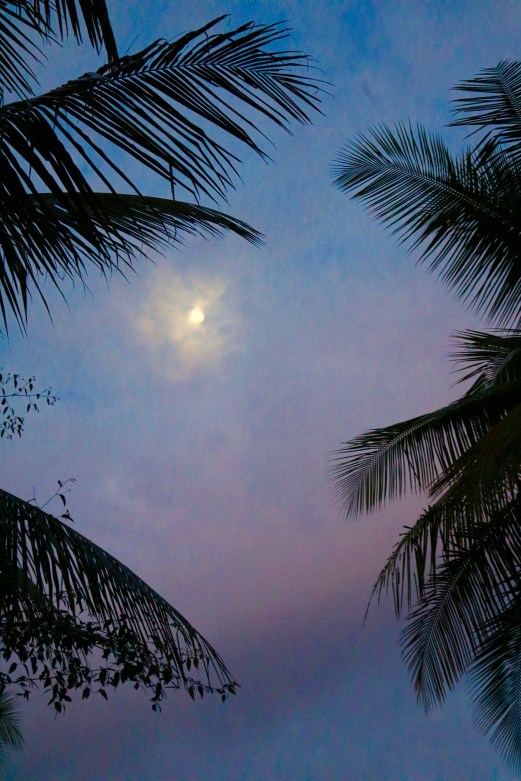
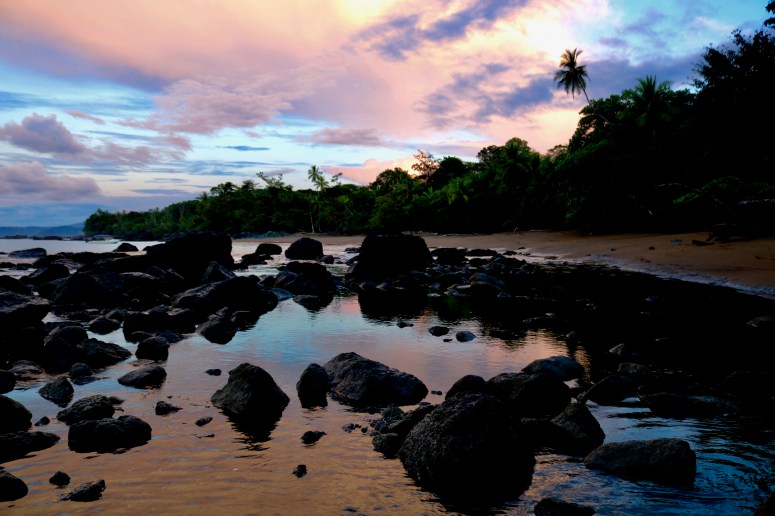
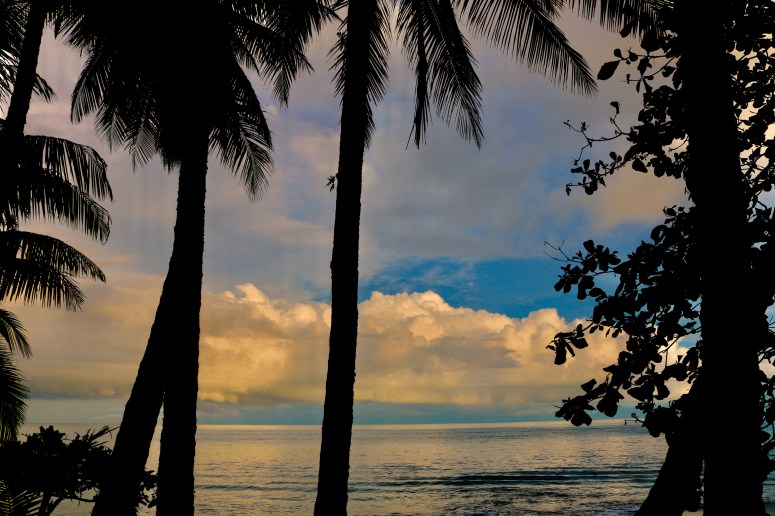
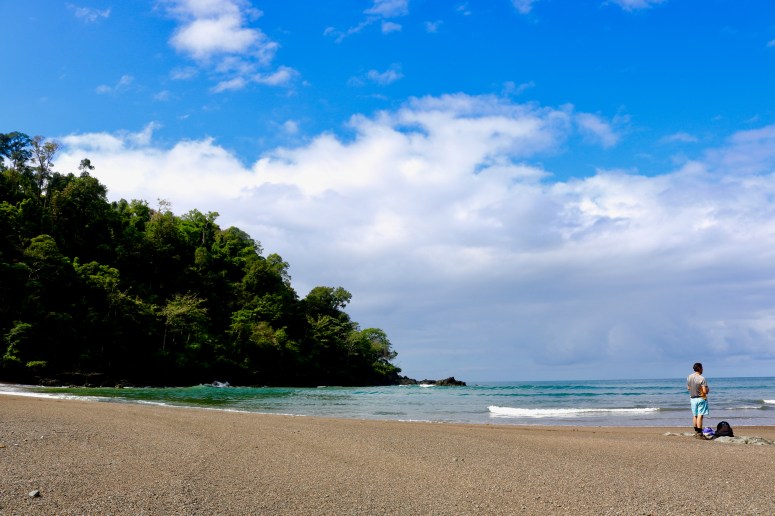
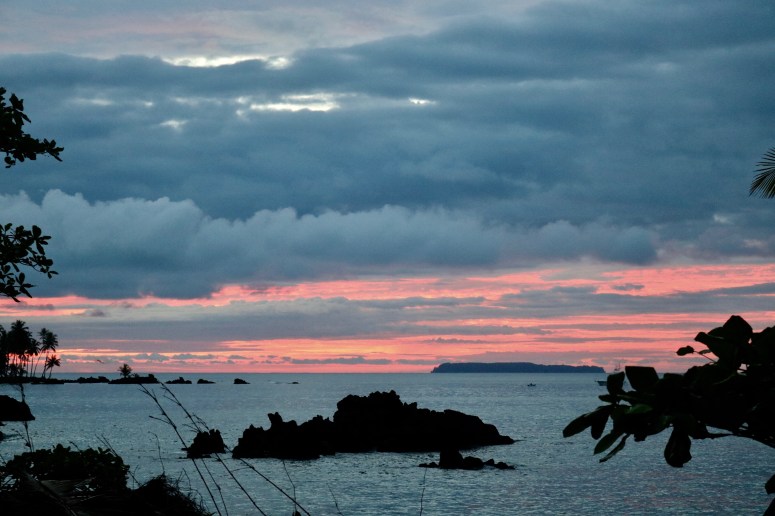
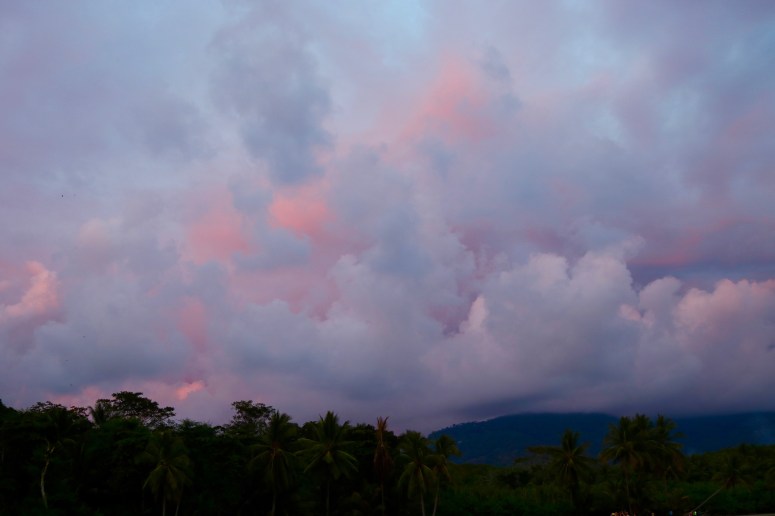
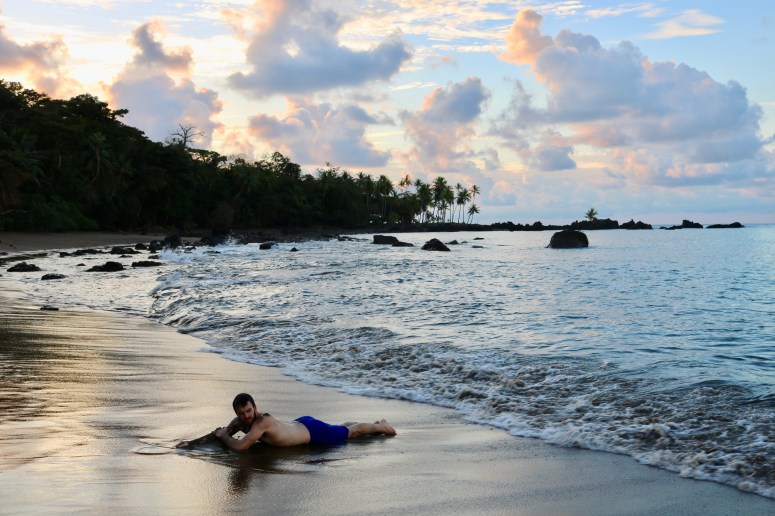
Close to the equator in the phantasmagorically green jungles of Costa Rica’s Peninsula de Osa, a traveler is blessed with about twelve hours of light and twelve hours of darkness every day. The sun rises bright, glows brilliant by midday, and then—after the traveler enjoys a late afternoon snooze in the sand, a pleasant happy hour drink before dinner, and one more swim—the sun flings a heavenly radiance over everything before slipping away. You might describe the sunsets as riots of color, except they don’t make a sound. From my vantage point, in a year dated 2018 by humans on Planet Earth, I’ve been taught that the sun (if we could hear it) would sound terrifying. This is because most of us believe the sun is an explosive, fiery thing.

And I think that’s probably true.

But I love the sun more than I fear it and have only felt anger for its power once in my life when it continued to shine on me (a whit of short-lived, organic matter in its boundless universe) at a time when I wished to die rather than endure the despair and physical pain of grief. Indeed, that phenomenal Superstar—aged more than 4-and-a-half-billion years old—has become my go-to guiding, wishing, and good luck star.

After the sun sets on the Osa Peninsula, the jungle goes dark.  One stands in the dense tangle of it and notices how the darkness settles in, first through the eyes, then down the throat, and finally into the soul where it dominates the imagination. Osa Jungle Black neither fades nor intensifies, but is resolute and vast. It feels fresh, smells lush, and pulsates with loud alive-liness. If a traveler turns on her headlamp, and aims its beam of light in every direction, she won’t believe how many eyes are watching. There are big eyes, little eyes, and tiny eyes. There are watery eyes, too, staring through the murk of swamps and calm streams and dangerous rivers.

Embraced by the purity of Osa Jungle Black with my family, after 12 days at peace alongside extraordinary nature, solitude, and the restorative wonders of the Pacific Ocean, I felt a haunting—not from hidden creatures waiting to bite me, sting me, or enjoy my entire family for a midnight snack. Nor from a ghostly sensation—or romantic fantasy—that tribes of the restless dead were guarding a wild paradise at risk.

What haunted me was my own good luck.

What if it had failed me?
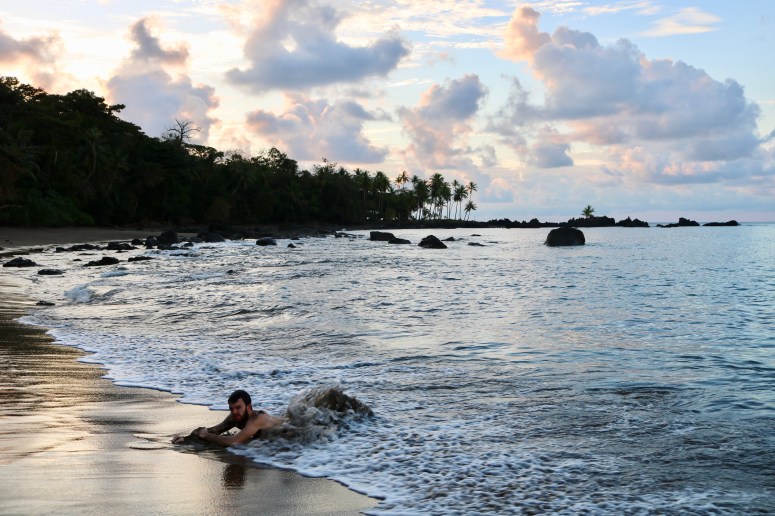
IMG_7188

IMG_7516


CHAPTER ONE

When I first began planning a trip for my family to see Costa Rica, I thought it best to avoid a futile chase for some kind of utopia. After all, Costa Rica’s ecotourist destinations have been on the travel industry’s radar for a long time. I knew I was late to the party.

My husband thought he’d reduce my anguish by giving me a copy of a customized travel itinerary through Costa Rica, prepared by an elite travel consultant for friends taking a getaway trip for two. Their tour included must-see sites, luxury accommodations, and fun activities organized in a stress-free (and appealing) style with chauffeur-driven car rides and plane rides from Palm Tree A to Palm Tree B to Volcano to Cloud Forest to Coffee Plantation to Eco Resort with meals included and personal needs fulfilled.

All I had to do, according to my husband, was study the blueprint for the luxury tour and design something for twice the number of travelers at half the number of colones. Extra credit: Pull it off last minute during the busiest tourist season. Honors: Take our family where all those tourists are not going to be. Cum laude: Include culinary and cultural enrichment. Magna cum laude: Could we go ziplining. Summa cum laude: No shared bedrooms except, of course, for the mom and the dad.

After several fitful starts and stops (Costa Rica really is on every tourist’s radar) and some tense marital discussions, I summoned the goddesses of utopian escapes for help.

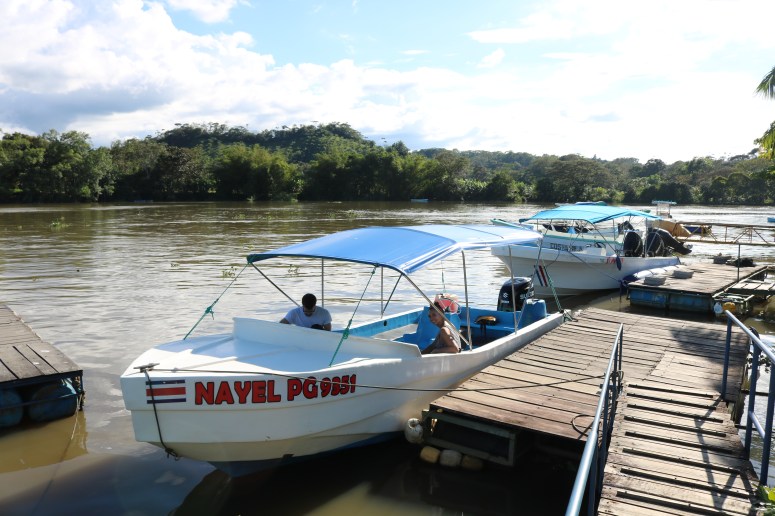
Soon, I found an enchanting place for rent in the wild jungles of the Osa Peninsula. The dreamy dwelling, named Casa Nirvanita, was portrayed by its gracious owners as a luxurious shelter, open to nature (“a biological jewel”) set in both secondary and primary rainforest with fruit trees and flowers growing amid rivers that flowed to the Pacific Ocean. Jungle creatures and critters lived all around (and often in) the dwelling, which had three bedrooms, four bathrooms, and several hammocks. We’d need to purchase food and drink for our entire stay, box and load it into a small boat, then take a voyage down the Sierpe River and into the (often turbulent) Pacific Ocean for a run across Drake Bay and over to a beach where we’d rock and roll in the surf while bringing our provisions ashore. Once arrived, we’d have no car, no take-out deliveries, no grocery stores. Not even a neighboring home from whence to borrow an egg.

IMG_7779

On approach to the Pacific Ocean and Bahia Drake from the Sierpe River.


CHAPTER TWO

Before setting off for the Osa Peninsula, though, we needed a place to stay for the first four nights of our vacation. The dates fell during the New Year’s weekend holiday and, of course, not much showed up as available. But I did find one curious option made all the more intriguing due to the fact that it didn’t have a collection of 5-star reviews. In fact, it didn’t have any reviews at. It was a new-to-the-market, up-and-coming ecolodge. The name, Eden’s Nest, sounded fun, the price was right, and the digs were neat. They were called jungalows (bungalows built into the jungle canopy) and the property was located in Ojochal, a tranquil village on the way to Sierpe, the port town where we’d be storing our car for several days near the boat launch for travel to the Osa Peninsula. Each newly-renovated jungalow had a kitchenette, a balcony, and a bathroom and they were so well priced (less than $100/night!) that everyone could have their own hideaway. Our potential host, Carlo, offered to custom design a tour for us through the mountains, cloud forests, farms, and markets of a Costa Rica he had grown to love, beyond the beaten tourist paths.

We sent a lot money to Carlo and hoped we wouldn’t be adding a dumb luck story to our family’s tales of travel. After all, the jungalows had no reviews and the village of Ojochal wasn’t on the tourist radar.
IMG_7269


CHAPTER THREE

As soon as you come bounding into the jungles of Costa Rica, it seems like everyone you meet is saying everything you want to believe:

There is nothing here that will harm you!

Enjoy yourself!

Pura Vida!

When it first happened to us, we had already managed the airport hustle, retrieved our rental car, and conquered one of Costa Rica’s legendary steep, narrow, rutted, muddy, slick, twisty, and unmarked roads (two attempts) in the dark after a long drive from San Jose and upon final approach to Eden’s Nest. (Like this: Drive up a dark road in a little bit of rain, the road gets surprisingly steep, car wheels start spinning in some slurp, shift into reverse for a long, long ride backwards perhaps a quarter of a mile in the dark to where you started, then switch to first gear and gun the engine never letting your foot off the gas and never loosening your grip on the steering wheel no matter how many ruts throw you off course or how many cliff sides get too close.) And hopefully no other cars are coming at you from the opposite direction.

Welcome to the jungle!

IMG_7111

A fairy tale jungalow-of-one’s-own at Eden’s Nest in Ojochal.

Writing, reading, working, drinking Costa Rican coffee, smoothies, and finding local swimming holes (thanks to Carlo’s tips) with waterfalls.

IMG_7119

IMG_7139

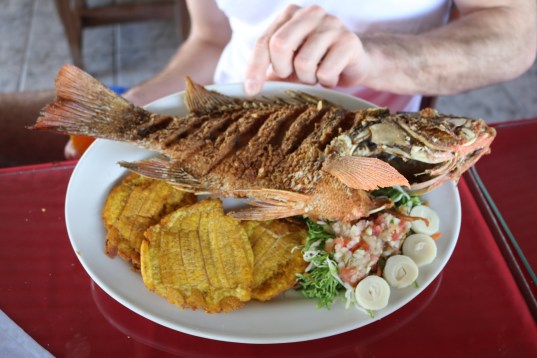
Lunch after swimming. The lemons looked like oranges and that’s what we thought they were until we bit into them! Whole cooked fish with fried plantains.

IMG_7740

IMG_7734

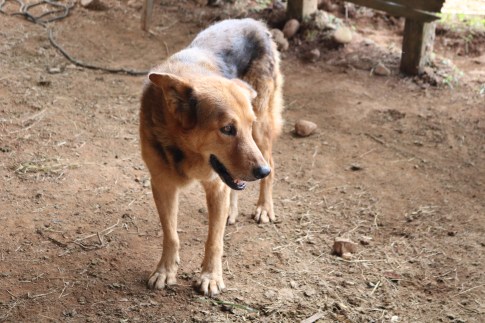
Belly rubs for Jessica at Eden’s Nest—the most lovable dog in Costa Rica!


CHAPTER FOUR

Talk about lucky.

The jungalows at Eden’s Nest were clean, comfortable, charming, and eco friendly. Sure, there were a few quirks…like Carlo’s recommendation that if our family wanted to go on tour with him, and see as much as we could in one day, his truck would be heading for the mountains before 6AM.

So we set the alarms on our phones and woke up laughing out loud

because early-morning-wake-up calls in a rowdy jungle don’t need one iota of technology!


CHAPTER FIVE

The most common question I’m asked about my family’s trip to Costa Rica is this one: Your kids travel with you? It’s a good question. My “kids” are adults—my son is 26, my daughter is 23—and they haven’t lived at home since they graduated high school and left for college. My son lives in Brooklyn, his favorite city, and my daughter lives in Somerville, MA wrapped up with her favorite city, Boston.

They’ve got it going on.

So whenever (3x so far) I’ve decided to hire a private guide for an entire day during our travels, I hope for good luck and good fun because I want my kids to enjoy traveling with us. (One of the most outstanding all-day tours our family took was with Alvin Starkman’s Mezcal Educational Tours in Oaxaca, Mexico. At the end of that long day, my daughter gave the tour an A+ grade.)

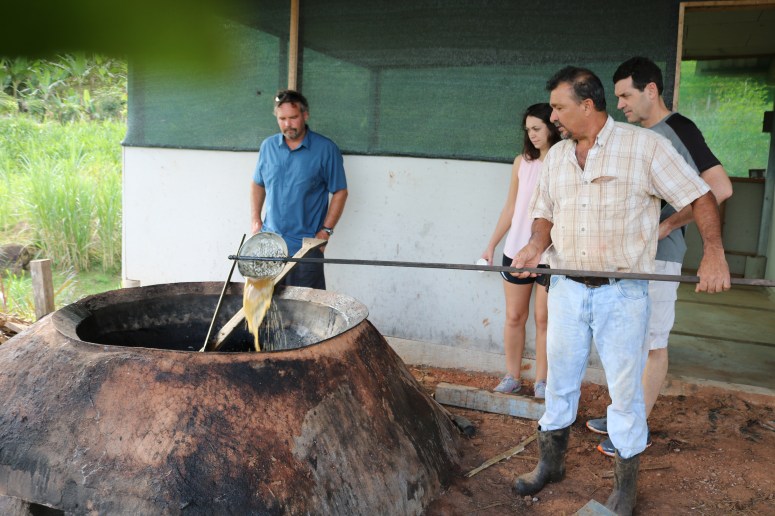
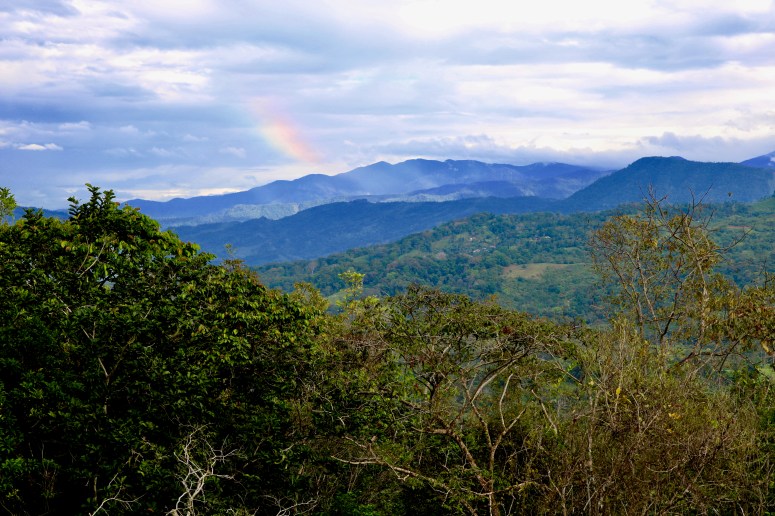
Carlo had it going on for a Costa Rica we hoped to find. He drove us into the Talamanca mountains, past waterfalls, through cloud forests, and onto a farm where a family welcomed us, proudly showed us their lands, crops, and livestock; how they make sugar and grow coffee, and then they bestowed generous gifts of organic fruits upon us after sharing wholesome cups of Costa Rican coffee on their porch. We visited San Isidro and ate in the market. We hiked at Cloudbridge Nature Reserve. We stopped for a typical Costa Rican afternoon snack at a roadside restaurant. All along the winding, scenic, narrow routes, we passed farmers on horseback sharing the roads with people out walking and people out riding motorcycles. Carlo’s tour included unexpected surprises about the culture, customs, cuisines, and beauty of Costa Rica.

At the end of the day, Carlo took us to the seaside in Dominical. He backed his truck up to the beach, opened the tailgate, and offered all of us a cold beer as local families were gathering on the beach to build campfires and watch the moon rise, almost full, before the start of a new year.
IMG_7239

IMG_7271

IMG_7322


Beautiful pineapples hand picked for us.

IMG_7310

IMG_7318

A necessary tool, the machete, completely and quickly whittles sugar cane into sticks of true sweetness.

IMG_7345

Making sugar.

IMG_7293

Taking home sugar and coffee.

The family’s twin grandsons picked shirt-fuls of oranges and grapefruits for us.

IMG_7381

Organic fruit for making smoothies back in our jungalows at Eden’s Nest.

IMG_7253


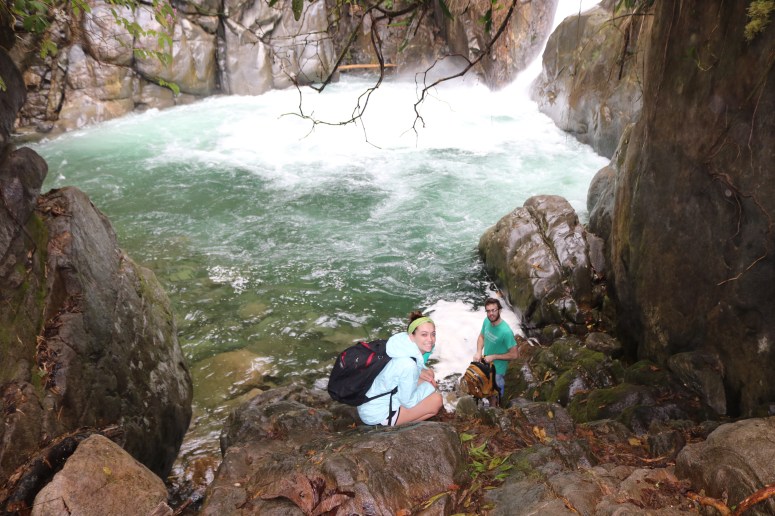
A PLEASANT HIKE TO PACIFICA FALLS AT CLOUDBRIDGE NATURE RESERVE
IMG_7432

My son playing his Brazilian pandeiro—a hand frame drum—with the falls. 

IMG_7435


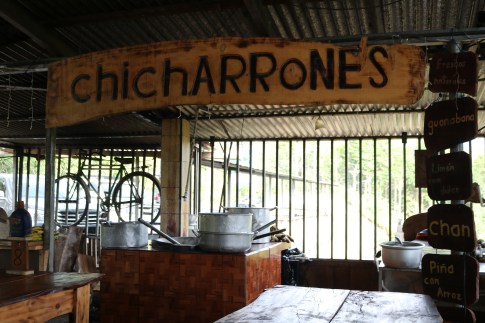
STOPPING TO ENJOY A TYPICAL COSTA RICAN AFTERNOON SNACK
IMG_7487

IMG_7504

IMG_7226


CHAPTER SIX

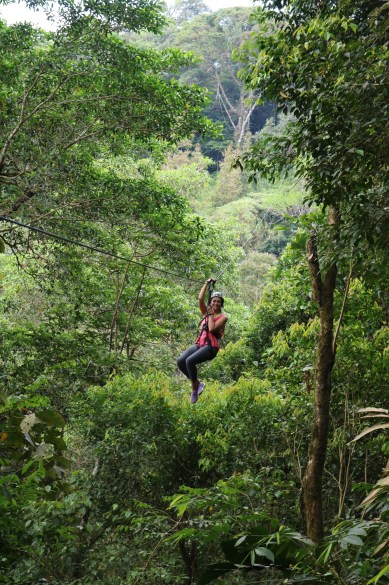
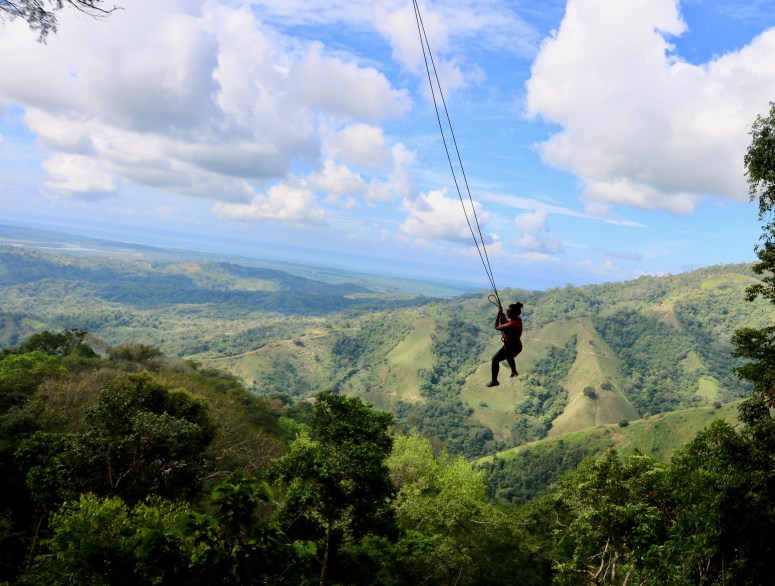
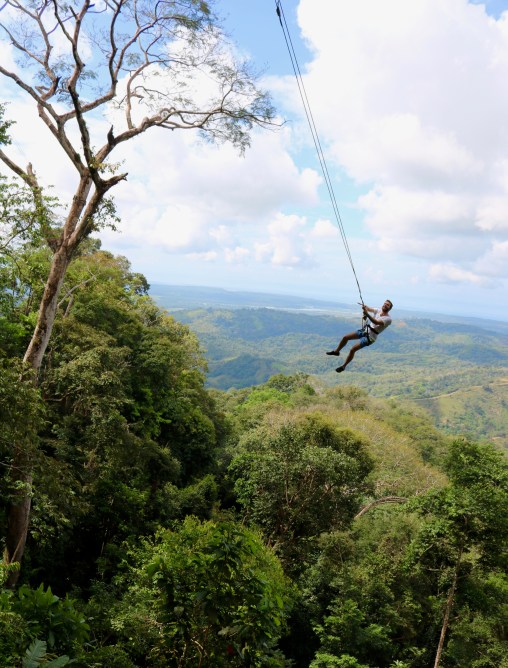
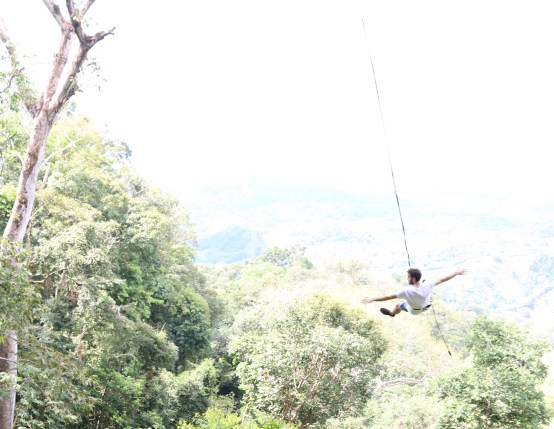
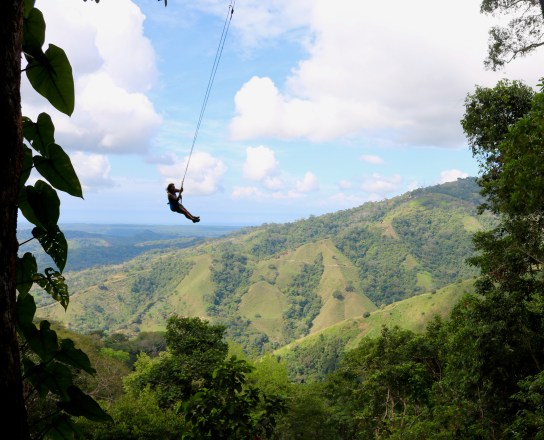
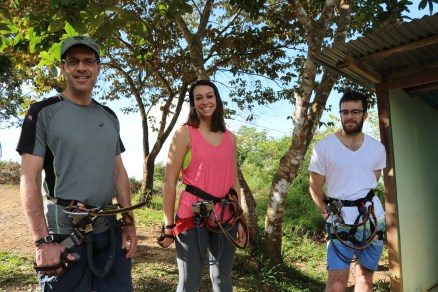
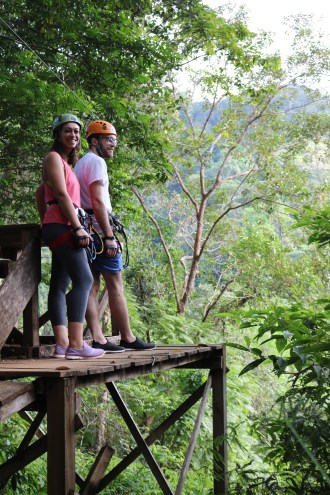
You can’t go to Costa Rica and pass up a chance to zip-line way up high and fast through the canopies of tropical rainforests and jungles. Lucky for us, Osa Canopy Tour was close to Eden’s Nest offering 9 zips, 11 platforms, 2 wobbly bridges, 2 scary drops, and one woohoo Tarzan swing to send you soaring over views of the Pacific Ocean. The adrenaline rush was a good one—it didn’t stop my heart, but it did take my breath away.

I will always remember zip-lining in Costa Rica as one of the most joyful and thrilling excursions I’ve ever shared with my family.
IMG_7552

IMG_7573

IMG_7585

IMG_7638

IMG_7660

IMG_7669

IMG_7663

IMG_7646


CHAPTER SEVEN

Our time at Eden’s Nest ended on January 1st, 2018 and our boat for the Osa Peninsula was scheduled to depart Sierpe for Bahia Drake and Casa Nirvanita at 3:00 the same day. We said goodbye to Carlo, gave Jessica (the most adorable pooch) some belly rubs, and promised to visit again. Carlo and his wife Tineka have exciting dreams for developing Eden’s Nest and they are ready to offer any services that might make a trip to Costa Rica more appealing. Carlo gave us useful advice consistently, including where to find ATM’s and where to grocery shop. It’s fun to check in on their website to watch Eden’s Nest become more and more of a destination ecolodge. One memory I won’t forget: Watching luminous Blue Morpho Butterflies, from a perch on our balcony, taking magical flights through the vibrant greens of Ojochal’s forests.

After grocery shopping (8 days provisions/four foodies), we crammed eight boxes of food/drink/one cooler into our rental car and set off for the outpost town of Sierpe. I immediately worried about how we would fit our suitcases, plus eight boxes of food and drink and one cooler, plus every member of our family onto a 28′ boat hired to help us find utopia.

Pura Vida! My husband, my son, and my daughter said. And they were right. The boat handled everything just fine. By the time the sun set on the first day of a new year,

the real world had fallen off our radar.
IMG_7764

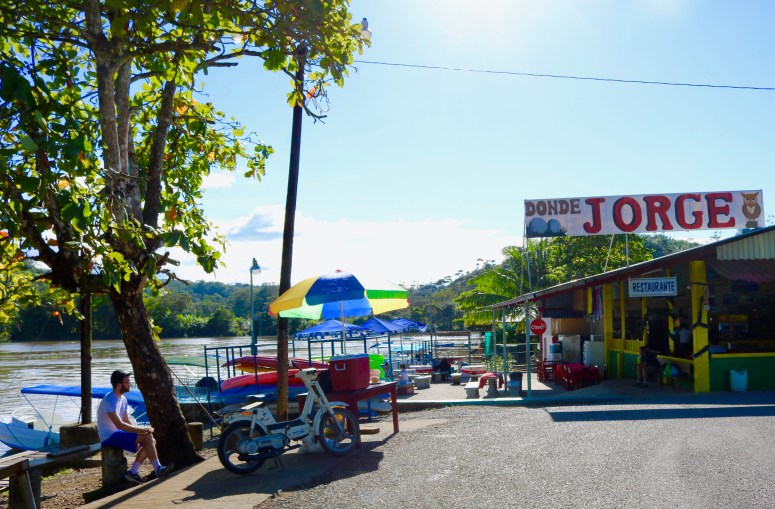
Last supper before departure from the port of Sierpe, Costa Rica.
IMG_7762

Our cruise ship.

IMG_7765


Landing somewhere near the equator in Central America.
IMG_7804

IMG_7805

IMG_7812


CHAPTER EIGHT

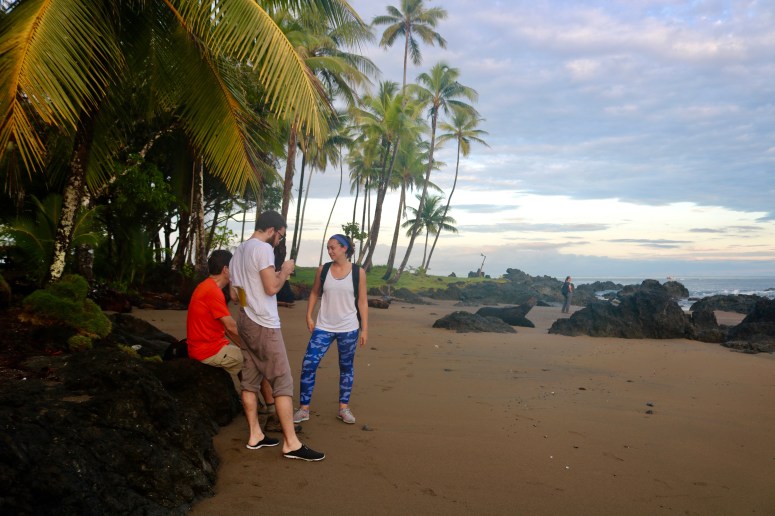
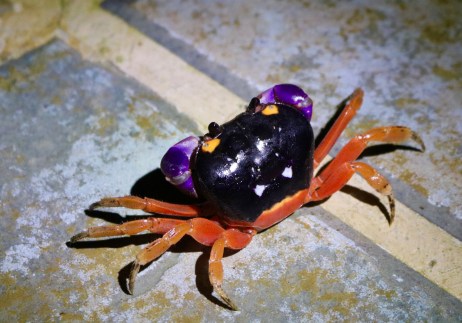
The first of many wild friends in our newfound utopia on the Osa Peninsula greeted us by moving into our shoes while we ate dinner after arriving. Halloween Moon Crabs. We didn’t know what they were when my husband noticed shadows moving on the porch. But our hosts had ensured us, “there is nothing here that will harm you!” so we shook the colorful crustaceans out of the shoes and found them to be somewhat likable.
IMG_7846

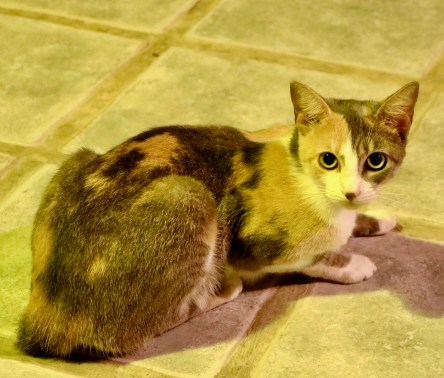
The house came with a cute cat, even so, Cute Cat didn’t seem interested in the crabs or giant Smoky Jungle Frogs (one of Costa Rica’s largest amphibians) that shared our living spaces and environs. The Smoky Jungle Frog we met could have been a prince. It was first spotted by my daughter on a night hike several pitch-black trails away from our house. “O.M.F.G.” She whispered.  “Don’t anyone move. There is something BIG looking right at me.” Here is an example of another reason why I travel with my children. My daughter, though she isn’t loopy over strange things that stare at you in the night, is a champion huntress. She’ll never miss a creature feature party, especially one promising unexpected guests in unusual settings. Later that evening, she spied an even bigger amphibian watching her from the comfort of damp, leafy jungle brush close to the house after she had settled in to enjoy a glass of wine. Surely, we joked, Smoky Jungle Frog had followed her and was hoping for a kiss that might change its life forever.

Trying to kiss a Smoky Jungle Frog in Costa Rica probably wouldn’t end well, according to a random Internet fun search: “In addition to inflating its body to appear larger, the Smoky Jungle Frog protects itself by secreting a toxin known as leptodactylin. This poison is released from its skin when it is handled, and it can cause rashes or a stinging sensation in humans, especially on any open cuts. The frog is capable of vaporizing this toxin into the air, potentially affecting people who are nearby without touching it.” 

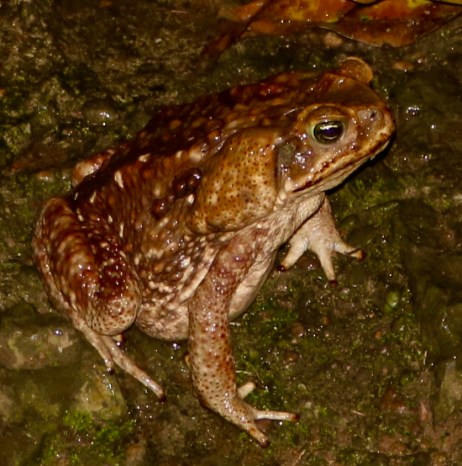
As it turns out, it wasn’t a Smoky Jungle Frog disturbing the peace of my daughter’s evening. It looked more like the largest toad in the world, the Cane Toad, and although there are those who promote the licking of these toads to bring on hallucinogenic visions, that probably wouldn’t end well either. The Cane Toad’s glands are packed with enough poison to kill large animals. Science is studying the toad’s medicinal healing possibilities, but human reaction to recreational experimentation with the toxin can be unpredictable and potentially lethal.
IMG_8753

As the days and nights passed in our Jungle Palace (we lit the house with candles at night and it felt like we were living in a wonderful, mystical, lost-world palace) it became evident that Cute Cat had no desire whatsoever to patrol our living and sleeping quarters for creepy crawlies, creepy hoppers, creepy flying things, and/or super creepy slitherers. Perhaps it was because the Osa Peninsula jungles remain, for now, a stronghold for one of the greatest cats on Earth—the elusive Jaguar—and our palace cat shared some of that coolest-of-cats attitude.
IMG_7826

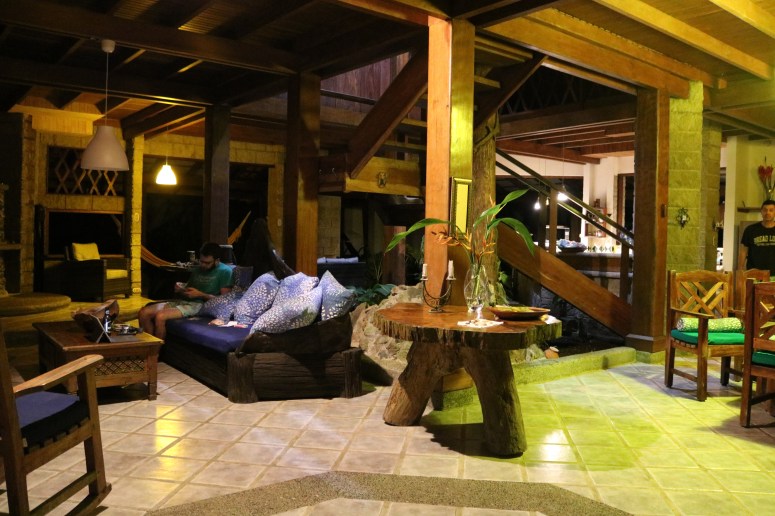
View from the porch into Casa Nirvanita, a luxurious Jungle Palace.
IMG_7830

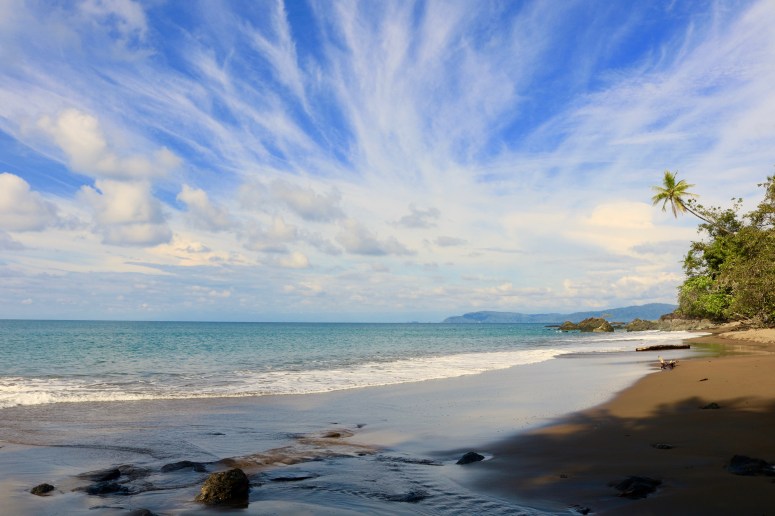
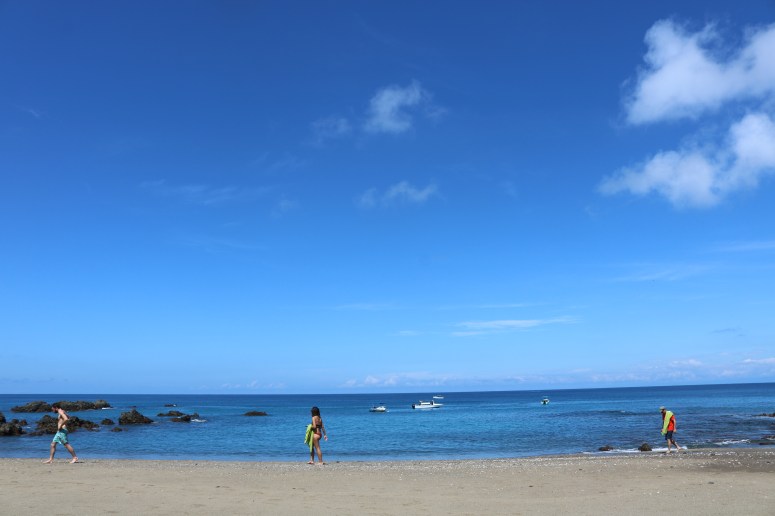
Perfect sand, surf, and tidal pools.

IMG_7938

Paddleboarding.

IMG_7899

Early morning kayaking.

IMG_8182

IMG_8130

Tide in.

IMG_7935

Tide out.

IMG_7906

IMG_8159IMG_8368

IMG_8586


CHAPTER NINE

Ecotourism: Responsible travel to natural areas that conserve the environment, sustain the well-being of local people, and support interpretation and education. (TIES. The International Ecotourism Society.)

The Sixth Extinction: “Though it might be nice to imagine there once was a time when man lived in harmony with nature, it’s not clear that he ever really did.” Elizabeth Kolbert

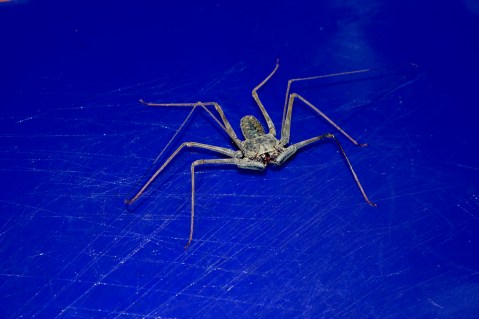
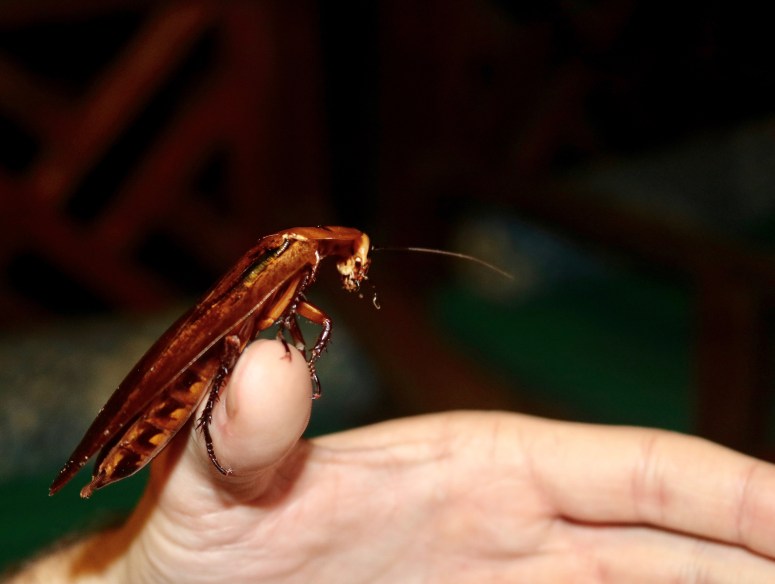
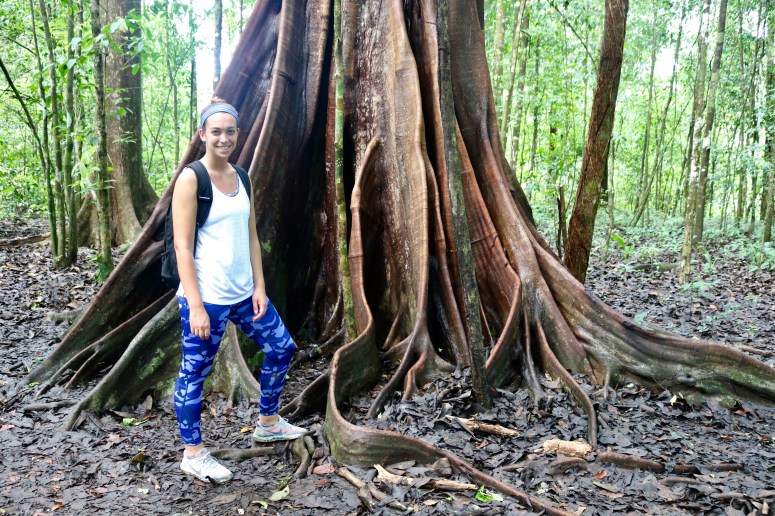
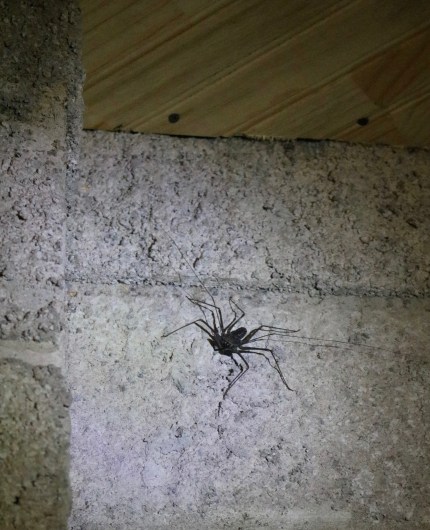
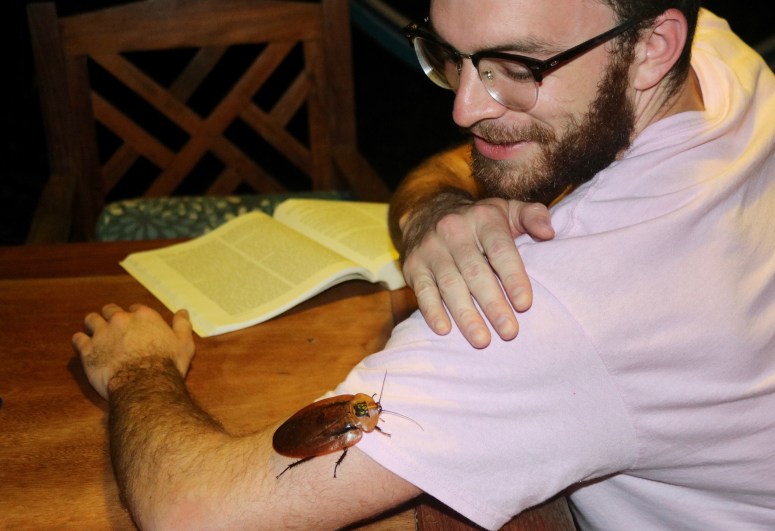
One evening a deluge of rain poured from the night sky, keeping us inside our palace shelter. Refugees from the storm soon appeared on the kitchen shelves (Common Tink Frog), on the walls (Giant Cockroach, Tailless Whip Scorpion), in the ceilings (bats), and in the corners (more amphibians of the toad variety). It became a night of great excitement and adventurous education. Fortunately for us, my son had devoted one summer during college to the pastime of happily skipping through the woods and fields of the Hudson River Valley collecting insects. Through his guidance, we developed a bit of a crush on Blaberus giganteus, a giant cockroach, and Amblypygi, a Tailless Whip Scorpion. The relief that calmed me when my son could immediately identify the astonishing bugs made the trials and tribulations of raising my kids feel even more triumphant. I didn’t question his authority—I could tell by the levels of admiration and rapture percolating through the humid atmosphere of a wet night in a rainforesty jungle, that my son had waited a long time to meet these impressive creatures on their own turf.

As for the frogs and toads coming in from the rain, what a story they can’t tell about their evolution and survival since long before the dinosaurs walked the Earth and long before flowers bloomed on plants, up until these days of present history when research begun in the 1980’s in Costa Rica reported a somber decline in, and vanishing numbers of, frogs.

But it’s a story we can try to understand through science, research, and the deliberate choice to free our minds from the confines of chosen ignorance while opening them to the possibilities of genuine truths about Planet Earth and Life. If all of this sounds like an exhausting and boring way to spend a vacation in paradise, it isn’t. Brain massages administered through the art of thinking can stimulate long periods of obsessed excitement over novel discoveries and wonders of the world. These massages have been proven to ward off the evils of ignorance, apathy, and cynicism while stimulating brilliance, courage, awareness, and—best of all—activism.

Tailless Whip Scorpion. Harmless.
IMG_8545

IMG_8563

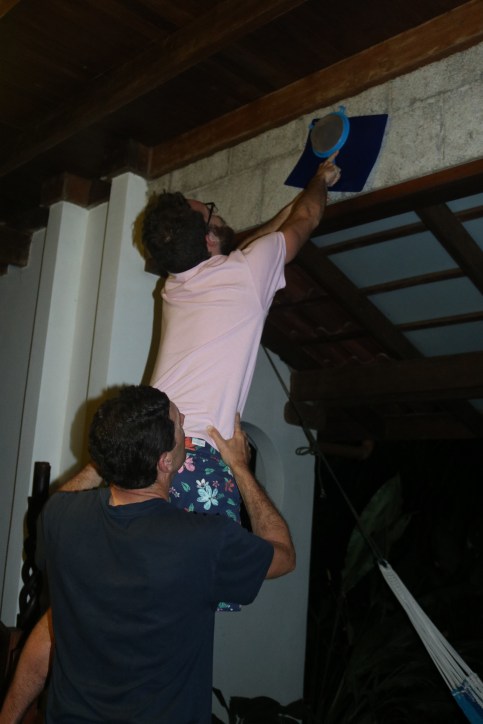
Few adventures are as exciting as spending a rainy night in paradise catching bugs in one of Earth’s most biologically intense jungles. Note the improvisational use of common kitchen utensils and containers as hunting and observation devices.
IMG_8523

IMG_8525

Blaberus giganteus. Our host, German, names this jungle bug his favorite.
IMG_8539IMG_8536

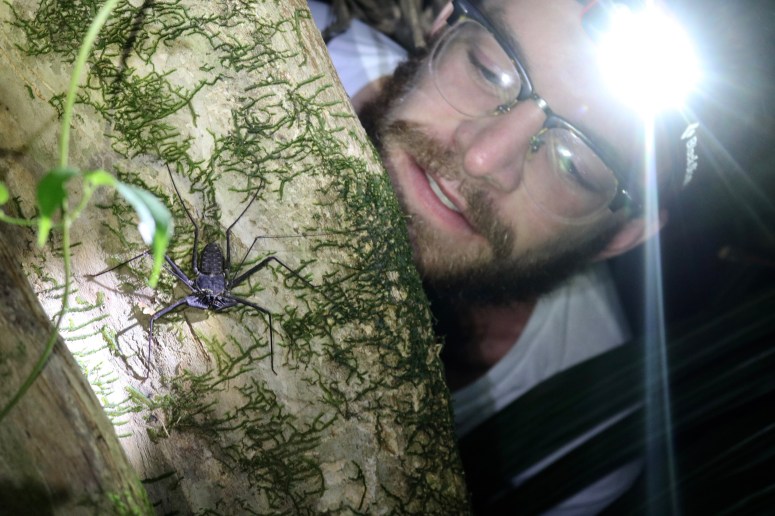
In the night jungle: Tiny frogs. Blue dragonflies. Blue crayfish. Opossum in a tree. Smoky Jungle Frog. Spiders. A lot of the handsome Tailless Whip Scorpions.

The Tailless Whip Scorpion on a tree in the jungle at night. This bug, in spite of having what appears to be an awkward, cumbersome collection of legs, can actually scamper rapidly up and down trees.
IMG_8745


CHAPTER TEN

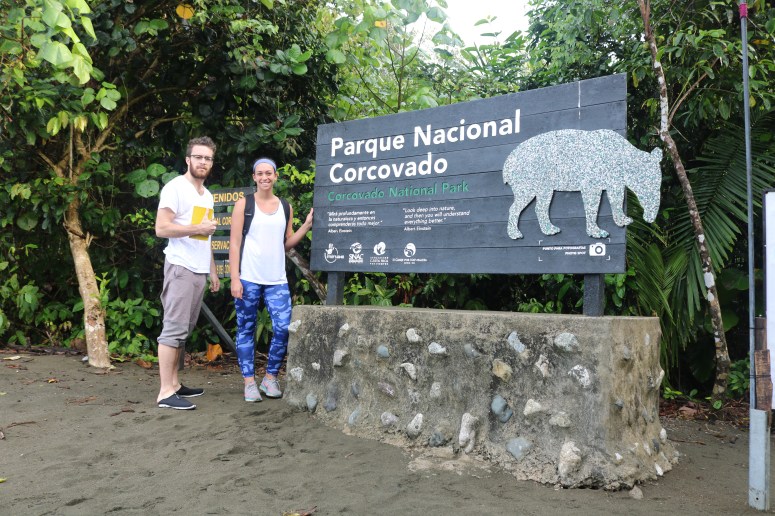
A short walk from Casa Nirvanita, one of the transportation “hubs” for the Osa Peninsula has been set up.  It’s marked by a spare, wooden shelter where backpackers, day hikers, eco-lodge tourists, and other travelers wade through the water to hop on small boats for guided (required) tours to the Sirena contact station at Parque Nacional Corcovado and/or guided (also required) snorkeling tours to Isla del Caño. Our Casa Nirvanita hosts arranged a wildlife tour of Corcovado National Park and a snorkeling tour of Caño Island for us.

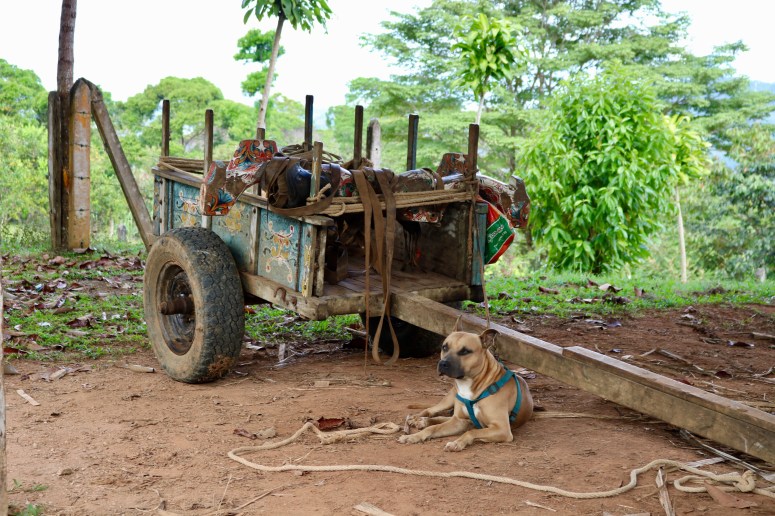
A public transport hub in Drake Bay and one of the many community pooches. In Costa Rica, we noticed stray dogs were friendly and well fed.

IMG_8373

IMG_8066

Corcovado National Park is a vibrant habitat for wildlife on the Osa Peninsula. Everything Exciting and Everything Scary and Everything Endangered exists somewhere in Corcovado National Park. (There’s gold in them ‘thar hills too.) For me, a guide added a layer of possible protection from the Everything Scary category of wild animals. I carried a first aid kit everywhere we went (because everywhere we went required walking through a jungle) but after researching the feared Terciopelo (aka: the highly venomous Fer-de-Lance Pit Viper) and noting its aggressive nature, the first aid kit had come to feel like dead weight in my backpack.

A typical day tour through Corcovado takes a group of 10-12 people quietly into the park with a competent guide carrying a powerful scope. Everyone gets a turn peeking at whatever the guide finds and if the animal behaves and sits still long enough, cell phone cameras can be pressed against the scope’s lens for pics. After a few hours of stalking wild beasts, lunch is served at the park headquarters before another round of quiet walks in search of magical creatures.

It was hot and muggy and since I didn’t get to see a three-toed sloth, I wasn’t sure if the tour satisfied me. I asked my kids what they thought of it. We did see a lot of animals! But there is something about sloths, and we were in Costa Rica…and I knew I might not pass that way again for a long time, if ever. My son’s review of the day rescued me. “Mom,” he said, “it was a Pokemon day. I mean everywhere we went, some animal came popping up out of nowhere.”

It’s true, the animals we saw weren’t like any we’d ever seen. And there they were, hiding out in their own habitats. There are no guarantees in Corcovado National Park that you will see wildlife. The animals are free range.

Short hike to the boat-stop for a one-hour ride to Corcovado National Park.

IMG_8073

IMG_8088

Sirena Contact Station for lunch. Note the large cabin with stacked bunks inside mosquito netting. Overnight tours are now on my bucket list. (Awakening at 3AM for breakfast by 3:30 in order to hit the trail early enough to find animals.)

Can you spot the hidden Pokemon?

IMG_8081

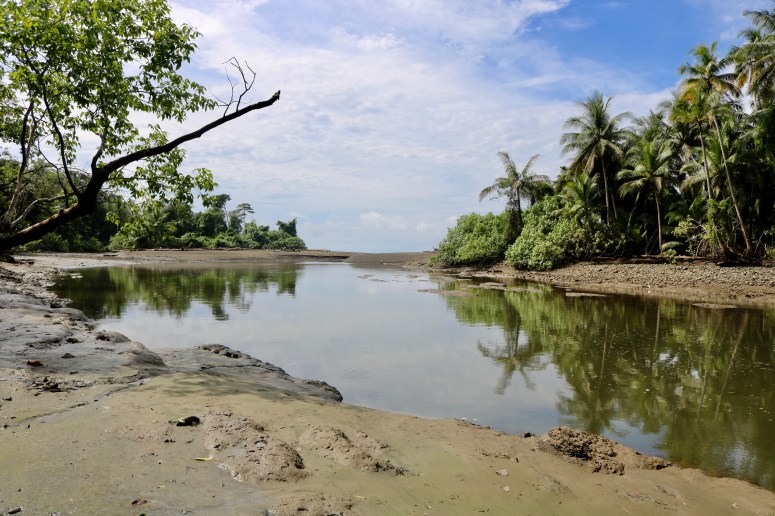
It’s a Caiman and it was hiding out in a stream with three others nearby. Below is a boring pic of Rio Sirena during our hike. Such a calm and muddy river…flowing to the Pacific Ocean…and hosting populations of American Crocodiles and Bull Sharks. It’s a long journey from this place to emergency medical care.
IMG_8093

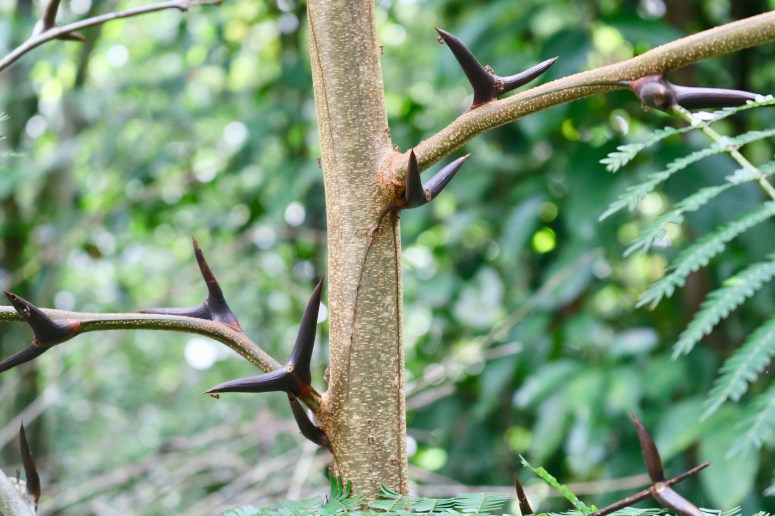
Wherever you go hiking or walking through slick mud, be cautious when grabbing onto trailside flora for support.
IMG_8122


CHAPTER ELEVEN

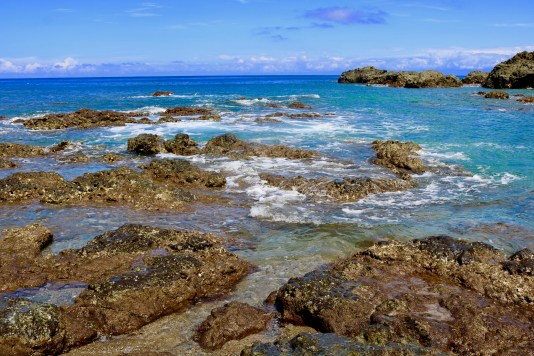
Isla del Caño Biological Reserve off the coast of Parque Nacional Corcovado doesn’t seem to have a chance in a world where alarms are sounding throughout the scientific community about the future for Earth’s coral reefs. Some warn the Earth might lose 90% of its coral reefs in the next 30 years. Others say all of Earth’s essential and irreplaceable coral reefs will be gone in 30 years.

You can still dive and snorkel through the protected and splendid coral reefs of Caño Island with a guide. A tour allows time to relax on the island’s remote beaches with the most charming collections of hermit crabs crawling around and hiding inside individually precious shell houses. Our guide, a marine biologist decorated with tattoos of marine life, told us one story of an unfortunate encounter with a Stingray. The side of her foot made contact with the animal’s vicious tail as she stepped into the Pacific Ocean to go for a swim. “I just didn’t see it,” she said. She also said the pain was excruciating, there were stitches and meds, and it wasn’t a big deal. After proceeding to educate us about the marine life we might encounter and raising our consciousness about the fragility of the biological reserve, she made a final announcement: “Please, remember to enjoy yourselves!”

We snorkeled along walls of coral teeming with a lot of our favorite fish, got accepted into an elite school of high-achieving fish, saw a Zebra Moray Eel, and observed several graceful Stingrays gliding through their own marvelous worlds under the sea.

IMG_8385

IMG_8438

IMG_8388

IMG_8442

IMG_8439


CHAPTER TWELVE

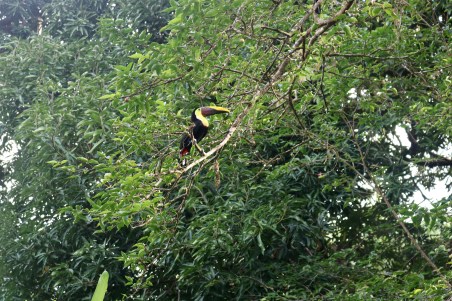
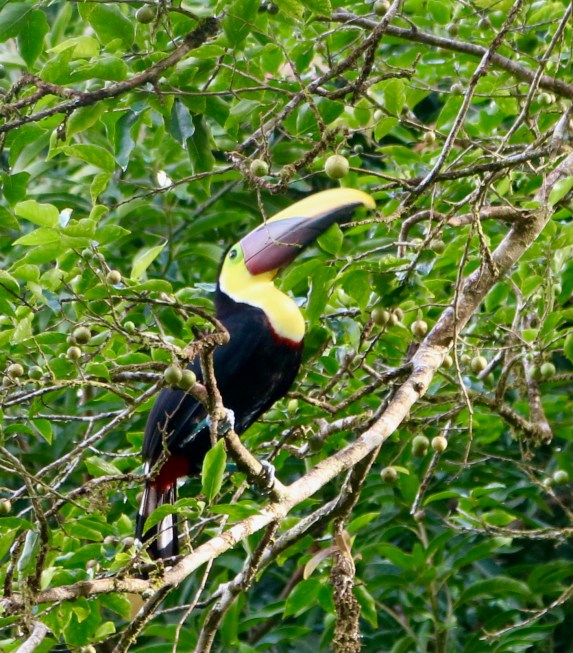
“Toucan!”

Such extravagant achievements of Mother Nature! Up close and personal (they delighted us every day at Casa Nirvanita) these birds supersede their images as cartoon characters and cereal box ambassadors.
IMG_8604

IMG_8603

A Toucan in flight!

IMG_8244


CHAPTER THIRTEEN

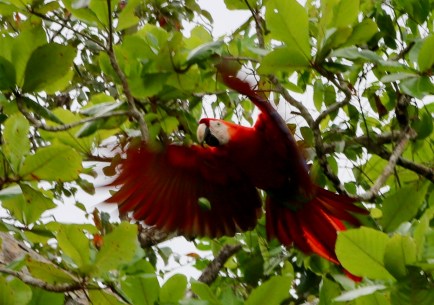
As for the Scarlet Macaws. 😦  Costa Rica’s Osa Peninsula is a surviving outpost where these largest of parrots still exist in the wild. The birds are far too prized as pets and must be protected from poachers. They are intelligent, noisy, adorned with royal avian plumage, and several of them lived in the jungles along our beach.

Scarlet Macaws mate for life.

IMG_8189

IMG_8196

IMG_8213

IMG_8197


CHAPTER FOURTEEN

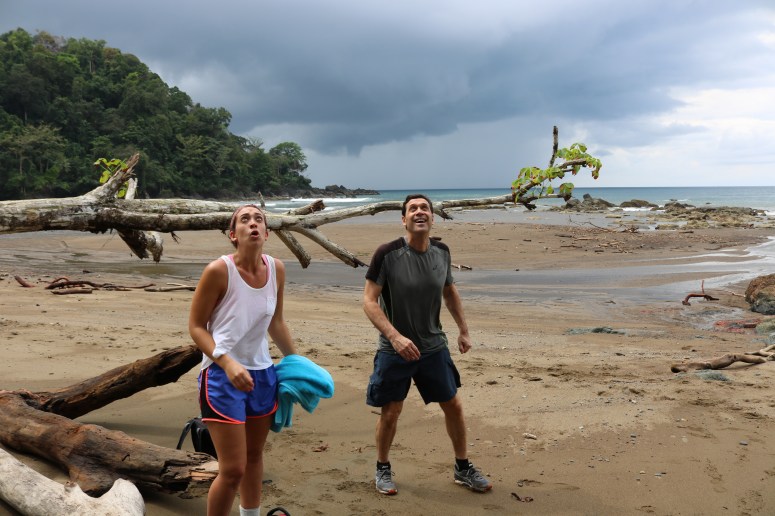
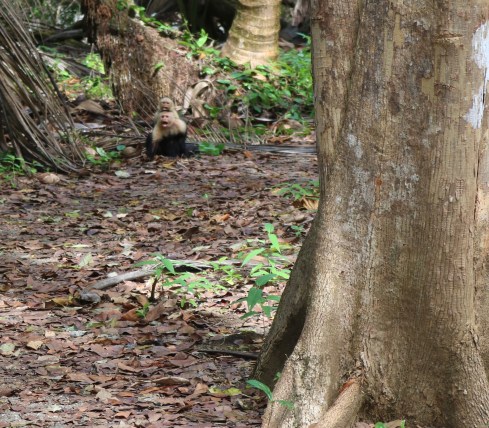
What about the monkeys? Captivating, cute, ferocious, and eerie. Never have the unfathomable spans of evolutionary history come to such a howling stop as the moment I watched a White-faced Capuchin Monkey—after days and days of observing them swinging, sailing, and lounging in the jungle canopies—stand up and take a few steps. Spine tingling and funny bone shivering.

All four species of Costa Rica’s native monkeys inhabit the Osa Peninsula. Three of them, the White-Faced Capuchin, Geoffrey’s Spider, and the Mantled Howler swing through the treetops using prehensile tails, which are like an added limb. A fourth species, the Central American Squirrel Monkey, uses its tail mostly for balance.

Those prehensile tails gave a colony of White-faced Capuchins an unfair advantage over us when we entered one of their fiercely protected territories while hiking from Casa Nirvanita to Playa San Josecito. The little rascals probably wanted any picnic hidden in our backpacks and from what I observed, they were good at getting what they wanted—the wrack line near their territory was cluttered with tourist debris. (But no dead bodies.) The monkeys outnumbered us by about 20 and they closed in from every direction, snarling, screaming, and chasing. We’d been enjoying the meditative daze of a good hike, weaving in and out of the jungle, up and onto sandy coves, over rocks and through rivers. The surprise attack left us no way out—we were the monkeys in the middle! So we picked up the pace. So did the monkeys. We hollered at them. They screamed back. My husband grabbed a giant stick. The monkeys grabbed sticks. Then, my husband began whipping a big palm tree branch around—trying to take out and sweep away as many agile aggressors as possible. And that’s when I saw an alpha male wrap his prehensile tail around one of those really big palm tree branches and begin running at us with it! The battle of wits only ceased when we made it through that monkey pit and out the other side, where Playa San Josecito sparkled in the sun.

We waited until the tide receded far out before hiking home. Low tide gave us a much-desired option for skirting the monkey zone (we could hike out on the beach, through rocks) and when we began to intrude too close to the monkey pit, they approached the edge of the jungle—some of them venturing out onto the rocks—just to let us know we’d made the right decision about where to walk.

Watching monkeys in the trees.
IMG_8021

White-faced Capuchin Monkeys.

Hiking through a colony of bold monkeys. Note the alpha male with a soldier on his back screaming in harmony at us.
IMG_8658

The world-class hiking trail that passes in front of Casa Nirvanita to Playa San Josecito crosses Rio Claro (best to try it at low tide) near a sea turtle sanctuary.

IMG_8644

IMG_8646

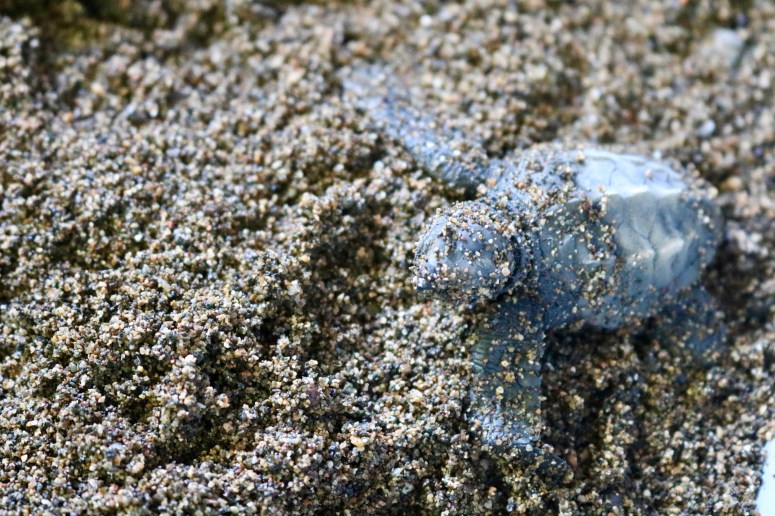
Newborn turtles at the sanctuary!

IMG_8650

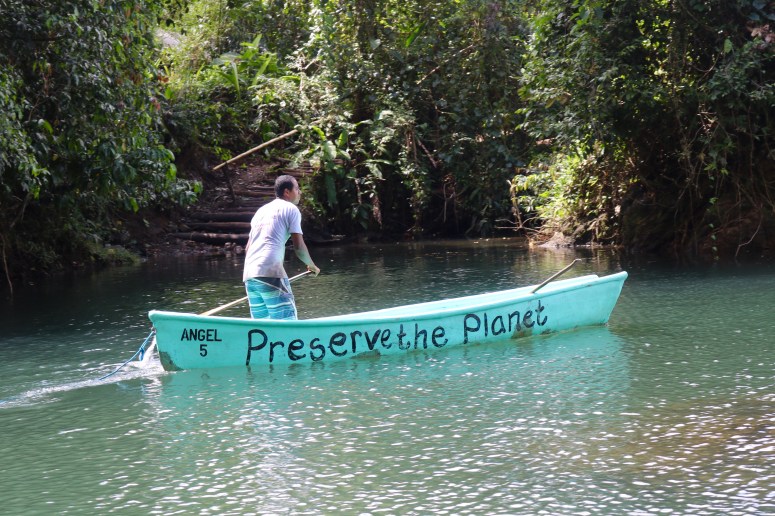
The current in Rio Claro is strong. When the tide is high, or if you don’t want to try wading through, there’s an option to take a short boat ride over the river for a couple of bucks. The money funds the mostly-volunteer staffed turtle sanctuary.
IMG_8699

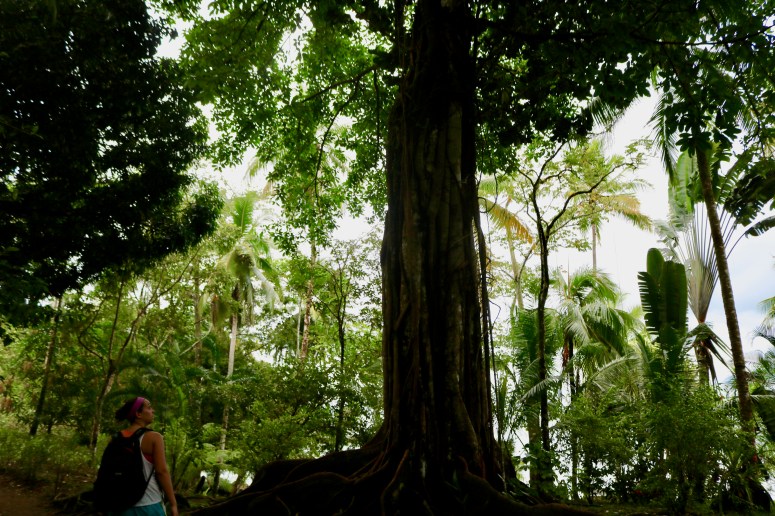
Views from the trail inside the jungle.

IMG_8686

Afloat at Playa San Josecito. Not a secret beach, but a beautiful one. Except for the nasty monkeys on the trail closer to the beach, the hike to get to San Josecito is mid-range rugged, spectacular, and muddy.

IMG_8666

A Ctenosaur? Iguana? Ticos walking home with their impressive daily catch. 


CHAPTER FIFTEEN

Confession time. We weren’t completely isolated from the real world at Casa Nirvanita. The same hiking trail leading to Playa Josecito in one direction, led to the modest (as of this writing) village of Agujitas about 3 miles away in the other direction. We took a walk one day, and found the trail linked up with one of the most elite eco-lodges on the Osa Peninsula. The town of Agujitas has a variety of good value lodgings too.

We left in the afternoon for our hike to Agujitas, found a great place to enjoy a drink and a snack, and hustled back onto the trail hoping to make a safe return to our Jungle Palace before dark. I was the last one—taking too much time to watch the sun set in various coves from too many stunning cliffs—and as the jungle was going dark, the Howler Monkeys began to cry out from the tree tops. Few experiences will raise the hair on your neck the way finding yourself alone in the jungle at night with Howlers hootin’ and yowling does. Their calls amplify sensations of feeling lost in an ancient (familiar?) and unnerving primordial otherworld.

This friendly dog hiked all the way to Agujitas with us.
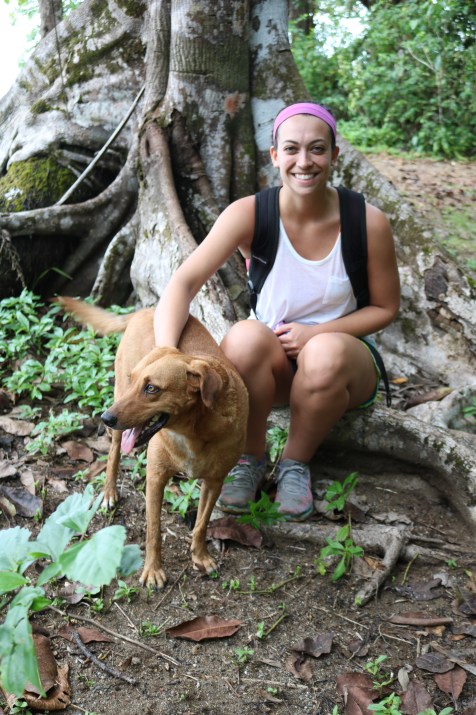
IMG_8279

IMG_8286

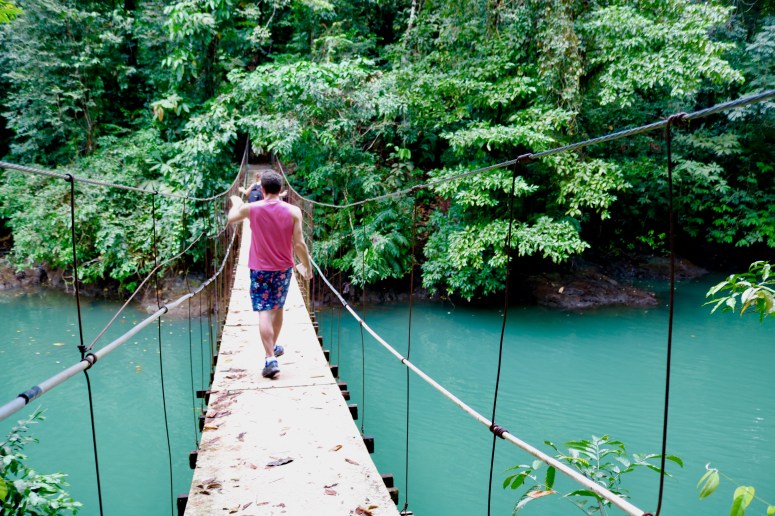
From Casa Nirvanita, it’s a 6-mile hike (round trip) to go have a beer or Piña colada or soda and a snack in Agujitas. Spectacular route with fun bridges over colorful rivers. 

IMG_8332

IMG_8354


CHAPTER SIXTEEN

Unofficial list of wildlife we encountered:

Howler, Spider, Capuchin, and Squirrel Monkeys. Pale-billed Woodpecker. Agouti. Blue Crayfish. Smoky Jungle Frog. Scarlet Macaws. Tiger Heron. Stingray. Zebra Moray Eel. A lot of tropical fish. Pecarries. Coati. Caiman. The greatest variety of Hermit Crabs we’ve ever observed, moving around both on and off the beaches. Halloween Moon Crabs. Other crabs. Pelicans. Sea Turtle. Bats. Opossum. Parrots. Toucans. Hummingbirds. Vultures. Blue Morpho Butterflies. Other butterflies. So many colorful birds I am so sorry I didn’t record their names. Termites. Spiders. Iguana or Ctenasaur. Geckos. Toads. Frogs. Blaberus giganteus. Tailless Whip Scorpion. Leaf-cutter Ants. The tracks of a Tapir.
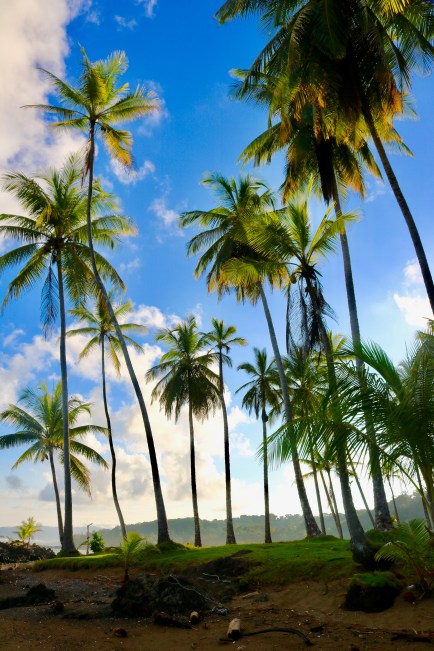
IMG_7859


CHAPTER SEVENTEEN

Something has to be written about how we ate during our time as castaways on the Osa Peninsula: We forgot to buy crackers. There wasn’t any chocolate. No sugar. No ice cream. No cookies, cakes, muffins, or pies. No candies, syrups, or honey. No endless bags of various varieties of chips.

We prepared our meals using the foods of Costa Rica: Rice, beans, fruits, vegetables, eggs, chicken, shrimp, fish. We did have some peanut butter and jelly, too. After several days, we felt noticeably better. Perhaps this jungle diet has to be consumed while hiking every day, swimming in the Pacific Ocean everyday, and experiencing full-body pure humidity sweats all day/ everyday in order for it to bring on feelings of refreshment.

Maybe too, one is refreshed by the joys of preparing meals together and sitting down to eat them together while the music of the ocean plays in the background.

Artful meal prep in the kitchen at Casa Nirvanita.
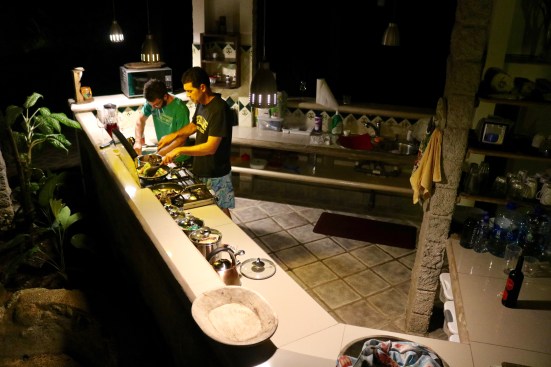
IMG_7985

Poetry readings during brunch. (Poetry written on location, Osa Peninsula.)
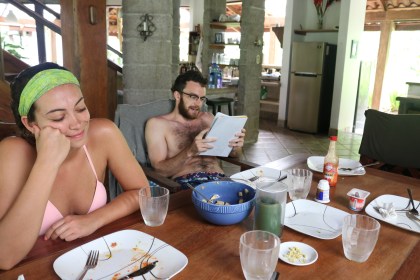
IMG_8231

I named several of our happy hour appetizers: Howler Monkey Nests. Pelican’s Pleasure. Green Iguana Slurp. Halloween Moon Crab Cakes. (Made with shredded carrots and rice, no crabs.)

IMG_8515

Our hosts at both Eden’s Nest and Casa Nirvanita gave us chilled coconuts and we added the coconut milk to our fruit smoothie concoctions.

IMG_7759

CHAPTER EIGHTEEN

One more pass through the once-in-a-lifetime sanctuary of peace and tranquility where I never had to lock a door or close a window or turn on air conditioning or fire up a heating system.
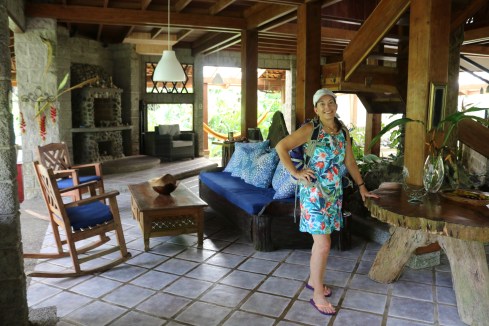
IMG_8767

Farewell smiles with our host at Casa Nirvanita, Clara.
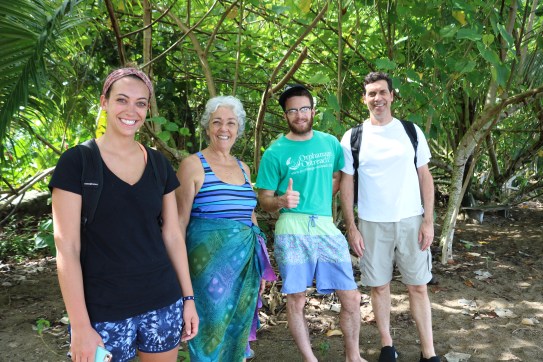
IMG_8771

Rio Sierpe, homeward bound.

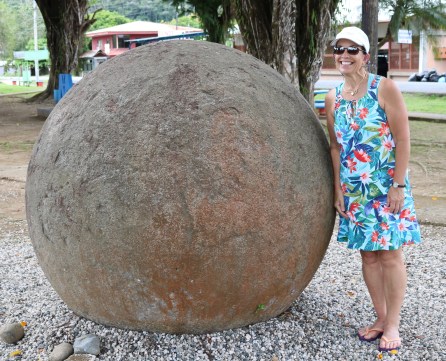
IMG_8786

Grabbing some last-minute mana from one of the mysterious pre-Columbian stone  spheres in Sierpe.
IMG_8796


EPILOGUE

A traveler through the coastlines and jungles of Costa Rica’s Osa Peninsula won’t find grand monuments commemorating so-called glorious reigns of kings and queens. No cathedrals, tombs, or museums filled with artwork, weaponry, furnishings, or other tchotchkes of human existence disrupt the landscapes. It’s a small place, for sure. Maybe not much happened—in the storybooks of human history—on the long sweeps of curved shoreline where the Pacific Ocean has stroked the edges of magnificent jungles since forever ago. Or, perhaps, maybe some of the things that did happen—through the actions of humans recklessly searching for gold and other riches, exotic plants, exotic foods, exotic animals, slaves—were never deemed worthy of enshrinement.

All I know is that my luck did not fail me when I decided I wanted all of my family to see and learn more about one of Earth’s last surviving worlds of natural biodiversity. I hoped it would be one of those lost worlds still at work cranking out—for plucky travelers—soul sprints brought on by the one and only: Mother Nature. My good luck had to work overtime. Jungle safaris are undeniably booby-trapped with danger. Never did thoughts of Pit Vipers and the safety of my children leave me alone, especially at night when we spied an opossum in a tree and I remembered that the Fer-de-Lance likes to eat them and that a big snake was only recently seen in the very environs into which we had ventured. I also needed to find sanctuaries where we could merrily pass the time collecting shells and exploring tide pools while soaking up the sun. Somehow, we were able to sneak in 8 unforgettable days at Casa Nirvanita before the owners removed their Shangri-La from the rental market. Hopefully, it will come back on the market, because if I am ever lucky enough to return to the Osa Peninsula, I would stay at Casa Nirvanita again for all of my jungle safari adventures.

There is no other place on the planet like the Osa Peninsula.

From Osa Conservation.org:

Once an island floating in the Pacific, the Osa evolved in isolation until it merged with mainland Costa Rica by way of the same fault system that extends to California. Located along the Central American isthmus, Costa Rica itself is a hotspot of biological diversity, as innumerable species poured into the land bridge created when the two American hemispheres joined together. When the Osa Peninsula joined the mix nearly 2 million years ago, the area became a tropical landscape of unprecedented richness. The Peninsula is estimated to house 2.5% of the biodiversity of the entire world – while covering less than a thousandth of a percent of its total surface area – truly earning its title as the most biological intense place on earth.

One of the last places in Costa Rica to be settled and still sparsely populated, the Osa is covered almost entirely in magnificent, virgin rainforest extending all the way to the Pacific Ocean. Separating it from the mainland is the Golfo Dulce – one of only four tropical fjords on the planet. The Golfo Dulce is in fact the only place on the globe where populations of both Northern and Southern Humpback whales meet to birth their young. The Osa packs an unparalleled amount of land and marine species and diverse ecosystems in an incredibly small area, including:

  • The most significant wetland ecosystem and mangrove forests of Central America
  • The largest remaining tract of lowland rainforest in Pacific Mesoamerica
  • 2-3% of flora found nowhere else in the world
  • 323 endemic species of plants and vertebrates
  • The largest population of scarlet macaws in Central America
  • More than 4,000 vascular plants
  • More than 10,000 insects
  • More than 700 species of trees (which is more than all the Northern temperate regions combined)
  • 463 species of birds
  • 140 mammals, including 25 species of dolphins and whales
  • 4 species of sea turtles

These incredible ecosystems provide invaluable services to the people who depend on them for clean air, drinking water, food, jobs, cultural resources and a stable climate – and so their conservation is critical.

GO OSA. SAVE THE PLANET.
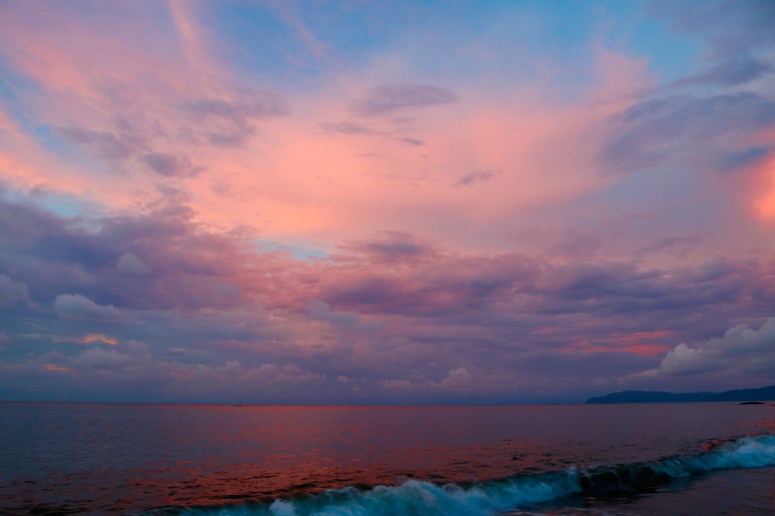
IMG_8498

Climate Change. Orgasms. Essential Sex.
A spring fever came over me. I slipped away and found myself surrounded by trees in an airship drifting under the command of its captain—Earth’s Climate. Horizon lines blurred behind a vibrant mist tinted ruby red. My neck extended. My head grew bigger and bigger. My eyes widened into bulging beads. Then, my airship wobbled and tipped. I fell out and landed in the canopy of a tree. Upon every branch, bouquets of mini red flowers unfurled. 

It all happened after I decided to deactivate my brain and social habits from Facebook for a little while.

There were fucking flowers everywhere. Everywhere. Some of the flowers had male reproductive parts and some of the flowers flaunted female reproductive parts. The sexually active botanical doohickies came in one size: teensy. 

I have a microscope. So I righted the airship, loaded it with some of the flowers, and brought them to my laboratory. There was no time to waste announcing these good vibrations of newfound joys on Facebook, or Twitter, or Instagram, or Snapchat.

Thank goodness, because springtime comes and goes before you know it—like all good orgasms. There was fucking flower power and fucking fast breeding going on in the trees and within the growing things hiding out in my favorite romantic forests and valleys and gardens. It was all happening without the use of nuclear power, batteries, engines, or viagra.

The red flowers casting a ruby mist over all of New England bloomed upon branches of the Swamp Maple—Acer rubrum—and an intense curiosity about the Acer rubrum launched my airship at the same time I deflated my social media networks.              .

The facts were simply these: After years of partaking in a slow and awkward cruise on social media, my brain had regressed and atrophied. Even though I had tried to believe the hype that social media was the wave of the future and a necessary learned behavior for creating connections and essential networks—the truth is, (for some of us), social media can be as vast a colossal failure as pesticides and nuclear weapons and heroin.

I went to my laboratories and decided to start repairing my brain by encouraging it to re-build new networks and connections.

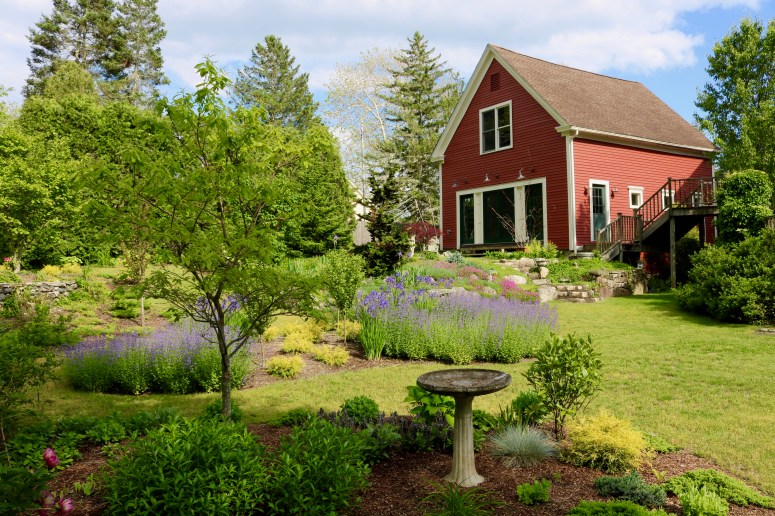
My laboratories are inside of this restored and renovated old barn (on the second floor) and outside of it too (gardens created and tended by me):

IMG_3830

IMG_3837

I surrounded myself with twigs, branches, buds, flowers, nuts, leaves, galls, bugs—all of it collected during regular walking treks or bike riding jaunts or dreamy meditative strolls through my gardens and through wildlife conservation land near home.

Studying the little flowers of a common maple tree tossed me into adventure-lands booby trapped with rabbit holes into which I fell. Disorientation and fascination ensued. During one morning’s tumbles, I underlined the following passages inside eight random books on my quest to find out how the Swamp Maple was invented, how it works to make more Swamp Maples, and how its LEAVES are capable of manufacturing oxygen for all living beings. (Without ever using batteries, engines, or viagra.)

Here are some written passages I underlined:

“This process is based on the “doctrine of uniformitarianism,” which states simply, “The present is the key to the past.” 

“However, I have never clogged myself with the praises of pastoral life, not with nostalgia for an innocent past of perverted acts in pastures. No. One need never leave the confines of New York to get all the greenery one wishes—I can’t even enjoy a blade of grass unless I know there’s a subway handy, or a record store or some other sign that people do not totally regret life. It is more important to affirm the least sincere; the clouds get enough attention as it is and even they continue to pass. Do they know what they’re missing? Uh huh.”

“Follow your genius closely enough, and it will not fail to show you a fresh prospect every hour. Housework was a pleasant pastime. When my floor was dirty, I rose early, and, setting all my furniture out of doors on the grass, bed and bedstead making but one budget, dashed water on the floor, and sprinkled white sand from the pond on it, and then with a broom scrubbed it clean and white….It was pleasant to see my whole household effects out on the grass, making a little pile like a gypsy’s pack, and my three-legged table, from which I did not remove the books and pen and ink, standing amid the pines and hickories.”

“I have often noticed that these things, which obsess me, neither bother nor impress other people even slightly.”

“…shambles….elegant experiments….The oxygen in the atmosphere is the exhalation of the chloroplasts living in plants….most of the associations between the living things we know about are essentially cooperative ones….symbiotic to one degree or another….Every creature is, in some sense, connected to and dependent on the rest.”

“Seeds are extraordinary objects.”

“Here, away from the pleasant, unintentional, fatal seductions and unplanned blackmail of friends and acquaintances, away from the facade I had built over the years to impress a world with the self I wished I were—a false front that I was obliged continually to reinforce—perhaps I could find my real self, whether it be good or bad.”

***************************************

Will the real Earth last long enough? For embarking on our own magical mystery tours? Tours that lead us to discover the stunning essential existence of leaves, the crazy sex life of flowers, the undeniable links, connections, and networks our lives depend on through the generosities of Mother Earth?

***************************************

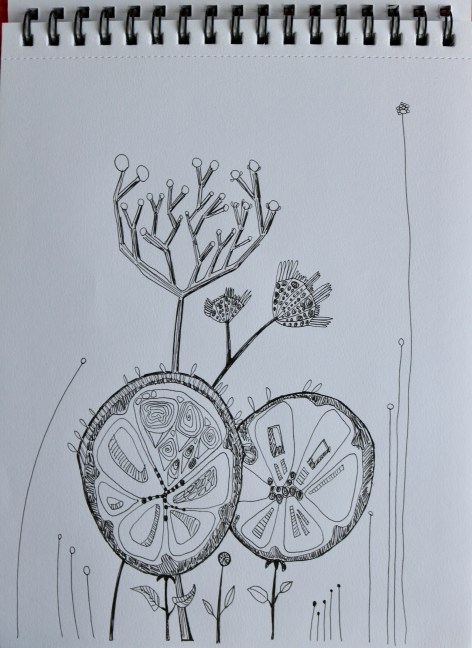
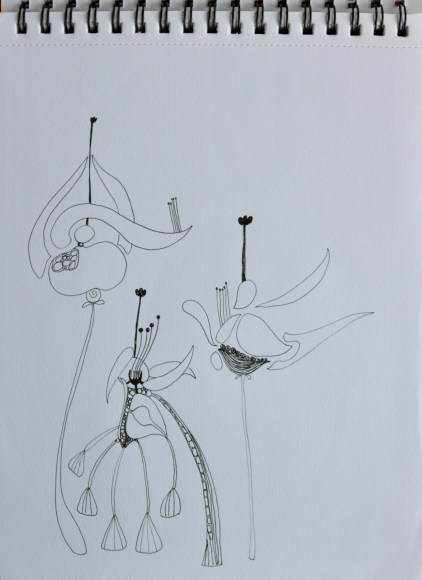
Here are some sketchbook drawings of my brain establishing new connections:

IMG_3787

IMG_3788

IMG_3790

IMG_3791

IMG_3789

I found grass growing under one Swamp Maple with red tints running through the graceful blades. What caused the colorations?

IMG_3844

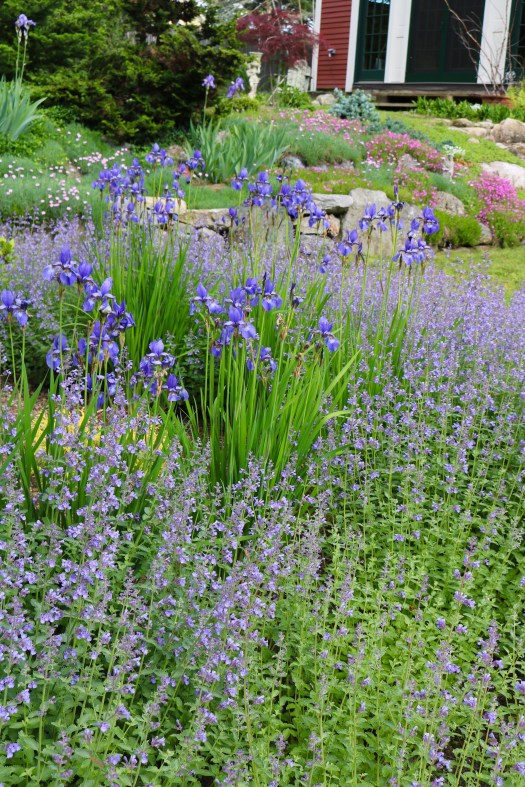
My gardens. Catmint. Iris. Pinks. Phlox.

IMG_3831

I stand with the Paris Climate Agreement and France’s vow with all who do, to—

“Make The Planet Great Again.”

We need to save the birds and the bees.

IMG_3807

******************************************

A Helicopter Mom Crashes And Hands Over The Controls.

“The Jews are undoubtedly a race, but they are not human.” A.H. 

This quote comes before Chapter One of Art Spiegelman’s brilliant graphic novel, MAUS, a story about the Holocaust. I have picked the book up from a position of prominence on a shelf in my daughter’s quiet bedroom. It is one of her all-time favorite books. She read it, perhaps, when she might have been too young to process the intense themes throughout the story and I’m sitting in her room thinking about that because this daughter of mine is about to graduate from college and make her dreams come true.

A mother can never know the exact moments when dreams begin to formulate inside a child’s heart, although we do our best to create supportive and enriched dreamworlds. We set our children free to go leaping through books and movies, to go traveling among the peoples and places of the world, to go wandering in and out of classrooms and onto playing fields. And then, when we aren’t looking, our children escape to discover for themselves sanctuaries for hiding their most cherished dreams—places where no one will trample those dreams nor steal one bit of the sparkle necessary to keep them shining.

IMG_2776

I am remembering watching the movie Freedom Writers with my daughter. In the movie, a teacher devotes herself to a large group of the least-promising students in a California high school. The students, through the skills of learning how to become writers, achieve much more than their own personal goals—they also learn the devastating history of the The Holocaust and arrange a remarkable meeting with Miep Gies, the woman who risked her life to protect Ann Frank’s family from the Nazis. I am sure I felt the presence of The Dream Fairy sitting right next to my daughter while we watched that movie. The fairy was quiet, but my daughter was not: I am going to work with the kids no one believes in. She declared. She had not yet finished junior high.

Words from the preface of another book I have found on my daughter’s bookshelves, Black Like Me“This may not be all of it…but it is what it is like to be a Negro in a land where we keep the Negro down.   Some whites will say this is not really it.  But we no longer have time to atomize principles and beg the question.  The real story is the universal one of men who destroy the souls and bodies of other men (and in the process destroy themselves) for reasons neither really understands.  It is the story of the persecuted, the defrauded, the feared and detested.  I could have been a Jew in Germany, a Mexican in a number of states, or a member of any “inferior” group.  Only the details would have differed.  The story would be the same.   This began as a scientific research study of the Negro in the South, with careful compilation of data for analysis. But I filed the data, and here publish the journal of my own experience living as a Negro. I offer it in all its crudity and rawness. It traces the changes that occur to heart and body and intelligence when a so-called first-class citizen is cast on the junkheap of second-class citizenship.”  John Howard Griffin 1959

I keep time tripping through my daughter’s bedroom because she called me last night to let me know that she’d been offered a position as a counselor working with teens in a residential treatment center where she will deal with the diverse needs of those confronting mental health and behavioral problems, addiction problems, juvenile justice problems, personal trauma problems, and family dysfunction problems. The treatment center is not the kind of place where the rich and famous show up.

My daughter called after spending several hours at the treatment center during a second interview:

“Mom, ” she said, “I’m so excited. But I’m nervous. This job is outside my comfort zone.”

“What makes you uncomfortable?” I asked her.

“How will I know the right things to do?” She said. “Or how to handle difficult situations.”

“Do you feel safe?” I asked her.

“You know,” she said, “risks go along with the kind of work I want to do.”

“Well,” I said, “you’ll be trained and have to learn as you go.”

“I guess this is the real world.” She said.

“Yes,” I said, “so much more of a real world than any of the protected and hidden worlds where we’ve always lived.”

“Some kids just want to go home,” my daughter said. “They want to reach their goals and return home, but home is not safe for them.”

“All kids want home,” I said. “And so many begin their lives without any luck. It’s not fair.”

I told my daughter about the teachings of Mother Teresa:

From her book, In The Heart Of The World, (a gift from one of my sisters): “There is so much suffering in the world. Material suffering is suffering from hunger, suffering from homelessness, from all kinds of disease, but I still think that the greatest suffering is being lonely, feeling unloved, just having no one. I have come to realize that it is being unwanted that is the worst disease that any human being can ever experience. In these times of development, the whole world runs and is hurried. But there are some who fall down on the way and have no strength to go ahead. These are the ones we must care about.”

And from one of Mother Teresa’s letters, reproduced in Joseph Langford’s Mother Teresa’s Secret Fire“Poverty doesn’t only consist of being hungry for bread, but rather it is a tremendous hunger for human dignity. Not only have we denied the poor a piece of bread, but by thinking that they have no worth and leaving them abandoned in the streets, we have denied them the human dignity that is rightfully theirs as children of God. The world today is hungry not only for bread but hungry for love, hungry to be wanted, to be loved.”

I recall our family’s recent trip to Oaxaca, Mexico. One day, in a bookstore there, my daughter bought the book, Crossing With The Virgin, Stories From The Migrant Trail. The book tells the harrowing stories of Mexicans crossing into the dangerous deserts of Arizona and the people who choose to help them with food and water.

Mother Teresa encouraged people to find the “Calcuttas” in their own countries, their own states, and their own communities where they could work to restore the promises of humanity which include the basic values of human decency and dignity.

My daughter doesn’t believe in or practice religion, so when I tell her about the teachings of Mother Teresa, I remind her that I am sharing the teachings because I believe they have meanings for all of us.

She tells me, “Some people say that I should trust in God and that God will bless me.”

I say, “You know they mean well. I hope if there is a God that He will bless and protect you, too!”

“Well, ummmmm,” she says, “how about if I trust in myself! Duh!”

Which inspires me to return to the lands of literature with a quote from one of my daughter’s favorite dreamworlds, the world of Hermione Granger at Hogwart’s:

“Are you planning to follow a career in Magical Law, Miss Granger,” asked Scrimgeour. “No I’m not,” retorted Hermione. “I’m hoping to do some good in the world!”

********

From Erin Gruwell of Freedom Writers: 

“…if you change enough communities you can change the world.”

Here is a video of the challenging community where my daughter believes she will help change the world:

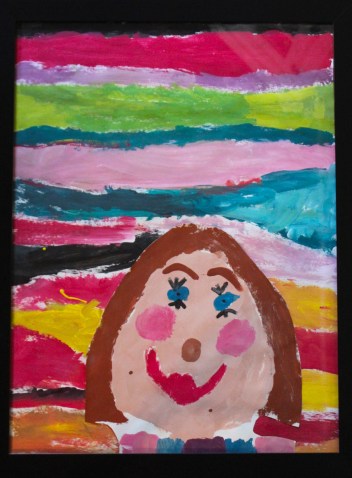
Preschool self-portrait by the little girl, now a woman on the move to heal our world,

who makes me a better person:

IMG_2774

Brooklyn. Over and Over Again.

“I look out the window and I see the lights and the skyline and the people on the streets rushing around looking for action, love, and the world’s greatest chocolate chip cookie, and my heart does a little dance.” Nora Ephron, Heartburn.

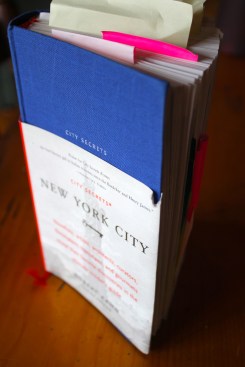
This blog post is dedicated to my neighbor down the street, Lisa, who, like me, has lost a child to Brooklyn. She wanted some ideas for things to do in Brooklyn. First of all, anyone who has lost a child to Brooklyn should buy this book: City Secrets New York City, Robert Kahn, editor. I’ve had the book for a long time, but ever since my son added his heartbeat (four years ago) to all the others keeping the Center of the Universe alive and vibrant, I’ve started to make my way through all the dog-eared pages of the book. It’s been a lot of fun.

img_2372

Wintertime in the northeast can be cold and snowy. If you’re looking for some heat, there’s good news: This weekend’s forecast for New York City is promising BALMY temps. So put on your stylish boots, sassy scarves, and go.

We usually base ourselves in Brooklyn because, like everyone else, we love Brooklyn. Here are some of the things we might do on a warm winter’s weekend in Brooklyn:

Stroll the neighborhoods of Brooklyn to enjoy adorable dogs, graffiti decorated buildings and warehouses, charming ethnic enclaves of cultural foods and languages, parks, colorful human beings, neat architecture, cool cemeteries—it’s everywhere in all parts of Brooklyn.

If we are feeling brain dead, we might choose to go to a museum. The Brooklyn Museum of Art is filled with surprises. Try going without researching what is there. One of the  treasures I came upon the first time I went to the Brooklyn Museum of Art was their fabulous Art Nouveau Butterfly Gate by Emile Robert. Can wrought iron be sensuous? It sure can!

In Long Island City (not far from the borders of Greenpoint/Williamsburg) there’s the Isamu Noguchi Museum. Perhaps a bit too esoteric for some, but maybe not. Restful, civilized. Tres serene.

We have a process for visiting the Metropolitan Museum of Art in Manhattan which is to slowly see the permanent exhibits by choosing one or two exhibits, instead of trying to walk through the entire museum. That way, we don’t have to spend an entire day in the museum or subject our brains to a meltdown. The Met has a suggested admission price—you can decide for yourself how much you want to pay or you can choose not to pay at all if you can’t afford to pay. If you are only heading in to see one thing and planning to stay for under two hours, (probably not possible, but maybe), you could pay less for your admission. That’s what we do. Since it’s going to be a balmy weekend, a walk through Central Park to the Met (or from nearby subway stops) would be very nice. Here are a couple of cools things to choose to see at the Met. (Don’t be surprised to find yourself falling down rabbit holes as you try to see just one thing):

  1. The Gubbio Studiolo featuring mesmerizing intarsia—an elaborate form of wood inlay marquetry created in 15th century Italy. Bazillions of pieces of walnut, beech, rosewood, oak, and fruitwoods have been used to create a stunning interior. This Italian studio from the Ducal Palace is a masterpiece of human obsession and a surprisingly charming place to find oneself in NYC. You will feel such delight if you go. It’s the most fascinating treasure hunt to find objects in this artwork. Hopefully you’ll have the studio all to yourself.
  2. The 6th century BC Etruscan chariot. Craftsmanship? Without climate-changing industrial manufacturing plants? Whoa.
  3. Not far from the chariot display there are Roman rooms with lovely frescoes, including one from Boscoreale, a village north of Pompeii, which was buried in the infamous eruption of AD79.
  4. The Damascus Room. Here you will find, of all things to find on a winter’s weekend in NYC, the residential winter reception chamber from a wealthy Syrian 18th century residence. Poetry is inscribed on its walls—forty stanzas—inspired most likely by the 13th century poet, the eminent Sufi, Imam al-Busiri of Egypt. He wrote what many believe to be the most recited religious poem in human history, the Qasidah al-Burdah, also called The Poem of the Mantle and The Celestial Lights in Praise of the Best of Creation; written as an ode praising the Islamic prophet Mohammad at a time when the poet had suffered paralysis from a stroke and was healed in a dream.

You can find translations for the poetry in the Damascus Room on the Met’s website and read it while you are riding the subway. (You do ride the subway, right?)

img_0185

Back in Brooklyn:

If it’s balmy, walk over the Brooklyn Bridge. Read Walt Whitman’s Crossing Brooklyn Ferry and an old blog post of mine Doing Lines in Brooklyn. 😀

https://theresajohnsonbertz.wordpress.com/2015/11/05/doing-lines-in-nyc/

It’s fun to walk to Manhattan at sunset, watching the sun fade away. Then walk back in the dark with all the city lights. Remember to spot the Statue of Liberty on the horizon!

Saturday morning: Grand Army Plaza Green Market—a farmer’s market I’ve never been to during wintertime, but I would check it out on a warm winter’s day.

FOOD! Here are some fun food stops in Brooklyn:

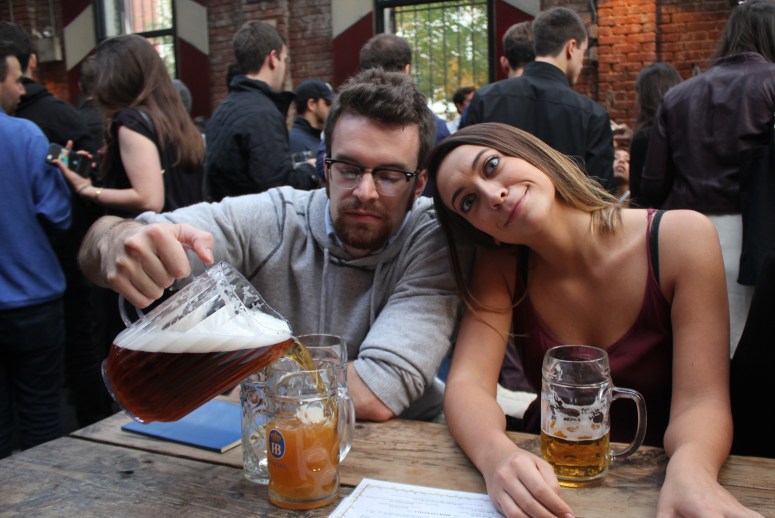
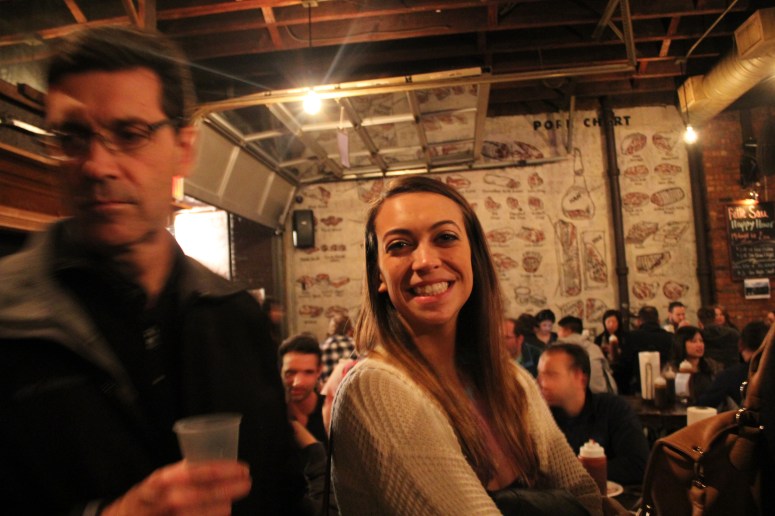
Radegast Hall and Biergarten. Afternoon happy hour with lively bands. My husband and I were the oldest partiers there during one afternoon in October. Our kids didn’t mind.

img_0193

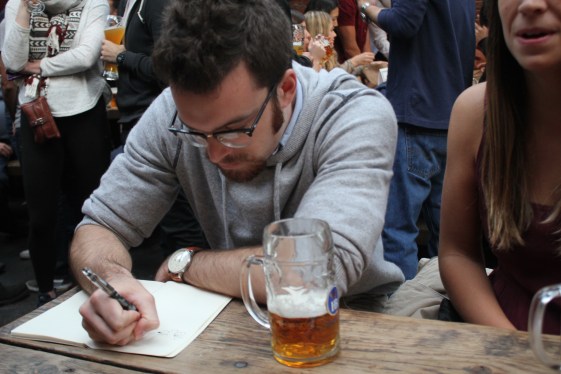
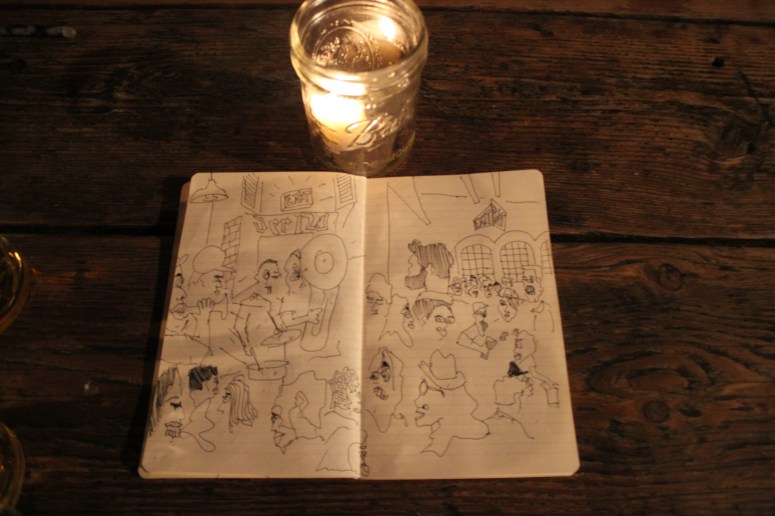
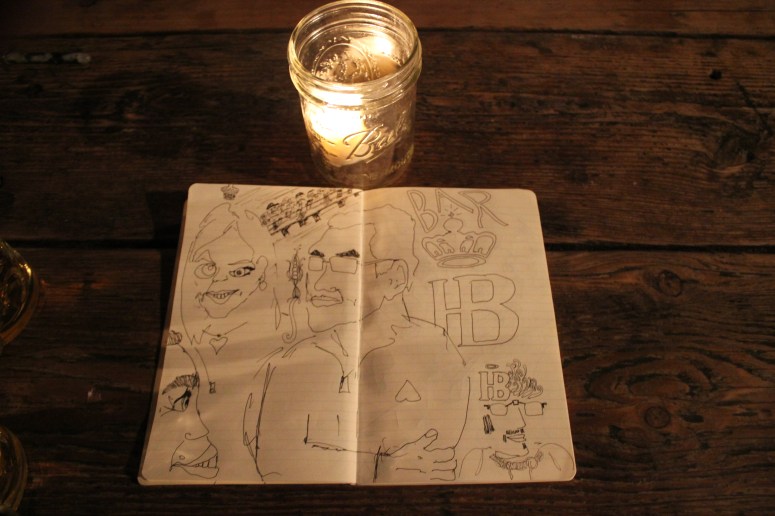
We all like to draw in my son’s journal when we are observing, and participating in, beer hall behavior.

img_0202

img_0209

img_0229

img_0230

img_0231

PEACHES HOT HOUSE. Bedford-Stuyvesant. Southern comfort food. You will want to be comforted by everything on the menu. Nashville-style HOT chicken. Not a fancy place. GOOD food.

FETTE SAU. (Williamsburg I think.) It means “fat pig” and it’s a barbecue place in a converted garage (so, you know, HIP) where the chaos of craft beer, beef, and American whiskey will make you feel like a jolly fat pig. We stood in a line that snaked outside and we ended up eating outside. Maybe it will be warm enough to eat outside during the upcoming balmy weekend.

img_0243

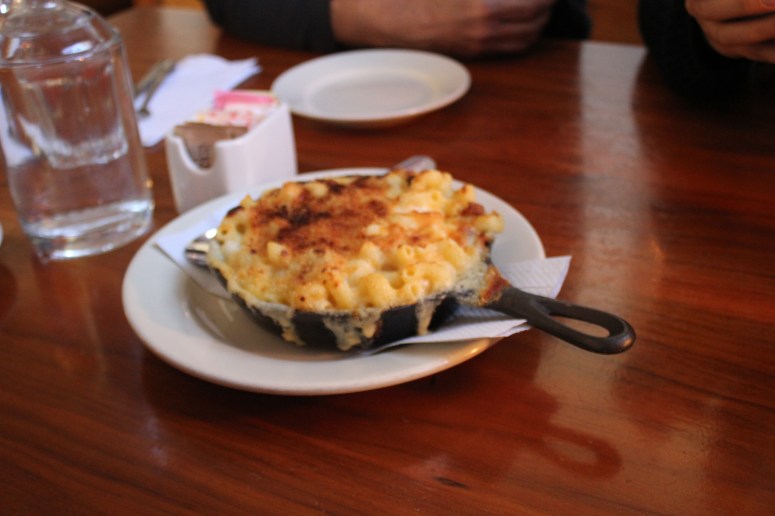
THE BROOKLYN STAR (Williamsburg.) Great for Sunday brunch. All kinds of comfort food and drinks to soothe overstimulated, overfed, and overindulged brains before you exit The Center of the Universe at the end of your weekend. Get in line early. Family bonding over shared mac-n-cheese is a new kind of religion for Sunday mornings in Brooklyn:

img_0277

As always, before traveling to Brooklyn,

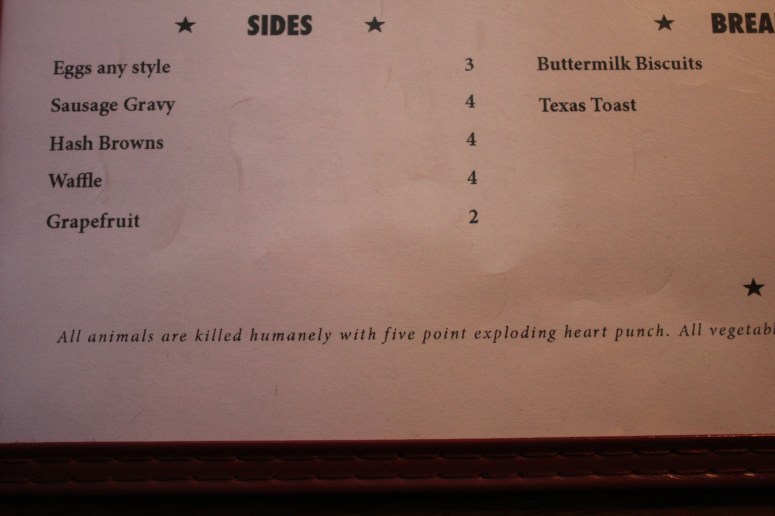
REMEMBER TO READ THE FINE PRINT:

img_0261

img_0262-2

***ALSO***

***THE NEW YORK TIMES TRAVEL SECTION JUST DID A “36 HOURS IN BROOKLYN” FEATURE THIS WEEK with a lot of great ideas! You can find it on the Internet!***

img_0258

img_0085

We love Brooklyn. Share your ideas with us too!

NE Patriots. Cheating. And WIN WINS.

This blog has a happy, hopeful, and fun ending. But first, true confessions:

I live in New England and the Patriots are my least favorite team. Why? Because they are cheaters and they have cheated more than once and they never even had to cheat in order to become champions. (Please note: By calling this a true confession, I am admitting to knowingly having committed a sin. I know it is a sin to doubt the integrity of the NE Patriots, especially if one lives in New England.)

Does this mean I think it’s okay to cheat sometimes if that’s the only way to become a champion? Yes. I think it’s okay to cheat sometimes. I will, in fact, look the other way if cheating allows you to achieve something you otherwise might not have achieved because you weren’t given a fair chance from the get go. For instance, I think it’s okay that some women have cheated by using a man’s name in place of their own name so that their writing would be considered for publication. I also thought it was okay for Gloria Steinem to cheat and became a Playboy Bunny (even though she never wanted to be a champion bunny) in order to investigate how women were being treated in Hugh Hefner’s clubs.

I’ve done some cheating in my life, too. And, of course, since I am the writer of this blog, I will choose to share one of my more charming cheating stories:

One sunny spring day, my fourth grade teacher made me skip recess so that I could administer a spelling test to students who were continually failing spelling tests. I was annoyed I had to miss recess. Soon, my pain was replaced by the pain of my classmates who not only had to miss recess, but would continue to miss recess until they learned how to spell. One doesn’t realize how one will handle positions of power until they are placed within such vainglorious places. I had been chosen by my teacher to stand as a leader (preferably an honest leader) before students in an American public school classroom and to administer a spelling test to those students. (My peers.) Indeed, in front of me sat a handful of bad spellers with papers, pencils, and wistful stares which never looked at me, but were bound instead for the world beyond the classroom windows where all the good spellers enjoyed the privileges of romping in sunshine and fresh air on a playground. Behind me loomed the chalkboard with beautiful, fresh, long white pieces of chalk. (All students, back then, lived for any opportunity to write upon the chalkboard.) So, I called the classroom to order and commenced announcing the spelling words. The students didn’t furiously begin writing the words onto their papers. So I said, “Raise your hand if you don’t know how to spell the words and I will write them on the chalkboard.” As you can imagine, this established me as a great leader. Everyone passed the test; we all returned to the regular schedules of recesses; and poor spellers were never denied equal access to recess again.

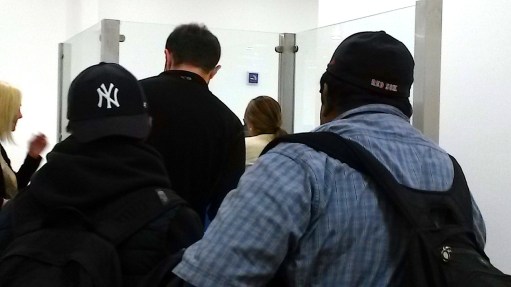
Fast rewind back to the true confessions beginning of this blog. If the Patriots aren’t my favorite team, which New England team is? That would be the UConn Huskies WOMEN’S Basketball team. They are not, as some male sportswriters claim, boring to watch. They play basketball with artistry, finesse, and athletic excellence in harmony with true teamwork. The universe will never again bring forth a greater organized group of women athletes. Soon to come—UConn’s 100th straight victory. After UConn, I like the Celtics (LOVED the Larry Bird era), the Red Sox, and then the Bruins. Sports are fun in the scrappy city of Boston and the fan base is wide ranging. The rivalries are energizing, too. Here’s a pic from the immigration line as my family was entering the US after traveling through Oaxaca, Mexico. I don’t know if these two hombres were good or bad or legal or just passing through, but they obviously could deal with their differences and probably enjoy one of the most enduring rivalries in American sports: (In case you can’t see, it’s a Red Sox cap chillin with a Yankees cap.)

20170115_072435

My differences with the New England Patriots have created a lot of great discussions with my family and friends. We all know that when it comes to cheating and being caught and being punished and being superstars, things can get unfair. But then—

The Trump thing landed in deeply blue New England. The leaders and the star quarterback of a team called the Patriots in New England were outed as fans of the new president. Ick. Ick. Ick! But not surprising.

What to do?

My daughter (a Trump disliker and total Boston sports fan and all-around awesome kid) reminded me: “Mom. Don’t judge a whole team by the political views of some. Don’t judge the entire NFL by the bad behavior of some. And don’t judge a person’s whole life by their political views.”  And then she did what I suppose I might have taught her to do—she expanded my consciousness by bringing to light something good.

“Martellus Bennett,” she said, “will not be going to the White House with the team to celebrate their Super Bowl victory.” That’s nothing unusual—Tom Brady didn’t go to Obama’s White House. Larry Bird refused a visit to the White House. So did many other sports superstars.

Nevertheless, I decided to see if I could find out why Bennett had chosen to protest Trump. What I found (via Internet postings, a Forbes article, and Bennett’s Twitter) was that Martellus Bennett appears to be a pretty cool and obviously fun man who doesn’t want to be defined as “just an athlete” or someone useful for promoting the products of other companies or someone without a strong moral base or someone without a voice.

Bennett wants to be the product he promotes and what he promotes is imagination.

WIN!

His company is The Imagination Agency (www.theimaginationagency.com) and he is the Creative Director of Awesomeness. Bennett was inspired by his love for his daughter to create a black female protagonist in picture books—a protagonist with all the freedoms to dream and imagine adventures the way many white kids grow up so freely imagining such things. When Bennett was young, he wanted to be Willy Wonka. He also wanted to go to Hogwarts. One of his favorite quotes is from author Ursula Le Guin: The creative adult is the kid who survived.

From Bennet’s website: The Imagination Agency is a wondrous group of monsters and imaginary friends tasked with creating, drawing, writing, and imagining fantastical adventures for kids all over the world.

According to the heartfelt beliefs of Martellus Bennett, you can have more than one dream. He has always been an artist—drawing, making films, animating, writing—and he claims that, “Every day I wake up a new me. I go to sleep in a cocoon and wake up a new beautiful butterfly.” Pretty fluttery sentiments for a man who is 6’6′ and weighs 270 pounds! Bennett wants his daughter and all children from all backgrounds to grow up learning how to let their imaginations run wild. He wants to inspire a sense for unlimited adventure.

It all sounds so wonderful doesn’t it? Lots of WINS!

Bennett’s Imagination Agency also features the HugFootballMartyPillow on their site and a campaign to “Spread the Hugs.” The pillows can be purchased for children undergoing heart surgery at Boston Children’s Hospital and are used to alleviate pain by giving the children something to hug when they have to cough after surgery in order to keep their lungs clear. For every ONE pillow purchased, ANOTHER pillow is donated to a child recovering from heart surgery. WIN WIN!

(BTW—when the scrappy Boston fans call Martellus, Mahty, it only makes him feel more at home.)

Imagination is a powerful, powerful, powerful attribute to respect, honor, and develop. We can use our imaginations in good and bad ways. It is always refreshing and restorative to discover the ways people are using their imaginations in positive ways to create a better world for ALL children from ALL backgrounds.

Bennett says, “Football is not something I can hand over to my kids. Creativity lasts forever.”

And now for some Friday Fun entertainment. Here’s Martellus Bennett in an animated story of the time he saved a fan falling over a railing. Bennett says he is just your friendly neighborhood superhero and he has actually saved several lives. “People need me. I am there for the people.”

If the video fails to work on this blog—just go to youtube and search for “Martellus Bennett saving a fan.” The video is funny, the animated art is great, and you might get inspired to awaken the adventures and superheroes inside your own imagination.

All wins.

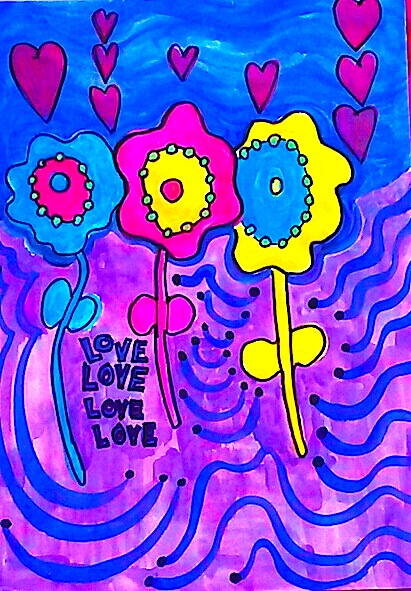
I dedicate this blog to my daughter. Thank you for keeping the conversations going. You have always been about LOVE and I was so proud to use your childhood artwork to make my sign for the Women’s March.

20170120_101455-1-1

A Happy Ending Story For 2016. With A Bright Start for 2017.

Ah, life.  Reads the last line to one of Kurt Vonnegut’s dismal short stories. In the story, a random, wonderful thing (the birth of a baby) becomes a random, horrible thing (the baby dies) for an everyday couple. The couple goes on to accept their fate, the world regards their misfortune as too bad, and the couple resumes the days of their lives as best they can.

I depend on Vonnegut’s two words with the little comma between them, whenever life tilts, then tumbles into misfortune—the kinds of misfortunes that don’t come with happy endings or silver linings or brighter sides

Ah, Life.

Who better than Vonnegut to write, with his unfairly wounded heart, those words as the final answer to a sad story? He had experienced the WWII bombing of Dresden, Germany while hunkered down in a slaughterhouse as a POW. He lived to deal with what he had witnessed and what he had been ordered to do with the carnage. And, as if an experience of war wasn’t enough, Vonnegut never escaped burdens of personal tragedy and heartache on his home fronts. On top of everything, he was afflicted with PTSD and depression.

And so it goes. (KV, also.)

And so it does go. For a lot of us. Sometimes it feels as though we can’t bear to shed another tear or expend another ounce of energy to keep our hearts pumping through the adverse challenges of illness, relationships, addiction, responsibility.

Ah, the heart. So high maintenance! Mine soldiered on and on through 2016. It soared; it crashed; it held the line. By year’s end, the Holiday Blues were getting the best of me until one day in December when I heard a simple story that blindsided my weary heart with happiness. In fact, I needed to give myself a happiness time out when I heard the story—just a minute or two—when I gave myself permission to stop and feel really happy because something good had come to light. The feeling wasn’t going to last forever, I knew that. It was only a moment of grace.

But what an amazing grace it was.

Because as much as bad news and the blues can drag me into my own slaughterhouses of self-loathing and self-destruction, good news can make the sun blaze a smiley face tattoo all the way through my thick skull and onto my parietal lobe where science claims human happiness gets juiced. According to contemporary maps of the human brain, the parietal lobe sits behind the frontal lobe which, in my life, too often gets used as a hammer—to pound stakes through my heart.

Heart, soul, brain, belly—wherever it is that happiness hangs out, it’s always good to welcome the spirit when it comes to abide.

Here’s Vonnegut on feeling happy:

“I urge you to please notice when you are happy, and exclaim or murmur or think at some point, ‘If this isn’t nice, I don’t know what is.'”

Vonnegut’s words aren’t earth shattering unless you know a little bit about the man voicing them. Or unless you, yourself, can recall your own descents and/or relapses into the pits of grief and despair. One never forgets how hope becomes the most amazing grace when the darkness begins to fade—how one sighs, then breathes again—murmuring a happy prayer of relief and gratitude: If this isn’t nice, I don’t know what is. 

Maybe we don’t really know what nice happiness feels like anymore. Many of us live in worlds tilted off balance—worlds where getting juiced with what we think is happiness is triggered by pings emanating from electronic devices which are often followed by pangs—of bewildering angst. Soon, an addiction to fake happiness develops. Desires for instant and constant and big-bling gratification become crippling. Useless emotions like jealousy or envy arise to ruin the day. The little things in life no longer delight us—little things that are actually the beautiful and surprising blooms from seeds we planted long ago and never stopped tending.

As I mentioned a few paragraphs ago, I was surprised by a nice story this year. The story was real, not fake. I received a genuine boost to my spirits—on all fronts—when the story came to me.

Let’s see if I can tell about it:

So. Once upon a time. This year. A week before Thanksgiving. My father saved my mother’s life. Mom was sitting in her wheelchair watching the news on a morning when Dad had decided not to go to the gym. Dad heard Mom utter an unfamiliar gasp. He sprang from the breakfast table. He called out to her. No response. He searched for a pulse. None. He began CPR. He dialed 911. He resumed CPR. The medics recharged Mom’s heart with a defibrillator. They rushed her to one hospital where she was then airlifted to another hospital. For several days, Mom was confined to the ICU as she entered into the brave new world of medically-induced hypothermia. Her body was cooled to preserve brain function by, hopefully, reducing the number of brain cells damaged due to loss of oxygen when Mom suffered sudden cardiac arrest. Basically, Mom was sort of safely frozen.

A big freeze descended on all of us as we waited to see whether or not Mom would survive, and, if she did survive, would her mental abilities be as sharp as they were before the sudden cardiac arrest which had caused loss of oxygen to her brain?

It was a dreadful experience. Over a few days, Mom’s body temperature was slowly restored and we encouraged her as she struggled to get her mind to achieve its baseline.

It’s hard to determine the exact moment of miraculous intervention which helped Mom’s perky mind thaw out as well as we could have hoped. It was definitely a team effort between Heaven and Earth. But it also might have been this: Dad’s CPR broke Mom’s ribs. He got through to her heart and kept it pumping when it mattered the most. (And Dad has his own health challenges. And Mom is paralyzed on her left side. So I have to wonder if some strong guardian angels came to the aid of my parents until the medics arrived. Maybe one of those angels went by the name of Cupid.)

During the longest days of panic, exhaustion, and worry, my sister and I were talking and suddenly remembered it was Christmastime. She told me she was going to order a wreath from a local flower shop where Dad lived and have them deliver it and hang it on his door.

Dad was home when the delivery arrived. The doorbell rang, he opened the door, and there stood a man with a wreath. The man said: “Do you remember me?” At first, Dad didn’t recognize the man, but as soon as the man introduced himself, Dad remembered him for sure.

It had been many years ago. Back in the days when Mom and Dad hauled their family of seven children from Indiana to Arizona to Connecticut, always on the move for better opportunities. In Connecticut (the family’s final frontier) Mom and Dad worked several jobs. Dad was an executive and Mom was a real estate broker. In their spare time (:D) they bought, restored, and sold homes. Mom and Dad spent many late nights and long weekends ripping apart, hammering together, and fluffing up neglected properties. They poured their hearts and souls into the homes they renovated.

One of those homes—we call it the Ironworks House—came to them unkempt with overgrown landscapes, cars and tools rusting away in side yards, and a neglected pool. It took Mom and Dad a year to renovate that house. While they worked, people watched the transformation. One evening, a man out walking stopped in to talk to Dad while Dad was working on the Ironworks House. Dad was installing a new wall that night. There was no time for breaks so Dad kept working and while he worked he explained to his visitor, through real time demonstrations and detailed explanations, how to build a wall The Right Way.

Whenever my parents completed a house renovation project, they acted just like any other great team of artists—proud and unsure about whether or not they really wanted to sell their beautiful work. But, my parents knew what it meant to have a family in a happy home and it gave them a great deal of satisfaction to match their homes with the right buyers.

When it came time to sell the Ironworks House, Mom determined that all offers must at least meet the asking price. Immediately, she had two offers—one for the asking price and one for less-than the asking price. The man who had stopped in to visit Dad one night while Dad was working on the house, had offered the asking price. Another man, from New York City, had offered less-than the asking price.

When Mr. NYC heard my parents had accepted the offer from Mr. Visitor, he increased his bid for the house.

But Mom and Dad said no go.

Mr. NYC didn’t give up. He was well-equipped with buy and sell and deal-making maneuvers.

But Mom and Dad said no go.

I think there was some discussion among the seven kids in those days—failed attempts to talk sense into Mom and Dad—like: “Are you guys crazy? Someone is offering you more money for all of your hard work!” (Mom and Dad probably said a prayer for the transformation of our greedy little souls.)

Mr. Visitor and his wife showed up at the closing for the Ironworks House without completing a home inspection. The attorneys said to them: “You haven’t had the home inspected yet.”

Mr. Visitor replied: “Have you ever watched these people build a house? There’s no need for an inspection.”

Boy do my parents love that part of the story. I do too.

So then along comes 2016, many years after the sale of the Ironworks House. Mom and Dad had moved several towns east along the Connecticut shore from where they lived when they were hard-working home makers. Mr. Visitor went on with his life and after retirement, liked keeping busy as a delivery man for a local florist. Yes, he was the one who showed up to deliver Dad’s Christmas wreath and hang it on his door.

And what became of the Ironworks House? Mr. Visitor and his wife raised their family there and created a home so happy that they passed it on to their daughter where she is now raising her family.

IF  THAT  ISN’T  NICE,  I  DON’T  KNOW  WHAT  IS!

On this, the last day of 2106, my mother is going to come home from the hospital.

Happy New Year to all from my heart and happy home to yours. I urge you, in the days to come, to notice when you are happy. When you do, take a happiness time out.

Allow the spirit to abide.

img_0676

O! Canada. And a Recipe for Relief.

America keeps coming undone. We act so shocked, but, honestly, what would America do without the drama of dysfunction? It’s as though a plague of uncivilized humanity has escaped from Hater’s Anonymous rehab to indulge in PDR’s: Public Displays of Relapse. They dream of reestablishing a culture of coddled cads who think PDBB’s—Public Displays of Boorish Behavior—should be acceptable forms of discourse.

It’s utterly repulsive. I don’t like America right now. I’m not feeling the love and I loathe what is becoming of my country. America—with its farce of an election—is being dominated by a cesspool of withered minds and floppy mouths belching forth a stench so foul, I can’t breathe without gagging. This does not mean I’ve lost faith in America. But still—my broken heart!

The good news is, there are some bright horizons—like the one to our north, and downeast from Maine. If any Americans out there, (like me), are seeking some relief, stop for a minute and say a prayer of gratitude for our position on the planet next to Canada.

Because across the border and into the Maritime Provinces, my husband and I have always found kindness, resplendent scenery, powerful tides, rejuvenating hikes and bike rides, nurturing food and drink, and wonderful music. These maritime—“of the sea”—lands include Nova Scotia and Cape Breton Island, Prince Edward Island, and New Brunswick. I’ve traveled to all of Canada’s Maritime Provinces, though not as often as I’d like. From where I live, Halifax is an easy flight out of Boston. Prince Edward Island and New Brunswick are road trip excursions. At the end of those road trips, a soulful and quiet peace awaits. It’s a welcomed type of slow travel that rarely moves beyond first gear, especially if you travel late into autumn which is what my husband and I just did.

On one hand, the Canadian Maritimes-style peace is so slow and so quiet that I don’t want to tell anyone about it. On the other hand, I’m not so sure people are interested in true peace anymore.

—Or their own souls.

—Or the souls of others.


Upon arrival in Canada, we stayed in a campground overlooking the Bay of Fundy from the town of St. Andrews, New Brunswick. The date was Canada’s Thanksgiving holiday weekend. We cooked dinner outside, the sun set, and soon a fellow camper stopped by our campsite to invite us over to his campsite for an evening of music. Thus passed our first night away from America as we found ourselves taken in—and taken away—by a fiddle player, guitar players, and singers performing songs and hymns in the distinctive, Celtic-derived traditions one looks forward to hearing in the Canadian Maritimes.

A few days later, my husband steered our motorhome into the belly of a ferry bound for Grand Manan Island—part of an archipelago of islands afloat in the mouth of the Bay of Fundy. The great American woman and writer, Willa Cather, spent many peaceful summers on Grand Manan, which is how I first learned about the island.

img_2238

On Grand Manan, we found North Head Bakery and bought ginger molasses cookies, macaroons, warm baguette, sugar donuts, and still-steaming raisin bread. We found walking trails at the very edge of majestic cliffs with only fresh air to steady our wobbling legs. We found islanders that waved hello whether we were driving our huge motorhome on their narrow roads or riding our mountain bikes up and down their hilly routes.

We biked to the infamous island outpost of Dark Harbour where we enjoyed a unique place to have a picnic. We discovered dulse, a superfood sea vegetable (aka seaweed) harvested by hand from the ocean and dried on rocks under the summer’s sun.

img_2107

img_2146

img_2152

img_2136

img_2142

img_2156

img_2163

img_2141

img_2160

img_2164

Willa Cather wrote: When kindness has left people, even for a few moments, we become afraid of them as if their reason had left them. When it has left a place where we have always found it, it is like shipwreck; we drop from security into something malevolent and bottomless.

America is shipwrecked. It has been sunk by malevolent and bottomless madding crowds.

A history of shipwrecks surrounds Grand Manan Island. Her cliffs are dangerous, wild, and windswept. One stands on the edges of the island in the year 2016 and considers the consistent tug of Earth’s greatest tides, those forces always at work eroding the truths we no longer seem to value and uphold as self evident. Indeed, a faraway island can leave a traveler like me, a woman unmoored from her own country, feeling hopeless and stranded. I found myself wishing the tides of the sea could take me away. Then I wanted them to promise to bring me back. I wanted to present the Bay of Fundy tides to the rest of the world, so everyone could notice how powerful and precious and vast they were, and how small each and every one of us becomes when we stand facing the phenomenon of Earth’s relentless waters.

img_2229-2

img_2231

I asked the tide to bring me sand dollars—

Intact sea urchins—

Pretty sea shells—

Fossils from a time when the Earth was not yet ravaged by the egos of men and women.

img_2172

img_2187

img_2167

img_2177

img_1962

img_2224

The tide took me from the island of Grand Manan to Fundy National Park where one of the most stunning campsites, Site 59, overlooked the whole wide world, in peace.

img_2257

2016-10-13-10-57-38

Our hikes there included premier trails through coastal forests, good doses of satisfying physical exertion, and solitude. Our bike rides and walks upon the ocean’s exposed floors elevated our spirits to our most grateful selves while pastoral settings inspired us to believe romantic thoughts about life. Cliffside picnics made our egg salad sandwiches taste royal enough to be served on golden paper plates.

img_2391

img_2264

img_2314

img_2382

img_2376

img_2417

img_2299

img_2310

We found friendship in the small, small village of Alma at the base of Fundy National Park where we were given the last of the season’s fish chowder on an outside deck at Tipsy Tails as the weather began to turn. Our server said: “Two bowls of chowder, two beers, and two blankets?” then she invited us to join in with the town later that night to celebrate the morning’s anticipated launch of the lobster fishing fleets when the tide would be high enough to float all boats. From our campsite, perched over the village, we heard the music commence as the moon was rising. We bundled up and walked into town using a sturdy, cliffside staircase comprised of more than 100 steps. Sea ballads, Scottish and Irish folk songs, and more hymns filled the night. The next morning, a bagpiper played as gale winds and dark clouds cast shadows over the faces of babies snuggled in the arms of mothers and grandmothers and aunties. Young men clung to boats jammed with lobster traps and before long, the boats sailed through the winds and out of sight. All of the fishermen faced long, hard, hopeful days at sea.

img_2323

img_2319

img_2317img_2329

IMG_2349.jpg

img_2366

20161014_080727


Upon re-entry into the United States, a guard asked us if we had any plants, fruits, or vegetables from Canada in our motorhome. We said no. He said he was going to have to come on board and see for himself. He opened our fridge, seemed satisfied, handed us our passports and said, “Welcome home.”

We did have one vegetable on board and I’m glad it wasn’t confiscated. It was the dulse, which hid itself well in spite of smelling like the boldest of low tides. The taste of it, right out of the bag, is just as strong and gamey as the aroma. But it is a legendary superfood with phantasmagoric health benefits and I was determined to learn how to cook with it.

Within a day of our return, I created my own version of fish chowder inspired by travels through the Canadian Maritimes and our discovery of the world-renowned dulse harvested in Dark Harbour, on Grand Manan Island. I used simple ingredients kept stocked in our kitchen. As I cooked, I reminded myself of how kind the people in Canada had been to us. When speaking about America’s sordid election, the Canadians we met didn’t hesitate to express their faith in America and many showed compassion for the unfortunate relapse into dinosaur-brained recklessness going on throughout every state. One man assured me, “America will do the right thing.”

But I don’t know…Willa Cather’s peaceful visits to Grand Manan ended in 1940 when safe passage to the island was threatened by German submarine activity in the Bay of Fundy.

If America wants to be great again, it must become kind first. Where there is kindness, there is reason. Where there is reason, there is peace.


COMFORT AND KINDNESS FISH CHOWDER

4 cups chicken stock (I used a 32 oz. store-bought carton)

2 cups chopped onion

1 T butter

1 T flour

1 cup half and half

1 big carrot, peeled and cut into half moons

6 red potatoes chopped into half inch squares

8 scallops (I keep a bag of Trader Joe’s jumbo frozen scallops handy)

1 handful of langostino tails (also a Trader Joe’s frozen seafood product—tastes like a combo of lobster, shrimp, crayfish)

3/4 lb. of fresh cod, cut into one inch pieces

Chopped thyme, chives, and parsley from the garden

2 T chopped dulse 

2 handfuls of dulse, cut into strips for frying in olive oil

Slices of baguette bread

Saute the onion in the butter until soft, but not brown. Blend in the flour, cook slowly and remove from heat. Slowly pour and stir in two cups of the broth. (This is a Julia Child all-purpose chowder base.) Add the carrots, add the rest of the broth and cook until just before the carrots are tender. Cook the potatoes in a separate pot of water until just before they are tender. Drain them and add them to the broth and carrots. Heat on low. Add spices, salt and pepper, and chopped dulse to taste. Pour in the half and half and gently heat up without boiling. Place all of the seafood into the chowder and let cook for ten minutes. The fish will break up, adding texture and flavor to the broth.

Heat olive oil in a pan. Working quickly, fry the strips of dulse, turning them once and draining them on paper towels. Toast a few slices of baguette in the olive oil. Fried dulse is tasty! It’s good dipped in salsa, too.

Serve the chowder hot with fried dulse on top and on the side.


Dulse from the market in Canada.

img_2462

A handful of dulse.

img_2468

Dulse separated into strips for frying.

img_2469

Fried to a crisp, glossy green.

img_2470

img_2471

Baguette dulse-flavored by toasting in the remaining olive oil.

img_2473

The chowder only needs some pepper and fried dulse on top.

img_2477


I set our table with a small arrangement of buttercups I found on the edge of our last mountain biking trail in Fundy National Park and some thyme and lavender still blooming in my garden went we came home. I found the vase at NovaScotian Crystal in Halifax when we traveled through on our way to Cape Breton two summers ago. The vase is perfect for small and sweet bouquets from the garden.

img_2464

Believe in kindness.

An Agonized Voter Tries Thinking.

img_1534There are some of us in America who feel as though we are doing our best to enjoy another brilliant autumn season in our increasingly separate and strangely isolated other worlds. These worlds of ours—where the leaves are turning colors and children have returned to school to learn how to read, write, do the numbers, and think intelligently—are feeling threatened by the existence of an alien world embroiled in an election season governed by complete insanity. The alien world is not far enough away. It’s right next to us, in the same time in contemporary history, on Planet Earth. Within the alien world’s election season, insanity has become manifest as acceptable behavior, where the word insanity can be defined as:
…a state of mind that prevents normal perception, behavior, or social interaction…a state of extreme annoyance or distraction…as for an action or a policy: behaving and/or making decisions in extremely foolish, irrational or illogical ways…

Even as the lexical roots of the word insanity keep sprouting up all over the place in the alien world, no one seems to notice how often they trip over them, knocking their brains asunder. I don’t know. Is it possible an epidemic of concussions has afflicted the brains of Americans?

Insanity, from the Latin: insanus:  in “not” + sanus “healthy”

Not. Healthy.

Americans are not healthy. Their current election season and the dark world from which it has emerged is not going to make them well. Furthermore, it threatens to harm global communities of non-Americans with its stealth compounds of mood and mind-altering poisons. It seems as though there has been an enormous explosion…as if all the human waste we have sunk into our oceans and blasted into outer space has come slamming back to Earth where it has morphed into herds of fire-breathing monsters.  Everywhere one searches for relief, one only finds 150 proof moonshine to throw on the fires. (Where moonshine can be defined as:…foolish talk or ideas…and 150 proof can be defined as the opposite of insightful: incite-ful.)

As much as I would like to hide away in more desirable other worlds, I ventured forth to watch the first round of America’s general election debates on television. The good news, for me, is that I don’t need to watch any more debates or any more television regarding the 2016 presidential elections in America. I get it.

Here’s what I get: I get that I should have screamed a lot louder and stamped my feet with more conviction when I refused to allow reality tv to invade my home when it first started glowing in the pleasure centers of American brains. It wasn’t enough for me to discourage the watching of that crap in just my own home. Reality tv marketed real meanness, bullying, and public humiliation as entertainment and real stupidity as escape. Real stupidity as escape. Cruelty, meanness, and bullying as entertainment. This is what tickles the brains of citizens living in a country drenched in freedom? Please note, it is real and enabled stupidity and cruelty I abhor. I am not against portrayed stupidity and cruelty in the arts.

Here’s what else I get: I get that it might not matter what happens after this season of elections. Because however much I fear our post-election world, the truth is the post-election world is already up and running. Most of us already know this because we’ve been noticing for a long time America’s bogus shift into the not-brave-at-all worlds where polarized dystopias, parading around as utopias, take root. These are the newfangled comfie, cozy, and convenient worlds where human beings don’t have to think, don’t have to deal with disagreements, don’t have to confront their own shortcomings, and don’t have to do the hard work of evolving. 

Not even humor can make these false-utopias desirable because it’s not funny anymore. It’s fucking insane and the collective insanity of humans is never good. Furthermore, Americans are not immune to fucking up. No one is—no one person, no one community, no one system of government is immune to becoming fucked up or to fucking up other parts of the world or to fucking up the individual lives of other human beings.

If you want to know what I think is the single, most urgent issue of the current election season, it’s the same issue that has always been, and should always be, the most important issue. No matter where we, as deeply-flawed humans, exist in history, we must be vigilant and progressive and visionary. We must care most of all about each other: Human Rights have to matter more to us than anything else.

There is no one person that we can elect into a position of power to save us from this epidemic of insanity.

Somebody throw me a reason to stop banging my head against my voting ballot. No don’t!

I am a woman. I am a mother. I know the choice for the next American president has been reduced to an unfortunate act of desperation. I can vote to sink the ship or I can vote to keep it listing in rough seas. I tell myself: At least if I keep it bobbing up and down, it might find its way into a safe harbor.

I also remind myself of the facts: I am ON the ship. CHILDREN are on the ship. Daughters. Sons. Grandchildren.

The seas are rough and we have a long way to go. We need a captain and we have only two choices. Neither choice is Eleanor Roosevelt or Abraham Lincoln.

This is why we played those games in school—the ones linked in with literature and the liberal arts. The ones that were supposed to help us become critical thinkers. Like the game we played in junior high after we all read Lord of the Flies: We were all put on an imaginary island…we had to decide who our leaders were going to be…and how they were going to affect the way we think and the behavior we chose to engage in…and we were supposed to be aware of the fact that we’d be responsible for the decisions we made and the things we did and what we believed when under the influences of the leaders we chose.

But here’s what else I get: I get that too many of the boys and girls playing games like those in junior high—and in high school—and in the best colleges and universities of the world—

those games where we all got placed on an island with each other,

the boys with the girls,

without rules,

and some people were popular and some people weren’t—

———

Too many of the boys and too many of the girls playing those games

Didn’t get it.

They never learned how to evolve.


Tools for Sustainable Loneliness.

What do you have to show for all of your loneliness? Destructive addictions? Obsessive behaviors? Too many hours spent staring at the cobwebs cluttering up your vast funks? You ask the spiders: Are you depressed? Or are you lonely? They bite you.

Same.

One of the most pleasurable obsessions I have to show for all of my loneliness is an attraction for tools. I especially love hand tools and have loved them since my own days of yore when we young ones were neglected and allowed to play with really cool, authentic things that didn’t come to us road-blocked behind rules, regulations, age restrictions, or trigger warnings.

On any given summer’s day in the times of yore, I’d take a few slow laps around the family garage before setting out to wander through the fading frontiers of America’s un-gentrified, suburban free ranges. Many family garages displayed a good selection of random tools and mine was one of the best being managed, as it was, by my dad, the United States Air Force man who grew up as the oldest boy on a farm. I went for Dad’s hammers, saws, shovels, maybe some pliers, and an ax. I’d load my wagon with Dad’s tools and leave home. Texting Dad in order to ask permission for engaging in the behavior of helping myself to his tools was, blessedly, not possible. Besides, I was following orders from Mom: Go outside and play.

On my way to the ancient childhood hinterlands, I’d stop at new-home construction sites, peruse their junk piles for lumber and add choice finds to my wagon. I planned to repurpose everything into an outpost. My outposts were repeatedly attacked, sacked, and plundered. I repeatedly rebuilt and reinforced. Dad would ask, whenever one of his carefully maintained tools went missing: Why? Why can’t you remember to bring the tools home? Why can’t you put them back where they belong? Why can’t you return them in the same condition you found them? Where are they?

They are somewhere in the woods of Indiana and/or the foothills of the Sonoran Desert in Arizona. It was in those places where I learned, on my own, how to love being lonely. A lot of children discover how to love their loneliness within the pages of books. For me, it was tools. If you take a hammer and hold it like you mean it, it becomes like a divining rod—leading you on to worlds of creative possibilities and sustainable satisfaction. Pounding a nail true, hits the spot every time. Success. Pleasure. Purpose.

I’m still a lonely girl, and I’m still loving—and losing—tools. Recently I lost one of my favorite gardening tools—my soil knife. She is a substantial hunk of steel fastened onto a sturdy handle. Her hunk-of-steel blade has one sharp edge and one serrated edge, making her a champ for slicing into the soil to lift out weeds and/or for sawing apart the gnarly root balls of plants. There’s also a handy v-notch cut out of her blade for ripping through twine. The handle of this tool, BTW, is neon orange—designed especially to help lonely wanderers, afflicted with an array of distraction disorders, find their tools when they lose track of life. My gardening tool will come back to me when my prayers to Saint Anthony make it though the queue. Until then, I’ve distracted myself with the old pitchfork, an outstanding hand tool for the quiet work of digging out unsustainable turf in order to replace it with beautiful, and more sustainable, gardens.

********

So it should come as no biggie surprise that when a lonely girl like me lands, in her luxury gypsy motorhome, in the parking lot of a truck stop near Gardiner, Maine, late at night, with the husband she met when she was too lonely to care about boys, and that husband says what do you want to do tomorrow—Lonely Girl looks at a map, opens a couple of cold beers, and can’t wait to answer the question. I open the windows, too, and speak to the hum of idling truck engines, all at rest after long days on the road. I keep romantic ideals about what I want to do and what I hope to find tucked in, and simply suggest a list of options for the next day’s adventures:

The Liberty Tool Company in Liberty, Maine. The Davistown Museum, across the street from Liberty Tool. And Morse’s Sauerkraut Euro Deli in the middle of one-of-the-best nowheres, which just happens to be on our route to Camden, Maine, the next day’s destination.

To lonely people everywhere, I say go to where lively spirits live their obsessions. You might discover that what you thought was loneliness might only be a longing—for what’s real and what’s cool and what’s peace and what’s good.

There are a lot of places in Maine where scholars, intellectuals, and classic passionate folks maintain playgrounds for those of us who choose to sustain our most lovely lonelinesses through the practice of learning all we can about what we like. For those of us who aren’t lonely at all, unexpected excursions and serendipitous discoveries are just plain fun. Liberty, Maine is an amusement park for the brain. (Go before the bourgeoisie litter the sidewalks with their Starbuck’s cups.) Even just watching the following video, about The Liberty Tool Company, offers the viewer a restful excursion:


********

If you go to Liberty, remember to pace yourself. The Tool Company will take you far, far away. I found a prayer card for fifty cents, a book by William Trevor for a buck, (The Day We Got Drunk On Cake), a chisel engraved S. J. Addis from London (late 1800’s?) for $2.50, an L.S. Starrett Co. divider for $3.00, and two Road and Track Magazines for $3.00 each. My husband found tools to keep in the motorhome for random repair work.

Hopefully you’ll reserve some brain power after your excursions through the tool store, because a trip across the street to the Davistown Museum will pretty much set your brain on fire. It’s a hands-on experience. You can touch and hold tools from a long time ago. Like a pitchfork from the days of the Revolutionary War, procured from Concord, MA. Slip your hands through the wooden handle and think about the work you might have performed, while keeping three day’s worth of provisions and weaponry strapped onto your body. You were an elite Minuteman, one of the Sons of Liberty in Massachusetts and, as such, you lived your life ever ready to enter into battle at a moment’s notice.

Or kneel beside the cobbler’s bench and examine its piles of tools. All of those tools and one artisan needed to fashion shoes, by hand.

Peer through a hazy glass case at a curious collection of wampum, one of the largest in New England on public display.

There’s a historic Wantage Rule—used to measure the volume of beer—it’s one of the earliest examples of American colonist’s Robert Merchant’s fine workmanship which came to equal the quality of work being produced in England long before the Revolutionary War.

There’s a fabulous children’s corner. Children can invent and build tools. Adults can gain access to research and resources supporting the value of studying the art and history of toolmaking.

There’s art—a lot of great art by contemporary artists at work in Maine.

There are so many tools, from so many chapters in history, to admire.

There’s a Civil War crutch.

There’s a chilling display of prison tools—made to be used as weapons by prisoners.

Some things are for sale. I bought a painting and two hammers. One of the hammers is completely hand made.

If you need to take a rest, there’s a nice porch where you can sit awhile.

********

After our time in Liberty, we hit the road for Camden State Park where we planned to set up camp for the next several nights. En route we had no choice but to stop at Morse’s Sauerkraut Euro Deli as per a recommendation from our son. He goes to Union, Maine with his comrade-in-drumming arms and fellow Slow Roasters musician, Freedom, to mine stone from ancient quarries for building percussion instruments. They also study drumming and percussion practices from secret sources. Upon hearing that we would be rolling through Union on our way to Camden, our son alerted us to the existence of a gastronomic outpost known for serving and supplying all comers with the most flavorful German food in the universe.

As it turns out, Morse’s wasn’t the only unexpected German-themed thing that happened to me as a result of my road trip via Liberty, Maine to Camden. There was a surprise literary excursion into one of those Road and Track magazines I’d acquired…an issue dated May 1972…which I thumbed through before packing them up to be sent away to my son in Brooklyn.

That part of my adventures and special finds in Liberty, Maine must remain secret until my son receives the magazines. He is the most passionate automobile enthusiast I’ve ever known—and Maine has plenty of places where that kind of lovely loneliness is sustained, too. Like the Owl’s Head Transportation Museum in Owl’s Head, Maine, (not far from Camden), where we went a few times when he was a little boy. There, his lovely, often lonely, attraction to automobiles and cool airplanes was sustained. We enjoyed car shows and once, we flipped out over the super-exciting experience of watching—and listening to—a GeeBee Racer airplane fly.

The state park at Owl’s Head is free. The rock beach there still rocks.

Random collections of Porsches were sunbathing in the parking lot of Owl’s Head State Park when we made our most recent journey there while camped in Camden.

And the tide pools…

It all makes me want to get lonely.

********

Liberty, Maine.

IMG_0297

IMG_0300


IMG_0307

You can buy books and a wedding dress.

IMG_0304


Children’s Corner at Davistown Museum.

IMG_0316

IMG_0313

IMG_0311.JPG

IMG_0315


Cobbler’s Bench.

IMG_0338


Historic tools.

IMG_0321

IMG_0327


The hand-carved handle on a pitch fork from Concord, MA

Revolutionary War period.

IMG_0324

Creepy weapons made by prisoners.

IMG_0336


Always-welcome Maine humor.

IMG_0343


On the road to Morse’s Euro Deli in Maine.

IMG_0357

IMG_0373


It’s no secret. You might have to wait a while.

IMG_0368

Sunny day display at Owl’s Head State Park.

A group of enthusiasts, no doubt, cruising the coast.

IMG_0442


Our rainbow beach umbrella, propped up with rocks.

Lovely loneliness.


IMG_0453

Along the tide’s edge, there is an underwater world to obsess over

as you stand in Penobscot Bay

and never notice how cold the water is.

IMG_0451

IMG_0471


Seductions. Irresponsibility. Italy.

IMG_4662The soul concentrates, wholly, on strong impressions of pleasure or pain—so writes Dante.

Yes.

And desires to experience pleasure instead of pain often lead to hapless experiences of seduction.

Which are often followed by consequences.

(Perhaps such consequences are worth every journey through Italian flavored, frescoed, and hand-crafted purgatorios?)

Yes even more!


*************

We (humankind since forever ago) obsess over the desires of our fugitive souls. Then we obsess over whether or not we can ever control those desires. Then we obsess over discovering a way to find, or establish, a heavenly paradise where our obsessions rule the world. (Led there by our true loves!) Then the pain of obsessing over what we wantbut cannot have—becomes such a waste of time that we engage ourselves in the useful arts of Deliberate Distraction:

We weed the garden. Reply to emails. Earn our keep. Think of others. Play with social media. Paint pictures. Arrange flowers into vases. Meditate. (“There is more right with you than wrong with you.”) Breathe into the tips of our toes and the ends of our earlobes. Eat right. Exercise. (Walkwalkwalk.) Stop at one glass of wine. Get some rest.

I’ve been distracting myself in all the right ways.

But I still want to board a plane and fly to Italy. Now.

I went to Italy in January of this year. I was there a few weeks ago. I’ve been there for two other trips of a lifetime long before January.

But I want to board a plane and fly to Italy again.

I want to check out. Go away without leave. Just do it.

For once in my life, I want to wave arrivederci while standing on my toes in a pair of sassy-ass shoes. I want my hair to be colored perfectly and cut bouncy. I wish to be sporting a smart piece of luggage stuffed with sketch pads and intense works of literature and M&M’s.

I want to have some money to take with me. Enough money.

I want to leave behind the piece of my heart that would pump weepy and worried for my family, and take only the pieces that will throb gushy and gorgeous over every little thing. (Like the frescoes! By Fra’ Angelico in Florence. Seduction via the renowned Annunciation at the top of stairs leading to austere hallways with doors opening into small cells where Dominican monks lived their medieval lives. Every little thing is in the lawn and Angel Gabriel’s wings—I am trying to grow a lawn like that and am contemplating sprucing up the colors of my own wings. Coming upon this work of art is a long-remembered experience of pleasurable feminine grace in a city dominated by masculine stone and little boy grittiness.)

IMG_4526

********

Flights to Italy.

I’ve looked them up.

Places to stay. Monasteries.

I google and google and google. Then I reject my computer and cuddle up with my books. About Italy.

ItalyItalyItaly.

I’m not even Italian, but I was raised Roman Catholic.

And ended up far more Roman than Catholic.

This happens all the time. I get obsessed about something. The next thing you know, I paint the walls of the house all over again and install new gardens, (designed in the spirit of a Renaissance palace overlooking the Tiber River with a loggia painted by Raphael), or I come home too pooped to clean, cook, and save the world because I spent the day walking to the moons of Saturn and back, (the ones named by Galileo), or I polish off a box of Trader Joe’s Dark Chocolate Peanut Butter Cups while scribbling nonsense into journals, (in the spirit of Marcus Aurelius and his Meditations I attempt to make myself perfect and well managed, yet I become perplexed, wondering why Marcus was never struck by an amazing grace that would have ended savage gladiator battles, Christian persecution, and his own failures as a parent to protect the Roman Empire from the cruelest son a man could ever have, that fully wicked Commodus!)

Once the chocolate sets in, I let the wish centers inside the insatiable pleasure zones of my brain seduce me. Deliberate Distraction goes awry. Pleasure zones that are stoked by myth and romanticism and idealized versions of time travel and pretend play conquer rational thought. Even at my age. Let’s pretend we’ve cashed in our savings, abandoned America and its contentious politics, and we’ve been hired to prepare a Roman feast to be served at an opening featuring my artwork on display at Peggy Guggenheim’s Venetian palace, (overlooking the Grand Canal!), for a guest list to include a cast of reincarnated characters from Florence.

********

When I arrived in Italy a few weeks ago, my husband hid our travel euros in the apartment we rented in Rome. We brought the load of cash with us to pay for VRBO accommodations all along our route from Rome to Florence to Venice. We often rent charming, owner-operated digs in which the owners might not speak English very well and/or prefer to do business on a cyber handshake. (No down payments.) In other words, we hang our travel dreams on excursions that may or may not be realized, with human beings and agreements that may or may not exist in the universe.

If all goes well, an accomplished musician might play enchanting music that will float through our fourth-floor medieval hideaway on its way to heaven.

IMG_4500

Renting owner-managed VRBO’s can feel like taking a free fall dive into a desperate trust, for sure, but I continue to allow myself to be seduced by the fairy-tale potential of the found travel poetry that arises from these kinds of acts of desperation. Using excerpts from an exchange of emails regarding a place to stay in Venice, here’s how such emails blossom into poems my fugitive soul can’t quit:

Found Travel Poem, 2016 AD

You don’t need to send any advances

So please you’ll pay cash at your arrive

in Venice Thanks

I’ll give you apartment when you arrive

I prefer meet you under the clock at train station

I will wait with my small dog Boston Terrier

Together we will go to the apartment only ten minutes I prefer walk

We wait.

Sincerely.

********

Darkness threatened to wilt the glow of our romantic spells when my husband forgot to pack the money hidden in our Roman love nest. He didn’t remember this divine tragedy until our train was puffing forth from Rome to Florence. Who cared? We’d deal with it in Florence.

In Italy.

We’d deal with our divine comic tragedy in Florence Italy where we were going to meet up with our daughter, who was studying abroad.

The process to rescue our money took part of a morning and all of another afternoon. There were anguished calls followed by missed deliveries followed by siestas and a lot of not today maybe tomorrow. It was the one afternoon we had set aside for shopping with our daughter, who was doing what we had always dreamed of doing when we were her age—taking art classes in Italy. It’s true what they say about helicopter parents—they encourage their children to experience the dreams they (the nutso parents) never realized.

My husband and I didn’t go to Europe until we were well into our 30’s.

By the time I first saw the David.

The rest of the world was so done with David.

But the thing is, if you stare long enough and David senses you’re a goner, he’ll wink at you. All your sins! Forgiven in the wink of an eye!

ItalyItalyItaly.

Italy!

********

So now I have journeyed more than half of my blog’s way, I have found myself within a shadowed forest, I have lost, as usual, the path that does not stray. (Apologies Dante!)

Furthermore, instead of getting on a plane and going back to Italy, I am resolved to the fact that the best I can do is send my daughter a list of the shops where I’d hoped we could have spent an afternoon getting all gushy and gorgeous over every little beautifully-Italian-made thing.

Only in  I T A L Y. 

Before sending the email, I asked the spirits of my new Murano glass rosary, (purchased near our Venetian hideaway) to remove the pain of glumness and bratty regret from my soul. I chose this rosary for the rainbow beads and the big yellow “any-prayer-of-intention” bead at the center. Yellow is my daughter’s favorite color. This rosary was presented to me as an option from a collection of unseen rosaries stored away inside a drawer in the back room of an art gallery, by a young lady as bright and beautiful as my daughter. The young lady watched me examine other rosaries on display and asked if I wanted to see one of her favorite rosaries. She told me she hand picks the beads from the Murano glassmakers and then the owner of the gallery strings them into rosaries.

IMG_5472

Soon, after I sent my email to my daughter and rubbed the yellow bead on my rosary, I received a found poem via email from my daughter about her experiences going on one of the shopping excursions from my list. After reading my daughter’s email, the pleasures of laughter condemned the pain of my glum brattiness to the infernos of hell:

Found OMG Poem, 2016 AD

OMG!!!!! Aquaflor is such a beautiful store! And the ladies who work there are so nice! I wanted to smell and buy everything! It was too expensive for me though!!!

It was in a small alleyway I would have never gone down! The door was so small I walked up and down the street! Then I found it!

I’m reading on my little balcony now. Nice peace and time to myself.

Except

I did have a run in with a pigeon!

I’m resting and reading and I hear something slamming into the walls!

Then I see it come walking into the living room!

It flew into our living room!

They are so annoying!

I locked myself in the bathroom until I heard it fly outhahaha!!!

*********

Ittaleeeeee!

********

Boston Terrier. Waiting for us at the train station. Venice.

IMG_4914

Boston Terrier wiped out after climbing up and over all the canal bridges.

IMG_4918

********

Fake David watches the sun set over Florence and the Arno River every day.

With tourists more fashionably dressed up.

Festive and fun Piazzale Michelangelo.

IMG_4594


IMG_4625

********

One medieval monk’s cell overlooking the cloisters at Museo di San Marco, Florence.

Artist and Saint Fra’ Angelico painted frescoes to aid the monks in commanding their souls to control all forms of harmful pleasure and pain.

IMG_4527


IMG_4514

********

The annoying pigeons and their more annoying partners in crime

appear in your snapshots whether you want them or not.

Piazza San Marco, Venice.

IMG_4987

********

My daughter in Europe.

OMG!!!  ITALY!!!!!  EUROPE!!!

13498154_10153763556066849_8851170691873799038_o

SEDUCE OUR FUGITIVE SOULS FOREVER!!!

IMG_4649

********