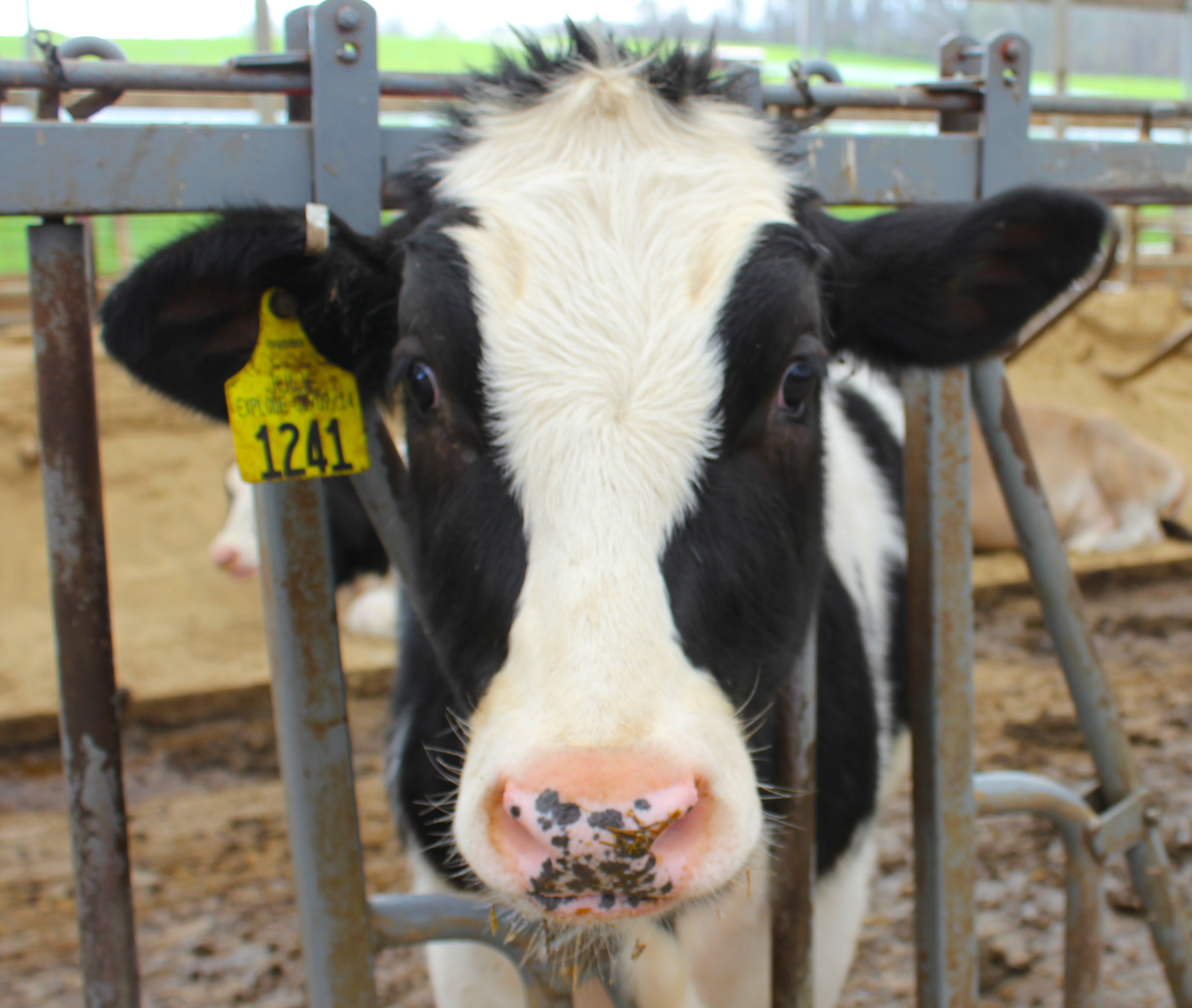
The Monster Inside That Will Never Be Crushed.

Today is my son’s birthday. He’s twenty four. He was, from the very beginning, a double-black-diamond child to parent. (Experts Only!) At birth, his forehead was marked with a bright yellow triangle. (Caution!) And when the hospital presented him to us, he came swaddled in a roped-off basinet labeled with a last-chance bailout. (Parent Area Boundary! Not Patrolled!)

Every morning when he was in high school—all four fucking ferocious years—I dragged my son from bed at least three times before he’d agree to wake up. After that, he would stand in the shower until fish in the Quabbin Reservoir cried uncle. Then he wasted 20-30 minutes arguing why anyone should have to wear shoes anywhere. I’d wrestle his shirttails into tucked-in positions while muttering a litany of ultimatums he never once regarded as threats to his life.

And then, we’d drive to school. I had already searched his backpack for contraband. I had already cleared my calendar for sure-to-come meetings with the Head of School, the Dean of Students, the Disciplinary Committee, and his advisor. And, best of all, I had already set aside some of his school work to read while enjoying a cup of tea.

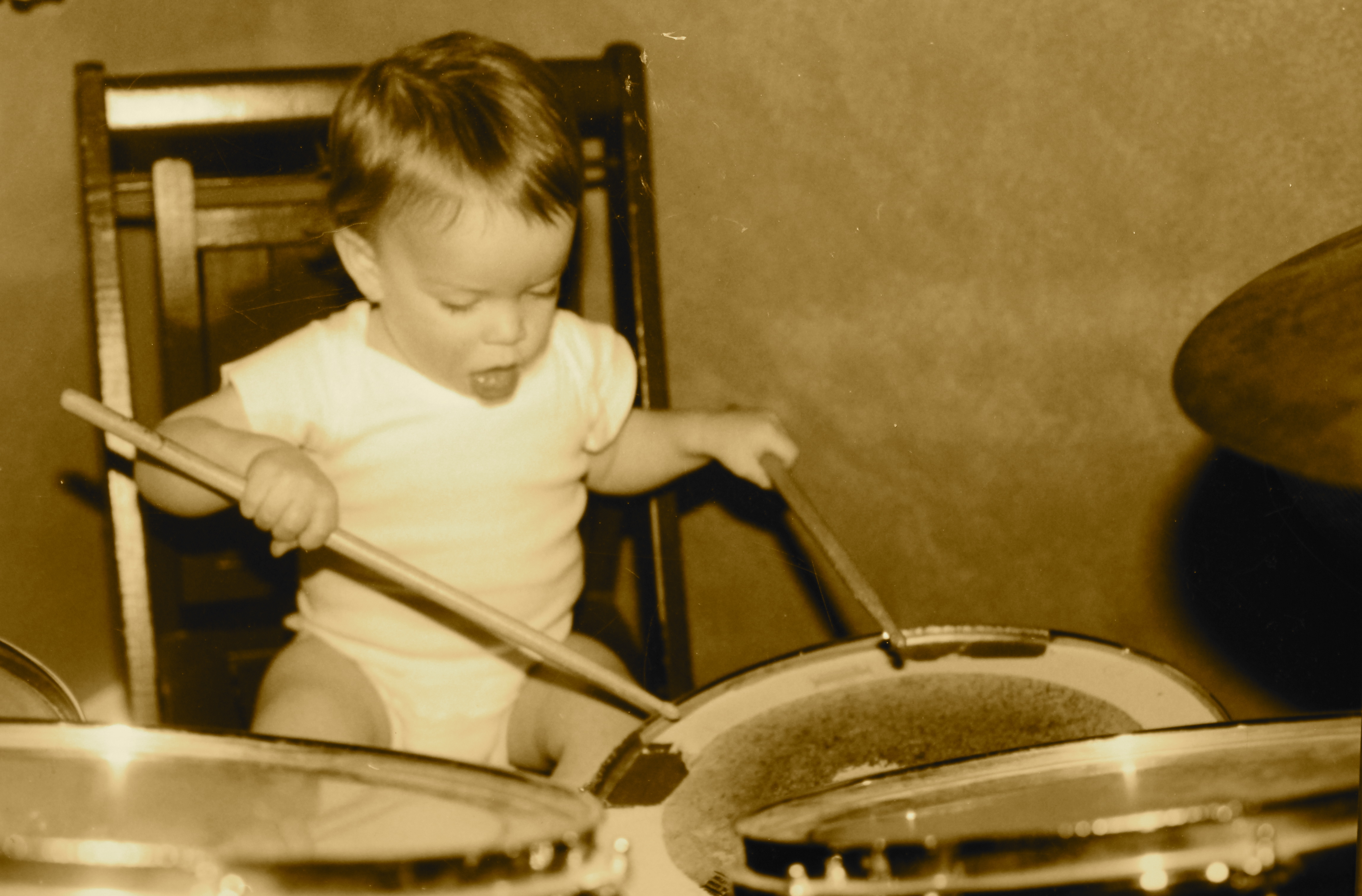
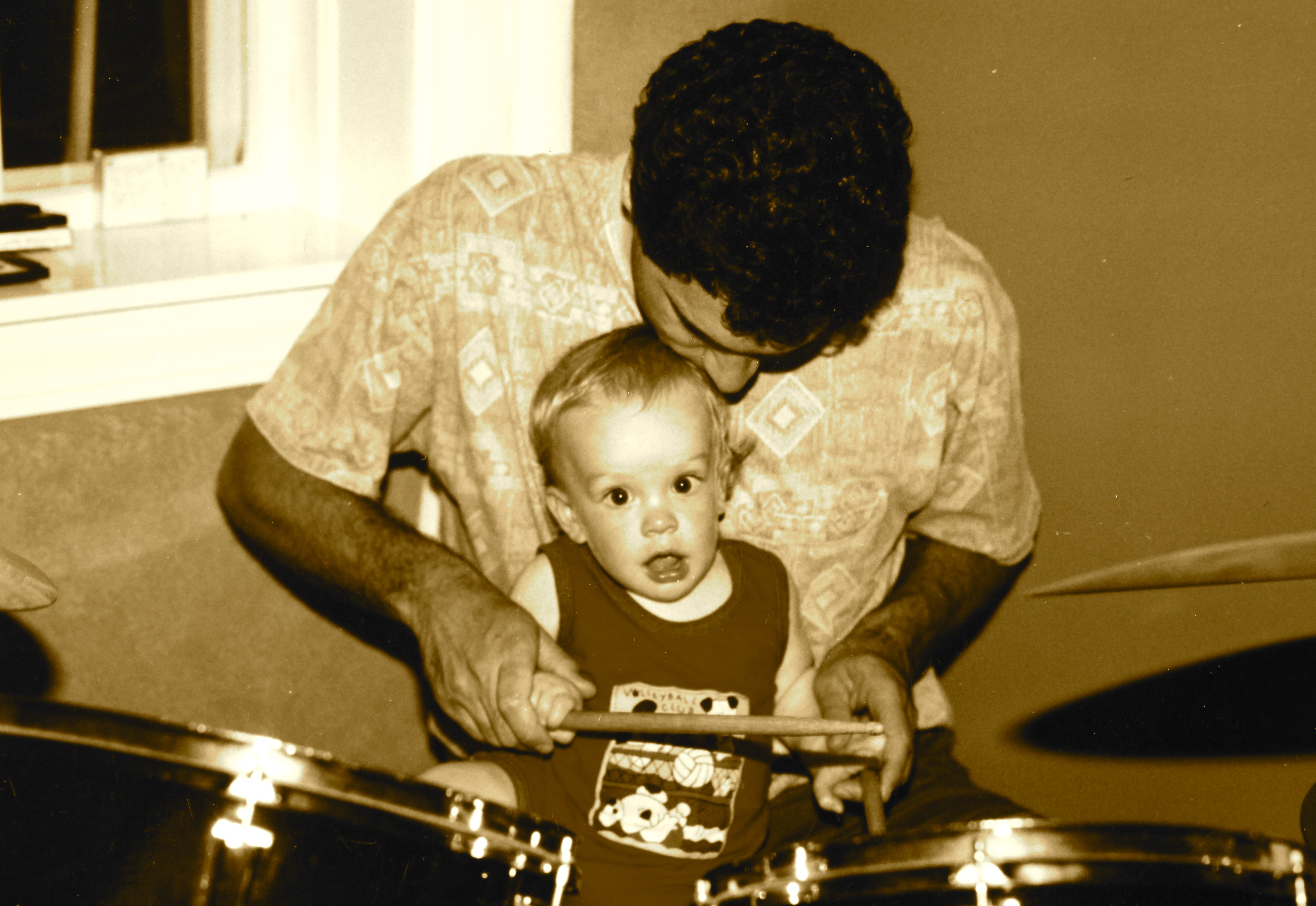
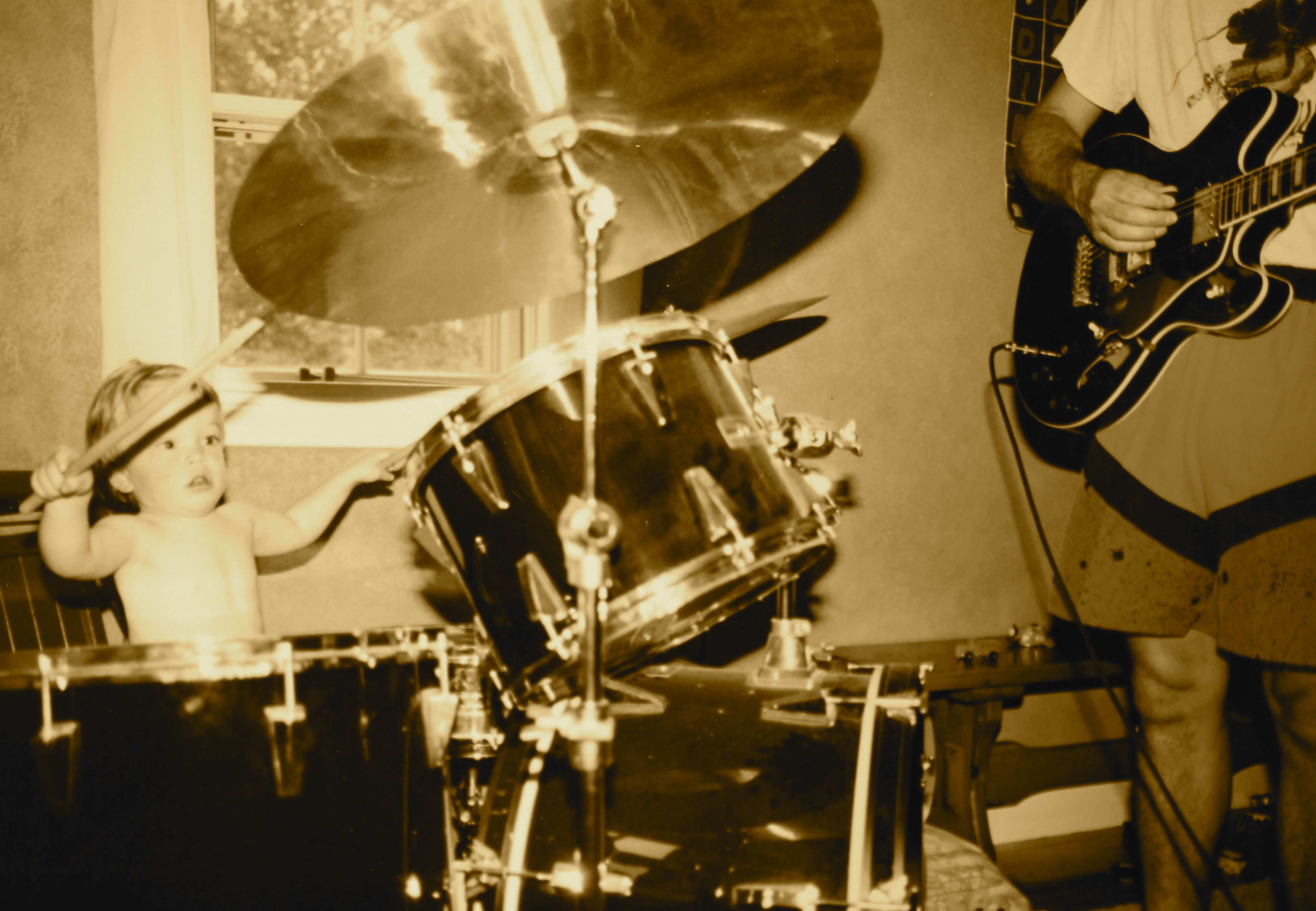
A lot of my son’s artwork—his drawings, his writings, and his musical performances—ignited disciplinary discussions and punishments. The troubles began by third grade when he came out as a manic reader and writer, a manic car and truck freak, a manic artist and cartoonist, and a manic, multi-talented musician. He accepted himself as he was and that was that.

We took him to his first monster truck show when he was four.

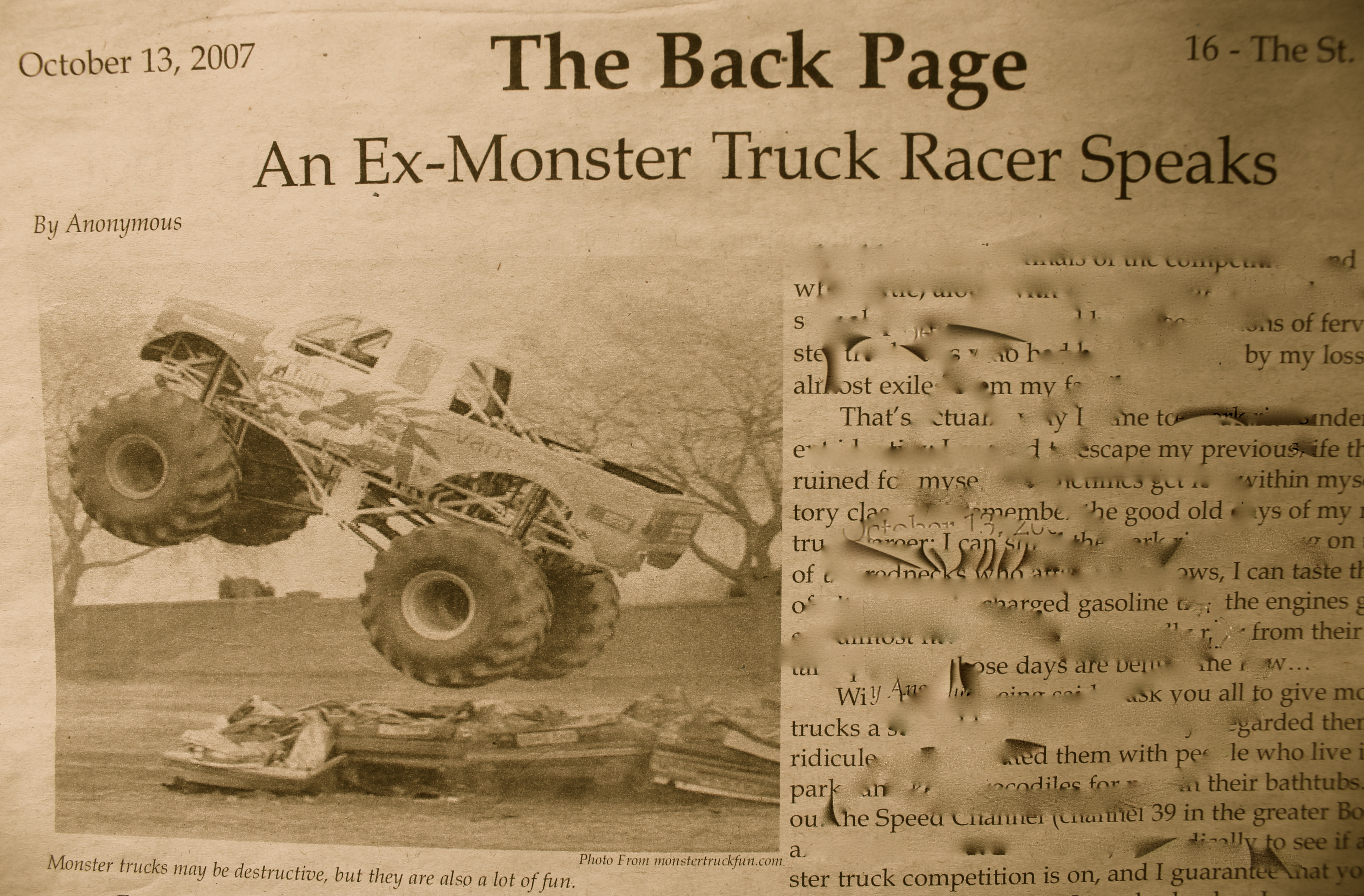
Ten years later, as a 14-year-old sophomore in high school, he wrote an article for his school’s newspaper encouraging the elite community of his peers to consider attending MTU (Monster Truck University) instead of MIT. It was one of the few works of art that made it through to the public without the censors hauling him off to the gallows in the town square.

I still derive pleasure from reading my son’s school work. I saved everything. In honor of his birthday, here’s his monster truck story, just for fun.

********
IMG_0352

********

An Ex-Monster Truck Racer Speaks  By Anonymous

Few of the festering beings that populate the bubble we live in have ever been graced by the presence of an ominous, looming monster truck. I still remember that fateful day, back when I was six years old and went to my first monster truck show.

As a wee lad, I could actually walk under the yellow caution tape withholding the beastly, leviathan trucks from millions of screaming, frenzied spectators. I could easily sit myself in the massive, hollow rim of the truck’s tire. I remember the experience so vividly, how I felt like an unborn bear cub resting snugly deep within his mammoth mother’s womb. At that moment in time, the monster truck and I were one, and the entire future of my life was decided. Some people as adults still haven’t found their one true love, their one true calling, but I am proud to say I found mine sitting in the 66″ Terra Tire of a monster truck when I was seven years old.

When I was nine, I drew up blueprints for my own mini-scaled monster truck. I spent every waking hour of the summer of fourth grade drawing these plans, and, using only duct tape, some WD40, the wood from a grove of oak trees I chopped down, and some granite I mined from Mount Wachusett, I built my own little state-of-the-art monster truck and was soon terrorizing the neighborhood.

When I was twelve, I was driving the Bigfoot truck—(only the most infamous, the most revered of all monster trucks)—in the professional monster truck circuit, the USHRA (United States Hot Rod Association) Monster Truck Nationals. Unfortunately, in an incredible twist of fate, the truck I was driving blew out its right rear tire when I was driving over a few school buses in the finals of the competition. I lost the whole title, along with my entire life. I was shunned in school, publicly accosted by those millions of fervent monster truck fans—all of them let down by my loss—and I was almost exiled from my family.

That’s actually why I came to prep school under a different identity; I needed to escape the previous life I had ruined for myself.

I sometimes get lost within myself in history class and remember the good old days of my monster truck career; I can smell the pork rinds sizzling on the grills of the rednecks who attend the show. I can taste the fumes of nitrous oxide-charged gasoline that the engines guzzle. I can almost hear the almighty, godly roar from their tailpipes.

But those days are behind me now…

With that all being said, I ask you all to give monster trucks a second look, especially if you’ve always regarded them with ridicule and associated them with people who live in trailer parks and keep crocodiles for pets in their bathtubs. Check out the Speed Channel (channel 39 in the greater Boston area extended cable network) sporadically to see if a monster truck competition is on and I guarantee that you too will be captivated just as I was back when I was a wee lad. Monster trucks have greatly influenced the outcome of my life and made me the person I am today—I want to share the gift of monster trucks with you all.

********

Go ahead, walk past the caution tapes you have tied around your heart.

IMG_0367

Excalibur!

IMG_0366

Reptoid!

********

IMG_0360

IMG_0358

IMG_0363

IMG_0359 2

********

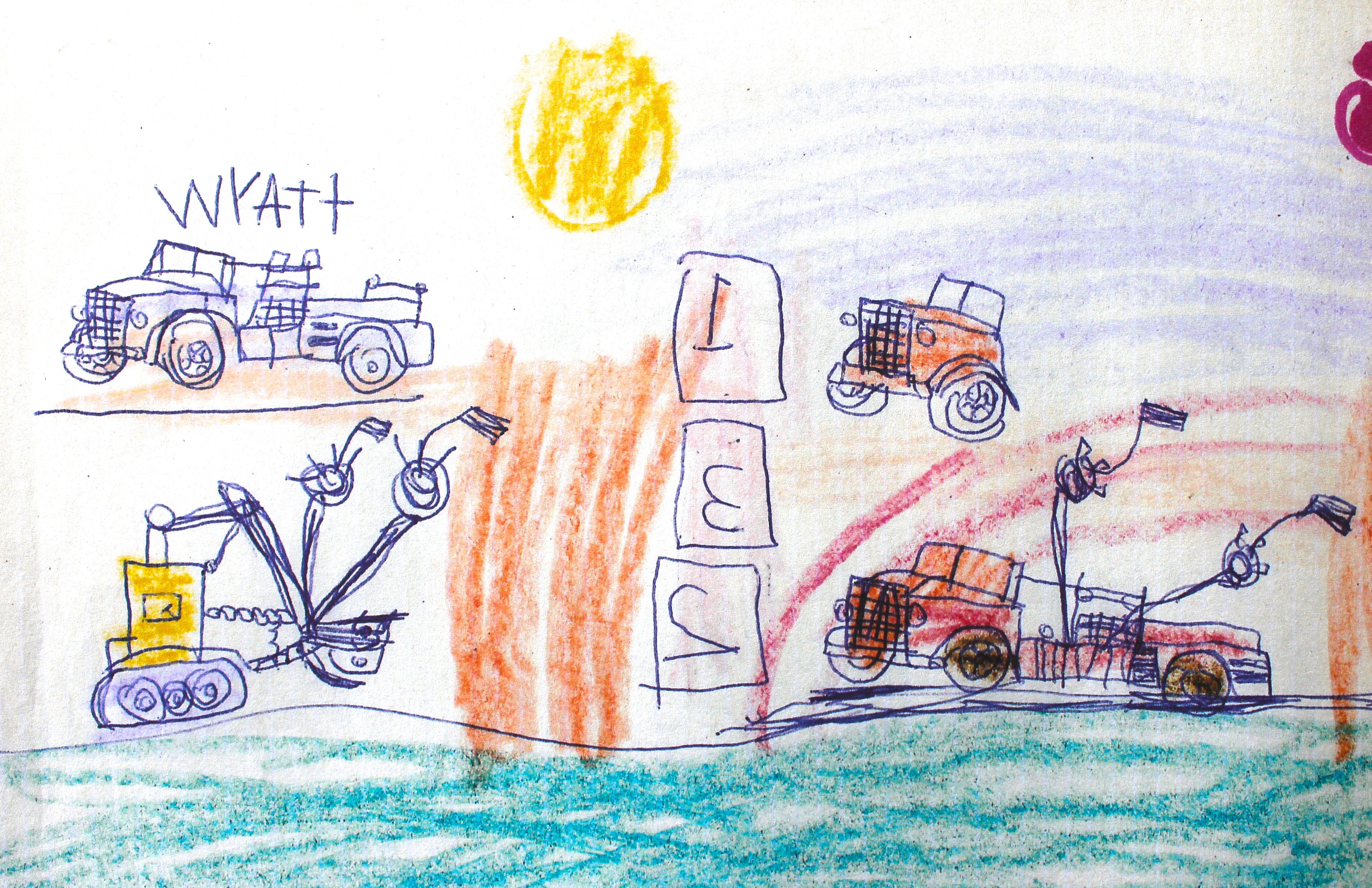
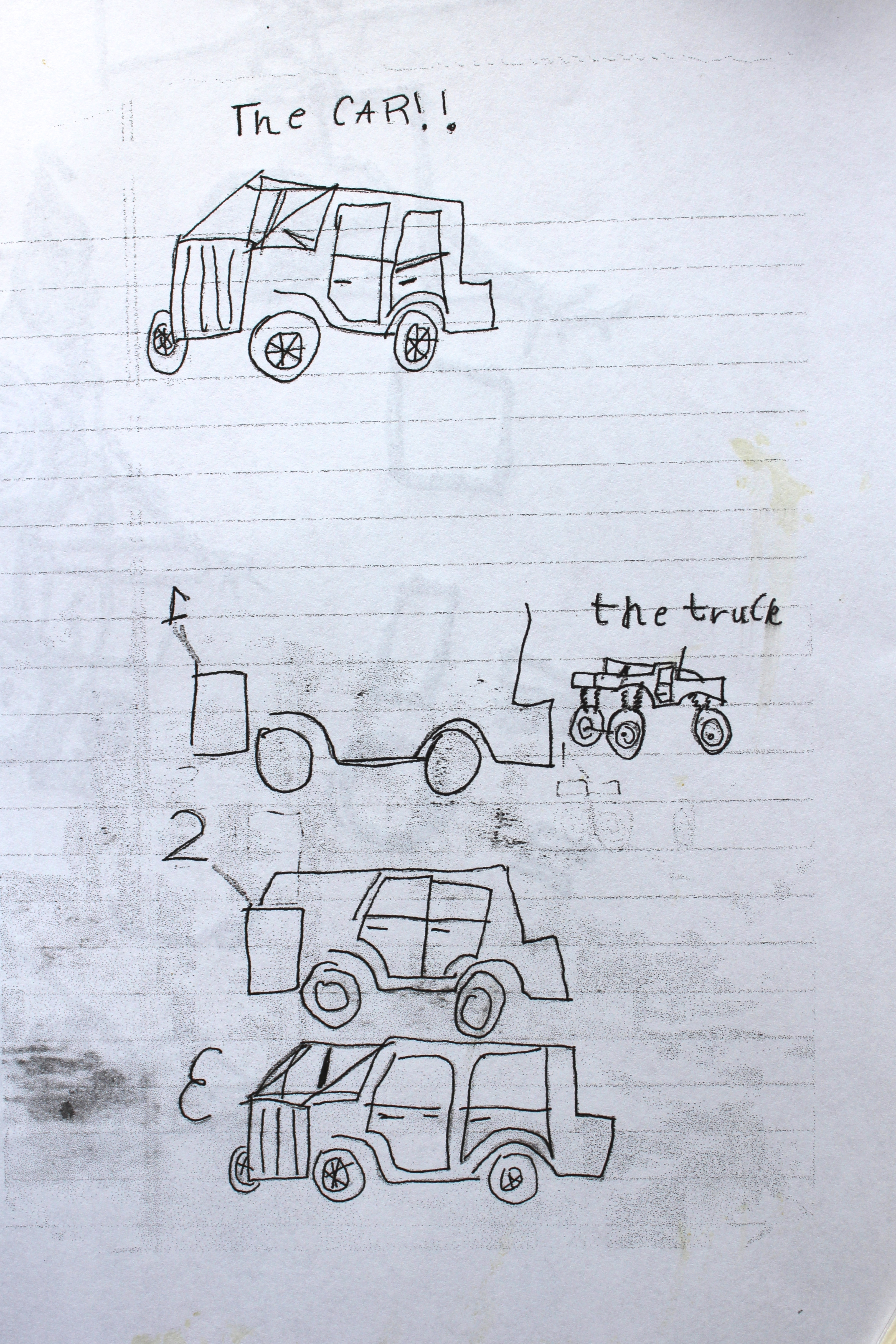
Before my son went off to kindergarten, I marveled at his drawings of cars and trucks.

“How do you know how to draw so well?” I would say. “I wish I could draw the way you do!”

And my son, taking my question to heart, would create “how to” drawings, with simple steps,

to help me (and anyone else) learn how to enjoy drawing cars and trucks!
IMG_0357

IMG_0356

By junior high, more and more elaborate trucks roared onto the pages of school notebooks.

IMG_0354

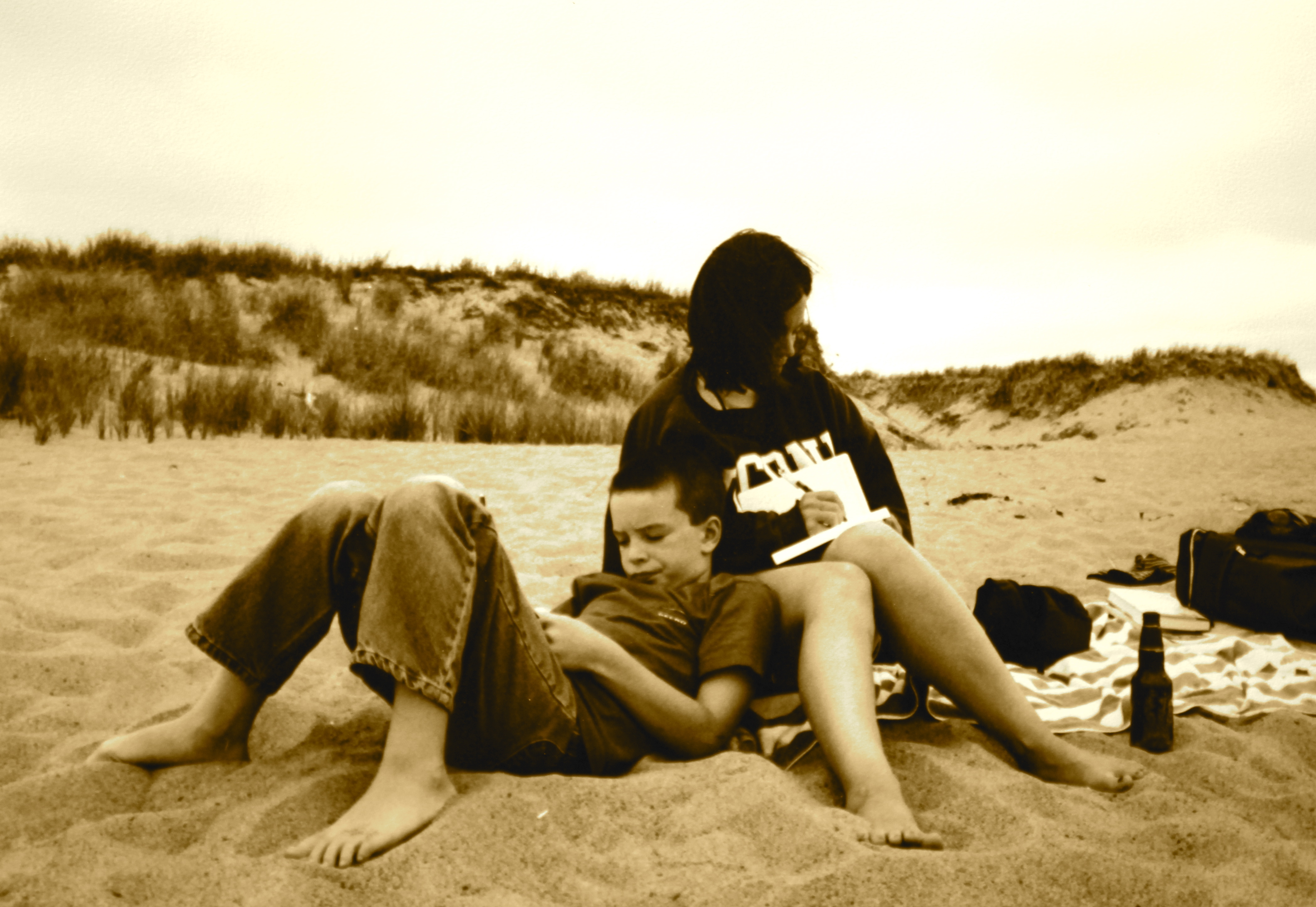
We always liked to read and write together.
IMG_0364 2

Happy Birthday to my son, a young man who has never abandoned his childhood passions.

IMG_4442

“We’re all going to die, all of us.

What a circus!

That alone should make us love each other, but it doesn’t.

We are terrorized and flattened by trivialities,

we are eaten up by nothing.”

A quote from Charles Bukowski, an unruly artist my son introduced to me.

********
A Midsummer Night’s Dream.

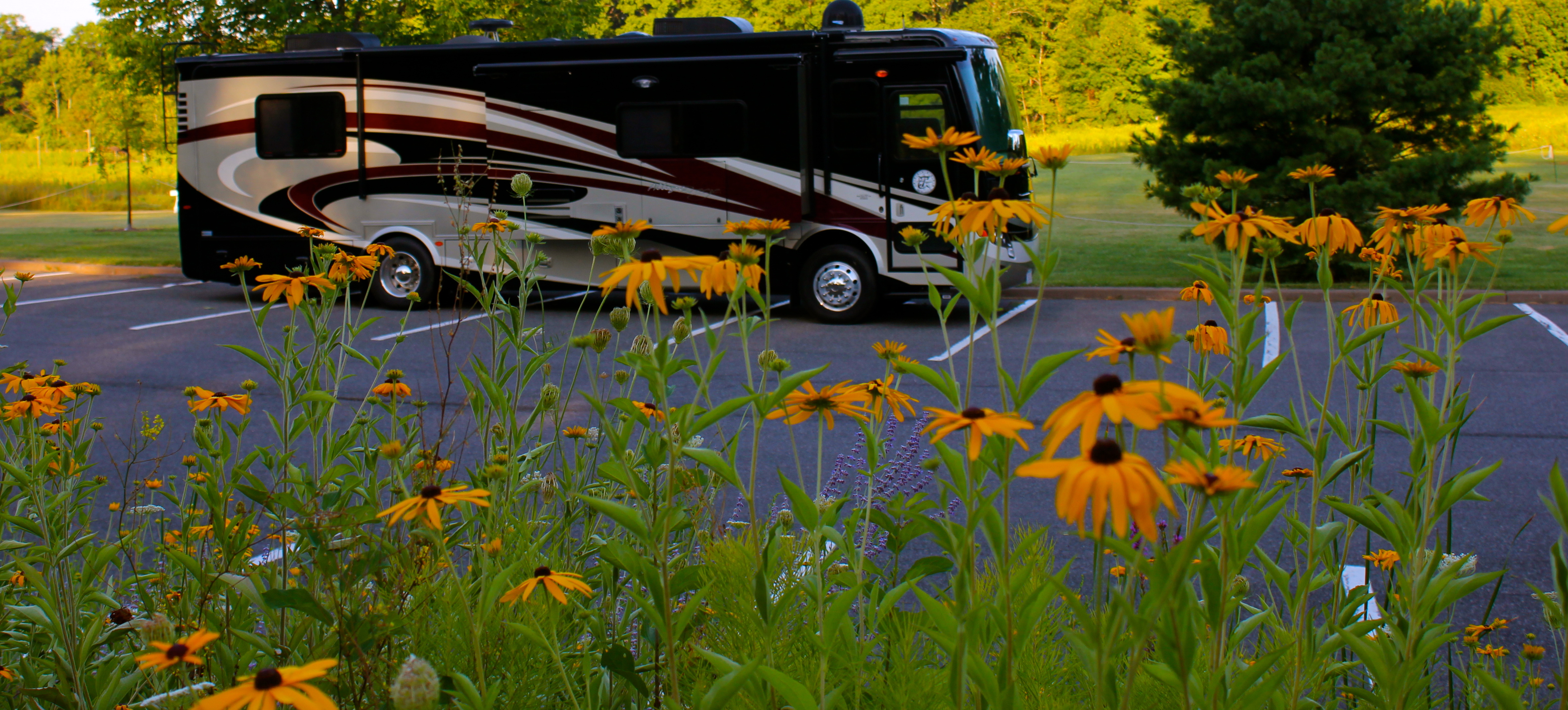
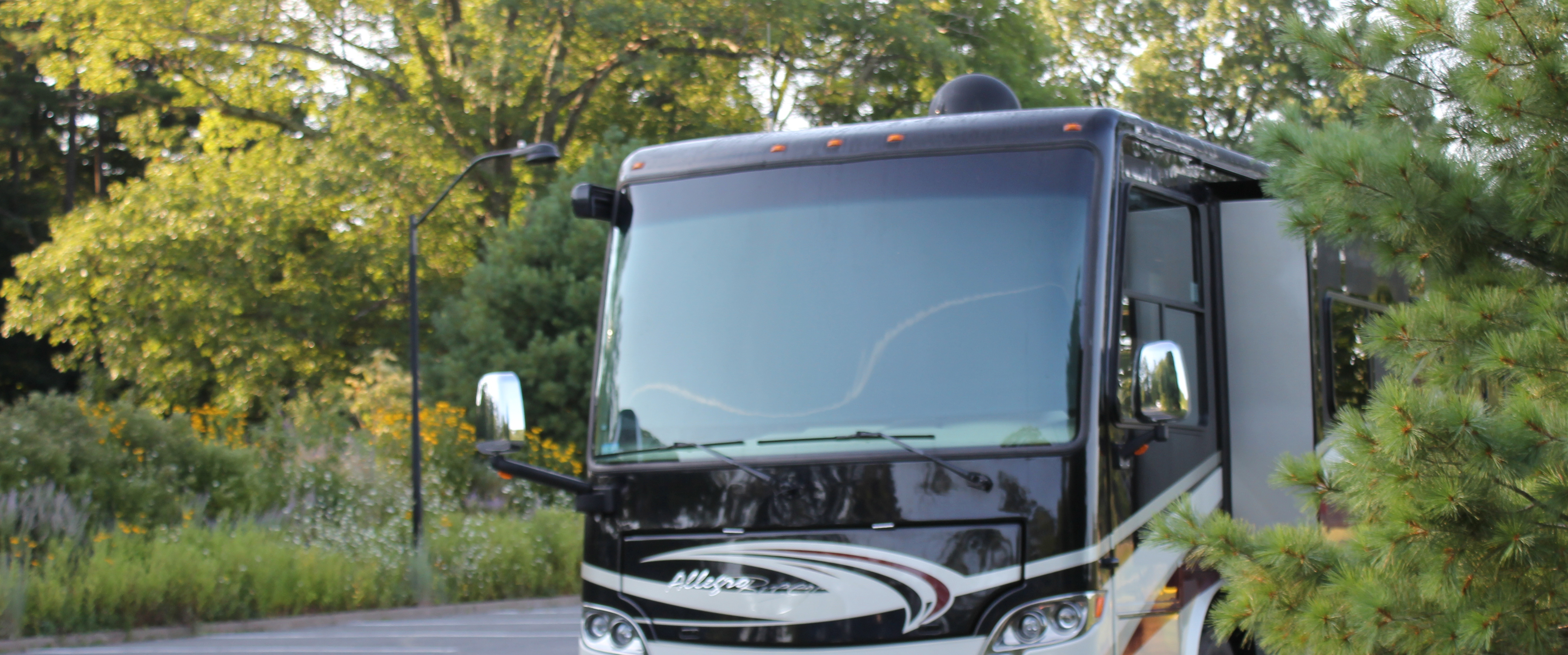
It was a hot August day, midsummer, when just before sunset a big bug (our motorhome) landed in a meadow at the edge of an enchanted forest somewhere along the Hudson River.

IMG_4509

The bug’s roomy belly contained sleeping quarters for human beings.

********
The big bug didn’t make a sound after landing, even as the insects in the meadow sang the loudest love song of all time,

Is Anybody Out There?

In spite of the noise going on in the meadow, and a dream that left me dancing with the saints, I fell fast asleep within the big bug’s belly.

The next morning, a brilliant sunrise awakened me.

IMG_4500

I put on a dress and went leaping into a field of flowers. Filled with wonder, I gathered up the edges of my dress and offered a prayerful bow to the Meadow Makers. It was a heartfelt, and—the deeper I dipped—dizzying curtsy. Oh! I winced—for I felt the world taking the curves a little too fast—my poor fragile mind! Perhaps I am still a little bit drunk! 

Upon righting myself among the flowers, and swatting away the stars flashing like fireflies over the surface of my eyeballs, a smile blossomed from the corners of my lips all the way up to where raindrops, no matter what the season, begin life as snowflakes. I pinched myself.

Methinks I’ve been bewitched, said I.

And after I said it, the flowers in the meadows swayed.

********
It all started at sunset the night before when a merry troupe of wandering musicians, summoned to tease and tantalize tango dancers of the Hudson Valley, sprang from behind the trees in the enchanted forest. Tadpoles in nearby ponds reacted to the fairy-dust-spangled revelry by tucking their tails inside their ears and covering their eyes with each the other’s tongue. Squirrels ran down rabbit holes and rabbits ate the beards off frightened hobbits. Roosters barked, birds honked, and plump woodchucks dangled upside down inside hickory nuts.

Tango dancers emerged from hideouts throughout the valley, ready to follow the merry wanderers to a tent in the heart of the enchanted forest. The tent sparkled with stained glass and gleaming chandeliers. Golden fringe hung from red velvet walls and ceilings. Glossy wooden dance floors shimmered.

Indeed, the shimmy to come would shatter the traditions of tango.

IMG_4400

IMG_4440

20150806_201731

The elite society of tango dancers donned their special shoes, lowered their sexy eyes, and parted their lips just enough to capture herds of forest dust mites, cast aswirl by the rising heat. Then, writhing around inside their sweaty bodies, the dancers slumped up against each other—squeezing the life out of their very own dreams—preparing to dance the way they’ve always danced, the way they were taught, the way everyone expected them to dribble their toes across the floor.

Until the troupe of merry wanderers began to play.

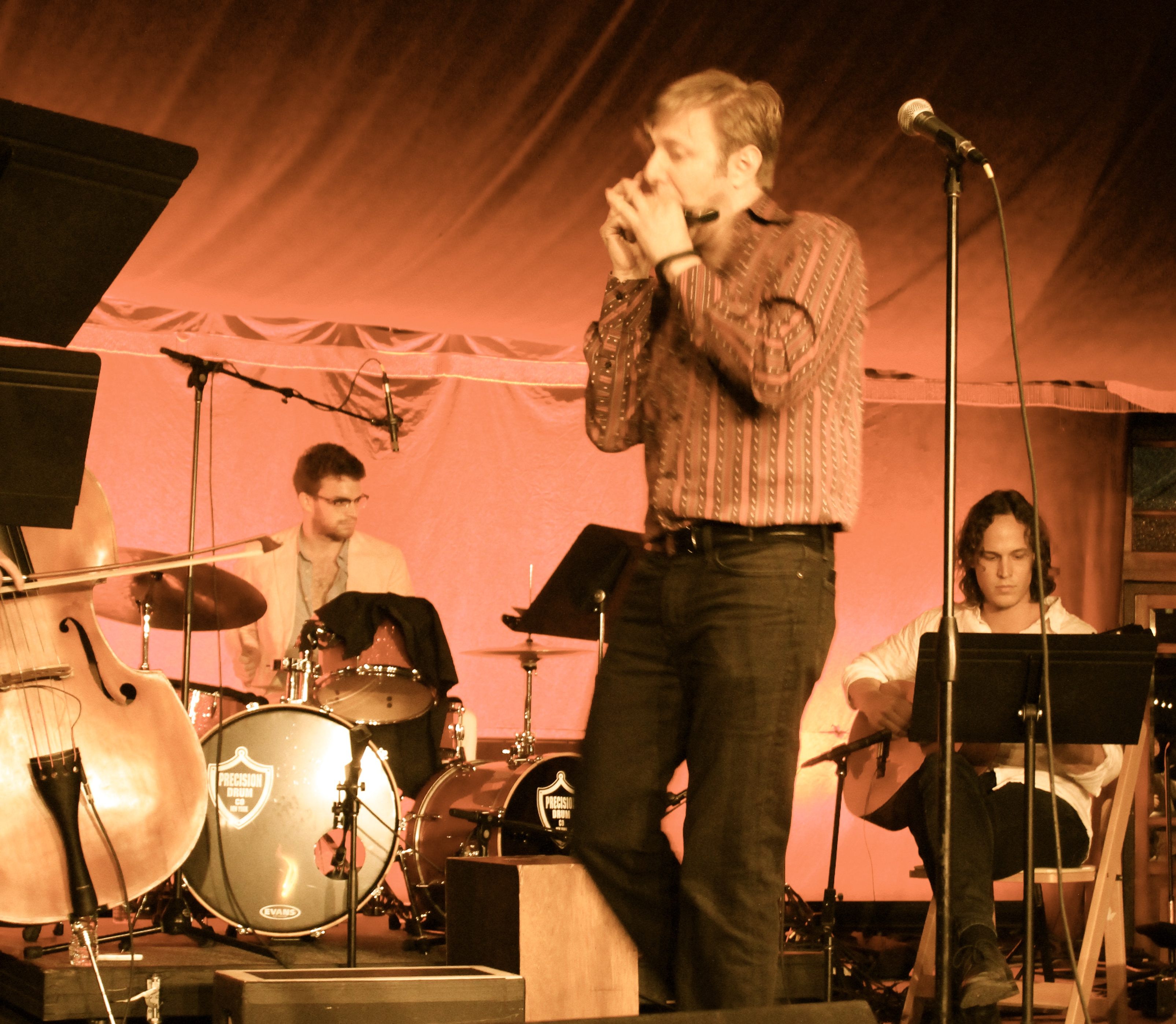
The goblins and elves and leprechauns on stage, snake charmed their harmonicas, pianos, violins, stand-up basses, guitars, and drums. Their joyful music-making answered all the insects, in all the meadows, in all the world.

Is anybody out there? 

The replies kept coming in melodious, mesmerizing doses. Hypnotic states of joy ensued and the dancers felt their hearts being rescued from sheltered cages. They watched as every willing heart was set afloat on the midsummer night’s breeze. Their spirits liberated, the dancers tangoed like freshly-kissed toads in the arms of legendary lovers.

The merry wanderers had done it.

IMG_4410

IMG_4418

IMG_4426

And when the merry wanderers flew from the stage, the dancers—a little boozed up and overly excited—tried to make the merry wanderers stay forever.

But it was all a dream.

The troupe had never played together before, some had never played tango, and they had only come upon each other that very night in the enchanted forest.

In fact, they barely had a moment to enjoy a bite to eat in the belly of the big bug before they disappeared into the woods.

IMG_4464

********

Later in the evening, a dancer discovered that I might have been the mother of one of the merry wanderers. She said, “You must have been a wonderful mother! They are all so talented and they play so well together and I hear they didn’t even have a chance to rehearse!”

Sometimes I was and sometimes I wasn’t a wonderful mother.

But if there’s one thing all wonderful mothers know, it is this: when you have a child, you give birth to dreams. But your dreams aren’t the ones that come to life.

Wonderful mothers learn that trying to trap lightning in a jar is a waste of energy.

IMG_4449

Once, my merry wandering child dreamed that he could make people feel happy, inspired, and brand new by playing music. He dedicated his heart and soul and body and mind to the quest.

On a midsummer’s night, I experienced his dreams coming true.

It felt wonderful to be his mother.

IMG_4445

The Slow Art of Finding Peace and True North.

Sebastian Smee is an art critic. He writes for the Boston Globe and he has been awarded a Pulitzer Prize for Criticism.

In the Boston Globe this week, there was an article written by Smee about the Maine Art Museum Trail. I looked forward to reading it, but by the end of the opening paragraph, I found myself terribly concerned for all the people who might read the same first lines and decide to anchor themselves forever to southerly, and most-convenient-to-Boston, regions of New England.

Smee had written: “There are two museums on the Maine Art Museum Trail that have so far eluded me: The University of Maine Museum of Art in Bangor and the Monhegan Museum of Art and History. The first—sorry Bangor—is too far north of Boston. The second is on an island—and that’s just inconvenient.”

********
THROW OFF THE BOWLINES!    SAIL AWAY FROM THE SAFE HARBOR!    (Mark Twain, I think.)

********

Bangor is not too far north. I promise. There is, as mentioned in Smee’s article, The University of Maine Art Museum to see up there. But there’s more. For instance, if you want to visit many of the places that inspired the art all along The Maine Art Museum Trail, keep driving down east to the coastline beyond Bangor.  You’ll find Acadia National Park plus a culturally distinct region of the world.

All you have to do is turn off the GPS and follow your nose. The scent of the sea, or at least the marvelous stink of a dramatically displaced low tide, will lead you to unexpected life-changing experiences such as the pleasures of being a spectator for the Women’s Skillet Toss at the Blue Hill Fair. This rowdy event fills the grandstands and it’s authentic Maine through and through, so even though you risk getting walloped upside the head by an errant iron skillet, you are not required to wear a helmet in order to attend the show. Women competitors are classified as Kittens and Cougars. They fling iron skillets as far, and as straight, as possible. Some of them can send those old iron workhorses sailing further than a soldier’s dream for a home-cooked meal! The Blue Hill Fair pleased E.B. White so much, it inspired many of the story lines and settings for one of the world’s (and my family’s) all-time favorite books, Charlotte’s Web.

As for Smee claiming Monhegan Island is just too inconvenient to visit, allow me to transform the idea of such a journey into something desirable, convenient, and perhaps necessary to your passage through life here on Earth.

IMG_3819

********
Let’s start with a time warp…the year is 2007…Labor Day weekend…I am Mother to a 15-year-old son beginning his junior year in high school and a 12-year-old daughter ready for college instead of middle school…both children are willful, independent rapscallions…we are bound for a campout on the coast of Maine and plan to take a day trip to Monhegan Island…Raffi music in the camper has been taken over by Hendrix…it is painfully inconvenient for my husband and me to travel with our teenagers…it is more painfully inconvenient for said teenagers to travel with us.

Places like Monhegan Island help counterbalance the laws of nature and the laws of technology in our tense and complicated modern world. You might not be suffering through the throes of parenting (or any other situation of nature-determined, unconditional love), but perhaps you are afflicted with the side effects of Blindsided-TechAlien Abduction. In other words, there’s a chance you’ve been abducted by technology aliens and don’t know it. The aliens are so charming and so invisible, you haven’t noticed how conveniently they have settled into your life. They eat with you, sleep with you, make decisions for you, and then they steal your identity, your attention span, your creative impulses, your freedom, and your ability to look UP and OUT.

Monhegan Island is small—only about one mile from end to end and side to side. There are no paved roads and not many cars. You ride a ferry boat to get there. Travel by foot prevails once you are upon the island.

Here’s what happened when our modern family went to Monhegan Island, as recorded–by hand–in my unedited travel journals:

Sunday, September 2, 2007. En route to Monhegan Island. At last. We won’t have a lot of time there. Two porpoises leapt along our port side as we left Boothbay Harbor. Best snack in the pack today was made by the kids: graham crackers with nutella, peanut butter, and 2 squares of Hershey’s. I read Checkhov’s short story, The Lady with the Dog, during the ferry cruise.

We made landfall at 11:05. Our crossing cut through calm seas under outrageous summery-blue skies. Stopped at The Barnacle after getting off the boat to find out what the local shop had to eat. We got two cups of clam chowder (with extra crackers) and one blueberry scone.

We sat under a stand of sunflowers to eat the chowder while bees flew orbital patterns around and around and around.

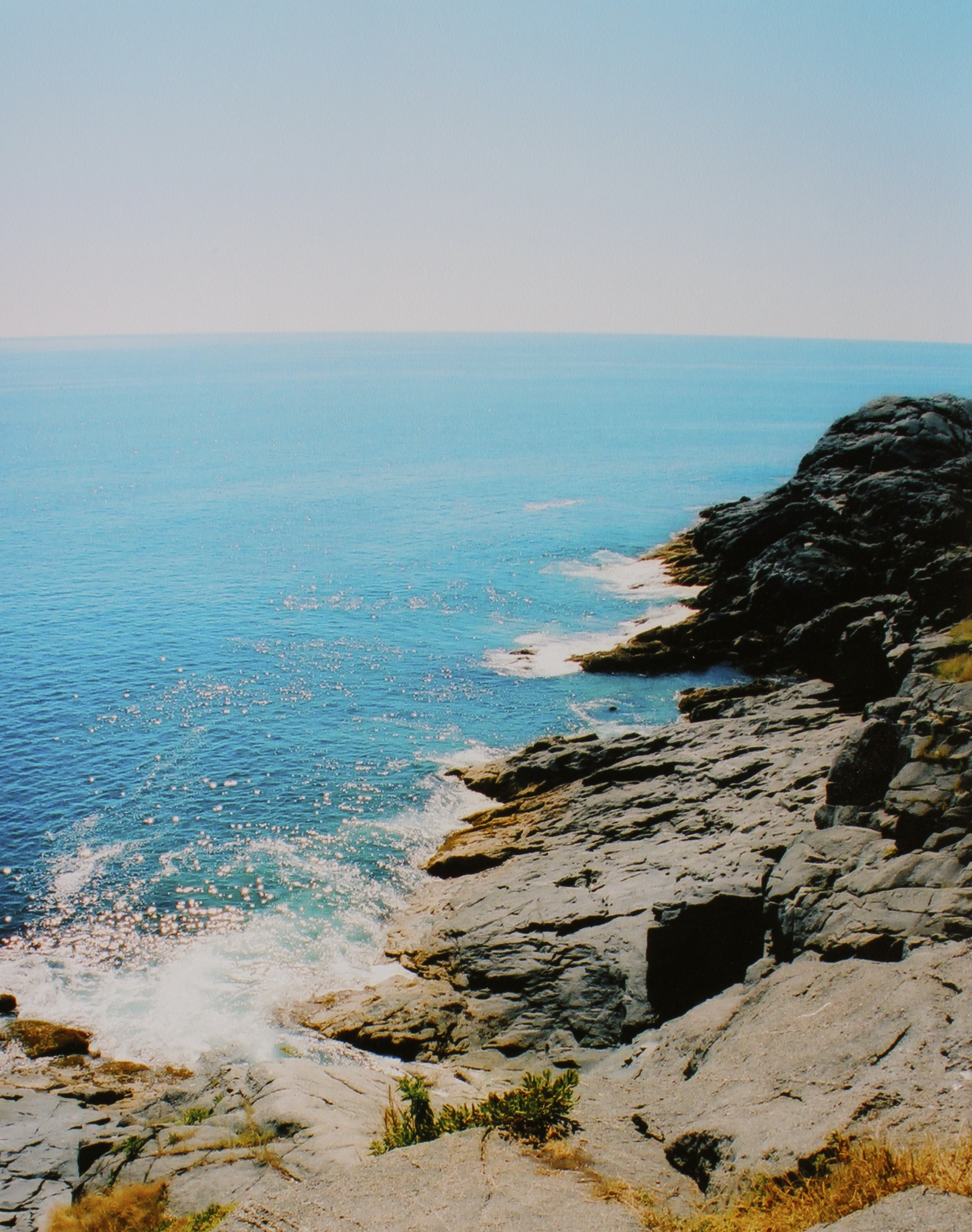
We set out walking. Burnthead Trail to Cliff Trail and then lost our way a bit to Cathedral Pines. Breathtaking views. You can see all the way out to where the water falls off the edge of the earth. The perches on this little island’s cliffs are not so little. I don’t know how high up we were, but it was high enough–rugged and rocky–and I didn’t like when the kids chose to stand close to the edges. They are hiking barefooted. I read the warning in the Visitor’s Guide out loud to my family. It sounded more like a work of dramatic fiction or an ancient myth, though. Rather than encouraging caution, I think my reading inspired a heroic contest of becoming a sole survivor:

     “Don’t try to swim or wade at Lobster Cove or any area on the back side of the island. Undertows there are unpredictable and dangerous, and high surf can sweep you away if you’re too close to the seas. No one has been saved who has gone overboard on the south or east sides of the island. Always keep a bulwark between you and the sea whenever viewing the surf.”

Picnicked in a stunning setting where the world could not be more scenic, nor life more idyllic. This is true even for a family filled with angst that can barely talk to each other.

I was happy to move away from the cliffs and enter the safe and soundless pretty moss woods at the Cathedral Pines trail. The moss must have felt dreamy to my barefooted hikers. Christmas trees adorn the trail as do the infamous neighborhoods of fairy houses constructed throughout the woodlands. We stopped to admire the imaginative handwork. Some houses had tables set with dinner in acorn bowls.

We walked on and on until we found ourselves busily pressing little sticks into the ground and balancing dried leaves atop them. My daughter built a fairy house next to a stream. My son built a fairy house perched perfectly in the crooks of roots at the base of a big tree. I built a small hut in between the two. My husband traveled from house to house to help with the fun.  We concentrated intently and quietly at our works of art for a long time in the cool and bug-free forest. 

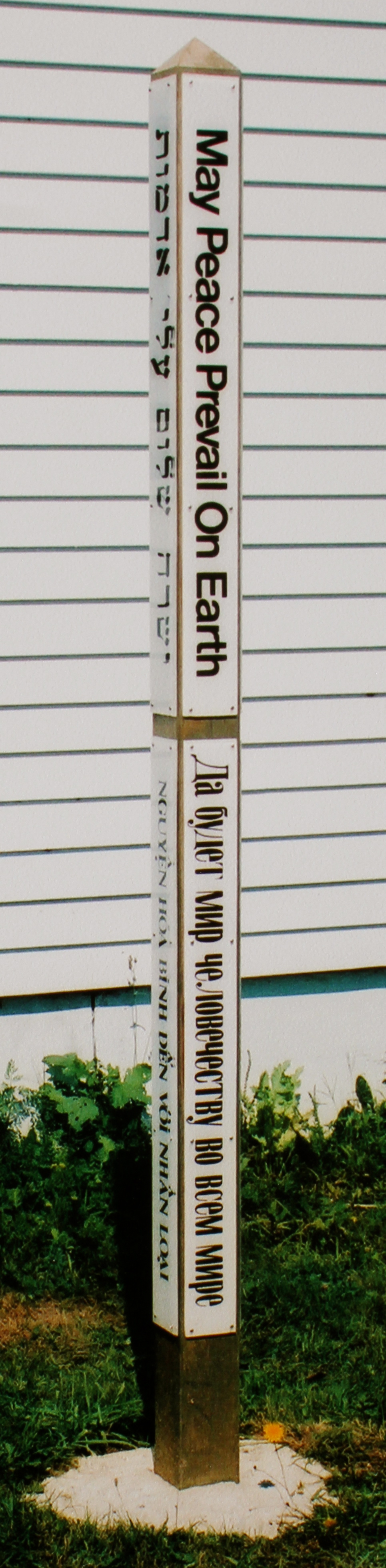
After we were satisfied with our fairylands, we walked back to the wharf, passing the island schoolhouse where there is a peace pole with the words, May Peace Prevail on Earth, written in several languages. A big wish from such a small island.

Before the loud blast from the ferry sounded a warning for departure, we had time for one more stop at The Barnacle. We got root beer, ice cream, and a fruit smoothie.

Returned to camp by 7PM. Both kids were good and dirty from hiking barefoot all day. Everyone cleaned up for the campfire. My husband and my son played guitar. Before bed, another camper stopped by our site to thank us for the music. She said it reminded her of her father and how he used to play guitar during her childhood campouts.

IMG_3820

********
One way to get to Monhegan Island is to take the ferry from Boothbay Harbor, Maine. A great place to stay is Southport Island, which is just beyond Boothbay Harbor, over a swing bridge. If you want to camp, there’s a campground there called Gray Homestead. If you want to rent a cottage, I recommend “An Tigin”, which you can find on VRBO or HomeAway. “Cheerful Southport Island Waterfront Cottage” might come up in an Internet search for “An Tigin.” The cottage is quaint and clean with good vibes of hard-working history and devoted love.

The Coastal Maine Botanical Gardens are nearby for another day trip. The best children’s garden is there–it is designed to encourage fascinating and fabulous fun. It succeeds famously.

Just down the road from the Coastal Maine Botanical Gardens, there is another swing bridge at the Trevett Country Store and Post Office. This swing bridge is operated by hand! According to my husband, the Trevett Country Store has the best lobster rolls. Southport Island has a country store, too, and their lobster rolls are good. So are their cupcakes! They also have a good selection of wine.

The Southport Public Library has a pretty cool butterfly collection. And the Hendrick’s House Museum has a letter written in perfect penmanship by a woman to her husband while he was serving in the Civil War. Not only did he receive the letter, but the letter survived the war. The survival of perfect penmanship has not fared so well.

Nevertheless, the slow art of finding peace does survive in places like Monhegan Island where leaving behind the conveniences of life—the car, the technology, the scheduled activities—isn’t inconvenient at all.

In fact, it’s restorative.

Slow days bring us one step closer to finding, and believing in, our own true norths

********
IMG_3821

For My Children, after Mother’s Day.

IMG_1164

Now the early mornings are warm and the grass is soft again.

I wear every leaf on the garden paths, woven together with all the others, for garden slippers.

No pair is perfectly matched. All are left behind with every step.

Earthy dew zaps my feet, washes them, startles the heart and composes a hymn.

*****
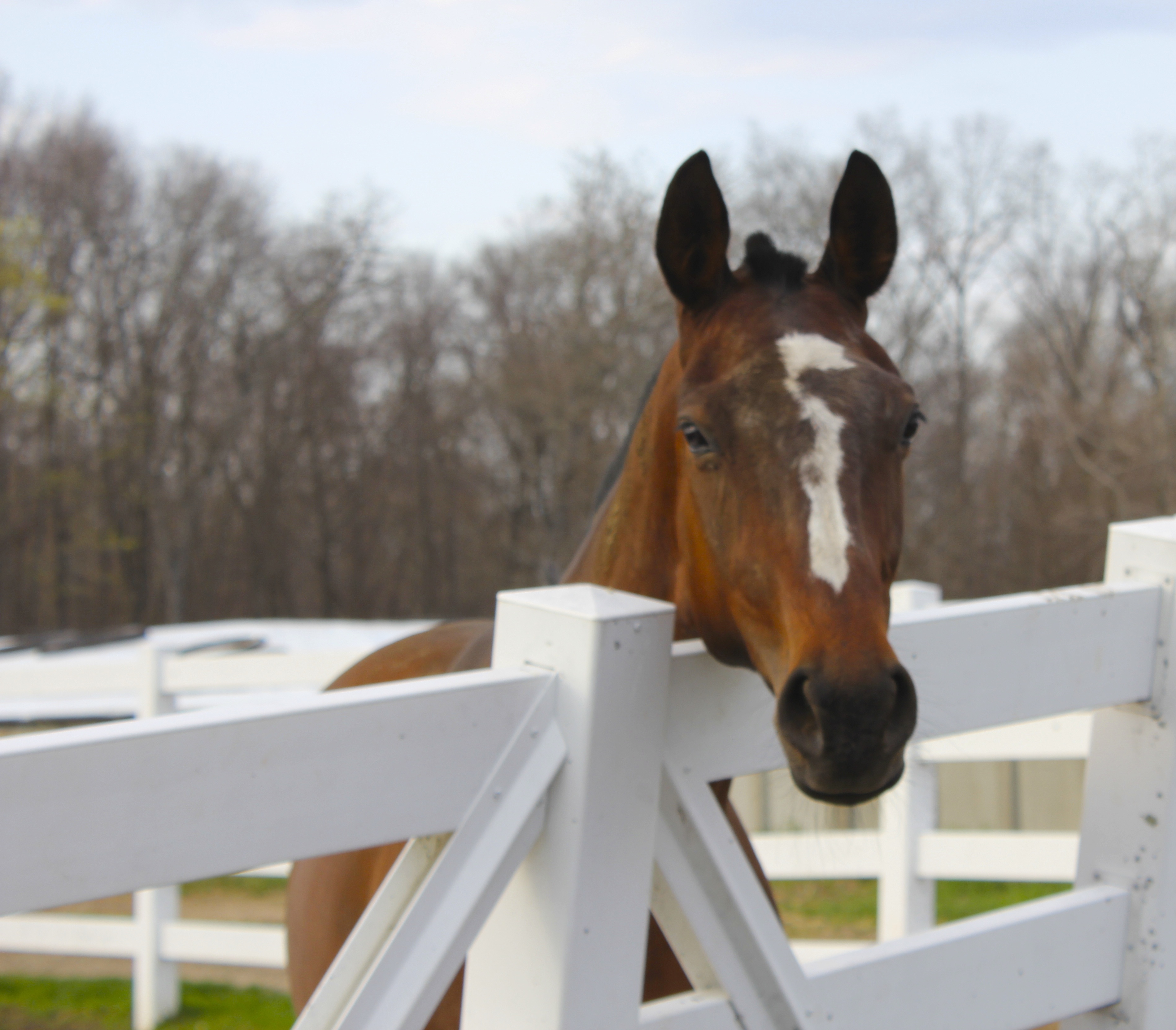
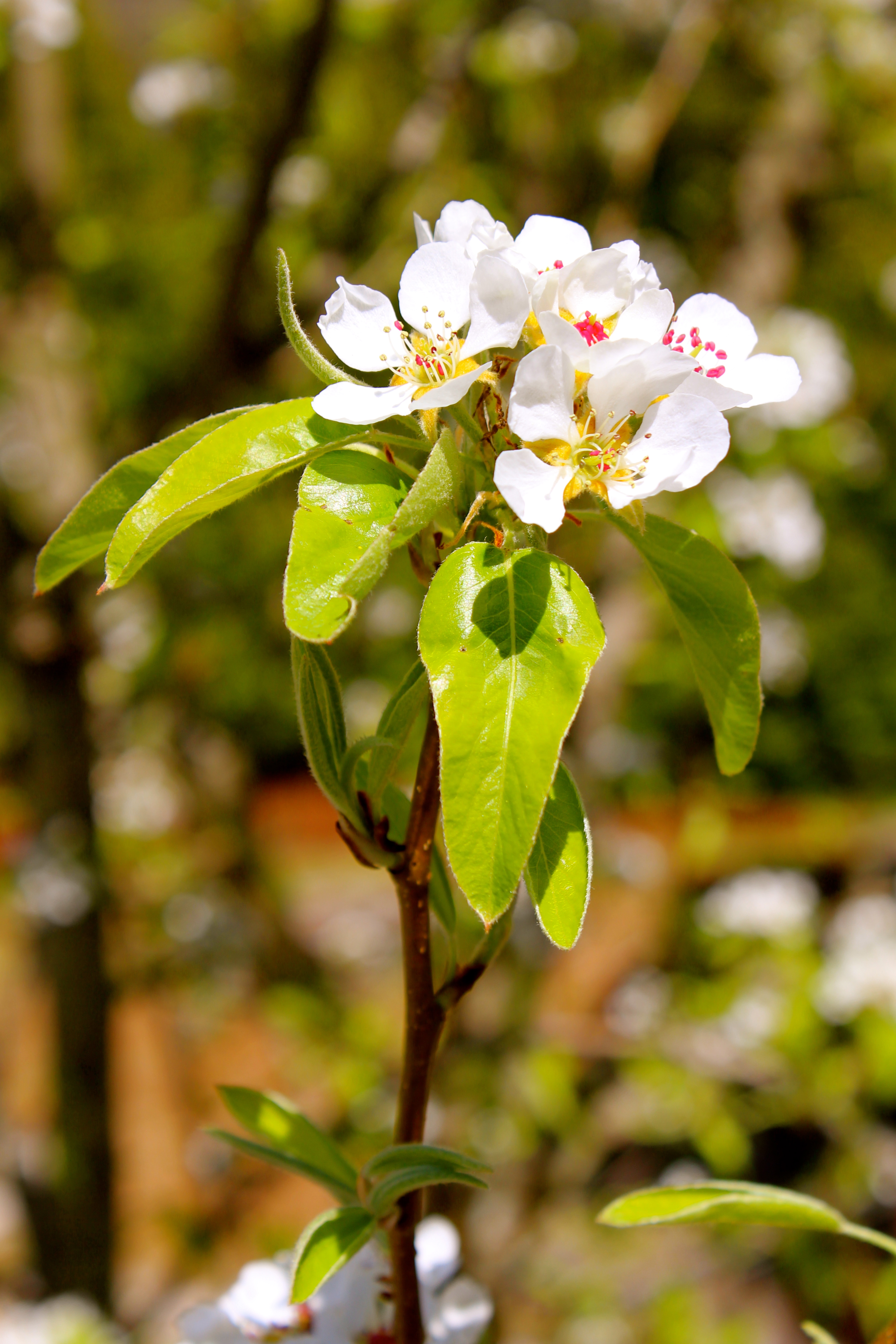
The sun rose a long distance east of the pear tree,

warming the Earth and waking up the air

which took flight from the still night

like invisible wings, gliding out of sync on unmapped airways.

The breathless sighs blew soft as fluttering eyelashes on sleepy schoolchildren

who wished to be out of doors on this day

out of classrooms.

IMG_1158

IMG_1159

The kingdom should set children free on such a day as today

when invisible magic carpets will steal them away

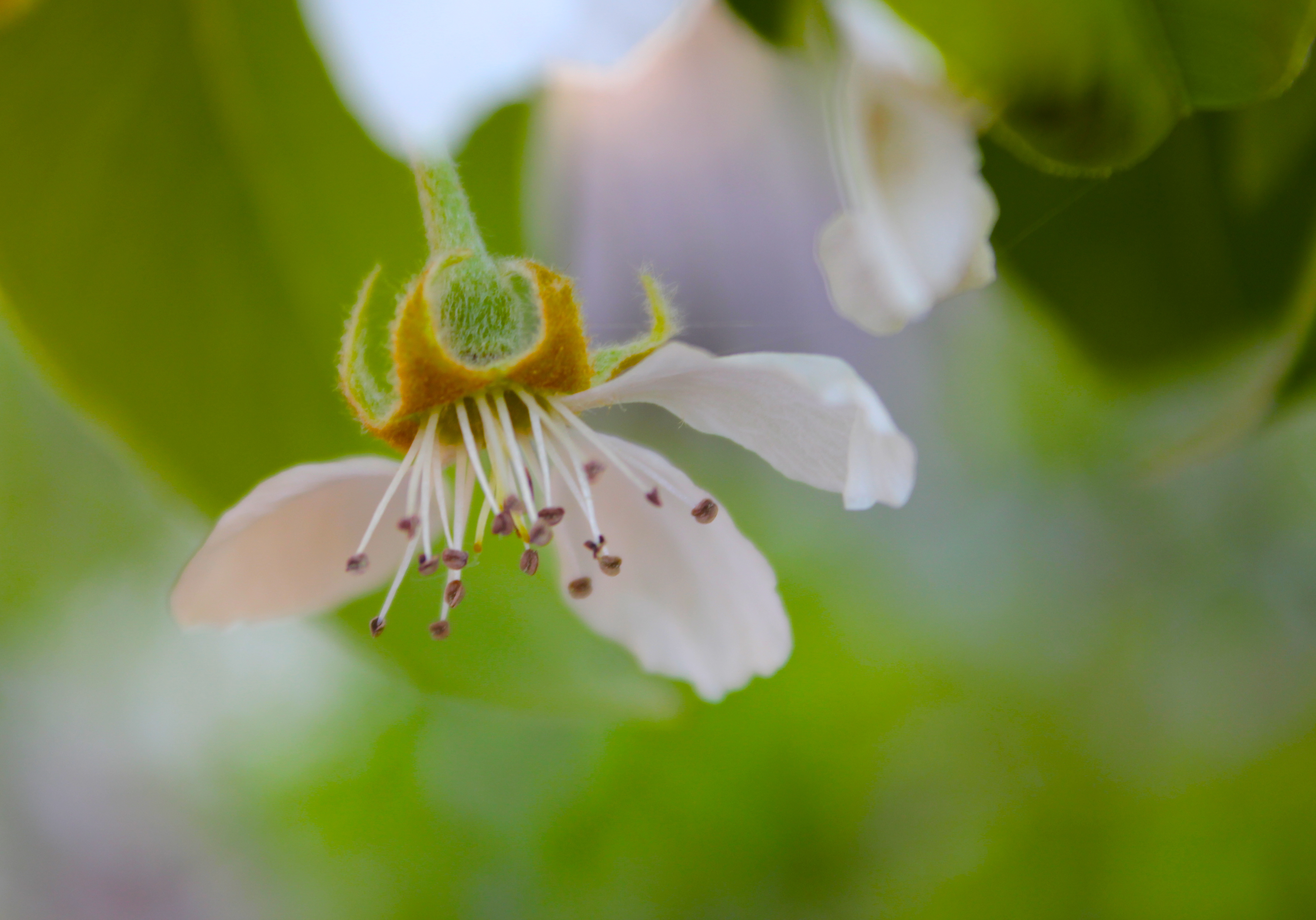
when the petals of the pear tree blossoms will fly into their ears and onto their tongues

and leave stars on the tree.

When the children will run

or gather into tribes around the lilacs

and look down to find ants,

look up to the bee, with pollen stored into travel packs on minuscule legs.

When everywhere, the breeze says nothing

and the robin stands next to my cup of tea showing off a beak filled with nest-building materials

all foraged from Earth.

It is all fiction when we talk about it in the classroom.

*****
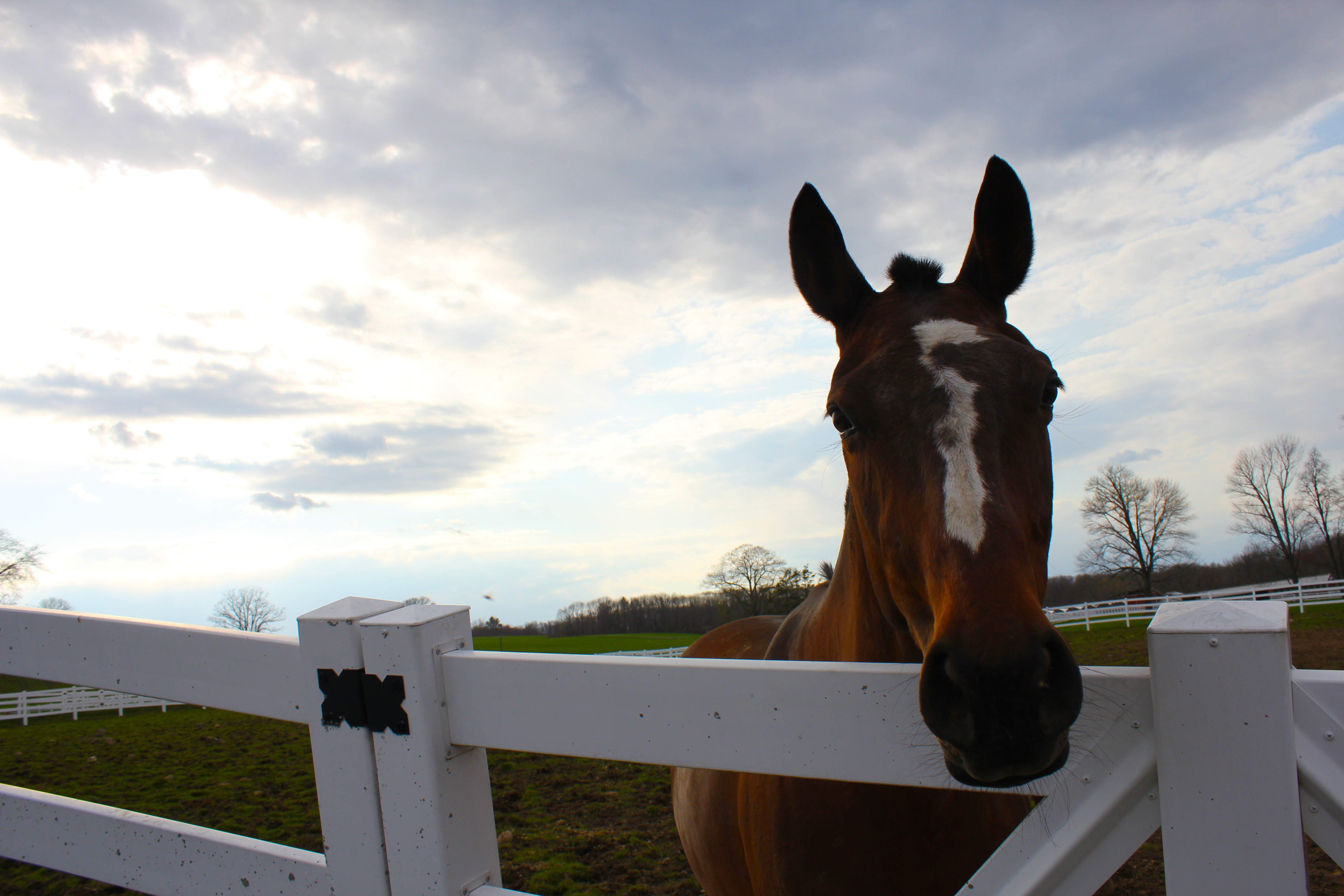
Remember when you were unafraid of your dreams!

Remember climbing into the tree and watching how the twig grew a flower

and the flower grew a fruit

and the bee made honey!

IMG_1162

Remember spending all day building nests, using your mouths

how you stood at the edge of the nest

and I watched you fall

my tears concealed underneath the stars on the pear tree, ripe.

And when you returned, eyes bigger, bellies full,

brains buzzing, chirping, and brave–

I fed you pear bread, with a dollop of pear jam.

IMG_1218IMG_1219

All the things I made,

from the tree I grew,

because your father was once a little boy who lived on Pear Tree Drive

And after I loved him,

I had you.

That Recurring Nightmare About Final Exams.

music-graphics-rockstar-110897

Everyone has their own, unique “worst nightmares.” Here’s one:

“I meet Rock Star Hunk on a romantic beach in the South Pacific. He talks to me. I smile. He says, ‘You have a leaf of lettuce dangling from the tip of your tongue and a poppyseed stuck between your two front teeth.’ He reaches into my mouth and plucks away the lettuce, then goes after the poppyseed, loosening the caps on my two front teeth. Drool drips from my tongue. Rock Star Hunk cleans his hand in the surf and while he’s not looking, I rearrange the caps I bought at the Dollar Store onto my teeth. There’s a shark. It strikes, taking off Rock Star Hunk’s hand in one chomp. Rock Star Hunk bleeds to death and when the shark smiles, there are poppyseeds stuck between every blood-stained tooth.”

Here’s some more worst nightmares, but these ones are not unique. If you attended college or university, chances are these bad dreams have revisited you through the years that have come to pass since those halcyon days of your youthful education. The nightmares are souvenirs of stress. They remind us that higher education wasn’t always idyllic. It was often frantic:

“I dreamed I showed up for my final exam and it was the wrong exam because I never attended the class.”

“I dreamed I slept through my final exam because I was taking speed the night before to study.”

“I dreamed I never got my college degree because I forgot my name, my social security number, and my purpose in life and I was so hungry, (because I’d been chewing on coffee grounds for days and days), that I ate my exam blue book and my #2 pencil, which I forgot to sharpen.”

*****

It’s final exam season again. It’s also springtime. America’s best and brightest students are under the guillotine. The blade is menacing—reflecting cruel combinations of warm sunshine mixed up with disheartening distress. This ritual of brain growth—study, pass, or hand over your head—has been happening for a long time. But every generation is convinced the pressure has never been so intense, so unreasonable, and so unmanageable.

Stress can lead to some serious mental breakdowns. Most of us can laugh–now–at the recurring final exam nightmares that harass us. But hopefully we haven’t forgotten how it felt to believe we were about to ruin our entire lives, because we weren’t prepared mentally and physically to endure the pressure of finals. For a lot of students, stress must be managed in tandem with other mental, physical, and social challenges.

It has never been easy to be a college or university student.

*****

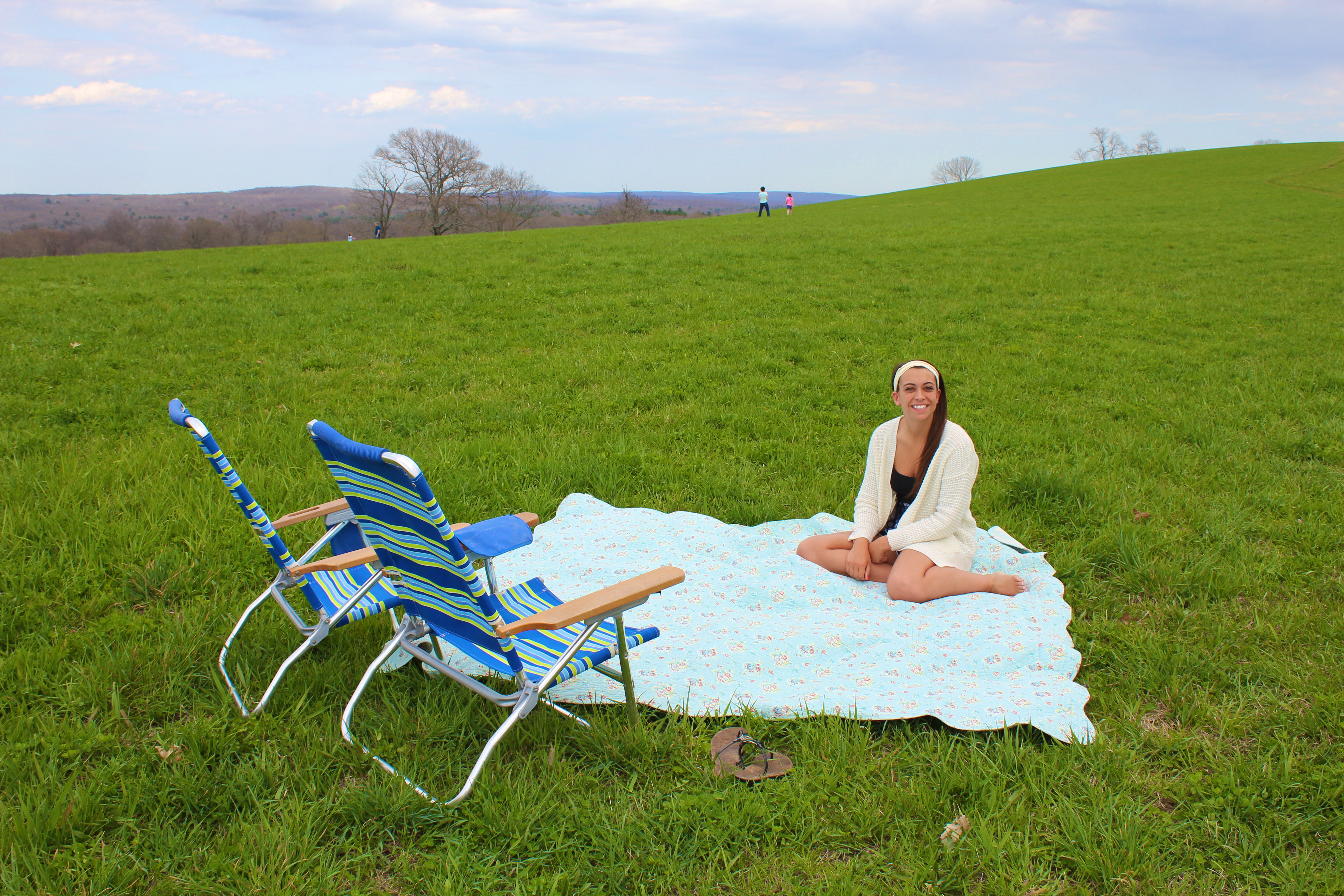
Our daughter, who is midway through the brain and body torture of final exams, needed a lifeline. So we visited and brought a picnic.

She attends a land-grant university. Few places are more perfectly set up to offer the stressed-out coed some au natural comforts.

*****

Land grant universities evolved in America around the 1850’s, when a social movement that supported higher education for the public began to gain attention. America’s education system, at that time, copied European models. Those models largely served to educate elite members of society within a class system that groomed students to become sedentary members of the government, or the palace, or the private schools.

American thinkers appealed for a system of higher education that would be more accessible to all and serve the people. It would be funded through the sale of government land and it would focus on agriculture and the mechanic arts, as well as classical studies. In other words, the education would serve the people and the country by promoting knowledge of the sciences, industry, and home economics. This model for education for the working class is all the rage now. Though we think curriculums are shifting in response to the perceived brilliance of kids in Singapore, (STEM: Science, Technology, Engineering, and Math), I believe the core fundamentals for these kinds of studies were established at land-grand universities in America.

Every state in the union has at least one land-grant university. We are all beneficiaries of their existence.

Furthermore, the existence of schools throughout America—both public and private—that honor broad ranges of academic studies makes this country, by far, a land of dynamic educational opportunity and choice.

*****

The perfect break from the pressure of final exams should include exercise, sunshine, healthy food, a caring community of family and friends, restful peace, and

ANIMALS.

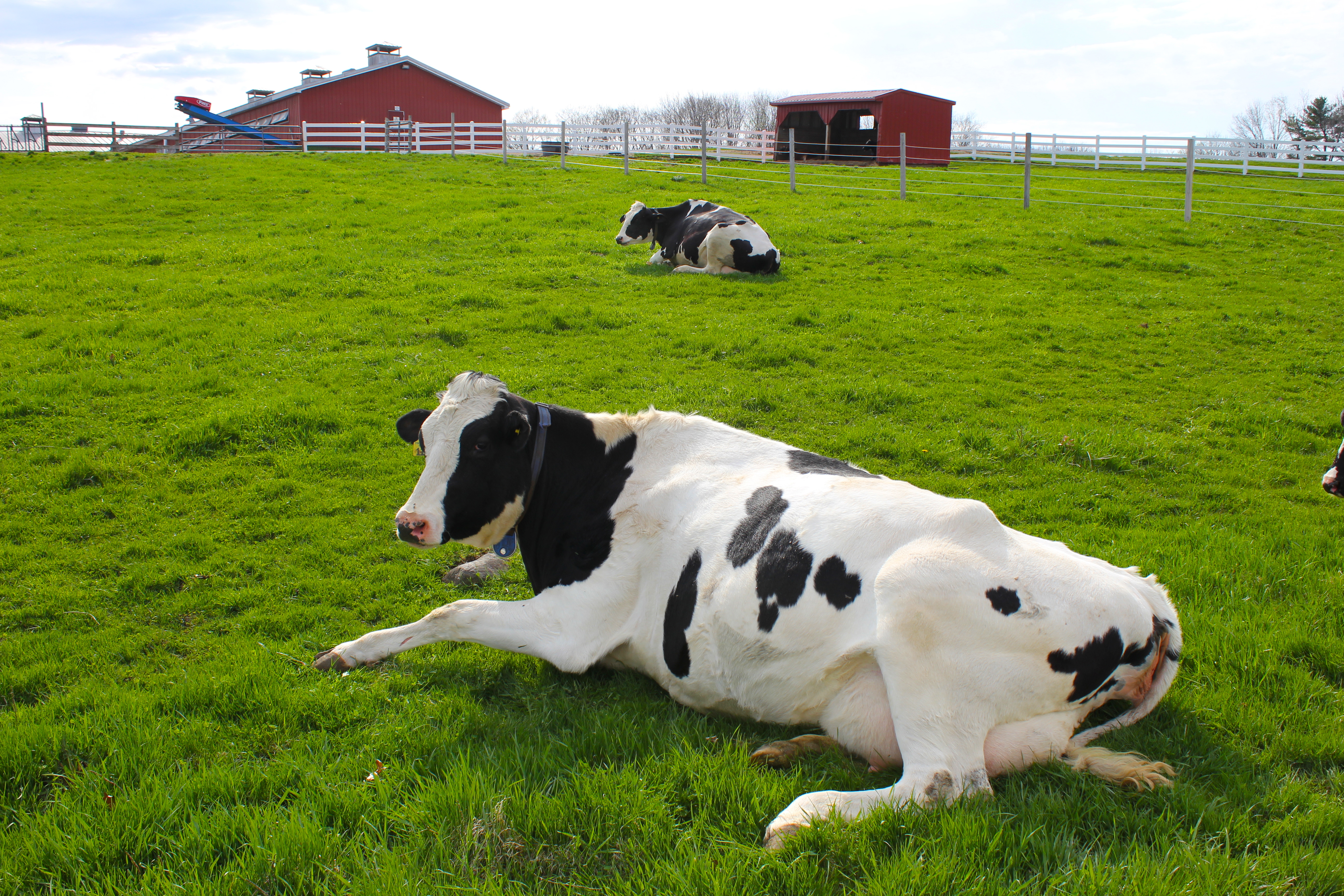
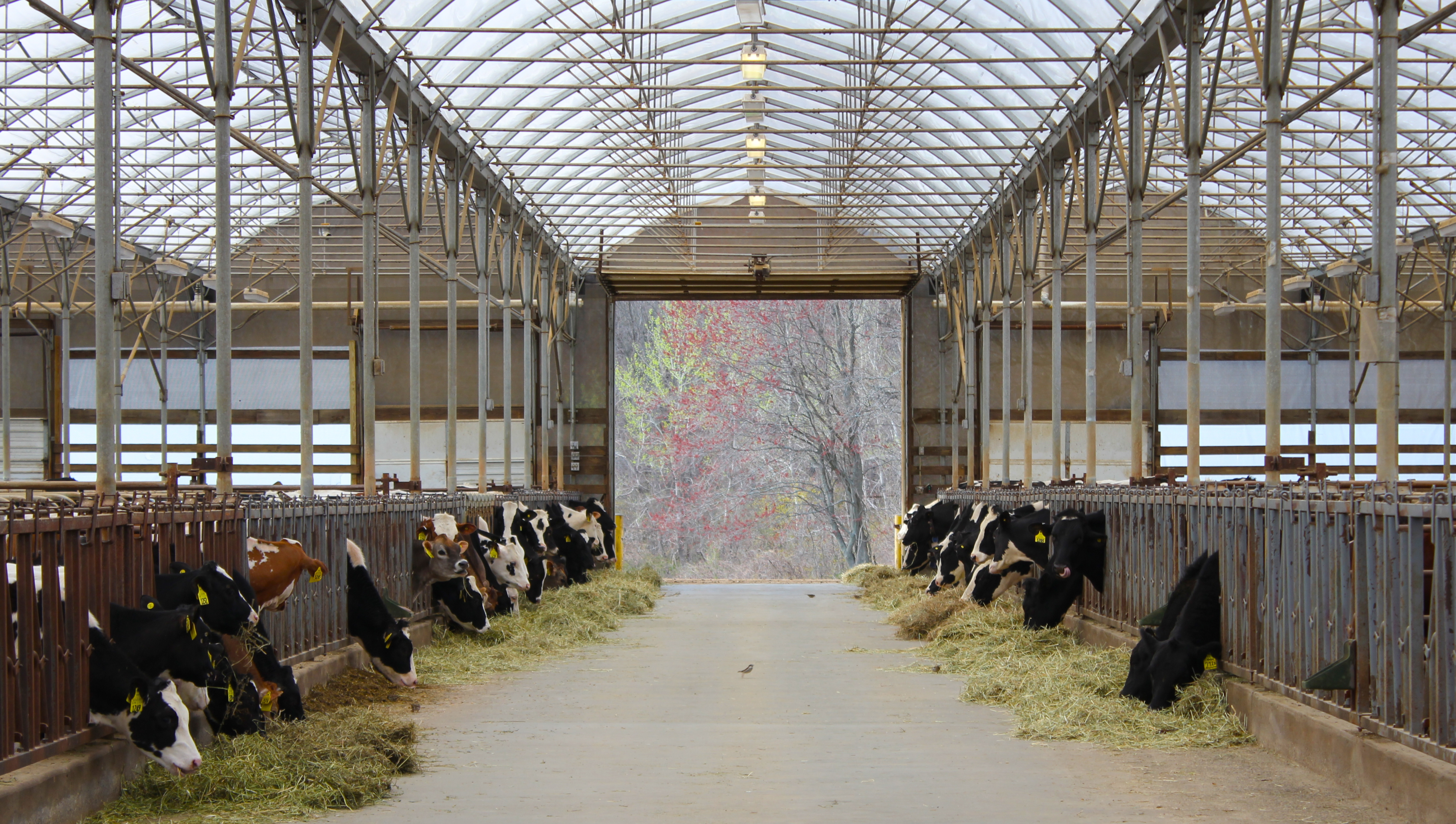
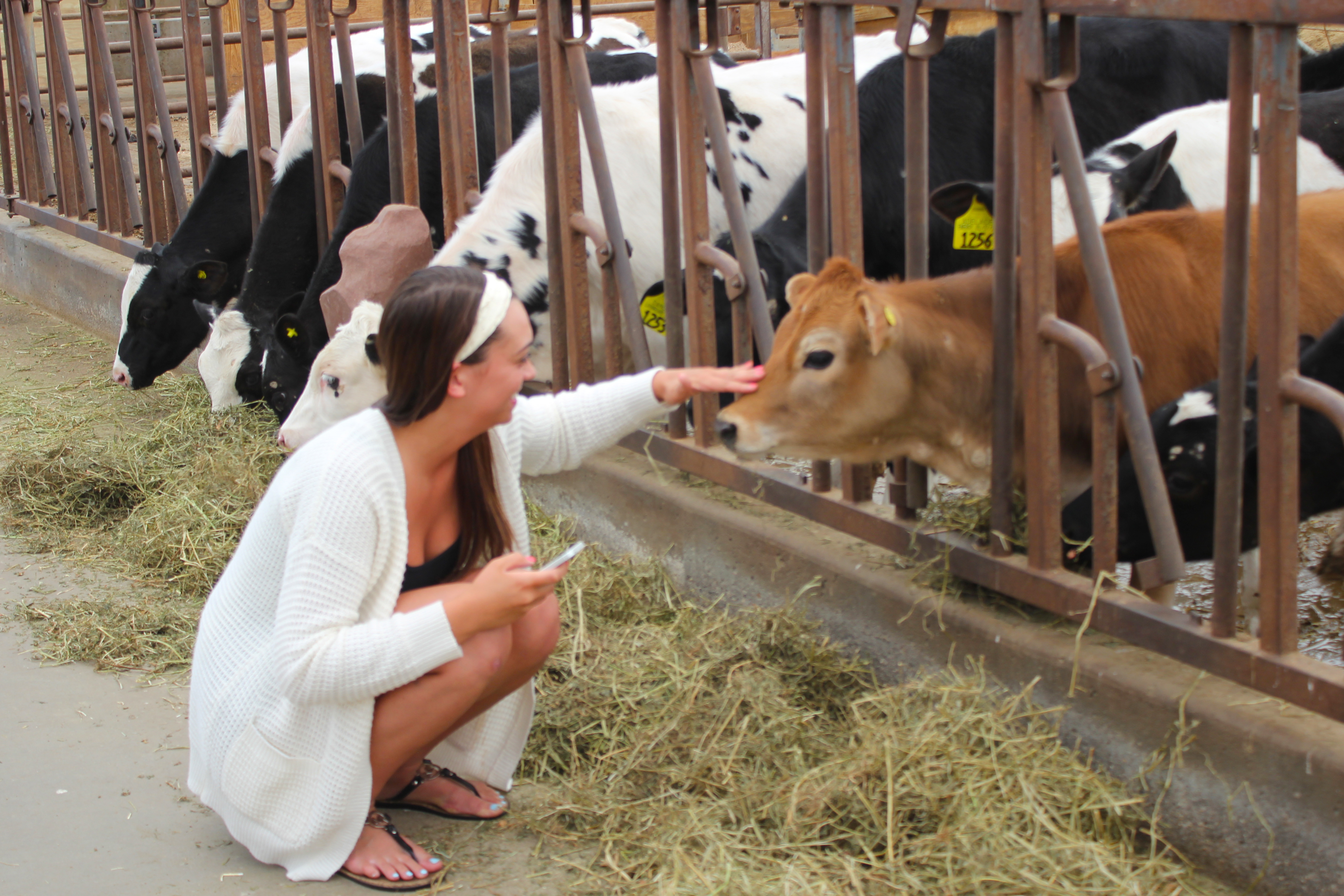
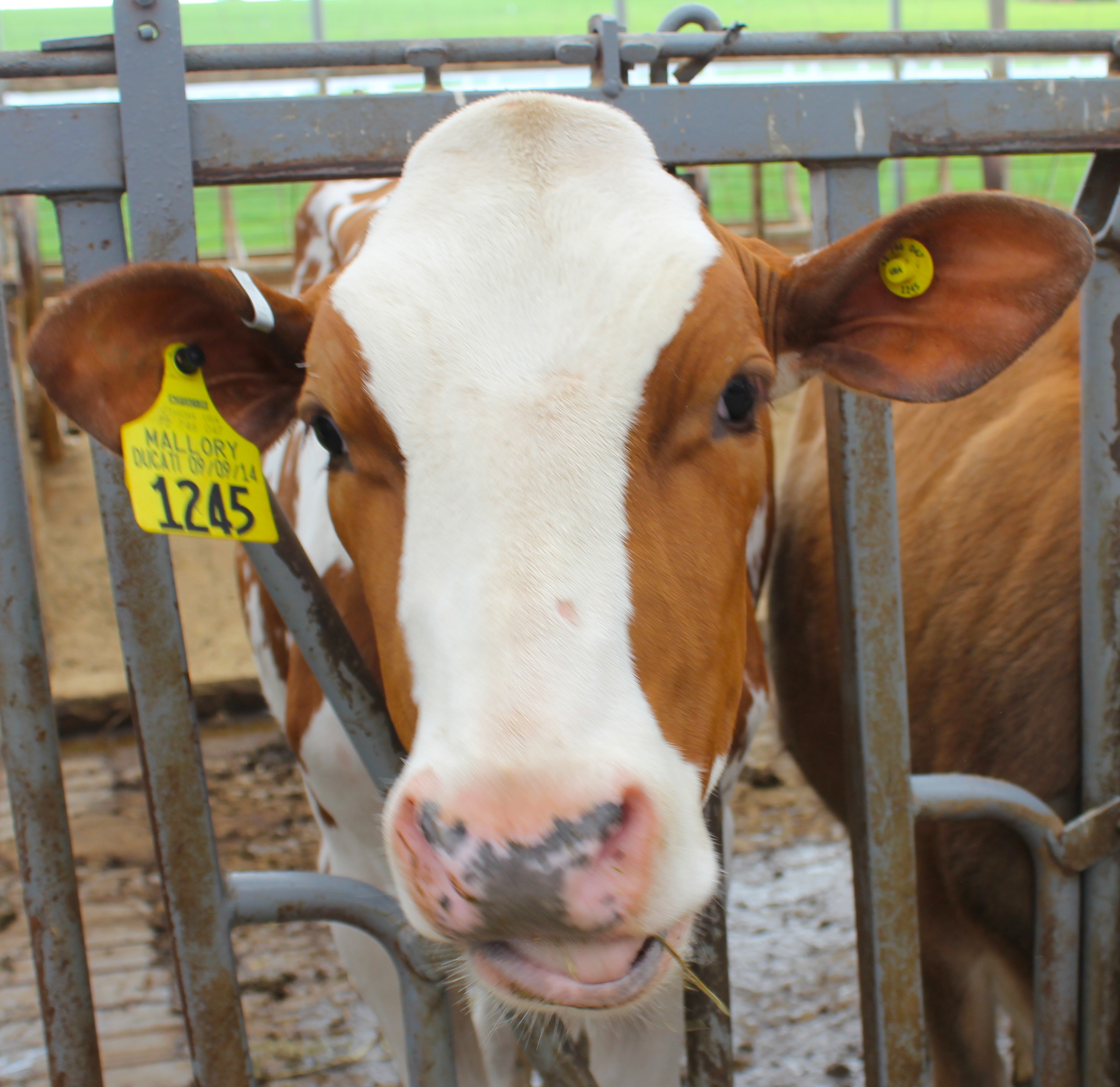
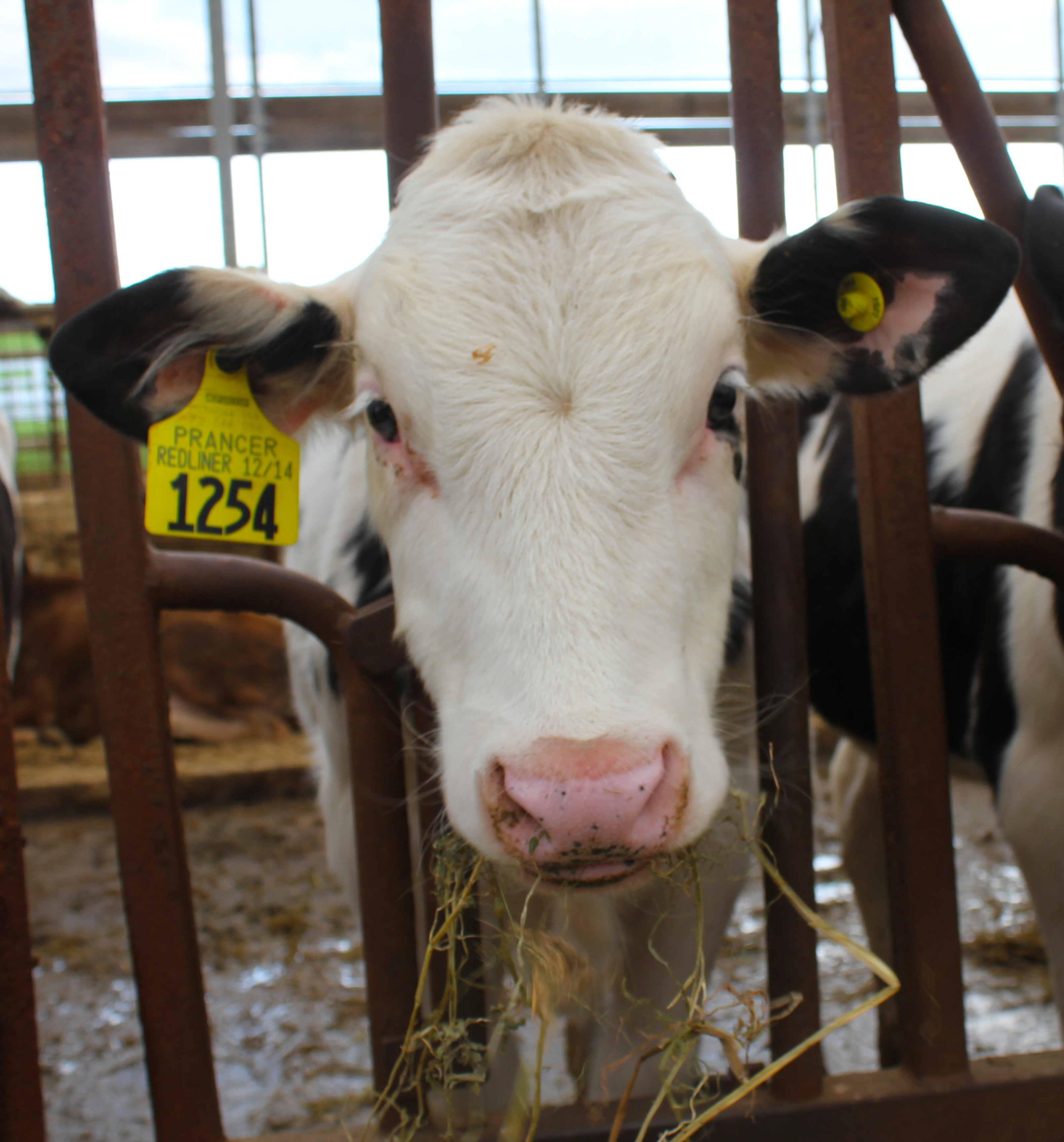
Many land grant universities are blessed with the natural resources to settle an out-of-control mind. Tapestries of agricultural fields and pastures roll away and up to the sky. Airy cow barns at my daughter’s university remain open to the public for delightful visits. Horses await visitors and will nod their heads over the fence. Sheep stand around acting bored. Dairy cows take a break from pumping out cartons of legendary ice creams. These are some of the original therapy pets of humankind and we never stop marveling at how big the animals can be, yet how gentle their dispositions are. The animals trigger memories of storybooks and childhood visits to farms all across America.

There might also be some gentle walking paths over hillsides leading to relaxing vistas where fresh-air breezes, tainted with the scents of newborn animals and freshly-planted flower beds, brush through your hair and keep the bugs away. Clouds and kites fly in unobstructed airspaces, sharing the sky with hidden stars waiting their turn to sparkle and ease tension after the sun sets.

*****

Getting close to family, friends, and animals, in a separate place of peace during times of stress, increases the output of happiness hormones.

Animals are the true rock stars—they never fail to lift our spirits and transport all of us back to the realities of what’s most important in life.

So here we are again. It’s springtime. It’s final exam season.

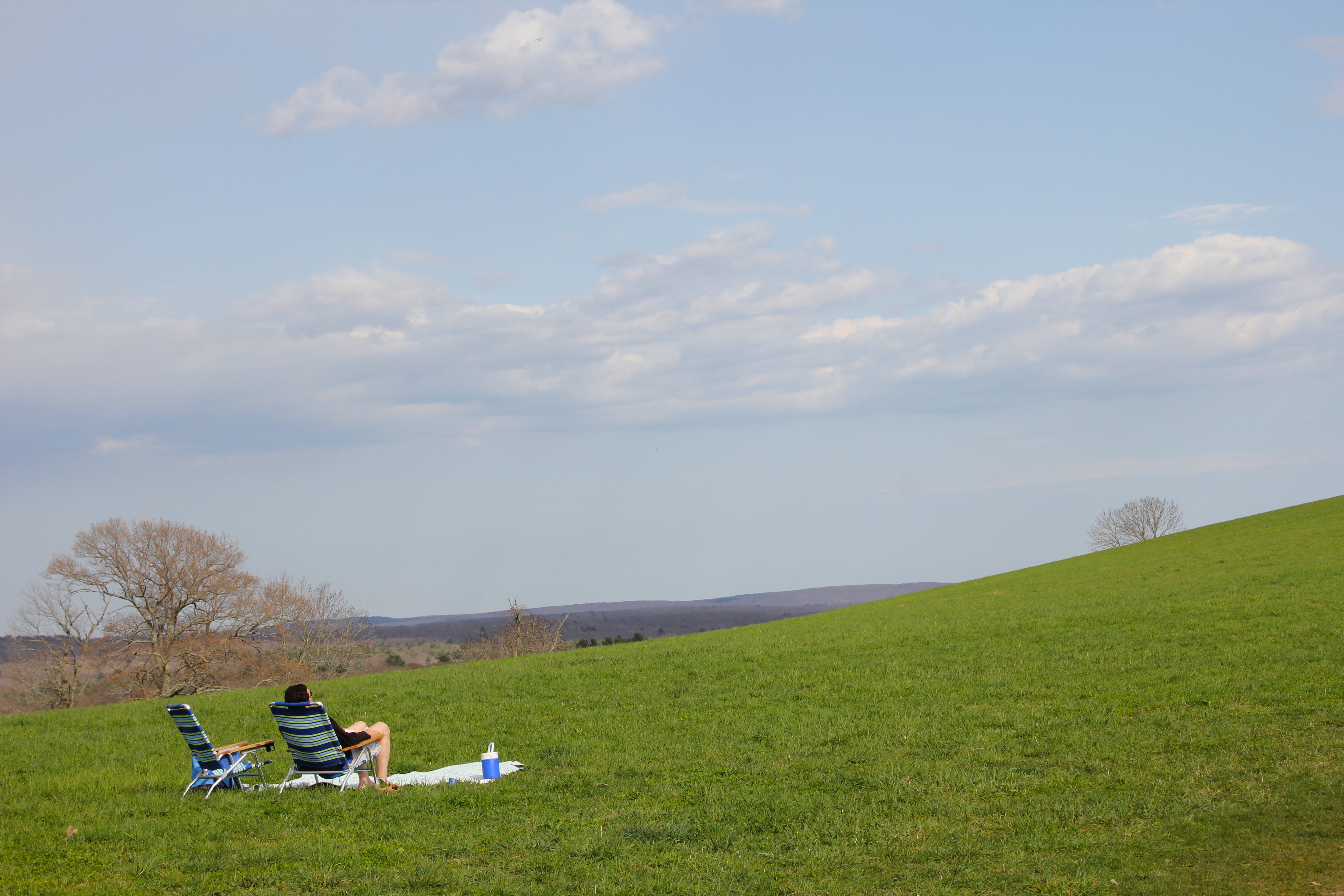
It’s also the time of year to start keeping a couple of chairs and a picnic blanket in the car.

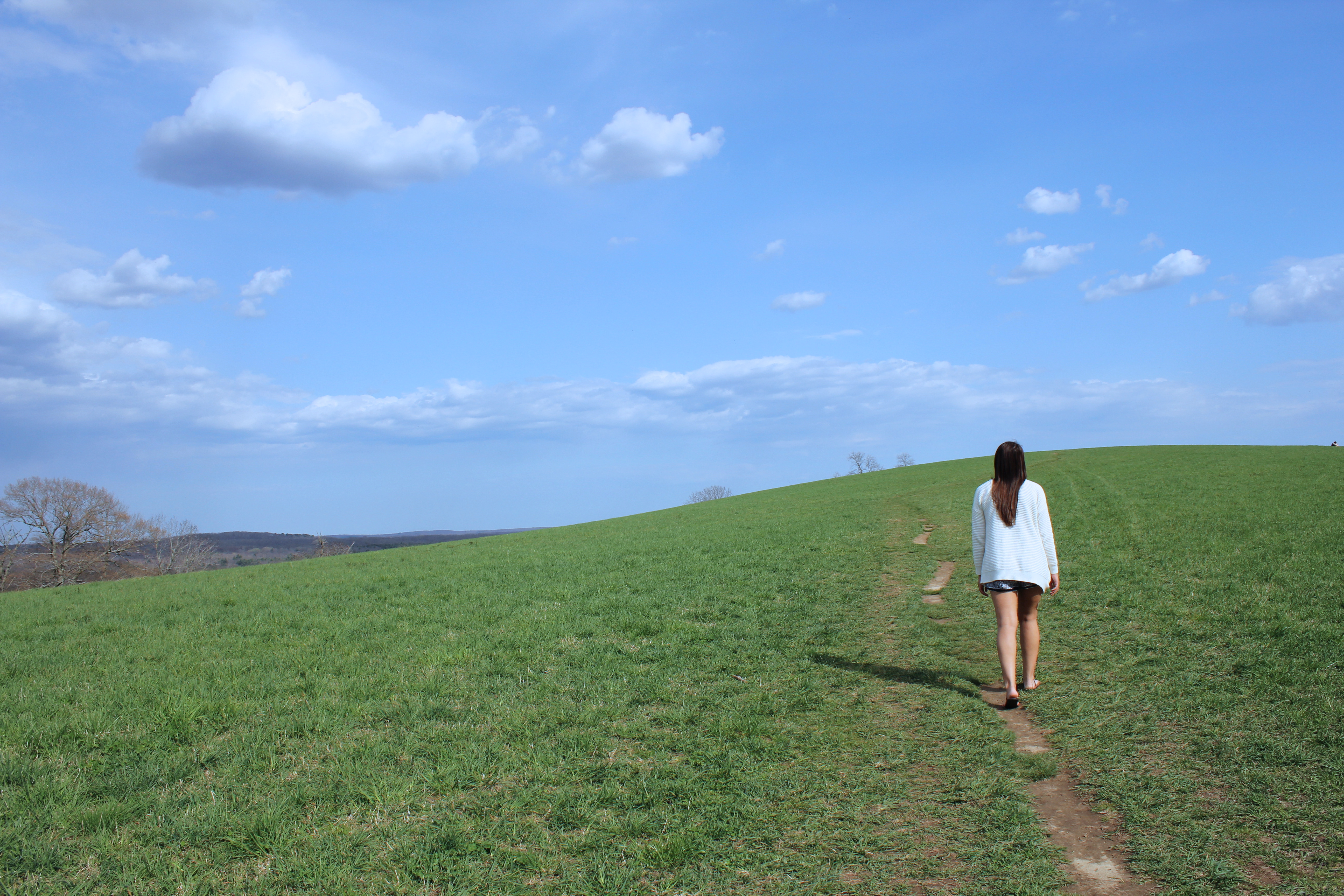
I hope these pictures make you smile, because that was our goal when we visited our stressed-out daughter in the middle of her final exams. According to a study by psychologists at the University of Kansas, the nation’s first land grant university to be established under the Morrill Act of 1862, smiling lowers the heart rate, reduces stress, and increases well being.

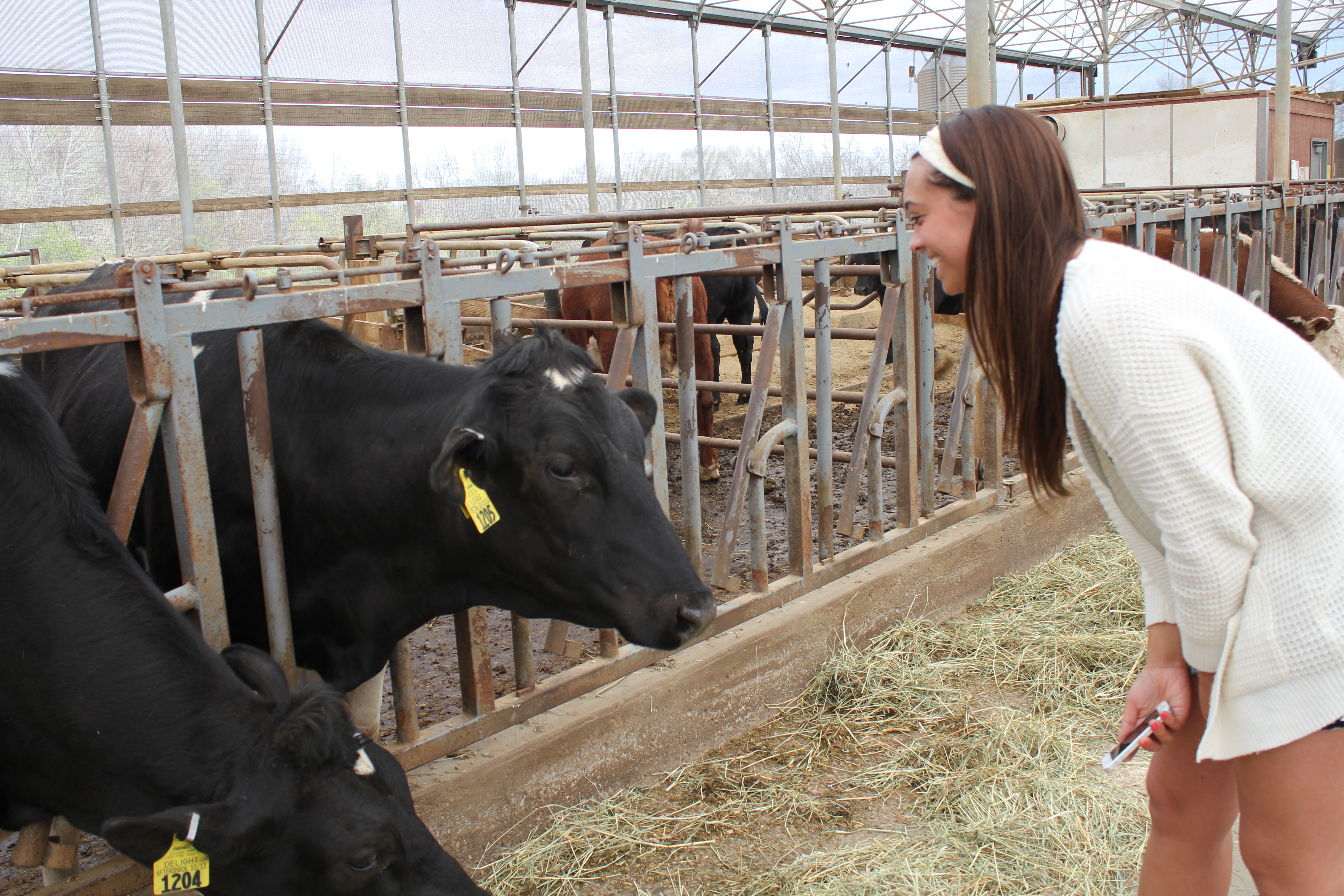
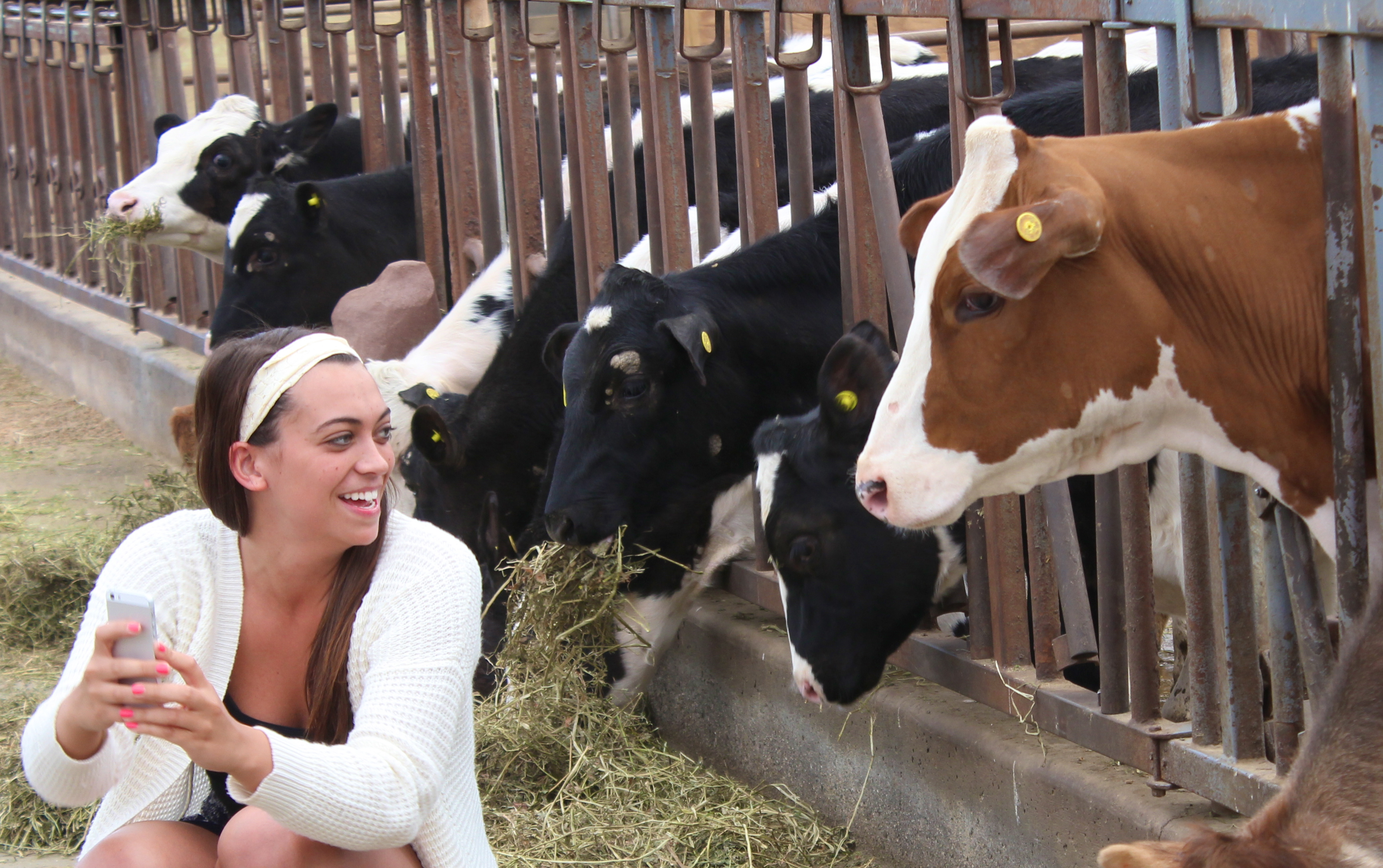
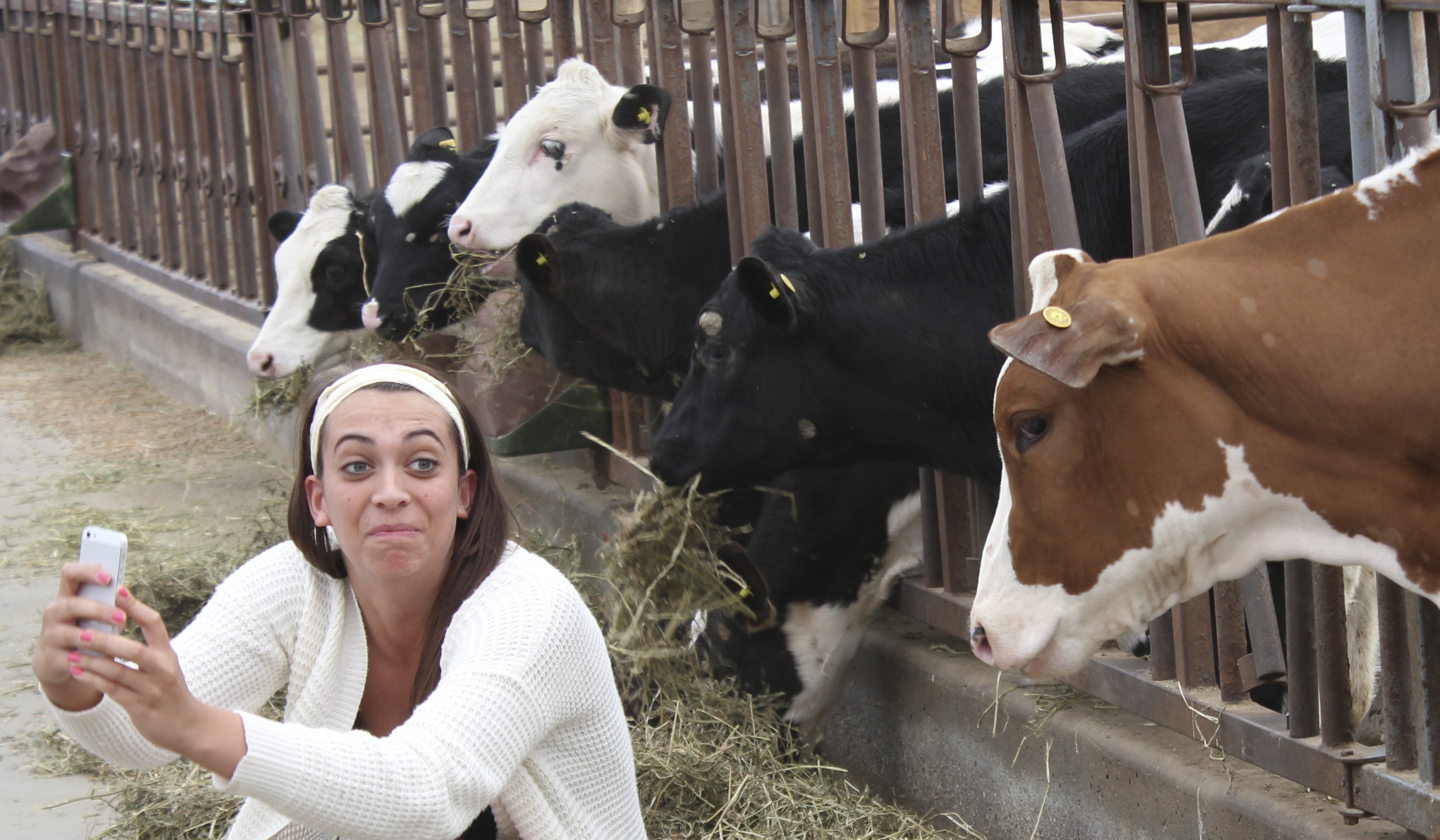
Genuine smiles, that include using the eye muscles, are the best. The cows made our daughter smile the most, putting a nice twinkle back into her weary eyes.

Maybe there’s a land grant university near you. Consider taking a picnic over there the next time you need a dose of au natural therapy.

*****

IMG_1077

*****

IMG_1074

*****

IMG_1080

*****

IMG_1088

*****

IMG_1083*****

The fresh, clean, open-air cow barn.

IMG_1093

*****

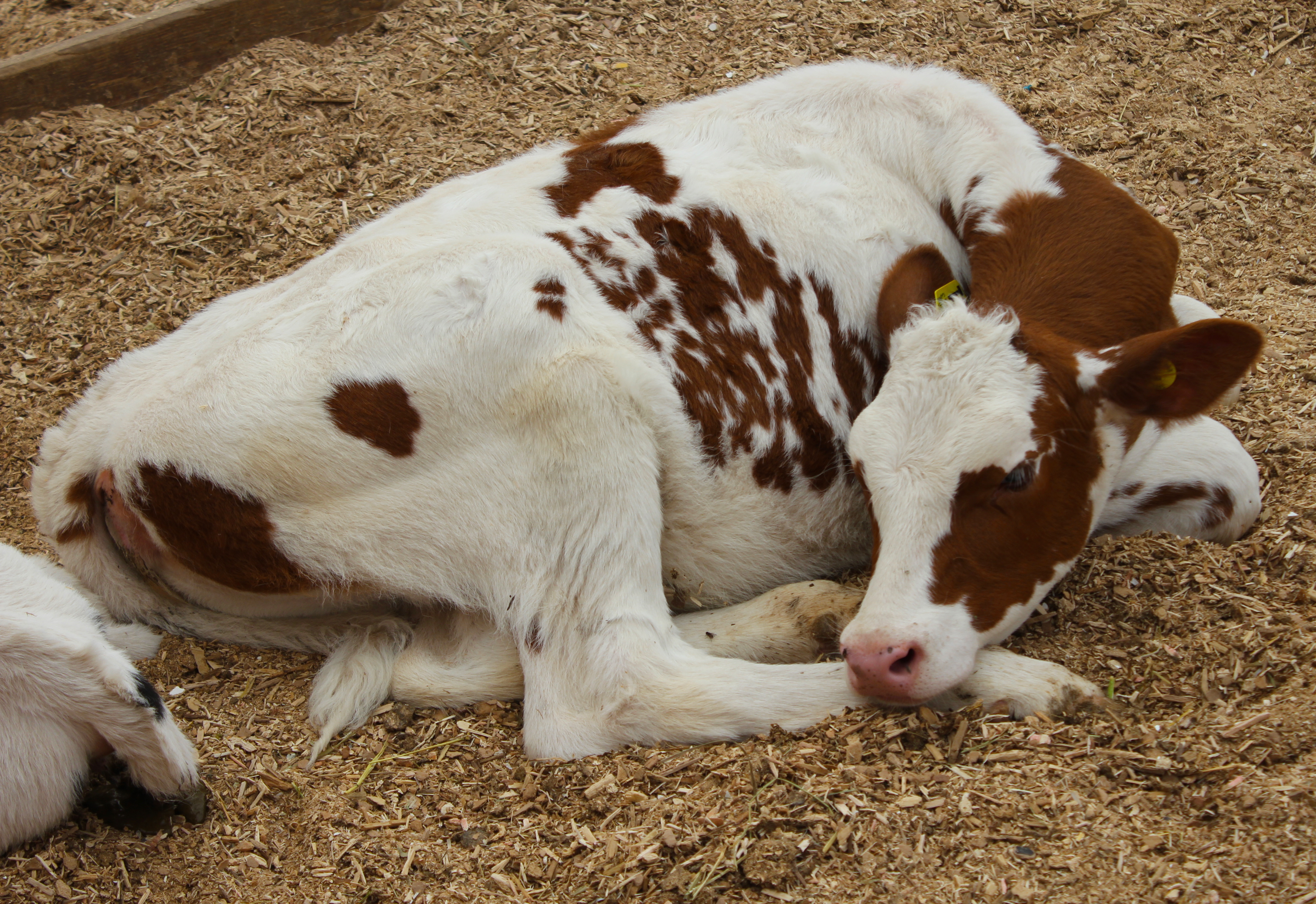
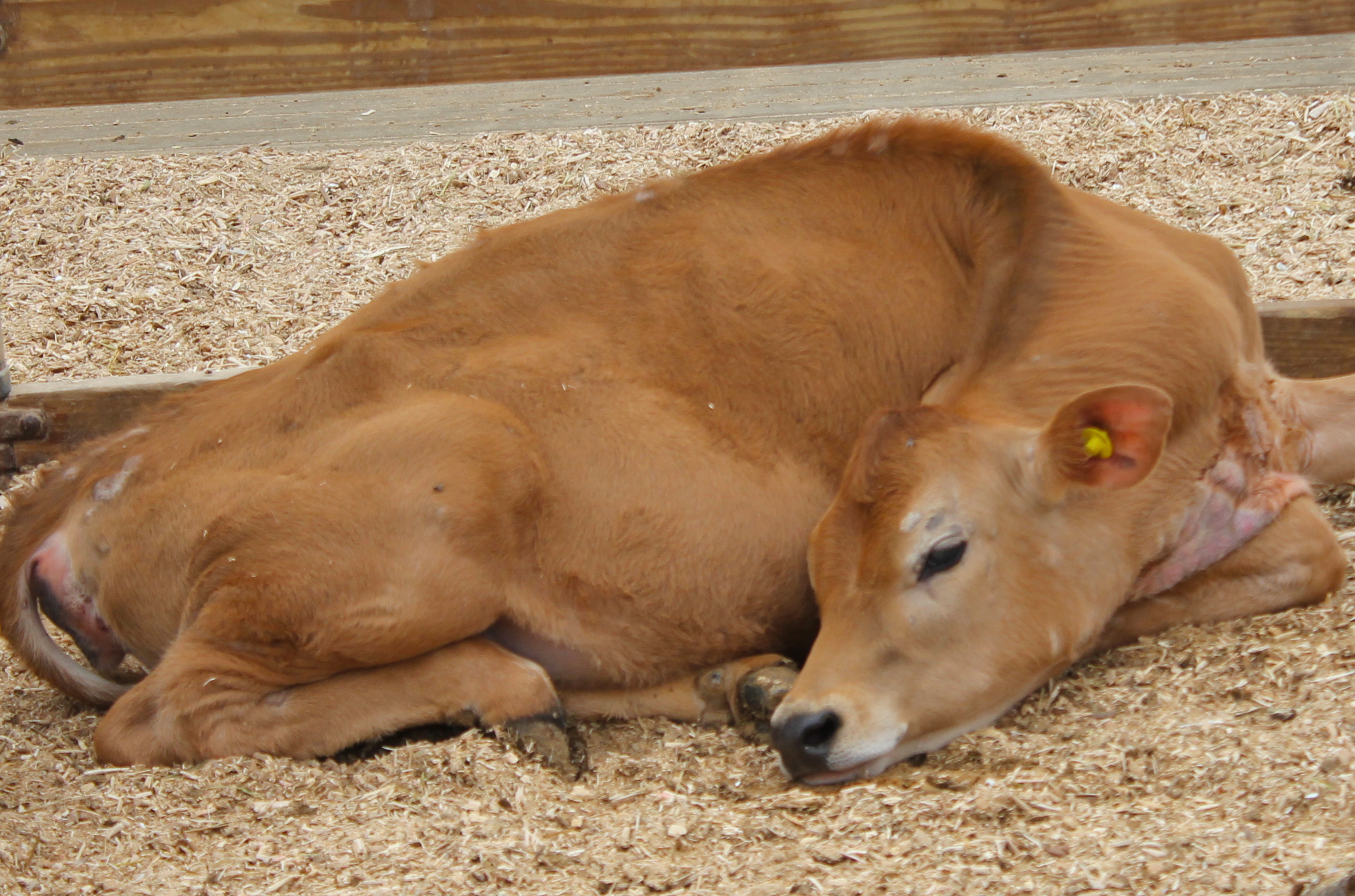
Newborns!

IMG_1120

*****

IMG_1095

*****

IMG_1100

*****
IMG_1099

*****

Rock star cows.

IMG_1117 2
IMG_1106

IMG_1105

IMG_1103IMG_1102

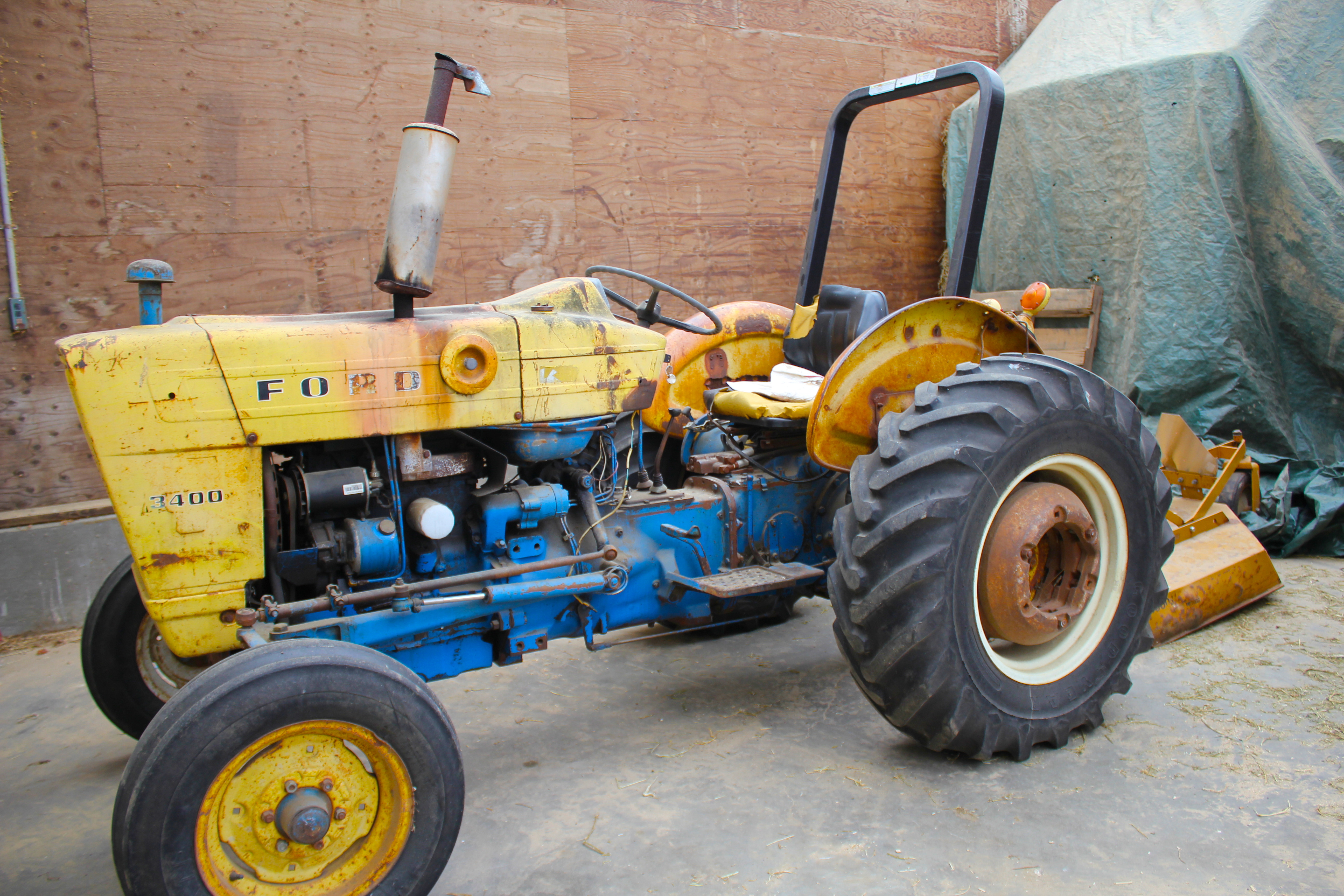
A tribute to our son who always loved the old tractors at farms and whose final exam days have become, probably,

recurring nightmares.

IMG_1123

*****

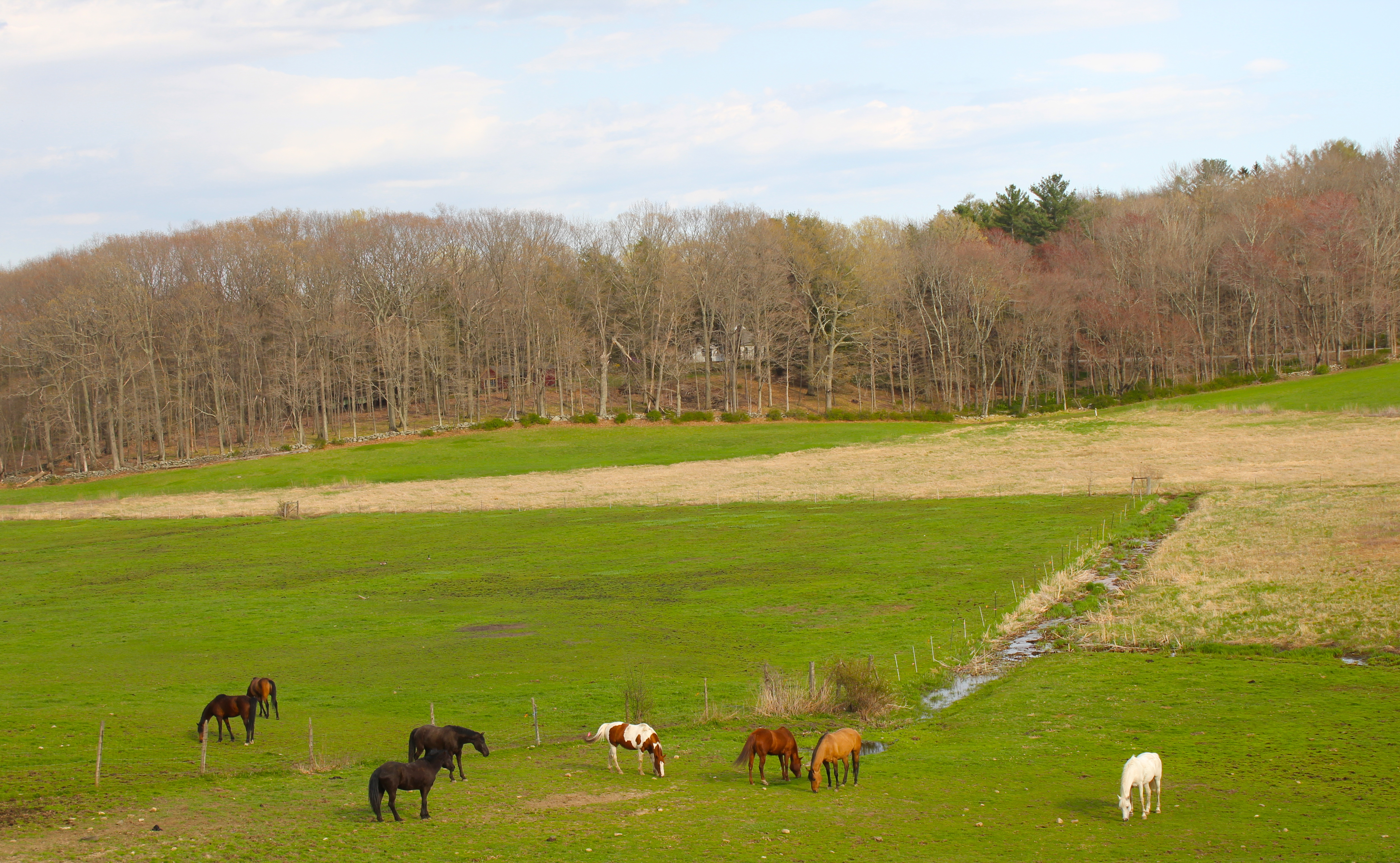
Friendly horses.

IMG_1126IMG_1129IMG_1134IMG_1137

*****

Good luck to all the students, (and their parents who worry about them), during this year’s

spring season of final exams!

The Ruffed Grouse.

On a sunny, bitterly cold day in Vermont, the snowpack depths grew deeper as springtime approached. It flowed in soft routes around and over tree trunks, boulders, streams, farm fields and well-worn hillsides.

Beautiful as ever, it was, to all of us.

Our daughter had come home from college for spring break and we had decided to spend the time together, retreating into winter’s encore and greeting spring from the tops of Vermont’s ski mountains.

*****

IMG_0462

The daylight flashed sparks of winter’s last light, beckoning us to come walking in the woods, just before sunset on our first day in Vermont. We packed up some appetizers with cold beers and traveled only a couple of miles deep into the forest where we made a campfire and sat, feeling how cold it still was and how glorious a campfire will always be. We had arrived, again, to a second-to-last day of winter. Over the years, the last days of winter had taken us to the world’s most beautiful snowcapped mountaintops. I arrive at those summits, ancient. Yet in all my lifetimes, never have I, nor never shall I, conquer the mountaintop. I am destroyed by the sublime magnificence of being there, every time. My tears barely drop, before the high-alpine air changes them into snowflakes that take flight. I follow them. Some I catch. Some disappear forever.

One of those timeless snowflakes flew from the top of Rendezvous Bowl in Jackson Hole, Wyoming where so many years ago, my daughter and I skied through deep powder snow that buried her strong little body. She had to go potty, now, and the potty was all the way at the bottom of the mountain, 4,000 vertical feel away. “I can wait till I ski down the mountain, Mommy,” she said. I followed her rainbow-shining trail of snowflakes, and have continued to do so, through the stratosphere of times gone by, and into the triumphs, trials, and tribulations of our lives together, today.

A mother slips into such memories, whenever she is spending time with her children.

Our campfire blazed heat, but the sun was setting fast with no moonlight to guide our way out. It was time to break our spare snow camp, and leave the forest. We walked until the trees, blackened, weaved paths to the stars through teal-flavored blues, glowing beyond.

IMG_0431

IMG_0427

Turning from the sunset, there was Jupiter, though we weren’t sure what we saw. It was a dazzling light acting like the most gigantic snowflake that ever hesitated to fall from the sky. We were lucky. Our feet left the ground at the sight of it and we soared, tumbling and gliding through the final hurrahs of the day.

IMG_0435

*****

Every season has its last call. When I sense it’s coming, it makes me anxious. I never get enough and will wave my arms at the heavens, shouting out to, and pleading with, the Great Bartender in the Sky:

One more round!

Winter’s sun moves, the light comes up, and I am at last kicked out of one season and left to go in search of the next.

I nurse the long goodbyes, the indulgent farewells. Like time spent with our dearly beloveds, time within New England’s seasons is a joyful, focused existence for anyone fortunate enough to live a long life traveling through spring to summer to fall to winter.

Nowadays, I awaken to the sun bouncing along the eastern horizon like a white ball pointing out lyrics to a song. Bird song, frog song, flower song. It has been moving from the right to the left, every day, making leaps one-whole-sun-circle width wide. I can’t stop it. Spring is here.

The signs are everywhere.

*****

Of course, one sign of spring is the annoying chirp of grouchy New Englanders. They are sick of snow, ice, cold and dark days. I’m not from New England. But I’ve lived here for a long time, almost forty years. When I first moved to New England, from the sunny southwestern Mexican/American borderlands of Arizona, I noticed that the natives weren’t the friendliest pickles in the barrel. I gave them the benefit of the doubt. Maybe they are just unhappy about the weather.

There was a pond on the campus of my university where I went on winter mornings with a pair of ice skates. I went there to feel happy. As alone as a seed cast by wintry winds to nowhere, I skated around my own private au natural ice rink. Next, I thought it would be fun to learn how to ski.

Winter was a long season—as long as all the rest, but colder and darker. It was too long of a season to give over to feelings of dissatisfaction. Furthermore, I made an acute observation about winter in the modern world—we have the technology to be outside in wintertime all day long. High-tech gear suits us up like bold adventurers traveling into outer space—and protects us while we cavort and gavotte—down mountains, through woodlands, and over icy lakes and ponds.

There is a poem by William Carlos Williams. Danse Russe. After I found the poem, I often thought of it while twirling around New England in search of people who knew how to enjoy wintertime. One year, I won the spring skiing  mogul competition on Outer Limits at Killington. I was a novice skier and a woman, competing against guys. We revisited those old playground ski trails on the first day of spring with my daughter. I asked my husband to tell it to me straight—had I won the mogul competition because I was the best skier or was it because I skied topless like the guys?

*****

Danse Russe

If I when my wife is sleeping
and the baby and Kathleen
are sleeping
and the sun is a flame-white disc
in silken mists
above shining trees,—
if I in my north room
dance naked, grotesquely
before my mirror
waving my shirt round my head
and singing softly to myself:
“I am lonely, lonely.
I was born to be lonely,
I am best so!”
If I admire my arms, my face,
my shoulders, flanks, buttocks
against the yellow drawn shades,—

Who shall say I am not
the happy genius of my household?

*****

Or had I won the competition, as a happy, lonely genius, in my dreams?

I am only kidding about skiing topless. And I’ve never entered any skiing competitions.

But our family does have a tradition for engaging in friendly forms of competition when we are out and about outside. We hand out Rusticator of the Day awards to anyone who earns them. The awards are named after the Rusticators of Acadia National Park, who seized the great outdoors while wearing suits and ties and petticoats.

Our competitions are wide open and there aren’t any rules. You never know if you will earn a Rusticator of the Day Award. It is merely an atta boy or atta girl bestowed upon anyone who carpe diems the rest of us when we least expect it.

My daughter is a great competitor for Rusticator of the Day awards. She is a natural source for magic and creative fun.

*****

As I have gone through the last days of this historic winter season in the Boston area, letting it go, muttering prayers of gratitude for such an epic experience of endless snowstorms, I have considered the scorn such a beautiful season, filled with so many surprises, arouses in people. Another William Carlos Williams poem comes to mind, The Last Words of My English Grandmother. Here follows last lines from the poem, about his grandmother nearing the end of her life, while in an ambulance heading for the hospital:

What are all those
fuzzy looking things out there?
Trees? Well, I’m tired
of them and rolled her head away.

I hope to never lose my reverence for the power of life in all its forms.

*****

On the very last day of winter, we were riding the chairlift together, when my daughter pointed to a fat, feathered beast in a grove of trees. “What is that?” She laughed. Everyone’s eyes grew wide with wonder.

Her father said it must be a grouse.

A what? 

A grouse. A Ruffed Grouse.

We have lived, camped, hiked, and biked in the woodlands of New England for all of her twenty years. And it has taken her this long to spot a grouse, hiding out.

She earned the Rusticator of the Day award. I’d never seen one, either. When you see something you’ve never seen before, it feels magical.

Which makes me think of the words Hokusai, one of my favorite artists, said before he died:

“If only Heaven will give me just another ten years… Just another five more years, then I could become a real painter.”

But back to the Ruffed Grouse we saw. They are shy birds and they hide in the snow. Their lives often end in violence, because they hold a vulnerable and valuable position in the food chain. The males create an interesting drumming sound with their wings. In wintertime, they grow projections from the sides of their feet which might be a form of seasonal snowshoe. And, Aldo Leopold wrote this about them: “The autumn landscape in the north woods is the land, plus a red maple, plus a Ruffed Grouse. In terms of conventional physics, the grouse represents only a millionth of either the mass or the energy of an acre, yet subtract the grouse and the whole thing is dead.”

*****

In terms of conventional time, my life represents the tip of a blip of a snowflake, in the blizzards of one Solar System’s infinite winter storms, melting in the warmth of a spring breeze.

The thought of it makes me hope to never subtract a day from any that belong to all the seasons of my life, because every one of them is a possible harbinger of unexpected magic.

Magic like the rare sighting of a Ruffed Grouse, emerging from a big New England winter, ready for spring.

Brave Irene and Life’s Snow Days.

How can something so white, create such dark scorn? The snow falls; New England groans. I think snowstorms are beautiful, but unless I want to be scooped up by a snowplow and dumped into a parking-lot snow mountain at Walmart, I best keep this dysfunctional happiness to myself.

One of my favorite heroines is Brave Irene, by the brilliant William Steig. Irene Bobbin was her mother’s dumpling, cupcake, and pudding pie and she was brave. I used to read the story with my children even if it wasn’t a snow day. But—whenever a snow day came along, then we really got into it. Brave Irene was on a mission to deliver a dress her mother had made for the duchess, in time for the ball. It was the most beautiful dress in the world. But her journey would take her over the hills and far away, and there was a snow storm coming. Brave Irene says:

“I can get it there!”

And, “But I love snow!”

She goes on to battle the snowy winds, clinging to the big box with the dress inside.

IMG_0187

And, of course, she becomes worn down just before disaster strikes.

IMG_0185

But Brave Irene persists, even with a broken heart.

IMG_0186

In the end, the duchess sends Brave Irene home in a sleigh, with ginger cake covered in white icing, some oranges and a pineapple, and spice candy of many flavors.

After reading the story on snow days with my children and after playing outside in the horrible cold winds, we ate ginger cakes and oranges and spice candies–or our own versions of such unfettered decadence.

And, of course, the days did come when we found ourselves challenged by true and terrible snow squalls while skiing on scary mountainsides. It would be so snowy, with fog as thick as a grumpy New Englander’s scorn for snow, that we couldn’t see each other. But—at least we could hear each other’s voices, woven in with the howls of the relentless winds:

“Go home!” the wind squalled. “Irene….go hooooooome…”

And no matter where we were, and no matter what storm had blown in to bury us, we became Brave Irene.

We pressed our backs to the wind and snapped, “We will do no such thing you wicked wind!”

*****

I talked my kids through the deepest snows and down the biggest mountains and out of the most frightening storms with Brave Irene.

The storms kept raging and we all kept growing up, and one day the winds shifted and I began to hear my children reminding me to plow on, keep moving, even when there is no one around to advise you.

Brave Irene’s strength comes from visions of her mother and a warm house—any warm house. Also, her yearning to be in the arms of someone special helps her make it through the storm.

Today, in my warm house, I’ll make lunch for my husband who is a little bit grumpy about more cancelled meetings. I, too, had another meeting cancelled for tonight.

But we will be in each other’s arms and we will be warm.

And I don’t make homemade soup and chicken salad, with cakes and spice candies, on just any old day.

Snowflakes.

Snowflakes, by Emily Dickinson

Snow flakes.

I counted till they danced so

Their slippers leaped the town,

And then I took a pencil

To note the rebels down.

And then they grew so jolly

I did resign the prig,

And ten of my once stately toes

Are marshaled for a jig!

*****

Today is the day before my husband’s birthday. He’s a January boy, he loves to ski, and this year a perfect snowstorm arrived in time to help me decorate the house and prepare for his birthday.

Many years ago, when my son was a grammar school boy, the fourth graders had an event called Business Hour. I think they had it once a month or so. During Business Hour, the kids traded arts and crafts or services or baked goods. They earned a form of wampum through completed homework, which they could use to buy anything during Business Hour, or they could just work out their own barter deals. I used to volunteer during Business Hour and ended up shopping most of the time because the kids created things that thrilled my soul.

I have always been a big fan of Kid Art. When you have Kid Art hanging in your house, the prig is constantly reminded to chill and the toes are kept loose for jigs, and the rebel spirit of kid confidence reminds me to infuse a little snowday joy into the times of my life.

All those years ago, I acquired a collection of hand-cut snowflakes from one of my son’s classmates at a Business Hour classroom trade show. Ever since, I have used the treasured collection to decorate the house for my husband’s birthday. I tape each snowflake, delicately, to the bay window near our winter dining area which looks out onto a snowy expanse of gardens where I love being distracted by the comings and goings of robins roosting in the juniper tree to eat the berries. We have a view of our barn, too, when we sit down to share our meals.

*****

Snowflakes. Harbingers of the happy dance. Here are some from my prized collection:

IMG_3199

IMG_3200

IMG_3201

IMG_3202IMG_3203IMG_3204IMG_3205IMG_3206IMG_3207

IMG_3208IMG_3209IMG_3210IMG_3211

And here they are arranged in compositions on the window for our dining pleasure:

IMG_1789

Gypsy Love.

The moon was out all day. A restless wind howled in the distance and I waited while it made its way toward me. Over the far hills it rushed, bending the poor birch trees already hard at work, holding snow in such pretty clumps of white on its branches. Cold, cold air made me stiff and tense. I waited. When the wind finally swirled around me, twisting my hair into tangles and lashing at my face, it was as terrible as cold could be. I peeked at the moon. The sun didn’t matter that day.

My telephone rang last night. It was a friend asking if she could come over to show me something she’d written seven years ago. I lit the fire and waited for her.

When she arrived we hugged each other, our soft bellies squished up between us.

“I could not have written this,” she said. It was a work of prose poetry and it was about her son’s descent into the living hells of bipolar disorder, drug abuse, and his failed quests to achieve recovery. He died, almost nine years ago, by his own hand.

Had I been all alone after reading the poem, I would have sat still, stunned, unable to think or speak–not wanting to do either, anyway. I only wanted to cry for the rest of my life. It’s true that the work has added power for me, because I knew her son and because I know her and because I know her husband and I know her youngest son, who was very good friends with my son when they were young boys. After I read the prose poem, I handed it to my husband who left the room to read it. When he returned, there weren’t just three of us sitting around the fire–there were four. My friend’s son settled in, too–his spirit freed. Though we knew a lot about his life and the circumstances of his death, now we knew more.

My friend is sure her son is channeling her. She believes she is being called, by him, to help families as they try everything to save loved ones who suffer with mental disorders and addictions. My friend tried everything to help her son.

“Is the writing good enough?” My friend asked. “Do you think I can use this to help people.”

And I answered her, not as a writer, but as a mother. I told her what she already knows, that her relationship with her son has evolved to a place she hoped and hoped for, a place where the darkest days of anguish would be finished. It didn’t happen the way we all wanted it to happen–no mother wants to have a relationship with a child from beyond the grave–but she is now in a place to help others, and her son is joining her. They are working together from a world of deeply spiritual love that only a mother and a child can know.

“I don’t know if I can do this.” My friend said. “But he won’t leave me alone. He keeps encouraging me. My mind races and races and won’t stop.”

I reminded her that she has been practicing and walking through the motions for a long time–she forgets how she has spent the last several years–stopping by my house, walking through my gardens, telling me everything. Each year, the remembered pain of her son’s life does not abate, and her self-criticism over what else she could have done to save him remains the glimmer of hope that inspires her to reach out and perhaps save another family.

I discovered, a long time ago, the point of WHAT ELSE in life. After the counselors, the prescription drugs, the treatment centers, the retreats, the priests–after all of that doesn’t work,  what else is there to do? Sometimes, there is nothing else. The pain is so insurmountable, the disease is so toxic, the injury is so grave–there is only the grace of death.

But sometimes, the what else is the unprofessional, un-clinical, unscientific, imperfect, untrained, nonjudgmental, unrestrained excursion into the heart of another human being. My friend knows how judgmental she used to be. It makes her heartsick to recall how she denied the depth of her son’s despair and dangerous behaviors. I could only nod my head, recalling all the things I believed until my own experiences changed–and continue to change–the ways I process and interpret the confusions of what it means to be human.

I began this week talking with another friend whose son took his own life almost three years ago. I am thinking of a friend today who is in court battling to keep her young daughter safe from a father dangerously addicted to alcohol. Not many of us avoid adversity.

“So you think the writing is good enough.” My friend said, holding the papers inscribed with the holy poem. “I just don’t know if I could tell the story and get through reading this to people who need to hear it.”

“Then call me.” I said. “I’ll go with you, whenever and wherever you are led to help other families.”

My friend’s face lit up. “You will?”

“Yes.”

“I’ll go, too.” My husband said.

The last times my husband and I visited with my friend’s son, he was doing some painting work for us. Every now and then he’d take a break with my husband for a few guitar lessons. He was a brilliant, beautiful boy then, almost in high school. Just a boy.

After my friend left, my husband and I cried for the rest of the night–not even in our dreams was our shared grief spared.

IMG_3161

Nonviolence. The Legacy of MLK.

When Martin Luther King, Jr. was murdered, I was in a shoe store in downtown Ft. Wayne, Indiana. The somber news interrupted the store’s calm atmosphere: “Reverend Martin Luther King, Jr. has be shot….” Ever-ready gusts of depression blew in and snuffed out all the excitement of getting new shoes. My birthday was the next day and I was going to be 8 years old. Up until then, my life had been dominated by news reports and images of violence crackling out from radios and onto newly-mass-produced TV screens—Vietnam, Civil Rights, the Cold War—all part of a steady stream of announced assassinations, race riots, protests, campus unrest, impending nuclear annihilation, evil communists. We left the shoe store immediately; my parents feared the city would react violently to the news of MLK’s assassination.

*****

Five years before MLK was murdered, he spoke in Ft. Wayne on June 5, 1963. Two months before that, he had written “Letter From a Birmingham Jail,” but had not yet delivered his “I Have a Dream Speech,” which would happen three months hence at the March on Washington. A year later, he would be awarded the Nobel Peace Prize.

Dr. John Meister, a pastor of the First Presbyterian Church introduced MLK during his visit to Ft. Wayne: “A glorious disturber of people and the peace.”

At the podium, MLK said, “Some say slow up. You’re moving too fast….But we are through with gradual-ism, token-ism, see how far you’ve come-ism….We have learned to stand up against the evil system—and still not hate in the process. We have discovered that love works miracles.” MLK warned that segregation was not just a problem for the American South, but that de facto segregation existed throughout the country.

King was right. One of the most troubling consequences of de facto segregation was that it created school systems throughout America which did not offer equal opportunities for education to all children. After MLK’s death, Ft. Wayne started trying to integrate their schools. None of us were prepared for the busing of Black kids into our all-white neighborhood schools. One day it just seemed to crash land in everyone’s front yard. Chaos ensued and while the adults were desperately trying to protect their children from harm, their children were desperately trying to make it through the school day. We were sexually and physically and mentally assaulted by each other. Our school bathrooms became war zones. So did the hallways, the lines for lunch, the gym locker rooms. I was a fifth grader in elementary school and the stories I heard about what was happening in the junior high schools and the high schools kept waves of fearful depression washing over me. At one point, I stopped going to school for several weeks. I didn’t tell anyone I was one of the girls being sexually and physically assaulted. I just kept saying, over and over again, “I have a stomach ache.”

*****

In honor of the MLK holiday, I took an excursion up the road through a driving rainstorm to go see the movie Selma. Most people in my region of the world were cheering on the New England Patriots, so I enjoyed a quiet night at the theater for one. I guess the movie isn’t getting the attention some say it deserves. I hope that won’t cause people to dismiss it as unworthy. The movie is not only well-directed with great acting and music, it’s also important because it’s a catalyst—it’s one of those films you go to see and after you see it, you start doing some research. You want to find out for yourself what’s true, what isn’t, and what happened to the people in the film. The movie triumphs as a work of art because it makes you think and thinking for yourself is one of the most crucial ideals of Martin Luther King Jr.’s legacy:

“INJUSTICE ANYWHERE IS A THREAT TO JUSTICE EVERYWHERE.” 

Injustice is everywhere. What do we do when we come upon it?

The legacy of Martin Luther King Jr. suggests that we consider the practices and philosophy of nonviolence. The MLK holiday, along with my excursion to watch the film, Selma, inspired me to learn more about MLK’s philosophy and strategies for nonviolence and how he developed them. One of the greatest men he admired was Mohandas Gandhi, best known as Mahatma (Great Soul) Gandhi:

…I was particularly moved by the whole concept of “Satyagraha”. Satya is truth which equals love, agraha is force; “Satyagraha” means truth-force or love force…As I delved deeper into the study of Gandhi, my skepticism concerning the power of love gradually diminished, and I came to see for the first time its potency in the area of social reform. Prior to reading Gandhi, I had about concluded that the ethics of Jesus were only effective in individual relationships. Gandhi was probably the first person in history to lift the love ethic of Jesus above mere interaction between individuals to a powerful and effective social force on the large scale….It was in the Gandhian emphasis on love and nonviolence that I discovered the method for social reform that I had been seeking for so many months. The intellectual and moral satisfaction I failed to gain from the utilitarians of Bentham and Mill, the revolutionary methods of Marx and Lenin, the social contract theory of Hobbes, the “back to nature” optimism of Rousseau, and the superman philosophy of Nietzsche—I found in the nonviolence resistance philosophy of Gandhi. I came to see it was the only morally and practically sound method for oppressed people in their struggle for freedom.”

In MLK’s 1959 Sermon on Gandhi, he elaborated on points he’d made in a 1957 speech, Birth of a Nation:

“The aftermath of nonviolence results in the creation of a beloved community, so that when the battle is over, a new relationship comes into being between the oppressed and the oppressor. The way of acquiescence leads to moral and spiritual suicide. The way of violence lead to bitterness in the survivors and brutality in the destroyers. But, the way of nonviolence leads to redemption and the creation of the beloved community.”

King emphasized that the Beloved Community was not some utopian Garden of Eden with gentle serpents and luscious apples. The Beloved Community was a community of people devoted to the methods of nonviolence.

King’s study of Gandhi influenced his Six Principles of Non-Violence. In his first book, Stride Toward Freedom, (he was attacked and stabbed while signing copies of the book), he lists the principles:

1) Nonviolence is a way of life for courageous people. It is an active nonviolent resistance to evil. It is aggressive spiritually, mentally, and emotionally. 2) Nonviolence seeks to win friendship and understanding. The end result of nonviolence is redemption and reconciliation. 3) Nonviolence seeks to defeat injustice, not people. 4) Nonviolence holds that suffering can educate and transform. Nonviolence accepts suffering without retaliation. 5) Nonviolence chooses love instead of hate. 6) Nonviolence believes that the universe is on the side of justice. The nonviolent resister has deep faith that justice will eventually win. Nonviolence believes that God is a God of justice.

His Letter From a Birmingham Jail spelled out Six Steps for Nonviolent Social Change (Love in Action):

1) Information gathering. Become an expert on your opponent’s position. 2) Education. Inform others about your position. 3) Personal commitment. Eliminate hidden motives and prepare to accept suffering in your work for justice. 4) Discuss and negotiate. Use grace, humor, and intelligence. Do not seek to humiliate. 5) Use direct action. When the opponent is unwilling to discuss/negotiate—impose “creative actions” to supply moral pressure. 6) Reconciliation. Nonviolence is directed against evil systems, forces, oppressive poles, unjust acts, but not against persons.

*****

Most important of all to MLK’s activism and legacy was his wife, Coretta Scott King. She isn’t often listed as a great American Black woman, but she is one of the greatest. She was born in Alabama, was the valedictorian of her high school class, and attended Antioch College until she was awarded a scholarship to study voice and violin at Boston Conservatory of Music. Corretta Scott King met MLK in Boston when he was at Boston University. The two married and settled in Montgomery, Alabama. Mrs. King was the mother of four children. In her “spare time,” she composed and performed “Freedom Concerts” which combined prose and poetry narration with music. The funds raised from her concerts supported MLK’s Southern Christian Leadership Conference. Upon her husband’s death, she established the King Center—a legacy to the philosophy and practice of nonviolence. She traveled the globe on goodwill missions, she was arrested for protesting against Apartheid in Washington, she was an author, an activist, and a civil rights leader who championed women’s rights and gay and lesbian rights. She was awarded the Gandhi Peace Prize and more than 60 honorary degrees from colleges and universities. She worked exhaustively to establish the Martin Luther King Jr. holiday and, by doing so, she has kept the spirit of his dreams alive.

*****

If you watch the movie Selma you will get a sense for how the principles of nonviolence led to, among other things, the passage of the Voting Rights Act of 1965. (1965! In America! Voting rights still being challenged!)

Talk about courage. It takes a lot of mighty hearts, and a lot of people willing to think, in order to rise above the injustice of Selma’s Bloody Sunday and its attendant vicious attacks against human dignity.

Watching authentic footage of the people marching from Selma to Montgomery I found myself wanting to look into the eyes of every freedom fighter. I wanted to touch the power of every heart that must have leaped into the arms of guardian angels that day, praying for the safety of all. Could I ever believe so fully in the weapons of nonviolence? In a situation as dangerous? In a country that claims to protect liberty and justice for all?

If I continue to study the principles of non-violence, and think of those who have practiced them before me, I think I could.