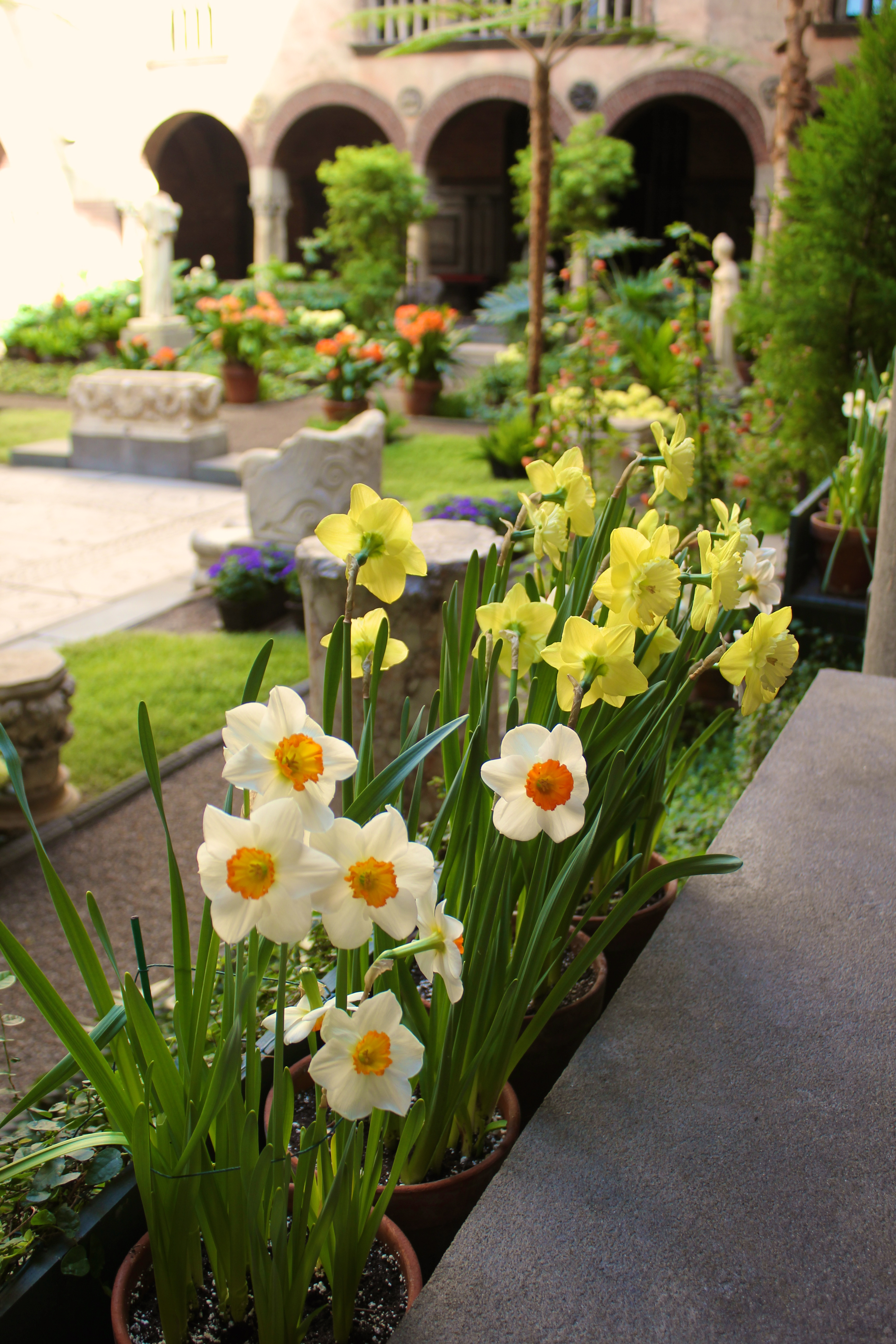
For a brief time in spring, beginning with the week before Easter, a sentimental tradition of floral joy appears at what is now known as the Isabella Stewart Gardner Museum in Boston.
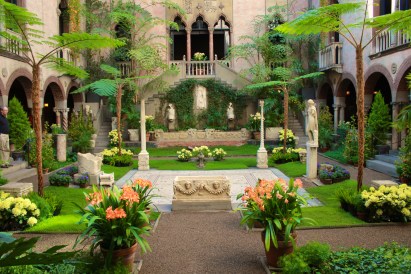
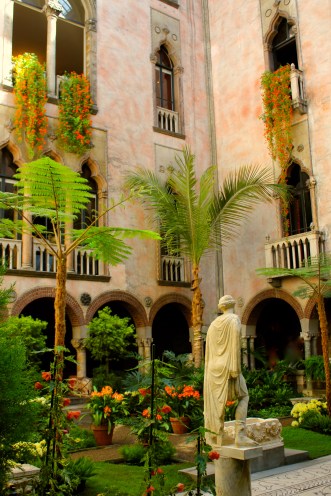
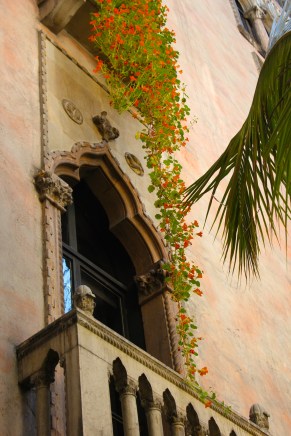
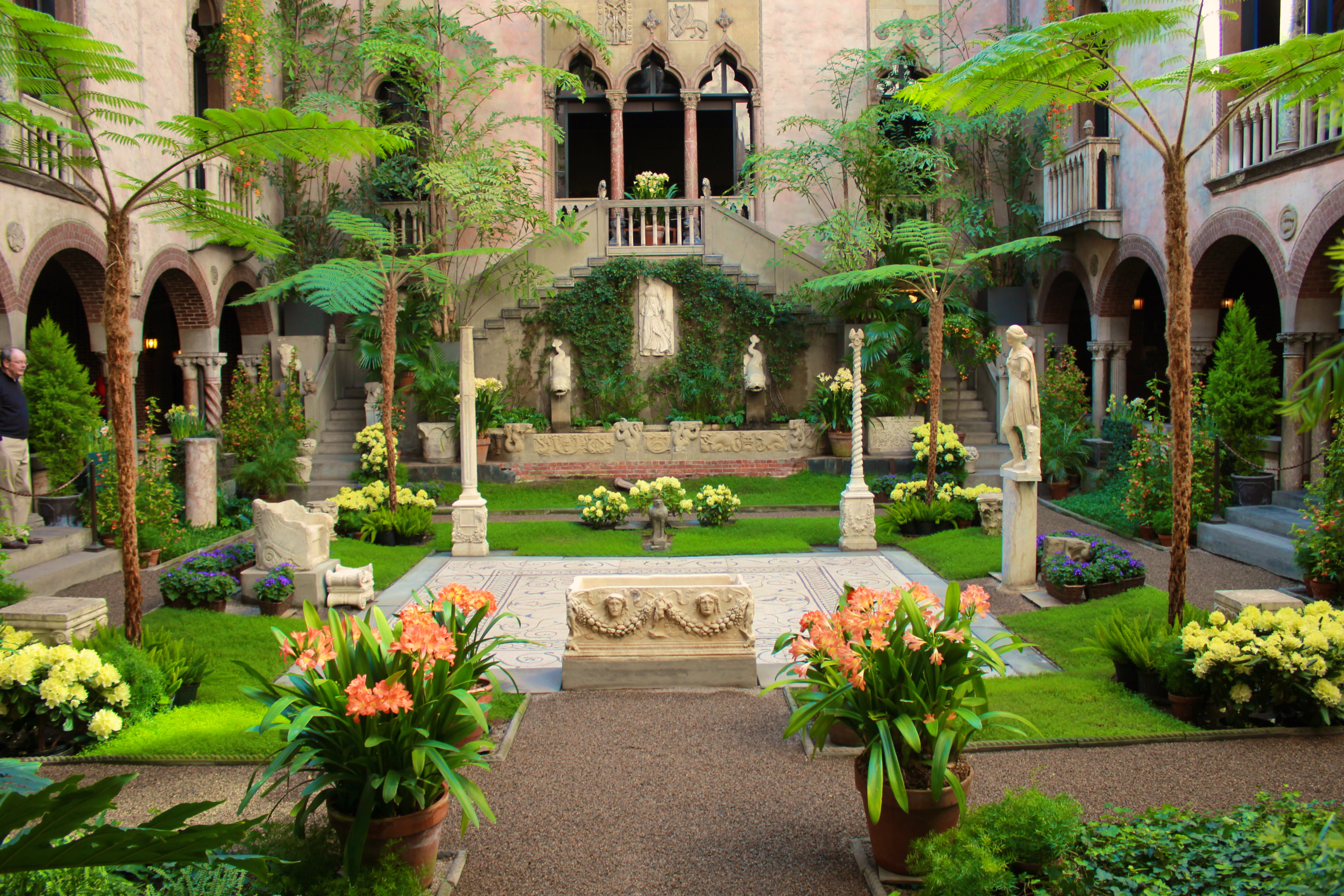
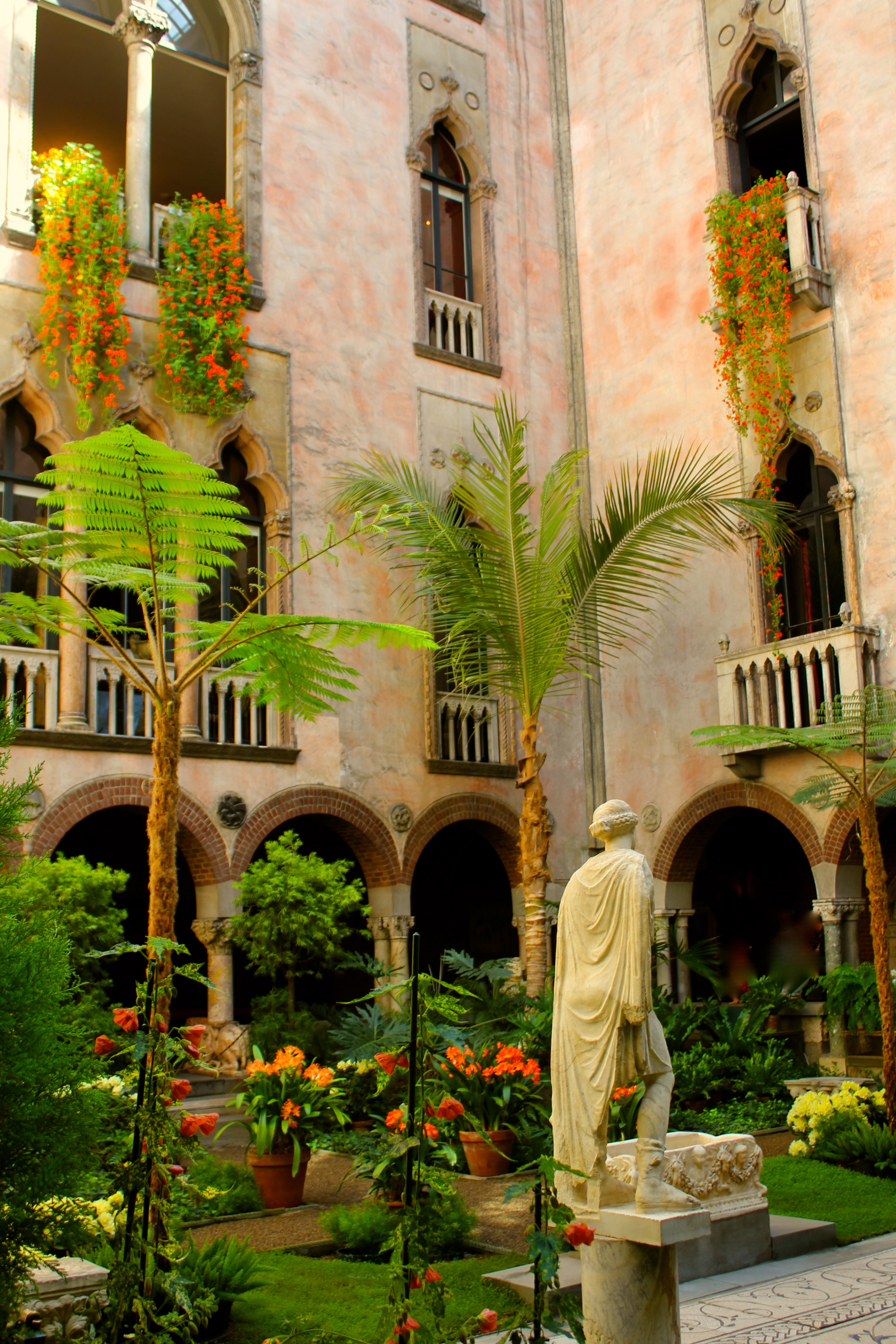
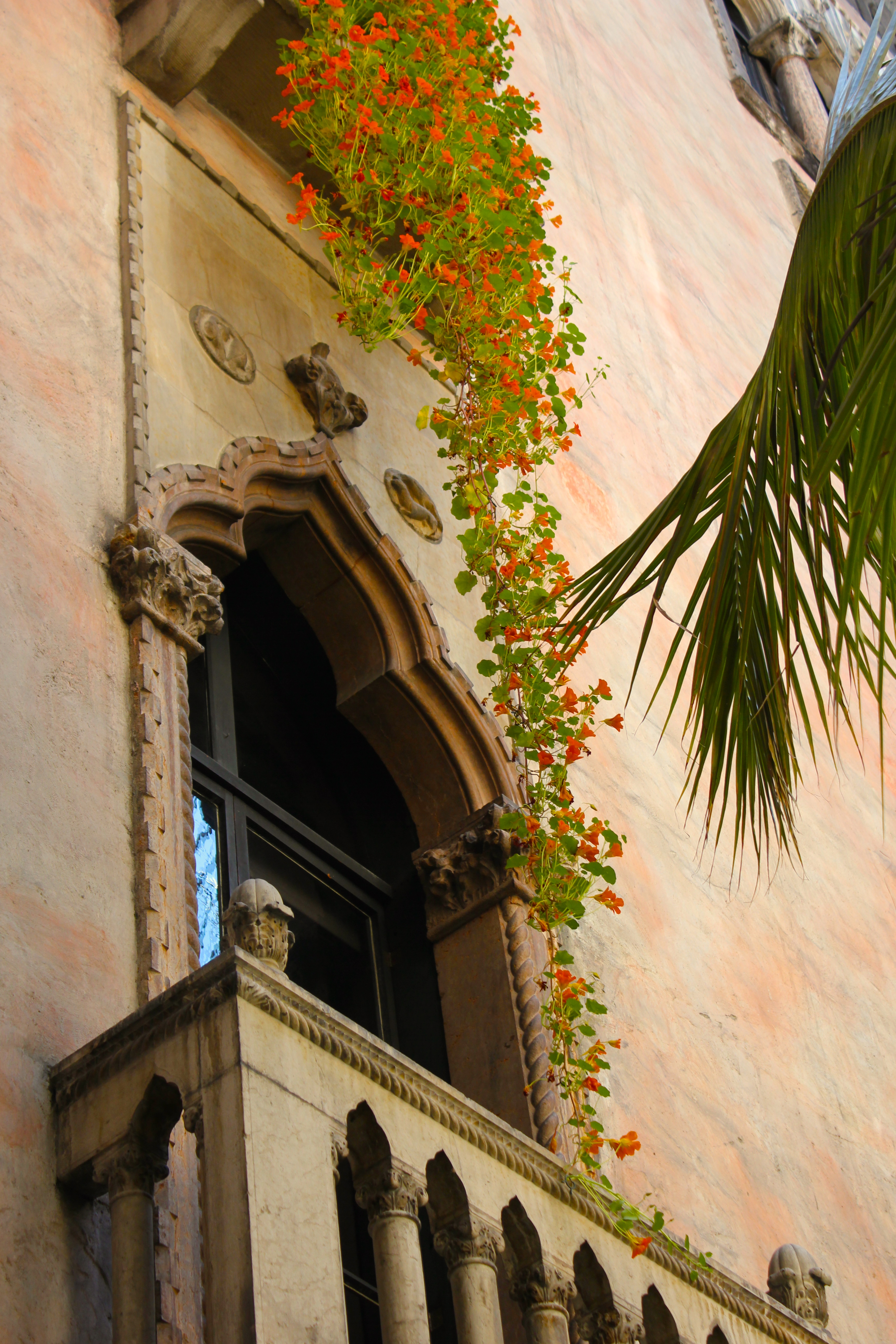
Nasturtium vines spill from third floor balconies, draping the walls of an interior courtyard with jeweled, painterly impressions of summer. The Venetian palace that hosts this happy display, known as Fenway Court when Mrs. Gardner built it in 1903, is a sanctuary for romantics. Gallery after gallery keeps precious the treasures of art that comforted one woman’s grieving soul. The treasures were arranged by that very soul. Think whatever you want to think about them. There are no labels or titles accompanying the art. Decide for yourself if you like it. Or not.
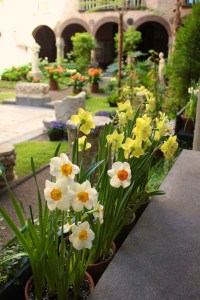
Sitting under archways in cloisters surrounding the courtyard, gentle, percussive patterings of garden fountains are meant to relax the visitor. Yet there is no rest for anyone who likes to grow things. The mind leaps, onto several paths, every one of them bound for another dream garden waiting to be realized. One season, I planted Nasturtiums in flower boxes so that they would cascade from one level of our deck, down to the next level, a la Isabella G. The simple plants, grown from fat seeds, accomplished so much in just a few months!
*****
*****
Isabella Stewart Gardner had a reputation—an easy thing for any unconventional woman in Boston to acquire. Gossip girls and boys followed her relentlessly, trying to figure her out and judge her. They still do. She is an intriguing personality.
I have always zeroed in on the defining tragedy of her life—the death of her only son, from pneumonia, when he was not yet two years old. After his death, Mrs. Gardner suffered a miscarriage. For two years, grief, depression, and illness consumed her. In a state of despair, she and her husband retreated for a year to travel the lands of Europe where she was encouraged to pursue her passions for art. Mrs. Gardner returned to America when her husband’s brother, a widower, died. He left three sons. Mr. and Mrs. Gardner adopted their nephews. History speculates that the beloved boys were gay, and that the oldest committed suicide at age 25 when he fell in love with another man who rejected his amorous affection.
Mrs. Gardner, to me, was a woman on a quest to fill the voids in her life. Voids that could never be filled.
She sought solace for relentless heartache.
*****
In the Spanish Cloister gallery on the first floor, a painting by John Singer Sargent, El Jaleo, gives moody homage to the human quest to feel happiness, without reservation or guilt. The painting depicts the experience of escaping into the music, dance, and dress of idealized Gypsy freedoms. The year it was painted, 1882, was a time when Gypsies were scorned by polite society because polite society judged the nomadic, exotic culture as one that believed in false magic and superstitions. Polite society honored magic and superstition only if it was wrapped up in the confines of organized religion—and called such things by other names: miracles, prayers, devotionals, sacraments.
From El Jaleo, Mrs. Gardner leads us into deeply intimate and personal journeys. Religious art abounds. The quest for faith, the search for happiness, and the desire for immortality are human struggles we are never sure of. The soul never stops seeking communion with the spirit of a true, supreme being.
*****
Since it is Easter season, I take interest in the Stations of the Cross, carved into stone, displayed near the tranquil courtyard.
I want the story of the resurrection to be true.
I want to be reunited with all the loved ones I’ve lost.
I seek a triumphant end to all the suffering my fellow human beings have endured.
I like Mrs. Gardner. She left all the doors, to all the rooms of her own, open. Her rooms are churches, sanctuaries, galleries, studios, dance halls, performance halls, dinner halls, salons, and quiet study halls.
She is the high priestess of the collection and she wants to share how art saved her.
She inscribed, upon a plaque for the museum: “C’est mon plaisir.”
It is my pleasure.
She wants art to save us, too.
*****
I walk upstairs from the courtyard and enter the Raphael Room. There, a little painting facing a chair and a desk, near a window, perpendicular to the room, captivates me. The painting is delicate in size. It is Raphael’s bittersweet Pieta. And, I have breezed past it on every other visit to the museum.
Mary and Saint John cradle the body of her dead son, Jesus, as Joseph of Arimathea and Nicodemus, who removed him from the cross, are present, prepared to assist in his final burial. Mary Magdalene kneels and kisses the feet of the adored Jesus.
Next to the painting, on the desk, is a vase holding stems of dried Teasel. The Teasel’s sharp points evoke the Crown of Thorns used to humiliate Jesus.
I think of how Mrs. Gardner must have chosen to sit, in the little chair near the window with this painting, during intense experiences of mourning. The painting might have soothed her into hoping for an afterlife. On other days, perhaps the painting assuaged her own despair, as she transferred some of her pain to Mary, another woman bearing the unfathomable pain of losing a beloved child.

*****
From the Raphael Room, I walked into the Tapestry Room and stood in the darkened, atmospheric space near a painting of the Assumption of Mary and a horrid sculpture of painted lindenwold representing the head of Christ, crucified. The backlit greens and oranges of Nasturtium flowers and their circular leaves, hung past an open balcony, like a veil I wished to wrap all around me. I live in a modern world, where the savage torture of human beings continues. My shoulders slumped at the thought of a contemporary Christ, how his crucifixion would be broadcast through social media.
I left the Tapestry Room and walked through the elevator passage, stopping to admire the Asian art within it, and ascended the stairs to the third floor. One of my favorite rooms, the dark and sexy, leathery and lacy, Veronese Room led to the Titian Room where you can study the simple set up for the bountiful Nasturtiums. Pots with carefully-tended, planted vines are elevated on overturned pots and arranged in rows of three on wooden benches. Light streams into this room.
I have reached a pinnacle.
This is the gallery featuring Titian’s grand Europa. The painting is powerful and I engage in a spiritual conversation with Mrs. Gardner about her placement of the painting, in line with another small desk and chair, near a window, with a vase of fresh flowers, with another painting on the desk, Christ Carrying the Cross. I sit in the chair (in my mind), and consider the line up.
Human passion, ecstasy, seduction, loss, transformation, control, surrender, cruelty, deliverance, redemption, tragedy, triumph. Resurrection. Peace.
Where—and to whom—or to what—do we commend our spirit?
How do we fill the voids?
I am sure Mrs. Gardner sat here, numb, many hours. Never coming away with any answers.
Grateful for art.
What is more true than art?
*****
My impromptu Easter excursion continued as I stepped from the Titian Room into the Long Gallery. This is a fun part of the museum where cases filled with memorabilia are covered with cloths that can be lifted for personal exploration. There is a case with James McNeill Whistler’s walking stick, also known as his wand, which he gave to Mrs. Gardner in 1886. Underneath the walking stick is a letter he wrote to her, including wonderfully incorrect spelling and punctuation:
“The masterpiece should appear as the flower to the painter—perfect in it’s bud as in it’s bloom. With no reason to explain it’s presence—no mission to fulfil—a joy to the artist—a delusion to the philanthropist—a puzzle to the botanist—an accident of sentiment and alliteration to the literary man.”
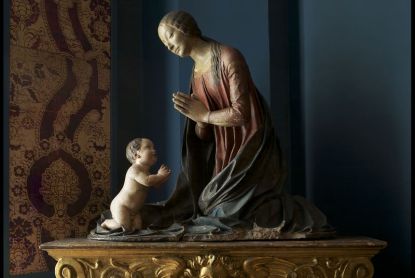
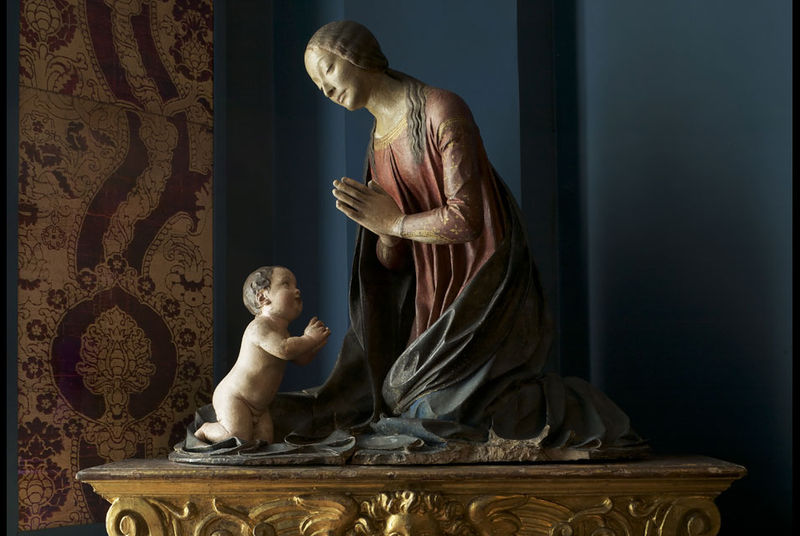
At one end of the Long Gallery there is a charming terra-cotta sculpture, Virgin Adoring Child. But I think it looks more like Mary teaching her little son Jesus how to pray.
 The other end of the Long Gallery is anchored by Mrs. Gardner’s personal chapel with French Gothic stained glass, carved saints, Italian choir stalls from the 16th century, and a prayer desk I wish I owned. There are two places to kneel here, facing the stained glass, and after walking all through the museum, this becomes a perfect respite. Kneeling, there is time to tip the eyes up and all around, admiring all of Mrs. Gardner’s spiritual nook. The stained glass transported me to Sainte Chapelle in Paris, the most beautiful and magical cathedral, built to house the Passion Relics, especially the Crown of Thorns.
*****
Before leaving the Gardner Museum, I stop into the MacKnight Room, a most intimate room of Mrs. Gardner’s own. There’s a bottle of collected sand from a trip to see the pyramids in Egypt. And, there is a reproduction of a watercolor, Mrs. Gardner in White, painted by her friend John Singer Sargent after she suffered a stroke. The iconic, scandalous portrait of a more youthful Isabella Stewart Gardner that hangs in the Gothic Room—the one that caused a great deal of vicious gossip in Boston—  (and was never again exhibited until after her death), gives way to an intensely personal portrait of a woman who seems to have arrived at a state of peaceful acceptance with her own life.
*****
In the end, Mrs. Gardner was not ashamed of how she had lived, nor how she looked. Art sustained her and helped her recapture a dramatic zest for life. She wraps herself up in a white shroud and sits for a final portrait.
She was buried between her husband and her son at Mount Auburn Cemetery in Cambridge.
Because it is Easter, I prefer to believe she is with her husband and all of her lost children, including her nephews, in a paradise where there is no suffering,
in a kingdom without end.
*****


















































































 Excursions