Willie. Weed. Luck.

A radiant Willie Nelson beams through a veil of marijuana smoke on the cover of Rolling Stone. It’s May, 2019 and he’s eighty-six years old. The photo was taken March 15th, one day after Willie rocked Texas Hill Country at an exclusive, intimate music festival he hosts known as Luck Reunion. Some critics said Willie’s performance this year at Luck was his best in the eight years since the festival began. He still tours, too. How does Willie do it? He gives a lot of credit to weed. He also notes that loving well and working hard continue to keep him in the game. And, there’s this: Like me, Willie is a self-proclaimed sentimental and nostalgic sap.

I know all of this because recently I became a little obsessed with Willie Nelson. First of all, his music has always been a part of my life; everyone knows the man is a legendary American roots music outlaw. (He’s also an American stoner outlaw; a country boy raised by his grandparents during the Great Depression who went on to became a longhair more apt to smoke a bong than drink a beer.) Second of all, several years ago Willie came into my life unexpectedly through the mail. Thirdly and best of all, this year Willie came into my life just in time to redirect a run of bad luck. The fact is, there isn’t anything more exciting than getting blindsided by luck. And when it comes to Luck, Texas style, Willie is the man.

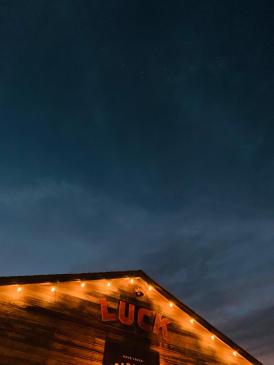
The Luck Reunion Music Festival takes place at Willie’s own Luck Ranch in Spicewood, Texas just outside of Austin during the days of the SXSW Music Festival. Tickets are hard to come by and highly coveted. To keep things fair and prices right, Luck Reunion uses a system of four lucky draws. If your name comes up, you can buy two tickets. Only about 2,000 tickets are sold, so if you never win a draw, you are basically out of luck because the chances for scalping tickets are slim.

If you do get lucky and have a chance to make it through the gates at Luck for the festival, you’ll enjoy a full day of the best in American roots music on six stages, you’ll get all drinks on the house, you’ll find the best in local food creations and art, and, of course, you’ll get to hear a grand finale featuring Willie and his family band (yes, that includes his kids and Sister Bobbie) delivering one hit after another with all the feel-good fun you would expect from a successful, satisfied Texan. The entire scene won’t just get you high, it’ll get you feeling sentimental and nostalgic, too. Turns out, science is beginning to extol the benefits of healthy doses of weed, sentimentalism, and nostalgia. But the funny thing is, if anyone has become the unexpected poster child for the joys of weed and faith and fun and luck, it has to be Willie Nelson.

* * * * *

I first heard about Willie Nelson’s Luck Reunion in late February of this year at the same time a long run of personal bad luck seemed to be gaining steam instead of puttering out. My new year, from the get-go, had been defined by bad news: The diagnosis of a serious, painful, chronic illness (son), two consecutive, compromising injuries (husband), life-goal roadblocks (daughter), and serious injury (sister). The crappy blends of bad luck not only cancelled (at the last minute) our traditional family trip and our yearly skiing adventures, but it also snuffed out a few dreams, flooded the worry chambers of my racing brain, and just plain bummed me out.

So after groveling through the early months of 2019 like a timid mouse without a Pixar contract, it finally happened.  Luck came my way and when it did, I found myself taking a second look at a misfit guitar hanging on my wall. The one everyone makes fun of. The one that arrived in the mail, from across the country, in a flimsy, torn-up cardboard box. Somehow, the guitar escaped harm. It was more ornamental than instrumental, nevertheless I hung it up on the wall next to other guitars that are played all the time. Why did I hang the guitar up? For two reasons. One: The guitar was purchased at a charitable auction by my brother in a spirit of generosity. Not one to collect things, nor own much of anything, he sent the guitar to me because my husband, my son, and my daughter are all musicians and he thought we might like it. Two: The guitar was signed by Willie Nelson. Yes, of course there are thousands of charitable guitars signed by Willie Nelson; so it isn’t a rare thing to own. But Willie Nelson, himself, is a rare thing. He’s that rare human being who overcomes adversity, isn’t afraid to be an outlaw for art and activism, and doesn’t focus on bitterness, self pity, or despair in spite of running into (and through) more heart shredding episodes of bad behavior and bad luck than anyone deserves. He’s also open minded. Willie Nelson is eager to reconsider long-held positions and take a look at situations from different, often better, perspectives.

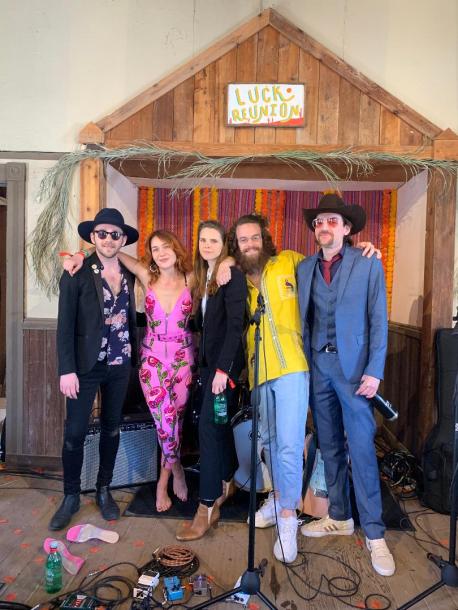
Could it be? That the guitar on my wall was a good luck charm? Some kind of fate-filled talisman just hanging around in my home waiting for the right time to make me kick up my heels when all I wanted to do was sit on my butt and stare out the window? Because something kind of cool happened in February when I was sitting on my butt staring out a window on a wall just opposite Willie Nelson’s guitar. My son, the professional musician and an outlaw since long before he was born, called. “Hi Mom.” He said. “I’m playing drums with Lola Kirke at SXSW in Austin. We have two shows. We’ve also been invited to play at Willie Nelson’s Luck Reunion.”

My son.

Performing music as part of a day of peace and love at Willie Nelson’s ranch.

In Texas.

Where Willie Nelson would be performing, too.

I let those thoughts sink in for about a second before I bolted for my computer and looked up how to get tickets. No go. I’d missed all four rounds of the lucky draw. It was enough that I wanted to see my son perform, but then I discovered that the lineup included Mavis Staples. Mavis effing Staples. My heart beat faster. Both Willie Nelson and Mavis Staples are heroic outliers in the realms of American music and American activism. They’d been through a lot. Mavis marched from Montgomery to Selma. I wanted to go to Luck, Texas and get some inspiration from that kind of living history. I had to get to Luck, Texas. Spooky, but true: our family trip, which had been cancelled due to illness and injury, was to have been an excursion to Big Bend National Park near the Rio Grande in Texas…

stared up at that Willie Nelson guitar hanging on my wall again…

It’s impossible to express the feelings of excitement that kept washing over me as I realized my son would be a part of a peaceful celebration of music and history and passion and art and food and drink hosted by Willie Nelson at one of Willie’s most beloved homes. The mission statement on the Luck Reunion website made every sentimental and nostalgic drop of sap running through my blood simmer with high hopes that luck would get me there: “…Luck Reunion is a movement dedicated to cultivating and spreading the culture of Luck, Texas and the evolution of our American roots. Our goal is to attract and celebrate musicians, artists, and chefs who, like the outlaws and outliers before them, follow their dreams without compromise. By collaborating with a group of creators who share our vision, we aim to celebrate the legacies still among us, while lifting up a crop of individuals who share a respect for those who blazed the trails before them. We are on a mission to cultivate the new while showing honor to influence. Join us in preserving the legacy of Luck, Texas.”  (If this mission statement makes your heart flutter, go to the website and get on the mailing list for next year’s lucky draw.)

As February ended, and March began, I still hadn’t heard from my son about tickets to Luck Reunion. I considered writing a letter to Willie Nelson and pleading with him to let me in. I repeatedly checked the Internet for ticket options.

Nothing.

And then one Sunday night, three days before the 2019 Luck Reunion,  I heard a twang near the Willie Nelson guitar hanging on the wall. It was my husband’s phone. I knew it had to be my son texting us. I closed my eyes, crossed my fingers, and hoped to fucking die…and go to Texas heaven.

The text: “I can get you in.”

My husband and I flew to our computers and booked flights, a car, and a little cabin near a lake. I bought Willie’s book, It’s a Long Story. My Life. I watched videos of Mavis Staples. We asked friends which acts they thought we should make sure to see. (All of them!) I pored over maps and decided we’d stay near Austin for the music, then spend time touring through the wildflowers of Texas Hill Country and the history and riverwalk festivities of San Antonio, then return to Austin and fly home. It would be a pilgrimage; because when it comes to religion, I believe in good luck and bad luck. I also believe in the laws of physics. Good luck has to follow bad luck, eventually.

As fast as I could (the trip was only a few days away), I scrambled to pack my things and button up our house and affairs so I’d have some time to start dreaming about sitting with a heaping plate of smokey Texas barbecue and a tall glass of crispy American beer. I sighed just thinking about my clothes getting drenched in the sweet, smokey scent of Big Texas Dreams. If bad luck had taken away hikes with my family in Big Bend and skiing powder in the Canadian Rockies with my true love, you can bet your country-girl boots I sure as hell would take the trade of listening to live music while strolling the dusty lanes of Luck, Texas where Willie Nelson holds his unique party in the ruins of an old west town he built to film one of his movies, “The Red Headed Stranger.” (He nurtures rescued wild horses on his ranch, too!) Furthermore, my son was scheduled to play with Lola Kirke in the Chapel. I love chapels. What could be better than a chapel where the altar is a stage for music? At Luck, the chapel is one of the most intimate stages with great sound. The lineup at The Chapel was superb. In fact, the lineup at the entire festival kept my stomach filled with butterflies. After being down on my luck for so long, I couldn’t wait to lift our spirits in Texas Hill Country.

And so we did. We started out on Rainey Street in Austin, fully energized by SXSW revelers. To our great joy, we found a Oaxacan restaurant down the street from the club where my son was booked to play with Lola Kirke. What a blast.


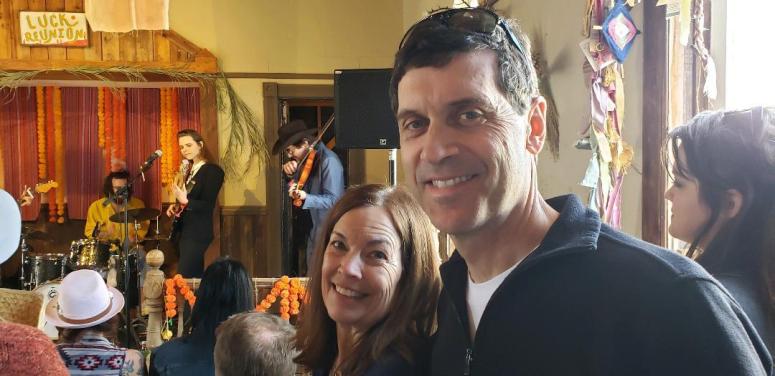
The next day was Luck Reunion. We didn’t know the details of how we would get into the festival, so we lined up with everyone else, living on a prayer, hoping our names were on a guest list. Eventually, the nerves were too much for me. I held our place in line and my husband went looking for some information. When he returned, he brought two, sparkling VIP passes for the parents (us, of course) of one of New York City’s most dedicated outlaw musicians.

The wows kept coming all day. Fabulous details like fresh flowers on tables and elaborate shrines to the departed souls in American music enhanced the feeling of “being a part of the Luck family.” Hearing and watching as many outstanding musical performances as we could, made us feel so fortunate. In fact, we didn’t stick our VIP passes onto our clothes. We kept them carefully protected inside our pockets. One can never have too many lucky charms.
IMG_2585

As for inspiration, it was everywhere. When Mavis Staples took the stage—a stage dedicated to female artists—nostalgia flooded forth. She started with “Slippery People” by the Talking Heads. She belted out “Freedom Highway,” the first protest song her father wrote at the time of the tragic case of Emmett Till and just as the famed Staple Singers were joining Martin Luther King’s fight for civil rights in America. She finished with a fresh performance of “The Weight,” inviting the female performers at Luck on stage to join in. Here’s a fun fact: The iconic version of “The Weight” performed by The Band…for the Last Waltz film…the one with those soulful gospel voices… features The Staple Singers. Pops sings a lead and so does Mavis. Pull it up on the Internet and give it a listen. (That injection of nostalgia? Those chills? It’s all good for you.)

Mavis Staples hasn’t let a bit of her soul wilt. She still believes in the power of music and she still believes in her ability to lead the people forward through her art. She’s almost eighty-years old; totally blessed with superpowers. And how about the way “respect for those who blazed the trails before us” plays out among the up and coming crop of new musicians invited to Luck? My son drummed out Lola Kirke’s new rendition of Rick Danko’s “Sip the Wine” at Luck.

Before Willie Nelson took the stage, my son herded us into the VIP area for something to eat. He showed up with a barbecued (or maybe it was roasted?) alligator head. I hesitated. “Mom.” He said. “Peel away a piece of meat and try it. Don’t you want to say you ate alligator head at Willie Nelson’s ranch?” Like a lot of strange meats, it tasted a little bit like chicken. Then my son said, “I just found out we’re going to be playing at Bonnaroo.” As if the day didn’t already have enough excitement to it.
IMG_2609

Willie and his family band took the stage at about 11 PM. It was an epic concert under the party lights of one man’s grand Texas dreams. Willie played hit after hit; every song a crowd pleaser. How the heck does he do it? As he writes in his book, he is a sentimental man. And, like I said earlier, science claims there’s something to be said about the benefits of allowing sappy vulnerability to soothe your soul. Willie writes: “My eyes are closed, my prayers are aimed towards the heavens, but in my gut, I don’t feel worthy of so much good fortune. I sing okay, I play okay, and I know I can write a good song, but I still feel like I’ve been given a whole lot more than I deserve…The fuel is love—love of people, places, animals, plants, water. Love of sound, love of space, love of fireflies and star-filled skies. Love of life. Love of home.”

Seems so simple to believe in love. But it’s not. More Willie: “I’d had my share of low moments, but I was learning that there’s always something you can do. You can train your mind to look up, not down and not back.” But then again: “I try to live in the present tense, but I’m always aware of the power of my past.” If you read Willie’s book, keep a computer handy for the interactive experience of listening in on the extensive varieties of music he’s studied and performed both on his own and with a thrilling collection of the world’s greatest musical artists.

Hope to see you at Luck Reunion next year!
IMG_2625


Whiskey river, take my mind

Don’t let her memory torture me

Whiskey river, don’t run dry

You’re all I got, take care of me
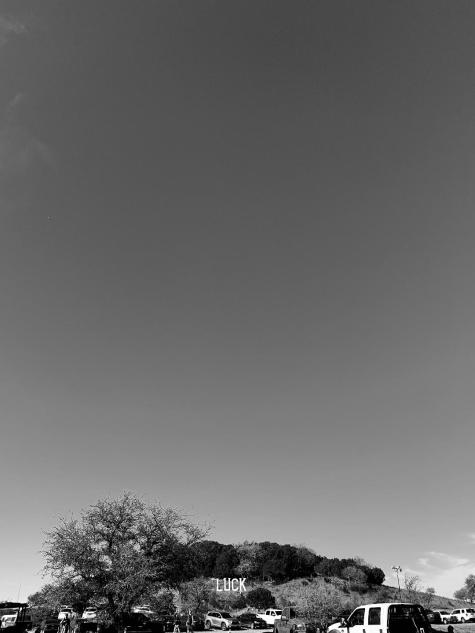
 

IMG_2560


The Chapel at Luck.


20190314_130627


IMG_2604

Lola Kirke and band in The Chapel at Luck.
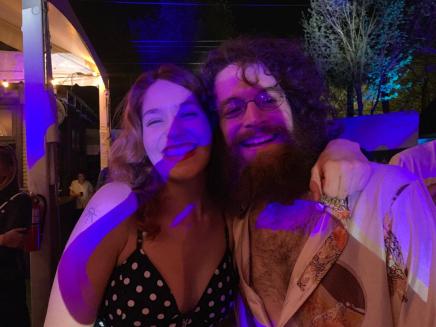
 

IMG_2536

My son and his friend Lola Kirke after their gig in Austin at the SXSW Music Festival.


20190314_152710

All performers are presented with an exclusive Luck Reunion ring and become a forever member of the Luck Reunion family.
 

IMG_3086


IMG_3090


IMG_2641


IMG_3223


Music is magic. It not only takes us back, but also leads us forward.

❤ Show Mercy to the Unlucky ❤

* * * * *
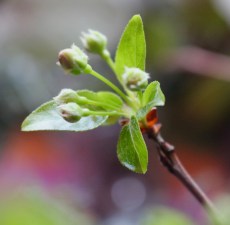


Good Mourning After A Long Winter.

IMG_9003

I know springtime is glowing behind a fresh crop of New England snow clouds, even though another blizzard bears down on us. It’s March, but winter drags on in our household. My mother-in-law died last week, joining my father-in-law, I hope, in a heavenly paradise. She took to her grave the end of a grand era in my life—almost 40 years of perfect-world love and life defined by hot summer days on a Cape Cod beach or carriage-road bike rides on the coast of Maine or feasts, fun, and celebrations throughout the years for every good reason we could think of.

When I flip through photos and memories of bygone days, emotional blizzards roar forth, burying everything we did in the blink of a snowflake’s fast flight to Earth. I find myself feeling adrift, tumbling through gusts of tearful sobs it seems shouldn’t come so frequently because my mother-in-law’s life was a long and wonderful one. Her heart was warm, not cold. In fact, she excelled at thawing the most bitter conflicts, the most chilling glares of disappointment, and the snarkiest comments of criticism and displeasure. Her determination to find ways through the misunderstandings of human imperfections usually triumphed because my mother-in-law was blessed with a gorgeous superpower: Faith in Love. There is a big-hearted difference between believing in love and having faith in love. The former is often a hopeful, romantic thing while the latter requires hard work and great patience.

* * * * * * *
The snow will rise to irresistible depths in the Massachusetts countryside when this newest, big blizzard winds down and I will go out walking or skiing through it. Last week, a storm blasted us just as we were creating a homemade service for my mother-in-law’s funeral.

I had gone walking through my gardens before that first storm, both to calm my sorrow and to search for plants I might want to put together into a seasonal bouquet for my mother-in-law’s service.

The Witch Hazel was blooming—I’d been painting a twig of it onto genuine vellum in watercolor through winter’s final days.

I found fragrant sprigs of Lavender, Sage, and Thyme and picked five sprays of the Sage, one for each of my mother-in-law’s five children.

I pruned branches from my Pear Tree. My mother-in-law had raised her family and lived her happiest years in a home on Pear Tree Drive in upstate New York.

I chose a branch from the Kousa Dogwood remembering how I had suggested that my in-laws should select a Kousa Dogwood for their last, new home. We drove all around town after they bought their final love nest, looking at Kousa Dogwoods growing in the gardens of neighboring houses.

I added branches from my Saucer Magnolia, a tree I grow in a memorial garden I designed for the memory of my baby son who died twenty-five years ago. The Saucer Magnolia was the one tree blooming in the gardens of the home where I lived when he died. My mother-in-law faithfully visited and decorated her grandson’s little grave every time she stopped to stay with us. Standing in my garden near the Magnolia tree, I had a sudden realization: When I became a mother for the first time, my mother-in-law became a grandmother for the first time. We were never the same after that day. Another memory, of something my mother-in-law said, came to me: “If you think you are beside yourself with happiness about your new baby, just wait until you have a grandchild.” My mother-in-law’s other superpower: Grandmother.

Blueberry branches, Redbud branches, Fothergilla branches, and Crabapple branches—I gathered a little bit of all of them.

I carefully selected a few branches from the Bonfire Peach Tree I planted in my garden when my father-in-law died almost six years ago. The Bonfire Peach is a showy, ornamental beauty for the garden because the pink spring blossoms are fluffy and profuse. Every year I pick the (usually neglected by most gardeners) little peaches and make one pie. The peaches are tart and it’s labor-intensive to make a pie from so many little fruits, but the pie is always a savory exclamation point to summer’s end.

Finally, I clipped branches from the Swamp Maple, a tree I fell in love with one year ago when I began to study it in springtime. The escape into my studies became a worthy distraction as my mother-in-law’s health continued to decline and she slipped further and further away into the mysterious and cruel afflictions of dementia. I felt gratitude for the Swamp Maples throughout that sad growing season. I know it sounds so corny to a lot of people to express love and appreciation for a tree, but people who believe such emotions are silly obviously have never had a tree come to their rescue.

The twigs, stems, and sprigs I gathered throughout my gardens before they were buried under the snowflakes of an epic New England nor-easter, were plunged into jars of warm water on a countertop in front of a window in my kitchen. I hoped to coax the buds to blossom early and make me happy by doing so.

Now I am watching as today’s snowflakes become lighter and more powdery. I love to trace their flights throughout my gardens, outside the windows of my home as I sit typing on my computer—a device my mother-in-law never learned to use.

The gardens, of course, are buried again.

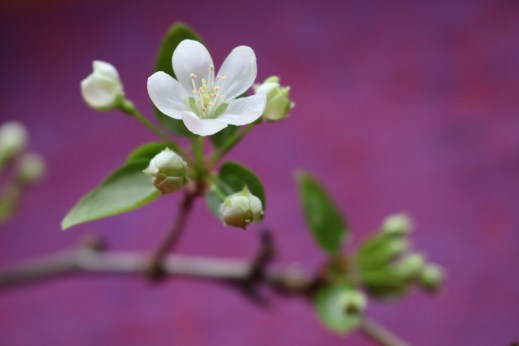
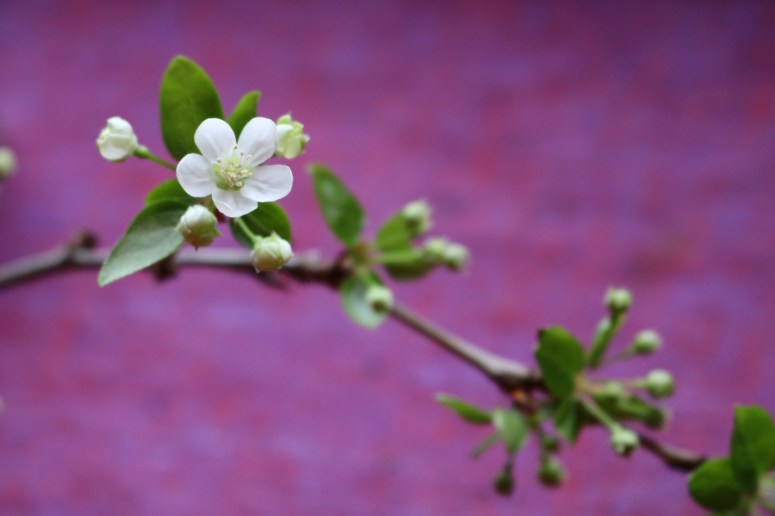
Yet one of the crabapple buds upon a twig I clipped just last week has one flower beginning to unfurl. So I blow on it, as gently as a spring breeze, and watch as the dainty, precious flower blossoms. 🙂

Surely, these are the final snowstorms of our long winter. Soon, I will be taking my wounded heart onto favorite hiking trails and into local garden centers in search of something special to plant in my gardens for the memory of my mother-in-law.

A springtime sun will come shining through and I will get to work, healing my heart again and keeping the faith, in love.

❤ ❤ ❤

IMG_9036.jpg


IMG_9035

❤ ❤ ❤


Climate Change. Orgasms. Essential Sex.

A spring fever came over me. I slipped away and found myself surrounded by trees in an airship drifting under the command of its captain—Earth’s Climate. Horizon lines blurred behind a vibrant mist tinted ruby red. My neck extended. My head grew bigger and bigger. My eyes widened into bulging beads. Then, my airship wobbled and tipped. I fell out and landed in the canopy of a tree. Upon every branch, bouquets of mini red flowers unfurled. 

It all happened after I decided to deactivate my brain and social habits from Facebook for a little while.

There were fucking flowers everywhere. Everywhere. Some of the flowers had male reproductive parts and some of the flowers flaunted female reproductive parts. The sexually active botanical doohickies came in one size: teensy. 

I have a microscope. So I righted the airship, loaded it with some of the flowers, and brought them to my laboratory. There was no time to waste announcing these good vibrations of newfound joys on Facebook, or Twitter, or Instagram, or Snapchat.

Thank goodness, because springtime comes and goes before you know it—like all good orgasms. There was fucking flower power and fucking fast breeding going on in the trees and within the growing things hiding out in my favorite romantic forests and valleys and gardens. It was all happening without the use of nuclear power, batteries, engines, or viagra.

The red flowers casting a ruby mist over all of New England bloomed upon branches of the Swamp Maple—Acer rubrum—and an intense curiosity about the Acer rubrum launched my airship at the same time I deflated my social media networks.              .

The facts were simply these: After years of partaking in a slow and awkward cruise on social media, my brain had regressed and atrophied. Even though I had tried to believe the hype that social media was the wave of the future and a necessary learned behavior for creating connections and essential networks—the truth is, (for some of us), social media can be as vast a colossal failure as pesticides and nuclear weapons and heroin.

I went to my laboratories and decided to start repairing my brain by encouraging it to re-build new networks and connections.

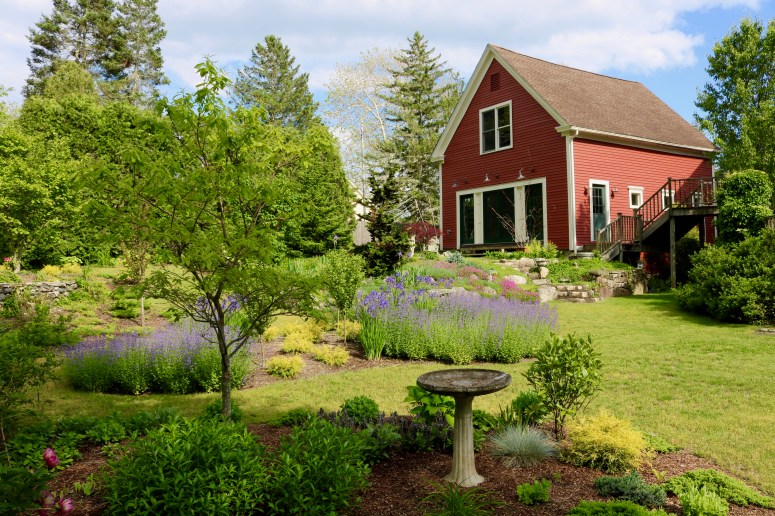
My laboratories are inside of this restored and renovated old barn (on the second floor) and outside of it too (gardens created and tended by me):

IMG_3830

IMG_3837

I surrounded myself with twigs, branches, buds, flowers, nuts, leaves, galls, bugs—all of it collected during regular walking treks or bike riding jaunts or dreamy meditative strolls through my gardens and through wildlife conservation land near home.

Studying the little flowers of a common maple tree tossed me into adventure-lands booby trapped with rabbit holes into which I fell. Disorientation and fascination ensued. During one morning’s tumbles, I underlined the following passages inside eight random books on my quest to find out how the Swamp Maple was invented, how it works to make more Swamp Maples, and how its LEAVES are capable of manufacturing oxygen for all living beings. (Without ever using batteries, engines, or viagra.)

Here are some written passages I underlined:

“This process is based on the “doctrine of uniformitarianism,” which states simply, “The present is the key to the past.” 

“However, I have never clogged myself with the praises of pastoral life, not with nostalgia for an innocent past of perverted acts in pastures. No. One need never leave the confines of New York to get all the greenery one wishes—I can’t even enjoy a blade of grass unless I know there’s a subway handy, or a record store or some other sign that people do not totally regret life. It is more important to affirm the least sincere; the clouds get enough attention as it is and even they continue to pass. Do they know what they’re missing? Uh huh.”

“Follow your genius closely enough, and it will not fail to show you a fresh prospect every hour. Housework was a pleasant pastime. When my floor was dirty, I rose early, and, setting all my furniture out of doors on the grass, bed and bedstead making but one budget, dashed water on the floor, and sprinkled white sand from the pond on it, and then with a broom scrubbed it clean and white….It was pleasant to see my whole household effects out on the grass, making a little pile like a gypsy’s pack, and my three-legged table, from which I did not remove the books and pen and ink, standing amid the pines and hickories.”

“I have often noticed that these things, which obsess me, neither bother nor impress other people even slightly.”

“…shambles….elegant experiments….The oxygen in the atmosphere is the exhalation of the chloroplasts living in plants….most of the associations between the living things we know about are essentially cooperative ones….symbiotic to one degree or another….Every creature is, in some sense, connected to and dependent on the rest.”

“Seeds are extraordinary objects.”

“Here, away from the pleasant, unintentional, fatal seductions and unplanned blackmail of friends and acquaintances, away from the facade I had built over the years to impress a world with the self I wished I were—a false front that I was obliged continually to reinforce—perhaps I could find my real self, whether it be good or bad.”

***************************************
Will the real Earth last long enough? For embarking on our own magical mystery tours? Tours that lead us to discover the stunning essential existence of leaves, the crazy sex life of flowers, the undeniable links, connections, and networks our lives depend on through the generosities of Mother Earth?

***************************************
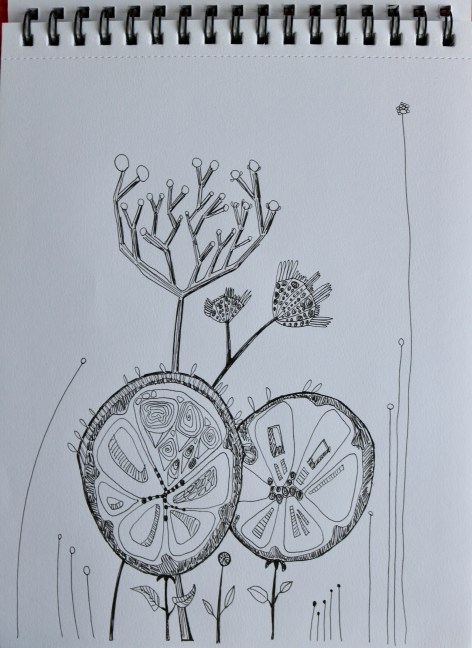
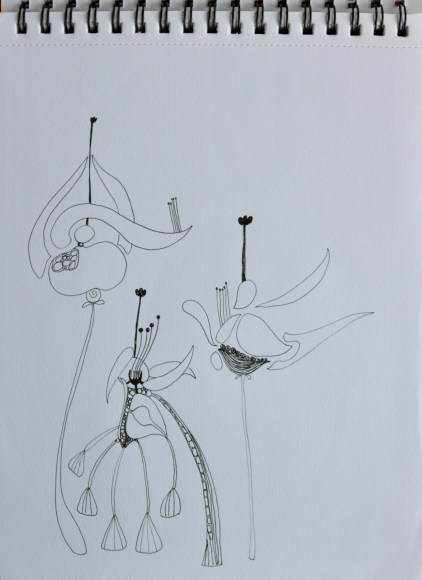
Here are some sketchbook drawings of my brain establishing new connections:

IMG_3787

IMG_3788

IMG_3790

IMG_3791

IMG_3789

I found grass growing under one Swamp Maple with red tints running through the graceful blades. What caused the colorations?

IMG_3844

My gardens. Catmint. Iris. Pinks. Phlox.

IMG_3831

I stand with the Paris Climate Agreement and France’s vow with all who do, to—

“Make The Planet Great Again.”

We need to save the birds and the bees.

IMG_3807

******************************************

BOSTON MARATHON Fearless261.

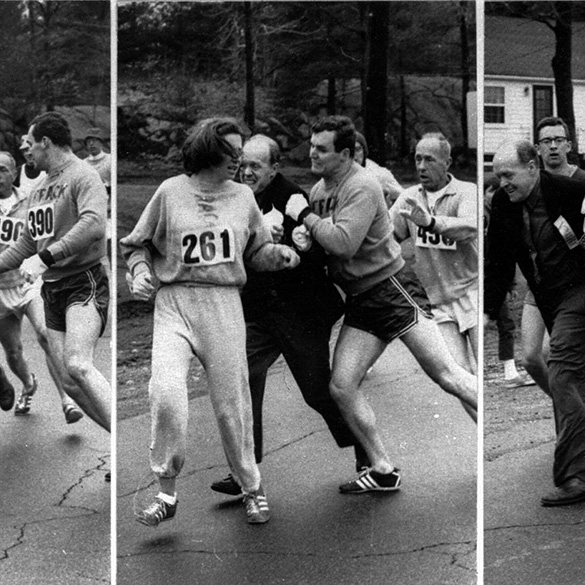
50 years ago in 1967, Kathrine Switzer, a student at Syracuse University, showed up prepared to become the first woman to officially run all 26.2 miles of the Boston Marathon.

But the race was for men only.

Two miles into the race, an angry race director assaulted Switzer and tried to prevent her from participating. With the help of her coach, her boyfriend, and a friend from the men’s cross country team at SU (Switzer trained with the team) Switzer was able to continue running and protect her bib from being ripped away.

kathrine-switzer-teaser-2

Today, April 17, 2017, Switzer will run in the Boston Marathon. She is 70 years old.

Kathrine Switzer ran 39 marathons. She won the New York City Marathon in 1974 and ran her personal best in Boston, 2:51:33, finishing second, in 1975.

When she first ran Boston, it took her more than four hours.

So don’t give up.

Overcome your doubts, your fears, your adversity, your roadblocks, your perceived existence in isolated struggle…

And become fearless.  Connect with Kathrine Switzer’s Fearless261 campaign: “A global community of women, be she a walker, jogger, or runner who have found strength, power and fearlessness from putting one foot in front of the other.”

“For all women who want to take on personal challenges through running or walking.”

And “For all women who want to become fearless through connection to others and realize you are not alone.”

http://www.261fearless.org/news/

For women who want to take on personal challenge through running or walking…today is a beautiful day in Boston to keep it going or to get it started.

Download Switzer’s bib number 261 from her Fearless website, pin it on, and go any distance, anywhere, with Switzer and her community of Fearless Women today.

Start something and keep it going! Conquer miles and miles, over heartbreak hills, through the taunts and jeers of the angry ignorants, past the nonbelievers and the non-doers—and don’t forget to run circles around the useless, madding crowd.

I’ve been a jogger, sometimes I’m a runner, mostly I’m a walker, hiker, biker, skier.

Today, I’m going to run in my heart and jog with my feet. I’ve downloaded Switzer’s bib, but I could only find one safety pin to secure it onto my shirt. While I was rummaging through drawers in my house, searching for more pins, I found something better to use—something my daughter gave me many years ago—a pin that says “Why Be Normal?”

At 9:32 AM, women will start running the Boston Marathon this morning.

I’ll be ready to go. My route isn’t far from the start line in Hopkinton and I’ll be running alone.

But not in spirit!

#RunwithKathrine   #FearlessRunner   #BeFearlessBeFree   #Run261

IMG_2810.jpg

A Helicopter Mom Crashes And Hands Over The Controls.

“The Jews are undoubtedly a race, but they are not human.” A.H. 

This quote comes before Chapter One of Art Spiegelman’s brilliant graphic novel, MAUS, a story about the Holocaust. I have picked the book up from a position of prominence on a shelf in my daughter’s quiet bedroom. It is one of her all-time favorite books. She read it, perhaps, when she might have been too young to process the intense themes throughout the story and I’m sitting in her room thinking about that because this daughter of mine is about to graduate from college and make her dreams come true.

A mother can never know the exact moments when dreams begin to formulate inside a child’s heart, although we do our best to create supportive and enriched dreamworlds. We set our children free to go leaping through books and movies, to go traveling among the peoples and places of the world, to go wandering in and out of classrooms and onto playing fields. And then, when we aren’t looking, our children escape to discover for themselves sanctuaries for hiding their most cherished dreams—places where no one will trample those dreams nor steal one bit of the sparkle necessary to keep them shining.

IMG_2776

I am remembering watching the movie Freedom Writers with my daughter. In the movie, a teacher devotes herself to a large group of the least-promising students in a California high school. The students, through the skills of learning how to become writers, achieve much more than their own personal goals—they also learn the devastating history of the The Holocaust and arrange a remarkable meeting with Miep Gies, the woman who risked her life to protect Ann Frank’s family from the Nazis. I am sure I felt the presence of The Dream Fairy sitting right next to my daughter while we watched that movie. The fairy was quiet, but my daughter was not: I am going to work with the kids no one believes in. She declared. She had not yet finished junior high.

Words from the preface of another book I have found on my daughter’s bookshelves, Black Like Me“This may not be all of it…but it is what it is like to be a Negro in a land where we keep the Negro down.   Some whites will say this is not really it.  But we no longer have time to atomize principles and beg the question.  The real story is the universal one of men who destroy the souls and bodies of other men (and in the process destroy themselves) for reasons neither really understands.  It is the story of the persecuted, the defrauded, the feared and detested.  I could have been a Jew in Germany, a Mexican in a number of states, or a member of any “inferior” group.  Only the details would have differed.  The story would be the same.   This began as a scientific research study of the Negro in the South, with careful compilation of data for analysis. But I filed the data, and here publish the journal of my own experience living as a Negro. I offer it in all its crudity and rawness. It traces the changes that occur to heart and body and intelligence when a so-called first-class citizen is cast on the junkheap of second-class citizenship.”  John Howard Griffin 1959

I keep time tripping through my daughter’s bedroom because she called me last night to let me know that she’d been offered a position as a counselor working with teens in a residential treatment center where she will deal with the diverse needs of those confronting mental health and behavioral problems, addiction problems, juvenile justice problems, personal trauma problems, and family dysfunction problems. The treatment center is not the kind of place where the rich and famous show up.

My daughter called after spending several hours at the treatment center during a second interview:

“Mom, ” she said, “I’m so excited. But I’m nervous. This job is outside my comfort zone.”

“What makes you uncomfortable?” I asked her.

“How will I know the right things to do?” She said. “Or how to handle difficult situations.”

“Do you feel safe?” I asked her.

“You know,” she said, “risks go along with the kind of work I want to do.”

“Well,” I said, “you’ll be trained and have to learn as you go.”

“I guess this is the real world.” She said.

“Yes,” I said, “so much more of a real world than any of the protected and hidden worlds where we’ve always lived.”

“Some kids just want to go home,” my daughter said. “They want to reach their goals and return home, but home is not safe for them.”

“All kids want home,” I said. “And so many begin their lives without any luck. It’s not fair.”

I told my daughter about the teachings of Mother Teresa:

From her book, In The Heart Of The World, (a gift from one of my sisters): “There is so much suffering in the world. Material suffering is suffering from hunger, suffering from homelessness, from all kinds of disease, but I still think that the greatest suffering is being lonely, feeling unloved, just having no one. I have come to realize that it is being unwanted that is the worst disease that any human being can ever experience. In these times of development, the whole world runs and is hurried. But there are some who fall down on the way and have no strength to go ahead. These are the ones we must care about.”

And from one of Mother Teresa’s letters, reproduced in Joseph Langford’s Mother Teresa’s Secret Fire“Poverty doesn’t only consist of being hungry for bread, but rather it is a tremendous hunger for human dignity. Not only have we denied the poor a piece of bread, but by thinking that they have no worth and leaving them abandoned in the streets, we have denied them the human dignity that is rightfully theirs as children of God. The world today is hungry not only for bread but hungry for love, hungry to be wanted, to be loved.”

I recall our family’s recent trip to Oaxaca, Mexico. One day, in a bookstore there, my daughter bought the book, Crossing With The Virgin, Stories From The Migrant Trail. The book tells the harrowing stories of Mexicans crossing into the dangerous deserts of Arizona and the people who choose to help them with food and water.

Mother Teresa encouraged people to find the “Calcuttas” in their own countries, their own states, and their own communities where they could work to restore the promises of humanity which include the basic values of human decency and dignity.

My daughter doesn’t believe in or practice religion, so when I tell her about the teachings of Mother Teresa, I remind her that I am sharing the teachings because I believe they have meanings for all of us.

She tells me, “Some people say that I should trust in God and that God will bless me.”

I say, “You know they mean well. I hope if there is a God that He will bless and protect you, too!”

“Well, ummmmm,” she says, “how about if I trust in myself! Duh!”

Which inspires me to return to the lands of literature with a quote from one of my daughter’s favorite dreamworlds, the world of Hermione Granger at Hogwart’s:

“Are you planning to follow a career in Magical Law, Miss Granger,” asked Scrimgeour. “No I’m not,” retorted Hermione. “I’m hoping to do some good in the world!”

********

From Erin Gruwell of Freedom Writers: 

“…if you change enough communities you can change the world.”

Here is a video of the challenging community where my daughter believes she will help change the world:

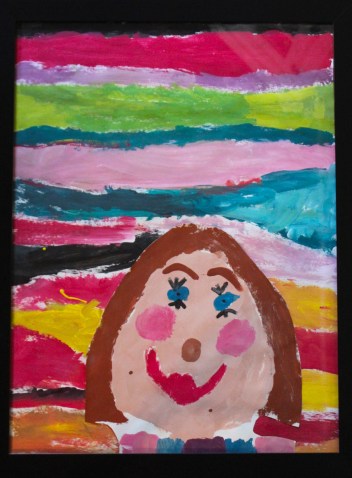
Preschool self-portrait by the little girl, now a woman on the move to heal our world,

who makes me a better person:

IMG_2774

A Happy Ending Story For 2016. With A Bright Start for 2017.

Ah, life.  Reads the last line to one of Kurt Vonnegut’s dismal short stories. In the story, a random, wonderful thing (the birth of a baby) becomes a random, horrible thing (the baby dies) for an everyday couple. The couple goes on to accept their fate, the world regards their misfortune as too bad, and the couple resumes the days of their lives as best they can.

I depend on Vonnegut’s two words with the little comma between them, whenever life tilts, then tumbles into misfortune—the kinds of misfortunes that don’t come with happy endings or silver linings or brighter sides

Ah, Life.

Who better than Vonnegut to write, with his unfairly wounded heart, those words as the final answer to a sad story? He had experienced the WWII bombing of Dresden, Germany while hunkered down in a slaughterhouse as a POW. He lived to deal with what he had witnessed and what he had been ordered to do with the carnage. And, as if an experience of war wasn’t enough, Vonnegut never escaped burdens of personal tragedy and heartache on his home fronts. On top of everything, he was afflicted with PTSD and depression.

And so it goes. (KV, also.)

And so it does go. For a lot of us. Sometimes it feels as though we can’t bear to shed another tear or expend another ounce of energy to keep our hearts pumping through the adverse challenges of illness, relationships, addiction, responsibility.

Ah, the heart. So high maintenance! Mine soldiered on and on through 2016. It soared; it crashed; it held the line. By year’s end, the Holiday Blues were getting the best of me until one day in December when I heard a simple story that blindsided my weary heart with happiness. In fact, I needed to give myself a happiness time out when I heard the story—just a minute or two—when I gave myself permission to stop and feel really happy because something good had come to light. The feeling wasn’t going to last forever, I knew that. It was only a moment of grace.

But what an amazing grace it was.

Because as much as bad news and the blues can drag me into my own slaughterhouses of self-loathing and self-destruction, good news can make the sun blaze a smiley face tattoo all the way through my thick skull and onto my parietal lobe where science claims human happiness gets juiced. According to contemporary maps of the human brain, the parietal lobe sits behind the frontal lobe which, in my life, too often gets used as a hammer—to pound stakes through my heart.

Heart, soul, brain, belly—wherever it is that happiness hangs out, it’s always good to welcome the spirit when it comes to abide.

Here’s Vonnegut on feeling happy:

“I urge you to please notice when you are happy, and exclaim or murmur or think at some point, ‘If this isn’t nice, I don’t know what is.'”

Vonnegut’s words aren’t earth shattering unless you know a little bit about the man voicing them. Or unless you, yourself, can recall your own descents and/or relapses into the pits of grief and despair. One never forgets how hope becomes the most amazing grace when the darkness begins to fade—how one sighs, then breathes again—murmuring a happy prayer of relief and gratitude: If this isn’t nice, I don’t know what is. 

Maybe we don’t really know what nice happiness feels like anymore. Many of us live in worlds tilted off balance—worlds where getting juiced with what we think is happiness is triggered by pings emanating from electronic devices which are often followed by pangs—of bewildering angst. Soon, an addiction to fake happiness develops. Desires for instant and constant and big-bling gratification become crippling. Useless emotions like jealousy or envy arise to ruin the day. The little things in life no longer delight us—little things that are actually the beautiful and surprising blooms from seeds we planted long ago and never stopped tending.

As I mentioned a few paragraphs ago, I was surprised by a nice story this year. The story was real, not fake. I received a genuine boost to my spirits—on all fronts—when the story came to me.

Let’s see if I can tell about it:

So. Once upon a time. This year. A week before Thanksgiving. My father saved my mother’s life. Mom was sitting in her wheelchair watching the news on a morning when Dad had decided not to go to the gym. Dad heard Mom utter an unfamiliar gasp. He sprang from the breakfast table. He called out to her. No response. He searched for a pulse. None. He began CPR. He dialed 911. He resumed CPR. The medics recharged Mom’s heart with a defibrillator. They rushed her to one hospital where she was then airlifted to another hospital. For several days, Mom was confined to the ICU as she entered into the brave new world of medically-induced hypothermia. Her body was cooled to preserve brain function by, hopefully, reducing the number of brain cells damaged due to loss of oxygen when Mom suffered sudden cardiac arrest. Basically, Mom was sort of safely frozen.

A big freeze descended on all of us as we waited to see whether or not Mom would survive, and, if she did survive, would her mental abilities be as sharp as they were before the sudden cardiac arrest which had caused loss of oxygen to her brain?

It was a dreadful experience. Over a few days, Mom’s body temperature was slowly restored and we encouraged her as she struggled to get her mind to achieve its baseline.

It’s hard to determine the exact moment of miraculous intervention which helped Mom’s perky mind thaw out as well as we could have hoped. It was definitely a team effort between Heaven and Earth. But it also might have been this: Dad’s CPR broke Mom’s ribs. He got through to her heart and kept it pumping when it mattered the most. (And Dad has his own health challenges. And Mom is paralyzed on her left side. So I have to wonder if some strong guardian angels came to the aid of my parents until the medics arrived. Maybe one of those angels went by the name of Cupid.)

During the longest days of panic, exhaustion, and worry, my sister and I were talking and suddenly remembered it was Christmastime. She told me she was going to order a wreath from a local flower shop where Dad lived and have them deliver it and hang it on his door.

Dad was home when the delivery arrived. The doorbell rang, he opened the door, and there stood a man with a wreath. The man said: “Do you remember me?” At first, Dad didn’t recognize the man, but as soon as the man introduced himself, Dad remembered him for sure.

It had been many years ago. Back in the days when Mom and Dad hauled their family of seven children from Indiana to Arizona to Connecticut, always on the move for better opportunities. In Connecticut (the family’s final frontier) Mom and Dad worked several jobs. Dad was an executive and Mom was a real estate broker. In their spare time (:D) they bought, restored, and sold homes. Mom and Dad spent many late nights and long weekends ripping apart, hammering together, and fluffing up neglected properties. They poured their hearts and souls into the homes they renovated.

One of those homes—we call it the Ironworks House—came to them unkempt with overgrown landscapes, cars and tools rusting away in side yards, and a neglected pool. It took Mom and Dad a year to renovate that house. While they worked, people watched the transformation. One evening, a man out walking stopped in to talk to Dad while Dad was working on the Ironworks House. Dad was installing a new wall that night. There was no time for breaks so Dad kept working and while he worked he explained to his visitor, through real time demonstrations and detailed explanations, how to build a wall The Right Way.

Whenever my parents completed a house renovation project, they acted just like any other great team of artists—proud and unsure about whether or not they really wanted to sell their beautiful work. But, my parents knew what it meant to have a family in a happy home and it gave them a great deal of satisfaction to match their homes with the right buyers.

When it came time to sell the Ironworks House, Mom determined that all offers must at least meet the asking price. Immediately, she had two offers—one for the asking price and one for less-than the asking price. The man who had stopped in to visit Dad one night while Dad was working on the house, had offered the asking price. Another man, from New York City, had offered less-than the asking price.

When Mr. NYC heard my parents had accepted the offer from Mr. Visitor, he increased his bid for the house.

But Mom and Dad said no go.

Mr. NYC didn’t give up. He was well-equipped with buy and sell and deal-making maneuvers.

But Mom and Dad said no go.

I think there was some discussion among the seven kids in those days—failed attempts to talk sense into Mom and Dad—like: “Are you guys crazy? Someone is offering you more money for all of your hard work!” (Mom and Dad probably said a prayer for the transformation of our greedy little souls.)

Mr. Visitor and his wife showed up at the closing for the Ironworks House without completing a home inspection. The attorneys said to them: “You haven’t had the home inspected yet.”

Mr. Visitor replied: “Have you ever watched these people build a house? There’s no need for an inspection.”

Boy do my parents love that part of the story. I do too.

So then along comes 2016, many years after the sale of the Ironworks House. Mom and Dad had moved several towns east along the Connecticut shore from where they lived when they were hard-working home makers. Mr. Visitor went on with his life and after retirement, liked keeping busy as a delivery man for a local florist. Yes, he was the one who showed up to deliver Dad’s Christmas wreath and hang it on his door.

And what became of the Ironworks House? Mr. Visitor and his wife raised their family there and created a home so happy that they passed it on to their daughter where she is now raising her family.

IF  THAT  ISN’T  NICE,  I  DON’T  KNOW  WHAT  IS!

On this, the last day of 2106, my mother is going to come home from the hospital.

Happy New Year to all from my heart and happy home to yours. I urge you, in the days to come, to notice when you are happy. When you do, take a happiness time out.

Allow the spirit to abide.

img_0676

Gimme Shelter.

So here we go after Election Day, 2016.

America drank the political party kool-aids, but I am still nursing a brutal hangover. Maybe I should have known better than to listen to anyone at any of those parties. And now I’ve got an uneven, smeary kool-aid mustache stain marking my upper lip. How about you? Are you sporting a political party kool-aid stain on your upper lip? What color is yours? Red? Blue? It’s been more than a couple of weeks now. Will this thing ever fade away? 

Meanwhile, in the fun election-results column, my state of Massachusetts (nouveau-hip Massachusetts) legalized marijuana for recreational use. (Just in time to make all parties going forward more fun than those November election parties!) I’ve lived in the berry blue state of Massachusetts for a long time with preppy, bookish, more-fashion-wrong-than-fashion-right liberals. I’ve also lived in America’s midwestern and southwestern regions. I’ve spent most of my life traveling throughout my country’s still-united states, staying with family and friends or opting to make new friends in campgrounds, roadside motels, and posh resorts. My family is large, with more conservatives than liberals at the table.

But a lot of unexpected things happened inside my American head and heart amid this year’s election noise when I tuned in to listen to surprising conversations with family, friends, and fellow Americans. I found myself confronted with points of view that will never come into focus for me. I realized, in many cases, others won’t ever “get” me and I might not ever “get” them. Worst of all, that old buddy-buddy bromide, “let’s agree to disagree” failed to inspire civility.

All I can say is: Choose your drugs, America, and find your escapes because the country is going to pot. Things are getting crazy and the crazy isn’t crazy fun. It’s crazy effed up.

It happens. Abraham Lincoln did not win the popular vote his first trip to the White House. Would you have voted for him? One of his campaign promises was to allow slavery to continue to exist in the states where it already had destroyed, and was continuing to destroy, generations of human beings. From the day of Lincoln’s election to the day of his inauguration, the ultimate in protest behavior ensued when slave-holding states began to secede from the Union. Were there any other protestors beyond those seceding in the southern states? Tens of thousands, perhaps, from up north? Marching on Washington to let Lincoln know that they were not okay with even a little bit of slavery?

What forms of injustice, and in what quantities, do we allow one administration to create an acceptance and tolerance for, in order to establish a false peace? Do we go along with a little bit of racism? A little bit of misogyny? A little bit of xenophobia, homophobia, Islamophobia? A little bit of big government controlling the press? Influencing social media? Running personal businesses through the White House and using the White House as a promotional brand? There’s more but my head hurts.

Maybe the impending gentrification and normalization of Dystopia America won’t hurt a bit when our amber waves of grain become verdant stands of pot plants. Some citizens could go back to the closet, back to the kitchen, back to another country, back to un-evolved times in history—while the stoners get to keep coming out of the drug dens.

So whether your vote was influenced by drinking the cherry cherry red kool-aid or the berry berry blue kool-aid or the protest-vote, triple-awesome grape kool-aid or the internet troll-spiked-with-Russian-vodka kool-aid—Hello!—I am among the walking wounded, (as I mentioned earlier), and we are nursing brutal hangovers. America’s 2016 election beat some of us up pretty good. We the people of this great country, in order to form a more perfect Union, did not deserve to have our lives and our relationships ravaged by such epic political drama, dysfunction, and damaging hate served non-stop in heaping helpings from all sides and all players.

America—

—is a nasty country.

And although I’m looking forward to baking warm cookies, decorating the drug den, and hosting a Peace and Make-Love-Not-War pot party for any friends I might have left, I also know it would never heal a heart like mine to create my own utopia and pretend I saw no evil, heard no evil, and spoke no evil.

My America is in tatters. It’s shattered. We are not walking the good path of establishing Justice nor are we doing the good work to ensure Domestic Tranquility. And to those who have a simple command for someone like me: America! Love it or leave it!—I have a more complicated response: Hello! (Again.) I am a woman and a mother. I can’t abandon what I love. Any person who has ever parented one or more uber-rebellious adolescents knows love and loathing must often be battled all in the same heart. Any person who has ever managed to build a successful marriage knows this too. Any person who has ever been one of the marginalized citizens of his or her country knows this too.

And here’s the thing. Many of us have already left our religions (for me, that would be Catholicism) because we didn’t love or accept religious ideologies or want to teach our children that women and other designated human beings were unworthy of the most revered positions of leadership, the most honorable acts of respect, and equal seats at the table with God, if such a phenomenon as God exists. We accept the freedom for such religions to exist. But when it comes to America, we do love, support, want to live by, and are willing to defend the fundamental truths of her Constitution and her Declaration of Independence.


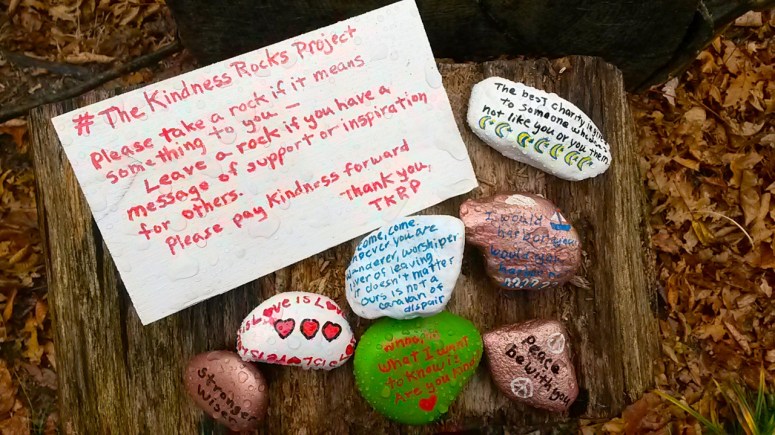
A few days after America’s 2016 election was finally over, I escaped to the woods for a walk in the cold rain and happened upon a pop-up, feel-good arrangement by some fellow citizens promoting The Kindness Rocks Project:

20161115_121924

I stopped to admire the heartfelt effort and thought about the ways we human beings try to make ourselves, and others, feel better in a world where hate is so prevalent, misunderstanding is so warped, oppositional heartbeats thunder so persistently inside our aching chests,

and too many of us end up feeling unwelcome and unsupported in our own country.

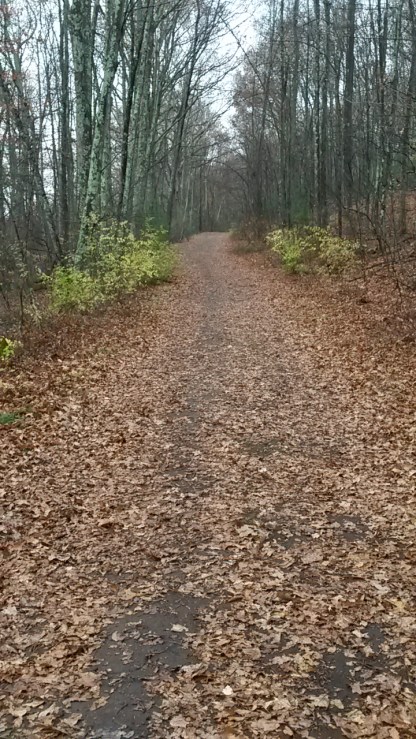
I picked up the bronze Peace Be With You rock, stuffed it into my pocket, and continued on the trail through the rain and deeper into the cold, empty forest.

20161115_124512

The rock grew heavier in my pocket.

I was thinking about my children. My family and friends. Americans I talk to wherever I go. How to shore up my soul and settle it down. How to believe in a promised land when, as a woman, I am one of the publicly shamed citizens of my own country—and the world.

I could walk through a thousand forests and never understand the allure of corruption, deceit, and deliberate cruelty. I suppose my cognitive processing problems are exacerbated by the very act of choosing to go walking through forests—Shared Forests, Preserved Forests, Beloved and Appreciated Forests. Alas, I’m not only a Woman, but I’m also a Flower Child and a goddamned Tree Hugger. Where is my promised land? I pressed the Peace Be With You rock into the disturbed soil at the base of a mighty tree that had been upended by a terrible storm. Maybe someone else would like to admire it.

There are, of course, things we can do to work at restoring Justice and Domestic Tranquility in America. December’s issue of the The Sun Magazine features an interview with Ralph Nader entitled It’s Easier Than We Think. Ralph Nader On How We Can Change Society. Trigger warning: Ralph doesn’t like a lot of America’s popular politicians. Furthermore, activism isn’t about hitting the send button on an electronic device where you’ve recorded your own angry thoughts and feelings.

We can also learn to dance and I recommend the Tango. Perhaps America needs to start establishing tango parlors—special places where the Peace-Be-With-You Groovies can go to get some shelter.

Once, I traveled to Buenos Aires and landed in a tango parlor inside an abandoned warehouse. We were delivered to the venue courtesy of my niece (she was a student in Buenos Aires) and an angry taxi driver who, when we asked him if it was safe for us to visit the tango parlor, hollered: “Nowhere is safe! You shouldn’t even be in this country!” in between shouting obscenities at protesters blocking our route. My niece translated the taxi driver’s warnings to us using her soft and sweet inside voice, which made us feel bold and adventurous.

A gigantic, anatomically-correct sculpture of a human heart hung from the ceiling of the cavernous tango parlor. It appeared to float in the darkness. Not until after midnight did the musicians arrive, and that’s when the city’s tango dancers emerged from their nowheres. As the musicians played and the couples tangoed, the big heart swayed.

The Tango involves unique and intense forms of intimacy between the dancers and the musicians. Its history and development does not include academic or privileged pedigrees. The dance arose from passion—the kind of passion that sets hearts afloat on small boats in vast and uncertain oceans where mean and nasty sea monsters want to eat them up.

I had created a work of art influenced by my excursion to Argentina and the quiet conversations I had with people I met—people who shared stories from their own dark histories of oppression, exile, and return.

The work was a triptych representing fragmented maps, trails, and walls. I used black walnut ink, which I make from Black Walnut trees in my garden. I included text from my journal, written after the night at the tango parlor.

It surprised me to come upon this work of art, recently, while I was searching for something else.

The art spoke to me all over again from a completely new perspective as I sat in the shelter of my own utopia—surrounded by the serenity of my own gardens—as the sea change of a troubling election bore down on my beloved America.

…The light of la luna falls onto the peaks of the Andes Mountains from skies where darkness conceals our embarrassments as we try to slide the tango into our bodies and out of our feet. We are all pressed up against each other, our faces so close we only have to whisper. Some of us stumble. Others escape. Musicians play. More beautiful dancers, everywhere, find a place for their secrets in the dance and the music. They know to keep truth well-hidden under lowered eyelids and safely quiet behind barely parted lips.  Worries are danced away by the pleasure of bodies, alive, leaning in on each other. We want to dance. We need to dance. The music is all we can trust. 

20161129_091822-1

Trails. Walls. One Heart, Blooming.

Artwork by Theresa


Here is the final paragraph from Abraham Lincoln’s first inaugural address. Lincoln was just a man. A man so imperfect and so wrong about slavery and African Americans, yet president of the United States of America. He believed these words, though, and became a better man.

Where, oh where! Are the better angels of our nature now?

“I am loathe to close. We are not enemies, but friends. We must not be enemies. Though passion may have strained, it must not break our bonds of affection. The mystic chords of memory, stretching from every battlefield, and patriot grave, to every living heart and hearth-stone, all over this broad land, will yet swell the chorus of the Union, when again touched, as surely they will be, by the better angels of our nature.”

20161118_163325

May the gods bless and restore to America, the better angels of our nature.

O! Canada. And a Recipe for Relief.

America keeps coming undone. We act so shocked, but, honestly, what would America do without the drama of dysfunction? It’s as though a plague of uncivilized humanity has escaped from Hater’s Anonymous rehab to indulge in PDR’s: Public Displays of Relapse. They dream of reestablishing a culture of coddled cads who think PDBB’s—Public Displays of Boorish Behavior—should be acceptable forms of discourse.

It’s utterly repulsive. I don’t like America right now. I’m not feeling the love and I loathe what is becoming of my country. America—with its farce of an election—is being dominated by a cesspool of withered minds and floppy mouths belching forth a stench so foul, I can’t breathe without gagging. This does not mean I’ve lost faith in America. But still—my broken heart!

The good news is, there are some bright horizons—like the one to our north, and downeast from Maine. If any Americans out there, (like me), are seeking some relief, stop for a minute and say a prayer of gratitude for our position on the planet next to Canada.

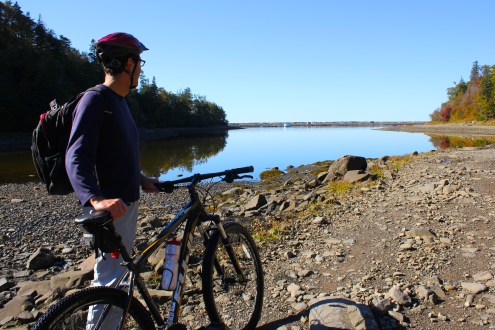
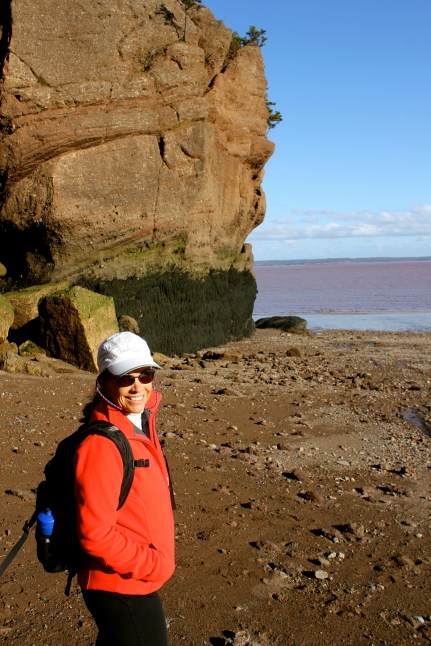
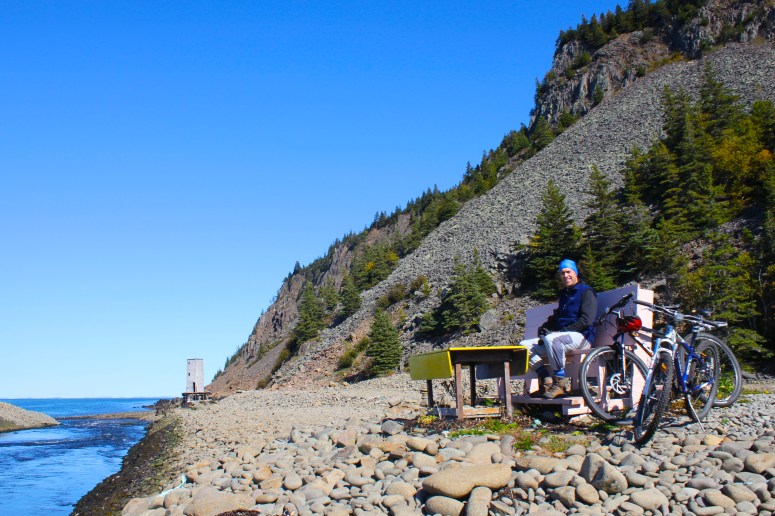
Because across the border and into the Maritime Provinces, my husband and I have always found kindness, resplendent scenery, powerful tides, rejuvenating hikes and bike rides, nurturing food and drink, and wonderful music. These maritime—“of the sea”—lands include Nova Scotia and Cape Breton Island, Prince Edward Island, and New Brunswick. I’ve traveled to all of Canada’s Maritime Provinces, though not as often as I’d like. From where I live, Halifax is an easy flight out of Boston. Prince Edward Island and New Brunswick are road trip excursions. At the end of those road trips, a soulful and quiet peace awaits. It’s a welcomed type of slow travel that rarely moves beyond first gear, especially if you travel late into autumn which is what my husband and I just did.

On one hand, the Canadian Maritimes-style peace is so slow and so quiet that I don’t want to tell anyone about it. On the other hand, I’m not so sure people are interested in true peace anymore.

—Or their own souls.

—Or the souls of others.


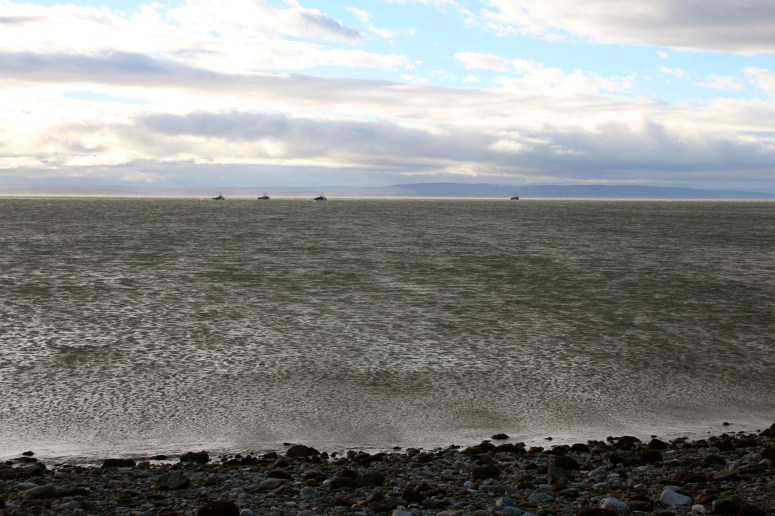
Upon arrival in Canada, we stayed in a campground overlooking the Bay of Fundy from the town of St. Andrews, New Brunswick. The date was Canada’s Thanksgiving holiday weekend. We cooked dinner outside, the sun set, and soon a fellow camper stopped by our campsite to invite us over to his campsite for an evening of music. Thus passed our first night away from America as we found ourselves taken in—and taken away—by a fiddle player, guitar players, and singers performing songs and hymns in the distinctive, Celtic-derived traditions one looks forward to hearing in the Canadian Maritimes.

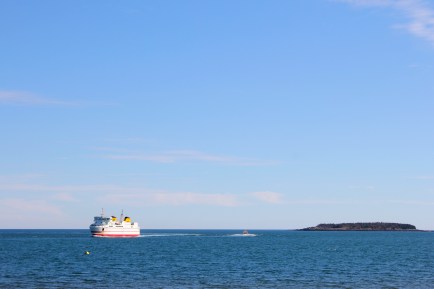
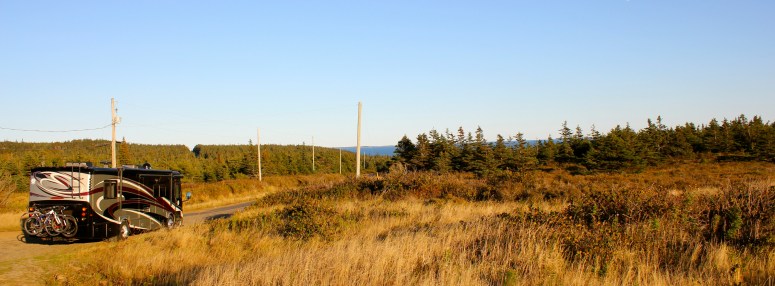
A few days later, my husband steered our motorhome into the belly of a ferry bound for Grand Manan Island—part of an archipelago of islands afloat in the mouth of the Bay of Fundy. The great American woman and writer, Willa Cather, spent many peaceful summers on Grand Manan, which is how I first learned about the island.

img_2238

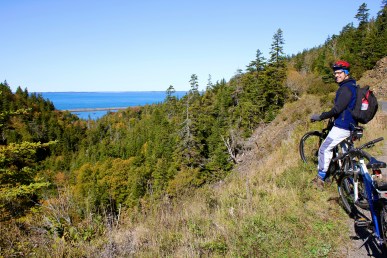
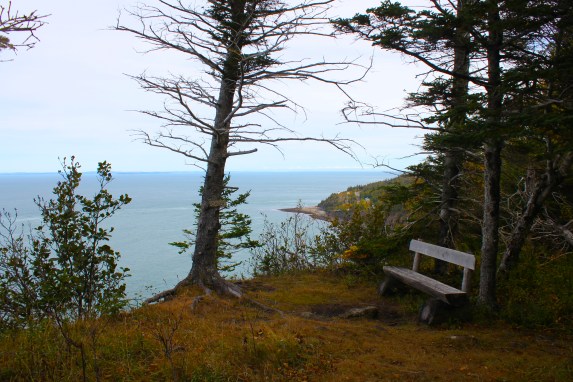
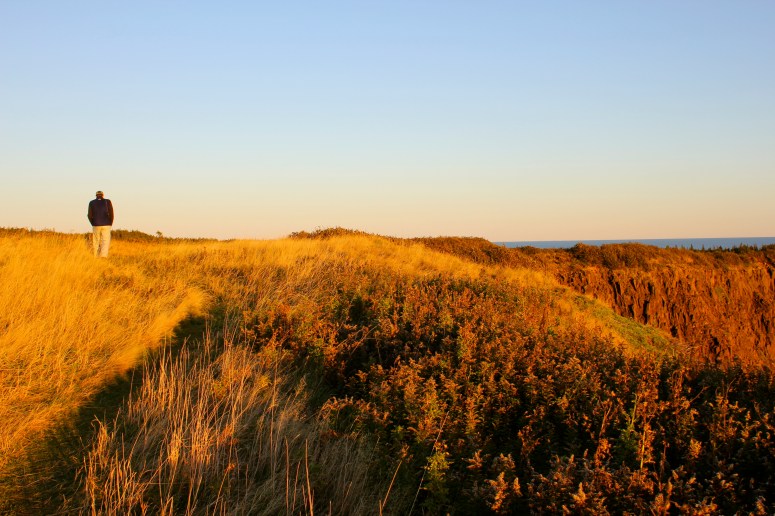
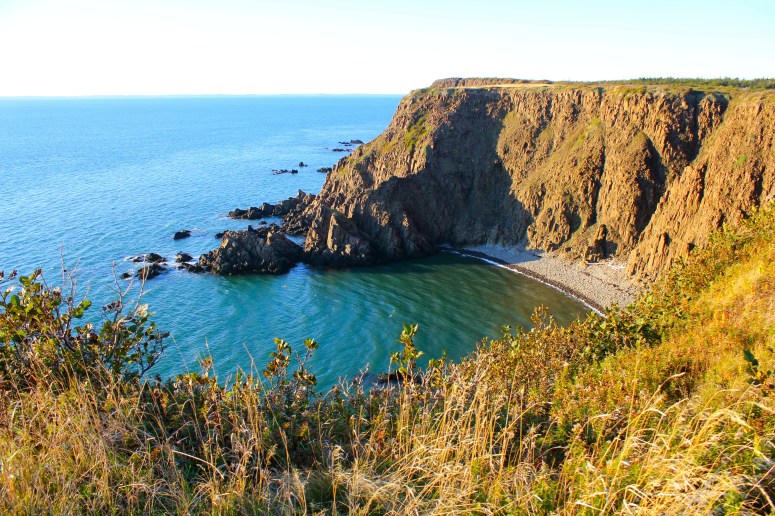
On Grand Manan, we found North Head Bakery and bought ginger molasses cookies, macaroons, warm baguette, sugar donuts, and still-steaming raisin bread. We found walking trails at the very edge of majestic cliffs with only fresh air to steady our wobbling legs. We found islanders that waved hello whether we were driving our huge motorhome on their narrow roads or riding our mountain bikes up and down their hilly routes.

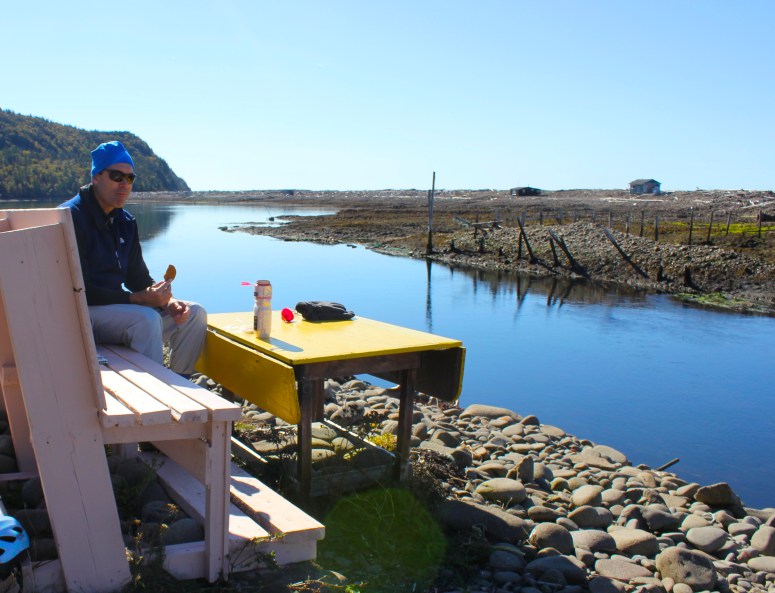
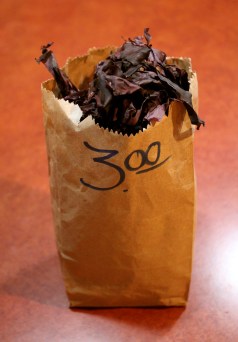
We biked to the infamous island outpost of Dark Harbour where we enjoyed a unique place to have a picnic. We discovered dulse, a superfood sea vegetable (aka seaweed) harvested by hand from the ocean and dried on rocks under the summer’s sun.

img_2107

img_2146

img_2152

img_2136

img_2142

img_2156

img_2163

img_2141

img_2160

img_2164

Willa Cather wrote: When kindness has left people, even for a few moments, we become afraid of them as if their reason had left them. When it has left a place where we have always found it, it is like shipwreck; we drop from security into something malevolent and bottomless.

America is shipwrecked. It has been sunk by malevolent and bottomless madding crowds.

A history of shipwrecks surrounds Grand Manan Island. Her cliffs are dangerous, wild, and windswept. One stands on the edges of the island in the year 2016 and considers the consistent tug of Earth’s greatest tides, those forces always at work eroding the truths we no longer seem to value and uphold as self evident. Indeed, a faraway island can leave a traveler like me, a woman unmoored from her own country, feeling hopeless and stranded. I found myself wishing the tides of the sea could take me away. Then I wanted them to promise to bring me back. I wanted to present the Bay of Fundy tides to the rest of the world, so everyone could notice how powerful and precious and vast they were, and how small each and every one of us becomes when we stand facing the phenomenon of Earth’s relentless waters.

img_2229-2

img_2231

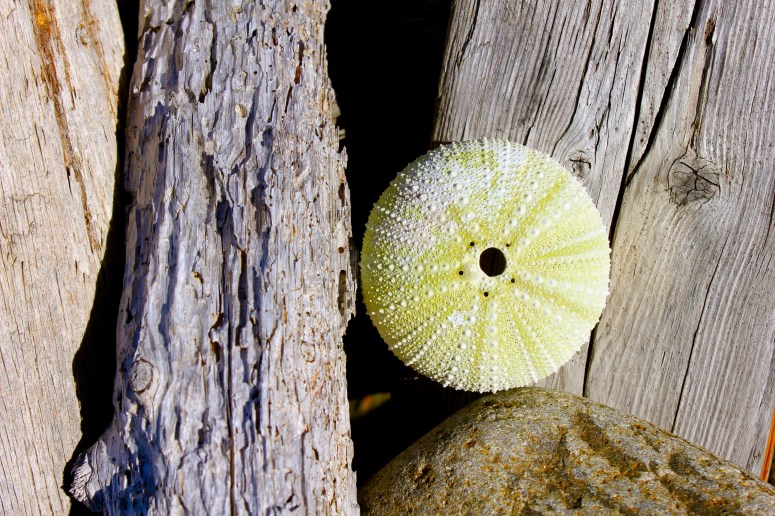
I asked the tide to bring me sand dollars—

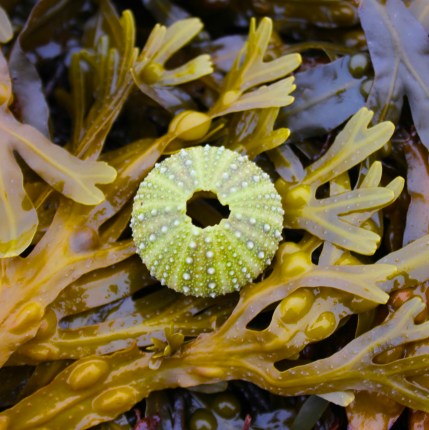
Intact sea urchins—

Pretty sea shells—

Fossils from a time when the Earth was not yet ravaged by the egos of men and women.

img_2172

img_2187

img_2167

img_2177

img_1962

img_2224

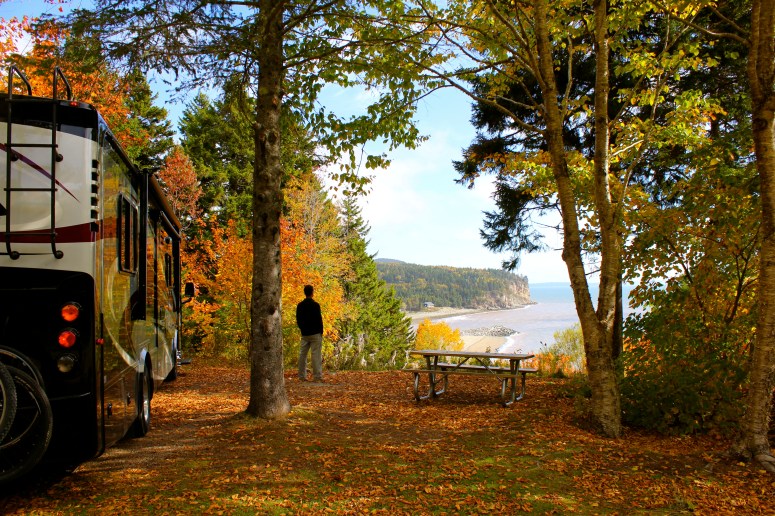
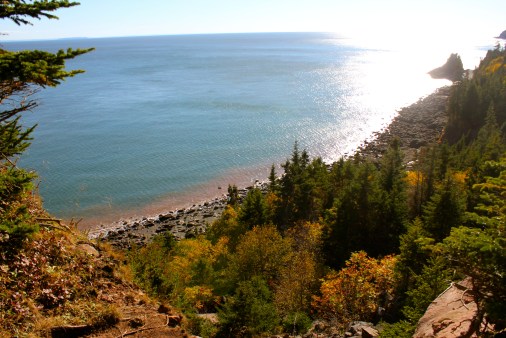
The tide took me from the island of Grand Manan to Fundy National Park where one of the most stunning campsites, Site 59, overlooked the whole wide world, in peace.

img_2257

2016-10-13-10-57-38

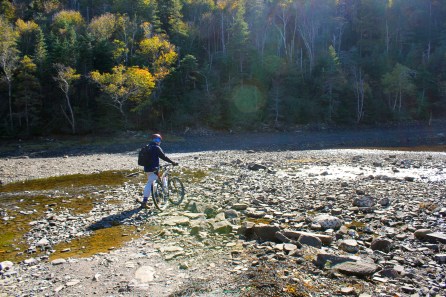
Our hikes there included premier trails through coastal forests, good doses of satisfying physical exertion, and solitude. Our bike rides and walks upon the ocean’s exposed floors elevated our spirits to our most grateful selves while pastoral settings inspired us to believe romantic thoughts about life. Cliffside picnics made our egg salad sandwiches taste royal enough to be served on golden paper plates.

img_2391

img_2264

img_2314

img_2382

img_2376

img_2417

img_2299

img_2310

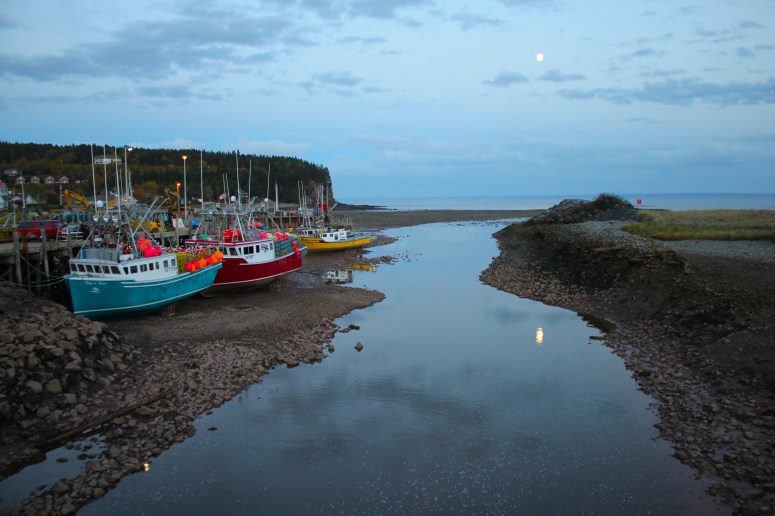
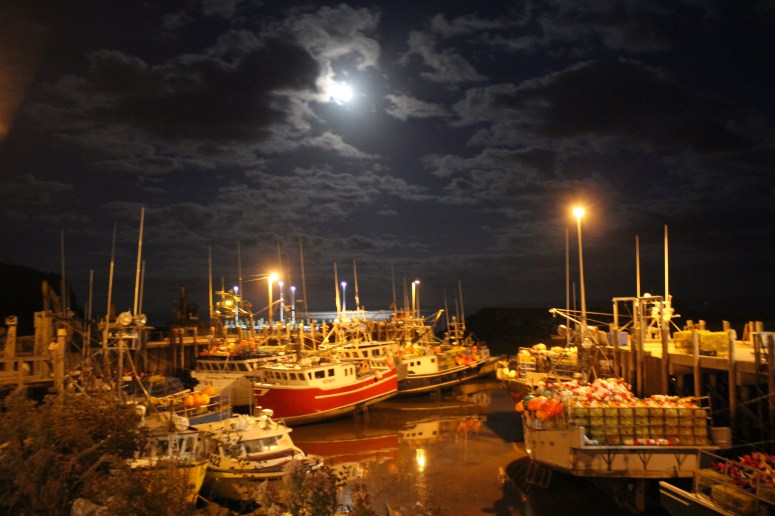
We found friendship in the small, small village of Alma at the base of Fundy National Park where we were given the last of the season’s fish chowder on an outside deck at Tipsy Tails as the weather began to turn. Our server said: “Two bowls of chowder, two beers, and two blankets?” then she invited us to join in with the town later that night to celebrate the morning’s anticipated launch of the lobster fishing fleets when the tide would be high enough to float all boats. From our campsite, perched over the village, we heard the music commence as the moon was rising. We bundled up and walked into town using a sturdy, cliffside staircase comprised of more than 100 steps. Sea ballads, Scottish and Irish folk songs, and more hymns filled the night. The next morning, a bagpiper played as gale winds and dark clouds cast shadows over the faces of babies snuggled in the arms of mothers and grandmothers and aunties. Young men clung to boats jammed with lobster traps and before long, the boats sailed through the winds and out of sight. All of the fishermen faced long, hard, hopeful days at sea.

img_2323

img_2319

img_2317img_2329

IMG_2349.jpg

img_2366

20161014_080727


Upon re-entry into the United States, a guard asked us if we had any plants, fruits, or vegetables from Canada in our motorhome. We said no. He said he was going to have to come on board and see for himself. He opened our fridge, seemed satisfied, handed us our passports and said, “Welcome home.”

We did have one vegetable on board and I’m glad it wasn’t confiscated. It was the dulse, which hid itself well in spite of smelling like the boldest of low tides. The taste of it, right out of the bag, is just as strong and gamey as the aroma. But it is a legendary superfood with phantasmagoric health benefits and I was determined to learn how to cook with it.

Within a day of our return, I created my own version of fish chowder inspired by travels through the Canadian Maritimes and our discovery of the world-renowned dulse harvested in Dark Harbour, on Grand Manan Island. I used simple ingredients kept stocked in our kitchen. As I cooked, I reminded myself of how kind the people in Canada had been to us. When speaking about America’s sordid election, the Canadians we met didn’t hesitate to express their faith in America and many showed compassion for the unfortunate relapse into dinosaur-brained recklessness going on throughout every state. One man assured me, “America will do the right thing.”

But I don’t know…Willa Cather’s peaceful visits to Grand Manan ended in 1940 when safe passage to the island was threatened by German submarine activity in the Bay of Fundy.

If America wants to be great again, it must become kind first. Where there is kindness, there is reason. Where there is reason, there is peace.


COMFORT AND KINDNESS FISH CHOWDER

4 cups chicken stock (I used a 32 oz. store-bought carton)

2 cups chopped onion

1 T butter

1 T flour

1 cup half and half

1 big carrot, peeled and cut into half moons

6 red potatoes chopped into half inch squares

8 scallops (I keep a bag of Trader Joe’s jumbo frozen scallops handy)

1 handful of langostino tails (also a Trader Joe’s frozen seafood product—tastes like a combo of lobster, shrimp, crayfish)

3/4 lb. of fresh cod, cut into one inch pieces

Chopped thyme, chives, and parsley from the garden

2 T chopped dulse 

2 handfuls of dulse, cut into strips for frying in olive oil

Slices of baguette bread

Saute the onion in the butter until soft, but not brown. Blend in the flour, cook slowly and remove from heat. Slowly pour and stir in two cups of the broth. (This is a Julia Child all-purpose chowder base.) Add the carrots, add the rest of the broth and cook until just before the carrots are tender. Cook the potatoes in a separate pot of water until just before they are tender. Drain them and add them to the broth and carrots. Heat on low. Add spices, salt and pepper, and chopped dulse to taste. Pour in the half and half and gently heat up without boiling. Place all of the seafood into the chowder and let cook for ten minutes. The fish will break up, adding texture and flavor to the broth.

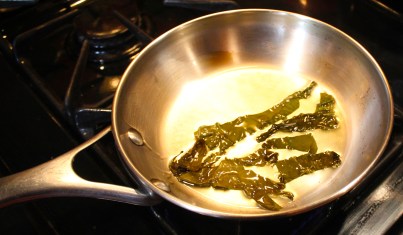
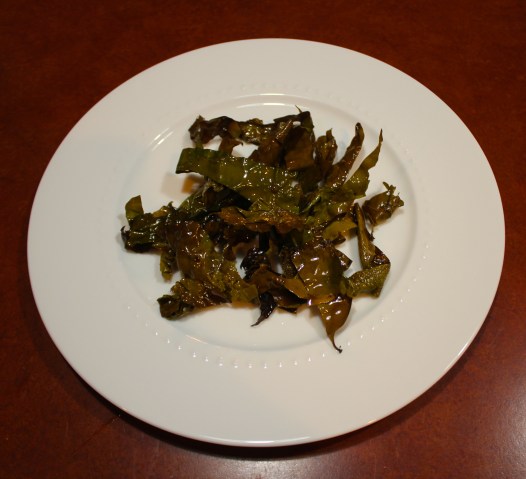
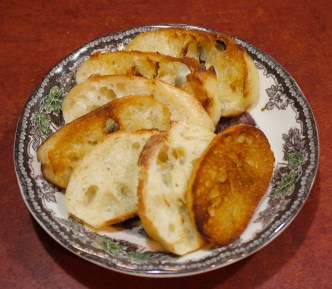
Heat olive oil in a pan. Working quickly, fry the strips of dulse, turning them once and draining them on paper towels. Toast a few slices of baguette in the olive oil. Fried dulse is tasty! It’s good dipped in salsa, too.

Serve the chowder hot with fried dulse on top and on the side.


Dulse from the market in Canada.

img_2462

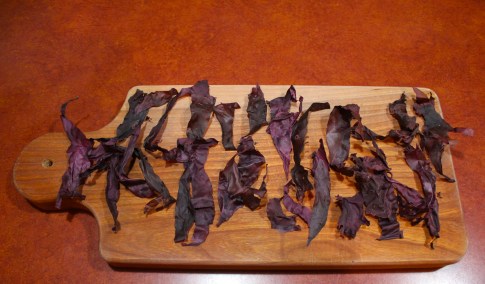
A handful of dulse.

img_2468

Dulse separated into strips for frying.

img_2469

Fried to a crisp, glossy green.

img_2470

img_2471

Baguette dulse-flavored by toasting in the remaining olive oil.

img_2473

The chowder only needs some pepper and fried dulse on top.

img_2477


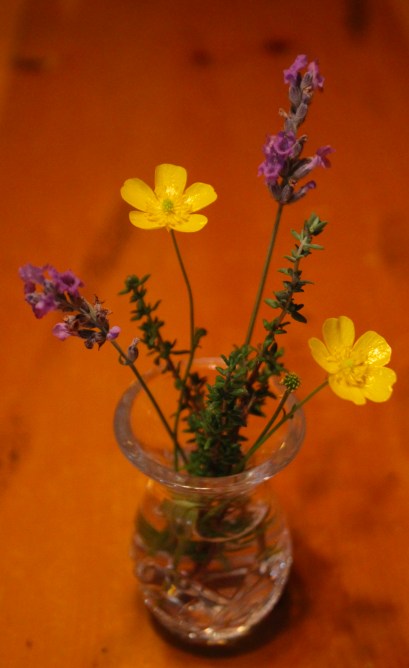
I set our table with a small arrangement of buttercups I found on the edge of our last mountain biking trail in Fundy National Park and some thyme and lavender still blooming in my garden went we came home. I found the vase at NovaScotian Crystal in Halifax when we traveled through on our way to Cape Breton two summers ago. The vase is perfect for small and sweet bouquets from the garden.

img_2464

Believe in kindness.

Artists of New York.

After a long winter of the gloomy blues—uber-enhanced by a rainy and cold spring season—I spotted a rufous-feathered eastern towhee while I was out walking in the woods. As it perched on the branch of a beech sapling between me and the rays of the rising sun, the bird made me feel as though I’d found a plump, red flower with a song.

There were no other humans near the New World sparrow’s thicket.

All the socks in the laundry pile matched up

and the Fairfield Inn, Long Island City, Queens said they had a room for $119.00.

It was Friday.

I’d clicked play for a video posted on my son’s Facebook: The Ramone’s Do You Wanna Dance. In the video, the crowd gets crazy happy about music. On my son’s Facebook, he asks do you do you do you do you wanna dance and alerts the Facebook community that he and his bandmates—all members of New York City’s Teeth People—have a show coming up later in the evening at a club called Piano’s

in the Lower East Side

in never the same old, same old New York City

if you wanna dance.

My son included a tantalizing promise with his FB post: Freedom, the band’s percussionist, would be singing a lead.

I figured if the day’s luck held, my husband and I could make it to NYC in time for the show at 10pm. (Three-and-a-half hour drive to the center of the universe, if the stars are aligned and there aren’t any fires to put out on the home front.)

We hit the road in time to ride the brakes over roads crammed with vehicles moving at the speed of frozen molasses melting uphill.

Finally made it to the hotel.

Parked the car FOR FREE.

Changed into black duds, put on some boots, dotted my eyes with mascara.

Fetched the hotel’s courtesy van to the subway. Climbed the stairs to the subway platform and—as if on cue—along came a 7 train. We rumbled from Queens into Grand Central. Flew through the closing doors of a 6 train. At Bleeker, an F train was just waiting to take us to Delancey and Essex

where real music lives

in real time

in a cozy conglomerate of valiant clubs featuring now bands playing new music upon stages managed by sound-and-light technicians as passionate about their artful work as the boys and girls in the bands are about their artful work.

ARTFUL WORK IS THE ONLY CURE.

********

Long about midway through Teeth People’s set, every member of the band took a turn on another instrument.  The bass player got rid of his bass guitar and moved to center stage to sing a lead. The lead singer/guitar player moved to play the bass. The percussionist moved to take a seat at the drum kit. And the drummer (my son!) strapped on a guitar near a microphone where a new percussion ensemble of drums and a garbage can lid awaited his crazy-happy-about-music act of playing guitar and percussion while throwing in a little bit of singing.

During this brief shuffle, the percussionist—aka Freedom—made an announcement. He asked the crowd to check out: STAYIN FIT IS LIT—a video created by his junior-high students in Queens, New York.  The video was inspired by—and generated in support of—Michelle Obama’s Let’s Move health and fitness campaign.

If you are a parent, an educator, and/or a great American, Michelle Obama’s Let’s Move website is LOADED with useful information about how to make America great again.

FYI and BTW: Stayin fit is totally lit if you ever want to be an artist at work in a rock band. Because after the long hours of your day job—and the volunteer work you can’t walk away from—you’ll be doing an enormous amount of heavy lifting and extra laps for several more hours every single day: hauling gear to and from gigs, rehearsing, promoting your art, performing your art, producing your music, pounding the pavement for gigs, and muscling your brain to stay on so you can study music, learn music, and create music. Then there’s all the jumping, swaying, banging on drums, and training the vocal chords to sing, sing, sing.

True to their FB post, Teeth People surprised the crowd at the end of their performance when Freedom leaped onto center stage to sing lead for one more tune: A cover of the Ramone’s, (you guessed it), Do You Wanna Dance. It was a unexpected moment of surprise in Teeth People history to hear Freedom singing while the band performed a cover tune—something they rarely do.

When the lights came up and it was time for the band to haul their act onward, one more unexpected and generous moment by an Artist of New York surprised everyone when the sound and light technician, (one of the best in NYC), locked into STAYIN FIT IS LIT on the Internet and played it loud, filling a bar in the Lower East Side with the groove of the next generation. It was so WOW to realize the sound guy had paid attention to Freedom’s announcement! I ❤ New York!

********

HERE IT IS: Freedom’s and New York City’s young Artists of New York at work. Don’t miss the spinning roundhouse kick to the bag of junk food. Original music by 8th grader Kazi Hoque for Arts and Literacy Middle School’s “Let’s Move” competition. YES—your clicks  and the clicks you encourage kids to make on this video help promote it! How often does a video worth encouraging young kids to watch come along? Freedom, (the junior high teacher you wish you could have had), is coaching the gym rats at 1:21 and asking What you eatin right now? at 2:16:


If you watch the video on youtube, you can click “Show more” beneath it to access the lyrics. Print them. Hand them out to a classroom of kids. Play the video. The kids will wanna wanna wanna dance! Share the video!

I was so impressed by Freedom’s community of students and teachers—and envious too. How I longed for programs like this one in the suburban after-school programs where I raised my kids.  When I explored the websites associated with Freedom’s “day job” communities, I discovered great inspirations and hopes for America—through music, dance, drama, painting, etc.

—And then—my heart skipped a beat when I found my son, unexpectedly, in one of the videos. He was working with his bandmate, Freedom, teaching kids how important it is to bang on garbage can lids:


********

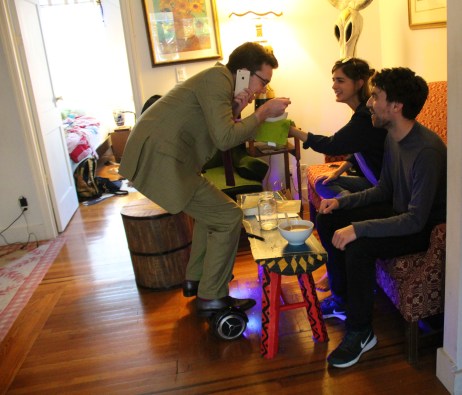
Artists of New York multi-tasking. Eating, working, talking, hover boarding.

IMG_3789

And stayin fit riding Citibikes over the Williamsburg Bridge from Brooklyn to Manhattan to more artful work.

IMG_3809

New Teeth People EP “Talk” coming out May 6th:

http://teethpeople.bandcamp.com

20160422_220541

It never stops when you’re an Artist of New York.

ARTFUL WORK IS THE ONLY CURE.

Let’s Move!

IMG_3804

Gypsies. Tramps. Thieves.

Peasants. Criminals. Prostitutes.

Slaves.

My husband. My son. My daughter. Myself.

Rome.

********

No one makes it through life without a little hunger.

And, we are all slaves—

to our stomachs, to the beat of our hearts, to the madness of our desires. It is, of course, best to become a slave to your own desires, rather than the desires and expectations of others.

Yet here I find myself, living in a time in history when people all around me wish to become the slaves of other masters promising to coach them, cut them apart, and put them back together into idealized forms of god and goddess-like perfections. They seek to confess their crimes, vanquish their poverty, and avoid being seduced by authentic beauty and pleasures. They worry about how people have sex, how people eat, and how people use grammar.

They worry about how people judge each other as authentic or not.

Maybe it’s just me.

Best to leave my American bourgeois grumblings for a week and go to Rome for some attitude adjustment, with my family. Because, as my son says, the Romans were so badass. It’s true—every time I go to Rome, I excavate more and more of my humanity and can never be sure how badass I might have once been. Could I have been a vestal virgin? A peasant? A papal servant? A champion gladiator? A designer of fountains? A stray cat? A chanting monk? A trapped lion? A good Catholic? A happy Pagan?

We decided to go to Rome in January, a time in America when the new year is celebrated with gatherings of great councils of experts and social media gurus at work selling post-humanist “ta-da!” processes for achieving perfection, and post-humanist wonder drug formulas for brain boosting, and post-humanist public humiliation platforms for incorrect use of the comma.

It’s also the time of year when colleges are on break which meant my daughter was able to travel with us.

On our fifth day in the Eternal City, we walked from the ancient exile zone of the Jewish Ghetto (where we were staying) across the Tiber River to the ancient exile zone of Trastevere. We wanted to learn the art of preparing a typical Roman meal.

We were—every “perfect-American-family” one of us—hungry.

So hungry.

********

Sycamore trees bow into the now-walled-up Tiber River.

IMG_1760

IMG_1761

IMG_2129

********

Somewhere in the maze of the narrow streets that make Trastevere so irresistibly charming, Chef Andrea welcomes students into his kitchen at Cooking Classes in Rome. Don’t be late—it was the ugliest American thing we did. I go to Europe to find beauty in details. If you are late to Chef Andrea’s class, you will miss out on his special attentions to delightful beginnings for your day.

IMG_2249

IMG_2179

********

Involtini alla Romana. (Roman style beef rolls in tomato sauce.)

IMG_2147

IMG_2134

IMG_2135

IMG_2143

********

Bay Leaf. The Romans take it from plants growing everywhere. We learned how to prepare two forms of tomato sauce. One was used to submerge the Involtini alla Romana and let it cook, the other was for our handcrafted Cavatelli pasta.

IMG_2184

IMG_2174

IMG_2187

IMG_2182

IMG_2217

IMG_2188IMG_2211

********

Using Italian-made hand tools to handcraft Cavatelli pasta. Very zen.

Every piece of pasta has someone’s heart rolled into it.

IMG_2141

How much salt? One pinch per person.

IMG_2148

IMG_2154

IMG_2183

IMG_2223

IMG_2225

IMG_2233

IMG_2235

IMG_2239

IMG_2237

IMG_2231

IMG_2244

********

Carciofi alla Romana. (Roman style artichokes.) Roman-style artichokes are the food of the gods. American-style artichokes are for barbarians.

Goethe wrote in Travels through Italy: “The peasants eat thistles.” Supposedly it was a behavior he found too repugnant to ever enjoy.

IMG_2132

IMG_2192

IMG_2203

DO  NOT DO THIS:

IMG_2194

IMG_2200

IMG_2204

There is a secret stuffing prepared for the artichokes.

The most authentic stuffing uses a Roman herb growing wild along the Appian Way.

IMG_2210

IMG_2221

IMG_2222

********

Dessert. Crema al Limone con Kiwi.

And a lesson in which is the male and which is the female lemon.

IMG_2155

IMG_2160

Using the electric whisk.

IMG_2161

IMG_2165

IMG_2163

IMG_2177

********

Our cooking instructions included intriguing history lessons and useful magical secrets about how to properly infuse artful details into your work as a chef in the kitchen. Many of the recipes are derived from necessity and are composed using the kinds of foods that were available to be used by the lower classes that lived on the “other side of the river” in Trastevere. The prostitutes learned to prepare and strategically place aromatic meals out into the narrow alleyways where the scents of sexy cooking became concentrated. Such tantalizing pleasures—on several levels—were impossible to resist by potential customers.

Indeed, cooking engages all the senses.

We opted to have wine pairings with our courses and Chef Andrea’s choices were exquisite.

My husband and I have enjoyed various styles of cooking classes in France, in other parts of Italy, and in the United States. Chef Andrea’s Cooking Classes in Rome exceeded our expectations and the price was surprisingly reasonable.

********

Time to eat our works of art with all of our new friends from all over the world.

The Carciofi alla Romana appetizer.

IMG_2257

Paired with Prosecco di Valdobbiadene.

IMG_2260

First course: Handcrafted Cavatelli fatti a mano con sugo di pomodoro fresco e basilico.

Paired with Frascati Superiore DOC

IMG_2264

IMG_2263

Second course: Involtini alla Romana.

Paired with Negramaro, from the heel of the boot in the famous and breathtaking

Puglia region in the south of Italy.

IMG_2270

IMG_2274

Dessert: Crema al Limone con Kiwi.

Paired with Moscato, 100% Malvasia del Lazio “gleaming golden yellow grapes”

harvested in late October.

IMG_2277

IMG_2278

IMG_2291

IMG_2293

********

At the conclusion of our meal, Chef Andrea asked if any of us would one day use the secrets we learned back in our own countries. What artist does not wish to change the lives of others for the better? And why go to Rome if you do not want to be inspired to create something great?! Or be transformed?

We returned home on a Saturday evening. By the next night—Sunday—our humble gypsy-camp kitchen in America was being transformed into a Trastevere-style trattoria. My daughter’s boyfriend wanted to learn everything we could remember from our day with Chef Andrea in Rome.

********

You don’t need a big, industrial, or high-tech kitchen in order to make art with food. In fact, most of our classes in Europe have taken place in kitchens as small, or smaller than, ours.

IMG_2588

Rome in January was lovely, about 60 degrees. I was happy to find some parsley hanging on in my herb gardens, even though snow was on the way.

IMG_2593

For the handcrafted pasta:

IMG_2595

We had to ask for artichokes at the supermarket. They brought some out from the back storerooms. They weren’t as beautiful as the artichokes in Rome, but still worthy.

IMG_2599

In order to offer finely-grated Pecorino Romano,

this is the side of the cheese grater to use:

IMG_2604

Chopped herbs and garlic and SALT.

IMG_2630

The secret to cooking and eating garlic,

and still being able to get a sweet (not smelly) kiss from your true love all over Rome:

IMG_2625

********

IMG_2606

The artichokes will definitely require some more practice:

IMG_2628

IMG_2629

IMG_2607

IMG_2608

IMG_2612

IMG_2649

IMG_2633

IMG_2638

Lemon zest in the milk for the dessert:

IMG_2621

********

IMG_2655

IMG_2657

IMG_2666

IMG_2663

Beautiful snow began to fall during the last course. I set the dessert glasses out to be blessed before assembling the Crema al Limone con Kiwi into them.

IMG_2671

IMG_2675

A glass of limoncello for everyone.

IMG_2682

********

The next day, Monday, there was a generous slice of beef, a few slices of mortadella, and some pasta left over. I sliced the meats and dropped them, along with chopped garlic, into fresh tomato sauce and, borrowing a tip from the prostitutes of yore, began letting it cook. Sexy aromas floated up to—and swirled all around—the desk where my husband had returned to his workaholic self. (Monday was the Martin Luther King holiday. Though my husband had not driven into his office in Boston, he had begun work by 7AM and hadn’t left his desk even as the noon hour approached.) Soon, I heard my husband coming down the stairs, through the narrow alleyways, and finding his way into my kitchen.

We had a nice lunch together, planning our next trip to Italy, and a possible Roman feast at our son’s apartment in Brooklyn.

IMG_2692

IMG_2695

All roads leads to Rome. (Trucks created from random scraps of wood by my son when he was a toddler. Hand tools made in Italy for rolling out pasta.)

IMG_2687

********

If you want to know how to make the food Chef Andrea taught us how to make, you will have to visit him at his Cooking-Classes-in-Rome studio in Trastevere.

Is it worth it to travel all the way to Rome to learn how to make a typical Roman feast? And bring more beauty into your life? And spend time with your family making new friends over food? And feel more hopeful about our post-humanist world?

OMG.

Is the Pope Catholic?

********