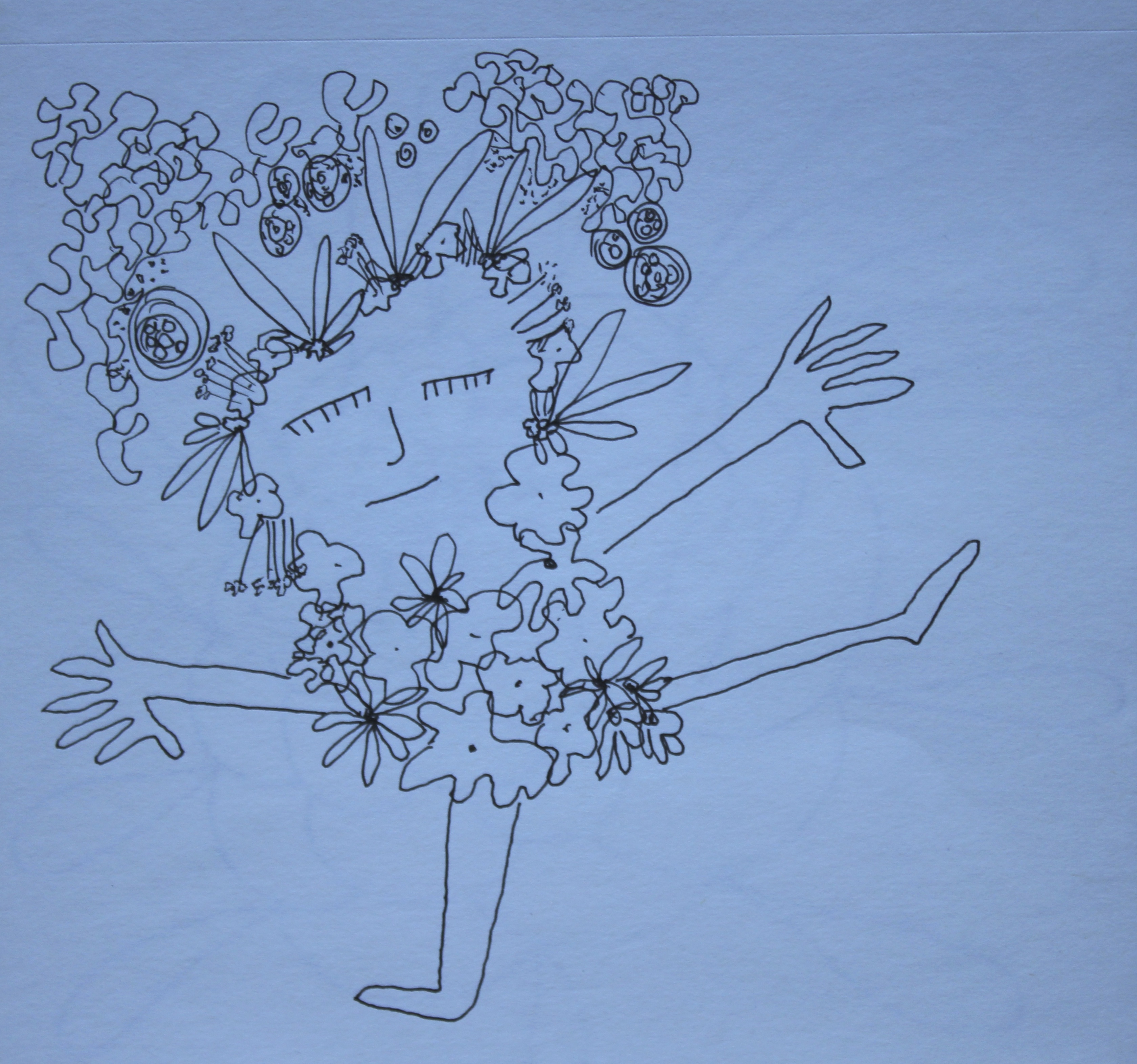
A Truly Beautiful New Year’s Eve.

For about 58 pages or so into T Magazine’s (a NYT publication) Holiday 2015 issue, the reader flips through well-known worlds of conspicuous consumption ruled over by all the familiar party hosts. Ralph Lauren, Louis Vuitton, Prada, Cartier, Coach, Estee Lauder, Bloomie’s, Bergdorf Goodman, Tiffany (Since 1837!), and many more.

Maybe the magazine is not the best distraction for the start of what might be a lonely and/or disappointing New Year’s Eve.

But then the magazine presents a little letter from the editor declaring that the overall mood of the magazine will be set by an essay a few pages beyond (past Gucci and HUBLOT) making the case for the idea that “…when we try to create the perfect anything, we often end up stripping away the shaggier bits that may contain the spontaneous, the real, the personal and the one-of-a-kind—and thus, the truly beautiful.”

So then comes the essay, The Good Enough Holiday, about “gladsomeness” and the joys of family traditions and how the gift of a shiny penny used to make a starry-eyed child feel as though they’d become a millionaire.

And thenafter the essay, there are more and more and more seductive sexy alluring oh my gosh yes that and that and oh how thin and famous and RICH everyone is and look at those beards trimmed as perfect as the hedge around Versailles with revelers wearing diamonds on the soles of their shoes all aglitter like a Hall of Mirrors reflecting upon the sparkling and soothing salt waters of private lagoons and pre-fab fantasy forests! 

I can’t tell if I am supposed to take T Magazine completely seriously. It’s so absurd. It’s also funny, corny, interesting, and sumptuous. I think, based on the magazine’s website, that it strives to be influential, sophisticated, cultural, extraordinarily luxurious, stylish, and right on target with the “influences and ideas shaping this moment.”

The magazine came to my house a while ago tucked into a liberal newspaper—the New York Times—a prestigious newspaper that has done a great job reporting on wealth inequality in America which is an idea shaping the moment, but not an idea shaping T Magazine.

The magazine makes me wish I had a million available-to-spend-right-now dollars—a reflection of wealthy lifestyle influences bombarding Americans all the time.

The magazine feels, to me, like the energy at a gala charity event—money, money everywhere, a few good conversations, a few feel-good moments, and then that excessive “morning after” emptiness that can be so depressing when conspicuous consumption gets into bed with conspicuous contributing.

The magazine is like New Year’s Eve in America—it’s an enigmatic something marked by great expectations and foolish fantasies. It strokes the wondrous pleasures of indulging in ideas for fresh and trendy new beginnings. It sends exciting ideas tumbling into arenas of dream possibilities where attitude adjustments, fashion-upgrades, fine art acquisitions, exotic travel, and professional and personal lifestyle changes are casually woven into everyone’s everyday gig. Over a lot of drinks. And too much food. And loud laughter.

Though the magazine claims an affinity for the “shaggier bits” of spontaneity, and the real, and the personal, and the one-of-a-kind, I didn’t find any such “truly beautiful” examples of these treasures on the glossy pages. There were, most definitely, many beautiful things to look at and fascinating things to read about.

But to find truly beautiful, the magazine would have had to send their writers into the homes of the rest of us. For that is where the private galleries of the truly beautiful, one-of-a-kind treasures of the world are kept carefully displayed or robustly ready for joyful excursions into playtimes and gladsomeness.

I was charmed to notice, as I gazed at page after page of suggested purchases, that many of the beautiful items featured were similar to things I already have, and although the magazine’s chosen works of art were lovely, my works of art, in my humble opinion, are more truly beautiful.

What follows is my own version of a New Year’s Eve party game. Some of these things are not like the others. But they’re close.

********

From T Magazine’s feature: Tangible Beauty. Exquisite, rare objects that honor the gift of giving. Photos by Anthony Cotsifas. Styled by Haidee Findlay-Levin.

Polygonal bronze bookends as artful as they are useful, left untreated to attain a natural patina over time.  $1,250.00 each.

IMG_1558

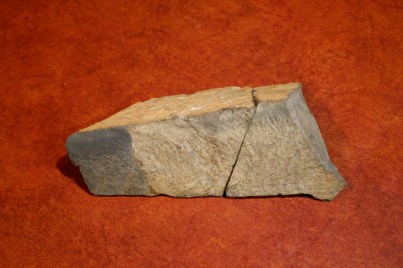
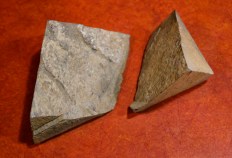
My Version of polygonal art: Ancient stone from the top of a random mountain (not a national park!) in Maine. An all-natural brain teaser made of sturdy materials bonded together by Earth’s own timeless forces. Found while hiking alone with my husband after locking our kids in the family camper at the trailhead because they were driving us crazy. Not as easy as it looks. (To be a parent, or to figure out this ancient puzzle.) Free.
IMG_1554

IMG_1547

IMG_1555

********

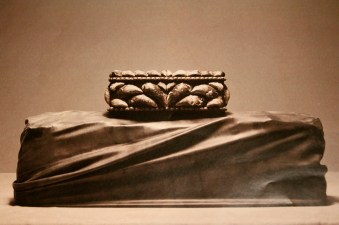
From Tangible Beauty. Wild mussels and periwinkles covering vintage objects, like a box. Wild, untamed sentimental keepsakes. About $300.00
IMG_1561

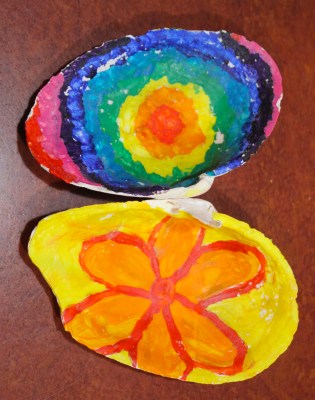
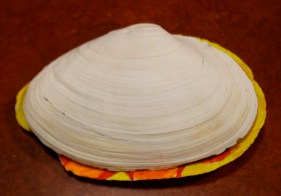
My version of sentimental shells and boxes: Wild clamshells claimed in the romantic Atlantic surf by my daughter. Sentimental glee painted by her own heart and hand inside. This shell is part of a series of shell paintings she called The Garden. Free.
IMG_1531


IMG_1533

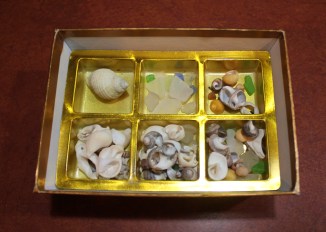
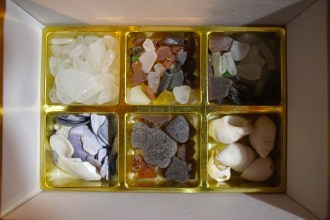
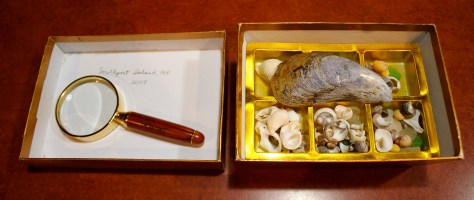
And, our version of a special box for treasures. An old chocolate box, repurposed as a box of curiosities found one day on a beach on an island in Maine. All shells might, or might not be, ancient. There is sea glass mixed in. You can rearrange the treasures however you like, in two tiers of compartments and closely examine them with the magnifying glass. Shells, free. Box of chocolates, can’t remember what they cost. Magnifying glass was a promo gift from an insurance company.

IMG_1570

IMG_1571

IMG_1572

IMG_1575

********

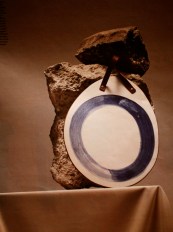
From Tangible Beauty. Refined and rustic terra-cotta platters influenced by folk architecture and agrarian tools and primitive symbols. The forms are affixed with leather handles which I like very much. $225.00
IMG_1560

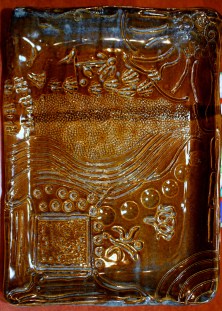
My version of a folk art platter with primitive symbols: a slab of pottery produced by my daughter. Not free—the materials and studio at her school cost something.
IMG_1536

********

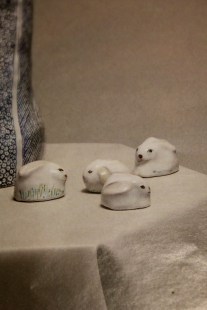
From Tangible Beauty. Sophisticated charm from the innocence of naive art. Whimsical creatures with free-spirits using a rare technique of maiolica dating back to the Renaissance. Baby rabbits, about $46.00 each. I love bunnies!
IMG_1564

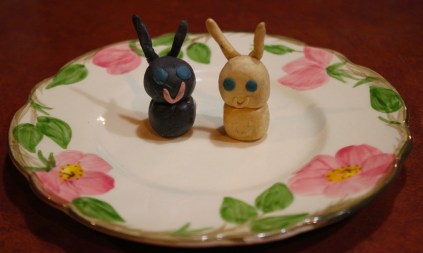
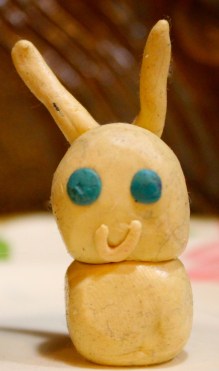
My version of precious, naive art bunnies. Sculpted clay creatures paired on a plate by my daughter—something my husband would joke about making a meal out of. But I have never disturbed the offering and after many years, there are lots of “shaggy bits” of dust on the bunnies. An all-natural effect of furriness! The white bunny has a pink tail on the back. Nice detail. Free.
IMG_1541

IMG_1538

IMG_1538 2

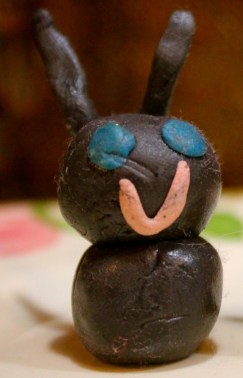
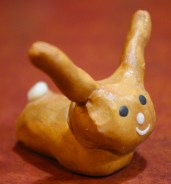
And another naive bunny I treasure, sculpted from baking clay, a gift from my niece when all of us had bunnies for pets.
IMG_1546

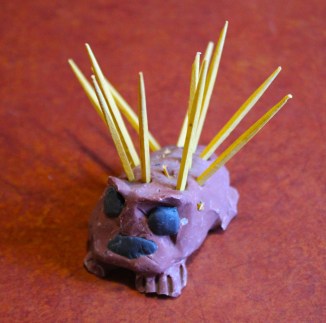
And one more naive creature. From my son. The gift of a clay porcupine using innocent toothpicks.
IMG_1579

********

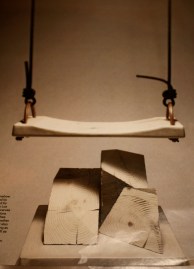
From Tangible Beauty. A swing. Hand carved with luxe leather loops. Functional and sculptural for swinging inside a grand loft space or for gliding in the great outdoors from a real tree. $2,500.00
IMG_1565

I don’t have a picture of my version of this. It was a disk cut from a hunk of oak that my husband drilled a hole into the middle of and secured on a single strand of rope with a heavy-duty, hand-tied knot. The rope was flung over a branch in the old elm tree in our backyard. The single-rope design meant you’d go flying in all directions and you had to hug the rope to save your life. A lot of spinning. Only one mishap—when a neighborhood daredevil jumped off and the swing swayed back into his forehead and left a delicate gash that needed a few stitches.

********

On New Year’s Eve, I hope we all spend some quiet time feeling starry eyed about the truly beautiful lives we already have and going for a stroll through our own galleries of priceless treasures.

And may 2016 bring more true, genuine beauty your way!

********

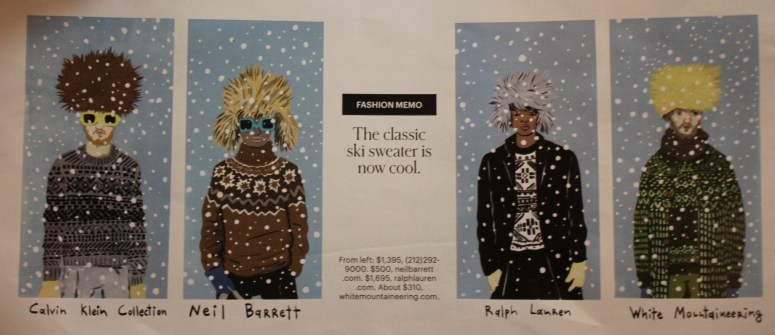
P.S. According to T Magazine:
IMG_1567

My take on this: The ski sweater, just like the ski mountain, just like the ski mountain bar, just like the ski mountain lodge, just like the ski mountain snowflake, just like the ski mountain french fries, just like the ski mountain home-packed lunch, has always been cool.

Think snow!

********



Ghosts Of Christmas Peace.

“Each December the people of Boston gather to witness the annual lighting of the Christmas tree. Some of them probably do not know why the people of Halifax send a tree every year or even that it is a gift from Nova Scotia. No one needs to know the story behind a tree to admire its beauty. But the people of Halifax know where it comes from and they remember the story.” —From the frontispiece with an illustration of Halifax Harbour in the award-winning book Curse of the Narrows, The Halifax Explosion 1917, by Laura M. Mac Donald. Mac Donald began researching and writing this book, about her hometown of Halifax, after emigrating from Toronto to New York City. While waiting for her green card and deciding that perhaps another book about the Halifax Explosion did not need to be written, Mac Donald experienced in person the September 11th terrorist attacks on New York City—“I watched in incredulity as so many of the details I’d just researched repeated themselves.”

Mac Donald’s book, and my excursions with my husband and my daughter last summer through Nova Scotia, affected me deeply.

********

There is a display at the Maritime Museum of the Atlantic in Halifax of a child’s collection of pocket possessions. The collection includes a small, bouncy ball toy, made of translucent rubber the color of tumbled, light-green sea glass. There is also a stainless steel hair comb. There is an eraser, the corners rounded and worn away. And there are three wooden pencils—two yellow, one green—sharpened down to about two and a half inches each, with hand-carved leaded points. The soft wood on the end of one pencil still bears imprints from the child’s habit for gnawing on the pencil, perhaps while thinking, or feeling bored, or daydreaming.

The child was killed in the Halifax Explosion of December 6th, 1917, before enjoying another day of lessons and play at St. Joseph’s School where, it seems to me, no part of a pencil or an eraser ever went to waste, hair was kept neatly groomed, and bouncy ball toys might have been taken away by a stern nun from time to time.

This death, as far as I know, was never labeled collateral damage or an accident of friendly fire. Though, the way I see things, it was a little bit of both combined with too much innocent victim of the most devastating, man-made explosion ever to rip through wartime history prior to the dawn of the Atomic Age. (After that, the explosions at Hiroshima and Nagasaki usurped the Halifax Explosion for biggest and most destructive.)

The Halifax Explosion happened during World War I. It was an event of war that resulted in casualties and lifelong trauma for civilian citizens on North American soil. Like a lot of legendary war stories, the story of the Halifax Explosion is a tragic tale of unfathomable human recklessness tangled up with inspiring examples of humanitarian courage, comfort, and care.

The setting for this war story was Halifax Harbour, a place of prosperity due to its position as a significant port for naval warfare operations in North America. Through the harbour’s particularly tight passage, known as The Narrows, sailed ships in the business of organizing convoys to deliver munitions, supplies, and soldiers to the battlefields of Europe. One such ship, the French ship Mont-Blanc, carried a load of munitions so lavish and volatile that her cargo holds were secured by copper nails to prevent sparks—a detail as useful as designing a place to keep a bucket of water in the cargo hold of the Enola Gay, in case her infamous cargo blew too soon.

What was aboard the Mont-Blanc? 2,300 tons of picric acid. 250 tons of TNT. 62 tons of guns cotton. And 246 tons of high-octane fuel benzole, stored in barrels on the deck. She had sailed to Halifax from Gravesend, NY and was entering The Narrows at the same time the Norwegian ship, SS Imo, was leaving.

The SS Imo carried no cargo. She was sailing for New York to acquire emergency relief supplies to aid civilians in war-ravaged Belgium.

On the morning of December 6, 1917, the two ships collided as they tried to pass each other in The Narrows. Metal hulls ground together igniting sparks. Fire erupted and an oily, black cloud arose, drawing the attention of onlookers.

The residents of Halifax watched from windows at home, at businesses, and at schools. Mont-Blanc’s crew immediately abandoned ship, shouting out desperate warnings in French, but no one could hear them or understand what they were saying.

Mont-Blanc drifted toward the shores of doomed Halifax and within twenty minutes, exploded.

Her catastrophic blast released the energy of 2.9 kilotons of TNT sending a shock wave through the Earth at twenty three times the speed of sound which could be felt well over one hundred miles away. (So says one website.) Shock waves rocketed in all directions, at the destructive speed of 3,000 feet per second, shattering windows sixty miles away. (So says another website.) And—at the moment of detonation—the temperature of the explosion exceeded 9,000 degrees Fahrenheit.

The blast affected everything within almost two miles. It vaporized the waters of the harbour, resulting in a tsunami that roared forth to fill the void, surging sixty feet beyond the high water marks.

The citizens of Halifax thought sabateurs! German attack!

And fires raged throughout the city.

With night’s darkness, temperatures dropped to 16 degrees Fahrenheit.

Snow began to fall.

A bleak, bitter cold gripped the tortured city and did not set it free. Gale winds howled and the next day, a blizzard raged.

Temperatures plummeted to 20 degrees below zero.

********

2,000 people lost their lives, each as divine as yours, as mine.

9,000 were injured, (many of them suffered eye injuries from flying glass), and 6,000 were left without shelter. Some were orphaned. Some were never found or identified, their pocket possessions—all that was left of their lives—never claimed by a loved one.

What’s in your pocket? What are the things you carry?

IMG_5193

********

The State of Massachusetts sent immediate and sustained aid to Halifax, dispatching a train loaded up with supplies and medical personnel as soon as news of the disaster reached Boston.

IMG_5004

One year later, in 1918, the City of Halifax sent a Christmas tree to the city of Boston as a gesture of gratitude. Nova Scotia, in the spirit of good will and peace, memorialized this gesture in 1971 and began sending a tree to Boston every holiday season. For the people of Nova Scotia, it is considered a great honor to donate a tree from your own land to be sent to Boston Common.

********

I never knew the detailed story behind the Christmas tree on Boston Common, though for so many years I have enjoyed admiring it. But after traveling through the resplendent otherworlds of Cape Breton Island and exploring the foodieville fun and history of Halifax this summer with my husband and my daughter, I read Curse of the Narrows—a book that caused me to cry over and over again.

Then, I showed up to join in with the people of Massachusetts and people traveling from Nova Scotia to celebrate the lighting of the memorial tree on Boston Common this holiday season. The ceremony was a festive evening of entertainment and remembrances with dignitaries from Halifax taking the stage next to dignitaries from Boston.

IMG_1069

IMG_1066

A strong police presence dominated the Boston Common throughout the festivities and I am sure I wasn’t the only one wondering if the crowd included any suspicious persons carrying suspicious backpacks or hiding suspicious firearms under winter coats. This is our new normal—certainly in places like Boston where a terrorist attack on the Boston Marathon stunned the city and the state and the world of peaceful sporting events.

I think that now, more than ever, maybe we do need to know the story of the tree on Boston Common, because it’s a story of war and peace and it has never been useful for any of us to just wish for Peace on Earth, once a year, from the comfort of our faith, our chosen communities, and our civilized countries. Places of peace are once again battlefields all over the world. We are, all of us, direct targets of new kinds of world wars.

********

The writer and activist Natalia Ginzburg wrote of World War II in Italy: “There is no peace for the son of man…Each of us would dearly like to rest his head somewhere, to have a little warm, dry nest. But there is no peace for the son of man…all the certainties of the past have been snatched away from us, and faith has never, after all, been a place for sleeping.”

It’s true humankind has waged war since long before, and long after, Jesus, the Prince of Peace, was born. And the devastation at Halifax plus all the carnage of World War I on the battlefields of Europe, did not prevent World War II from happening. Indeed, weapons and ideologies of mass destruction grew more atrocious during World War II.

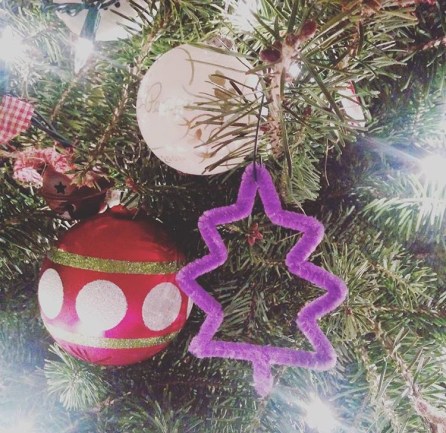
Yet I have experienced the graceful composure of my grandfather, a man who fought against depraved Japanese armies during World War II and was seriously injured, as he lived to see such tiny evidences of peace as those represented by the friendship of his great-grandchild, my daughter, with a classmate from Japan when she was in pre-school. When my daughter’s friend moved back to Japan, her family sent our family a holiday package with three hand-made ornaments bent from pipe cleaners into the simple shapes of a present, a candy cane, and a Christmas tree. This year, the ornaments inspired me to think of Sadako Sasaki, a Japanese girl who was two years old when the atomic bomb exploded over Hiroshima. Sadako did not escape the effects of the bomb’s radiation, even though she lived a mile away from the epicenter of the bomb, and she died of leukemia ten years later. She had hoped to save her life and send messages of peace to the world by honoring a Japanese legend that believes if you fold 1,000 paper cranes, your wishes will come true.

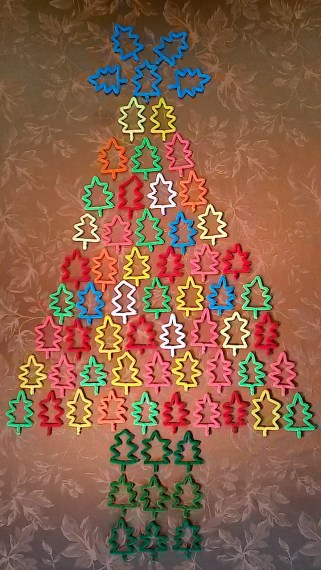
So I began to fold and bend pipe cleaners into Christmas trees this holiday season. I made them in different colors, representing the lights on the tree from Nova Scotia in Boston. My trees symbolize Peace on Earth and Good Will to All and I sent them, with a version of this blog post, to family and friends.

20151218_110223

I hope that people everywhere will begin to believe in doing the hard work of waging peace and, instead of joining war efforts, I hope people will join peace efforts.

From writer and activist Mahatma Gandhi: “As human beings, our greatness lies not so much in being able to remake the world—that is the myth of the Atomic Age—as in being able to remake ourselves.”

I have a wish that people will consider remaking themselves into intelligent, mindful activists ready to wage the struggles for peace. It can be as simple as beginning to write letters to elected officials. There are websites that will guide you through on how to do this. You might structure a letter around your own stories of peace. Or, you might have terrible stories of war. However it is you believe the laws of the nations of the world need to be established and/or changed in order to create a more peaceful world, put your beliefs in writing and send them to the people we’ve elected—and will be electing—to represent us. Maybe you have your own more proactive ideas for creating peace.

The work of creating peace is not futile.

Musician and activist Bono, of the Irish band U2, spoke about showing up to give a concert in Paris after this year’s terrorist attacks of November 13th: “How bizarre is it…that when we left Paris we went straight to Belfast and we found peace? We found hope. This was supposed to be an intractable problem. And this was a peace that was brutal. People had to really compromise to make this peace. When you get bleak about things and think, Gosh, is there an end to this? Yeah, there is, it just takes lots of work, lots of time. I was never a hippie—I’m punk rock, really. I was never into: ‘Let’s hold hands, and peace will come just because we’ll dream it into the world.’ No. Peace is the opposite of dreaming. It’s built slowly and surely through brutal compromises and tiny victories that you don’t even see. It’s a messy business, bringing peace into the world. But it can be done, I’m sure of that.”

***Boston Common, 2015***

FullSizeRender

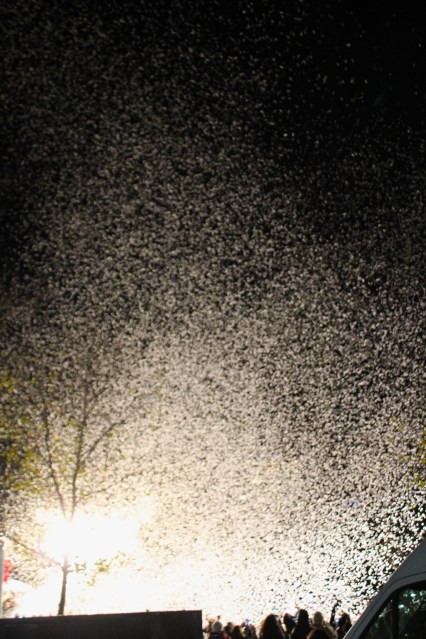
And a grand confetti shower over Boston and the Common after the lights on the tree started to sparkle.

IMG_1080

********

Views from our little house, Cape Breton Island, Nova Scotia, and the deck where I sat with tea and a notebook every morning.

IMG_4594

IMG_4802

********

From my home to your home, I wish you Peace.

20151219_224110-1-1

********

FullSizeRender-1

********

Giving Thanks.

“Thanksgiving, after all, is a word of action.”

This quote, by W. J. Cameron, showed up in my Friends of Acadia newsletter. I agree that giving thanks is probably the best action we can take to honor our own place in the world and to be mindful of all the people and all the serendipitous good fortunes—here now, happening now and/or gone before, happening in the past—that have made our lives the best they can be and inspired us to continue to live joyful lives with meaning and purpose.

Thanksgiving is the one day of rest created for and celebrated by all. It is a day of rest with the kind of work, thanksgiving, that is good for everyone’s well-being.

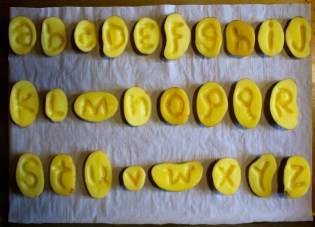
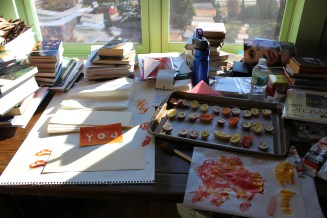
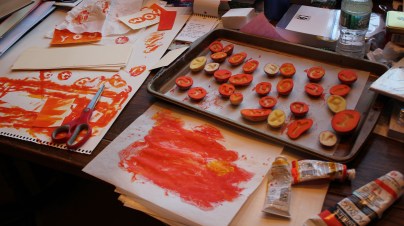
As a sincere expression of my gratitude toward the readers who read my blog this year, I decided to use the Thanksgiving potatoes to make a set of letters with which to create a note of happiness.

IMG_0927

IMG_0929

IMG_0931


********

You, Reader, are special to me. I think about you, with good cheer, when I am at work in my “blog studio” practicing how to write. I care very much about how my art is cyber-delivered into, and cyber-received by, the whole wide world.

Thank you for visiting my site this year. I hope you enjoy celebrating the heartwarming spirit of giving thanks with all of your favorite families and friends. And I hope the day’s work returns to you all varieties of  heartwarming goodness.

********

IMG_0936

********

This ephemeral work of art, created especially for my readers, is bordered with leaves I saved from my Sweetbay Magnolia Tree. It measures seven and a half feet by three and a half feet. The quote is from Percy Bysshe Shelley. I saw the quote painted into the elaborate crown molding of a grand room, opening onto a grand stone porch, overlooking America’s Hudson River Valley.


French Entrance. French Exit.

Come and sit in a Parisian cafe with your friends close to me. I want to write, but writing is a lonely way of making art and when I sit near other people, I feel some comfort. I want to sort things out on the page, entering and exiting trains of thought. If you ask the waiter to take a drink over to me, I know you won’t mind how I keep at my work. My smile for you is one of deep gratitude. And if we are blown to bits, we will agree it was only because we practiced and believed in, freely-chosen, broadly encompassing, and generously-shared education.

********

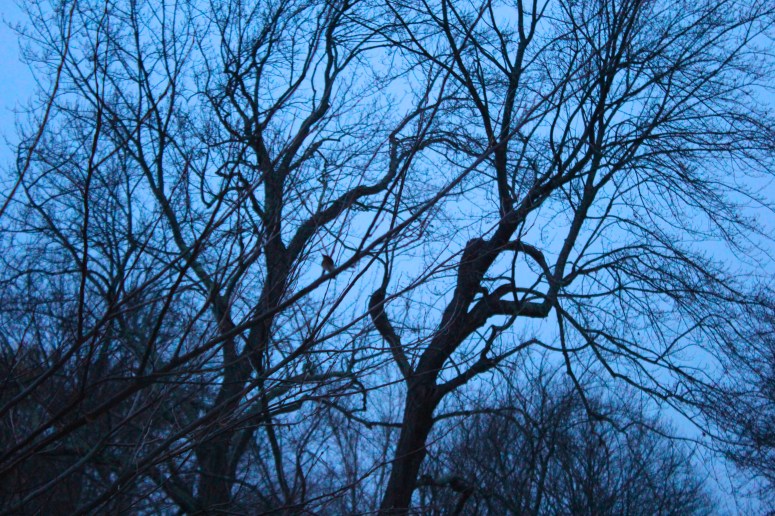
At dusk a week ago, in my peaceful garden far from Paris, a lingering leaf on the Japanese Snowbell Tree partied on like a plump house wren—the silhouette of its petiole became the distinct image of a delicate beak aimed for the heavens, ready to sing, and the curved edges of the leaf’s blade had softened into smoothed feathers. One last pear dangled lopsided at the top of the Pear Tree with a squirrel bite carved into it. Other flowers, leaves, twigs, fruits, and birds had already made their French exits—sparing my feelings, avoiding the unpleasantries of long goodbyes—by falling, blowing away, withering, packing up and moving on when I wasn’t watching.

The surface waters of the old garden pond rippled in slow motion, like the calm beat of a heart enchanted by poetry.

It was the news of more terrorist attacks—this time throughout the city of Paris—that had caused me to stop and appreciate the peacefulness surrounding me. I sought consolation, too, in Charles Baudelaire’s Paris Spleen, his book of prose poetry that never seems to get shelved in our house. Some days, Baudelaire’s writings make perfect sense to me and when that happens it is as though I have found a companion who will sit and write with me in a cafe on the streets of Paris for a long, long time. We drink and smoke and talk of how depraved humanity is. After we agree that mankind is the most evil beast, Baudelaire convinces me we must get more and more drunk, Drunk with what? With wine, with poetry, or with virtue, as you please. But get drunk. Which we do until our amplified laughter is shattered by dark discussions of our own deplorable and habitually sinful shortcomings. When it’s time for us to take our broken hearts home, or into bed together, we leave our small table crammed with empty glasses, smoldering cigarettes, and torn apart journals. (Though I save every page of what CB has abandoned.)  And then we go, hoping our chairs will stay warm for anyone else who needs to sit and think and talk and write as you please. In Paris.

********

While gazing at what was left of my gardens and thumbing through Paris Spleen, I was also expecting the arrival of five boys in a rock band from Brooklyn. The boys (one of them my son) had a scheduled gig nearby the next day.  Their journey would become a many-houred, several-moving-parts adventure beginning in Manhattan, with a detour to New Jersey before they circled north again. All of it led to one kitchen—mine—in New England’s safe and sound countryside, in the deep hours of a seasonably cold November night.

Dinner was set for midnight, and that’s when the boys showed up.

We decompressed over a candlelit repast that began with oysters before the next course was served, which was an offering of what I called jampalaeya—chicken, sausage, and fresh mussels from Prince Edward Island afloat in a spiced-up tomato broth with rice.  The drinking started with beer and wine and advanced to whiskey.

All of us tapped our glasses together. “To Paris!”

And then I said that it will never be enough for me to believe we will always have Paris which, if you’ve ever watched the movie Casablanca, was just a remark murmured between lovers in homage to the salve of fond memories.

The truth is, we might not always have Paris. Furthermore, any memories we have of our lovely selves in Paris will never serve to console us if we were to lose Paris.

The world cannot do without Paris.

Paris is not just about food and wine and champagne and hand-wrought loaves of bread and cute dogs prancing through a city with the most wonderful twinkling lights!

Paris is about the civilized world. And the civilized world includes any of us who have ever had our hearts broken, shredded, ravaged, persecuted, oppressed, and/or disregarded while, at the same time, we chose to madly believe that in the same world where endless evils and sadnesses exist, we will never tire of figuring out how to love and be loved.

We will always need Paris!

I notified the boys in the band—because I am a woman and I am a mother—that they cannot make a French exit in this life. They all have to do something, throughout their lives, to tip the heart of humankind toward its good side. They must stay at the party and never leave without saying goodbye. They can only say goodbye with a kiss to each side on the face of the good gods, one for gratitude and one for promises.

Yes, for sure. They agreed.

The most obvious thing everyone can do to tip the heart of humankind toward its good side, is to become educated.

I am standing up on a chair now, swinging my arms around in the air, trying to type. Education is under fire in my own country. We aren’t so sure how important it is to have a Liberal Arts education. We can’t seem to link such an education to making big bucks. When my son showed up for his Liberal Arts education at Bard College, the first thing they did was ask whether or not he was registered to vote. He was not yet 18. No problem, they said, if you’ll be 18 before the next election, we can register you now. Bard College makes a direct link to the crucial importance of becoming liberally educated, learning how to think, and employing your knowledge and skills to become a responsible citizen and voter. Education in the Liberal Arts is the most important process we have for preserving and continuing to create a functional and fair democratic society. Is it too expensive to become educated? We spend an enormous amount of money on weapons and jails to fight the consequences of ignorance, hate, and poverty. The value of education can’t be argued away. Furthermore, one doesn’t have to go to college for a Liberal Arts education. We are a nation that takes great pride in our free libraries. It’s hard to find a cafe in America that will allow you to sit and think and read and write for as long as you want, but not so hard to find a library.

We are, whether we like or not, a part of the battles to create a more peaceful world. It means we must do the hard work of learning how to think and how to become aware. We must continually go through the growing pains of intellectual evolution. We have to read—including work we don’t want to read. We have to look at art—including art we don’t get. We have to listen to music—including music we’re unfamiliar with.

We ought to walk through gardens. Admire architecture. Explore history. In our travels, it’s important to sit and talk to people we don’t know.

Most of all, we have to learn to listen.

********

At 1:30 AM, apres dinner and discussions with the boys in the band, I brew a pot of coffee. The boys charge up, then file out to the barn to begin rehearsing for their gig. They are all tired. It has been a long week of day jobs colliding with night jobs as artists and a lot of driving. Sleep is what they want most of all. But it has also been a week of their new record release called, “Let’s Go!”

On the release is a song that made me dance the first time I heard it in a vast warehouse-district, underground bar in Bushwick. Syrian landlords keep the urban campfires burning, on the sidewalk across the street. Artists come and go, free to perform and put their art out there.

The song is called French Entrance and it’s about coming out as a gay man. It makes one think of what it might be like to be a man suffering about his own real and true and normal self and how simple it would be for him to be able to tell a friend and have the friend say it’s okay fuck the people who can’t deal with it. The drumming and percussion pound out intricate rhythms of harmonious chaos with bass beats and guitar strumming that culminate in one fine blend of celebratory desperation. The vocals are casually Lou Reedish. Sexy casual. The song is a call to arms and legs and jumping up and down bodies—it’s time to get up and start dancing about the people at work making the world a place where everyone can live their own best life.

We can never settle ourselves into lives of comfort and complacency.

Abdellah Taia, an openly gay Arab writer and filmmaker, wrote an editorial for the New York Times after the attacks in Paris entitled, “Is Any Place Safe?” He writes of how much he needs Paris, yet how concerned he is for the future of the city:

“I came to Paris 16 years ago as a young, gay Muslim…”

“I made my life in Paris because I believe in its values: rationalist, humanist, universalist…”

“I left Morocco as a young and desperate gay man. In Paris, I found a place where I could fight for myself and for my dreams. But I know now that nowhere is totally free or safe.”

“But Paris is a city that has, in losing its borders, lost certain values as well. The neglect of a segment of our youth (especially those of Maghrebi origin, from countries like Morocco or Algeria) is an undeniable reality. This neglect has produced an environment conducive to radicalization, joyous nihilism and, now, carnage. Racist attitudes, ever more frequently espoused by certain politicians and intellectuals, have become the stuff of daily life.”

After I read Taia’s editorial, I was inspired to read something else he wrote: Homosexuality Explained to My Mother. The essay is completely astounding and grew my brain into new evolutionary worlds.

After listening to the new song by Teeth People called French Entrance, I resolved to move a book on my list of “must reads” to a more urgent position: Jean Genet’s A Thief’s Journal. 

I do these things because I want to think about and learn about and try to understand the ways we might be neglecting youth in this world and why they seek to join communities of evil or become increasingly evil as lone gunmen throughout the world, especially in my own country.

********

We will, indeed, always need Paris. It is a city where brave artists and freedom fighters (like the French Resistance during World War II) have found, and continue to find, their voices. I am grateful to them. The legacy of their work changes how I perceive the world and inspires me to join the battles for love and peace.

In that way, Paris keeps us alive through the darkest days of our lives. We are encouraged to get to work. To keep thinking and educating ourselves. To be brave and to Smash the Televisions. (Another great song on the new “Let’s Go!” record. The whole record is outstanding.)

 ********

Here’s a link to the new song by Teeth People called French Entrance. Promise that if you listen, and read the lyrics, you’ll never opt for the French exit when life asks you to tip the heart of humankind toward its good side. Actually—don’t wait to be asked. Get out there and start dancing.

https://teethpeople.bandcamp.com/track/french-entrance

Here is a picture of one last leaf playing the part of a house wren on the Snowbell Tree in my garden:

IMG_0905

********

The Monster Inside That Will Never Be Crushed.

Today is my son’s birthday. He’s twenty four. He was, from the very beginning, a double-black-diamond child to parent. (Experts Only!) At birth, his forehead was marked with a bright yellow triangle. (Caution!) And when the hospital presented him to us, he came swaddled in a roped-off basinet labeled with a last-chance bailout. (Parent Area Boundary! Not Patrolled!)

Every morning when he was in high school—all four fucking ferocious years—I dragged my son from bed at least three times before he’d agree to wake up. After that, he would stand in the shower until fish in the Quabbin Reservoir cried uncle. Then he wasted 20-30 minutes arguing why anyone should have to wear shoes anywhere. I’d wrestle his shirttails into tucked-in positions while muttering a litany of ultimatums he never once regarded as threats to his life.

And then, we’d drive to school. I had already searched his backpack for contraband. I had already cleared my calendar for sure-to-come meetings with the Head of School, the Dean of Students, the Disciplinary Committee, and his advisor. And, best of all, I had already set aside some of his school work to read while enjoying a cup of tea.

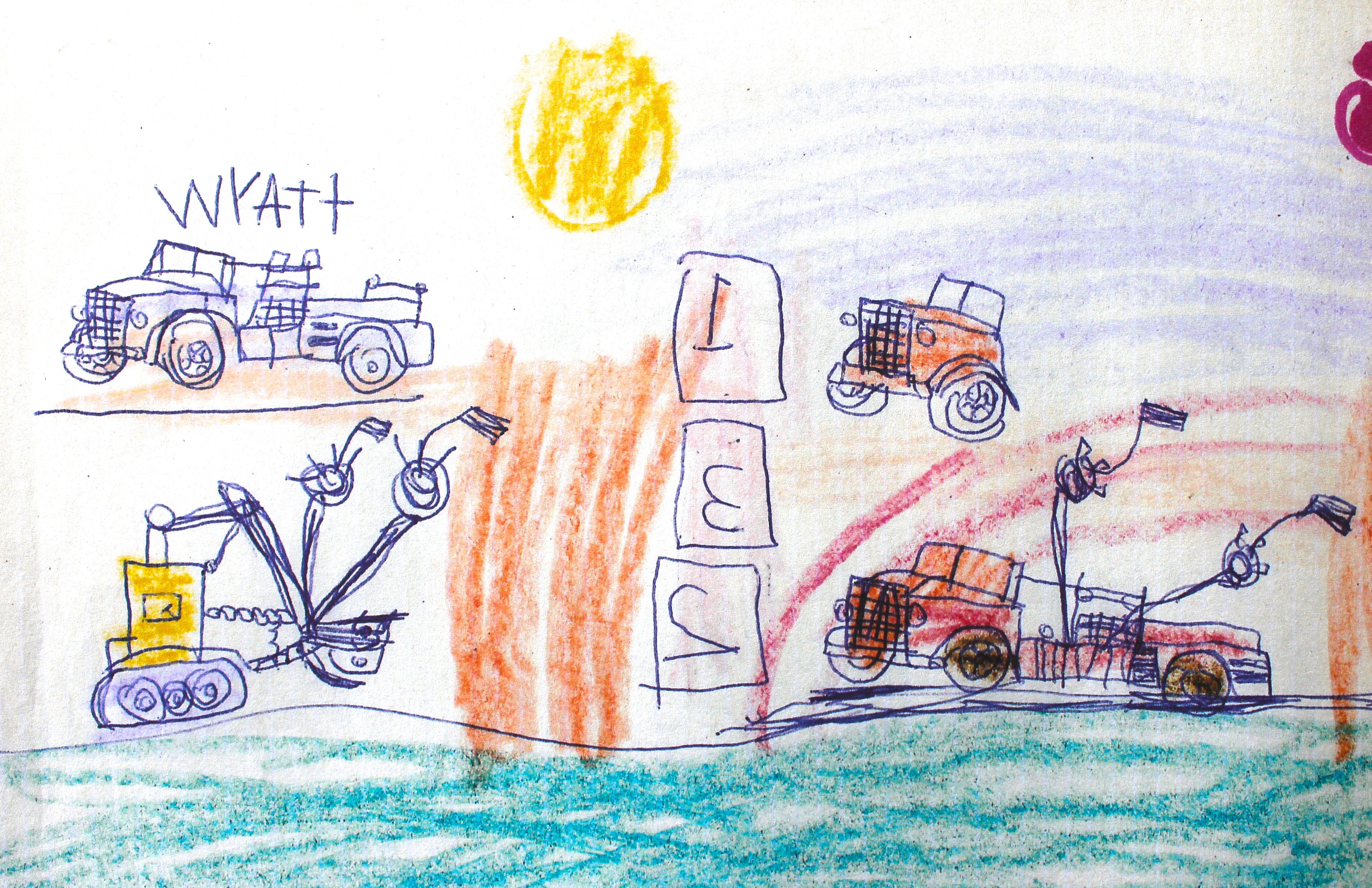
A lot of my son’s artwork—his drawings, his writings, and his musical performances—ignited disciplinary discussions and punishments. The troubles began by third grade when he came out as a manic reader and writer, a manic car and truck freak, a manic artist and cartoonist, and a manic, multi-talented musician. He accepted himself as he was and that was that.

We took him to his first monster truck show when he was four.

Ten years later, as a 14-year-old sophomore in high school, he wrote an article for his school’s newspaper encouraging the elite community of his peers to consider attending MTU (Monster Truck University) instead of MIT. It was one of the few works of art that made it through to the public without the censors hauling him off to the gallows in the town square.

I still derive pleasure from reading my son’s school work. I saved everything. In honor of his birthday, here’s his monster truck story, just for fun.

********

IMG_0352

********

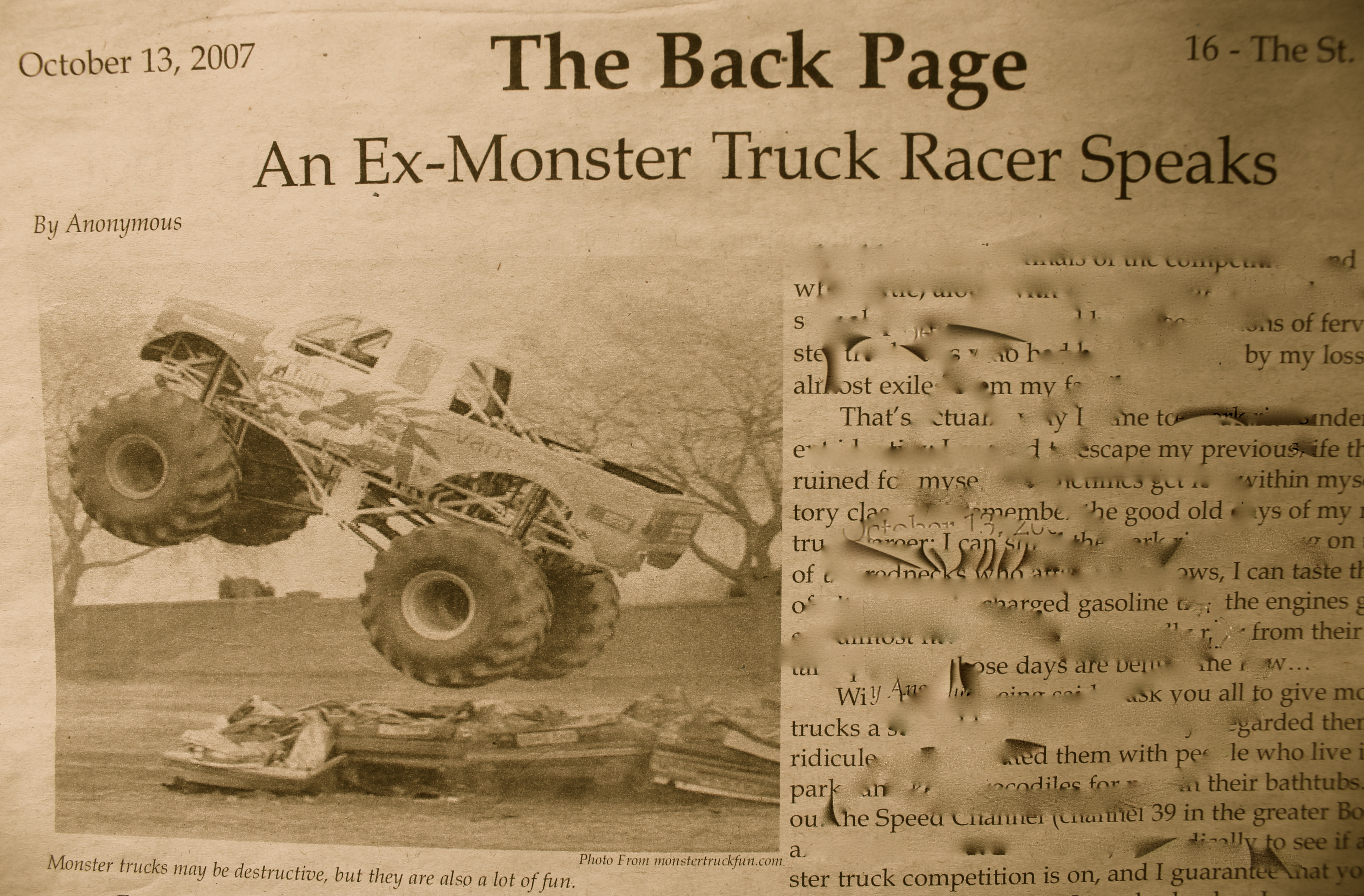
An Ex-Monster Truck Racer Speaks  By Anonymous

Few of the festering beings that populate the bubble we live in have ever been graced by the presence of an ominous, looming monster truck. I still remember that fateful day, back when I was six years old and went to my first monster truck show.

As a wee lad, I could actually walk under the yellow caution tape withholding the beastly, leviathan trucks from millions of screaming, frenzied spectators. I could easily sit myself in the massive, hollow rim of the truck’s tire. I remember the experience so vividly, how I felt like an unborn bear cub resting snugly deep within his mammoth mother’s womb. At that moment in time, the monster truck and I were one, and the entire future of my life was decided. Some people as adults still haven’t found their one true love, their one true calling, but I am proud to say I found mine sitting in the 66″ Terra Tire of a monster truck when I was seven years old.

When I was nine, I drew up blueprints for my own mini-scaled monster truck. I spent every waking hour of the summer of fourth grade drawing these plans, and, using only duct tape, some WD40, the wood from a grove of oak trees I chopped down, and some granite I mined from Mount Wachusett, I built my own little state-of-the-art monster truck and was soon terrorizing the neighborhood.

When I was twelve, I was driving the Bigfoot truck—(only the most infamous, the most revered of all monster trucks)—in the professional monster truck circuit, the USHRA (United States Hot Rod Association) Monster Truck Nationals. Unfortunately, in an incredible twist of fate, the truck I was driving blew out its right rear tire when I was driving over a few school buses in the finals of the competition. I lost the whole title, along with my entire life. I was shunned in school, publicly accosted by those millions of fervent monster truck fans—all of them let down by my loss—and I was almost exiled from my family.

That’s actually why I came to prep school under a different identity; I needed to escape the previous life I had ruined for myself.

I sometimes get lost within myself in history class and remember the good old days of my monster truck career; I can smell the pork rinds sizzling on the grills of the rednecks who attend the show. I can taste the fumes of nitrous oxide-charged gasoline that the engines guzzle. I can almost hear the almighty, godly roar from their tailpipes.

But those days are behind me now…

With that all being said, I ask you all to give monster trucks a second look, especially if you’ve always regarded them with ridicule and associated them with people who live in trailer parks and keep crocodiles for pets in their bathtubs. Check out the Speed Channel (channel 39 in the greater Boston area extended cable network) sporadically to see if a monster truck competition is on and I guarantee that you too will be captivated just as I was back when I was a wee lad. Monster trucks have greatly influenced the outcome of my life and made me the person I am today—I want to share the gift of monster trucks with you all.

********

Go ahead, walk past the caution tapes you have tied around your heart.

IMG_0367

Excalibur!

IMG_0366

Reptoid!

********

IMG_0360

IMG_0358

IMG_0363

IMG_0359 2

********

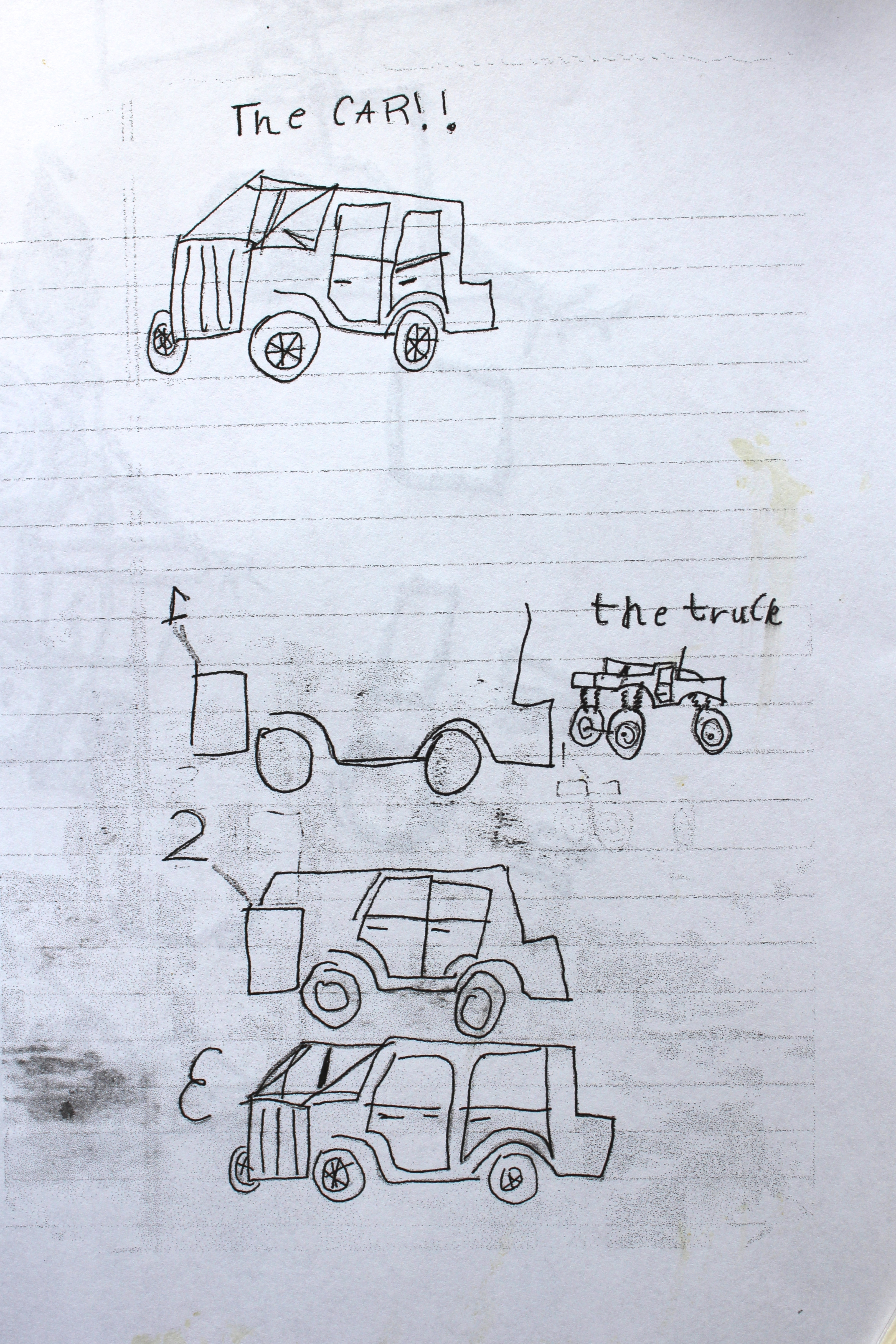
Before my son went off to kindergarten, I marveled at his drawings of cars and trucks.

“How do you know how to draw so well?” I would say. “I wish I could draw the way you do!”

And my son, taking my question to heart, would create “how to” drawings, with simple steps,

to help me (and anyone else) learn how to enjoy drawing cars and trucks!

IMG_0357

IMG_0356

By junior high, more and more elaborate trucks roared onto the pages of school notebooks.

IMG_0354

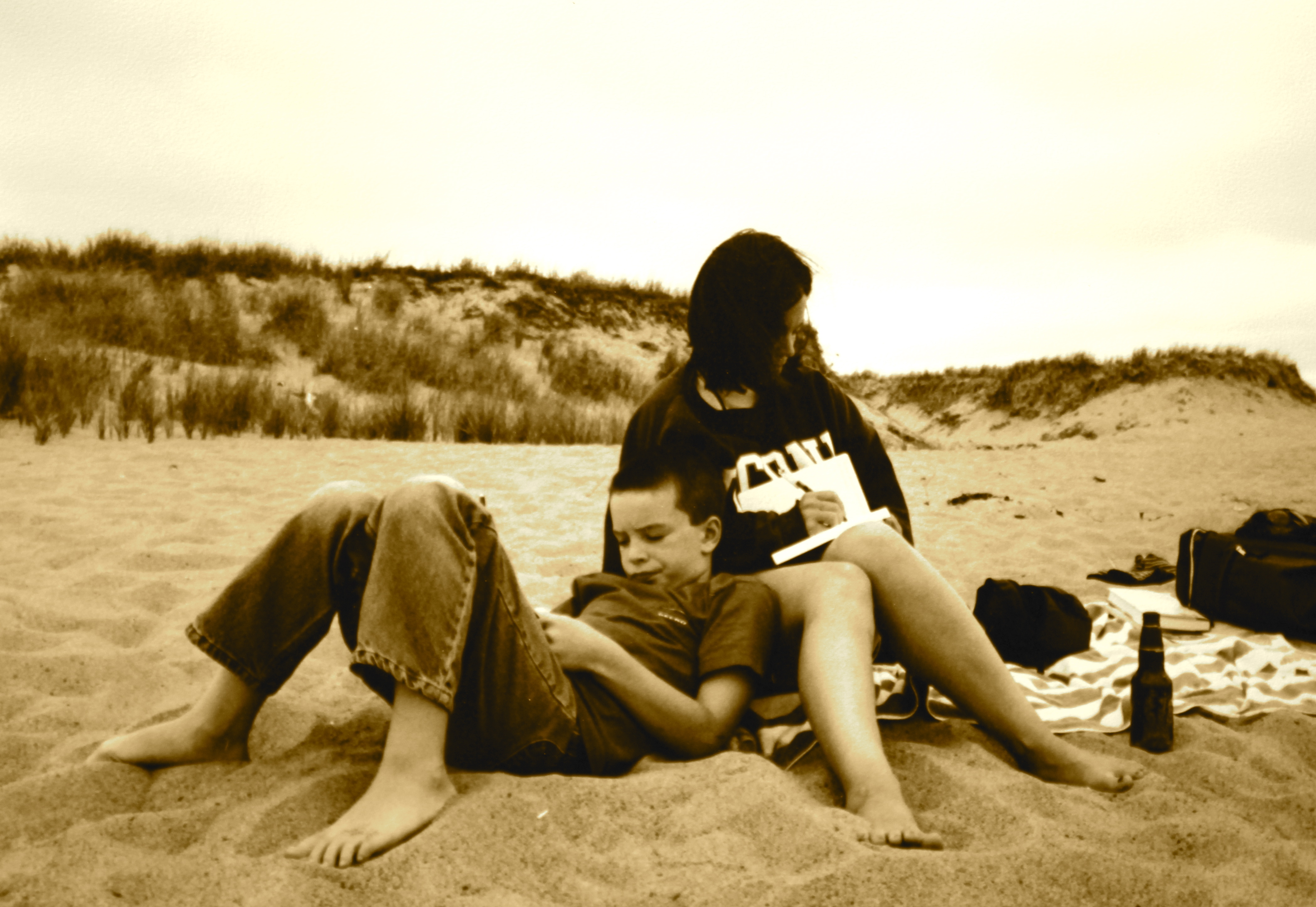
We always liked to read and write together.

IMG_0364 2

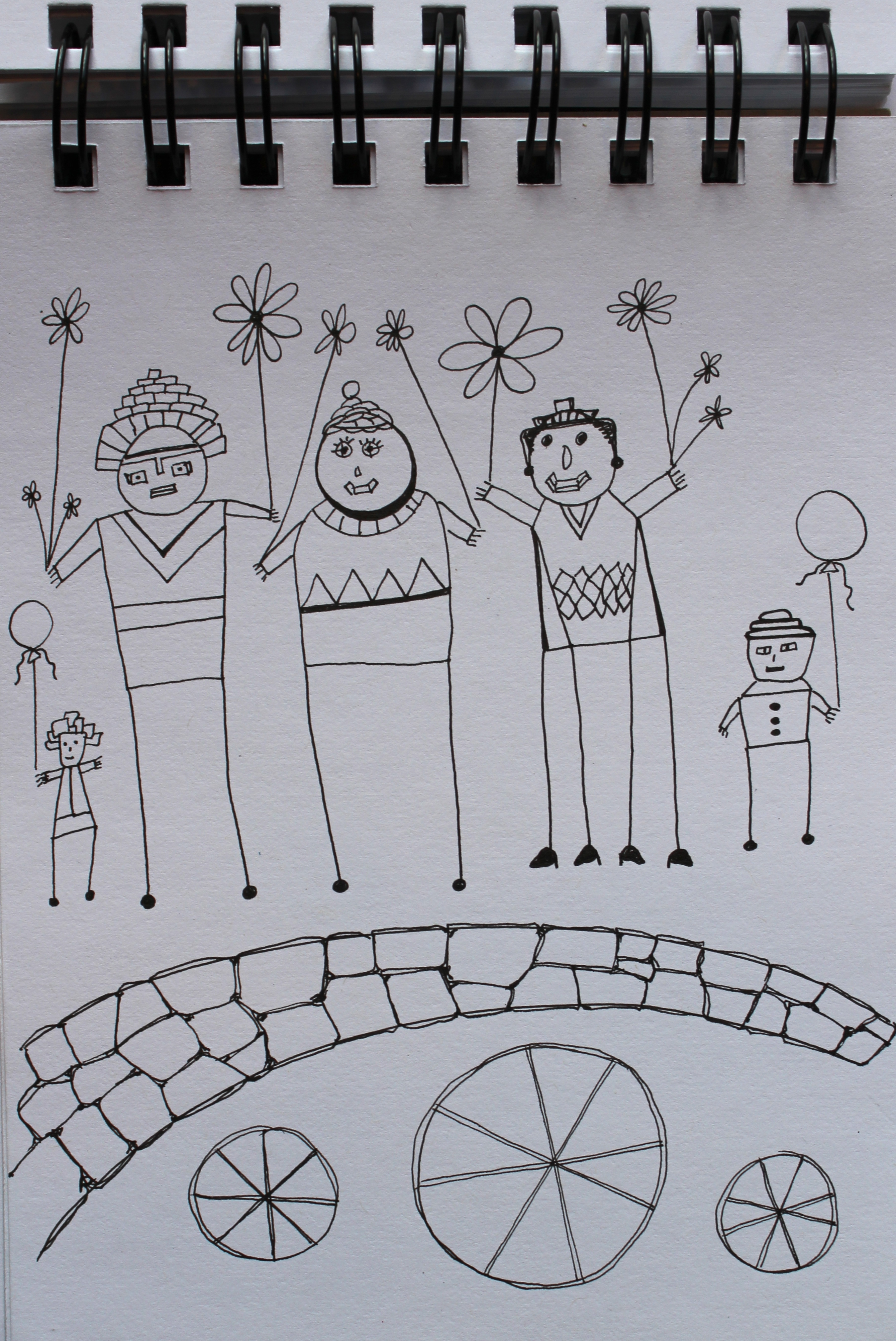
Happy Birthday to my son, a young man who has never abandoned his childhood passions.

IMG_4442

“We’re all going to die, all of us.

What a circus!

That alone should make us love each other, but it doesn’t.

We are terrorized and flattened by trivialities,

we are eaten up by nothing.”

A quote from Charles Bukowski, an unruly artist my son introduced to me.

********

Herzog For Halloween Week. Do You Have A Soul?

IMG_0038

One day, not too long ago, I posted feelings of love for a plant on Facebook. Here’s what I did. I wrote about the Montauk Daisy, (Nipponanthemum nipponicum), which grows in my dooryard and my gardens. I described the plant as a “happy late bloomer” thus identifying my own humanity with the plant and, furthermore, employing the plant’s bright white, daisy-like flowers as an arousal agent for human emotion.

This sentimental slash romantic behavior stirred up a cyberspace snake pit—that vale of venomous angst where contemporary culture gathers to unlock, and brutally judge, the mysteries of human existence. Before long I felt the sink of snarky fangs slicing through to my bones and calling me out—in the public theater of social media—for being a romanticized, sentimental dweeb. The pointy fangs punctured a few rowdy endorphins that flow like champagne bubbles through my blood whenever a shot of botanical bling makes my heart way too plump. Pop!

I considered that if I wanted to survive the bite and reduce the stings of humiliation, perhaps I ought to come up with a clever response or those fangs might sink as deep as the taproot on a bloom of winter depression. Alternatively, I could open a bottle of champagne and drink up. But a killing frost was in the forecast for New England and I still had more than 50 potted shrubs and perennials to settle into the soils of my pleasure grounds, aka My Gardensthe breeding environs, of course, for radical romanticism.

So instead of wrestling with snarky snakes, I escaped into the hours of the day’s late afternoon and went to work finding places in the garden for as many of the potted plants as I could. I also wrenched gnarly clumps of Lily of the Valley, Convallaria mojalis, out of the Earth for division and reinsertion into my little part of the Earth’s ecosystem. I did the polka with a nest of bumble bees, Bombus terrestris, while trying to place some Royal Ferns, Osmunda regalia, over those bumblers’ hideout. And when the setting sun lit up the colors of autumn on every growing thing wherever I looked, I halted my obsessive work and did my own kind of calling out:

Da mi basia mille, deinde centum, dein mille altera, dein secunda centum!

(Give me a thousand kisses, then another hundred, then another thousand, then a hundred more!)

Struck happy by a soulful rush of satisfaction with my own little world, I concluded there would be no rehab for my sentimentalism or my romanticism.  I carry the propensities for mush from at least an 8-year-old self. She is such an awkward self, yet remains a dependable friend. I see her again, (the delirium of my labors has done it), and she is hiding under a tree, reading a book. She is most likely in love with the tree and is sure the tree loves her too.

The book my 8-year-old self is reading, (under a tree I have decided to remember as an apple tree that must have been planted by the folk hero John Chapman), is entitled George Washington Carver, A Great American. It’s about an American-born slave—traded as an infant for a horse—who conquers adversity to become a botanist, scientist, inventor, artist, and teacher. Carver also believed that flowers planted in the dooryard and bright colors painted on the interior of an otherwise dreary cabin, could lift the spirits. (Both of these practices have become life habits for me. I plant flowers in my dooryard and I paint the walls and doors and ceilings of my home with bright colors and cheerful pictures.) After my young self is done reading about George Washington Carver, she climbs into the tree. (Surely it must have been an apple tree. They were the best for climbing.)

I had discovered the kiddy-lit biography about George Washington Carver on the shelves of a Bookmobile that visited my Indiana neighborhood during summertime. In those days I’d wake up early on Tuesday mornings and leave home to wait for the Bookmobile. I’d press my butt up against the butts of every other kid crouched onto the stubby curb of our cul-de-sac, where the Bookmobile parked and stayed for a few morning hours. We all wanted to be first on board the big white van and although we’d come to attention and stand in line politely when the Bookmobile arrived, it was only because we’d already scraped each other’s grimy faces over the pavement, in the gladiator arena of that cul-de-sac, for curb positions.

The Bookmobile days marked a time in American history when every butt on every kid was small, and summer reading was a free-choice act, (there were no required summer reading lists where I lived), that led to the fulfillment of at least one unalienable right: the pursuit of happiness.

I remember how the interior of the Bookmobile smelled as sweet as a Garden of Eden.

It was not a snake pit. It was a quiet sanctuary.

Nobody bothered anybody else in that mobile monastery.

The librarian was nice to romantic dweebs.

********

Alone at home, later, after the day of the Facebook snake bite, I turn on the television. I click into the movie, Almost Famous, about a young kid who wants to write about rock music. There’s Philip Seymour Hoffman as Lester Bangs (the legendary writer and critic) talking to his adolescent mentee, William, on the telephone. William is despairing about his life. Bangs breathes out a sobering declaration for William, but his voice drifts from TV land and fills the quiet chamber of my empty house:

“We. Are uncool,” he sighs.

William tells Lester Bangs how glad he is that Bangs is at home to take an SOS call.

Bangs smirks: “I’m always home. I’m uncool.”

The scene about “cool” in Almost Famous is a great one. It comes after William’s euphoric rise as a neophyte rock-and-roll journalist ends in profound heartbreak. And, let’s face it, if you’re home alone clicking into that scene—a scene featuring Philip Seymour Hoffman as the inimitable Lester Bangs—after examining your failures as a sentimentalist, you’re bound to experience a disturbing attack of dweeb doom, slamming like a rogue wave into your gut, and tossing you to the carpet into a pitiful heap of smoldering defeat.

I was so home alone listening to the character of Lester Bangs define cool on television, something I rarely watch, even though earlier in the evening I had gone out for a brief excursion. My excursion delivered me to a leftover bookstore because I wanted to buy Patti Smith’s newest book M Train. When I couldn’t find the book on any of the display tables, I asked a doe-eyed young woman standing behind the help desk about the book. The young woman had cool, long, blond hair. She wore cool boots. She had a cool scarf, cool jewelry, and cool make-up. Back when bookstores were cool, the people who worked in them could talk cool about books.

“Tell me the name of the book again?” The young woman said to me.

“M Train.”

“And tell me the author again?”

“Patti Smith.”

The young woman tapped her cool fingernails onto a computer, consulting cyberspace. She had cool painted fingernails. “It’s shelved in our music section,” she said.

We went to the music section.

“Tell me the author’s name once more,” she said.

“Smith. Patti Smith.”

I found the book. There were three copies.

“Here it is,” I said to her, “thanks for your help.”

The young woman told me she had never heard of Patti Smith.

Wow. I thought. That’s kind of cool.

********

Just about anyone can related to this line from the first pages of M Train:  “It’s not so easy writing about nothing.” (Word, Patti.)

And from Almost Famous I soon locked into another great line, delivered by the character of Lester Bangs, as acted out by Philip Seymour Hoffman, via the screenplay by Cameron Crowe: 

“The only true currency in this bankrupt world is what you share with someone else when you’re uncool.”

I thought: Sharing. In cyberspace. It’s what we do nowadays: Cats. Dogs. Bunnies. Horses. Food. Art. Kids. Lovers. Boozy late nights. Landscapes. Good times. Flowers. Music. Articles. Events. Epic trips. Holidays. Crafts. Births. Deaths. Illnesses. Fund raisers. Videos. Political bullshit. Tricks. Deep thoughts. Rants. Raves. Blog posts. Selfies.

********

Later, later, later into the night, I exchanged some text messages with my son about Werner Herzog, the filmmaker. My son told me to check out Herzog’s documentary Cave of Forgotten Dreams about the Chauvet Cave in France which contains the oldest known paintings created by human beings.

So I did.

It’s a romantic film. You might not believe in the human soul or the soul of flowers. You might not even be sure if you have a soul. Herzog will help you answer some of these questions. It is his goal to arouse your imaginings and seduce you into believing that about thirty-two thousand years ago, something magnificent happened in the history of evolution: The awakening of the modern human soul.

So since it’s Halloween week, why not watch Cave of Forgotten Dreams and consider the human soul? (It’s easy to watch online.) The music, composed and performed by Ernst Reijseger on cello with Harmen Fraanje on piano and the voices of the Kettwiger Bach-Ensemble, will evoke the hauntings of a Poe short story, the sleeping quarters of a dark, damp, and cold medieval cathedral, and the conjuring of the human soul from the great beyond!

Let Herzog guide you into the Chauvet Cave.

Allow your imagination to become unleashed. Free your rational mind.

You will find yourself in the spirit world—where trees can speak, man can become an animal, an animal can become a man, and the spirit world controls the hand of the artist.

You will believe the walls of the cave can talk, while killing you softly if you linger too long.

You will think of leaving this life to enter the world of the spirits and you will not doubt that the spirits exit their world to exist in ours. Indeed, even the scientific minds that have laser scanned every nook and cranny of the Chauvet Cave have admitted to being overcome by irrational feelings of “eyes upon us” when they have been inside the cave—eyes from humankind that lived more than thirty thousand years ago. And perhaps never died(A chilling historical point of reference: The last glaciers melted away just twelve thousand years ago.)

As Herzog guides the viewer on a strange pilgrimage into the lives of humans so vastly long gone, he asks: Did they dream? Did they cry at night? What were their hopes, their families?

The ending became, for me, deeply unsettling and spooky. I felt the familiar ghosts of romanticism and sentimentalism wrapping their arms around my shoulders and taking control of my hands and my heart, growing my soul.

For many viewers, the ending won’t be unsettling or spooky at all. They’ll think it’s mushy.

The film is only spooky, and wonderful, if you have a soul.

IMG_1725

********

You Are Not Real.

IMG_5894

Maybe some homemade oatmeal will help.

Keep the oats out. Make cookies later. People need real cookies.

IMG_5895

Use real drugs.

IMG_5899

Five minutes to cook, three minutes to rest, covered.

Tea, brewing in cup made by daughter.

Pad of paper. Pen.

One drawing.

IMG_5905

Bowl of raisins and maple syrup on hot oatmeal.

Ready to work outside in the cold and in the rain.

Stay up into the night baking.

IMG_5898

July’s Garden and the Feast of the First Tomato.

IMG_3611

Now grows July’s garden like a wild child. She is ten years old. She exists in the trance of summer’s ancient charms. She leaves home for the day and goes everywhere—into the meadows, the forests, over to the creekside, up into the trees. She returns home wild with superpowers. She can bloom, fruit, set seed, and seek love. All through the wild days, the birds follow her. She runs barefoot through clover fields and, alas, disturbs a very busy honey bee. The honey bee drills its barbed-edge stinger into her foot, then dies. The wild child limps home, weeping. Her mother concocts a salve with baking soda and water, paints it onto her wounded foot, and reminds the wild child to keep her shoes on whenever she is running away from home.

July’s garden resurrects the wild child.

She is older now, but nevertheless dons her play clothes early in the morning and leaves home for the day, slipping yonder out the old back door and into the garden. She begins with a plan, but then her shoes come off. She knows her superpowers are no match for the Eden she has muscled out of the dirt.

July’s garden remembers love at first sight.

July’s garden persuades recklessness to overrule order.

July’s garden teases, with perfume-scented dangers. If the wild gardener survives her broken back, poisoned skin, and woodchuck-tattered will, serenity seeps in—so sympathetic—and replenishes the rain barrels, the bird baths, and the wine cellar.

July’s garden blinds the wild gardener with full-on sunshine.

Flowery aromas, suspended in the steamy heat, wait for the beat of a butterfly’s wings to disperse memories of heaven to wherever the gardener is at work heaving and hoeing. This is real aromatherapy. Fragrances penetrate the wild gardener’s weak sensibilities, reducing them to a soothing salve of unfettered romantic longings. The gardener paints her world with the sweetly-scented cure, healing loneliness, failures, sorrows, and fear.

July’s garden sings only love songs, and the gardener, barefoot and pregnant with too many dreams, closes her eyes to listen. Her fingertips replace her eyes as she reaches out, finding her way using her hands and her tongue and her nose. The gardener stumbles to the melodies of love—hands a-sway, her nose in the air. Such a snob indeed she has become, expecting her garden to attract the favor of the gods.

July’s garden calls the devoted gardener to kneel next to the tomatoes and keep a vigil—for it is bad luck to grow them and not be the first to eat them. The Feast of the First Tomato is never scheduled. When the time comes, the wild gardener plucks the chosen fruit, adores it, and then eats it.

The Feast of the First Tomato unravels the wild gardener’s soul.

She builds a blueberry-beaded rosary, anoints every berry with her sweat, and prays for everlasting sunshine. Then she collects the blueberry prayer beads into a bowl and feeds them to her family.

July’s garden responds to the wild gardener, emoting and inspiring more primal desires through performances of sultry, blooming, botanical ballets. The show won’t go on forever. But the wild gardener is smitten and chooses to spend the rest of her life believing it might.

This is how the gardener ended up married.

This is how she ended up with children.

This is how she learned she would never find the inside passage to Eden,

without first running around outside—barefoot—

through clover fields, buzzing with bees.

IMG_3610

Shining Island Nights.

I am alone in a cottage on Southport Island, Maine.

The tide is up, the sun has gone down, and the moon is growing full.

I arrived a day ago amid surly, stormy winds that pushed my car into drunken-man swaggers making it impossible for me to drive a straight line along the center lane of the Maine turnpike. Though the wind came in bold bursts, the rain did not. It fell with vertical and horizontal determination, saturating the airspace between Heaven and Earth in the surround sound of snapping patter that was never accompanied by pitter. Temperatures stayed in the 50’s—chilly enough to get a fire going in the wood stove of the little cottage I’ve rented for one week.

I am here to immerse myself in the studies of Myth, Magic, and Medicinals at the Coastal Maine Botanical Gardens. My one-week course is entitled: Drawing and Painting Medicinal Plants of the Physic Garden. Every summer, I pack up my books, pencils, pens, paintbrushes and pads of paper, and retreat to summer school, somewhere. This year, I am pretending to be a monk with a little stall in a cathedral that overlooks gardens I am in charge of tending, studying, and drawing for the rest of my life.

On my way to this summer’s brain and body summer camp, I stopped in Brunswick, Maine to view the Bowdoin Art Museum’s new show, Night Vision: Nocturnes in American Art 1860-1960. The show opened as I was driving by and runs through October. Such indulgent moodiness possessed me as I dashed through the gloomy rain, descended into the basement of the museum, and commenced falling under the spells of American artists who were crazy, brilliant, multi-talented, hard working, and passionate.

Night Vision is superb. It leads the psyche, via art, through darkness, illumination, electricity, romance, and altered perceptions. The range of featured artists and media is stellar. The history is broadly and surprisingly revelatory. This will probably be my favorite art show of the year and for anyone motoring back and forth on Coastal Route 1 in Maine this summer, a stop to see the show will be a highlight (or bright nightlight!) of summer. Free admission for non-stop thrills and chills and fainting spells.

********

It is now twilight, as I write, after my first day of summer school and I should have studied and practiced what I learned in class today. But summer’s sun composed symphonies upon the sea and inside the forests all around me, and I found myself out walking instead.

There was a wooden bridge at the end of my street beckoning me.

There were charming gardens beside the cottage begging for admiration.

And, of course, I noticed how well suited I am for sitting still in the final light of summer’s last Monday in June. There was something else on my mind, too—three years ago on this date, my beloved father-in-law died. Thirty years ago, he would have awakened us at dawn, filled the thermos with hot coffee, revved up the motorboats, and off we would have gone to prowl the lakes of Maine for fish. I didn’t care so much about catching fish. It was enough to catch the break of day, and the quiet that ushers it in, with him and my husband and Uncle Herb and cousin Mark. We liked letting the first thoughts of the day commingle with the soft lapping of lake water rocking up against our boats. Aunt Margie and Mom Bertz welcomed us back to shore and the rest of the day was given over to talk about how great it was to be together, in Maine.

********

Moonlit tranquility is arising at last to finish off day one of my summer school. The gentle drones of a distant foghorn sound like sighs of romance as I prepare to go to bed and sink my head into the pillow. But for anyone sleeping alone in a small cottage by the sea in Maine, a foghorn, before long, takes on the sounds of a moaning madman. The neighborhood, soon after, becomes Stephen King’s. And the doors—are they locked?

And the sweet little cottage, does it have a basement?

Louder, louder, louder groans the foghorn. Redrum. Redrum. REDRUM.

And the gardens around the cottage—the hedges—is the moon bright enough?

For the art-class-lady to ever find her way out?

Will she ever learn to draw and paint and name every plant on Earth?

I already like my teacher. She told me that if all I do, all week, is spend time learning how to draw a leaf, then that’s just fine. I can be a crazy leaf lady. She also said that when you are drawing, both hands must be at work advancing the cause of art—as soon as she sees one hand being used to cradle a slumping head, she comes in for a rescue.

And before we can begin to draw any plant, we have to write about the plant’s history and its healing properties. We have to write about how and where the plant grows. We have to write and write and write, using any words at all that come to our own minds, about every part of the plant, in every possible way.

I am so bewitched by the shine of my midsummer night’s dreams.

My cauldron boil-eth over.

********

Views from my cottage and a wooden bridge.

IMG_3107

IMG_3109

IMG_3111

********

Ralph Albert Blakelock’s A Waterfall, Moonlight 1886

On display in the show at the Bowdoin Art Museum, Night Vision

Blakelock was a self-taught original. He studied the styles of the Hudson River School. A madman, a genius—some saw him as a prophet of the styles of abstraction to come. This painting was one of my favorites in the show, borrowed from the MET in New York.

Unknown-1

AND LOOK WHAT HAPPENED in my very own little cove of the world the next night!!!

IMG_3117

Myth, magic, and the medicinal madness of island nights.

Ordinary Goddess.

Master_Of_Flora_-_The_Triumph_of_Flora_-_WGA14441

HAPPY MAY DAY.

I propose a revolution. Our leader will be the goddess of flowers from Roman mythology, Flora, whose name is still used today to describe plants indigenous to a specific region of Earth.

Through the flora and fauna of a region, we discover Earth’s most diverse and defining differences. People are the same all over. But an ancient saguaro cactus thriving in the desert is quite unlike the primrose growing near a woodland stream.

We shall kick off the revolution with a revival of Flora’s Festival of Floralia.

Homes, temples, and hairdos will be adorned in flowers.

Any ordinary person will become a queen or a king or a princess or a prince. Or a forest spirit. Or a fortune teller.

There will be milk, honey, and flowers.

With vegetables, fruits, and fertility.

Everyone will wear brightly colored clothing. Or no clothing at all, just flowers.

IMG_1045

The festival should not be isolated to a hot and remote corner in the northlands of Nevada.

Like all good revolutions, the restoration of the Festival of Floralia will be about the ordinary people.

Us commoners. The usuals.

I had an ordinary great grandmother who grew an ordinary garden and lived an ordinary life.

All my life I’ve been ordinary, too.

And now arrives the month of May, in the year 2015, on the continent of North America in the region of New England.

The sun that shined upon the Goddess Flora, shines upon me.

And from my May-seasoned Earth springs daffodils, heathers and heaths, hyacinth, hellebores, magnolia blossoms, tulips, grape hyacinth, herbs, andromeda blossoms, peach tree blossoms, pear tree blossoms, skunk cabbage blossoms, and the Bethlehem sage, in pink and blue.

and other flowers I planted as bulbs, but forgot to label.

The leaves of grass grow in congregations of sun worshippers. They wave their green tips to the sky, occasionally taking a break to comb through the red feathers of a hungry Robin’s breast.

May. These ordinary days of outdoor work.

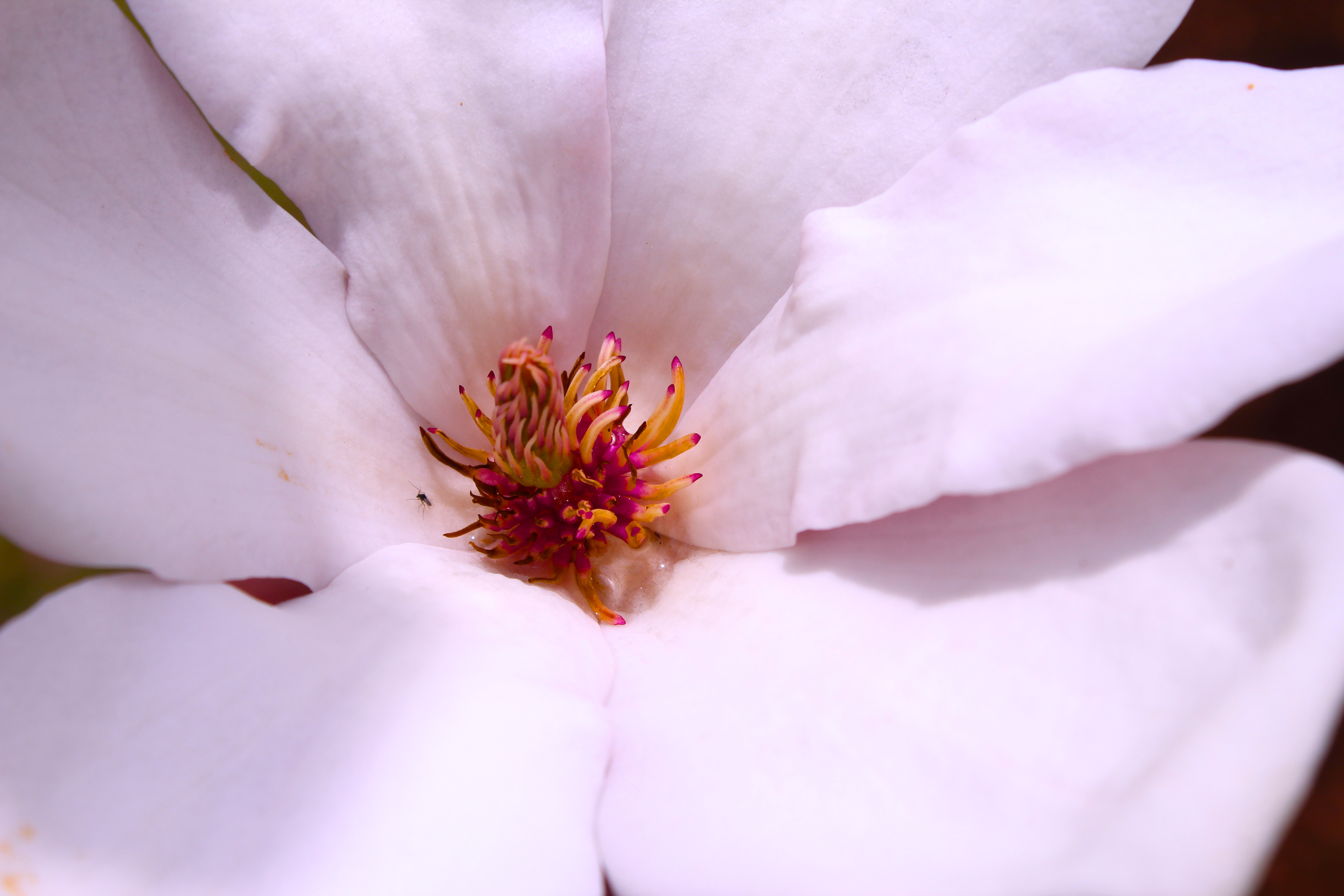
Of standing next to the magnolia tree, staring into the blossom.

IMG_1053

Of sniffing every flower. Touching all the petals.

Of stomping on anthills and slapping mosquitos.

Of tracing the flights of butterflies.

And awakening to birdsong.

The festival is upon us. The seasons of dopey drunken outdoor joys are here. Leaves and flowers and seeds and fruits will take over our pathways, drop onto our heads, infiltrate our sinuses,

and overflow from the plates on our dinner tables.

We shall write poetry, draw pictures, and make music.

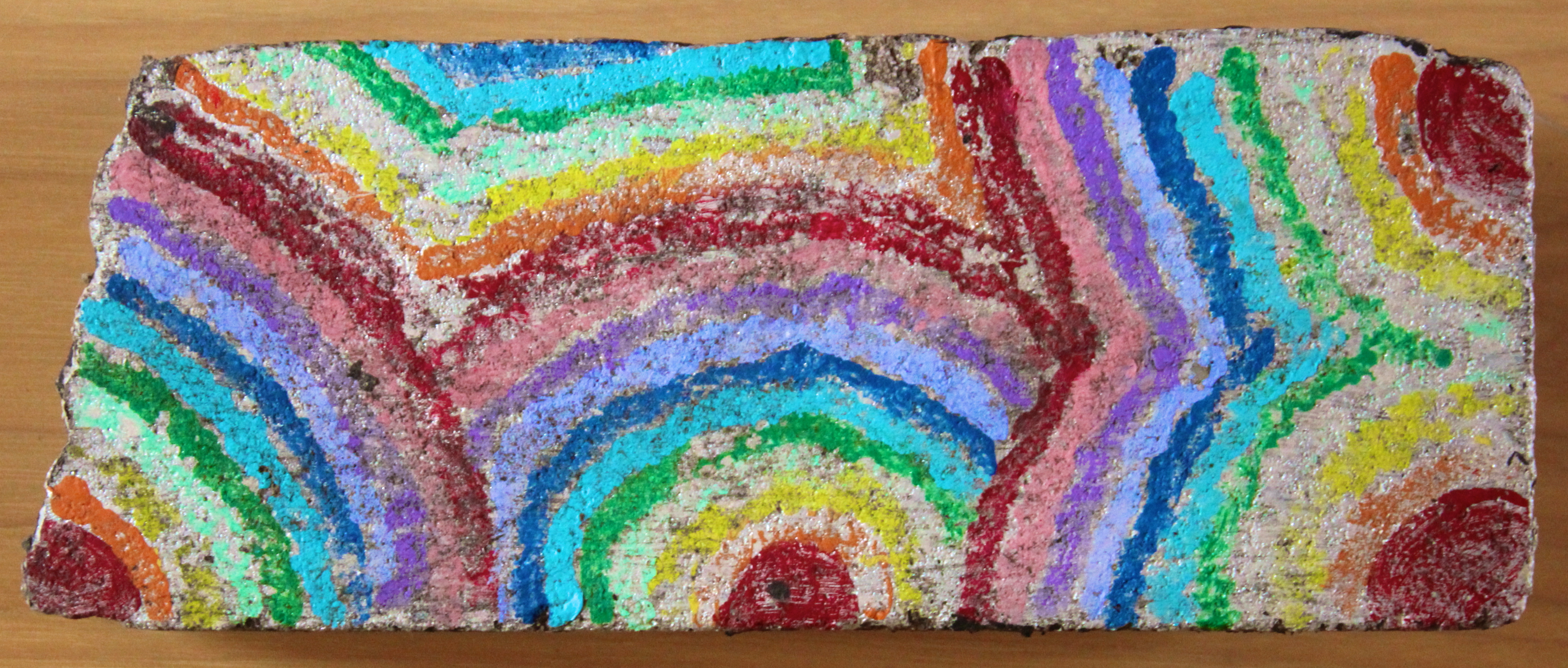
We shall paint rainbows on broken stones, following the instructions of the children.

IMG_1047

We shall ride bicycles.

Hike trails.

Paddle waterways.

Pitch tents.

Cultivate gardens.

And harvest goodness.

We shall not fret over our innocence, our incompetence, or our unabashed ecstasy.

IMG_1042

IMG_1044

This will be a good revolution

A festival of ever-blooming celebrations

When we find flowers in the compost pile

And make castles

Out of molehills.

IMG_0287